Hashima Island Tour Nagasaki: The Complete Gunkanjima Guide
Plan your Hashima Island tour in Nagasaki with our guide to Gunkanjima. Compare tour operators, learn the dark history, and get essential landing tips.
On this page
Hashima Island is a fascinating abandoned coal mining facility located off the coast of Nagasaki, with industrial parallels to Japan's manufacturing history. Many people recognize its unique silhouette which resembles a massive Japanese warship floating in the sea. Booking a hashima island tour nagasaki allows you to explore this hauntingly beautiful UNESCO World Heritage site. This guide covers everything you need to know about visiting the famous ghost island. Travelers interested in historical sites and engineering marvels like those in Tokyo will find Hashima's industrial preservation equally compelling.
The island served as a symbol of rapid industrialization for many decades. Today, it stands as a silent reminder of a bygone era in Japanese history. Travelers from around the world visit to see the decaying concrete buildings and narrow streets. Exploring these ruins provides a rare glimpse into the lives of the workers who once lived here.
What is Hashima Island (Gunkanjima)?
Hashima Island is widely known by its popular nickname, Gunkanjima, which translates to Battleship Island. The high concrete sea walls and dense buildings give it the appearance of a Tosa-class battleship when viewed from the sea. It is located approximately 15 to 19 kilometres southwest of the main port of Nagasaki. This small island was once the most densely populated place on Earth, with over 5,200 people crowded onto less than 0.06 square kilometres.
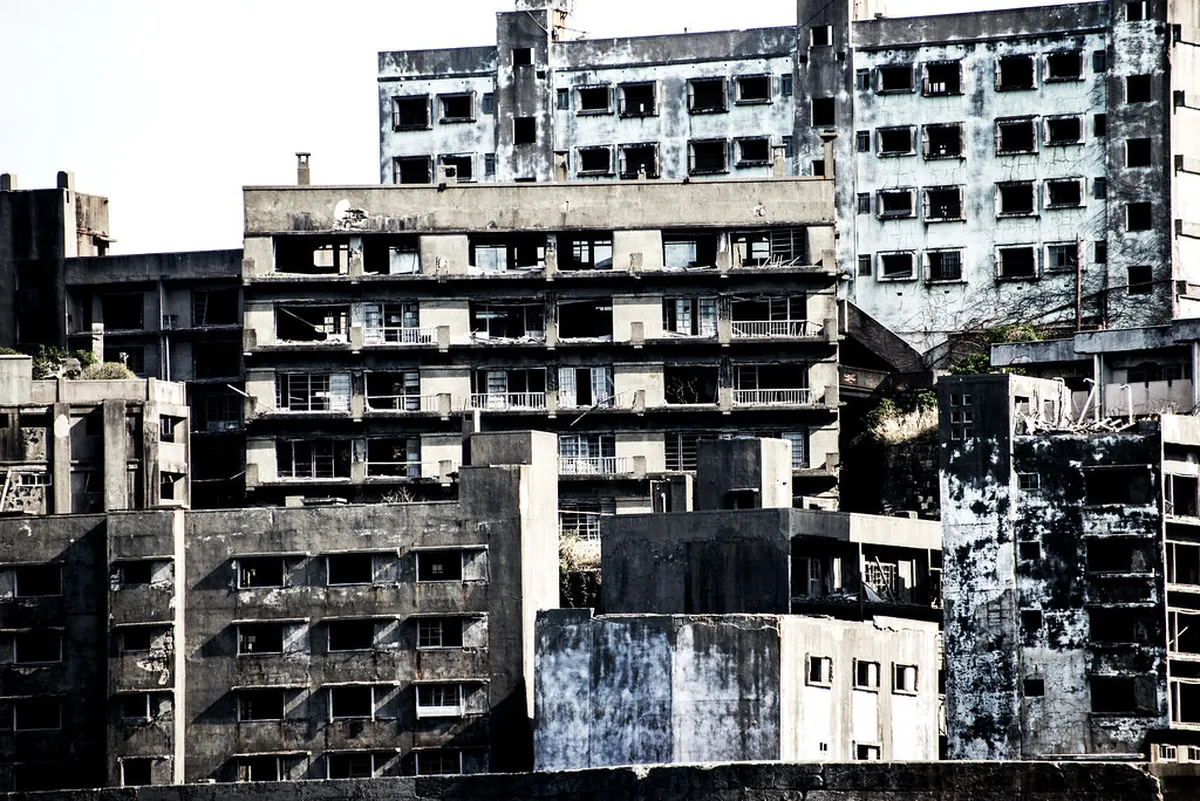
The site is now completely uninhabited and has become a major destination for history enthusiasts and photographers alike. In 2015, it gained international recognition as a component of the UNESCO World Heritage Site known as "Sites of Japan's Meiji Industrial Revolution: Iron and Steel, Shipbuilding, and Coal Mining Industries." Visitors can only access the island through official licensed guided tours, which are required by Nagasaki city government regulations for safety reasons.
The island also achieved worldwide pop-culture fame as the visual inspiration for the villain's lair in the James Bond film Skyfall (2012). Actual filming, however, took place on a soundstage and in Macau — no scenes were shot on the island itself. It was also used as a live-action filming location for Attack on Titan (2015), making it a recognisable landmark well beyond history circles. The atmosphere on the island is both eerie and captivating, and the ruins are best appreciated with the historical context a good guide provides.
The History: From Coal Mining Peak to Abandonment
Mitsubishi bought the uninhabited island in 1890 to begin large-scale undersea coal mining operations. Coal was essential for the growth of the Japanese steel industry during the Meiji era. The company built massive concrete apartment complexes to house thousands of workers. These buildings were among the first reinforced concrete structures in Japan and represent a remarkable engineering achievement for their time.
At its peak in 1959 and 1960, over 5,000 people lived on this tiny rock. The population density was significantly higher than modern-day Tokyo. Life on the island included schools, a hospital, shops, a cinema, and even a rooftop garden and swimming pool. Everything changed when petroleum began to replace coal as Japan's primary energy source throughout the 1960s.
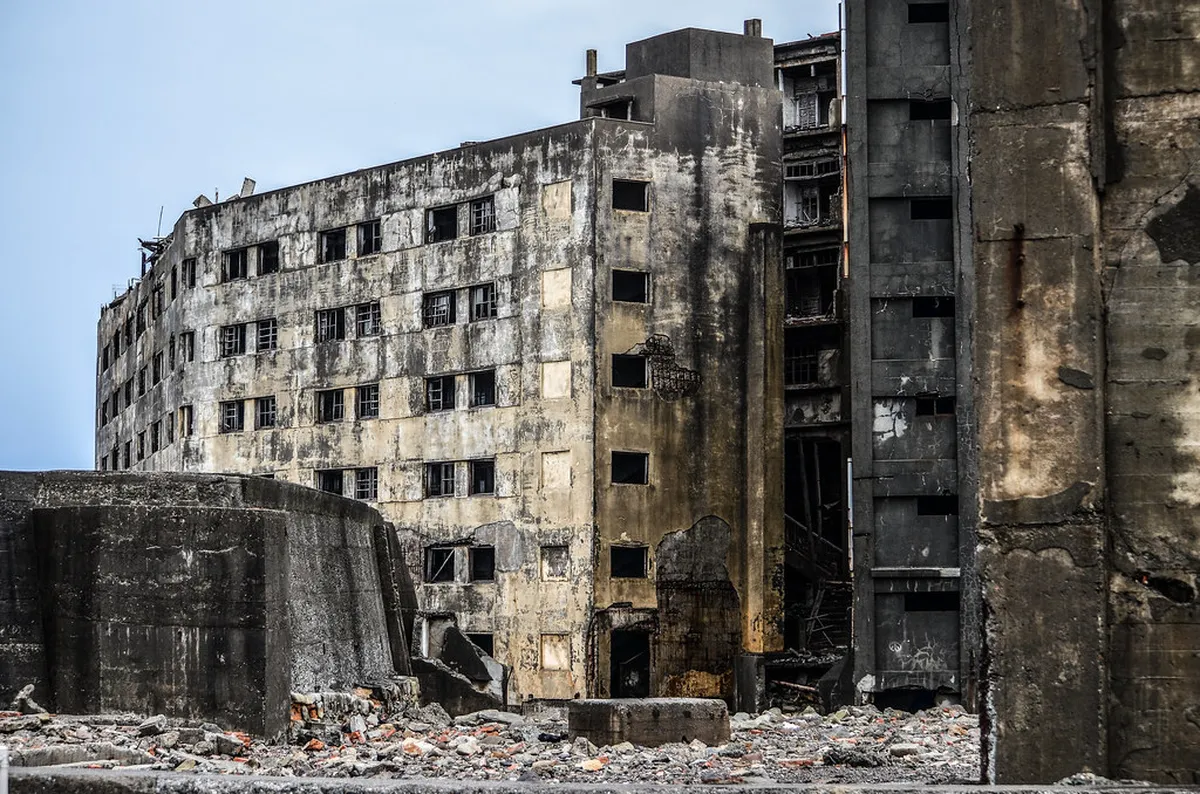
Mitsubishi officially closed the mine in January 1974 as demand for coal plummeted. Residents had to leave the island quickly, often abandoning personal belongings, furniture, and even family photographs. Nature slowly reclaimed the buildings over four decades of silence and sea salt. The island remained completely closed to the public until April 2009, when the first official landing tours were introduced.
The Dark History: Forced Labor and UNESCO Status
The history of the island is not without significant controversy. During World War II, and in the years leading up to it, Korean and Chinese laborers were forced to work in the mines under brutal conditions. Estimates suggest that as many as a thousand deaths went unrecorded. Many tour companies remain reluctant to address this history openly, and the island had no formal memorial to forced labor victims as of the early 2020s.
This dark chapter led to intense international debate when Japan applied for UNESCO status in 2015. South Korea initially opposed the listing and only withdrew its objection after Japan agreed to acknowledge the suffering of wartime laborers through future memorials and an information center. The UNESCO designation itself focuses on the industrial achievements of the Meiji era, not on the wartime period. Understanding both the engineering progress and the human cost is essential for a complete and honest visit to the site.
Modern tours are gradually incorporating more information about these historical complexities, though the depth varies by operator. Visitors are encouraged to read about the full history before arriving. You can learn more in The Guardian's reporting on the forced labor history. Planning a Nagasaki 3-day itinerary allows enough time to pair the island tour with visits to the Atomic Bomb Museum and Peace Park for a fuller picture of the city's layered past.
All Five Licensed Gunkanjima Tour Operators Compared
Five tour companies hold official Nagasaki city government licenses to operate landing tours to Hashima Island in 2026. They depart from different terminals around Nagasaki Port, at different times and price points, so your choice should depend on budget, language needs, and departure convenience.
| Operator | Adult fare | Duration | English guide? |
|---|---|---|---|
| Yamasa Shipping | ¥4,200 | ~2.5 hrs | Tue/Thu/Sat |
| Gunkanjima Concierge | ¥5,000–¥5,500 | Standard tour | Audio guide |
| Gunkanjima Cruise | ¥3,600 | ~3h 10m | Japanese only |
| Seaman Company | ¥3,900 | Twice daily | Japanese only |
| 7th Ebisumaru | Lowest price | ~1.5 hrs | Japanese only |
Yamasa Shipping Co., Ltd. charges around ¥4,200 per adult. Tours last approximately 2.5 hours and depart from Nagasaki Port Terminal at 09:00 and 13:00. This is the best option for English speakers — English guides are available on Tuesdays, Thursdays, and Saturdays, and Chinese guides on other days. Booking online in advance often unlocks a 5 to 10% discount. Visit their site to confirm current departure schedules before booking.
Gunkanjima Concierge charges ¥5,000 to ¥5,500 for the standard class ticket, with premium and super-premium tiers going up to ¥11,000 on peak days. The standard ticket includes entry to the Gunkanjima Digital Museum (normally ¥1,800 separately), making this the best value for visitors who want the museum as well. The operator reports a 94% landing success rate and 91% departure rate, the highest publicly cited figures among all five operators. Tours depart from the museum building at the Tokiwa Terminal. Audio guides are available for foreign visitors. The GUNKANJIMA CONCIERGE website has online booking in English.
Gunkanjima Cruise Co., Ltd. is the most affordable operator at ¥3,600 per adult (¥1,800 for children 12 and under). Tours run roughly 3 hours and 10 minutes and include a stop at nearby Takashima Island, where a Coal Museum holds a detailed scale model of Gunkanjima. The downside is that all on-board commentary is in Japanese only. Boats depart from Motofuna Pier, a short walk from the Ohato tram stop. Check the Gunkanjima Cruise website for the current schedule and landing probability information. Seaman Company runs tours at approximately ¥3,900 per adult, departing twice daily from around 10:30 and 13:40. Their website is in Japanese only. 7th Ebisumaru operates shorter tours of roughly 1.5 hours at the lowest price among the five operators, departing at 10:00 and 15:00. Their website is also in Japanese. For international visitors, Yamasa or Gunkanjima Concierge will generally deliver the clearest experience.
Every tour costs an additional ¥310 per adult (¥150 for children) on top of the base fare. This is a mandatory Nagasaki city government preservation fee. Some operators bundle it into the advertised price; others collect it separately at check-in. Always confirm the total cost when booking.
Essential Things to Know Before You Book
Landing on the island is never guaranteed even when the weather looks calm. The boat captain can only dock if the sea meets strict government-set thresholds: wave height must be under 0.5 metres and wind speed must stay below 5 m/s. Yamasa Shipping publicly states that successful landings happen on roughly 100 days per year — meaning about two-thirds of all tours result in a cruise-only experience.
Landing is only possible on approximately 100 days per year. Even with clear skies, rough seas can prevent docking. If the captain cannot land, you receive a partial refund for the landing fee but the cruise continues.
Book well in advance for peak periods. Slots fill up fastest during Golden Week (late April to early May), the autumn colour season (October and November), and summer school holidays (late July to August). For these windows, booking two to three months ahead is strongly recommended. Cancellations are more common in winter due to rough seas, but so is last-minute availability — a useful trade-off if you have flexibility.
Dress for an exposed, shadeless environment. Sneakers or flat-soled shoes are mandatory; high heels, stilettos, and sandals are not permitted on the island. Umbrellas and parasols are also banned for safety reasons — pack a rain jacket or poncho instead. There are no toilets on the island and no vending machines, so use facilities on the boat and bring your own water and snacks. You will need to sign a safety waiver at check-in, and you must arrive 30 to 45 minutes before the posted departure time.
Every tour charges an additional ¥310 per adult (¥150 for children) as a mandatory Nagasaki city government preservation fee on top of the base fare. Some operators bundle it in; others collect it separately at check-in.
Who Can and Cannot Join: Accessibility and Health Rules
The ferries and the island itself are not wheelchair accessible. The boarding process involves steps and narrow gangways, and the island's walking route covers uneven rubble surfaces with no ramps. Visitors with serious mobility impairments or chronic illnesses should contact operators directly before booking. Operators do not reject reservations outright for disability status, but conditions on the day may lead to last-minute refusals for safety reasons.
Children under three years old are not permitted on any tour. Children aged three to six may be allowed by some operators, but Nagasaki law requires that children under six remain seated below deck at all times — meaning parents must stay inside with them rather than joining the deck crowd. Some operators refuse bookings for children under six entirely; check the specific operator policy before reserving. Pets are not allowed on any tour.
Motion sickness is a serious consideration. The waters around Gunkanjima are notoriously rough, and even passengers who do not normally suffer from seasickness have reported feeling ill on the return trip. Bring your own medication — operators do not sell it on board. In Japan, motion sickness medicine is called yoidome (酔い止め) and is available at any major pharmacy chain such as Matsumoto Kiyoshi or Welcia. Taking it before boarding, not after symptoms start, gives the best results.
What to Expect During the Gunkanjima Landing Tour
The boat ride from Nagasaki Port takes approximately 40 to 60 minutes each way depending on the operator and sea conditions. As you approach the island, the massive scale of the ruins becomes dramatically clear — the sea walls, the collapsed rooftops, the overgrown walkways. The approach from the water is itself one of the highlights of the experience, and many visitors consider the views during the crossing among the best photo opportunities of the day.
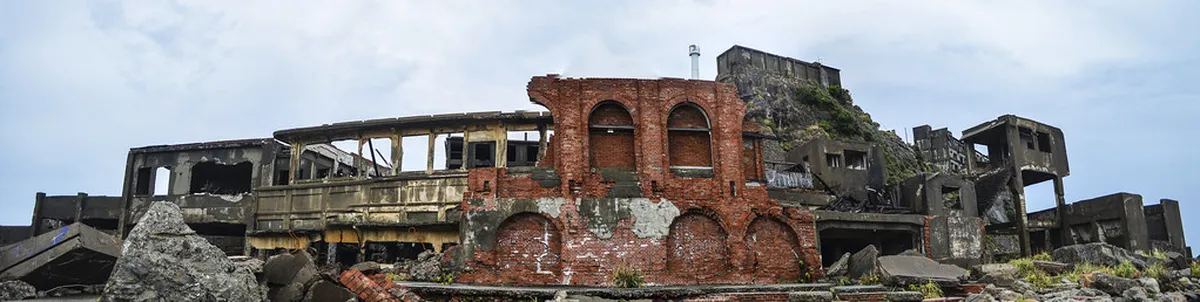
Once you land, you follow a fixed path to three separate observation platforms. A guide explains the function of each building visible from the route: the primary school, the apartment blocks, the main shaft housing, and the former cinema. The total time on the island is capped at 45 to 60 minutes by government regulation. You cannot deviate from the designated route, and all ruins are behind safety fences.
Photography is fully encouraged during the crossing and on the island. Drones are strictly forbidden without special government permits issued well in advance. Guides share personal accounts from former residents — many operators have interviewed ex-miners and their descendants, and these stories add a human dimension that the physical ruins alone cannot convey. The Nagasaki Attractions: Top 20 in 2026 seen from the water during the approach — the Mitsubishi shipyards, the distant bridges — add further context to the industrial scale of the region.
How to Get to Nagasaki Port
Most tour boats depart from terminals clustered around Nagasaki Port. Yamasa Shipping, Seaman, and Ebisumaru use the main Nagasaki Port Terminal or its surrounding piers; Gunkanjima Concierge departs from the Tokiwa Terminal adjacent to the Gunkanjima Digital Museum; Gunkanjima Cruise departs from Motofuna Pier near the Ohato tram stop. Confirm your specific operator's departure location when booking, since arriving at the wrong terminal means missing your tour.
Nagasaki's tram network is the easiest way to reach the port area. Tram lines 1 and 5 stop at Oura Coast Street (大浦海岸通), which is within a five-minute walk of the main terminals. Trams run frequently from Nagasaki Station and cost a flat ¥140 per ride regardless of distance. If you are staying near the station, the walk to the port area takes roughly 20 to 25 minutes along the waterfront.
Many visitors start their day at the Nagasaki Atomic Bomb Museum and then head to the port for an afternoon tour departure. If your landing tour is cancelled due to weather, the Gunkanjima Digital Museum near the Tokiwa Terminal is an excellent fallback. The museum uses virtual reality and projection mapping to show areas of the island that are permanently closed to visitors, and includes interviews with former residents. It is open daily and takes about 60 to 90 minutes to explore. Paid parking is available near the terminals for those driving, but public transport remains more practical for most visitors. Include this tour in your Nagasaki 1-day itinerary to make the most of your time in the city.
Frequently Asked Questions
Was the movie Skyfall actually filmed on Hashima Island?
While the island inspired the villain's lair in Skyfall, no actual filming took place on the island itself. The production team used a soundstage and digital effects to recreate the decaying atmosphere. You can learn more about local filming sites in a broader Nagasaki itinerary guide.
How long does a typical Gunkanjima tour take?
Most tours last approximately three hours from departure to return. This includes a 45-minute boat ride each way and about 45 to 60 minutes of walking on the island. Be sure to arrive at the terminal early for check-in and safety briefings.
Is the Hashima Island tour worth it for first-time visitors?
The tour is absolutely worth it for history buffs and photography enthusiasts visiting Japan. You will see a unique side of the country's industrial past while exploring a truly eerie landscape. It offers a stark contrast to the modern city views found at Mount Inasa.
Visiting Hashima Island is a powerful experience that stays with you long after you leave. The combination of industrial history and natural decay creates a truly unique atmosphere. Make sure to book your tour early to secure a spot on the boat. A hashima island tour nagasaki is a must for any traveler interested in Japan's complex history.
Remember to check the weather and prepare for possible landing cancellations. Even if you only see the island from the boat, the views are spectacular. The stories of the people who lived there provide a deep connection to the past. Enjoy your journey to one of the most mysterious places in the world.
Free: The Nagasaki Essentials guide
Top things to do, where to stay, a perfect day plan, getting around, and the best time to go — a Nagasaki mini-guide you can take offline.
You might also like


Continue reading
More guides you'll find useful