

Nagasaki 3 Day Itinerary: 8 Essential Planning Steps
Plan the perfect Nagasaki 3 day itinerary. Includes a day-by-day guide to Peace Park, Gunkanjima, and Dejima, plus essential tips on transport and where to stay.
On this page
Nagasaki is a city of hills and harbors located on the western coast of Kyushu. Three days is the right amount of time to balance its wartime memorials, colonial gardens, and abandoned island ruins without feeling rushed. This guide walks through every day in sequence, covering logistics that most travel articles skip entirely.
Many travelers arrive expecting only a somber look at the city's wartime past. What they find is a vibrant multicultural heritage shaped by Portuguese traders, Dutch merchants, Chinese immigrants, and Christian missionaries — all within a compact, tram-served city center. This plan ensures you see the essential landmarks and still have time to eat well.
| Day | Morning | Afternoon | Evening |
|---|---|---|---|
| Day 1 | Atomic Bomb Museum (08:30) | Peace Park + Hypocenter Park | Mount Inasa night view |
| Day 2 | Gunkanjima boat tour (09:00) | Glover Garden + Oura Cathedral | Dinner on Dutch Slopes |
| Day 3 | Dejima (08:00) | Megane Bridge + Teramachi | Shinchi Chinatown dinner |
Is 3 Days in Nagasaki Enough for First-Timers?
Three days is the ideal length for a first visit. The city is compact enough that you can reach most major sites by tram, so you spend very little time in transit. You will cover the atomic bomb memorials, the Gunkanjima island tour, the colonial gardens, and the old Dutch trade district without cutting anything important.
Two days forces uncomfortable choices. You would almost certainly have to skip Gunkanjima, which frequently gets canceled due to ocean swell — having a third day gives you a backup slot if your morning boat tour is called off. It also gives you a full half-day to explore Dejima and Chinatown at a pace that does not feel rushed.
Four days becomes appealing if you want day trips to Huis Ten Bosch or the Unzen volcanic region. However, most first-time visitors find that three days provides a satisfying and complete picture of what makes Nagasaki distinct from every other city on Kyushu.
How to Get to and Around Nagasaki
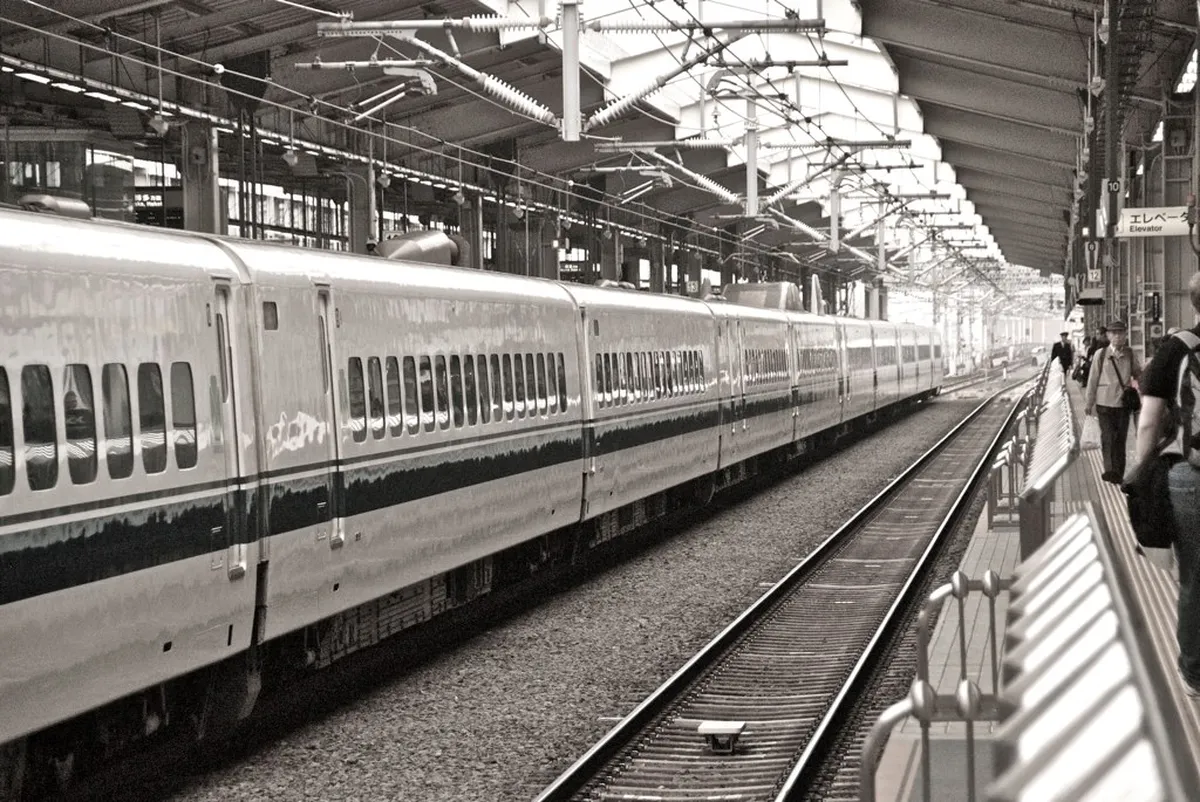
Most visitors arrive from Fukuoka via the Nishi-Kyushu Shinkansen bullet train. The journey requires a transfer at Takeo-Onsen station from the Relay Kamome limited express train. This transfer happens on the same platform and takes only a few minutes, but the Relay Kamome itself is worth knowing about before you board. It is a tilting train that sways noticeably on curves; travelers who are prone to motion sickness should take a window seat and avoid reading on the phone during the 60-minute ride to Takeo-Onsen. The total journey from Hakata Station takes about 90 minutes. Alternatively, visitors from Hiroshima can take a connecting service after visiting that city.
A cheaper and often more comfortable alternative is the highway bus from Fukuoka's Hakata Bus Terminal. The round trip costs around 5,800 JPY (roughly 40 EUR), the seats are wide and numbered, and there is USB charging. Journey time is about two and a half hours. If you found the Relay Kamome experience unpleasant on the way in, the bus is the practical return option.
Getting around the city itself is easiest on the vintage electric tram system. Each ride costs a flat fare of 140 JPY for adults. All four tram lines reach the major tourist sites, and the network is simple enough to navigate without Japanese. A one-day unlimited pass is available at most hotels and costs 600 JPY. If you are coming from the airport, check the Nagasaki Airport Bus Timetable for current limousine bus departure times; the ride to the city center takes around 45 minutes.
Best Time to Visit Nagasaki
Autumn (September to November) is the best season for this itinerary. Temperatures drop to a comfortable 15–22°C, the foliage around Glover Garden and Suwa Shrine turns red and gold, and ocean swell is generally lower in October — which means a higher chance of actually landing on Gunkanjima. Crowds are moderate rather than peak, and accommodation prices are competitive.
Spring (March to May) runs a close second. Cherry blossoms in late March and early April make Peace Park particularly striking, and the weather is mild. The Nagasaki Kunchi Festival in early October draws large crowds to Suwa Shrine and can push hotel rates up significantly, so book at least six weeks ahead if your dates overlap with it.
Summer (June to August) brings high humidity, frequent rain, and rougher seas that increase the likelihood of Gunkanjima cancellations. Winter is quieter and cheaper; the Nagasaki Lantern Festival in February is spectacular if you can handle the cold, with thousands of lanterns lighting the Chinatown district. Avoid Golden Week (late April to early May) and Obon (mid-August) if you want lower prices and smaller queues at the Atomic Bomb Museum.
Where to Stay in Nagasaki: Best Neighborhoods
The area around Nagasaki Station is the most convenient for transit. You will find modern business hotels in this district at rates typically between 8,000 and 15,000 JPY per night. It is the best base if you have early morning train or bus departures, and the station food court is one of the few places that stays open later in the evening.
Staying near Shinchi Chinatown gives you a more traditional and lively atmosphere. This area puts you within walking distance of many excellent local restaurants serving Champon noodles and Sara Udon. It sits on a major tram junction, so access to the rest of the city is easy. Budget travelers can find pod hotels and guesthouses in this area from around 3,000 JPY per night.
The Dutch Slopes neighborhood offers a quieter residential setting with beautiful hillside architecture. Some streets here are very steep, so check whether your accommodation has luggage storage at a lower level before booking. Luxury travelers should consider properties near the Oura Cathedral area, where some boutique hotels have harbor-facing rooms with views of the Mitsubishi shipyards.
Day 1: Urakami, Atomic Bomb Memorials, and Mount Inasa Night View
Start at the Nagasaki Atomic Bomb Museum when it opens at 8:30 AM. Arriving early means you will walk through before the large school groups arrive around 10:00 AM. Admission is 200 JPY. Allow around 90 minutes inside — the museum is compact but detailed, covering the bomb's development, the destruction of Urakami, and the city's recovery. It is smaller than Hiroshima's Peace Memorial Museum but the memorial park complex around it is arguably more contemplative.
From the museum, walk north to the Peace Park. The 9.7-meter Peace Statue by sculptor Seibou Kitamura sits at the center; the raised right hand represents the nuclear threat and the extended left arm gestures for peace. Continue a short walk south to Hypocentre Park, which marks the exact point above which the bomb detonated at 11:02 AM on August 9, 1945. The park is quiet and mainly visited by locals, which makes it one of the more affecting stops on this day.
The Gunkanjima island tour on Day 2 requires booking at least 30 days ahead in spring and autumn. Landing depends on ocean conditions — scheduling it on Day 2 rather than Day 3 gives you a backup slot if the first tour is cancelled.
After lunch in the Kawaguchimachi area near the museum tram stop — several small ramen and Champon restaurants cluster here — take Tram Line 1 or 3 to Takaramachi Station for the Mount Inasa Ropeway. The observatory deck ranks among the world's top three night views alongside Monaco and Shanghai. Arrive at least 30 minutes before sunset to secure a good position on the deck. If the ropeway queue is very long on a clear weekend, a taxi directly to the summit takes about 15 minutes from the tram stop.
Day 2: Gunkanjima (Hashima Island) and Glover Garden

Book your Gunkanjima island tour for the morning departure, typically 9:00 AM from the Nagasaki Port Terminal near Dejima. The ferry crossing takes 40 minutes each way. Landing permission depends entirely on ocean conditions and is decided by the captain on the day — historically, landings are only possible around 50% of the time year-round, with the lowest success rate in summer and the highest in October and November. This is why scheduling Gunkanjima on Day 2 rather than Day 3 matters: if your morning tour is canceled, you have a backup slot on the morning of Day 3 before continuing to Hashima Island in the afternoon.
Book at least 30 days ahead, especially for spring and autumn visits. If the boat cannot land — or if weather cancels the tour entirely — the Gunkanjima Digital Museum near the port is a genuinely excellent alternative. It uses mixed reality to recreate the underground coal mines and residential tower blocks, including a frank account of the Korean forced laborers who made up a significant portion of the workforce during WWII. This history is rarely covered on the island tour itself, so the museum is worth visiting regardless of whether you land.
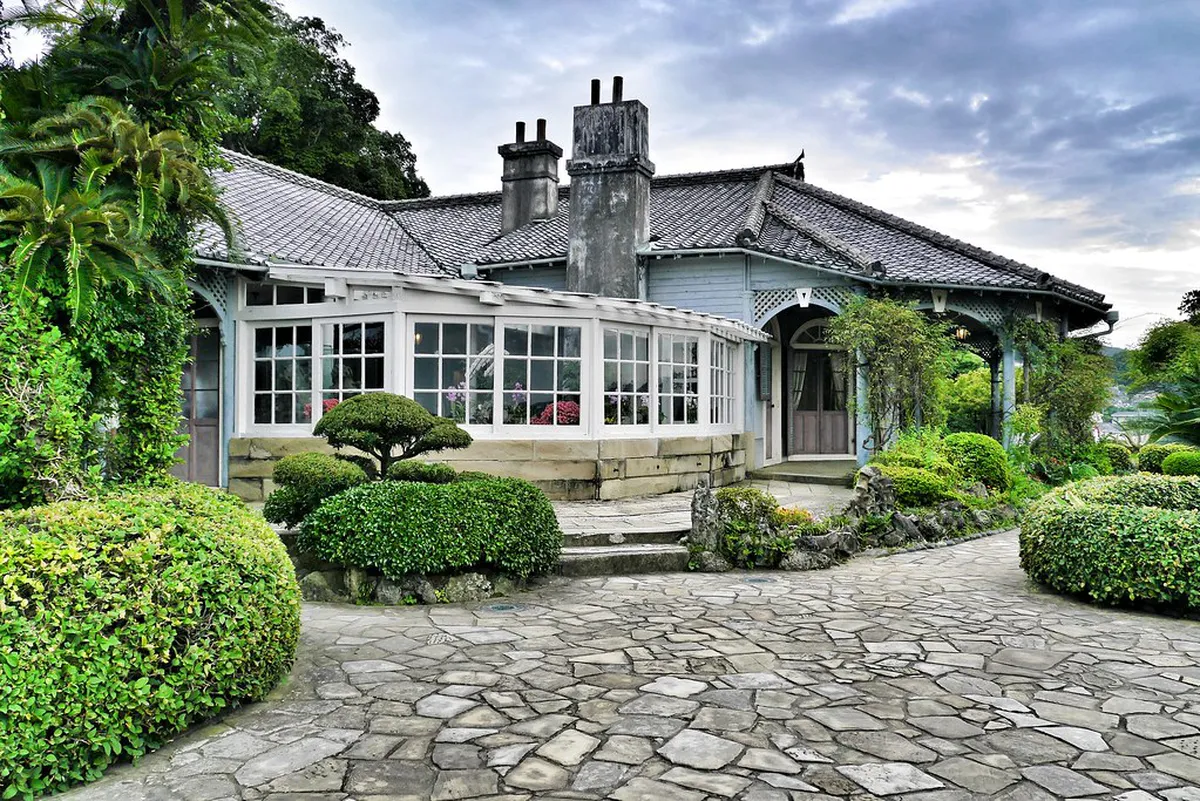
In the afternoon, take the tram to the Oura Cathedral stop for Glover Garden. The garden charges 620 JPY and opens at 8:00 AM. It contains several mid-19th century Western-style residences built by European merchants, the most famous being the Glover Residence — Japan's oldest wooden Western-style house, now a UNESCO World Heritage component of the Meiji Industrial Revolution sites. Walk through at a slow pace; the terraced layout offers progressively better views over Nagasaki Bay toward the Mitsubishi shipyards. Nearby Oura Cathedral, Japan's oldest Gothic stone church, is viewable from outside at no charge. End the day with dinner along the Dutch Slopes, a quiet cobblestone area lined with traditional Dutch-era townhouses and a handful of small restaurants.
Day 3: Dejima, Meiji History, and Shinchi Chinatown
Dejima is a short walk from Nagasaki Station and opens at 8:00 AM. Admission is 520 JPY. The site was a small artificial island built in 1636 as the only permitted point of contact between Japan and the outside world during the sakoku isolation period. Dutch East India Company traders lived here under strict restrictions for over 200 years, making it the sole conduit for Western science, medicine, and technology into Japan. The reconstructed warehouses, trading offices, and residences give a clear picture of how unusual this arrangement was.
After Dejima, walk east toward the Megane Bridge. The 17th-century double-arched stone bridge takes its name from its resemblance to a pair of spectacles when reflected in the water. It is a popular photography stop but takes only about 20 minutes to see. Continue into the Teramachi temple street, which runs along the hillside and strings together a succession of Buddhist temples and Shinto shrines in a single 15-minute walk — a good way to see traditional architecture without a dedicated detour.
Finish the day in Shinchi Chinatown, Japan's oldest, dating to the 17th century when Chinese traders lived near the port. Lunch here on Champon noodles — the dish was invented in Nagasaki for Chinese students and features thick wheat noodles in a pork-and-seafood broth. For the afternoon, visit the Nagasaki Chinatown district's Confucius Shrine and pick up Castella cake as a souvenir. The best version comes from Shooken Cafe Sevilla, which has been making the Portuguese-derived sponge cake since 1681. Look for boxes with coarse sugar crystals on the base — this is the traditional marker of a properly made Castella. The shop closes by early evening, so do not leave this until after dinner.
Book in Advance: Essential Tickets for Nagasaki
The Gunkanjima tour is the only booking that genuinely requires significant lead time. Reserve your slot at least 30 days before arrival during spring (March to May) and autumn (September to November). Several operators run departures from the Nagasaki Port Terminal; all charge around 4,000 JPY and include the same access zone on the island. Check weather forecasts the night before and call the operator on the morning of departure if conditions look marginal — most will advise you by 8:00 AM whether landing is likely.
The Nagasaki Atomic Bomb Museum does not require advance booking for individual visitors. Large organized groups arrive around 10:00 AM on weekdays, so arriving at 8:30 AM opening time gives you clear access to the most important exhibits. The Mount Inasa Ropeway operates on demand and rarely has waits longer than 20 minutes except on clear Saturday and Sunday evenings in autumn, when a 30-minute queue is common.
Nagasaki Travel Tips: Food, Timing, and 8 PM Shutdowns
Most Nagasaki restaurants close by 8:00 PM. Plan to be seated for dinner by 7:00 PM. If you arrive by train after 9:00 PM, the station food court is your best option for a hot meal.
Nagasaki is not a late-night city. Most restaurants close by 8:00 PM and do not reopen until 8:00 or 9:00 AM the following morning. Plan to be seated for dinner by 7:00 PM at the latest. If you arrive by train after 9:00 PM, the station food court may be your only option — it stays open slightly later than most restaurants. Convenience stores (Lawson, FamilyMart, 7-Eleven) are open 24 hours and stock full hot meals, so stocking up the night before an early departure is a genuine strategy rather than a last resort.
The two dishes worth seeking out specifically in Nagasaki are Champon and Sara Udon. Champon is a thick noodle soup with seafood and pork; Sara Udon uses the same ingredients but with crispy fried noodles instead of the boiled version. Both are Chinese-influenced dishes created in Nagasaki and taste noticeably better here than in versions served elsewhere in Japan. The best restaurants are clustered in the Chinatown district and the Kawaguchimachi area near the Atomic Bomb Museum.
Castella cake is the most important souvenir. Most shops sell it in long rectangular boxes with a thin layer of coarse sugar crystals at the base — the crystals indicate the traditional recipe. Shooken Cafe Sevilla near Megane Bridge is the most-cited specific shop among travelers. Several brand-name Castella producers also have shops near Nagasaki Station, making last-minute purchases before a train departure straightforward. Prices run from around 1,000 JPY for a short box to 3,500 JPY for a full-length gift box.
Alternative Options: Huis Ten Bosch and Saga Side Trips
If you have a fourth day, Huis Ten Bosch is the most popular addition. This large theme park near Sasebo recreates a Dutch town with canals, windmills, and formal gardens. It is particularly famous for its seasonal tulip festival in spring and illumination events in winter. The park is about 90 minutes from Nagasaki by local train and a connecting bus.
Nature travelers should consider the Unzen Onsen area on the Shimabara Peninsula. This volcanic region has steaming fumaroles, hot spring baths, and hiking trails through calderas. It takes about 90 minutes by bus from Nagasaki Station. The peninsula also has a castle in Shimabara town and strong connections to the Shimabara Rebellion of 1637, a largely Christian uprising that influenced Japan's isolation policy — a thread that connects directly to what you saw at Dejima.
Saga prefecture is another quick option. The town of Arita is the historical center of Japanese porcelain production, accessible in under an hour on the Nishi-Kyushu Shinkansen. The adjacent village of Okawachiyama has a concentration of traditional kilns and is far quieter than Arita's main street. If your interest in Nagasaki's trading-port history extended to the goods that passed through Dejima, Arita is the logical continuation of that story.
Frequently Asked Questions
Is Nagasaki worth visiting for 3 days?
Yes, three days allows you to balance historical sites with unique cultural experiences. You can visit the Peace Park, tour Gunkanjima, and explore colonial gardens comfortably. This timeframe also provides a buffer for potential boat tour cancellations.
How do I get from Fukuoka to Nagasaki?
The fastest way is taking the Nishi-Kyushu Shinkansen from Hakata Station. You must transfer to the Relay Kamome train at Takeo-Onsen station. The entire journey takes approximately 90 minutes and is covered by the JR Pass.
Do I need a car in Nagasaki?
A car is not necessary for exploring the main city center attractions. The local tram system and buses are efficient and cover all major tourist sites. You only need a car if you plan to visit remote areas like Unzen.
Nagasaki is a city that stays with you long after you leave its shores. This three-day plan helps you navigate its complex history and beautiful landscapes. I hope this guide makes your first visit to Kyushu truly memorable. Safe travels as you explore one of Japan's most fascinating historical ports.
Pair this with our broader Nagasaki tourism attractions guide for the full city overview.
For related Nagasaki deep-dives, see our Nagasaki 1 Day Itinerary: The Perfect Route and Nagasaki Day Trip From Fukuoka: 1-Day Itinerary Guide guides.
Free: The Nagasaki Essentials guide
Top things to do, where to stay, a perfect day plan, getting around, and the best time to go — a Nagasaki mini-guide you can take offline.
You might also like


Continue reading
More guides you'll find useful


