Nagasaki 1 Day Itinerary: The Perfect Route
Plan the perfect Nagasaki 1 day itinerary. Includes Peace Park, Glover Garden, the "Anime Stairs," and practical tips for getting around by tram and bus without a car.
On this page
Nagasaki is one of Japan's most layered cities — a harbor town shaped by Dutch traders, Chinese merchants, Portuguese missionaries, and the most destructive single event of World War II. This nagasaki 1 day itinerary is designed for first-timers who want to move efficiently without missing the sites that give the city its emotional weight. You will use the tram network for most of the day, which is both cheap and reliable.
The plan follows a morning/afternoon/evening structure. You start in the northern peace district when the crowds are thin, work your way south through Chinatown and Dejima, then climb to Glover Garden for the harbor views. The evening ends on Mount Inasa, named one of the top three night views in the world. One day is tight but completely achievable with an early start.
| Time | Stop | Duration | Cost |
|---|---|---|---|
| 08:30 | Peace Park | 30–40 min | Free |
| 09:00 | Atomic Bomb Museum | 60–75 min | 200 yen |
| 10:30 | Hypocenter Park | 20 min | Free |
| 12:00 | Dejima | 45–60 min | 510 yen |
| 14:00 | Glover Garden | 60–75 min | 620 yen |
| 16:00 | Anime Stairs (optional) | 30–40 min | Free |
| 19:00 | Mount Inasa Ropeway | 90 min | 1,250 yen |
Is Nagasaki Worth Visiting?
Most travelers who ask this question are trying to decide between Nagasaki and Hiroshima — or wondering whether the train ride from Fukuoka justifies a single day. The honest answer is that Nagasaki offers something neither Hiroshima nor any other city in Japan quite replicates. Three distinct foreign cultures — Dutch, Chinese, and Portuguese — fused here over three centuries of partial isolation and have never fully separated. You see that fusion in the architecture, the food, and the shrines.
History buffs will spend the morning in genuine silence at the Peace Park and the museum. Foodies will discover Champon noodles, Castella sponge cake, and Turkish rice — dishes with no direct equivalent elsewhere in Japan. Photographers get a harbor city that photographs like nowhere else in Kyushu. Even a single day leaves most visitors wishing they had booked an extra night.
Nagasaki vs. Hiroshima: Which One to Visit?
If you can only visit one atomic bomb city, the choice is less about the history and more about the rest of the day. Hiroshima pairs naturally with Miyajima, one of Japan's three classic views, reachable by ferry in 30 minutes. Nagasaki pairs naturally with Glover Garden, Dejima, and Mount Inasa — a fuller urban day trip with more cultural variety. Hiroshima's Peace Memorial Museum is slightly larger and more comprehensively documented. Nagasaki's museum is equally moving and notably less crowded. If you are traveling Kyushu and can reach Nagasaki in under two hours from Fukuoka, go to both.
Getting to Nagasaki: Fukuoka Day Trip vs. Shore Excursion
The fastest land connection is the Nishi Kyushu Shinkansen, which opened in 2022. From Hakata station in Fukuoka, take the Relay Kamome limited express to Takeo-Onsen, then board the Kamome shinkansen to Nagasaki. Total journey: approximately 1 hour 30 minutes. A one-way unreserved seat costs around 4,200 yen. The JR Northern Kyushu Rail Pass (3 days, 10,000 yen) covers both the relay express and the shinkansen, paying for itself on a single Fukuoka–Nagasaki return trip. If you are traveling Kyushu for three or more days, the pass is the obvious choice. See the full breakdown in our Nagasaki day trip from Fukuoka guide.
Cruise passengers arrive at Matsuyama Pier, roughly 2 km north of the Peace Park. Walk south along Route 206 to reach the park in about 25 minutes, or take any northbound tram to the Matsuyama-machi stop and walk 5 minutes west. Shore excursions run tight schedules; budget 2.5 hours for the peace district, then use a taxi or bus to reach Glover Garden before the ship departs. Skip Mount Inasa on a shore excursion unless you have 8+ hours in port — the ropeway round-trip alone takes 90 minutes with travel.
Nagasaki Peace Park and Memorials
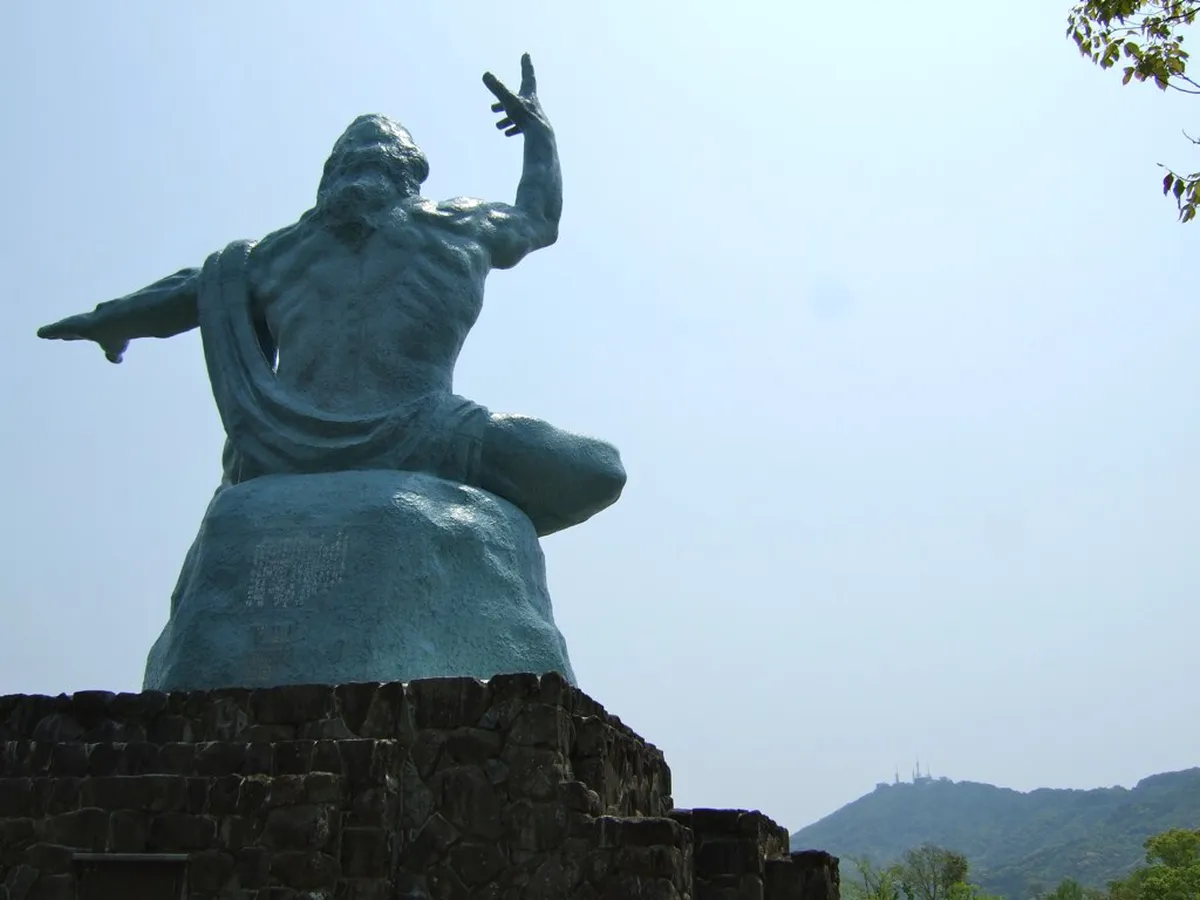
Start at 8:30 AM. Peace Park sits at the northern end of the peace district in Matsuyama-cho, free to enter and open 24 hours. The centrepiece is the Peace Statue by sculptor Seibo Kitamura: 9.7 metres tall, right hand pointing to the sky (the threat of nuclear weapons), left hand extended horizontally (peace), eyes closed in prayer. At the statue's base, a vault holds the names of everyone killed by the bomb and its long-term effects — a number that continues to grow as hibakusha (survivors) pass away.
Walk south from the statue to the Fountain of Peace, a dove-shaped fountain dedicated to victims who called out for water in the hours after the blast. The park's perimeter path is lined with stone sculptures donated by countries around the world, each inscribed with a message against nuclear weapons. Arrive before 9:00 AM and you will have most of the park to yourself. Tour groups begin arriving around 9:30 AM. Allow 30 to 40 minutes here before moving to the museum.
Atomic Bomb Museum: A Lesson in History
The Nagasaki Atomic Bomb Museum sits a 5-minute walk south of Peace Park, at 7-8 Hirano-machi. Opening hours are 8:30 to 17:30 (last entry 17:00), with extended hours in August. Admission is 200 yen for adults. The museum narrates the bombing as a chronological story: the events leading to August 9, 1945; the 11:02 AM detonation at 500 metres above the Urakami district; the destruction zone; the human cost; the reconstruction; and finally, the ongoing case for abolition. The narrative arc moves deliberately from grief to determination, ending with contemporary peace activism and the Nihon Hidankyo movement, which won the Nobel Peace Prize in 2024.
Admission to the Nagasaki Atomic Bomb Museum is 200 yen for adults. Arrive by 08:30 when it opens to walk through before school groups arrive around 10:00 AM.
If you can time your museum visit to be inside at 11:02 AM — the exact minute of detonation — the experience takes on a different quality. The museum's central hall quiets naturally at that hour, and reading the displayed personal accounts with that time awareness changes how the information lands. Plan to spend 60 to 75 minutes inside. From here, walk 5 minutes south to the Hypocenter Park, where a black granite obelisk marks the exact point beneath the detonation. The surrounding area, once flattened to the horizon, is now a quiet residential park.
Dejima: The Historic Gateway to the West
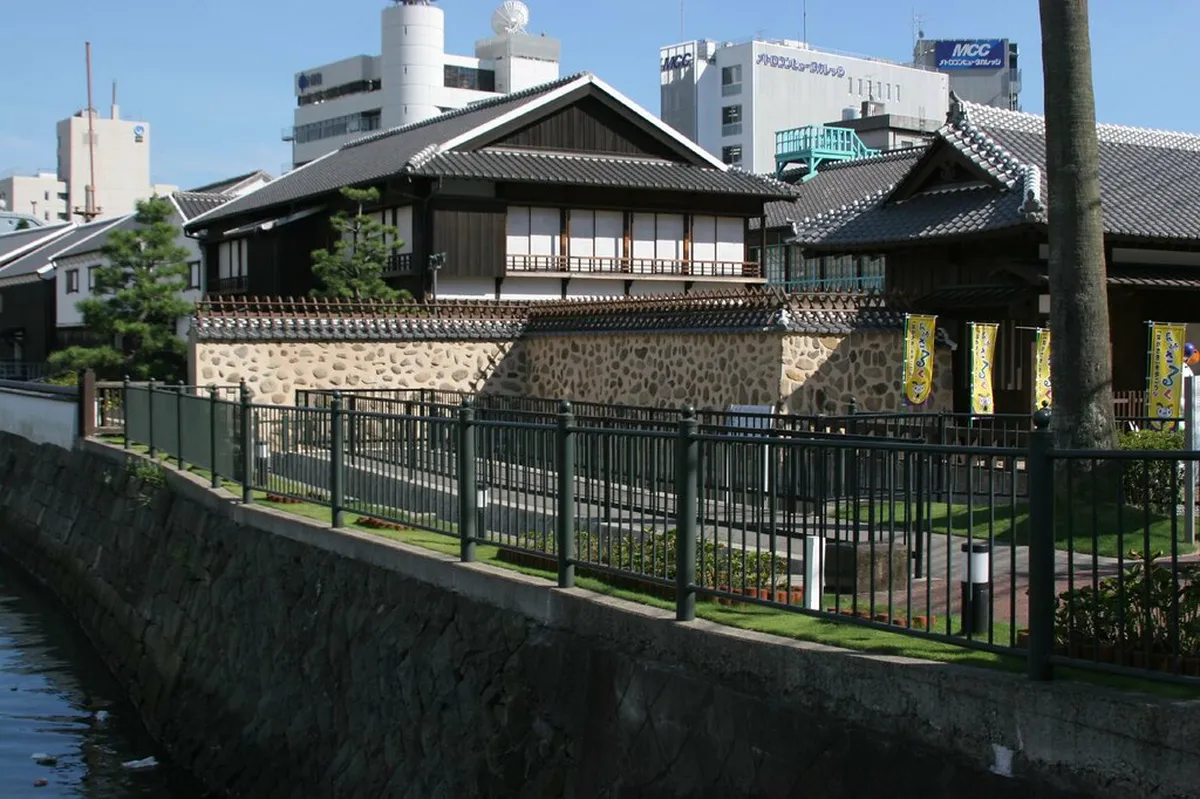
After the peace district, ride the tram south to Dejima-machi stop and visit Dejima by noon. One important caveat: the island you see today is a reconstruction, not original 17th-century fabric. The actual island was absorbed into the city when Nagasaki expanded its waterfront in the Meiji era. What now exists is a careful archaeological and archival reconstruction of the Dutch East India Company's trading post, completed in phases between the 1990s and 2017. About 25 buildings have been recreated to period spec, furnished with Dutch, Indonesian, and Japanese trade goods of the era.
Admission is 510 yen. The site opens at 8:00 AM. Allow 45 to 60 minutes to walk through the warehouses, the chief merchant's residence, and the recreation of the single bridge that was the only legal connection between Japan and the outside world for over 200 years. The reconstruction is well done, and the interpretive panels are strong in both Japanese and English. Knowing you are walking through a recreation rather than an original site does not diminish it — it makes the historical premise (Japan sealed off, one small island the only exception) more vivid, not less.
Glover Garden: An Elegant Hillside Estate
Glover Garden sits on a hillside south of the city center, a 10-minute walk from the Oura Cathedral tram stop or a short ride from Dejima. Admission is 620 yen. Opening hours run 8:00 to 18:00 in standard season, extended to 21:00 during the summer illumination period (late July through September). The garden preserves nine Western-style stone and timber buildings built by European merchants in the second half of the 19th century. The largest is Thomas Blake Glover's residence, the oldest Western-style building still standing in Japan. Glover himself is sometimes cited as partial inspiration for the opera Madama Butterfly, given his marriage to a Japanese woman and his outsized role in modernizing Japan's naval and industrial sectors.
The best time to arrive is between 14:00 and 15:30. The harbor view from the upper terrace is clear in the afternoon light, and the worst of the tour groups have typically moved on by then. Use the outdoor escalators built into the hillside to reach the upper gardens; they are included in admission and spare your legs for the rest of the day. Allow 60 to 75 minutes. The nearby Oura Cathedral — a UNESCO World Heritage Site and the only Gothic-style church in Japan designated a national treasure — is a 5-minute walk and free to approach from the outside if you want a brief detour.
The "Anime Stairs": A Pilgrimage for Iroduku Fans
If you have room in the afternoon schedule, the so-called "Anime Stairs" — formally the Oura Tenshudo-shita slope stairway — are a short detour from Glover Garden. Exit the garden's lower gate and walk northeast along Minami Yamate-machi for about 7 minutes toward the Ishibashi tram stop. The stepped stone lane winds uphill through old European-style residential streets with harbor views at each landing. The location became a minor pilgrimage site after appearing in the 2018 P.A. Works anime series "Iroduku: The World in Colors," which was set in a fictional version of Nagasaki.
Be realistic about the climb: it is steep, the stone steps are uneven, and the reward at the top is a harbor view you can also get from Glover Garden's terrace. For anime fans, the detour is obviously worthwhile. For everyone else, it is optional filler if you find yourself ahead of schedule. The total detour from Glover Garden and back to the Ishibashi tram stop adds about 30 to 40 minutes.
Practical Logistics: Trams, Passes, and No-Car Travel
The tram network covers every major site in this itinerary. A single ride is 140 yen regardless of distance. The 1-day tram pass costs 600 yen and is available at the tram terminal inside Nagasaki Station or at the tourist information counter. It pays for itself after five rides. Most trams run every 5 to 8 minutes during daytime. To get from the peace district south to Dejima and Glover Garden, you will likely need to change lines at Shinchi Chinatown tram stop.
When changing tram lines, ask the driver for a transfer ticket (norikae-ken) before stepping off your first tram — not at the destination. If you exit without asking, you must pay again. No other tram system in Kyushu works this way.
Here is the transfer trap that catches first-timers: if you need to change tram lines, you must ask the driver for a transfer ticket (norikae-ken) before you step off — not at the destination stop, but when you are still on the first tram. Show your day pass and ask "norikae kudasai." The driver hands you a paper slip; show it to the driver on your second tram. If you exit without asking, you will have to pay again. No other Japan tram system in Kyushu works quite this way, and it is not prominently signed in English.
For the evening, take Bus No. 3 or No. 4 from Nagasaki Station to Ropeway-mae (approximately 10 minutes). The Mount Inasa Ropeway runs from 9:00 to 22:00; a round-trip ticket costs 1,250 yen for adults. Arrive 30 minutes before sunset to claim a good viewing position. The view takes in the full harbor and the lights of the surrounding hills — it was selected as one of the three best night views in the world alongside Shanghai and Monaco in 2021. Descend after dark; Bus No. 20 or No. 40 returns to Nagasaki Station from Ropeway-mae in about 10 minutes.
Nagasaki Event Calendar: Key Dates for 2026
Two events in 2026 are worth planning around rather than stumbling into. The Nagasaki Lantern Festival (長崎ランタンフェスティバル) runs during the Lunar New Year period — in 2026, that falls in late January to mid-February. The city's Chinatown and the surrounding streets are hung with approximately 15,000 lanterns and paper figures. Hotels fill up at least two months in advance during this period. If you are visiting western Kyushu in February, book early or expect to stay in Fukuoka and day-trip in.
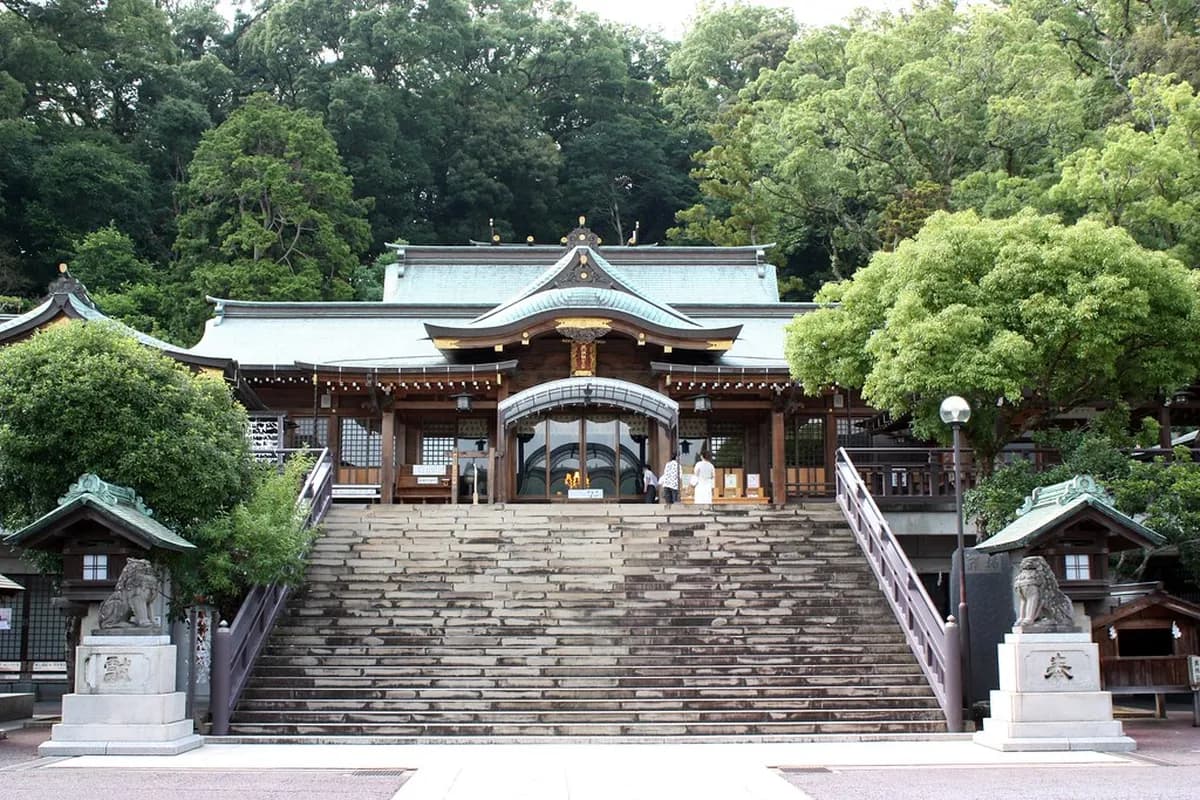
The Nagasaki Kunchi Festival takes place October 7 to 9 every year without exception — it has run since 1634. This is one of the three great festivals of Japan, featuring dragon dances, Chinese-influenced floats, and neighborhood performance groups rotating the honor of performing at Suwa Shrine. Tickets for the main Suwa Shrine performances sell out almost immediately after release. Book accommodation six months in advance and check exact 2026 performance schedules on the official Kunchi site. The official Nagasaki tourism site also publishes the full 2026 event calendar with ticketing links.
Add an Extra Day: Hashima Island and Beyond
If you have a second day, the most popular extension is a tour to Hashima Island (Gunkanjima), the abandoned coal-mining island 19 km offshore. The concrete apartment towers and sea walls create an unmistakable silhouette — the island doubled as the villain's lair in the 2012 Bond film Skyfall. Boat tours depart from Nagasaki Port and take about 50 minutes each way. Tours must be booked in advance (at least 30 days during busy season) because capacity limits are strict and weather cancellations are common. Expect to pay around 4,000 to 5,000 yen including the landing fee.
Nature travelers should look at the Unzen Onsen area in the Shimabara Peninsula, about 90 minutes by bus from the city. The volcanic steam vents at Unzen Jigoku are dramatic and the hot spring town is a genuine retreat. The Huis Ten Bosch theme park near Sasebo is a full-day option if you are traveling with children. For those who want to stay closer to the city, the Teramachi temple street and the Sanno Shrine one-pillar torii gate (a torii that survived the blast with only two of its four pillars standing) are both within walking distance of the main tram lines and take under two hours combined.
Frequently Asked Questions
Is 1 day enough for Nagasaki?
One day is enough to see the major historical highlights like the Peace Park and Glover Garden. You will need to start early and use the tram to move efficiently. Consider an extra day if you want to visit Hashima Island.
How do I get from Fukuoka to Nagasaki?
The fastest way is the Nishi Kyushu Shinkansen from Takeo-Onsen station. You take a relay express from Hakata to connect to the bullet train. The total journey takes about 90 minutes one way.
What is the best way to get around Nagasaki?
The streetcar or tram is the most convenient method for tourists. It covers all major attractions and is very affordable. Buy a day pass at the station to save money on multiple trips.
Nagasaki offers a powerful experience that stays with you long after leaving. This nagasaki 1 day itinerary ensures you see the most impactful sites efficiently. Whether you come for the history or the views, you won't be disappointed. The city's unique charm makes it a standout destination in southern Japan.
Remember to check the weather before heading to Mount Inasa for the view. I hope this guide helps you plan a meaningful and memorable visit. Safe travels as you explore the beautiful streets and slopes of Nagasaki. Enjoy every bite of Champon and every moment of peace in the parks.
Use our Nagasaki attractions hub to plan the rest of your trip.
For related Nagasaki deep-dives, see our Nagasaki 3 Day Itinerary: 8 Essential Planning Steps and Nagasaki Day Trip From Fukuoka: 1-Day Itinerary Guide guides.
Free: The Nagasaki Essentials guide
Top things to do, where to stay, a perfect day plan, getting around, and the best time to go — a Nagasaki mini-guide you can take offline.
You might also like


Continue reading
More guides you'll find useful