Kanazawa Cherry Blossom Guide: 8 Essential Tips & Spots
Plan your Kanazawa sakura trip with our 2026 forecast, top 10 viewing spots, a one-day itinerary, and local tips for avoiding the crowds.
On this page
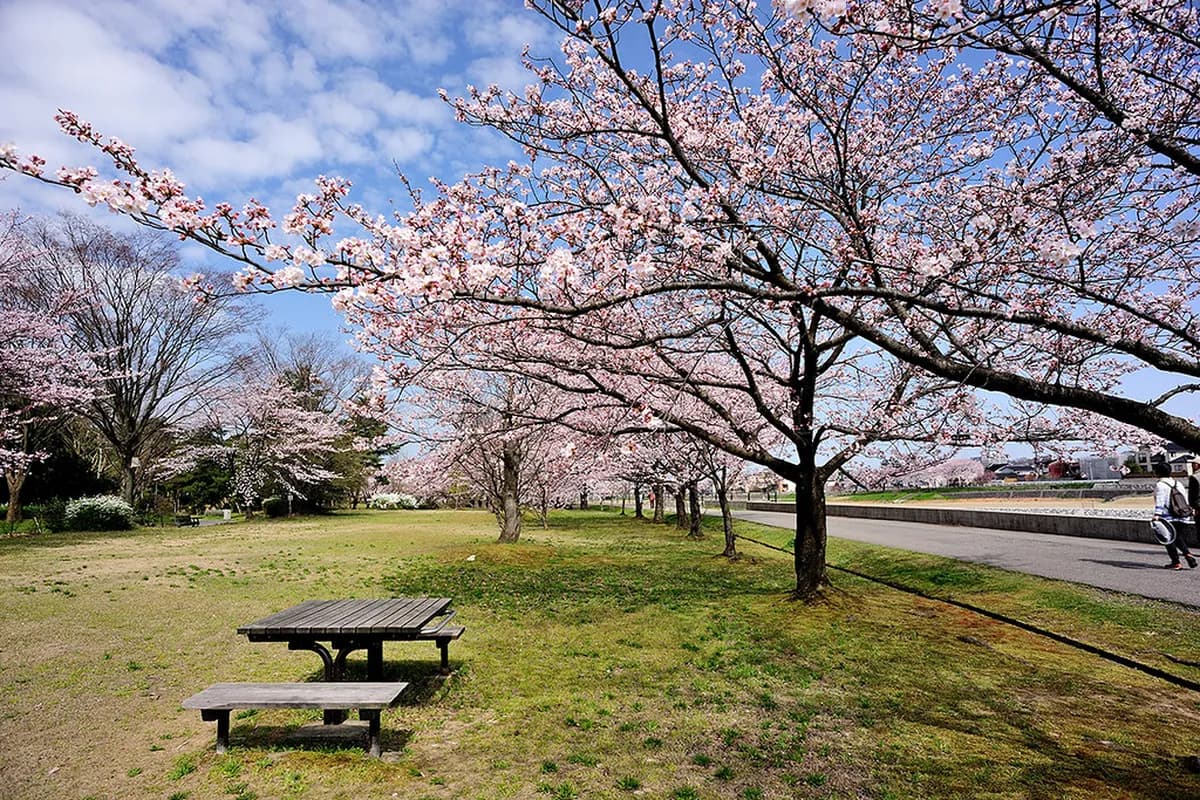
Kanazawa is one of the most rewarding cities in Japan for sakura season. Historic gardens, geisha districts, and castle walls all come alive with pink blossoms in early April. The city blooms a few days later than Tokyo, which makes it a smart second stop on a multi-city spring itinerary drawing visitors from Osaka and Tokyo seeking a less-crowded alternative.
Spring temperatures run between 8–16°C / 46–61°F at peak bloom. Rain is common — locals call the unpredictable coastal showers "Hokuriku rain." Packing a compact umbrella matters here more than almost anywhere else in Honshu.
This guide covers the 2026 forecast, the top viewing spots, a one-day walking itinerary, and the practical details that matter most. Check the full list of Kanazawa attractions if you want to extend your stay beyond sakura season.
2026 Kanazawa Cherry Blossom Forecast and Peak Viewing Times
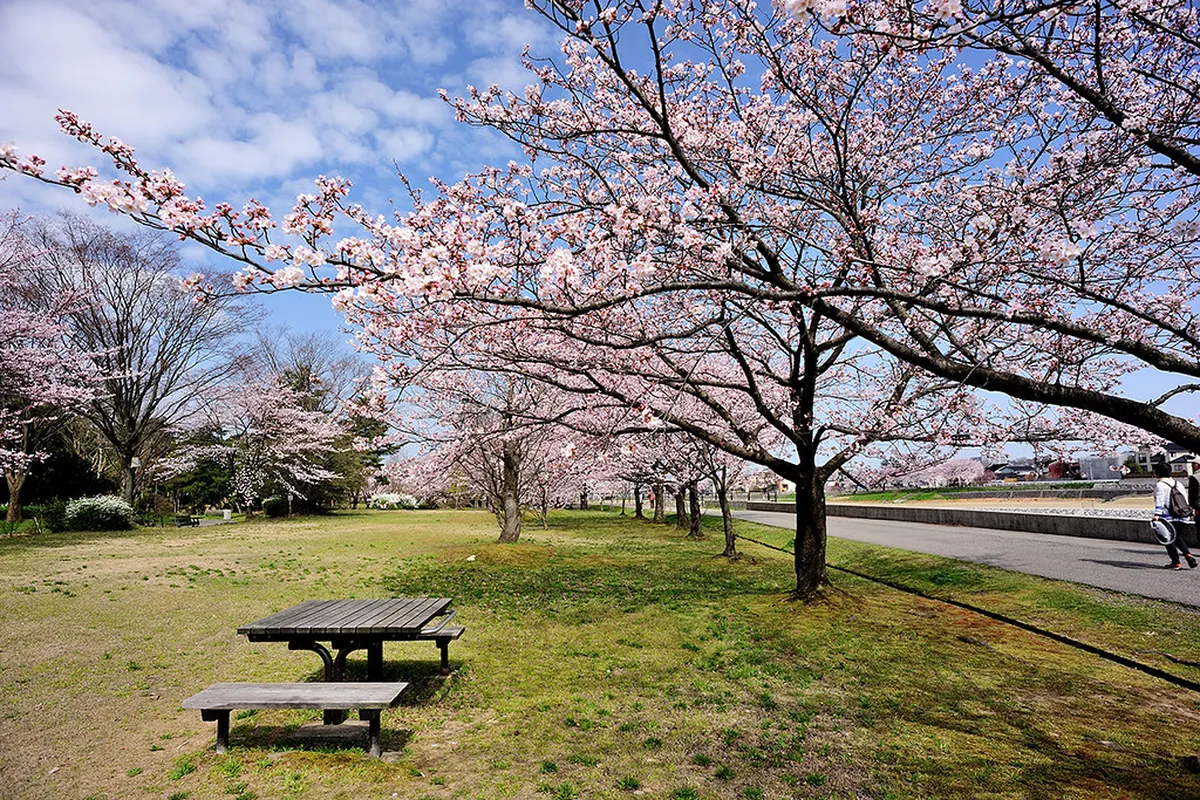
In 2026, the first buds opened in Kanazawa on 29 March. Full bloom was reached on 2 April, which aligns closely with the historical average of late March to early April. The peak viewing window lasted through approximately 8 April before petal fall accelerated.
Once full bloom begins, you have roughly seven days of prime conditions. Warm southerly winds can compress this window to five days; a stretch of cool, overcast weather can extend it to ten. The Japan Meteorological Corporation and the Official City Data page both publish real-time updates from mid-March onward.
If you are planning ahead for future years, Kanazawa's average first bloom falls on 27–29 March and full bloom arrives 3–5 days later. The city blooms roughly three to four days after Tokyo and two days after Osaka. Building in a two-day buffer on either side of the forecast date is the safest approach.
Kenrokuen waives its ¥320 entry fee and runs nightly illuminations during peak bloom week (roughly 5–8 days). The free window is declared officially — check the Kanazawa Tourism Association site from late March each year.
| Phase | Typical Dates | What to Expect | Crowd Level |
|---|---|---|---|
| First Bloom | 27–31 March | 5–30% of buds open; early risers only | Low |
| Full Bloom | 1–8 April | 80–100% open; peak pink canopy | Very High |
| Petal Fall | 9–15 April | Flower rafts on rivers; fewer crowds | Moderate |
| Late Bloom | 16–30 April | Yaezakura and kikuzakura only | Low |
Kenrokuen Garden and Kanazawa Castle Park: Logistics and Free Admission
Kenrokuen Garden charges ¥320 per adult for standard entry. During peak bloom the city waives this fee for a limited window — in 2026 that window ran from the official bloom declaration through 8 April. The garden also extends opening hours and runs a nightly illumination from sunset (around 18:15–18:30 in early April) until 21:30 during the same period. This is not a year-round event: arrive outside the free window and you pay full price with no evening lights.
The precise free-admission window is triggered by the city's official bloom declaration, not by a fixed calendar date. Check the Kanazawa Tourism Association site in late March each year for the confirmed schedule. In most years the window is five to eight days.
Kanazawa Castle Park is free to enter and open daily. The Ishikawa-mon Gate provides the best foreground for sakura photography, especially at sunrise when tour groups have not yet arrived. The outer lawns east of the castle are the top hanami picnic area for local families. The castle's weeping cherry trees (shidarezakura) on the east side bloom two to three days after the main Somei Yoshino, offering a natural second act.
Top Classic Sakura Viewing Spots in Kanazawa
The Sai River embankment is Kanazawa's widest open sakura space. Trees line both banks for several hundred metres south of Sakura-bashi Bridge, with the Hakusan mountain range as a backdrop on clear days. Families and school groups fill the grass; there is plenty of room to spread a mat and still have sky above you. The adjacent Shin-Tatemachi shopping street makes a convenient base for snacks and drinks.
Kazuemachi Geisha District along the Asano River offers the opposite experience: narrow stone lanes, a single towering cherry tree at the Kuragari-zaka entrance, and the possibility of hearing geisha practicing inside the training hall nearby. The sakura canopy over the river here is especially photogenic at dusk. Higashi Chaya, a short walk north, lines its riverside promenade with mature trees that are popular for evening strolls.
Hyakumangoku-dori (the main boulevard near the 21st Century Museum of Contemporary Art) has a sakura-lined median that drops petals on passing traffic. It is easy to miss because most visitors head straight to the garden, but the five minutes it takes to walk this stretch are worth it.
| Spot | Character | Best Time | Crowd Level |
|---|---|---|---|
| Sai River banks | Open, family-friendly, mountain views | Morning | Moderate |
| Kazuemachi / Asano River | Narrow, historic, atmospheric | Dusk | High |
| Kenrokuen Garden | Manicured, iconic, illuminated at night | Night (free week) | Very High |
| Kanazawa Castle Park | Wide lawns, castle backdrop, free entry | Sunrise | High |
| Hyakumangoku-dori | Boulevard median, easy walk-through | Any time | Low–Moderate |
Hidden Gems: Local-Favorite Cherry Blossom Locations
Mount Utatsu (Utatsuyama Park) sits directly behind Higashi Chaya and is the closest thing Kanazawa has to a forest sakura experience. Thousands of trees cover the hillside, and the view down over the old town and sea on a clear day justifies the 20-minute walk. Local families use the park for picnics throughout the second and third weeks of April.
Noto Kajima Station on the Noto Satoyama Kaido railway line is known among rail fans as "Sakura Station." The platform sits inside a natural tunnel of branches that close overhead in full bloom. The trade-off is 90 minutes each way from Kanazawa on a local line. It is worth the journey specifically if you have a full free day and want a scene unlike anything in the city itself.
Shogetsu-ji Temple in the Teramachi district is the most useful hidden gem for timing reasons. It is home to a 400-year-old Great Sakura, a mountain cherry variety (yamazakura) with white blossoms that open roughly one week after the main Somei Yoshino. If you arrive to find the main bloom is over, a ten-minute walk up the W-slope from Sakura-bashi Bridge leads you to a tree that may still be at peak. The temple grounds are quiet and free to visit.
Understanding the Different Types of Sakura Trees in Kanazawa
Somei Yoshino is the pale-pink, five-petaled variety you see in most photographs of Japanese spring. Nearly all riverside and park trees in Kanazawa are Somei Yoshino, and because every tree in Japan is a graft from the same root stock, they all open within a day or two of each other in any given temperature zone. This is why forecasts can be so precise.
Shidarezakura (weeping cherry) has long, drooping branches covered in deeper pink flowers. Several grow at Nishi Chaya geisha district and on the east side of Kanazawa Castle. They typically bloom one to two days after the Somei Yoshino, giving them a slightly different peak window.
Yaezakura and kikuzakura are the late-season double-petaled varieties. Kikuzakura in particular can have over 100 petals per flower — Kenrokuen displays two prominent kikuzakura trees on its grounds. These bloom in the third and fourth weeks of April, two to three weeks after the main flush. They are the most reliable fallback for travelers who miss the Somei Yoshino peak.
A Perfect One-Day Kanazawa Cherry Blossom Itinerary
Start at 07:30 at the Sai River near Sakura-bashi Bridge. The early light is ideal for photography, crowds are thin, and the mountain backdrop is clearest in the morning. Allow 45 minutes to walk south along the bank and back.
By 09:00 cut northeast through the Nishi Chaya geisha district to catch the weeping cherries and a matcha stop at one of the small confectionery shops. Then walk toward Kanazawa Castle Park, arriving around 09:45. Spend an hour in the castle grounds and around Ishikawa-mon Gate. The gate is at its best when the morning light hits the white walls from the east.
Enter Kenrokuen at 11:00. Budget 90 minutes for the garden: the Hanami-bashi flower-viewing bridge is the priority shot, followed by the north-side panoramic viewpoint over the cherry canopy. If it is during the free-admission week, return here after dark for the illumination. In the afternoon, walk to Kazuemachi along the Asano River, then north to Higashi Chaya. From there the path up to Utatsuyama Park takes about 20 minutes and rewards with a city-wide view. This route covers the full spread of the city's sakura in a single day without using public transport. For accommodation options near this route, see the guide to where to stay in Kanazawa.
Spring Flavors: Seasonal Foods to Savor During Sakura Season
The tea houses along Kenrokuen's Edo-machi lane run spring-only menus. Kenroku-tei offers ankoro zanmai (colored red bean paste sweets) with matcha from 08:30. Chaya Kenjou-tei, open 11:30–15:00, is the most useful rainy-day option: it sits inside the garden grounds with a window view over the cherry trees, solving the problem of cold or wet spring weather with a hot drink and a seat out of the wind.
Kaga cuisine — the traditional cooking style of Kanazawa — is at its best in spring. Look for dishes featuring bamboo shoots, wild vegetables (sansai), and the local white sweet shrimp (shiro-ebi). The Omicho Market covered food hall is the most direct way to sample these. For a full breakdown of what to order and where to order it, the Kanazawa food guide has current vendor listings.
Sakura-flavored sweets appear in every konbini and wagashi shop in April. The most authentic version is sakura mochi — glutinous rice cake wrapped in a salted cherry leaf. The salt-and-floral combination is unique to spring and hard to find outside Japan. Most wagashi shops in the Higashi Chaya district have it fresh through mid-April.
Essential Hanami Etiquette and Practical Visitor Tips
Do not touch or shake the branches. Even light contact knocks petals off prematurely, and shaking branches to create a petal shower is considered disrespectful. Japanese visitors do not do this, and park staff at Kenrokuen will ask you to stop.
The 09:00–14:00 window at Kenrokuen during the free-admission week is the most congested period of the year. Arrive at 07:30 for peaceful photography, or return after 17:30 for the evening illumination with far smaller crowds.
Picnicking (hanami) is fully expected in public parks and along the riverbanks, but not inside Kenrokuen itself. Bring a picnic mat and keep food and drink within the footprint of your group. Take all rubbish with you: public bins are extremely rare in Japanese parks. Alcohol is common at riverside picnics and accepted as long as it stays quiet.
Arrive early or late in the day to avoid the largest tour groups. The 09:00–14:00 window at Kenrokuen during the free week is the most congested period. Arriving at 07:30 or returning after 17:30 for the illumination gives the same trees with a fraction of the crowd. Keep voices low in the geisha districts (Kazuemachi, Higashi Chaya, Nishi Chaya) at all hours — these are working residential areas, not theme parks.
Beyond the City: Nearby Spring Day Trips and Activities
Noto Kajima Station (described above under hidden gems) is the top out-of-city sakura target. For a second option, the village of Shirakawa-go in the mountains of Gifu Prefecture typically sees cherry blossoms two to three weeks after Kanazawa due to elevation. The thatched-roof gasshozukuri farmhouses under a spring sky make for a completely different visual register from the urban spots.
Yamagata-machi in Noto Peninsula has weeping cherry trees that attract local photographers but almost no foreign visitors. Access requires a car; the drive from Kanazawa is about 75 minutes via Route 415. The combination of coastal scenery and pale-pink blossoms along rural roads is hard to replicate anywhere in the greater Kanazawa area.
Closer to the city, Teramachi temple district is a walkable 10-minute loop from the Sai River that most first-timers skip. Over 70 temples are clustered here, several with small private cherry trees visible from the road. The Ninja Temple (Myoryuji) has its own modest courtyard tree and is open for tours year-round.
Frequently Asked Questions
When is the best time to see cherry blossoms in Kanazawa?
The best time is usually the first week of April. This is when the Somei Yoshino trees reach full bloom. You should monitor local forecasts starting in early March.
Is Kenrokuen Garden free during cherry blossom season?
Yes, Kenrokuen usually waives its entry fee for about one week. This coincides with the peak bloom period in the city. The garden also stays open later for night illuminations.
What should I do if I miss the full bloom in Kanazawa?
Visit Shogetsu-ji Temple to see late-blooming varieties like the Chrysanthemum Cherry. You can also head to higher elevations like Mount Utatsu. These areas often have blossoms later than the city center.
Kanazawa rewards early planning and flexible timing. Book accommodation well before late March — the best ryokan rooms in the city fill two to three months ahead of the forecast peak. For a curated list of where to stay, see the guide to Kanazawa accommodation.
Whether you arrive at full bloom or a week late, this city almost always has something in flower. The combination of castle walls, geisha lanes, and riverside paths makes even petal-fall beautiful. Have a wonderful spring trip to Ishikawa.
Free: The Kanazawa Essentials guide
Top things to do, where to stay, a perfect day plan, getting around, and the best time to go — a Kanazawa mini-guide you can take offline.
You might also like


Continue reading
More guides you'll find useful