Kokusai Dori Naha: Essential Things to Know, Eat & Buy
Walk Naha's 1.6 km Miracle Mile: Yataimura food stalls, Sunday events, shopping tips and a sample itinerary for your visit.
On this page
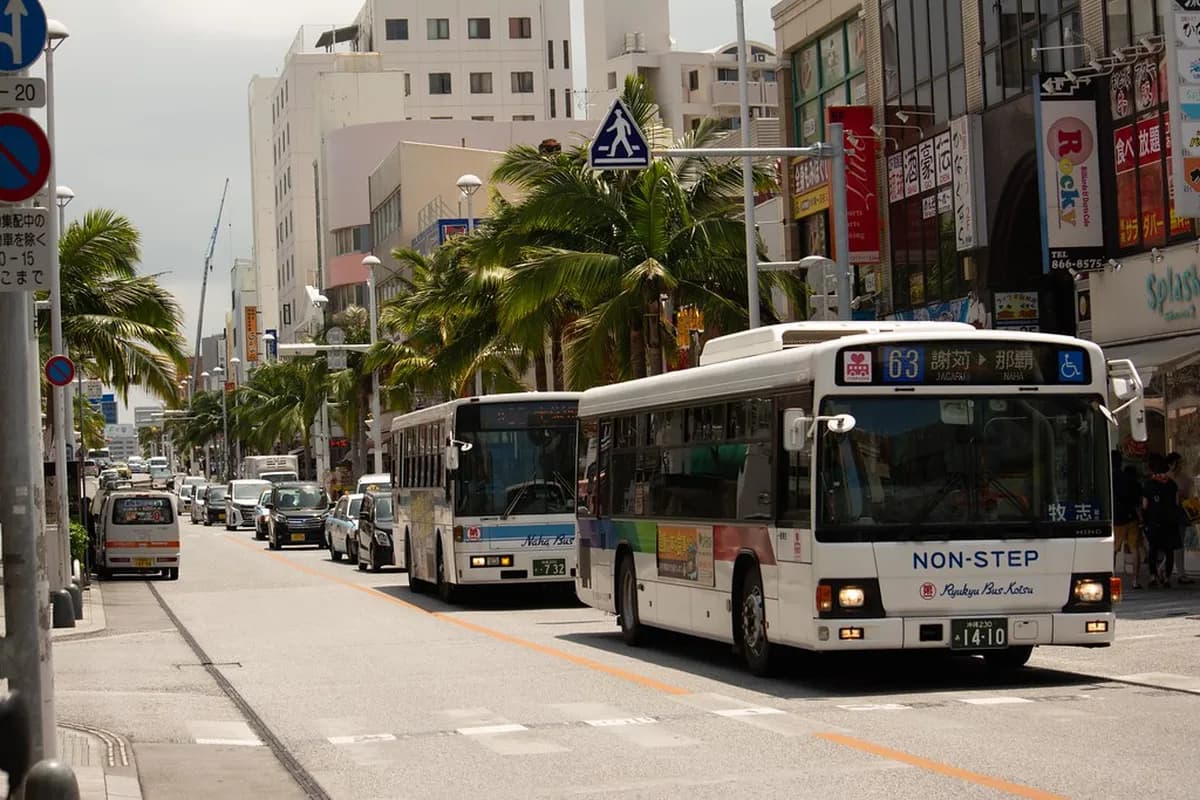
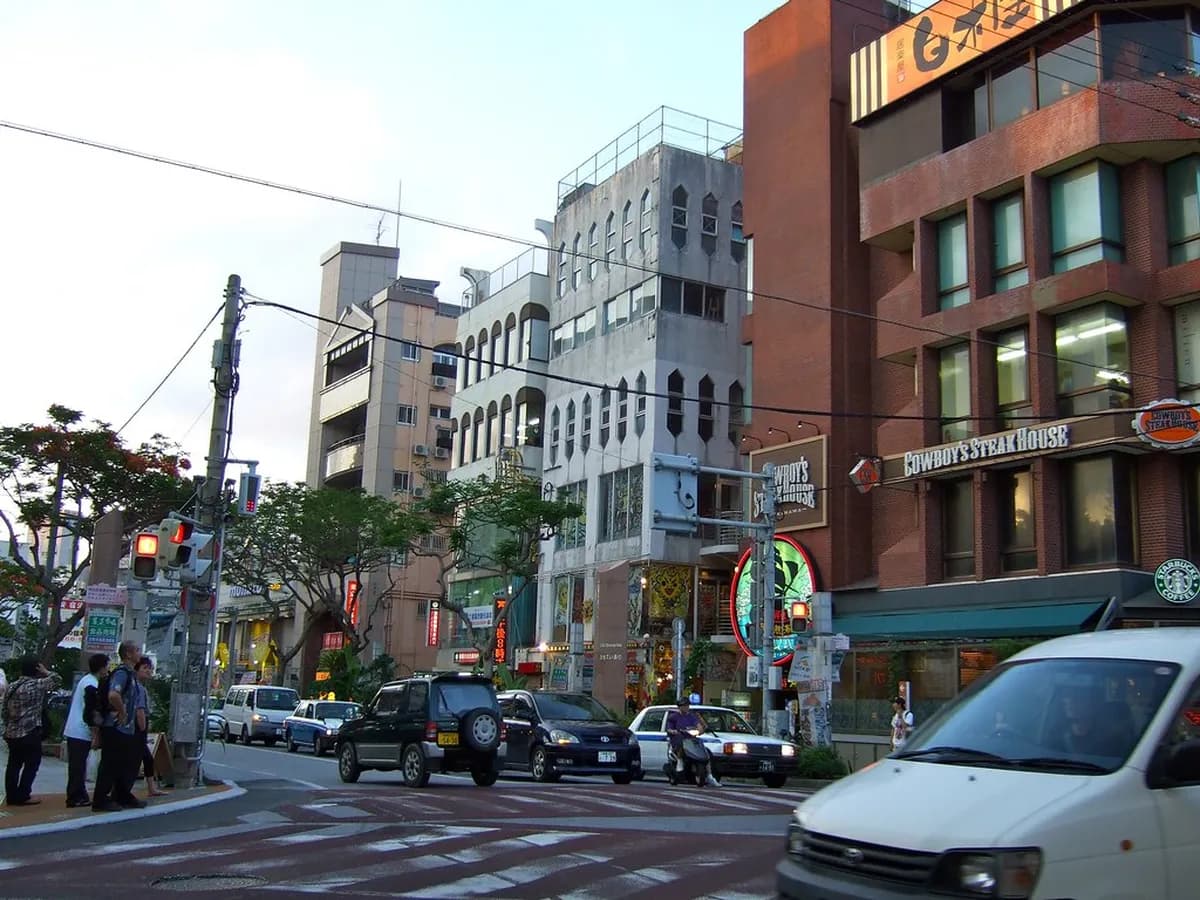
Kokusai Dori is the 1.6-kilometre commercial spine of Naha, running from Asato in the east to Palette Kumoji in the west. Locals nicknamed it the Miracle Mile after the street rebuilt itself from rubble within a few years of the 1945 Battle of Okinawa, and that post-war energy still defines the place in 2026.
Today the strip mixes Don Quijote-style discount towers, Ryukyu glass studios, awamori bars, and twenty open-air food stalls into a single walkable corridor. Every Yui Rail visitor passes through it, but most miss the back-alley arcades and Sunday transit mall where the street is at its best.
This guide covers the history, the must-see stops, the shopping and food highlights, a Sunday-only experience worth planning around, and a practical day-trip itinerary. It is written for first-time visitors, cruise passengers landing at Naha Port, and travellers using Naha as a base for the wider Naha attractions circuit.
The History of the "Miracle Mile"
Before the war, Kokusai Dori was a quiet residential road on the outskirts of central Naha. American bombing in 1945 levelled roughly 90 percent of the city, and the street's reinvention as a commercial high street began almost immediately under US occupation.
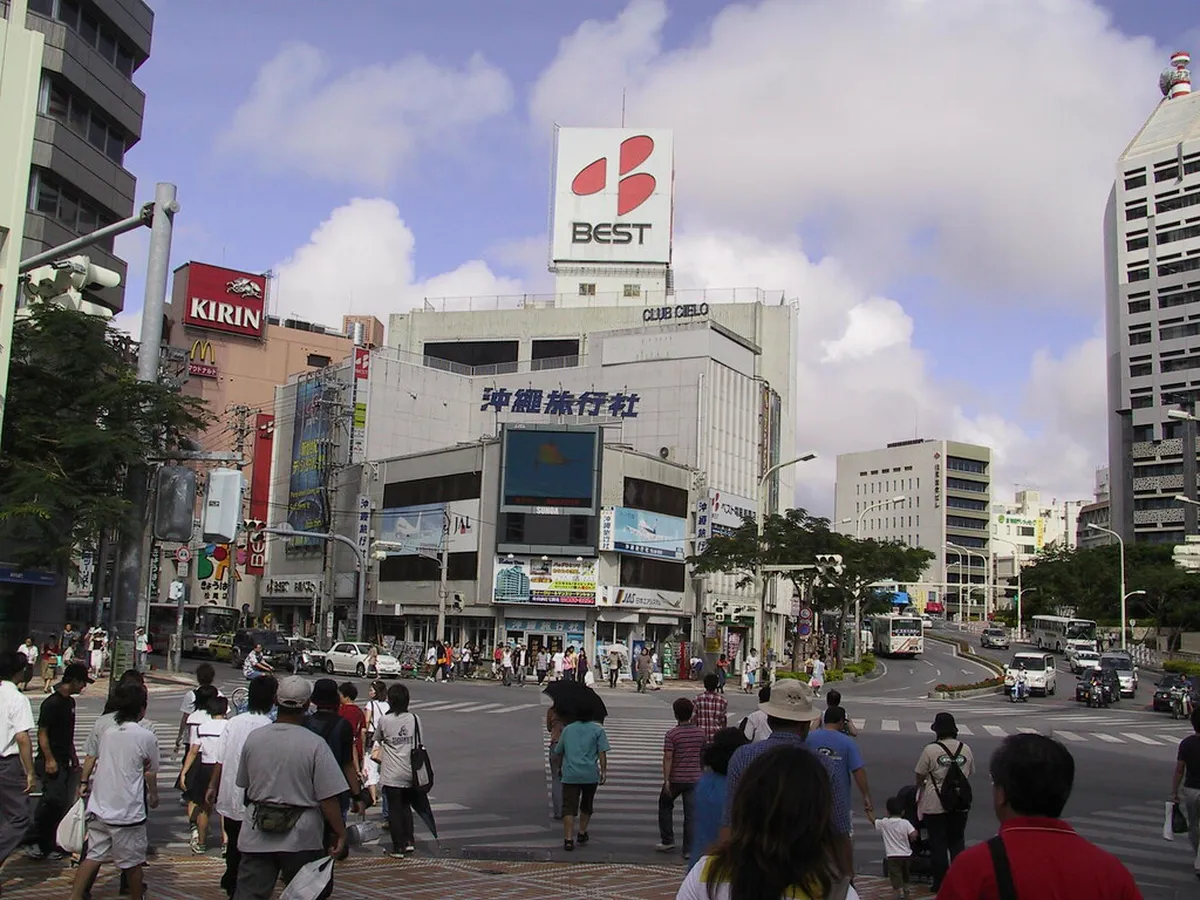
The catalyst was the Ernie Pyle International Theatre, named after the American war correspondent killed on Iejima in April 1945. The 1,000-seat cinema opened in 1948 and gave the street its "International" name. Within a decade, department stores, dance halls, and souvenir shops had filled in around it, and visiting journalists started calling the corridor the "Miracle Mile of the Pacific."
The original theatre is long gone, replaced by retail towers, but the name stuck. Look up at the older mid-century facades between Mitsukoshi-mae and Tenbusu Naha and you can still read the post-war commercial logic in the building lines.
Top Must-See Kokusai Dori Attractions
Start at the eastern end at Saion Square, the modern plaza fronting Makishi Station. The square's open stage hosts free Eisa drum performances on most weekends and acts as the most reliable meeting point on the street.
Walking west, Tenbusu Naha is the cultural anchor at the midpoint. The building houses tourist information in English, a free observation lounge, and the Naha Traditional Performing Arts Theatre, which runs short Ryukyu dance shows several evenings a week.
The western terminus is Palette Kumoji, the Ryubo Department Store complex sitting directly above Kencho-mae Station. From here you can pivot south into Tsuboya Pottery District (a 12-minute walk) or continue to Shuri Castle by monorail in 15 minutes — the natural next stop covered in our Shuri Castle Naha guide.
Shopping Guide: From Don Quijote to Covered Arcades
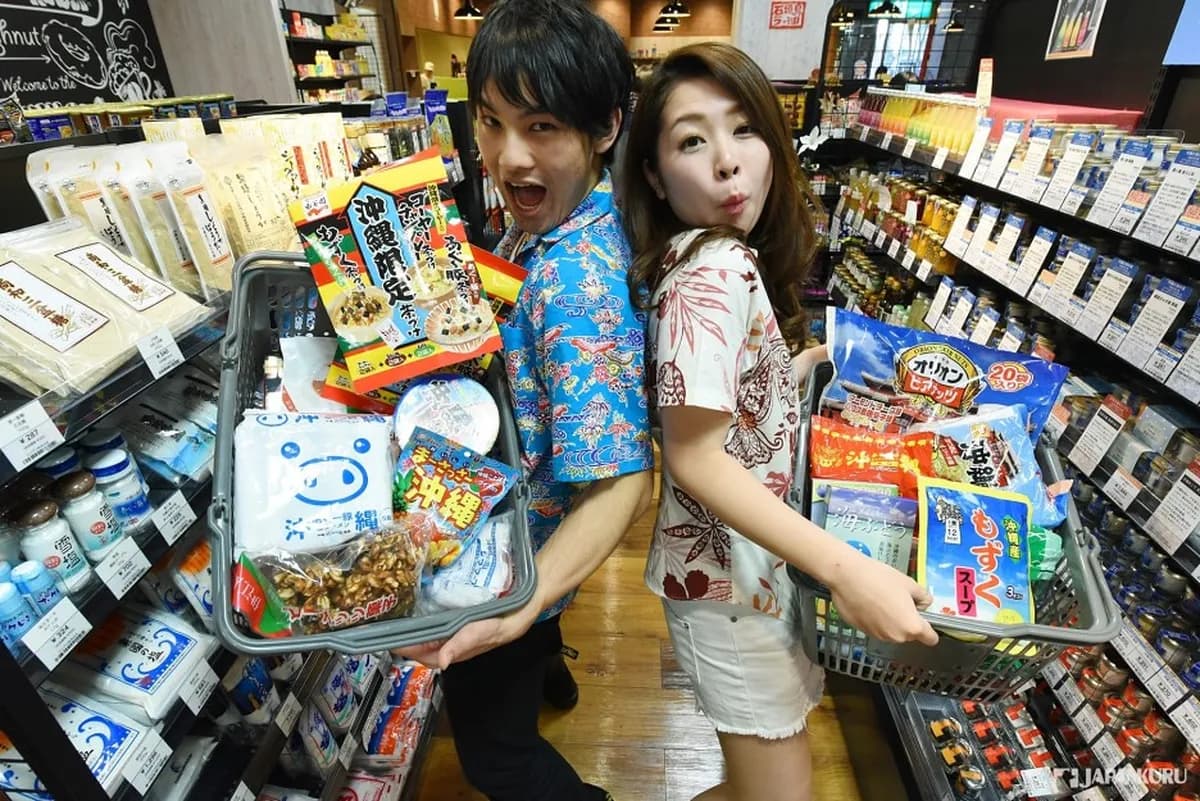
Don Quijote Kokusai Dori is the obvious starting point and runs 24 hours, which makes it the default late-night stop for anything from sunscreen to Kit Kat variants. The basement-to-fifth-floor layout is dense; if you only have an hour, head straight to the second floor for Okinawa-specific snacks (Chinsuko cookies, beni-imo tarts, Royce' Okinawa salt chocolate).
For Ryukyu glass, lacquerware, and bingata textiles, skip the main-street souvenir shops and walk into the Heiwa Dori Arcade, which branches south just past the Mitsukoshi-mae crossing. Prices are 20 to 30 percent lower than on Kokusai Dori itself, and the stalls are run by the makers in many cases.
Department-store shoppers should aim for Ryubo at Palette Kumoji. The basement food hall (depachika) is the best single place in Naha for vacuum-packed rafute, sata andagi, and Awamori miniatures suitable for hand luggage. Most hotels along this stretch are listed in our where to stay in Naha guide and put you within ten minutes' walk of all three shopping zones.
Prices in Heiwa Dori Arcade run 20–30 percent lower than on Kokusai Dori's main strip for Ryukyu glass and lacquerware. Walk south past the Mitsukoshi-mae crossing to reach it — and many stalls are run directly by the makers.
Back-Alley Arcades: Heiwa Dori and Shijo Hondori
The most underrated part of Kokusai Dori is what sits perpendicular to it. Three covered arcades — Heiwa Dori, Mutsumibashi Dori, and Shijo Hondori — branch south near the midpoint and lead directly to Makishi Public Market. They are roofed against rain and sun, lit until late, and noticeably cheaper than the main street.
Heiwa Dori is the most photogenic, with hand-painted shop signs, octogenarian shopkeepers, and a denser concentration of bingata fabric, vintage kimono, and dried-fish stalls. Shijo Hondori is grittier and runs straight into the seafood end of Makishi Market — useful if you are heading there for lunch anyway.
Most cruise day-trippers never leave Kokusai Dori itself, which is why these alleys still feel local even at peak season. Budget 45 minutes to wander them properly; the loop back to the main street via Mutsumibashi Dori takes you past several family-run pickle and miso shops that have been operating since the 1950s.
Where to Eat: Yataimura Food Stall Village and Local Markets
Kokusai Dori Yataimura is a permanent food-stall village tucked behind the eastern end of the street, near Makishi Station. Twenty small counters serve Okinawan staples — goya champuru, taco rice, Ishigaki beef skewers, fresh sea-grape (umibudo) — until around 23:00. Each stall seats six to ten, and the etiquette is to order one or two dishes per stall and rotate.
For lunch, Makishi Public Market is the headline choice. Buy fresh sashimi, Agu pork, or sea urchin on the ground floor and pay around 600 yen per person to have it cooked upstairs at one of the partner restaurants. Detailed ordering instructions and a stall map are in our Makishi Public Market guide.
The signature street snack to seek out is Pork Tamago Onigiri — a fist-sized rice ball wrapped in nori with a slab of Spam and a folded omelette inside. The Ueno-style branch on Matsuo 2-chome (a 90-second walk off Kokusai Dori) opens at 07:00 and is the easiest option for breakfast on the way to the market. Wider food coverage including awamori bars and izakayas sits in our Naha food guide.
Museums, Art, and Traditional Crafts in Naha
The Naha City Traditional Craft Pavilion, on the second floor of Tenbusu Naha, is the single best stop for understanding Okinawan crafts in one visit. Five disciplines are represented — bingata dyeing, Ryukyu lacquerware, Ryukyu glass, Tsuboya pottery, and Shuri-ori weaving — and you can book a 60 to 90-minute hands-on workshop from around 2,500 yen.
Tsuboya Pottery Street is a 10-minute walk south of Kokusai Dori and is the historic centre of Okinawan ceramics, with kilns dating to 1682. The Naha City Tsuboya Pottery Museum (350 yen) is small but excellent on Ryukyu trade-era ware.
For a deeper Ryukyu Kingdom history pass, pair Kokusai Dori with Shuri Castle (currently mid-reconstruction with public viewing of the rebuild) and the Okinawa Prefectural Museum at Omoromachi, two stops north on the Yui Rail.
Parks and Outdoor Spaces Near the Main Street
Matsuyama Park, four blocks north of Kokusai Dori, is the closest proper green space and a useful escape from the midday heat. The shaded benches near the central pond are usually free even on cruise-day weekends.
Onoyama Park, one Yui Rail stop south at Tsubogawa, is larger and includes a sports stadium that hosts the annual Naha Great Tug-of-War in October. If you are travelling with children, the playground equipment here is more substantial than anything directly on Kokusai Dori — see our Naha with kids guide for the full kid-friendly route.
Yui Rail: Which Station for Which Landmark
Three Yui Rail stations serve Kokusai Dori, and choosing the right one saves up to 15 minutes of walking with luggage or in summer heat. A single ride is 230 to 270 yen; a 1-day pass is 800 yen and pays off after three rides.
- Kencho-mae — exit here for Palette Kumoji, Ryubo Department Store, the prefectural government office, and the western start of the street.
- Miebashi — the midpoint exit, closest to Tenbusu Naha, the Traditional Craft Pavilion, and Mitsukoshi-mae crossing where Heiwa Dori begins.
- Makishi — exit here for Yataimura food stalls, Saion Square, Don Quijote, and the eastern end of Kokusai Dori; also the shortest walk to Makishi Public Market via Ichiba Hondori.
The full monorail runs from Naha Airport to Tedako-Uranishi every 6 to 10 minutes between 06:00 and 23:30. Routing tips for the rest of the city are in our getting around Naha guide.
Seasonal Calendar: Festivals and When to Visit
Kokusai Dori has a busy events calendar, and a few dates close the road or pack the pavements. Plan accordingly — these are the ones that materially change the experience in 2026.
- January — Hatsumode crowds at nearby Naminoue Shrine; shops open earlier than usual on the 2nd.
- March to April — Ryukyu cherry blossom (kanhizakura) is already over, but cruise season ramps up sharply.
- Early May — Naha Hari dragon-boat festival at Naha Port (3rd to 5th); side streets host related parades.
- August — 1 Million Eisa Dance Festival on the first weekend closes Kokusai Dori for the entire day with continuous drumming and parade processions; book hotels two months ahead.
- October — Naha Great Tug-of-War on the Sunday before Sports Day; a 200-metre, 40-tonne rope is pulled along Route 58 just west of Kokusai Dori, and the street fills with food stalls afterward.
- December to February — quietest months; temperatures of 16 to 20°C make this the most comfortable walking season for visitors avoiding humidity.
If you have flexibility, the August Eisa weekend and the October Tug-of-War are the two highest-payoff dates, and both work well as anchors for a longer Naha trip plotted out in our Naha 3-day itinerary.
Family-Friendly and Budget-Friendly Travel Tips
Kokusai Dori is more budget-friendly than its central-Tokyo equivalents, but a few habits make a big difference. Most main-street restaurants charge a 10 percent service surcharge after 22:00; the Yataimura stalls do not. Lunch sets (teishoku) at side-street diners run 800 to 1,100 yen and are typically half the price of the same dish at a Kokusai Dori frontage.
For families, the under-12 fare on the Yui Rail is 120 yen, and a family 1-day pass is the cheapest way to combine Kokusai Dori with Shuri Castle and the Aquarium-bound bus terminal in a single day. Stroller access along the main street is fine; the back-alley arcades have shallow steps in places, so a lightweight stroller works better than a heavy travel system.
Free entertainment is genuinely abundant: street Eisa performances at Saion Square most weekend afternoons, the Tenbusu Naha observation lounge, and the Sunday transit mall described below.
How to Experience the Sunday Car-Free Transit Mall
Every Sunday, Kokusai Dori closes to vehicles between 12:00 and 18:00 and the entire 1.6 km becomes a pedestrian street. This is the single most photogenic version of the street, and the only window in which you can stand in the middle of the road for an unobstructed shot toward Palette Kumoji.
During the closure, buskers, Sanshin players, and street-food vendors set up along the central lane. Many shops bring tables outside and run flash discounts on overstock items. Children's bike-rental and chalk-art zones are usually staged near Tenbusu Naha. The official event calendar — including occasional cancellations during typhoons or major festivals — is updated on the Naha Kokusai Dori official site.
Pro tip: arrive at 12:00 sharp from the Kencho-mae end. The crowd builds west-to-east, so you can walk against the flow and reach the Yataimura stalls just as they open for the evening at 18:00.
The Sunday transit mall occasionally cancels due to typhoons or major festivals. Check the official Naha Kokusai Dori site (naha-kokusaidori.okinawa) before planning your entire visit around the car-free event.
A Sample Naha Day Trip Itinerary
This single-day plan works for cruise passengers and land-based visitors alike, assuming an 09:00 start at Makishi Station.
- 09:00 — breakfast Pork Tamago Onigiri at the Matsuo branch.
- 09:30 — Makishi Public Market: ground-floor browse, then a "buy-and-cook-upstairs" early lunch by 11:00.
- 11:30 — Heiwa Dori and Mutsumibashi Dori arcades for souvenir shopping.
- 13:00 — Kokusai Dori westbound, with a stop at Tenbusu Naha for a 60-minute bingata or glass workshop.
- 15:00 — Palette Kumoji and Ryubo depachika for vacuum-packed take-home items.
- 16:00 — Yui Rail to Shuri Castle (15 min) for the late-afternoon viewing slot before it closes at 18:00.
- 18:30 — return to Makishi and dinner at Kokusai Dori Yataimura, hopping between three or four stalls.
If you are staying overnight, swap the Shuri leg for an awamori-bar crawl along Ukishima Dori. The full multi-day version is mapped out in our Naha 3-day itinerary.
Practical Planning: Transport, Timing, and Weather
Cruise passengers landing at Naha Port have two realistic options to reach Kokusai Dori. A taxi from the cruise terminal to Kencho-mae is roughly 1,500 yen and takes 10 to 12 minutes. Walking 12 minutes to Asahibashi Station and taking the Yui Rail one stop costs 230 yen. Both beat the typical ship-organised shore excursion on price and flexibility.
- DIY transit from Naha Port — about 500 to 1,500 yen one-way (monorail or taxi), 12 to 25 minutes door-to-door, fully flexible itinerary, lets you skip directly to the back-alley arcades or Yataimura.
- Cruise shore excursion — typically 50 to 80 USD per person, four-hour fixed loop, limited shopping time, and group-paced; useful if you are nervous about Japanese signage or have mobility constraints.
Weather is the other planning factor. Okinawa stays warm year-round; June to early July is rainy season, August to September is typhoon season (and 1 to 2 percent of cruise calls get cancelled). The most comfortable walking months are November to March. Carry a folding umbrella regardless — tropical showers pass quickly but arrive without warning.
For navigation, save the Google Maps pin for Kokusai Dori offline; mobile data dropouts are common inside the covered arcades.
Frequently Asked Questions
What is the best time to visit Kokusai Dori?
Late afternoon is the best time to visit as the shops are fully open and the nightlife begins. The temperature is also cooler for walking. If you enjoy crowds and performances, visit on a Sunday afternoon for the pedestrian-only event.
How long is Kokusai Dori shopping street?
The main street is exactly 1.6 kilometers long, which is roughly one mile. Most visitors spend two to four hours exploring the shops and side alleys. This length makes it very easy to walk from end to end in one afternoon.
Is Kokusai Dori open on Sundays?
Yes, the street is open every day, but Sundays feature a special transit mall event. From noon to 6:00 PM, cars are banned and the road becomes a pedestrian zone. This is often the most exciting time for visitors to explore the area.
What should I buy at Kokusai Dori?
Popular items include Chinsuko cookies, Ryukyu glass, and colorful Kariyushi shirts. You should also look for local awamori spirits and Beni-imo (purple yam) tarts. These items represent the unique flavors and crafts of the Okinawa islands.
How do I get from Naha Port to Kokusai Dori?
The easiest way is to take a quick taxi ride which costs around 1,500 yen. You can also walk to the nearest monorail station for a cheaper transit option. This area is a great place to start your Naha nightlife exploration after your ship docks.
Kokusai Dori remains the most essential stop for any traveler visiting the capital city of Okinawa. Its blend of history, shopping, and local food provides a complete picture of the island's unique culture.
Whether you are looking for the perfect souvenir or a bowl of fresh noodles, this street has something for everyone. Use this guide to plan your visit and discover why it is known as the Miracle Mile.
Take your time to explore the hidden back-alleys and enjoy the lively atmosphere of the evening food stalls. Your journey through Naha will be much more memorable if you embrace the energy of this iconic street.
Pair this with our broader Naha attractions guide for the full city overview.
For related Naha deep-dives, see our Shuri Castle visitor guide and Makishi Public Market guide.
Free: The Naha Essentials guide
Top things to do, where to stay, a perfect day plan, getting around, and the best time to go — a Naha mini-guide you can take offline.
You might also like


Continue reading
More guides you'll find useful