Naha Food Guide: 10 Best Dishes and Dining Experiences (2026)
Discover the best of Naha's food scene with our guide to 10 must-try dishes, local restaurants, and practical tips for driving and dining in Okinawa.
On this page
10 Best Dishes and Dining Experiences in Naha (2026)
After five visits to Okinawa over the last decade, I still find myself surprised by the depth of Naha's culinary landscape. The city serves as a gateway to flavors that differ wildly from the sushi and ramen staples of mainland Japan. This 2026 Naha food guide reflects my most recent seasonal visit and highlights the dishes, addresses, and parking realities that decide whether a foodie day actually works.
Whether you are hunting the perfect bowl of pork rib soba, a vegan island-vegetable set, or a late izakaya counter pouring Awamori, Naha rewards travelers who plan around opening hours rather than guidebooks. Many of the best shops still close by 5pm and turn over fully by 9pm, so timing matters as much as your shortlist.
Essential Okinawan Dishes: Souki Soba and Goya Tempura
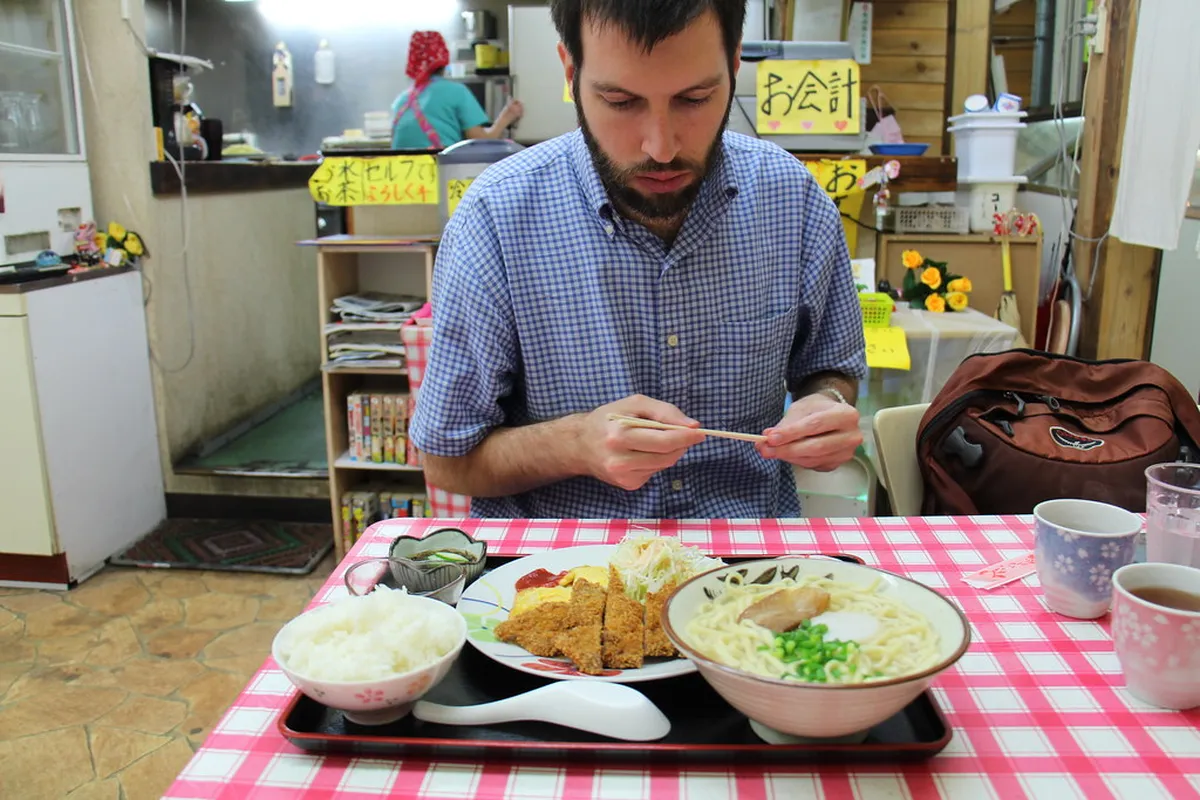
Okinawan Soba is not the buckwheat noodle most travelers expect from mainland Japan. The local version uses thick wheat noodles closer to udon, served in a clear pork-bone and bonito broth, usually topped with stewed Souki (pork ribs) or three-layer Rafute pork belly. A standard bowl runs 700 to 1,000 yen and lunch service typically ends by 15:00.
Goya, the bitter melon that drives most first-timers' opinions of Okinawan cuisine, appears two ways worth ordering. Goya Chanpuru stir-fries it with tofu, egg, and Spam-style luncheon meat for a balanced lunch set around 900 yen. Goya Tempura, less common, mellows the bitterness with a light batter and pairs well with a cold Orion draft for under 600 yen at most izakayas.
Centuries of Ryukyu Kingdom trade with China, Taiwan, and Southeast Asia gave the cuisine its tropical, pork-heavy DNA. Fermented tofu (tofuyo), pig's ear salad (mimiga), and Awamori rice spirit are the trio that signal a shop is cooking for residents rather than the cruise crowd. Order at least one to anchor your meal in real Okinawan flavor.
Okinawan vs Mainland Japanese Food Terms: A Quick Comparison
One reason travelers feel disoriented in Naha menus is that Okinawan dialect (Uchinaaguchi) names dishes differently from standard Japanese. The table below covers the terms you will see most often on chalkboards along Kokusai Dori and inside Makishi Market. Save it before you sit down.
- Soba: Mainland uses thin buckwheat noodles, often cold. Okinawan Soba is thick wheat noodles in hot pork broth, never cold.
- Chanpuru: The local word for stir-fry. The mainland equivalent is "itame", but Chanpuru always implies tofu plus a vegetable like Goya, Fu (wheat gluten), or Papaya.
- Awamori: Okinawa-only distilled rice spirit, 25 to 43 percent ABV, aged in clay pots. The closest mainland cousin is Shochu, but Awamori uses long-grain Thai rice and black koji.
- Rafute: Okinawan stewed pork belly in soy, brown sugar, and Awamori. The mainland Buta no Kakuni is similar but lacks the sugar-cane sweetness.
- Jimami Tofu: Peanut-based "tofu" with a custard texture, served chilled with sweet soy. There is no mainland equivalent; it is unique to the southern islands.
- Habushu: Awamori infused with a pit viper, sold around Kokusai Dori as a souvenir spirit. Mainland snake liquors exist but are rare outside specialty shops.
- Hirayachi: Thin Okinawan savory pancake. The mainland version, Okonomiyaki, is much thicker and stuffed with cabbage and seafood.
10 Best Dishes and Dining Experiences in Naha (2026)
Selecting where to eat can be overwhelming given the density of options along the vibrant Kokusai Dori shopping street. I have curated this list to mix iconic landmarks, hidden neighborhood shops, and modern fusion favorites. Each pick names the specific dish, the price band in yen, and a practical tip on timing or seating.
Local residents often skip the flashy Kokusai Dori storefronts in favor of the smaller shops tucked inside the covered arcades around Makishi. Following that pattern keeps you closer to the best value and the most authentic flavors. Most listings below sit within a 10-minute walk of a Yui Rail monorail station.
- Souki Soba at Maruyasu Soba
- Maruyasu serves a clean Souki Soba with melt-tender pork ribs in a clear bonito-pork broth. Bowls run 750 to 1,100 yen and the shop opens 11:00 to 17:00 daily.
- Order at the vending machine inside the entrance, then take the ticket to the counter. Most diners are in and out in 25 minutes.
- Best fit: first-timer wanting a textbook Souki Soba within five minutes of Kokusai Dori. Add Koregusu (chili-Awamori) for a sharp kick.
- Edomae Sushi at a Makishi Counter
- The standout meal for many travelers is a small Edomae sushi bar near Makishi, where a middle set runs around 1,500 to 2,500 yen with miso. Service is omakase-style at the counter.
- It is the centerpiece of my Makishi Public Market guide, where you can also pick fresh reef fish downstairs and have it grilled or sliced upstairs for a 500-yen cooking fee.
- Best fit: travelers who want quiet craft over volume. Arrive at 11:30 to skip the cruise crowd.
- Mazeman (Stir Noodles) at Mazeman Mahoroba
- Brothless stir noodles topped with minced pork, egg yolk, spring onion, and a savory gravy. Bowls are 900 to 1,200 yen with free miso refills.
- The shop sits a few streets off Kokusai Dori at 1-2-17 Makishi and runs 11:30 to 21:30. Spicy Taiwanese style is the move if you can handle heat.
- Best fit: noodle lovers tired of broth-heavy bowls. Expect a 15-minute wait at peak lunch.
- Taco Rice at Taco Rice Cafe Kijimuna
- Taco Rice is Okinawa's American-Ryukyu fusion of seasoned beef, lettuce, cheese, and salsa over rice; Kijimuna's signature "Ometaco" adds a fluffy omelet on top. Plates run 1,000 to 1,500 yen.
- The Naha branch on Kokusai Dori is open 11:00 to 22:00, but the original Kijimuna in Chatan (Central Okinawa) is the spot true fans drive to for the deeper menu.
- Best fit: families and picky eaters; this is the most kid-friendly entry on the list.
- Agu Pork Shabu Shabu at Mekiki no Ginji Shin-toshin
- Agu is a native Okinawan pork breed prized for sweet, low-melt-point fat. Shabu sets at Mekiki no Ginji land between 3,500 and 6,000 yen per person with drinks.
- The Shin-toshin branch sits near San-A Naha Main Place and is open 17:00 to 01:00 with on-site free parking. Reserve at least 48 hours ahead via your hotel concierge.
- Best fit: a single splurge dinner. Pair Agu with a flight of three regional Awamori for the full Okinawan experience.
- Blue Seal Ice Cream (Beni-imo and Salt Cookies)
- Blue Seal is the island's American-rooted ice cream brand. The two flavors worth crossing town for are Beni-imo (purple yam, earthy and not too sweet) and Chinsuko (salt cookie, the closest thing to Okinawan sea-salt caramel). A double scoop is 500 to 700 yen.
- Skip the always-busy Kokusai Dori flagship. The Makishi Public Market branch and the Omoromachi mall counter both move faster, especially before 12:00 or after 19:00.
- Best fit: any traveler with kids in tow, or anyone wanting a 10-minute air-conditioned reset between meals. Open 10:00 to 22:00 most locations.
- Roast Beef and Egg Donburi at Ecaqi
- A modern Naha favorite, Ecaqi tops thin-sliced rare roast beef on rice with a golden Tamago-no-kimi yolk and house soy sauce. Bowls are 1,400 to 2,200 yen.
- The shop is small (12 seats), open 11:00 to 20:00 most weekdays, and located a 12-minute walk from Asahibashi Station. Cards accepted; cash preferred for under 2,000 yen.
- Best fit: solo diners and couples wanting a photogenic, refined lunch outside the soba-and-izakaya rotation. Add the extra meat portion (300 yen) if you eat heartily.
- Vegan Lunch Sets at Mana
- Mana is the most reliable plant-based option in central Naha, serving daily-changing trays of island vegetables, brown rice, miso, and seasonal pickles. Sets are 1,400 to 1,800 yen.
- Located in the Tsuboya pottery district, the cafe runs 11:00 to 18:00 (last order 17:00) and closes Wednesdays. Walk-ins fine before 12:00; book ahead on weekends.
- Best fit: vegan and vegetarian travelers, plus anyone needing a vegetable-heavy reset after two days of pork. Tea is included with the set.
- Hirayachi at Itomanya
- Hirayachi is Okinawan thin savory pancake, closer to a French crepe than mainland okonomiyaki, served with chives and bonito. Plates are 600 to 1,200 yen.
- Itomanya is a counter izakaya open 17:00 to 23:00, ideal as a first or second drinking stop. Pair Hirayachi with cold Orion draft (550 yen) or an Awamori highball.
- Best fit: travelers wanting a low-key local snack rather than a full dinner. Sit at the counter to watch the cook work the griddle.
- Coastal Lunch at Cafe Santorini, Hamahiga Island
- Hamahiga sits about 75 minutes' drive east of Naha via the Kaichu Doro causeway. Cafe Santorini serves Mediterranean plates using Okinawan vegetables in a white-washed clifftop room. Lunch is 2,200 to 3,500 yen.
- Open 11:00 to 19:00 (last order 18:00), closed Tuesdays. The drive requires a rental car; there is no public bus that reaches the cafe.
- Best fit: travelers with a rental car wanting a half-day escape from the city. Time arrival for 16:00 to catch the late-afternoon light over the East China Sea.
Naha's Best Izakayas for Agu Pork and Awamori
The izakaya scene is where Naha's nighttime food culture lives. Beyond Mekiki no Ginji, two reliable picks anchor a long evening: Izakaya Masara, across the canal from the city center on Kumoji 2-6-20, where simmered pork spare ribs and garlic beef steak both run 1,200 to 1,800 yen; and Monogatori Awamori Pub up the coast in Yomitan, worth the 50-minute drive if Awamori tasting is your goal.
Awamori flights are the differentiator from a Tokyo izakaya night. Most Naha pubs pour 30ml tasters of three to five regional brands for 1,000 to 1,500 yen total, including aged Kusu (3+ years) that rarely leaves the prefecture. Ask for a Kusu, a Yomitan-distilled, and a young Ishigaki version side by side. For the after-dinner stretch, see Naha nightlife for late bars on Sakurazaka.
Family-Friendly and Budget-Friendly Dining Options
Naha is one of the most affordable food cities in Japan. Set lunches between 11:00 and 14:00 routinely run 800 to 1,100 yen, including miso soup and pickles. Family chains like Ryukyu Shabushabu and Yakiniku King operate kid menus around 600 yen and offer high chairs without booking, both unusual in mainland Japan.
Convenience stores deserve their own line. Lawson, Family Mart, and the Okinawa-only "San Esuto" all stock prefecture-specific items: Tako Rice onigiri, Beni-imo tarts, Sata Andagi (deep-fried doughnut balls), and Sanpin (jasmine) tea. Two onigiri plus a tea costs around 400 yen and makes a perfectly respectable breakfast before a Shuri Castle morning.
For street food, the Heiwa-dori and Ichiba-hondori covered arcades sell Sata Andagi at 100 yen each, freshly fried. Look for the shop with the longest queue of school kids; that is the one local mothers buy from.
Must-See Naha Attractions Between Meals
Between lunch and dinner you should walk Shuri Castle Park, the restored seat of the Ryukyu Kingdom. The 2019 fire damaged the main keep, and reconstruction is scheduled to continue through 2026 with the Seiden roof phase visible to visitors. Entry is 400 yen; allow 90 minutes. The full attraction round-up lives in my pillar guide to Naha attractions.
The Tsuboya Pottery District, a 12-minute walk from Kokusai Dori, is essential for foodies who care about the bowls under their soba. Workshops sell hand-thrown Yachimun ceramics from 800 yen for a small Awamori cup to 12,000 yen for a full Goya Chanpuru serving plate. Many shops will pack and ship internationally.
The Okinawa Prefectural Museum & Art Museum (OPMOA) in Omoromachi explains the island's ecosystem and the trade routes that shaped its kitchen. The combined ticket is 540 yen and the basement cafe serves a Goya parfait that is better than it sounds. Excellent rainy-day cover before a 5pm izakaya seating.
What to Skip: Overrated Dining Traps in Naha
Skip the international buffets in the cruise-port hotels and the chain-grade "American Steak Houses" along the central blocks of Kokusai Dori. Both charge mainland-Tokyo prices for food that loses everything that makes Okinawan cooking distinct. The 2,500-yen Steak Set is a particular trap; you can eat better Agu shabu at Mekiki no Ginji for similar money.
Be cautious with restaurants that advertise "Habushu shots" as a tourist novelty. The headline 1,000-yen pours are usually low-grade Awamori with food coloring rather than properly infused liquor. Buy a 100ml miniature from a licensed Awamori shop instead if you want the real thing.
Practical Foodie Logistics: Driving, Parking, and Itineraries
Most central Naha restaurants are walkable from a Yui Rail station, with Makishi, Kencho-mae, and Asahibashi covering 80 percent of this list. For Hamahiga, Yomitan, or Chatan picks, you need a rental car. International driving permits are required, and rentals at Naha Airport start around 5,500 yen per day for a kei car. Full transit and rental tips are in my getting around Naha guide.
Parking near Kokusai Dori is the single biggest logistical headache. Hotel parking runs 1,500 to 2,500 yen per night, but cheaper coin lots sit one or two blocks back from the main strip. Reliable options for a foodie day: Times Makishi 2-chome (24-hour cap around 1,200 yen), Repark Kumoji 1-chome (1,000 yen weekday cap), Times Heiwa-dori (compact, 200 yen per 30 minutes), and the Don Quijote underground lot on Kokusai Dori (free with 2,000 yen purchase). All four are within a 6-minute walk of Makishi Market.
If you have more than two days, follow my Naha 3-day itinerary to balance city dining with coastal day trips. Staying central in Makishi puts dozens of top eateries inside a 10-minute walk; see where to stay in Naha for hotel picks that match a foodie agenda.
Frequently Asked Questions
What is the difference between Okinawan Soba and Japanese Soba?
Okinawan Soba uses thick wheat noodles rather than the buckwheat found in mainland Japan. The broth is typically a clear pork and bonito base, served with tender pork belly or ribs. It is a hearty, comforting dish unique to the islands.
Is Naha expensive for dining out?
Naha is generally more affordable than Tokyo or Kyoto. Most casual lunch sets cost between $8 and $12, while a full izakaya dinner with drinks averages $30. You can find excellent street food for under $5 in the market areas.
Do I need to book restaurants in Naha in advance?
For popular izakayas like Mekiki no Ginji, booking a few days ahead is highly recommended. However, most soba shops and casual market stalls operate on a walk-in basis. Arriving early for lunch helps you avoid the longest queues.
Naha rewards travelers who plan around opening hours, walk one block past the neon, and order at least one dish that scares them a little. Souki Soba, Agu shabu, and a flight of Awamori are the three anchors a strong food day needs; everything else on this list is the texture that makes the Ryukyu kitchen distinct from anywhere else in Japan.
For more regional context across Naha, Chatan, and the northern coast, this Blake Erik Okinawa restaurant guide remains a useful long-form companion. Safe travels and enjoy every bite.
 8 Essential Restaurants in Kanazawa (2026)May 11, 2026