Naha With Kids: 10 Family Tips & Attractions (2026)
Visit Naha with kids in 2026: compare family attractions, current ticket prices, Yui Rail fares, stroller access, rainy-day plans, and day trips.
On this page
Naha is a practical Okinawa base for families: the airport connects directly to the city by monorail, central sights are compact, and indoor attractions provide easy escapes from heat or rain. For most families, three nights is enough for Shuri Castle, Kokusai Dori, a beach or museum stop, and one longer outing.
This guide was checked for 2026 opening hours, admission prices, stroller access, and transport details. It combines Ryukyu history, low-key green spaces, and realistic day trips without packing every hour. See the Naha attractions overview for more city ideas or the Churaumi Aquarium guide before planning a north-island day.
Getting to Naha: Arrival Tips for Families
Naha Airport (OKA) sits close to the city center and has useful family facilities. Official airport guidance lists nursing rooms with diaper-changing tables, sinks, and hot-water dispensers on floors 1–3 and in the international 4F food-court area. Airline counters lend strollers inside the terminal; longer rentals are available for a fee through the 1F Barrier-Free Tour Center. Check the Naha Airport nursing-room guide and stroller information before arrival.
Naha Airport Station is connected to the domestic terminal's second floor by a passageway, with elevators available for luggage and strollers. The Yui Rail is usually the simplest choice for hotels near Asahibashi, Prefectural Office, Miebashi, Makishi, or Omoromachi stations.
Airport taxis are metered, so the final fare varies with the destination and traffic. If a child restraint is important to your family, arrange a private transfer or ask the operator about one when booking rather than assuming a taxi will carry it. Cruise-port transfers also vary by terminal and cruise line. Our guide to getting around Naha compares the main options.
10 Essential Tips & Attractions for Naha With Kids
Planning a family trip to Naha means balancing high-energy city walks with quiet moments in the island's many green spaces. The city is compact, but subtropical humidity can flatten small children by 2 pm. Tackle major historical sites before 10 am, before the tour buses and the midday sun arrive.
This list mixes iconic landmarks, sensory-friendly gardens, and day-trip anchors that pair naturally with a 3- to 4-night stay. If you have extra time, our day trips from Naha piece extends the itinerary north to the aquarium and beyond. Pack a small towel and a refillable water bottle — Okinawan summers are intense, and shade is scarcer than first-time visitors expect.
For a first visit, prioritize places that offer a clear family payoff: space to move, something children can touch or watch, and an easy exit if energy drops. Opening hours and temporary closures can change during typhoons and public holidays, so follow the official links below before setting out.
- Shuri Castle Park (Shurijo)
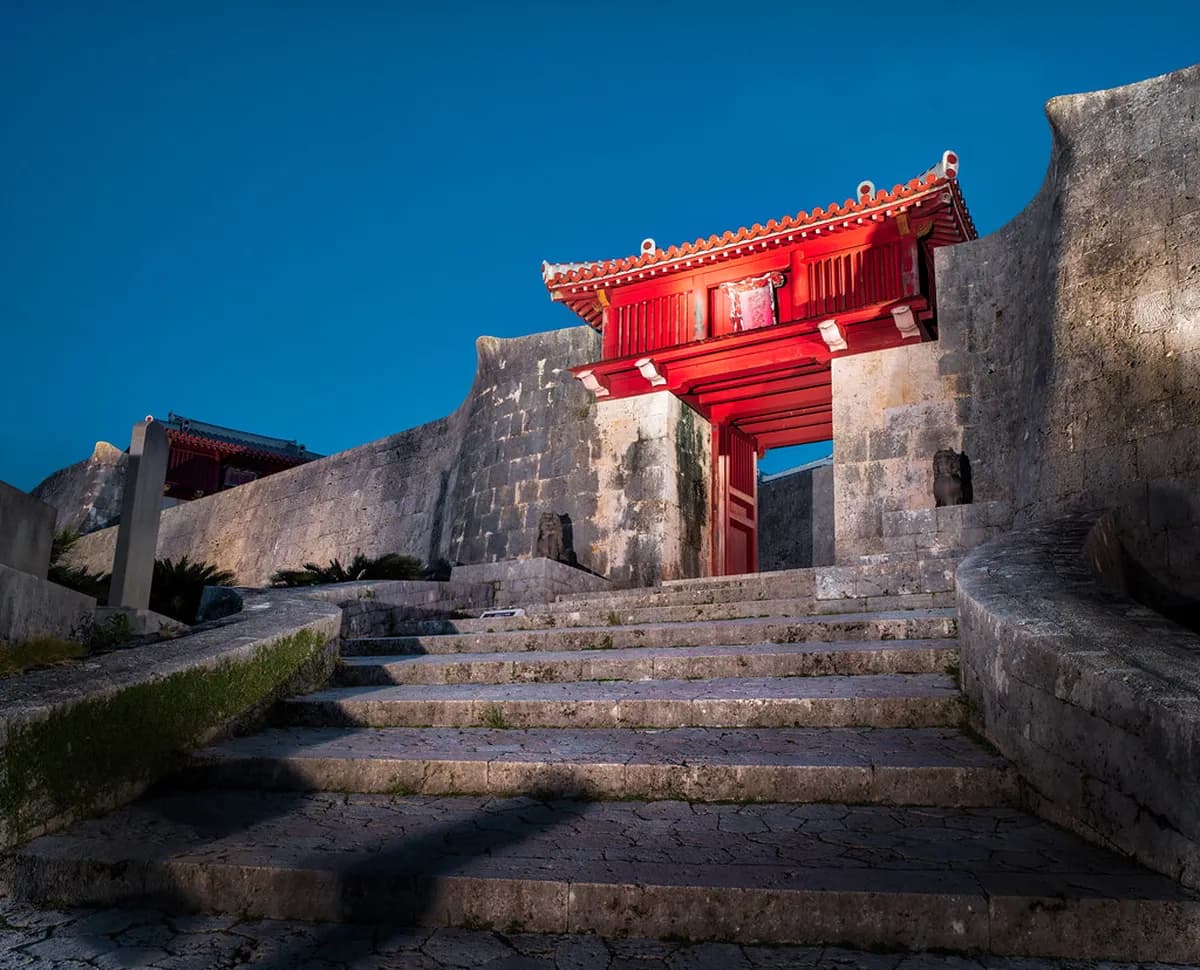
- The park introduces children to the Ryukyu Kingdom through gates, walls, viewpoints, and reconstruction exhibits.
- As of July 2026, the free area opens 8:30–18:00. The paid area opens 9:00–17:30, with last admission at 17:00; general admission is ¥400 for adults, ¥300 for high-school students, ¥160 for elementary and junior-high students, and free for ages six and under. Confirm details on the official admission page and visitor FAQ.
- Ask at the information desk about current children's activities or stamp sheets; programs can change as reconstruction progresses.
- The site is hilly. Use the marked accessible route and allow extra time with a stroller; parking is limited, so the monorail plus bus or taxi is often easier.
- Kokusai Dori (International Street)
- Naha's main thoroughfare is a 1.6 km strip of souvenir shops, themed cafes, and street performers running roughly between Kencho-mae and Asato stations.
- Most shops open 10:00–22:00, and the street itself is free to wander; visit on Sundays from 12:00–18:00 when the road closes to traffic.
- Use the Kokusai Dori guide to find the best spots for Blue Seal ice cream and Shisa-painting workshops.
- Tuck into the covered side arcades (Heiwa-dori, Mutsumi-bashi) when the sun is harsh — they are shaded, fan-cooled, and full of cheap snacks.
- Makishi Public Market
- Known as the "Kitchen of Okinawa," the rebuilt market displays tropical fish, local pork, produce, and Okinawan ingredients.
- The official market guide lists building hours of 8:00–22:00, although individual shops vary. The second-floor restaurants take last orders at 20:00, and regular closures include the fourth Sunday of each month except December plus specified New Year and lunar-holiday dates.
- Our Makishi market guide explains how the first-floor purchase and second-floor cooking system works; confirm preparation charges before ordering.
- The official guide lists accessible toilets, a nursing room, and wheelchair loans, but no stroller rental. Use a compact stroller or carrier at busy times.
- Umisora Park and Naminoue Beach
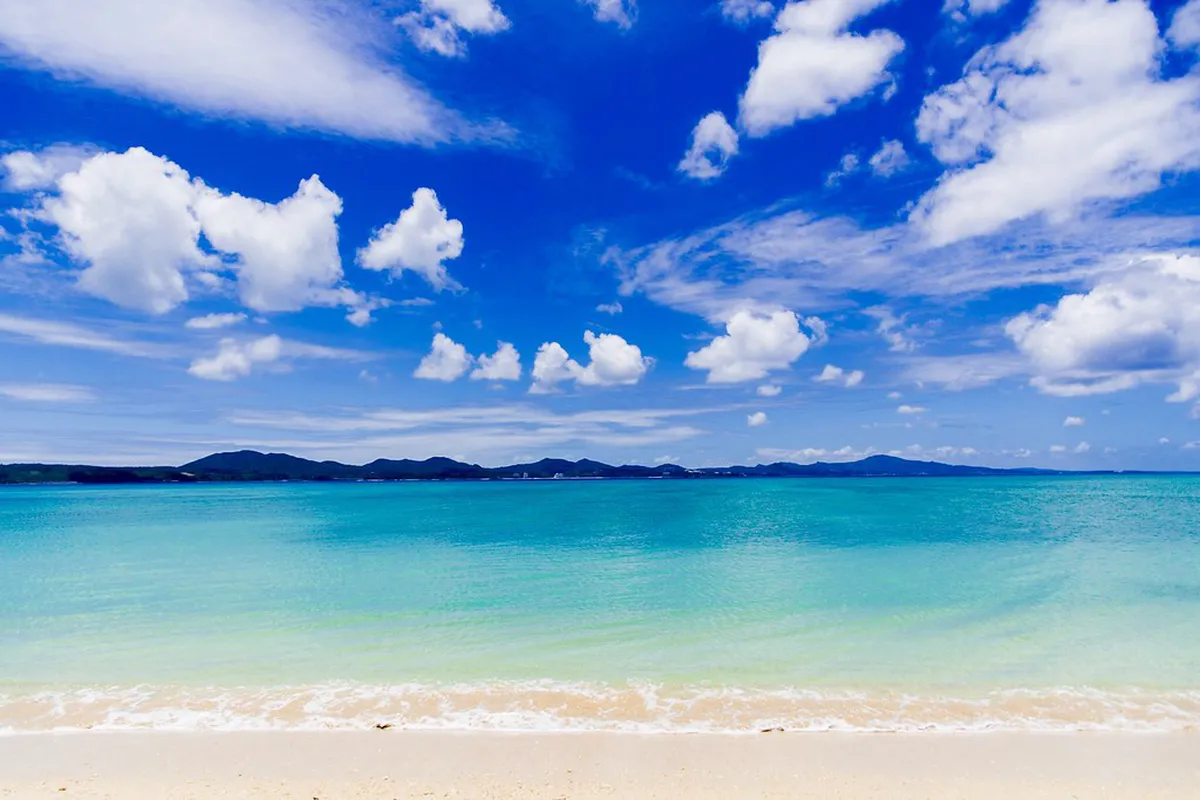
- This is the only swimmable beach within Naha city limits, with a small sandy cove protected by a large bridge overhead.
- The park is free and always open, making it a perfect early-morning or sunset stop after a hot day of sightseeing.
- Kids love watching low-flying planes descend toward Naha Airport while paddling in the gentle surf.
- Clean showers, lockers, and a covered playground sit just behind the beach — bring a change of clothes and you can stretch the visit easily to two hours.
- Tsuboya Pottery District
- This historic neighborhood features winding stone paths and dozens of pottery workshops, just a 10-minute walk south of Kokusai Dori.
- Walking the streets is free, and the area is noticeably quieter than the main shopping strip — ideal for a sensory reset.
- Most shops open 10:00–18:00; many offer 30-minute workshops where kids mold a clay Shisa for around 2,500 yen.
- The stone paths are bumpy, so a carrier is easier than a stroller for the narrowest back alleys.
- Fukushuen Garden
- This Chinese-style garden commemorates Naha's sister-city relationship with Fuzhou and works well as a calm break from downtown streets.
- The official garden site lists daytime hours of 9:00–18:00 at ¥200 for adults and ¥100 for children. Night admission from 18:00–21:00 costs ¥300/¥150; preschool children enter free. It closes Wednesday, or Thursday when Wednesday is a holiday.
- Paths include stone bridges and steps, so families using wheels should ask staff for the most accessible route.
- Allow 45–60 minutes and supervise closely around ponds and wet stone.
- Okinawa Prefectural Museum & Art Museum
- The museum covers Okinawan history and natural science, while the adjoining art museum has a separate ticket.
- For the museum permanent exhibition, the official visitor guide lists ¥530 for adults, ¥270 for high-school and college students, and ¥150 for non-prefectural elementary and junior-high students. It is not universally free for elementary-age visitors.
- Hours are 9:00–18:00 Tuesday–Thursday and Sunday, and 9:00–20:00 Friday–Saturday; last entry is 30 minutes before closing. Monday is normally closed, with holiday exceptions.
- Strollers and wheelchairs can be requested at the information counter. Check the events calendar for the current status of hands-on programs.
- Churaumi Aquarium (Day Trip)
- The aquarium is about 90 km north of Naha, so treat it as a full-day outing and reserve transport in advance.
- Current official admission is ¥2,180 for adults, ¥1,440 for high-school students, ¥710 for elementary and junior-high students, and free for children under six.
- Regular 2026 hours are 8:30–18:30, with later closing during specified Golden Week and summer dates. Check the official hours calendar because last admission is one hour before closing and severe weather can force temporary closure.
- Book a seat via the Okinawa Airport Shuttle if you prefer not to drive; confirm the return timetable before buying aquarium tickets.
- The Melody Road (Nago Area)
- This unique stretch of Route 58 plays the Okinawan folk song "Bashofu" through tire vibrations as you drive over carved grooves.
- There is no cost to experience the road, which is open 24/7 as part of the public highway between Nago and Hentona.
- Look for the painted blue eighth-note (♪) symbol on the asphalt — it marks the start of the 250-meter musical section, easy to miss at speed.
- Drive at exactly 40 km/h to hear the melody clearly; faster speeds compress the tune into squeaks, slower ones smear it into a drone.
- Cape Hedo Viewpoint
- Located at the northernmost tip of Okinawa, this cape offers dramatic cliffside views and the meeting point of the East China Sea and Pacific Ocean.
- The site is free and features well-maintained walking paths safe for older children, with a small visitor center selling cold drinks.
- The drive from Naha takes nearly three hours each way, so plan it as a full-day adventure with snack stops in Nago.
- The wind can be ferocious near the railings — keep a firm grip on small children and skip flimsy hats and umbrellas.
Where to Stay: Best Naha Neighborhoods for Kids
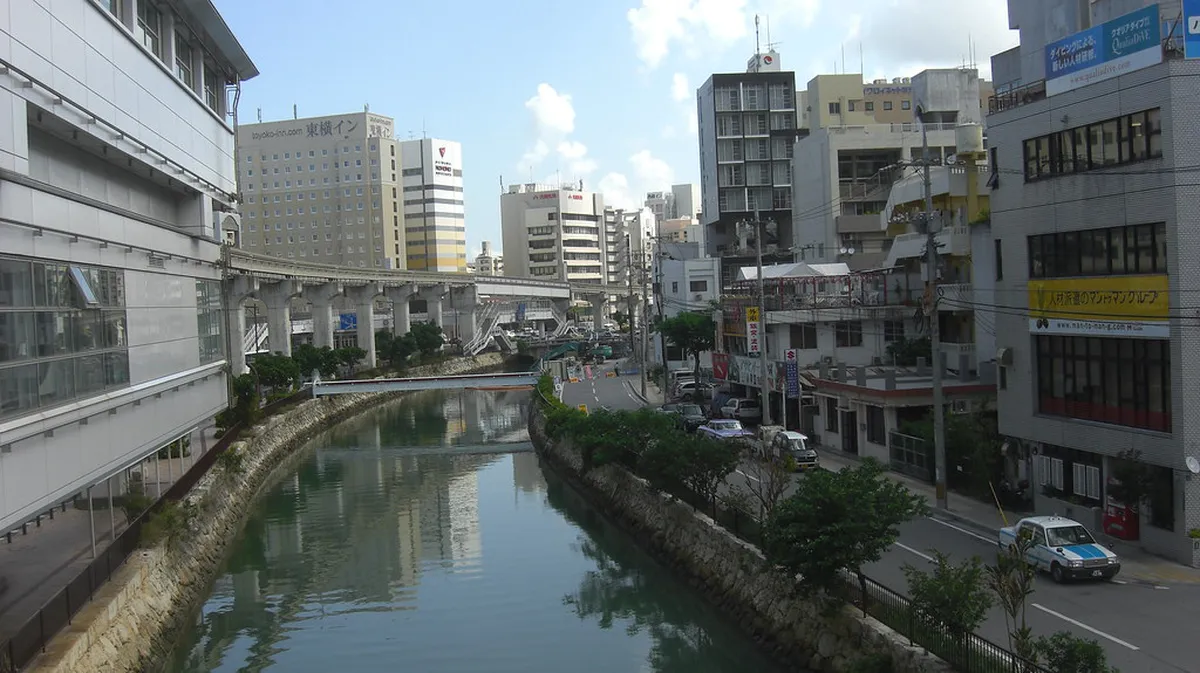
Choosing the right base in Naha depends on whether you want shopping convenience or a quieter, residential feel. The Miebashi and Makishi station areas put you within a five-minute walk of Kokusai Dori and the public market, with elevators direct to the Yui Rail platform. Our guide on where to stay in Naha compares the trade-offs in more detail.
For families wanting a quieter base, Asahibashi and the west side of central Naha offer straightforward airport access and shorter taxi rides to the port and Naminoue area. Room size, pool seasons, crib availability, and child-occupancy rules vary even within the same hotel, so confirm the exact room category before booking.
Some hotels offer reduced housekeeping or eco-plan benefits, but inclusions vary. Ask whether fresh towels, cribs, bed guards, children's toiletries, and breakfast for young children are included; never assume an adult-rate room automatically covers every child.
Naha's Best Parks and Green Spaces for Kids
When you need to burn off energy without paying admission, Naha's free parks are reliably excellent. Shintoshin Park, a 10-minute walk from the prefectural museum, has long roller slides built into the hillside, plus shaded picnic lawns and clean restrooms. It is hugely popular with local families on weekends and stays calm on weekday mornings.
Onoyama Park, near Onoyama Koen Station, has broad paths, sports facilities, playground space, and shaded areas that work well for an early-morning reset. Facility access can change during events, so check posted signs before promising a specific playground or pool session.
For a quick reset between sights, Yogi Park is a five-minute walk from Asato Station and contains an elephant-shaped slide that has been a local landmark since the 1980s. The shaded benches under the gajumaru fig trees are a favorite spot to feed a crying baby or wait out a sudden afternoon shower.
Family-Friendly Dining: Where to Eat in Naha
Soki soba, plain Okinawa soba, rice dishes, and mild curry are useful starting points for cautious eaters, but pork broth, fish stock, and other allergens may not be obvious. Ask staff before ordering if your child has dietary restrictions.
At Makishi Public Market, families can buy eligible seafood or meat downstairs and ask a participating upstairs restaurant to prepare it for an additional charge. Confirm the cooking fee and last-order time first. Chain restaurants around Kokusai Dori and shopping centers are dependable backups because menus often show photographs and allergen information.
Convenience stores stock onigiri, fruit cups, yogurt, bread, and drinks, making them useful for early breakfasts or emergency snacks. Product availability and prices vary by store.
Navigating the City: Yui Rail and Taxi Tips
The official Yui Rail guide lists QR 1-day tickets at ¥1,000 per adult and ¥500 per child, valid for 24 hours. QR 2-day tickets cost ¥1,800/¥900 and remain valid for 48 hours.
The Yui Rail connects the airport with central Naha, Shuri, and Urasoe. Stations are equipped for step-free access, but platforms and trains can become crowded at commuter times. Under the official fare rules, children under 12 use the child fare; up to two children under six may ride free with one paying adult. A third young child requires a child ticket.
Taxis are useful for hills, tired children, and luggage, but fares vary by distance, traffic, and operator. Show the destination in Japanese or use a map pin. For longer transfers, ask your hotel or operator for a current estimate.
Use this practical comparison when planning a typical day:
| Route | Public transport | Taxi | Best for |
|---|---|---|---|
| Naha Airport → central Naha | Direct Yui Rail to several hotel districts | Door to door | Rail for light luggage; taxi for bulky gear |
| Central Naha → Shuri Castle | Rail to Shuri plus bus, taxi, or uphill walk | Direct but traffic-dependent | Taxi for the simplest stroller transfer |
| Makishi → Tsuboya | Short walk on some uneven lanes | Usually unnecessary | Walk or use a carrier |
| Several rail rides in 24 hours | Compare single fares with the ¥1,000/¥500 pass | Pay per trip | Pass for rail-heavy days |
Walking is the best way to find hidden alleys, but the heat can flatten kids. Stick to covered arcades near Makishi during the hottest part of the day. If you are flagging by 4 pm, the rail is air-conditioned, fast, and lets exhausted children doze on a parent's shoulder for the ride home.
Sensory-Friendly and Accessible Naha Experiences
Naha can be loud and visually busy, but the city has more pockets of calm than first-time visitors expect. Tsuboya Pottery District is significantly quieter than Kokusai Dori and offers a peaceful walking environment among low stone walls. Many local parks have informal "quiet zones" where families sit away from the main playground equipment.
If Makishi Public Market feels overwhelming, use the outer aisles or visit soon after opening. At Shuri Castle, ask the information desk for the current step-free route because construction can alter circulation. The Okinawa Prefectural Museum officially offers wheelchair and stroller loans at its information counter.
Quiet rooms and sensory accommodations are not guaranteed, so contact major attractions before visiting if your child needs a specific setup. Noise-reducing headphones, a familiar snack, and a simple picture itinerary can make transitions easier. Fukushuen Garden, Tsuboya's side streets, and a museum visit near opening time are generally calmer alternatives to peak-hour Kokusai Dori.
Rainy Day and Typhoon Contingency Plans
Okinawa's tropical weather can change quickly, especially during the warmer months. Keep one flexible indoor option in central Naha, such as the Okinawa Prefectural Museum, rather than committing every day to long outdoor transfers. Kokusai Dori's side arcades offer some cover, but they are not a safe substitute for shelter during severe weather.
Follow official Japan Meteorological Agency information and instructions from your hotel, transport operator, and attraction. Do not start a cross-island day trip when services may be suspended.
DMM Kariyushi Aquarium is inside iias Okinawa Toyosaki, south of the airport, but it is not on the Yui Rail line. Use a scheduled bus, taxi, or car and confirm both the aquarium and transport are operating before leaving. During a typhoon, staying inside your accommodation may be safer than moving to another indoor venue.
Keep drinking water, shelf-stable snacks, charged devices, and essential medication in the room when severe weather is forecast. Hotel pools and other amenities still follow their own closure rules; never assume they will remain open during a storm.
Top Family Day Trips from Naha

Naha makes a strong base for one or two day trips, but Churaumi Aquarium is already a full day for most families. Shuttle journeys can take roughly two hours each way depending on the service and traffic; adding another ticketed attraction may make the day rushed.
For a shorter outing, Senagajima sits south of Naha and offers airport views, restaurants, and shops at Umikaji Terrace. Bus schedules, footbath availability, beach conditions, and spa day-use policies can change, so verify the specific activity before departure.
Northern day trips to American Village in Chatan, Cape Hedo, and the Melody Road also pair well together with a rental car. For deeper sand and snorkeling, the best beaches near Naha piece compares the most family-friendly options.
Practical Logistics and Sample Itinerary
Finding baby supplies is straightforward at any San-A or Aeon supermarket; Don Quijote on Kokusai Dori stocks Pampers and Moony diapers 24 hours. Convenience stores carry small wipe packs and emergency snacks. Pack a lightweight stroller rain cover — the tropical showers arrive faster than you can fold a hood down.
Spring and late autumn often bring more comfortable sightseeing temperatures than midsummer, but Golden Week crowds and typhoon disruptions can affect family logistics. Check the forecast and holiday calendar before booking nonrefundable day trips. Our 3-day Naha itinerary sequences meals alongside the major sights.
A manageable three-day rhythm is: Day 1 — arrival, Naminoue area, and an early Kokusai Dori dinner. Day 2 — Shuri Castle in the morning, then choose either Tsuboya or the museum. Day 3 — a reserved Churaumi Aquarium trip, or stay local with Makishi Market and Fukushuen Garden. Carry some cash for small shops, but keep the schedule flexible enough for heat, naps, and weather.
Frequently Asked Questions
Is Naha walkable with a stroller?
Central Naha is manageable with a compact stroller, especially around Yui Rail stations and main streets. Tsuboya lanes, castle slopes, and busy market aisles can be uneven or narrow, so a carrier is useful as a backup.
Where can I buy diapers and baby supplies in Naha?
Major supermarkets like Aeon and San-A are the best places to find a full range of diapers and formula. You can also find emergency supplies at most neighborhood drugstores. Many convenience stores carry small travel packs of wipes for quick refills while exploring.
Is the Okinawa monorail easy to use with kids?
Yes. Yui Rail stations provide step-free access, and the line directly serves the airport and several central districts. Avoid commuter peaks with a large stroller when possible. In 2026, QR passes cost ¥1,000/¥500 for 24 hours and ¥1,800/¥900 for 48 hours.
How many days do families need in Naha?
Three nights is a comfortable first visit. Use two days for central Naha and Shuri, then reserve one day for Churaumi Aquarium or another longer outing. Add a night if your children need slower mornings or regular naps.
What is the best rainy-day attraction for children in Naha?
The Okinawa Prefectural Museum is the strongest central option because it is indoors and close to Omoromachi Station. Check its Monday closure rule and current exhibition schedule before visiting.
Naha works best for families when each day has one major sight, one flexible stop, and time indoors during the hottest or wettest hours. The monorail covers the main urban corridor; taxis, buses, or reserved transfers fill the gaps.
Recheck attraction hours and transport on the day, especially during public holidays or severe weather. With that small amount of planning, families can combine Shuri history, markets, gardens, beaches, and one north-island day without turning the trip into a race.
See our Naha attractions guide for the broader city overview.
For related Naha deep-dives, see our best beaches near Naha and day trips from Naha.
Free: The Naha Essentials guide
Top things to do, where to stay, a perfect day plan, getting around, and the best time to go — a Naha mini-guide you can take offline.
You might also like

Continue reading
More guides you'll find useful