Getting Around Japan 2026: Trains, Metro, Buses, Flights & IC Cards
How to get around Japan in 2026: shinkansen vs domestic flights, metro and JR lines, IC cards, highway buses, ferries, taxis and luggage forwarding (takkyubin).
On this page
Japan has one of the best public-transport networks on earth, and learning how to use it is the single biggest unlock for a smooth trip. Bullet trains stitch the country together at 300 km/h, dense city metros run to the minute, and buses, ferries and domestic flights reach everywhere the rails do not. This guide gives you the national overview — when to take the shinkansen versus a plane, how IC cards work, how to forward your luggage, and how the pieces fit together — so you can move with confidence.
Use it alongside our complete Japan travel guide and Japan money guide, since the same IC card pays for most of your transport. For city-level detail, each destination guide below links to a dedicated "getting around" page.
The Big Picture: Japan Is a Rail-First Country
Plan around trains and everything else falls into place. Japan's rail network is fast, punctual and astonishingly comprehensive, so for the classic Tokyo–Kyoto–Osaka "Golden Route" and almost all city travel, the train is the default and best choice. You rarely need to rent a car unless you are exploring rural Hokkaido, the Japan Alps backroads or remote coastlines. The national transport overview is a useful reference for routes and operators.
The mental model: shinkansen and limited-express trains between cities, metro/subway and JR loop lines within them, and buses, planes or ferries only where rails are slow or absent. Decide how much ground to cover with how many days to spend in Japan before locking your route.
Shinkansen and the Japan Rail Pass Question
The shinkansen ("bullet train") is the star of Japanese travel: Tokyo to Kyoto in about 2 hours 15 minutes, frequent departures, reserved or non-reserved seating, and immaculate punctuality. You can buy single tickets at any JR station or online via the operators' reservation sites, or cover multiple long rides with a rail pass.
Whether the nationwide Japan Rail Pass saves money depends entirely on your route. After the 2023 price rise it only pays off for long, multi-leg trips (think Tokyo–Kyoto–Hiroshima–Tokyo within a week). For a single city pair or a Tokyo-centred trip, individual tickets are cheaper. Run your stops through the Japan rail fare and pass comparison, read the full break-even reasoning in is the Japan Rail Pass worth it, and use our shinkansen guide for routes and seat types.
IC Cards: One Tap for Trains, Subways and Buses
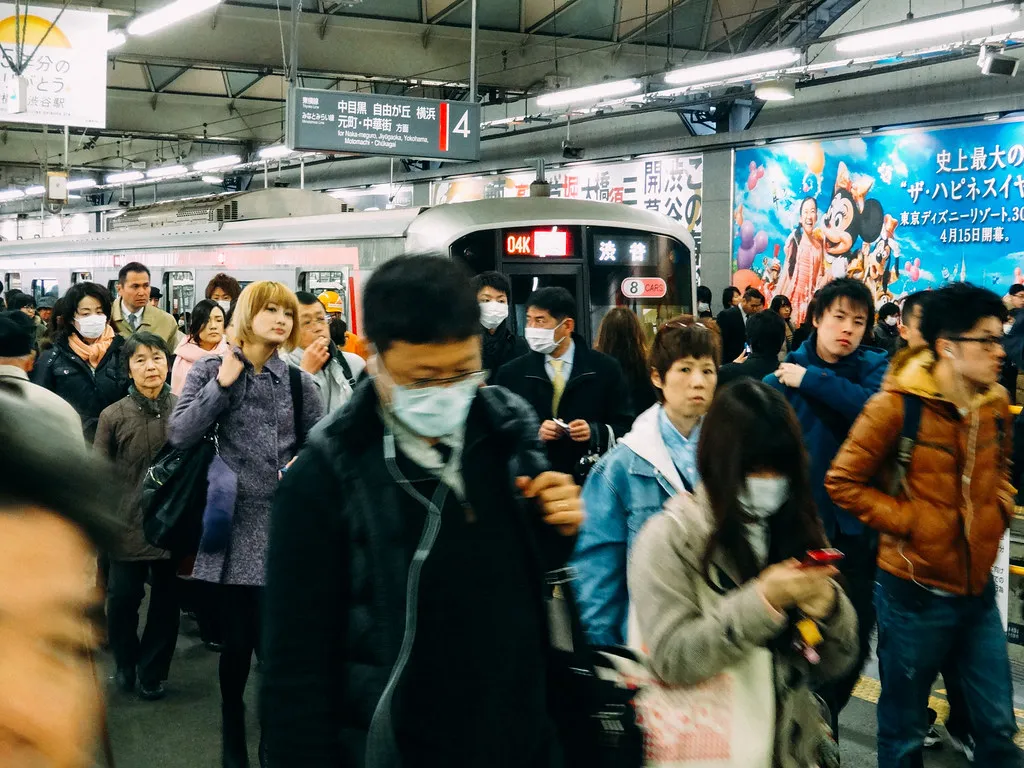
For everything except the shinkansen and reserved limited expresses, a rechargeable IC card is all you need. Tap in and out at train and subway gates, tap when boarding or alighting buses, and the correct fare is deducted automatically — no working out fare tables, no paper tickets. Suica, Pasmo and ICOCA are interchangeable across virtually all major networks, so one card covers the whole trip. A Mobile Suica in your phone is even smoother.
The same card also pays at convenience stores, vending machines and lockers, which is why we treat it as core money tech too — see the Japan money guide for buying, topping up and adding one to Apple Wallet.
Buses: Highway Coaches and City Lines
Long-distance highway buses are the budget traveller's friend — an overnight Tokyo–Osaka coach can cost a third of the shinkansen fare and saves a night's accommodation, at the cost of comfort and time. They are worth considering for tight budgets or routes the trains serve poorly. Book popular routes ahead, especially around holidays.
Within cities, buses fill the gaps the rail network misses, and in a few places — notably Kyoto, where many temples sit away from train lines — buses are essential rather than optional. Your IC card works on almost all of them. Some tourist-heavy cities sell day passes that beat per-ride fares.
Domestic Flights and Ferries: When They Win
For the longest hops, flying beats the train. Tokyo to Sapporo in Hokkaido, Tokyo to Fukuoka in Kyushu, or anywhere to Okinawa is faster and often cheaper by plane than by rail. Budget carriers (Peach, Jetstar Japan, Skymark) and the full-service ANA and JAL all compete on these routes; book early for the best fares and watch baggage limits on the low-cost airlines.
Ferries serve the islands and some scenic coastal routes — the Seto Inland Sea, the journey to Okinawa's outer islands, or overnight long-haul sailings — and can be a memorable, low-stress way to travel with a vehicle or a lot of luggage.
Taxis, Ride-Hailing and Luggage Forwarding
Taxis are clean, safe and metered but expensive; they shine for short hops with luggage, late nights after the trains stop, or reaching somewhere awkward. Apps like GO and Uber (which dispatches licensed taxis) make hailing easy in cities, and most cabs now take IC cards and credit cards.
The pro move that transforms multi-city trips is takkyubin (luggage forwarding). Hand your suitcase to a counter at your hotel, convenience store or the airport, and a courier such as Yamato Transport delivers it to your next hotel, often the next day on major routes. Use the luggage forwarding calculator for the published fare based on your regions, packed size and weight. You ride the shinkansen and navigate stations hands-free, carrying only a small overnight bag. On crowded trains and up station staircases, this is worth every yen. Pack accordingly with our Japan packing checklist.
Getting From the Airport Into the City
Japan's major airports are well connected. From Tokyo's Narita, the Narita Express (N'EX) and Keisei Skyliner reach central Tokyo in 40–60 minutes; Haneda is closer still via the Monorail or Keikyu line. Kansai International serving Osaka and Kyoto has the Haruka express, and most regional airports run a limousine bus or train into town. Buy these tickets with your IC card or at the clearly signed airport counters.
If you land jet-lagged, a pre-arranged airport limousine bus straight to your hotel district is the lowest-stress option — no transfers, luggage stowed underneath.
City-by-City: Where to Go Next
Every major destination has its own transport quirks, and each of our city guides covers them in depth — from Tokyo's layered metro and JR Yamanote loop to Sapporo's subway, Hiroshima's streetcars and Nara's walkable centre. Pick your cities from the Japan's best places to visit and build the route around the rail map.
With the national network understood, the rest is detail. Tap your IC card, forward your bags, reserve the long shinkansen legs in advance, and Japan opens up effortlessly. Start route-planning from our complete Japan travel guide.
Frequently Asked Questions
What is the best way to get around Japan?
Trains. The shinkansen connects cities at high speed while metros and JR lines cover travel within them. Add buses, domestic flights and ferries only where rail is slow or absent, and pay with a single IC card.
Do I need a Japan Rail Pass?
Only for long, multi-city trips. After the 2023 price increase the nationwide pass pays off mainly for itineraries like Tokyo–Kyoto–Hiroshima within a week. For a single city pair or a Tokyo-based trip, individual tickets are cheaper — do the maths first.
Can I use one IC card across all of Japan?
Yes. Suica, Pasmo and ICOCA are interoperable across almost all major networks, so one card (or a Mobile Suica on your phone) covers trains, subways and buses nationwide, plus convenience-store purchases.
Should I fly or take the train in Japan?
Take the train for the Golden Route and most journeys. Fly for the longest hops — Tokyo to Sapporo, Fukuoka or Okinawa — where planes are faster and often cheaper than rail.
What is luggage forwarding (takkyubin) in Japan?
A courier service that delivers your suitcase from one hotel (or the airport) to your next, usually next day, for around ¥2,000 per bag. It lets you ride trains and navigate stations hands-free — ideal for multi-city trips.
Master Japan's transport network and the whole country opens up: bullet trains between cities, a single IC card for everything local, luggage forwarded ahead so you travel light, and flights only for the longest hops. Reserve your long shinkansen legs in advance and the rest falls into place.
Plan the full trip with our complete Japan travel guide, sort payments with the Japan money guide, weigh the Japan Rail Pass, and master the shinkansen. Happy travels.
Free: The Tokyo Essentials guide
Top things to do, where to stay, a perfect day plan, getting around, and the best time to go — a Tokyo mini-guide you can take offline.
You might also like



Continue reading
More guides you'll find useful