

Japan Money Guide 2026: Cash, IC Cards (Suica/Pasmo/ICOCA) & Going Cashless
Plan money for Japan in 2026: how much cash to carry, IC cards (Suica, Pasmo, ICOCA), foreign-card ATMs, contactless payments, and tipping etiquette.
On this page
Japan has a reputation as a cash-loving country, and while that is still partly true in 2026, the reality is more nuanced. Tap-to-pay IC cards, contactless credit cards and mobile wallets now cover the vast majority of everyday spending in cities, yet a rural ryokan or a back-street ramen counter may still want yen in hand. This guide explains exactly how money works in Japan — the yen, how much cash to carry, IC cards like Suica, Pasmo and ICOCA, where to find ATMs that accept foreign cards, and when to reach for plastic versus cash.
Get this right before you fly and you will glide through ticket gates, convenience stores and restaurants without friction. For the bigger picture, pair this with our complete Japan travel guide and the companion getting around Japan guide guide, since your IC card does double duty for transport and payments.
The Japanese Yen: Notes, Coins and Rough Costs
Japan uses the yen (¥, currency code JPY). Banknotes come in ¥1,000, ¥2,000 (rare), ¥5,000 and ¥10,000 denominations, and coins run ¥1, ¥5, ¥10, ¥50, ¥100 and ¥500. The ¥500 coin is worth roughly £2.50/US$3.30, so coins accumulate fast — a dedicated coin purse genuinely helps. Japan redesigned its banknotes in 2024, but older notes remain valid, so do not worry if you receive a mix.
For a sense of scale: a convenience-store coffee is around ¥150, a bowl of ramen ¥900–¥1,200, a single metro ride ¥180–¥210, and a mid-range dinner ¥2,500–¥4,000. We break full daily budgets down in our Japan trip cost guide; use the custom trip budget planner when you are ready to calculate the whole group and convert the result into your home currency.
Cash vs Cashless in 2026: How Much Do You Really Need?
Japan has shifted hard toward cashless payment, pushed by government incentives and the 2020s tourism boom. In Tokyo, Osaka and other big cities you can tap a card or phone for trains, convenience stores, chain restaurants, department stores and most attractions. Many travellers now spend days without touching a banknote.
That said, cash is still king in specific situations: small family-run restaurants and izakaya, rural towns, traditional ryokan, temple and shrine offerings, local festivals, some taxis, and coin lockers. A sensible rule is to keep ¥15,000–¥30,000 in cash per person for a few days and top up at convenience-store ATMs as you go. Always carry more for trips into the countryside, where card acceptance thins out quickly.

IC Cards Explained: Suica, Pasmo, ICOCA and the Rest
A rechargeable IC card is the single most useful piece of money tech for a Japan trip. You tap it on train and bus readers, and at convenience stores, vending machines and many shops, to pay instantly from a prepaid balance. The big names are Suica and Pasmo (Tokyo region) and ICOCA (Kansai — Kyoto/Osaka), but thanks to nationwide interoperability a single card works across almost all major cities. Buy whichever is convenient where you land; it will work in the others.
Because the card covers both transport and small purchases, it removes the two biggest friction points of a Japan trip at once. Note: during recent semiconductor shortages, sales of some plastic welcome cards were limited — the Welcome Suica and ICOCA tourist versions, plus Mobile Suica on your phone, are the reliable routes in 2026. For transport strategy, see getting around Japan guide and whether the Japan Rail Pass is worth it.
Mobile Suica, Apple Pay and Adding a Card to Your Phone
The slickest option is a digital IC card in your phone's wallet. iPhone users can add Suica, Pasmo or ICOCA directly in Apple Wallet and top up with an overseas credit card — no physical card, no purchase queue, and you tap your phone at the gate. Many Android phones with Osaifu-Keitai support Mobile Suica too. Set this up at home before you fly and you will skip the airport ticket machines entirely.
One caveat: some foreign cards are declined when topping up a mobile IC card. If yours fails, you can still load cash onto a physical card at any station fare-adjustment machine. Carry a backup plan rather than relying on a single payment method.
ATMs: Where to Withdraw Yen with a Foreign Card
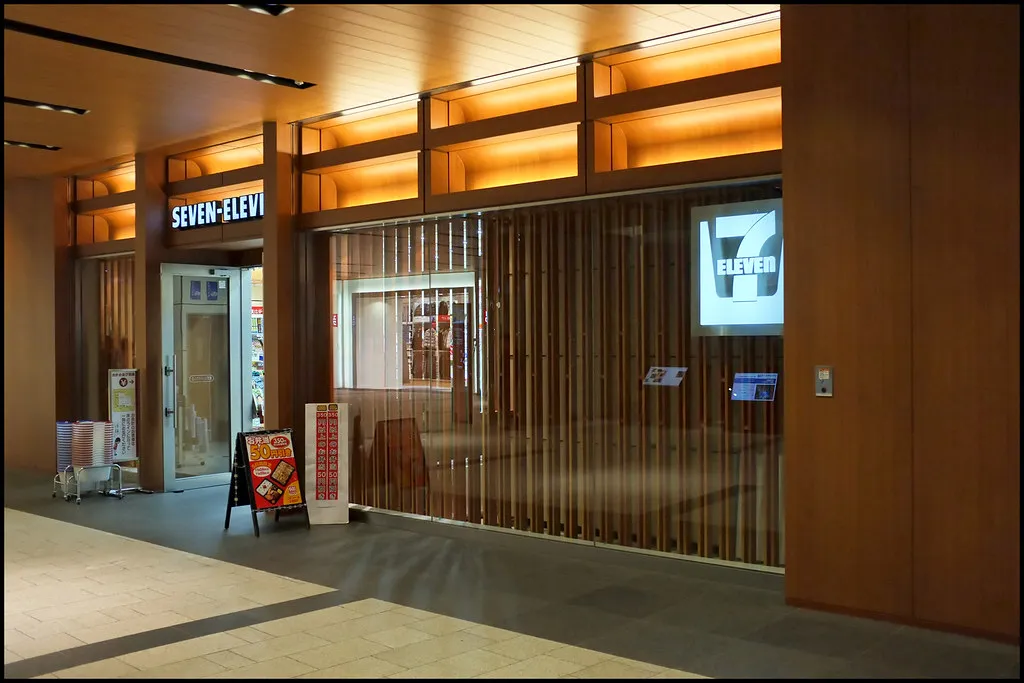
Not every ATM in Japan accepts foreign cards, which surprises first-timers. The two dependable networks are 7-Eleven (7 Bank) ATMs, found in tens of thousands of convenience stores nationwide, and Japan Post Bank ATMs in post offices. Both run 24/7 (post-office hours vary), offer English menus, and accept Visa, Mastercard, and most overseas debit cards. See the official Japan Post Bank international ATM page for details.
Withdraw in reasonable chunks (¥20,000–¥50,000) to minimise per-transaction fees, and tell your bank you are travelling so the withdrawal is not flagged. Avoid airport currency-exchange counters for anything beyond a small starter amount — ATM rates are almost always better.
Credit Cards, Contactless and Fees
Visa and Mastercard are accepted across city hotels, department stores, chain restaurants and attractions; American Express and JCB are more variable. Contactless tap is increasingly common but not universal, so always have the physical card and know your PIN. Choose a card with no foreign-transaction fee, and when a terminal asks whether to charge in yen or your home currency, always pick yen — "dynamic currency conversion" in your home currency bakes in a poor exchange rate.
For rural inns, small eateries and temples, assume cards will not work. This is the single most common payment mistake visitors make — see our first-time travel tips for the rest of the rookie errors to dodge.
Money Etiquette: Tipping, Cash Trays and Splitting Bills
Japan does not tip. Adding a tip in a restaurant or to a taxi driver is not expected and can cause confusion; excellent service is simply standard. At most shops and restaurants you place cash on the small tray by the register rather than handing it to the cashier directly, and you receive change on the tray too. Handle money with two hands when paying for something formal, and keep notes reasonably crisp.
Splitting a bill ("warikan") is common among friends, but pay at the front register rather than at the table. For the wider cultural rules — shoes, bathing, trains — read our Japanese etiquette.
Putting It Together: A Simple Money Plan
Here is a plan that works for most trips. Before you fly: add a Mobile Suica to your phone and load ¥3,000–¥5,000, and pack a fee-free card plus a backup. On arrival: withdraw ¥20,000–¥30,000 at a 7-Eleven or Japan Post ATM for cash-only situations. During the trip: tap your IC card for transport and convenience stores, use the credit card for hotels and bigger purchases, and top up cash as it runs low. For trips into the countryside or to a ryokan, withdraw extra in the last big city first.
Plan your route and days with our national complete Japan travel guide and decide trip length using how many days to spend in Japan. Get the money basics sorted and the rest of the trip flows. For official visitor information, the Japan National Tourism Organization is the authoritative source.
Frequently Asked Questions
Should I bring cash or use cards in Japan?
Both. Cities are largely cashless — IC cards, contactless and credit cards cover most spending — but small restaurants, rural towns, ryokan and temples are often cash-only. Carry ¥15,000–¥30,000 per person and top up at convenience-store ATMs.
What is the best IC card for Japan?
Any of Suica, Pasmo or ICOCA works nationwide thanks to interoperability, so buy whichever is sold where you arrive. A Mobile Suica added to your phone's wallet is the most convenient option and skips the purchase queue.
Which ATMs in Japan accept foreign cards?
7-Eleven (7 Bank) ATMs and Japan Post Bank ATMs are the reliable choices. Both run 24/7, have English menus, and accept Visa, Mastercard and most overseas debit cards.
Do you tip in Japan?
No. Tipping is not part of Japanese culture and is not expected in restaurants, taxis or hotels. Good service is standard, and a tip can even cause confusion.
How much money do I need per day in Japan?
Budget travellers spend around ¥8,000–¥12,000 a day, mid-range ¥15,000–¥25,000, and comfortable travellers ¥30,000+, excluding big-ticket transport. See our Japan trip cost guide for a full breakdown.
Sorting your money before departure removes the biggest day-to-day friction of a Japan trip: you tap through ticket gates, pay at convenience stores in a second, and always know whether to reach for cash or a card. Set up a Mobile Suica, pack a fee-free card, and withdraw a sensible cash buffer on arrival.
Keep planning with our complete Japan travel guide, the companion getting around Japan guide guide, our Japan trip cost breakdown, and Japanese etiquette. Safe travels and happy spending.
Free: The Tokyo Essentials guide
Top things to do, where to stay, a perfect day plan, getting around, and the best time to go — a Tokyo mini-guide you can take offline.
You might also like


Continue reading
More guides you'll find useful


