45 Essential Japan Travel Tips: Plan Your Perfect Trip (2026)
Plan your Japan adventure with 45 essential travel tips. Discover how-to guides, logistical hacks, cultural etiquette, and hidden gems for a smoother, richer experience.
On this page
Japan rewards prepared travelers more than almost any other destination. The systems are excellent, the food is extraordinary, and the culture is deeply considered — but it runs on its own logic, and first-timers who wing it often spend the first few days confused rather than delighted. This guide compiles 45 essential Japan travel tips for 2026, organized by topic so you can find what matters most before you leave and reference it on the ground. From booking timelines to cultural micro-etiquette most guidebooks skip, these tips are drawn from real experience across multiple visits.
Planning Your Japan Trip: Essential Pre-Departure Steps
Japan has a higher planning payoff than almost anywhere else. Many restaurants take reservations only in Japanese, popular museums sell out months ahead, and national holiday windows can turn a calm city into a gridlock. Starting your research three to four months out is realistic; some things (Ghibli Museum tickets, high-demand ryokan) require even longer.
Check your visa situation early. Citizens of 68 countries including the US, UK, Canada, Australia, and the EU currently enjoy visa-free stays of up to 90 days. Register on the Visit Japan Web platform before departure — it digitizes the customs and immigration declaration and can shorten arrival queues. Have your return or onward flight booked before you land; immigration may ask for it.
Travel insurance is non-negotiable. Healthcare in Japan is high-quality but expensive for uninsured foreigners. Get a policy that covers medical evacuation. Also memorize a handful of phrases before you go: arigato gozaimasu (thank you, politely), sumimasen (excuse me / sorry), and onegai shimasu (please) will carry you through the vast majority of daily interactions. Locals notice the effort.
Plan around Japan's national holiday clusters. Golden Week (late April – 6 May 2026) and the New Year window (late December – early January) see huge domestic travel surges. Trains and hotels fill weeks in advance and popular attractions become genuinely unpleasant. If you must visit during these periods, book accommodation and transport at least three months out and pick less-central destinations for day trips.
Golden Week is Japan's longest national holiday block. Every year, late April through early May brings domestic travel surges that clog trains and hotels. Book all transport and accommodation at least 3 months ahead if you must travel then, and choose smaller cities for day trips to avoid gridlock.
How Long to Spend in Japan and When to Visit
Two weeks is the sweet spot for a first trip. That gives you Tokyo (3–4 nights), a Shinkansen ride to Kyoto (3–4 nights), a side trip to Osaka or Nara, and ideally one night in a ryokan with an onsen. A 7-day trip is doable but forces hard choices — base yourself in one city and take day trips rather than moving every night. Check the 2 Week Japan Itinerary: The Ultimate First-Timer's Guide for a tested day-by-day framework.
Spring (late March–April) is famous for cherry blossoms and rightly so, but it is also the most crowded and expensive window. Autumn (October–mid-November) offers koyo (fall foliage) with comparable beauty and slightly lower crowds. Both seasons have the best weather: mild days, low humidity. The Best Time To Visit Japan: A Seasonal & Monthly Travel Guide depends on your tolerance for crowds versus your interest in seasonal spectacle.
Summer (July–August) is brutally hot and humid — temperatures regularly exceed 35°C in cities. The upside is fewer foreign tourists and a dense calendar of local matsuri (festivals). Winter (December–February) is cold but has the clearest skies, the lowest accommodation prices outside New Year, and the best odds of seeing snow-capped Mount Fuji from the Shinkansen. The shoulder windows of May (after Golden Week) and late September are often the most comfortable overall: warm enough, relatively uncrowded, and not yet peak-priced.
Essential Bookings and Preparations: What to Secure in Advance
Some Japan bookings need to happen months before departure. The Ghibli Museum in Mitaka (Tokyo) releases tickets on the 10th of each month for the following month — they sell out within hours. Ghibli Park in Nagoya requires similar advance planning. If either is on your list, set a calendar alarm and book the moment slots open.
High-demand kaiseki (traditional multi-course dining) restaurants in Kyoto and Tokyo often accept reservations only by phone, in Japanese. A practical workaround is to hire a Japan-based freelancer via a platform like Fiverr to call and book on your behalf — typically costs under $15 and saves considerable frustration. For everything else, use the restaurant's website or a booking platform like TableCheck or Tableall, which have English interfaces.
Decide on your rail strategy before you arrive. Purchase your Japan Rail Pass exchange order outside Japan — it cannot be bought domestically. Then compare the pass cost against your planned routes using a journey planner; a Tokyo–Kyoto–Tokyo round trip alone rarely justifies a 7-day pass (around ¥50,000 in 2026) unless you add two or three more Shinkansen legs. Regional passes (JR East Nagano/Niigata, Kansai Area Pass) are often better value for single-region trips. Read the full breakdown at Is the Japan Rail Pass Worth It? A Comprehensive 2024 Guide.
Book accommodation before finalizing your itinerary, not after. Ryokan in popular onsen towns like Kinosaki and well-reviewed guesthouses in Kyoto sell out two to three months ahead. Book hotels directly where possible — you often get the same price as third-party sites plus more flexibility on late check-out.
Navigating Japan: Transportation and Connectivity
Buy a Suica or Pasmo IC card at the airport or any major train station. These reloadable cards work on virtually every train, subway, and bus in Japan thanks to nationwide reciprocity agreements. They also work at convenience stores and many vending machines. iPhone users can add a digital Suica to Apple Wallet; tap-and-go with your watch and you never need to open an app. Android users outside Japan need a physical card.
| Essential Item | Where to Get It | Key Tip |
|---|---|---|
| Suica / Pasmo IC card | Airport or major train station | Works on trains, buses, taxis, and convenience stores nationwide |
| eSIM or Pocket Wi-Fi | Set up eSIM online before departure; rent pocket Wi-Fi at airport | eSIM is smoothest for data; set up before landing for immediate connectivity |
| Japan Rail Pass (JR Pass) | Purchase exchange order outside Japan; activate in Japan | Compare cost against your planned routes; often not needed for Tokyo–Kyoto–Tokyo round trips |
| Cash (¥10,000–¥20,000) | ATMs at 7-Eleven or Japan Post (24/7, accept most international cards) | Many small restaurants, temples, and vendors are still cash-only in 2026 |
| Comfortable walking shoes | Bring from home or buy at any department store | Avoid lace-ups; shoes must slip on/off quickly for temples and restaurants |
| Umbrella or rain jacket | Buy locally for ¥500–¥1,000 or bring from home | Japan's weather shifts quickly; walking between train stations in rain is common |
For internet access, an eSIM is the smoothest option in 2026 — set it up before you land and you have data the moment you step off the plane. Pocket Wi-Fi devices are an alternative if you have multiple devices, but they add something to charge and something to potentially lose. Build your Japan mobile-data plan from your trip length, group movement and phone compatibility, then see the detailed provider comparison at 9 Best eSIM for Japan in 2026: Tourist Guide & Comparison.
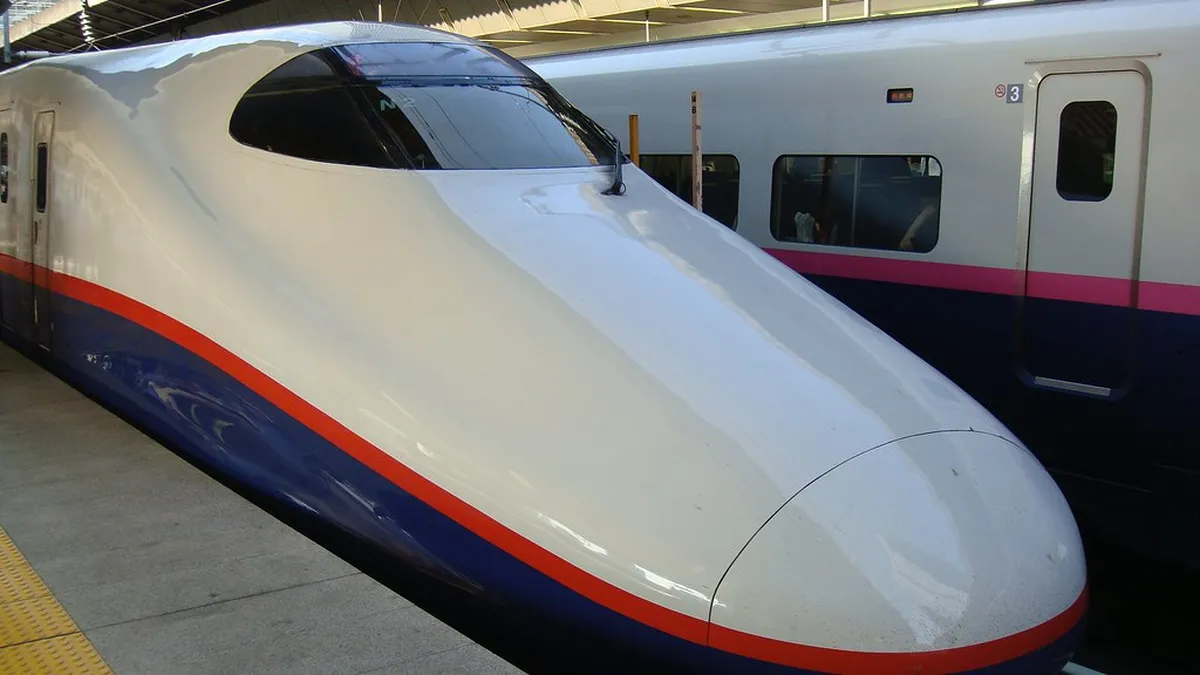
Google Maps is fully accurate for Japanese transit and will give you the correct entrance, platform, and exit for every journey. One thing it cannot tell you: sit on the right side of the Shinkansen when traveling from Tokyo toward Kyoto for the best view of Mount Fuji. The opposite applies on the return leg. A PA announcement in English will tell you when the mountain is in view on clear days. Read the Bullet Train Japan: Ultimate Guide to Shinkansen Routes & Tickets for seat selection, reserved vs. unreserved cars, and the free-seating tricks.
Station coin lockers are plentiful and save you from dragging luggage through temples. Sizes run from small bags to full suitcases; rates start around ¥300–¥700 for a day. For multi-city trips, Japan's takkyubin (luggage forwarding) service is more useful: send your suitcase from hotel to hotel the night before you travel. It arrives within one business day, costs ¥1,500–¥3,000 depending on size, and hotel staff handle the paperwork. You ride the Shinkansen with just a small daypack.
Cultural Etiquette and Social Norms
Japan runs on quiet consideration. The most jarring thing for many first-timers is how subdued public spaces are — a busy Tokyo subway at rush hour is quieter than a library in most Western cities. Keep your voice down on trains, do not take phone calls (text instead), and keep your bag on your lap or in the overhead rack rather than occupying a seat. These are not formal rules; they are baseline expectations.
One etiquette detail that catches nearly every first-timer: when paying in shops, place your cash or card on the small tray on the counter, not directly into the cashier's hand. The cashier will return your change the same way. This applies in convenience stores, restaurants, and most retail settings. Handing money directly is not rude exactly, but it marks you as someone who hasn't noticed how the system works — and noticing how the system works is the whole point of traveling in Japan.
The cash tray (or payment tray) is a cornerstone of Japanese retail etiquette. Always place your money or card on the tray, never hand it directly to the cashier. The cashier will return your change and receipt on the same tray. This practice applies everywhere in Japan—convenience stores, department stores, small neighborhood shops—and respecting it marks you as a traveler who has done their homework.
Remove your shoes whenever you see a step up to tatami, a row of slippers at a doorway, or explicit signage. This applies at ryokan, many traditional restaurants, some temples, and occasionally even modern venues like cat cafes. Wear socks without holes. Tipping is not done in Japan and can cause awkwardness — exceptional service is the standard, not something compensated with extra cash. The bow is the Japanese equivalent: a slight nod of the head is fine for most interactions; deeper for significant thanks.
Street food exists but you are not meant to eat while walking. Eat in front of the stall or find a nearby bench. Garbage bins are scarce outside train stations and convenience stores — carry a small bag for wrappers and dispose of them at your hotel or a konbini. Japan's public spaces are clean because residents operate this way, not because there is infrastructure to absorb carelessness.
Packing Essentials for Every Season
The cardinal rule: pack light. Japanese hotel rooms are small, trains have limited luggage storage, and you will be walking significantly more than you expect — 15,000–20,000 steps a day is normal. Bring only what fits in a carry-on if you can manage it. You can ship a souvenir suitcase home via takkyubin and buy most forgotten items at any convenience store or ¥100 shop (Daiso).
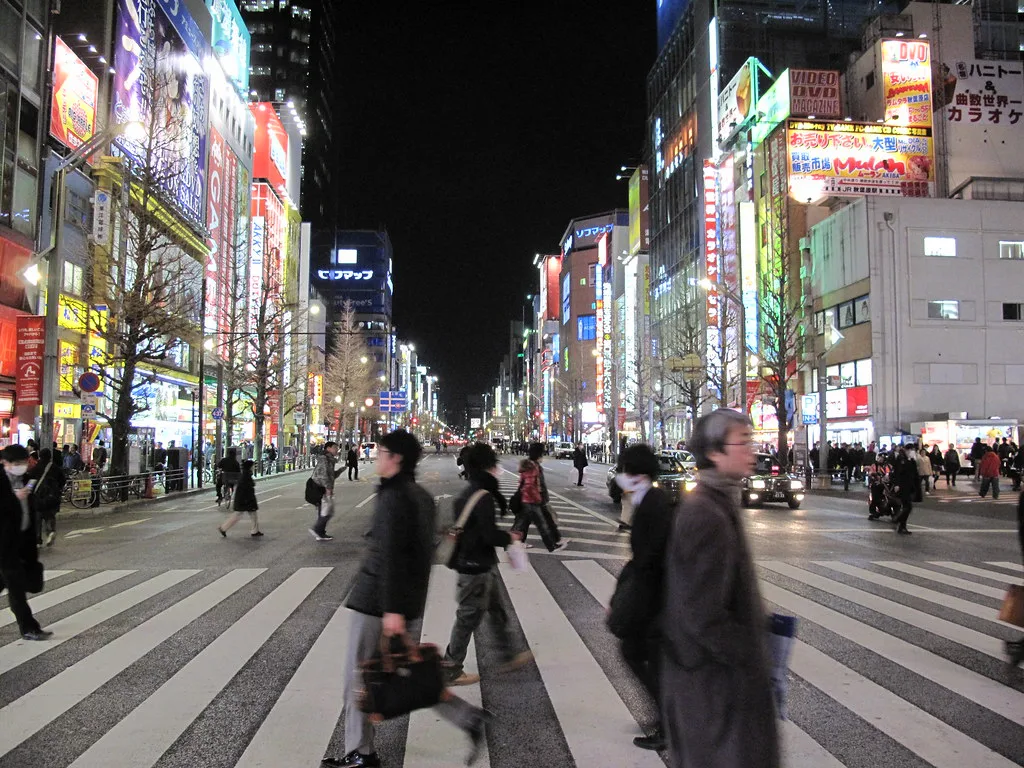
Shoes matter more here than almost anywhere. You need something comfortable enough for full days of walking, closed-toe for gravel temple paths, and easy to slip on and off quickly — you will remove them a dozen times a day. Avoid lace-up boots. For spring and autumn, layers work well as mornings are cool and afternoons warm. For summer, pack light, breathable fabrics and accept that you will sweat; small portable fans (sold at every konbini for around ¥300) help. For winter, bring a proper coat — Kyoto and Tokyo get genuinely cold in January and February.
Dress modestly by default, particularly if you are visiting temples and shrines. Knee-length or longer bottoms are the norm. Bright patterns and very casual clothing look conspicuous in Japanese public spaces, where neutrals dominate. Japan does not have a formal dress code for tourists, but blending in takes nothing away from your trip and usually improves how locals interact with you.
Pack a small towel. Many onsen and some older public facilities do not supply large towels. A compact microfiber towel earns its weight. Also bring an umbrella or packable rain jacket — Japan's weather shifts quickly in spring and autumn, and walking between train stations in a downpour is unpleasant. Foldable umbrellas are sold everywhere for ¥500–¥1,000 if you forget.
Food and Dining: Getting the Most from Japanese Cuisine
Japanese food culture rewards curiosity. Most restaurants display plastic food models in the window — point at what you want if the language barrier is steep, no explanation needed. Google Translate's camera function handles menus instantly: photograph the page and it overlays an English translation. Download the offline Japanese language pack before you travel so it works without data.
At full-service restaurants, the bill is usually placed on your table with or just after your food. You pay at the front on your way out, not at the table. This is universal across price points, from a ¥900 ramen shop to a ¥15,000 kaiseki. Do not wait for a server to bring a card reader to your seat.
Convenience stores — 7-Eleven, Lawson, FamilyMart — are a genuine part of the food culture, not a fallback. Their onigiri (from ¥130), bento boxes (¥500–¥800), hot foods, and pastries are consistently good and priced for daily use. A konbini breakfast of an onigiri, a tamagoyaki, and a canned coffee from the hot shelf costs around ¥400 and is reliably satisfying. Many larger konbini have seating and a microwave.
Eat the meibutsu — the regional specialty of wherever you are. Osaka means takoyaki and kushikatsu. Hiroshima has its own layered okonomiyaki, different from Osaka's style. Kanazawa is the place for fresh seafood. Kyoto specializes in kaiseki and yudofu. Seeking out the local dish in each city is one of the best organizing principles for a Japan food itinerary, and no competitor restaurant in any other city will do it better than the town of origin.
Logistical Hacks for Seamless Travel
ATMs inside 7-Eleven stores accept virtually every international card and are available 24/7. Japan Post ATMs are also reliable. Many bank ATMs at stand-alone branches do not accept foreign cards, which surprises travelers who are used to using any ATM. Keep ¥10,000–¥20,000 in cash on your person at all times. Many small restaurants, temple entry booths, and local market vendors are still cash-only in 2026, and arriving at a ticket window with only a card is a frustrating way to miss something.
Tax-free shopping applies to most purchases over ¥5,000 at participating stores — look for the Tax Free sign and bring your passport. This covers electronics, cosmetics, and souvenirs. Note that Japan's consumption tax refund system changes in November 2026: instead of attaching a receipt to your passport at the register, you will collect your refund at the airport on departure. Confirm the current procedure with the store cashier at the time of purchase.
Luggage lockers in major train stations take IC cards and cash. When you rent one, photograph the locker number and the route you took to reach it from the main concourse — large stations like Osaka or Shinjuku have hundreds of lockers across multiple floors, and finding yours an hour later is harder than it sounds. Learned this the unpleasant way.
For inter-city bus travel, Japan's highway bus network (highway buses from operators like Willer Express) is significantly cheaper than the Shinkansen on long corridors. A Tokyo–Osaka night bus costs ¥3,000–¥6,000 versus ¥14,000+ for the bullet train. The trade-off is time (8 hours overnight vs. 2h20) and comfort. For budget travelers or anyone routing through cities not on major Shinkansen lines, it is worth considering.
Beyond Tokyo and Kyoto: Other Cities and Places Worth Visiting
Osaka is the easy first extension from Kyoto (15 minutes by Shinkansen, or 35 minutes by local train on an IC card). It has a different personality — louder, more food-obsessed, more casual — and the street food culture around Dotonbori is worth a dedicated evening. Nara sits 45 minutes from both Kyoto and Osaka and can be done as a half-day: the freely roaming deer and the scale of Todai-ji Temple are genuinely striking, not tourist-trap gimmicks. See 20 Best Places to Visit in Japan (2026): Ultimate Travel Guide for a broader geographic overview.
Hiroshima and Miyajima Island work as a combined day trip from Osaka or an overnight from Kyoto. The Peace Memorial Museum is one of the most important sites in the country — allow at least two hours and go with the emotional bandwidth for it. The floating torii gate at Itsukushima Shrine on Miyajima is visible at any tide but most dramatic at high tide around sunset.
Kanazawa is frequently cited as the most underrated major city in Japan. It has the Kenrokuen garden (one of Japan's top three), a well-preserved samurai district, a renowned contemporary art museum (the 21st Century Museum of Contemporary Art has no obvious front entrance — exploring it is part of the experience), and a fresh seafood market. The city gets far fewer tourists than Kyoto despite comparable heritage density. Take the Thunderbird express from Osaka (about 2h15) or the Hakutaka Shinkansen from Tokyo (about 2h30).
For mountain and hot spring experiences, Hakone (90 minutes from Tokyo by Romancecar express) gives you Mount Fuji views on clear days and onsen access without needing to travel far. Nikko, north of Tokyo, has some of Japan's most ornate shrine and temple architecture packed into a forested mountain valley. Both destinations work as overnight trips and provide a completely different register from city travel.
Japan How-To's: Mastering Local Practices
Onsen etiquette has a short but firm set of rules. Wash thoroughly at the seated shower stations before entering the communal bath — not a rinse, a full wash. Enter the water without your large towel; a small modesty cloth can accompany you but goes on your head or the side, not in the water. Most onsen prohibit tattoos, though private baths (kashikiri) are increasingly available for those with them. The water is very hot, usually 40–42°C. Start with a few minutes and get out if you feel lightheaded.
At Shinto shrines, the purification sequence at the temizuya (stone water basin) goes: ladle water, rinse left hand, rinse right hand, pour water into your cupped left hand to rinse your mouth, rinse the ladle handle upright, replace. Do not drink directly from the ladle and do not return water to the basin. At the main hall: bow twice, clap twice, make your wish silently, bow once more. At Buddhist temples, the approach is simpler: light incense if available, place a coin in the offertory box, bow once.
For restaurant queuing: if there is a row of chairs outside or just inside the entrance, they are the queue. Sit in the first open seat closest to the host stand and move forward as people are seated. Do not hover standing near the entrance. At ramen counters and standing bars, you often order and pay via a vending machine at the entrance before sitting — the slip you receive is your order form.
The high-tech toilet panel is not as intimidating as it looks. The spray button (おしり or a figure icon) activates the bidet function; the stop button ends it. Heated seats are standard. Squat toilets still appear occasionally in older train stations and temples — look for the Western toilet symbol (a side-profile toilet shape) on door signs to find a standard seat if you need one.
Frequently Asked Questions
Which Japan travel tips options fit first-time visitors?
First-time visitors should prioritize tips on public transport, cultural etiquette, and booking essential attractions early. Learning basic Japanese phrases and carrying cash are also crucial for a smooth initial experience. Consider a 10-day to 2-week itinerary to cover major highlights.
How much time should you plan for Japan travel tips?
A minimum of 7-10 days is recommended for a first trip to Japan, allowing you to visit Tokyo and Kyoto. For a more comprehensive experience, including other regions like Osaka or Hiroshima, plan for 2-3 weeks. This duration offers a good balance of sightseeing and cultural immersion.
What should travelers avoid when planning Japan travel tips?
Avoid over-scheduling your itinerary, as travel between cities can take time. Don't rely solely on credit cards; many smaller establishments are cash-only. Additionally, avoid loud conversations on public transport and disrespecting local customs like onsen etiquette.
Is Japan travel tips worth including on a short itinerary?
Yes, even on a short itinerary, incorporating practical Japan travel tips is essential. Focusing on efficient transport, essential bookings, and key cultural norms will maximize your limited time. Prioritize tips that streamline logistics and enhance respectful interactions.
What are the essential bookings for a Japan trip?
Essential bookings include flights, accommodation, and a portable Wi-Fi device or eSIM. For specific attractions, secure tickets for popular spots like the Ghibli Museum or Universal Studios Japan well in advance. Consider a Japan Rail Pass if your itinerary involves extensive inter-city travel.
Japan is one of the most rewarding destinations in the world for travelers who show up prepared. Its systems are logical once you understand them, its culture is generous to respectful visitors, and the range of experiences — from a ¥130 konbini onigiri to a ¥40,000 kaiseki dinner — is broader than almost anywhere else. The 45 tips above cover the practical and the cultural, the logistics and the etiquette, the famous cities and the underrated alternatives.
The single best investment you can make before your trip is time spent reading — about the places you want to see, the customs you'll encounter, and the bookings that will otherwise close before you arrive. Everything else Japan handles with remarkable efficiency once you're on the ground.
Beyond Tokyo and Kyoto, first-timers love Himeji, Hakodate, Koyasan and Shirakawa-go.
Free guide: Japan's Hidden Gems
12 under-the-radar places beyond Tokyo & Kyoto — with the best season to visit each and a local tip you won't find in the guidebooks.
You might also like

Continue reading
More guides you'll find useful