Exploring the lush landscapes of Nagano often leads travelers to the serene Azumino Valley.
This daio wasabi farm visitor guide highlights one of the most unique agricultural sites in Japan.
Located near the historic city of Matsumoto, this farm offers a peaceful escape into nature.
Visitors can witness how pure mountain water creates the world's most famous spicy condiment.
Must-See Daio Attractions
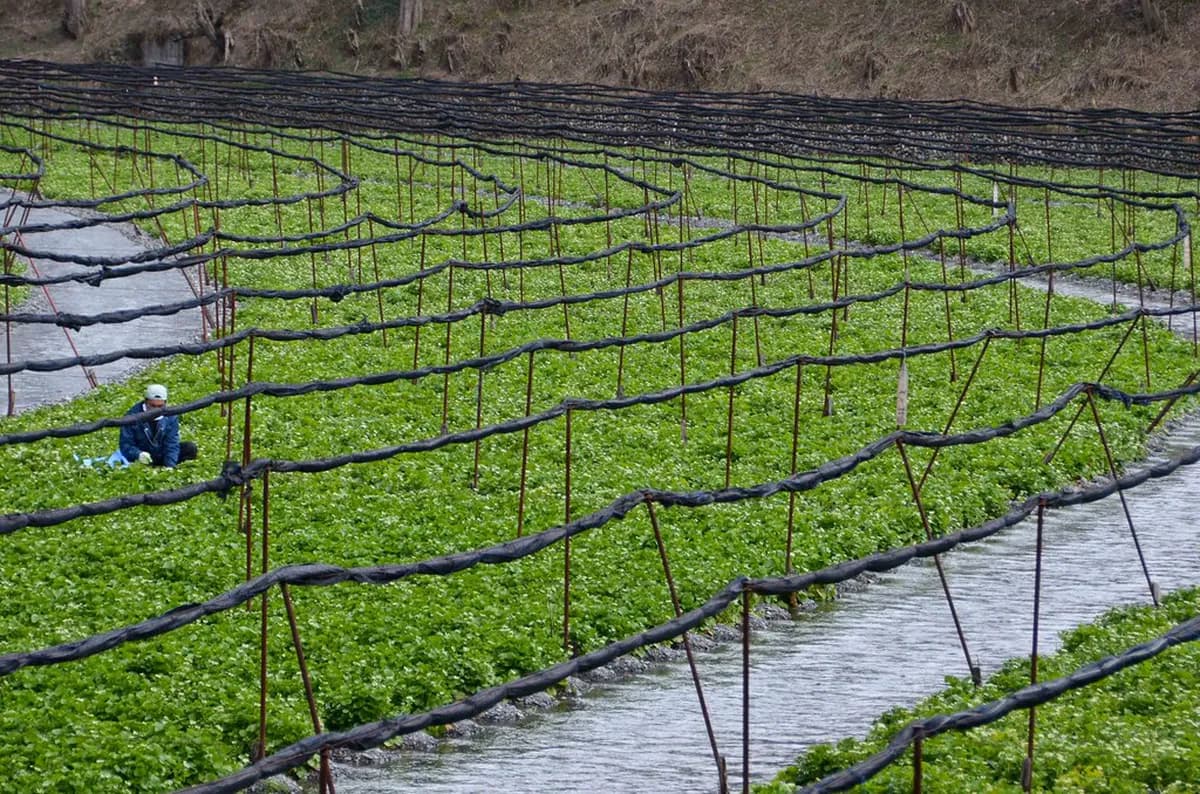
Founded in 1915, Daio Wasabi Farm has grown into one of Japan's largest wasabi operations, covering 15 hectares of land fed by snowmelt from the Northern Alps. The scale of the fields — rows of cultivated wasabi roots beneath protective black netting, irrigated by spring water from as far away as Mount Yari — is genuinely striking in person.
The three wooden water wheels along the Tade River are the farm's most photogenic landmark. These structures were built specifically for Akira Kurosawa's 1990 film "Dreams" and were designed to look historically authentic. You can view them from the riverbank or, from spring through summer, take a glass-bottom boat tour along the surrounding waterways. A large flat stone near the wheels marks where Kurosawa reportedly sat during filming — worth a photo stop in its own right.
The Daio Shrine sits at the center of the complex and is dedicated to Hachiman Daio, the farm's patron deity. Small stone carvings and a serene garden surround the shrine. The spiritual atmosphere here is quiet and understated — a contrast to the busier food and souvenir areas near the entrance.
- The wooden water wheels on the Tade River (Kurosawa filming location, free to view)
- Glass-bottom boat tours through the spring-fed waterways (spring and summer, ticketed)
- The wasabi cultivation fields — 15 hectares of gravel-bed growing rows
- The Daio Shrine and Kurosawa stone near the river
Wasabi Cultivation — What the Farm Teaches You
A dedicated museum on-site explains the wasabi cultivation process in detail, with displays on water temperature requirements, gravel-bed growing methods, and the difference between hon-wasabi (real wasabi) and the horseradish paste sold in tubes worldwide. Most visitors leave with a new appreciation for why fresh-grated wasabi tastes nothing like the green paste on supermarket shelves.
The onsite processing facility offers a glimpse of how roots are cleaned and graded before going to market. Informational boards are available in English, making this accessible to non-Japanese speakers. If you have extra time, look for the interactive station where visitors can try grating their own fresh wasabi root — a hands-on experience most people don't expect to find at a farm attraction.
The farm's gift shop stocks handcrafted goods from local Nagano artisans alongside the expected wasabi products. The range of wasabi-based items goes further than you'd think: wasabi chocolate, wasabi dressing, wasabi beer, and pickles made from wasabi leaves rather than just the root. Even the least adventurous eater usually finds something to bring home.
The Water, the Mountain, and Why Azumino Is Different
The farm's water supply is worth understanding before you arrive. It originates from the Azusa River, which is fed by snowmelt from Mount Yari and spring water from deep within the Northern Alps. The resulting streams that flow through the farm are among the clearest in Japan — cold, fast-moving, and home to trout you can see darting beneath the bridges.
There is also a cultural dimension to this water that most visitors miss entirely. The Hotaka Shrine in Azumino performs annual omizutori (water-drawing) and omizugaeshi (water-returning) rituals with the affiliated Myojin Shrine in Kamikochi. The same waterway that sustains the wasabi crops has been part of Shinto practice in this valley for centuries. Walking the riverbank with that context changes the experience from "pretty countryside" to something with more depth.
Seasonally, the grounds shift noticeably. Cherry blossoms in April frame the water wheels in pink, while autumn foliage from late October through November turns the valley gold. The cycling route that runs past the farm connects to a wider Azumino day trip network — renters at Hotaka Station can follow flat roads through rice paddies and local neighborhoods before arriving at the main gate.
Family-Friendly and Budget-Friendly Options
Entry to the farm is completely free, and parking (around 350 spaces) costs nothing. The main walking trail through the wasabi fields and along the river is entirely paved and manageable for strollers and wheelchairs on the flat sections. This makes it one of the few genuinely accessible rural things to do in Matsumoto.
Farm entry and parking are both completely free. The signature wasabi soft-serve ice cream near the entrance costs under ¥400 and uses real hon-wasabi — the heat is clean and sharp rather than burning. Bring cash for the boat tour (spring/summer) and restaurant.
Food costs are reasonable. The signature wasabi soft-serve ice cream near the entrance is the most popular snack and is milder than most expect. Wasabi croquettes, wasabi soba, and freshwater fish dishes are all available at the restaurant complex — a full lunch can be done comfortably under 1,500 yen per person. The soft-serve alone is under 400 yen and worth trying even if you dislike strong spice, because real hon-wasabi has a sharp, clean heat rather than a burning one.
Children tend to respond well to the open space and the waterways. The glass-bottom boat tour (spring and summer) gives kids a close-up view of the riverbed and fish. Wasabi grating demonstrations also work well for families — the grinding stone and small bamboo tools are easy for older children to use with supervision.
How to Get There and Plan Your Day
From Matsumoto Station, take the JR Oito Line to Hotaka Station — about 30 minutes and ¥330 per person. From Hotaka Station, taxis wait outside the main exit and take about 10 minutes to the farm entrance (approximately ¥1,500). If you're arriving by car from Matsumoto, the drive is 35–40 minutes; free parking is available on-site with around 350 spaces.
| Option | Journey Time | Approx. Cost | Notes |
|---|---|---|---|
| Train (JR Oito Line) + Taxi | ~40 min total | ¥330 + ~¥1,500 | JR Pass covers the train leg |
| Train + Rental Bicycle | ~45 min total | ¥330 + ~¥200/hr | Best option Apr–Nov; flat roads |
| By Car from Matsumoto | 35–40 min | Fuel + free parking | 350 free spaces on-site |
| Loop Bus (peak season) | Varies | Bus fare | Confirm schedule locally before relying on it |
Cycling is the most recommended option outside winter months. Rental bikes are available directly in front of Hotaka Station for around ¥200 per hour. The ride to the farm takes about 15 minutes on flat roads through rice paddies and quiet rural neighborhoods. From late April through early November, a local loop bus also connects Hotaka Station to the farm during peak tourist periods — check current schedules locally before relying on it.
Tour buses begin arriving around 10:00. Arrive at opening time on a weekday to have the grounds largely to yourself. The glass-bottom boat tours only run from spring through summer — check availability before planning your visit around them.
The farm opens at 08:00 from March through November and at 09:00 from December through February. Arriving at opening time on a weekday gives you the grounds largely to yourself before tour buses begin arriving around 10:00. Plan to spend 1.5 to 2.5 hours on-site, or longer if you want a full lunch at the restaurant. If you are meeting a guided tour, the standard meeting point is outside the main entrance gate, directly in front of the large wooden sign that reads "大王わさび農場".
On the return journey, the farm pairs naturally with a stop at Matsumoto City Museum of Art or a walk through the historic streets near Nakamachi Street. The farm works well as a morning activity, leaving the afternoon free for Matsumoto's city-center attractions.
What's Nearby and How to Build a Wider Nagano Itinerary
Within cycling distance of the farm, the Hotaka Shrine is worth a short detour — it's a few minutes from Hotaka Station and is the site of the annual omizutori water-drawing ritual that connects Azumino to the sacred waterways of Kamikochi. Riders following the Azumino Cycling Road can combine both stops in a half-day loop.
For a multi-day stay, Matsumoto makes the most practical base. A JR Pass covers the Oito Line, so you can day-trip to the farm at essentially no extra cost if you already hold one. From Matsumoto, the Hokuriku Shinkansen connects to Kanazawa and Tokyo, making the city a natural anchor for a broader central Japan itinerary in 2026.
Travelers interested in agriculture beyond wasabi should look at the Azumino apple orchards that fill the valley in autumn. Apple picking runs from late September through November and gives a different dimension to the same landscape. Local ryokan in the area frequently serve farm-direct meals featuring wasabi, river fish, and seasonal mountain vegetables — a better version of the food you'll try at the farm's restaurant, though the farm itself is a perfectly decent starting point.
Other Agriculture and Food Experiences in the Region
The Azumino Valley produces far more than wasabi. Apple orchards dominate the landscape between late September and November, and many farms allow direct picking. The water that irrigates the wasabi fields also feeds rice paddies, miso breweries, and sake producers throughout the valley — the same mountain snowmelt that makes hon-wasabi possible is what gives Nagano sake its clean, mineral character.
Back in Matsumoto, the historic shops on Nawate Street sell locally produced miso, pickles, and mountain vegetables sourced from farms in the Azumino area. A number of miso breweries near Matsumoto offer brief tours and tastings, adding an industrial food production angle that contrasts well with the outdoor experience at the wasabi farm.
For visitors who want more hands-on agriculture beyond wasabi grating, some farms around Hotaka offer strawberry picking in early summer and buckwheat harvesting in autumn. In 2026, several agricultural cooperatives in the valley are expanding eco-tourism access with guided farm walks. These programs are modest compared to major tourist circuits, which is part of their appeal — smaller groups, English-speaking guides available on request, and a more direct connection to working farmland.
Meeting Point for Guided Tours
If you book a guided tour that starts at Daio Wasabi Farm, your guide will be waiting outside the main entrance gate, next to the large wooden sign that reads "大王わさび農場" (Daio Wasabi Farm). This spot is easy to locate even on busy days — it sits directly in front of the parking area and is the natural pinch point where everyone enters the farm.
Arrive at least 10 minutes early. The parking lot is large (roughly 350 spaces) and can be disorienting during peak hours, particularly on weekends and Golden Week when tour buses arrive in waves. The entrance sign and welcome map board are the clearest landmark. Toilets and the soft-serve stand are also clustered near this point, making it a comfortable place to wait.
For independent visitors, the same entrance area doubles as an orientation hub. A large farm layout map is posted near the entrance booths, with paths labeled in both Japanese and English. The water wheels, shrine, and restaurant complex are all within a 5-minute walk of each other once you're inside. The farm's layout is linear along the river, so it is difficult to get genuinely lost.
Frequently Asked Questions
How much time should you plan for a Daio Wasabi Farm visit?
Most visitors find that two to three hours is sufficient to explore the fields, see the water wheels, and enjoy a snack. If you plan to take the boat ride or have a full lunch at the restaurant, consider staying for four hours. This allows for a relaxed pace.
Is the Daio Wasabi Farm worth including on a short itinerary?
Yes, it is highly recommended because it is free and offers unique scenery you won't find elsewhere in Japan. It is an easy day trip from Matsumoto. The farm provides a great break from temple visits and city shopping.
What is the best way to get to the farm from Hotaka Station?
The best way is by rental bicycle, which takes about 15 minutes through scenic fields. Alternatively, a taxi ride is quick and costs around 1,500 yen. During peak seasons, a loop bus may also be available for travelers. Walking takes about 30 to 40 minutes.
The Daio Wasabi Farm is a must-visit for anyone traveling through the Nagano region.
It combines natural beauty, cinematic history, and unique culinary experiences in one location.
Whether you are a solo traveler or with family, the farm offers a memorable day out.
Plan your trip today to taste the freshest wasabi in the heart of the Japanese Alps.
For official details, visit the Daio Wasabi Farm official site and Daio Wasabi Farm on Wikipedia.