
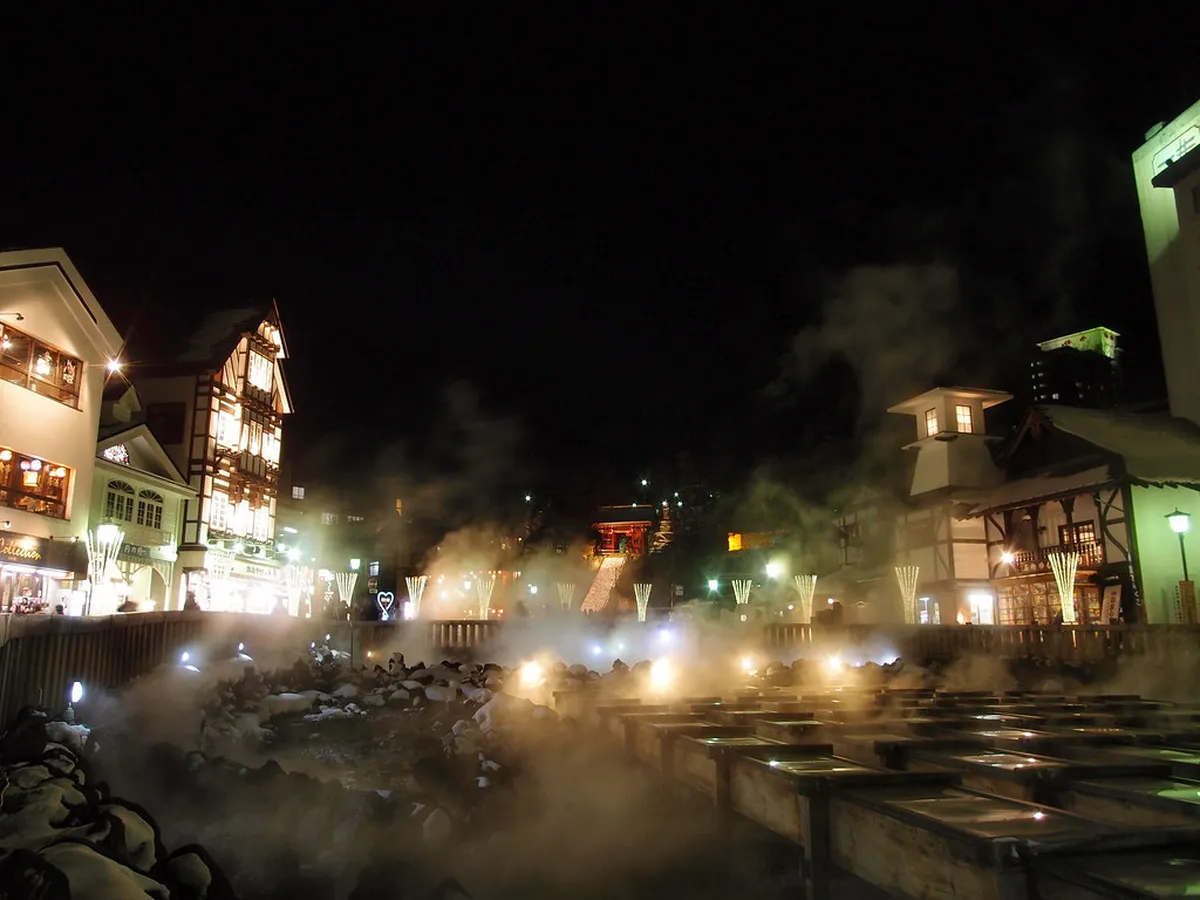
Yubatake Hot Water Field
The steaming hot-water field at the heart of Kusatsu Onsen, channeling 4,000+ litres of spring water per minute.
Visitor guide →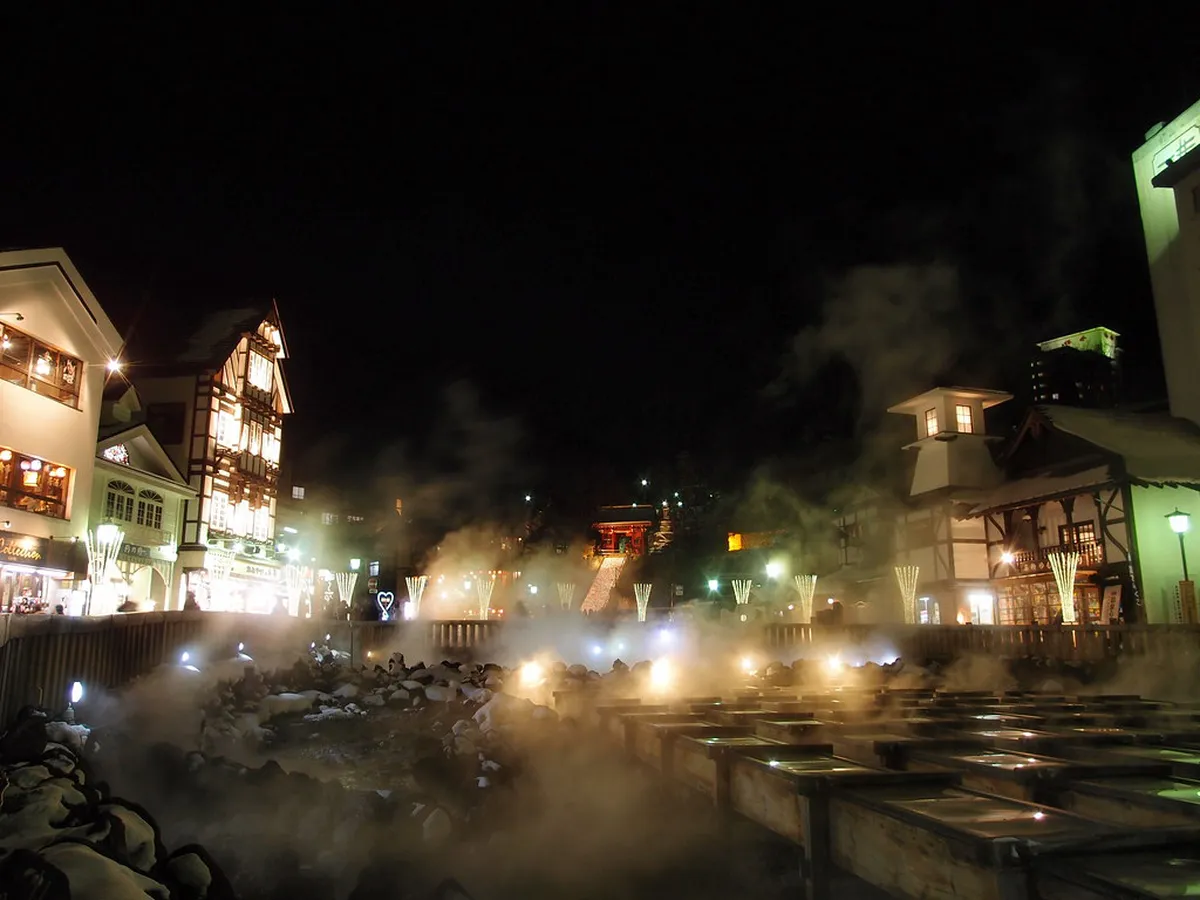
Things to do in Kusatsu Onsen: the Yubatake hot-water field, yumomi shows, open-air baths, skiing and shrines — with 2026 prices, hours, a day-trip itinerary and Tokyo access.
Kusatsu Onsen, perched at 1,200 m in the mountains of Gunma Prefecture, is widely rated Japan's best hot-spring town — and the highest-output natural onsen in the country, gushing more than 32,000 litres of mineral-rich water a minute. For first-time visitors the question is rarely "is it worth it" but "what are the actual things to do in Kusatsu Onsen beyond soaking?" This guide answers that: the five sights below are the ones that consistently reward the time and ticket price, grouped by what you came for — bathing, the famous hot-water field, the yumomi paddle show, winter skiing and a mountain shrine. Each card links to a full visitor guide with verified 2026 prices, opening hours and the practical tips that don't make it onto the official site. Further down you'll find a free-vs-paid breakdown, a half-day and full-day itinerary, how to reach Kusatsu from Tokyo in 3–4 hours, the best time to visit and money-saving tips. Bookmark this page as your starting point.
The steaming hot-water field at the heart of Kusatsu Onsen, channeling 4,000+ litres of spring water per minute.
Visitor guide →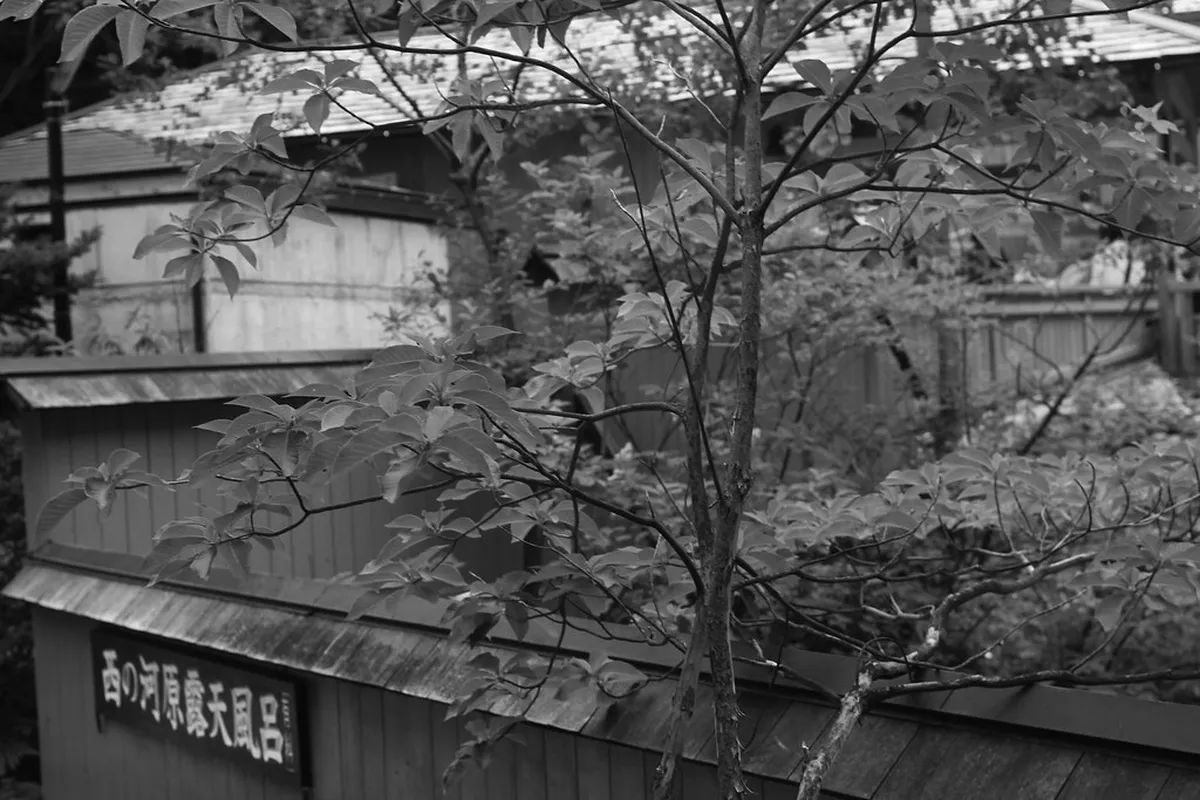
Riverside park of bubbling hot streams ending in one of Japan's largest open-air rotenburo.
Visitor guide →
Hall hosting the traditional yumomi hot-water-stirring performance with song and wooden paddles.
Visitor guide →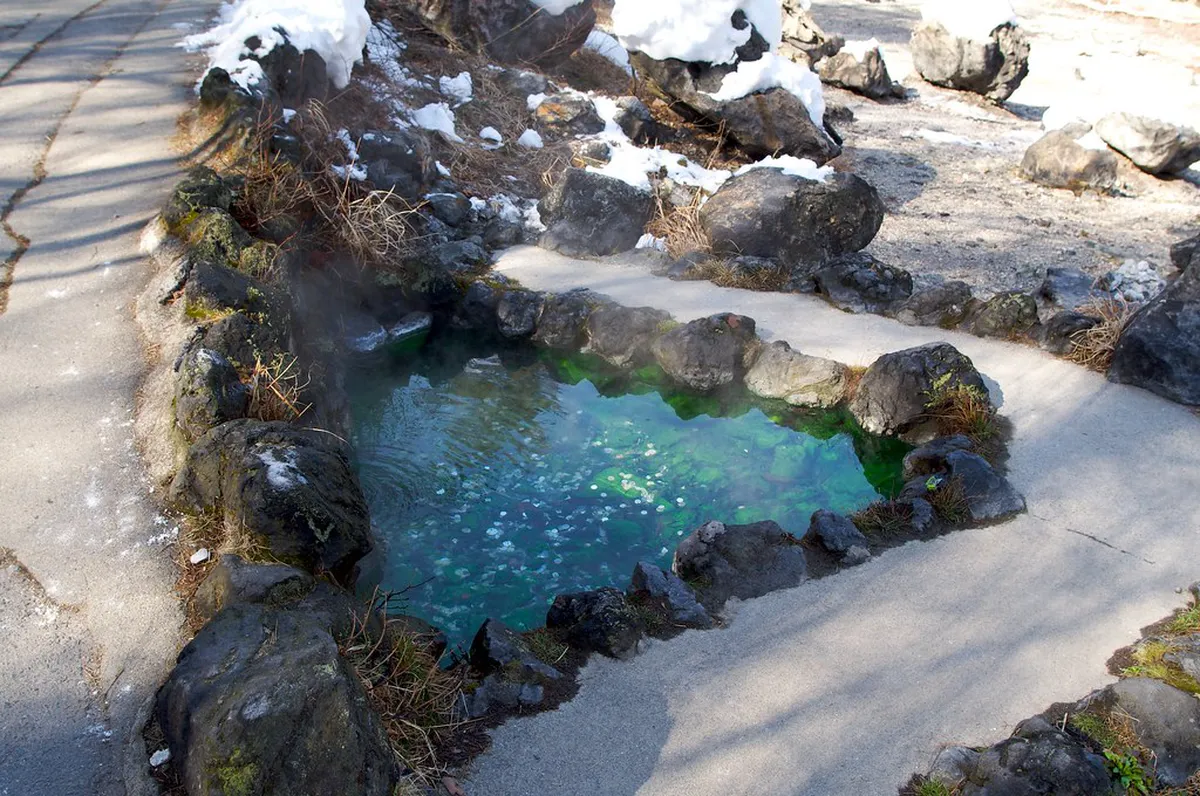
One of Japan's oldest ski areas on Mt Shirane, pairing powder runs with an onsen soak.
Visitor guide →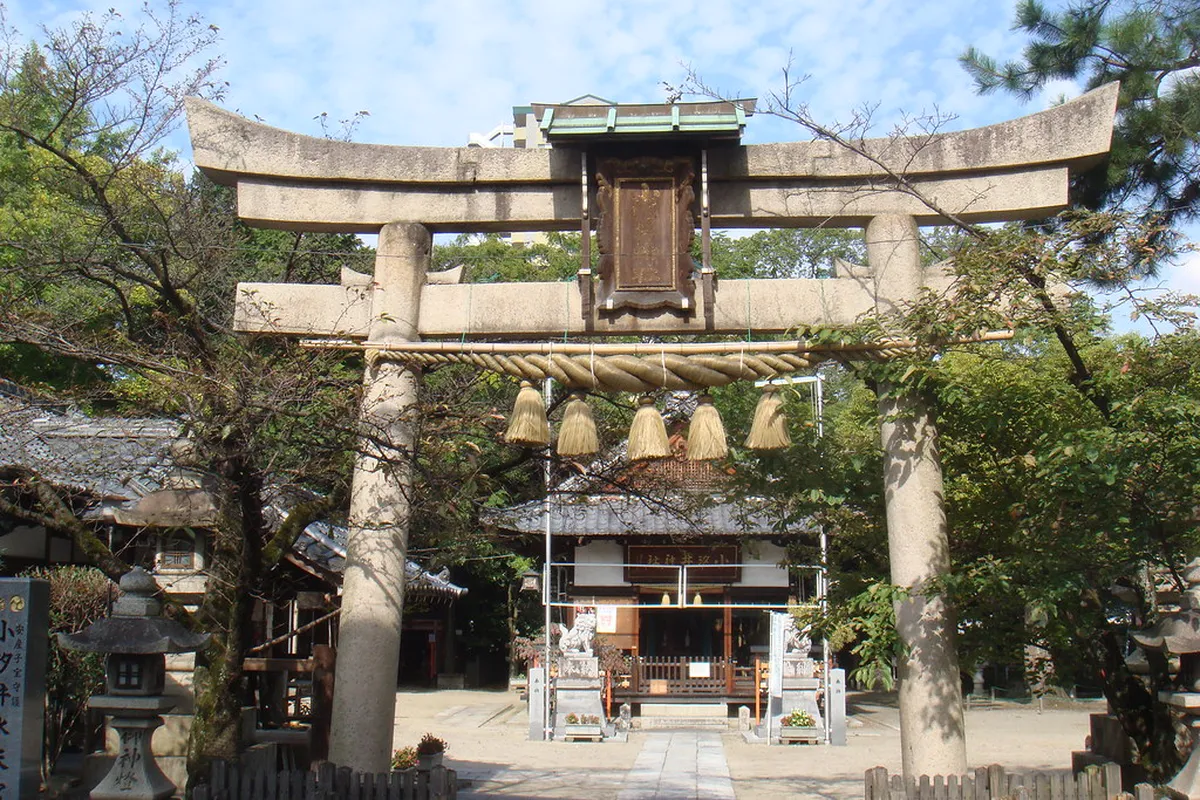
Mountain shrine dedicated to the deities of Mt Kusatsu-Shirane, reached by a forest stairway.
Visitor guide →Kusatsu's draws fall into a few clear categories, and knowing which is which makes it easy to build a plan around your interests. Almost everything sits within a 10–15 minute walk of the central Yubatake, so you rarely need transport once you arrive. The town's water is famously acidic — strong enough to be antibacterial, which is part of its long-standing reputation as a "cure-all" spring — so it's also worth pacing your soaks: short, hot dips rather than long ones. The five attractions below cover the full experience, from the must-see centrepiece to the seasonal and the spiritual, and you can mix as many as your time allows.
The Yubatake (湯畑), or "hot water field," is the symbol and beating heart of the town. A wooden-channelled basin in the centre of the village, it cools and distributes the source water to the bathhouses while throwing up clouds of sulphurous steam. It is open 24 hours, free to view, and best seen twice — by day for the turquoise mineral deposits, and after dark when it is lit and the steam glows. Free footbaths (yu-kemuri-tei) ring the field if you want to dip your feet without committing to a full bath.
You don't visit Kusatsu without soaking. Sainokawara Park, a 10-minute walk upstream from the Yubatake, is a valley of bubbling hot streams and pools that ends in Sai-no-Kawara Rotenburo, one of the largest open-air baths in Japan (around ¥700 for adults). The town also keeps a network of small, free local bathhouses (kyodo-yu) such as Jizo-no-Yu and Shirahata-no-Yu — fiercely hot, no-frills, and authentically local. For the etiquette, hours and prices of each, see our guide to Kusatsu Onsen's public baths.
Kusatsu's source water emerges far too hot to enter, so traditionally locals cooled it not with cold water (which would dilute the minerals) but by stirring it with long wooden paddles while singing — a ritual called yumomi. Netsu-no-yu Hall, beside the Yubatake, stages a costumed yumomi performance with song and the occasional audience paddle-along. Shows run several times daily; admission is roughly ¥800 for adults and ¥400 for children. Tickets can't be reserved and sell on the day, so arrive 15–20 minutes early for popular slots. Full schedule in our yumomi show guide.
From December to early April the Kusatsu Onsen Ski Resort on the slopes of Mt Shirane turns the town into a rare ski-and-soak destination — one of Japan's oldest ski areas, with runs for beginners through advanced and an onsen waiting at the bottom. It's the most seasonal of the five attractions but, in season, the headline reason many people choose Kusatsu over other onsen towns.
For a quieter half-hour, Kusatsu Shirane Shrine sits up a forest stairway dedicated to the deities of Mt Kusatsu-Shirane. It's free, rarely crowded, and pairs naturally with a walk between the Yubatake and Sainokawara Park.
One of Kusatsu's strengths is how much of it is free. Use this to budget a visit:
| Attraction / experience | Cost (2026) | Notes |
|---|---|---|
| Yubatake hot-water field | Free | Open 24h; lit at night |
| Free footbaths (around Yubatake & Sainokawara) | Free | Open 24h |
| Local public bathhouses (Jizo-no-Yu, Shirahata-no-Yu, etc.) | Free | Donations welcome; bring your own towel |
| Kusatsu Shirane Shrine | Free | Daylight hours |
| Sai-no-Kawara Rotenburo (large open-air bath) | ~¥700 adult | Towel rental extra |
| Yumomi show at Netsu-no-yu | ~¥800 adult / ¥400 child | Includes a souvenir paddle; same-day tickets only |
| Kusatsu Onsen Ski Resort lift pass | ~¥4,000–5,000/day | Winter season only |
In short: you can spend a satisfying half-day in Kusatsu for almost nothing, and the two paid headline experiences — the rotenburo and the yumomi show — together cost under ¥1,600.
Half-day (3–4 hours): Start at the Yubatake to orient yourself and test a free footbath. Catch a yumomi show at Netsu-no-yu next door, then walk up to Sainokawara Park for a soak in the big open-air rotenburo. That's the essential Kusatsu in three stops, all within a 15-minute walk.
Full day: Add the free local bathhouses on the walk between the Yubatake and Sainokawara, climb to Kusatsu Shirane Shrine, browse the souvenir lanes around the field, and return to the Yubatake after dark for the lit-up view. Break up the bathing with onsen-tamago (hot-spring eggs) and yu-no-hana sweets from the stalls along the field, and leave time for the steam-and-light atmosphere of the central plaza in the evening — it's the moment most visitors remember. If you can stay overnight, do: an evening and a dawn soak are the best part of an onsen town, a ryokan dinner is part of the experience, and a single day trip can feel rushed given the 3–4 hour journey each way. In winter, swap the morning for the slopes at the ski resort on Mt Shirane, then warm up with an afternoon rotenburo soak — the ski-and-soak combination is Kusatsu's signature winter day.
Kusatsu is one of the more accessible major onsen towns from the capital, taking roughly 3–4 hours by either route:
Because the town is compact and walkable, you won't need a car or local transport once you arrive. Kusatsu also makes a strong day trip from Tokyo, though an overnight is better — see more options on our Tokyo day trips hub and the full Kusatsu Onsen attractions guide for deeper planning.
Kusatsu rewards every season, but they're very different trips. Winter (December–March) is the most atmospheric: steam rising off the Yubatake against snow, a rotenburo soak as flakes fall, and skiing on Mt Shirane — it's the peak season, so book lodging early. Summer turns the highland town into a cool escape from Tokyo's heat, ideal for hiking nearby and exploring the moss park and wetlands above town. Autumn brings koyo foliage to the surrounding mountains, and late spring is quiet and mild. For a month-by-month breakdown of weather, crowds and events, see our guide to the best time to visit Kusatsu Onsen.
Kusatsu is one of the cheaper premium onsen experiences in Japan if you plan it right:
The essentials are the Yubatake hot-water field, a yumomi paddle show at Netsu-no-yu, and a soak in the large open-air rotenburo at Sainokawara Park. In winter, add skiing at Kusatsu Onsen Ski Resort, and any time of year you can climb to Kusatsu Shirane Shrine.
Yes — it's about 3–4 hours each way by direct bus or train, so a long day trip is feasible and lets you see the Yubatake, a yumomi show and one bath. That said, an overnight stay is strongly recommended: the Yubatake lit at night and a dawn rotenburo soak are the best parts of an onsen town.
The simplest route is the JR Kanto highway bus from Busta Shinjuku directly to Kusatsu Onsen, about 4 hours for ¥3,500–4,000 with no transfers. The fastest is a Shinkansen/limited express to Naganohara-Kusatsuguchi Station, then a 25–30 minute bus — roughly 3–3.5 hours total.
Much of it is free, including the Yubatake, footbaths, local public bathhouses and Shirane Shrine. The two main paid experiences are the Sainokawara open-air bath (~¥700) and the yumomi show (~¥800 adult / ¥400 child). Skiing in winter adds a lift pass of about ¥4,000–5,000 per day.
Yumomi is the traditional practice of cooling Kusatsu's scaldingly hot source water by stirring it with long wooden paddles while singing, rather than diluting it with cold water. A costumed performance runs several times daily at Netsu-no-yu Hall next to the Yubatake; tickets (around ¥800) are sold on the day only.
Winter (December–March) is the most atmospheric and the only ski season, but it's also peak. Summer is a cool highland escape ideal for hiking, autumn brings foliage, and late spring is quiet and mild. Choose by whether you want snow-and-ski or a calmer, cheaper soak.
You can cover the headline sights — Yubatake, a yumomi show and one bath — in a half-day of 3–4 hours. A full day adds the free local bathhouses, the shrine and a night-time return to the lit Yubatake. One overnight is the sweet spot for most visitors.
These in-depth blog guides go deeper on each part of a Kusatsu trip:
For background on the town and region, see Kusatsu, Gunma on Wikipedia and the Kusatsu travel guide on Wikivoyage.