Where To Stay In Kusatsu Onsen Travel Guide
Plan where to stay in kusatsu onsen with top picks, neighborhood context, timing tips, and practical booking advice for a smoother trip.
On this page
Kusatsu Onsen sits at around 1,200 metres above sea level in Gunma Prefecture and takes roughly 3–4 hours from Tokyo by train and bus. Because the village is isolated in the mountains, a one-night stay is the minimum most visitors need to properly experience it. Trying to do Kusatsu as a same-day trip means missing the evening soak, the morning quiet, and the bulk of the ryokan experience. This guide covers every major accommodation option in town, from entry-level ryokan with shared baths to high-end resorts with private open-air onsen in every room, plus a note on nearby areas if the main town is fully booked.
All prices below are approximate 2026 rates drawn from booking platforms and subject to seasonal fluctuation. Kusatsu fills up on weekends and during peak autumn and winter snow periods — book at least four to six weeks ahead for those dates.
Choosing Where to Stay in Kusatsu Onsen
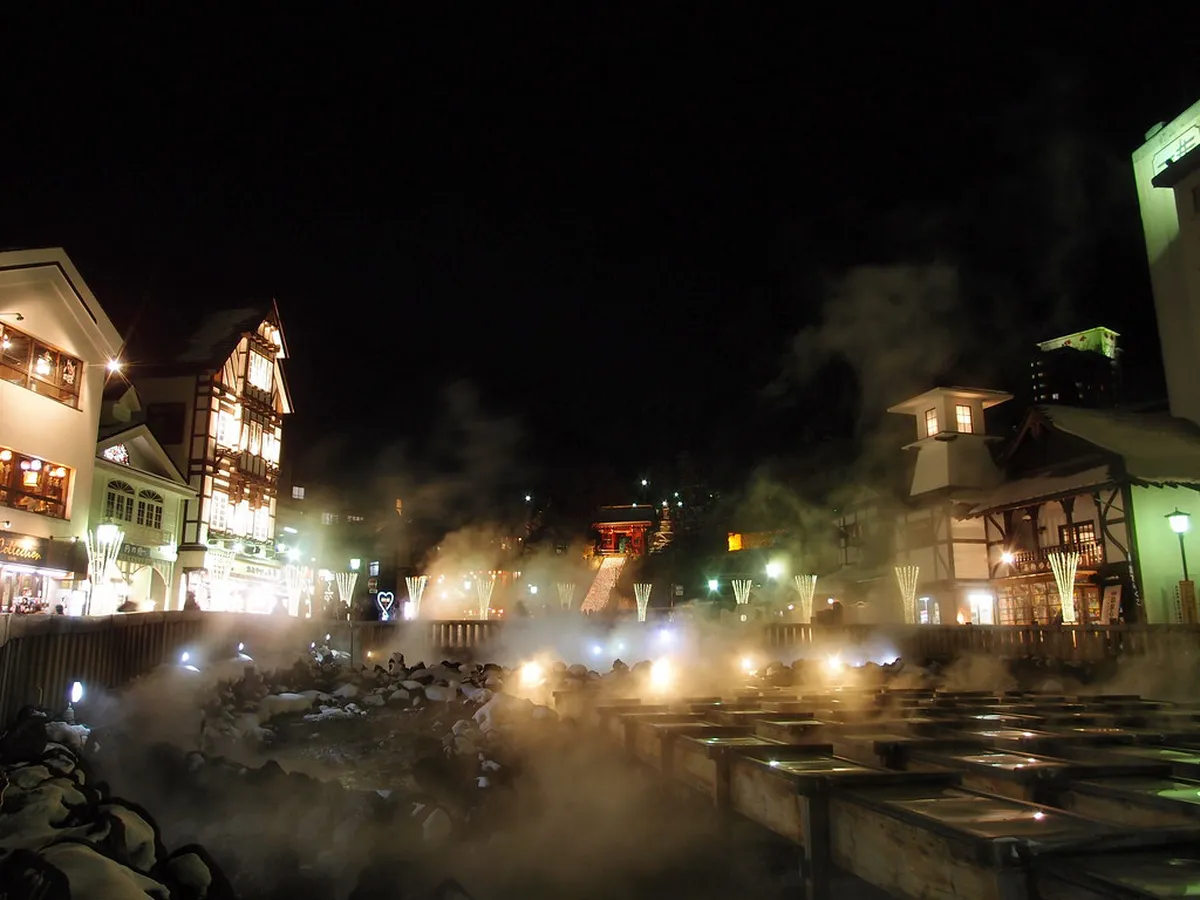
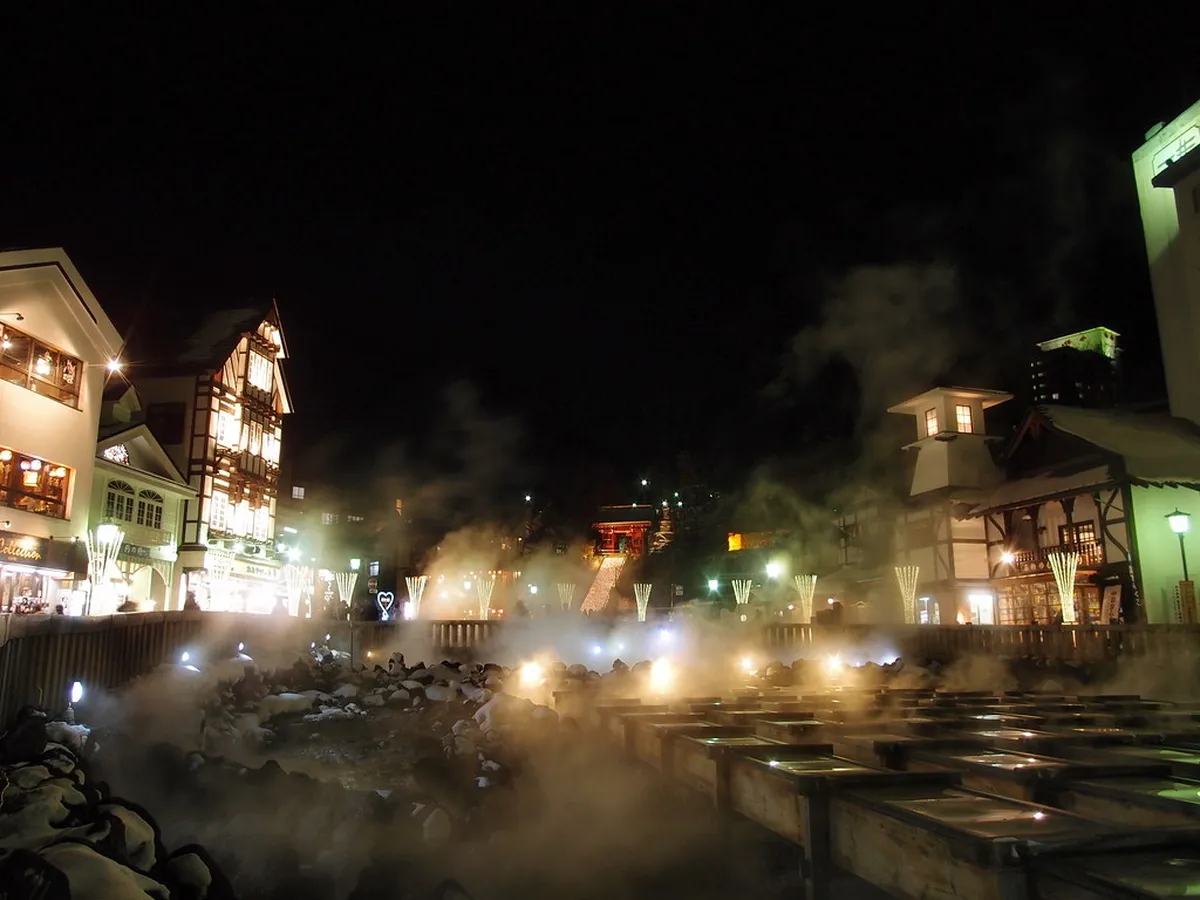
Most accommodation clusters within a ten-minute walk of the Yubatake, the open-air hot water field that anchors the town centre. Staying close to the Yubatake means you can walk to public baths, the Netsunoyu Yumomi show, and the main shopping street without needing any transport. A smaller cluster of hotels sits on the hillside above town — these tend to have wider mountain views and slightly more seclusion, at a modest price premium.
The majority of Kusatsu properties are full-board or half-board, meaning breakfast and dinner are included. Solo travellers and small groups will find the largest selection of room types in the town-centre category. Larger groups or families can consider villa options at properties like Kusatsu Onsen Eidaya. For a deeper look at what the town itself offers before you book, see the Kusatsu Onsen attractions guide.
One practical consideration before booking: Kusatsu's hot spring water is highly acidic, with a pH of around 2. That is part of why the water is so effective therapeutically, but guests with sensitive or damaged skin sometimes find extended soaking uncomfortable. If that applies to you, ask the property whether their communal baths have any alternative water source — a handful of properties supplement with sodium bicarbonate or softer silky-type baths alongside the main Kusatsu-minami or Yubatake water. This is rarely mentioned in booking descriptions but worth a quick enquiry before arrival.
Kusatsu Onsen Eidaya
Kusatsu Onsen Eidaya is one of the most flexible options in town, catering to couples, families, and large groups in the same property. Room types include Japanese-style rooms with private hot spring baths on the balcony, twin rooms with semi open-air baths, and the Showakan Villa — a standalone three-bedroom villa with a private hot spring bath priced at roughly $265 USD per night for up to six people. The villa rate does not include meals, though the on-site restaurant can prepare bento-style dinner and breakfast if ordered in advance.
For standard room bookings, expect around $285 USD per night for two people with breakfast and dinner included. The on-site atmosphere leans toward a B&B rather than a grand hotel: tatami communal spaces, Japanese cultural games available to borrow, and a domestic, unhurried pace. This is a good fit if you want the private-onsen experience without the formality of a large resort.
Hotel Sakurai
Hotel Sakurai is the most hotel-like property on this list in the Western sense — a large, high-capacity building with a big lobby, gift shops, arcade games, and a buffet mess hall serving both Japanese and international food. Select rooms have private open-air baths on the balcony, either in ceramic or Japanese cypress. If private-bath rooms are sold out, the Suites and Deluxe rooms still have mountain views and some feature indoor Japanese rock gardens.
A Japanese-style room with open-air bath runs approximately $415 USD for two people or $775 for four, with buffet-style breakfast and dinner included. Vegetarian options are available at the buffet. The hotel is walking distance to the central Yubatake and directly across from a 7-Eleven. Evening cultural performances — taiko drumming and a Yumomi show — take place in the hotel's own performance space. Hotel Sakurai suits travellers who want comprehensive facilities and an active atmosphere rather than a quiet retreat.
Tokinoniwa
Tokinoniwa is a traditional ryokan that leans hard into old-Japan atmosphere. All room types — double and twin — include an en-suite wooden onsen on the balcony, with a private seating area overlooking the surrounding Kusatsu landscape. The communal onsen area has multiple tub options, so guests can work through different temperatures and shapes over the course of a stay.
Deluxe double and twin rooms with tatami areas and open-air baths run $430–500 USD for two people or around $910 for four, with breakfast and dinner included. On-site facilities include a sake bar, spa, gift shop, lounge, and a Japanese garden walkway. If the aesthetic of a traditional ryokan matters to you more than resort amenities, Tokinoniwa is one of the stronger options at this price range.
Kusatsu Hotel 1913: Over a Century of Onsen Hospitality
Kusatsu Hotel 1913 has been operating in this location for more than a hundred years, making it the longest-running named property in town. The original main building has traditional tatami rooms; a newer annexe wing adds spacious rooms with private indoor onsen baths. A recently completed on-site restaurant serves kaiseki-style multi-course meals using local Kusatsu ingredients.
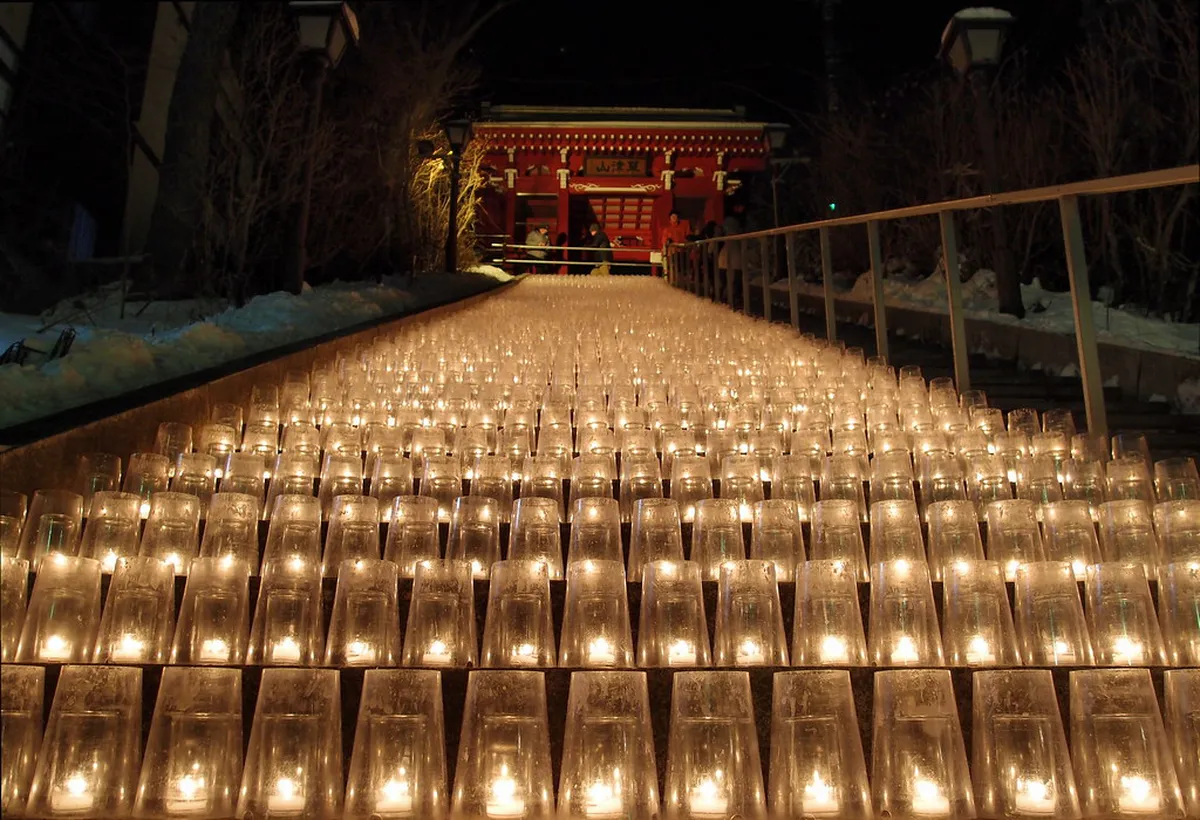
Twin and triple rooms with private onsen are priced at around $460 USD per night for two people, including breakfast and dinner. The communal baths draw water from two separate sources — Bandai and Nishi-no-Kawara — giving guests the chance to compare the slightly different mineral profiles of each in the same stay. This dual-source communal bath is an unusual feature that onsen enthusiasts often cite as a reason to choose 1913 over other mid-range properties. It is a well-suited option for travellers who want historical character alongside private-bath convenience.
Urakusatsu TOU
Urakusatsu TOU is the most design-conscious property in Kusatsu — a sleek, modern ryokan with clean lines and a quieter atmosphere than the larger hotel properties. Both Western-style rooms (beds) and Japanese-style rooms (futons) come with private onsen baths on enclosed balconies, creating a semi-open-air soaking experience in each room type. Kaiseki dinners use fresh regional ingredients.
Japanese and Western-style rooms with private hot spring baths cost approximately $630 USD for two people or $1,170 for four, with breakfast and dinner included. Beyond the en-suite options, Urakusatsu TOU offers kashikiri baths — communal onsen spaces that can be reserved for 45-minute private sessions. This means guests can experience a different tub and a different setting from their room bath, which adds variety to a two-night stay. The property is within walking distance of the town centre and its shopping district. Best suited to couples or solo travellers prioritising aesthetics and privacy over family amenities.
La Vista Kusatsu Hills Resort
La Vista Kusatsu Hills Resort takes its name from its position on the hillside above the town, with rooms looking out over the rolling Gunma mountains. Every room in the resort has a private onsen attached — this is the clearest differentiator from other properties where private-bath rooms sell out first. The communal onsen draws from three separate water sources: Yubatake, Bandai, and Yukawa-no-yu. The outdoor communal bath is on the top floor, so guests get the mountain panorama even when soaking collectively. Four kashikiri baths are also available on-site.
Twin rooms with open-air baths run $570–620 USD per night for two people, including breakfast and dinner. La Vista is a short walk to the Yubatake and town centre. The hillside setting means slightly more peace than the central-zone properties, and the guaranteed private bath in every room removes the need to book specific room categories in advance. Best suited to couples or honeymooners who want a resort feel without committing to the highest price tier. For wider context on the town, see the Kusatsu Onsen day trip from Tokyo guide.
Kusatsu Onsen Aeruyado Takamatsu
Kusatsu Onsen Aeruyado Takamatsu is one of the more unusual options in town: all rooms are Western-style (beds rather than futons) and have balconies for catching Kusatsu's mountain air. Private onsen baths in select rooms draw directly from the Yubatake water source. The standout room type is the twin room with two separate open-air baths at different temperatures — designed so you can soak in the hotter tub, rest in the cooler one, and repeat. These dual-bath rooms run approximately $973 USD per night for two people with breakfast and dinner included.
For more standard bookings, a superior twin room with a single open-air bath costs around $630 USD for two people, with buffet-style breakfast and kaiseki dinner. Larger groups can reserve adjoining twin rooms. The property also has communal indoor and outdoor onsen, access to onsen at a neighbouring property for onsen-hopping, a rock bath, sauna, and an on-site café. It is the top-end choice in town for guests who want Western-style sleeping arrangements alongside serious onsen access.
Nearby Alternatives If Kusatsu Is Fully Booked
Kusatsu Onsen books out entirely on peak weekends and during the winter snow season. If the properties above are unavailable, two nearby areas are worth considering as bases. Manza Onsen sits about 30 minutes drive to the west of Kusatsu at a higher altitude of around 1,800 metres. It is smaller and quieter than Kusatsu, with similarly acidic volcanic water and its own range of ryokan and hotels. The landscape is dramatic and the crowds are thinner.

Karuizawa is a larger resort town roughly 70–80 minutes by road and offers a wider range of Western-style hotels at varying price points. From Karuizawa, Kusatsu can be visited as a day trip by local bus. This is a reasonable strategy if you want a longer stay in the area but find Kusatsu accommodation too expensive or fully booked. The Shiga Kusatsu Kogen Route — open May to November — also links Shiga Kogen to Kusatsu for travellers with their own vehicle, opening up accommodation options in that national park area as well. Learn more about timing your visit in the best time to visit Kusatsu Onsen guide.
Frequently Asked Questions
How long should I stay in Kusatsu Onsen?
Most travelers find that a one to two-night stay is ideal for experiencing Kusatsu Onsen. This allows enough time to enjoy the Yubatake, public baths, and a traditional ryokan experience. Staying overnight lets you fully relax and soak in the onsen town's unique atmosphere. Consider a day trip from Tokyo if time is limited.
Is Kusatsu Onsen worth going?
Yes, Kusatsu Onsen is definitely worth visiting for its high-quality hot springs and vibrant atmosphere. It consistently ranks among Japan's top onsen towns. The unique Yumomi performances and the iconic Yubatake create a memorable cultural experience. Many visitors consider it a highlight of their Japan trip.
What are the top 3 Onsen towns in Japan?
Kusatsu Onsen is widely considered one of Japan's top three onsen towns, alongside Gero Onsen and Arima Onsen. Each offers distinct hot spring qualities and cultural experiences. Kusatsu is particularly known for its highly acidic, therapeutic waters. These three towns represent the pinnacle of Japan's hot spring culture.
Is Kusatsu Onsen a ryokan?
Kusatsu Onsen refers to the hot spring town itself, not a specific ryokan. However, the town is famous for its numerous ryokans, which are traditional Japanese inns. Many of these ryokans offer private onsen baths and traditional dining experiences. Staying in a ryokan is a key part of the Kusatsu Onsen experience.
Choosing where to stay in Kusatsu Onsen is key to a memorable trip. Whether you prefer a traditional ryokan or a modern resort, options abound. Consider your budget, desired amenities, and travel companions when making your decision. Each accommodation offers a unique way to experience this famous hot spring town.
Book your stay in advance, especially during peak seasons, to secure your preferred choice. Enjoy the therapeutic waters, delicious local cuisine, and rich cultural experiences. Kusatsu Onsen promises a truly rejuvenating and unforgettable Japanese getaway. Your perfect onsen adventure awaits.
For tickets, hours and visitor details, see our Kusatsu Onsen Ski Resort Visitor Guide & 2-Day Itinerary and Kusatsu Onsen attractions hub.
Free guide: Japan's Hidden Gems
12 under-the-radar places beyond Tokyo & Kyoto — with the best season to visit each and a local tip you won't find in the guidebooks.
You might also like

Continue reading
More guides you'll find useful