Kusatsu Onsen Yubatake Travel Guide
Plan kusatsu onsen yubatake with top picks, neighborhood context, timing tips, and practical booking advice for a smoother trip.
On this page
Kusatsu Onsen Yubatake is the vibrant heart of Japan's most famous hot spring town.
Sitting at 1,200 meters above sea level in Gunma Prefecture, Kusatsu has drawn visitors for centuries — samurai, emperors, and European physicians alike.
The Yubatake, or "hot water field," pumps more than 5,000 liters of 70°C water per minute from volcanic chambers deep below the town.
This guide covers everything you need to know before you visit in 2026.
What Is the Yubatake?
The Yubatake stands at the geographic and cultural center of Kusatsu Onsen. Volcanic rocks, wooden channels, rising steam, and a constant rush of scalding water make it unlike anything most visitors have seen. The water surfaces at over 70 degrees Celsius — hot enough that cooling it before use is not optional, it is essential to the town's entire bathing infrastructure.
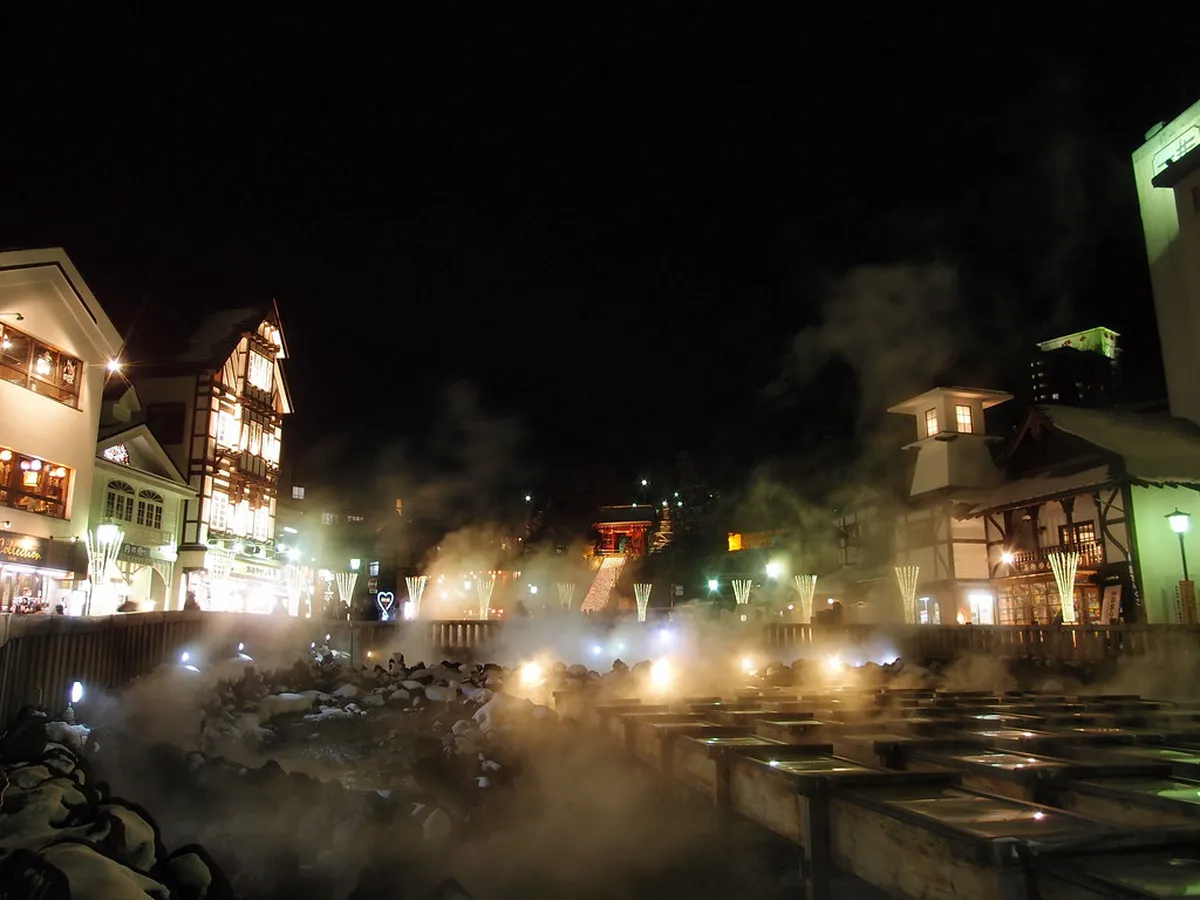
Six wooden conduits channel the water across a raised platform, exposing it to the mountain air so it drops to a bathable temperature before flowing into ryokans and public baths across town. Entry is free and the site never closes, making early morning and after dark equally rewarding times to visit. The smell of sulfur is immediate and unmistakable — locals say the name "Kusatsu" may derive from the Japanese word kusai, meaning smelly, though historians debate this.
The wooden channels do more than cool the water. As the flow slows and mineral content concentrates, a yellow-white sediment called yunohana — literally "hot water flowers" — collects on the channel walls. Workers harvest this sulfuric deposit regularly, and it is sold in nearby shops as bath salts. If you spot bags of pale yellow powder at souvenir stalls around the Yubatake, that is yunohana: a direct by-product of the field itself. No other major onsen town produces it in quite the same way.
A Historic Place of Healing and Relaxation
Kusatsu Onsen's earliest documented reference dates to 1472, during Japan's Warring States period, when it served as a recovery point for wounded samurai. Folklore credits the discovery to Yamato Takeru, a semi-mythological hero said to have lived 1,500 years ago. The town's reputation solidified in the Edo period (1600–1868), when national onsen rankings were published regularly and Kusatsu nearly always took the top position in eastern Japan.
International recognition arrived in the 19th century through Erwin Bälz, a German physician who served as personal doctor to Emperor Meiji. Bälz declared Kusatsu the finest highland hot spring he had ever encountered, a statement that circulated widely in European travel writing of the era. The novelist Naoya Shiga wrote portions of his celebrated work "A Dark Night's Passing" while staying here, and avant-garde artist Taro Okamoto designed a gourd-shaped promenade in the town center — both a sign of Kusatsu's enduring pull on Japan's cultural figures.
The water's high acidity (pH around 2) is the source of its therapeutic fame. It is believed to help with skin conditions, muscle fatigue, and circulation. The acidity also gives Kusatsu's water a natural antibacterial quality, which historically made it a destination for those seeking treatment rather than simply leisure. In 2000, Kusatsu marked its centennial founding by placing stone posts honoring 100 historical figures across the town — a permanent record of that healing heritage woven into the streetscape.
Hot Spring Culture: Yumomi, Public Baths, and Etiquette
Kusatsu's most distinctive cultural practice is yumomi — the cooling of near-boiling spring water using long wooden paddles. Workers stand at the edge of a bath and sweep the paddles back and forth in a synchronized rhythm, lowering the temperature without diluting the mineral content. The practice developed in the Edo period and, in Kusatsu, evolved into a performance art complete with a traditional song called "Kusatsu-bushi," which praises the town as an essential destination.
Today yumomi is performed at Netsunoyu six times per day. Adults pay 600 yen and children 300 yen — no advance reservation is needed, but popular time slots sell out, so arrive 20 minutes early. The building itself is beautiful, a wooden structure a short walk from the Yubatake. Bathing is not offered here; this is a viewing experience only, and the seats fill quickly in peak seasons.
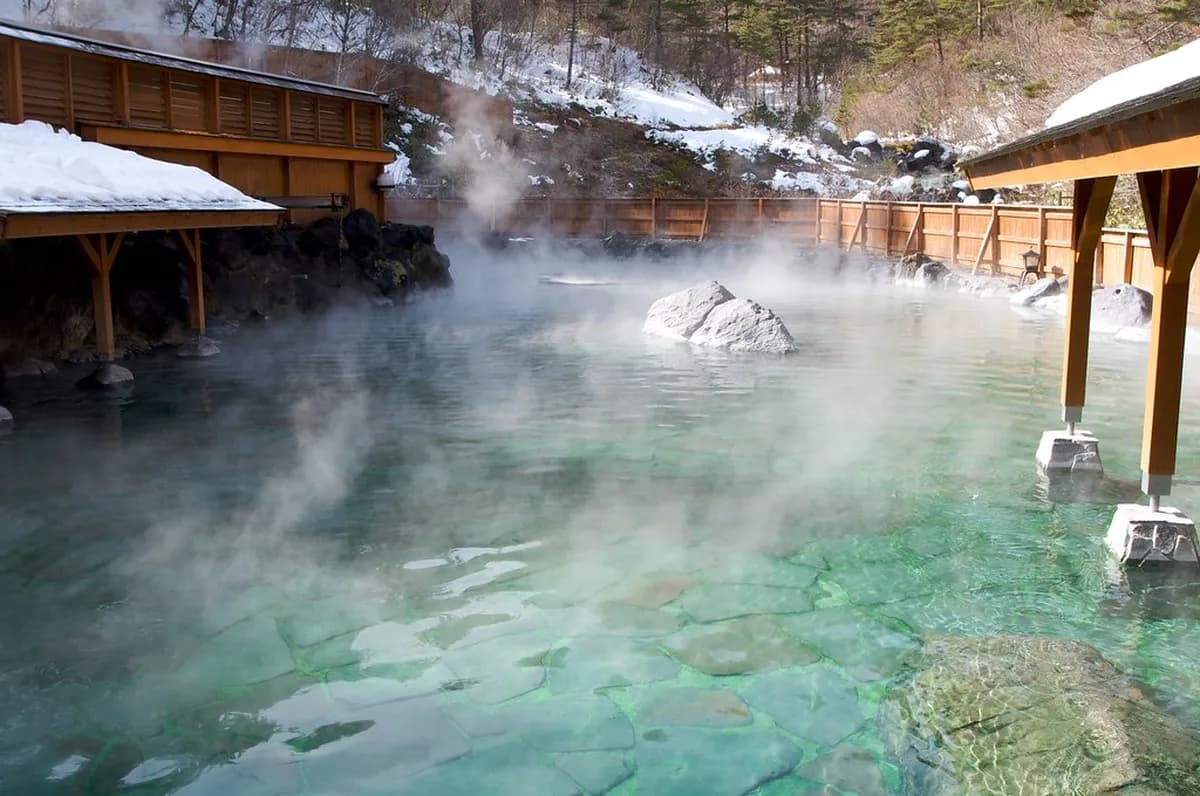
For bathing, Kusatsu has a network of public baths called sotoyu. Goza-no-yu is the most central and charges a small fee. Sainokawara Rotemburo in Sainokawara Park has two large outdoor pools accommodating 100 bathers each, separated by gender. Both the Yubatake and Sainokawara Park offer free open-air foot baths — no entry fee, no reservation, open around the clock. Standard onsen etiquette applies everywhere: wash thoroughly at the shower stations before entering any bath, keep small towels out of the water, and speak quietly inside bathing areas.
How to Get to Kusatsu Onsen from Tokyo
Kusatsu has no train station of its own, which surprises many first-time visitors. The closest rail access is Naganohara-Kusatsuguchi Station on the Agatsuma Line. From Tokyo's Ueno or Shinjuku stations, take the JR Shinkansen to Takasaki and transfer to a local express; total travel time is approximately two and a half hours. From Naganohara-Kusatsuguchi Station, a connecting bus takes around 25 minutes into the town center.
A simpler alternative is the Joshu Yumeguri Go highway bus, which runs directly from Shinjuku to Kusatsu Onsen Bus Terminal without transfers. Journey time is around three to three and a half hours depending on traffic. This option suits travellers who want a single-vehicle journey with luggage rather than the train-plus-bus connection. Highway buses also run from Ueno and YCAT (Yokohama City Air Terminal).
Once in Kusatsu, the town is compact and best explored on foot. Most ryokans, public baths, restaurants, and the Yubatake itself sit within a ten-minute walk of the bus terminal. For Sainokawara Park, allow a ten-minute stroll from the Yubatake along a road lined with shops and inns. Mount Shirane, the 2,160-metre volcano visible to the northwest, is a 30-minute bus or car journey and accessible for hiking from April to November.
Exploring the Area Around Kusatsu Onsen
Sainokawara Park sits a ten-minute walk from the Yubatake, down a street of ryokans and specialty shops. The park occupies a valley where natural hot spring sources bubble up at multiple points, forming warm streams and pools that merge into a central mountain stream. A free foot bath sits at the base of a small hot-water waterfall inside the park, and the Sainokawara Rotemburo public bath occupies a clearing near the top of the valley. Entry to the bath costs around 600 yen for adults.
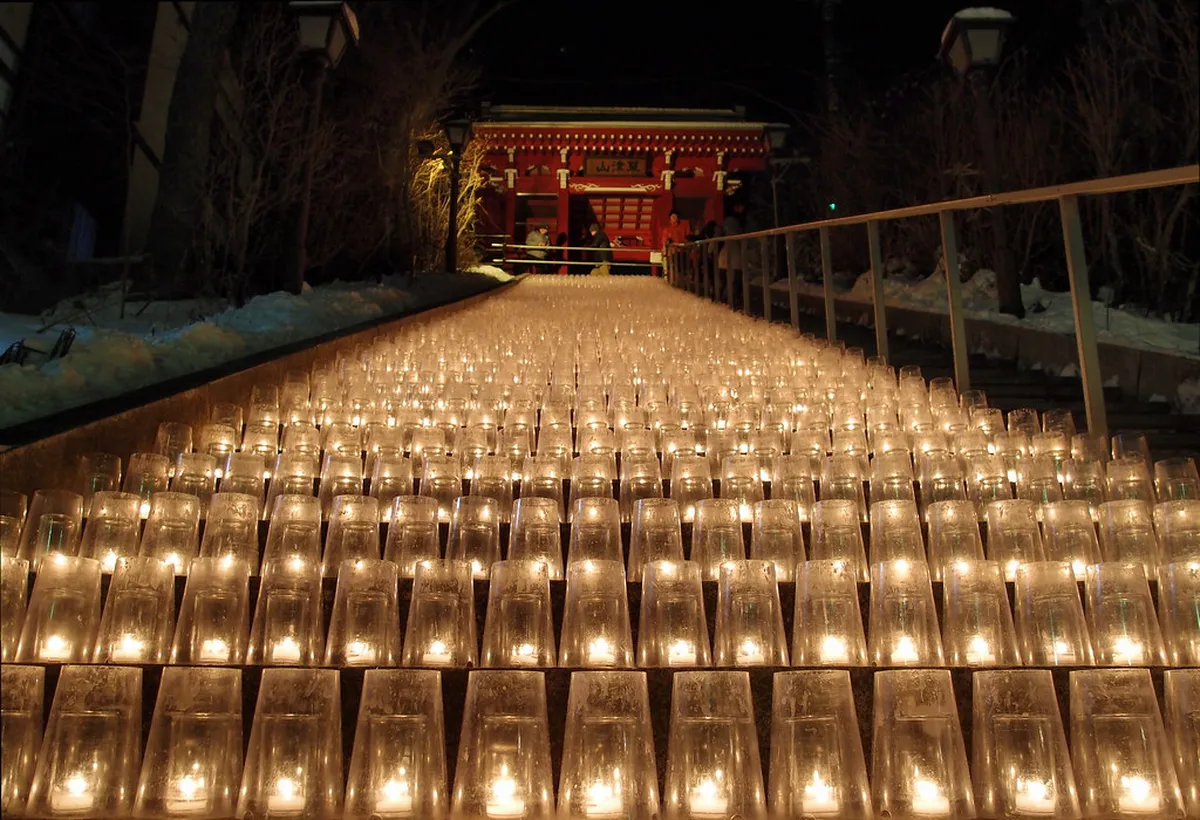
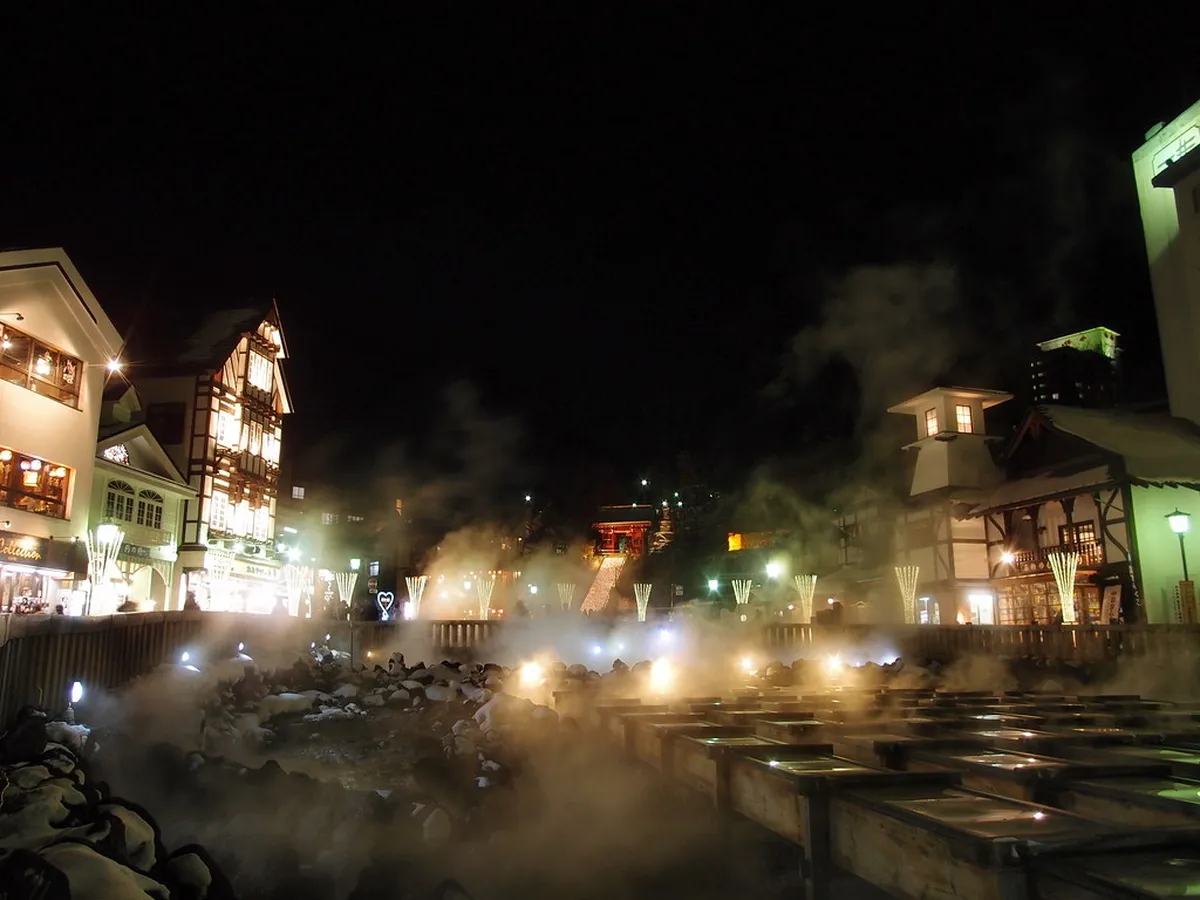
Kosenji Temple, a short walk from the Yubatake, is worth visiting after dark. From March to November, on the second and fourth Saturdays (and public holidays), the temple holds the Yume no Akari event: 1,200 candles in clear cups line the stone steps, creating a slow-burning spectacle that lasts into the evening. The Yubatake itself is illuminated at night, and the steam glows differently under artificial light than it does in daylight — worth seeing on its own merits even without the temple event.
For a longer excursion, Mount Shirane offers crater lake Yugama at 2,160 metres, its turquoise water visible year-round. The trail from Shirane Resthouse to the crater rim is straightforward on a clear day. In autumn the slopes run with colour; in winter they host several ski areas. Check volcanic activity advisories before any visit — Mount Shirane's activity level is monitored and access occasionally restricted at short notice.
Joshu Wagyu Beef and Local Food Around the Yubatake
The streets radiating from the Yubatake hold a dense mix of izakaya, udon shops, soba restaurants, and yakiniku grills. The local speciality worth seeking out is Joshu wagyu, beef from cattle raised in Gunma's mountain pastures on clean mineral-rich water. The meat has exceptional marbling and a tenderness that differs noticeably from standard wagyu. Shitatsuzumi, a yakiniku restaurant run by a butcher who purchases whole cows, is one of the most consistently recommended options in the area for both quality and price range.
For a quicker bite while walking, the Yuagari Joshu Beef Bun — stuffed with Joshu wagyu — is sold near the Yubatake and works well as a snack between sights. Budget visitors can find solid teishoku (set meal) options at smaller restaurants on Sai-no-Kawara Street for under 1,500 yen. Prices at yakiniku restaurants for a full Joshu wagyu set typically run 3,000–6,000 yen depending on cut and grade.
Shopping for Souvenirs at Kusatsu Onsen
Sai-no-Kawara Street, which wraps around the Yubatake, concentrates most of the souvenir shopping. Yuagari Karinto sells crispy deep-fried snacks in durable packaging with traditional Japanese designs — lightweight and TSA-friendly, which makes them popular as gifts. Grande Fiume Kusatsu stocks flavoured rusks (sugar, butter, Earl Grey, garlic) alongside gelato; the combination is sold as a single purchase and acts as a sampler for both products.
The most Kusatsu-specific souvenir is yunohana bath salts — the sulfuric sediment harvested from the Yubatake's wooden channels, described above. Multiple shops near the hot water field stock it in small bags. It dissolves cleanly in home baths and carries a mild sulfur scent; far more authentic than generic onsen-branded products sold at every gift shop in Japan. Other local options include manju (steamed buns), dried Gunma udon, senbei rice crackers, and cosmetics made with mineral extract from the springs.
Getting Around Kusatsu Onsen
Walking is the primary and most rewarding way to move through Kusatsu. The Yubatake, Netsunoyu, the main public baths, and most restaurants fall within a ten-minute radius of the bus terminal. The streets are narrow and often pedestrian-heavy during peak periods, which slows car traffic and makes walking faster anyway. Comfortable shoes matter: the terrain around Sainokawara Park involves uneven paths and some incline.
Local buses connect the Yubatake with Sainokawara Park and the Kusatsu Kokusai Ski Resort. Fares are low and stops are well-marked. For the Kusatsu Onsen From Tokyo Travel Guide, the bus terminal is the arrival and departure hub for all highway coaches, so plan your last activity no more than 15 minutes from there. During winter, some mountain roads — including the route to Mount Shirane — close entirely. Always check seasonal road and bus availability before planning excursions outside the town center.
Taxis wait near the bus terminal and at larger ryokans. They are useful for groups with luggage or for evening returns from restaurants after the last bus has run. Confirm the fare estimate before departure; rides within the town center are generally under 1,000 yen, while trips to the ski resort or Mount Shirane trailhead cost more.
Yubatake Hot Spring Webcam
The Yubatake is monitored by a live webcam, viewable from the Snow Monkey Resorts webcam page. The camera captures the full width of the field along with the surrounding buildings and ascending steam. Checking it before your visit gives a useful read on current crowd levels and weather conditions in the town.

The webcam is also a practical tool for checking seasonal state. After heavy snowfall in winter the Yubatake takes on a different appearance, steam contrasting sharply against white rooftops. During the summer festival and illumination events the field is lit and active well into the night. If you are timing a visit around specific atmospheric conditions or events, a webcam check the day before can confirm whether conditions match expectations.
For the wider city context, see our complete Kusatsu Onsen tourism attractions guide.
Frequently Asked Questions
Is Kusatsu Onsen worth going?
Yes, Kusatsu Onsen is definitely worth visiting for its unique Yubatake and therapeutic hot springs. The town offers a rich cultural experience with traditional ryokans and delicious local cuisine. It's considered one of Japan's top onsen destinations, providing both relaxation and historical charm.
Does Kusatsu Onsen smell?
Kusatsu Onsen has a distinct sulfuric smell, which is characteristic of many natural hot springs. This scent is a sign of the rich mineral content in the water. While noticeable, most visitors find it part of the authentic onsen experience and quickly get used to it.
What are the top 3 onsen towns in Japan?
While opinions vary, Kusatsu Onsen is widely regarded as one of Japan's top three onsen towns. Other frequently cited top destinations include Beppu in Oita Prefecture, famous for its 'Hells,' and Hakone in Kanagawa Prefecture, known for its scenic views and proximity to Tokyo. Each offers a unique hot spring experience.
Do I wear clothes in an onsen?
No, typically you do not wear clothes in an onsen. Japanese onsen culture requires bathing naked to ensure the cleanliness of the communal waters. You use a small modesty towel for covering while walking to the bath, but it should not enter the main bathwater. Always wash thoroughly before entering the hot spring.
Kusatsu Onsen Yubatake stands as a captivating symbol of Japan's rich hot spring heritage.
Its unique geothermal landscape and vibrant culture offer a truly unforgettable travel experience.
From relaxing baths to delicious regional cuisine, Kusatsu provides a perfect blend of tradition and rejuvenation.
Plan your visit to this premier destination for an authentic taste of Japanese wellness and charm.
For tickets, hours and visitor details, see our Yubatake Hot Water Field & Kusatsu Onsen Visitor Guide: 2-Day Itinerary & Tips and Kusatsu Onsen attractions hub.
Free guide: Japan's Hidden Gems
12 under-the-radar places beyond Tokyo & Kyoto — with the best season to visit each and a local tip you won't find in the guidebooks.
You might also like


Continue reading
More guides you'll find useful