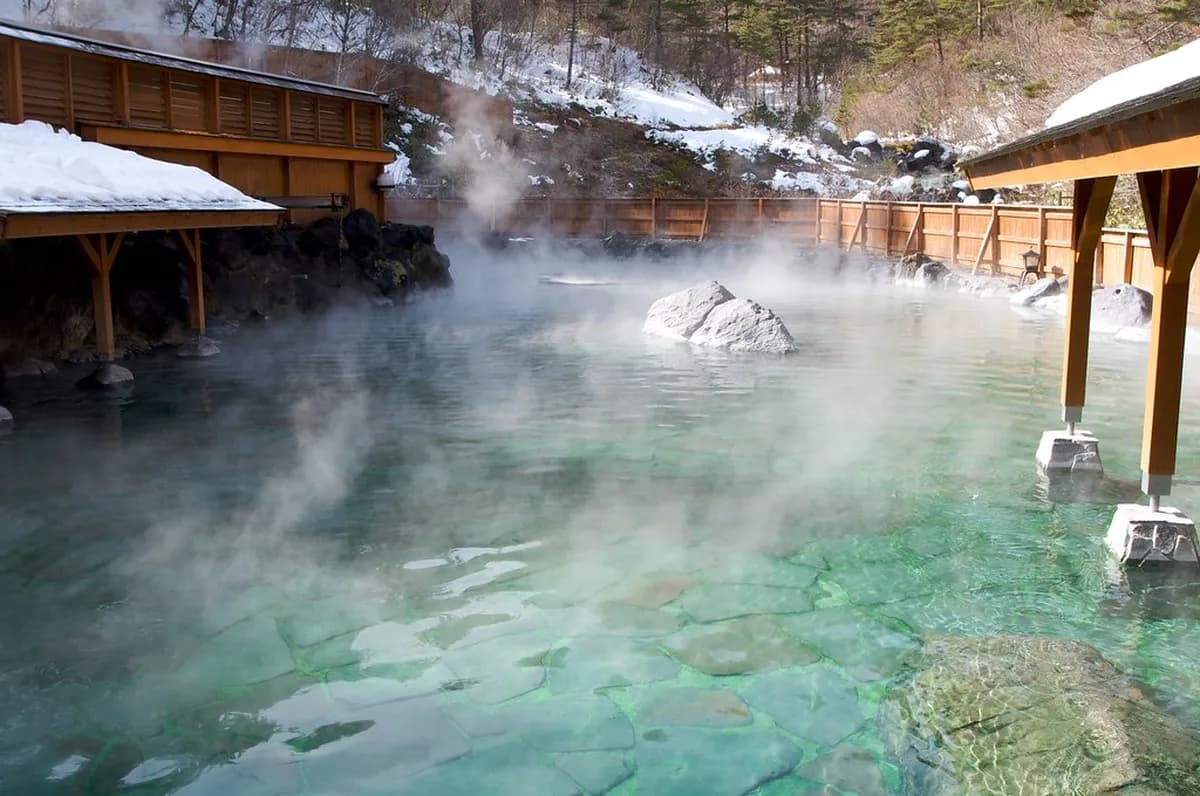
Kusatsu Onsen Travel Guide
Plan Kusatsu Onsen with top picks, neighborhood context, timing tips, and practical booking advice for a smoother trip.
On this page
Kusatsu Onsen sits 1,200 meters above sea level in the mountains of Gunma Prefecture, and Japanese travelers have ranked it the country's top hot spring destination for centuries. Its remote location keeps the international tourist numbers low even in 2026, which is part of what makes a visit feel so rewarding. The town pumps out more than 32,000 liters of hot spring water every minute from Mt. Shirane, an active volcano — more throughput than any other onsen resort in Japan.
The town is compact and entirely walkable. You can cross the main Yubatake square in about 10 minutes, and every significant attraction sits within 10 minutes of that central point. That tight layout makes planning simple: there is no need for taxis, local buses, or complex logistics once you arrive.
This guide covers the specific baths worth visiting (with current prices and hours), how to reach Kusatsu by Shinkansen and bus, the best outdoor spots, where to stay, and what to do after dark.
Key Takeaways
- Kusatsu's spring water is never diluted, reheated, or chemically adjusted — the most potent onsen water in Japan.
- The town is entirely walkable: every main sight is within 10 minutes of the central Yubatake square.
- Reach Kusatsu via Hokuriku Shinkansen to Karuizawa, then the Kusakaru Kotsu bus — about 3 hours from Tokyo.
- Three main public baths range from 500 to 800 yen; free community baths (jikan-yu) are also open to visitors.
- Book ryokan well in advance for weekend and winter stays — availability tightens significantly in peak season.
Why Kusatsu Onsen Is Worth Visiting
Kusatsu Onsen is famous among Japanese for one specific reason: it has the highest volume of natural spring water flow in the entire country, and that water is never diluted, reheated, or otherwise adjusted. Most onsen towns mix in cold water to reach a comfortable bathing temperature. Kusatsu uses a centuries-old technique called Yumomi — performers use large wooden paddles to cool the water mechanically — which preserves every mineral and therapeutic compound. The result is a significantly more potent soak than you will find elsewhere.
The acidity level is the other factor that sets it apart. Kusatsu's waters are highly sulfuric, acidic enough to dissolve a six-inch iron nail in under ten days. That acidity kills harmful bacteria on contact, which is one reason the springs have carried a reputation for healing since German physician Erwin von Baelz studied them in the late 1800s. Skin irritation is possible for sensitive bathers — first-timers should limit their first dip to three minutes in the hottest pools and build from there.
Beyond the water itself, the town remains genuinely uncrowded by Japanese standards. Even during busy periods, you rarely see more than a few dozen tourists at any single attraction. The compact layout, reasonable prices, and lack of heavy commercialization make Kusatsu feel like an authentic onsen town rather than a theme park version of one.
How to Get to Kusatsu Onsen
No train line runs directly to Kusatsu. Every route ends with a bus. The fastest approach from Tokyo combines the Hokuriku Shinkansen to Karuizawa Station with the Kusakaru Kotsu bus to the Kusatsu Onsen Bus Terminal — the journey takes roughly 2.5 to 3 hours total. Note that only the slower Asama Shinkansen services stop at Karuizawa; the faster Hakutaka and Kagayaki trains skip it entirely. Allow time between connections, as buses do not synchronize precisely with every arrival.
An alternative is the limited express train from Ueno Station to Naganohara-Kusatsuguchi Station on the Agatsuma Line, followed by a 700-yen local bus to the Kusatsu terminal. This route takes longer but can work well if you are starting from eastern Tokyo. Buses depart from directly outside the station exit. If you are coming from Nagano, Kanazawa, or Niigata, Karuizawa remains the most logical transfer point as it sits on the Hokuriku Shinkansen corridor.
Direct highway buses from Shinjuku Station also reach Kusatsu Onsen Bus Terminal, with the journey taking roughly 4 hours. The fare is around 2,000 yen less in total compared with the Shinkansen route, which makes it a reasonable budget option. Driving is practical if you have an international licence, but winter road conditions in Gunma's mountains can be severe — check forecasts before departing.
The Yubatake and Town Center
The Yubatake — "hot water field" — is the geographic and visual center of Kusatsu Onsen. Hot spring water pours down thick pinewood channels at its core, slowing and cooling as it travels before distributing to the surrounding baths and ryokan. The channels are constructed from resin-coated timber specifically because standard materials corrode rapidly under the water's acidity. At full flow, the Yubatake produces around 4,000 liters of spring water per minute on its own.
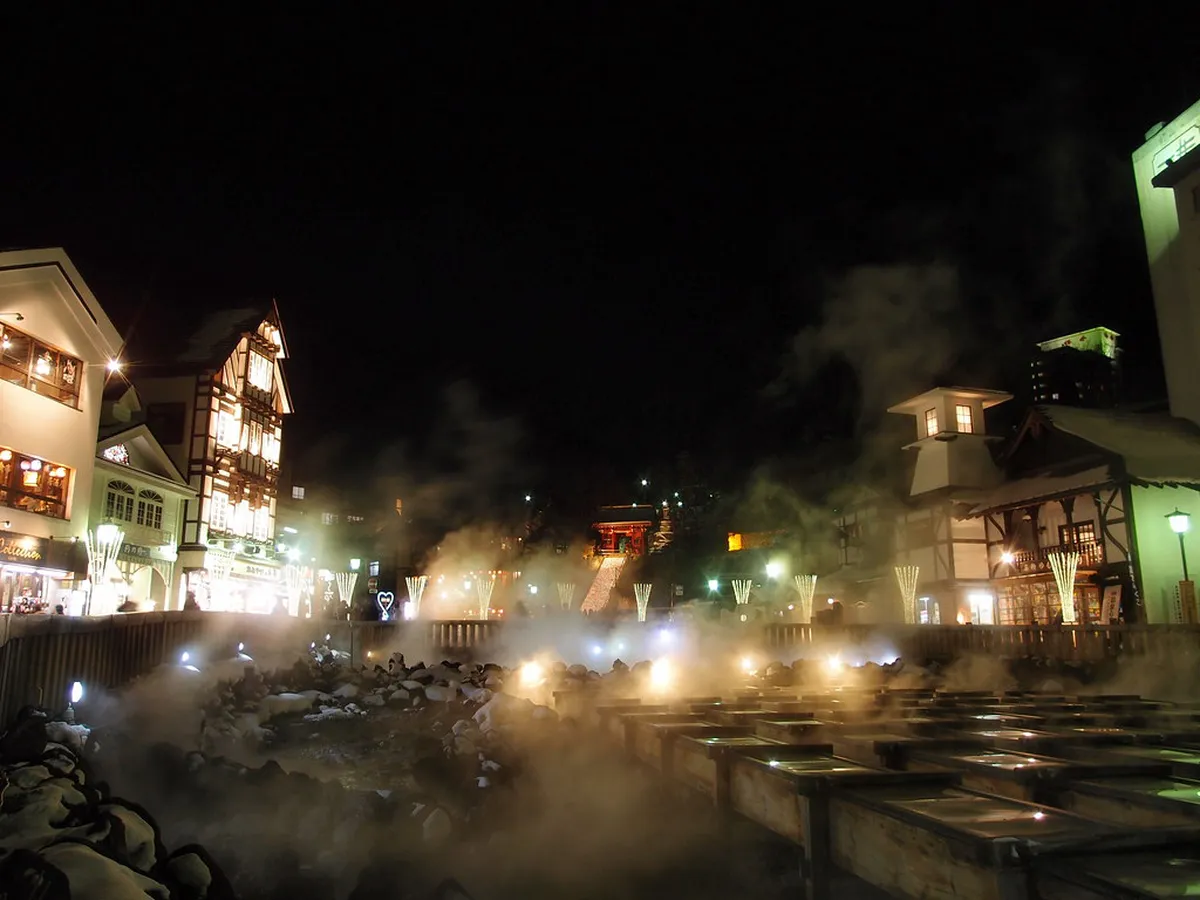
The steam above the Yubatake is at its most dramatic in cold weather, forming dense clouds that drift through the town center. At night, the square is illuminated and the colored mist creates an atmosphere that is unlike anything else in Japan. The Yumomi performance at the adjacent Netsunoyu hall runs six times daily; admission is 600 yen for adults. Lines can build up, so either arrive early for the first morning performance or book a seat in advance if you are set on attending.
The streets radiating from the Yubatake hold most of Kusatsu's restaurants, souvenir shops, and small cafes. Onsen manju — steamed buns filled with sweet red bean paste, cooked using residual spring steam — are the local street food staple. Several vendors operate directly alongside the Yubatake and are worth picking up as you move between baths.
How to Pick Your Hot Spring
Kusatsu has more than a dozen community baths scattered through its neighborhoods, but without Japanese-language skills they can be difficult to locate and the facilities are compact. The three main public baths offer a clearer experience for visitors and cover most preferences.
Goza-no-Yu (admission 500 yen; open 07:00–21:00; 1–2 minutes from the Yubatake) is the most accessible starting point. It was rebuilt in 2013 and offers both stone and wooden baths, with the two types alternated between genders on a rotating basis. Each bath has two pools fed from separate thermal vents, so the temperatures vary slightly between them.
Otaki-no-Yu (admission 800 yen; open 09:00–21:00; 15 minutes from the Yubatake) uses a traditional wooden interior with multiple tubs set at different temperatures in a practice called awaseyu. The graded heat allows you to move progressively between cooler and hotter pools — useful for newcomers building tolerance to Kusatsu's notoriously high water temperatures.
Sai-no-Kawara Rotenburo (admission 600 yen; open 09:00–20:00; 10 minutes from the Yubatake) is the large open-air communal bath within Sai-no-Kawara Park. Soaking outdoors while looking out over the park's steaming streams is a different experience from any indoor bath, and winter visits — with snow on the surrounding hills — are particularly memorable. For visitors who can only pick one bath, this one is frequently cited as the highlight.
Beyond these three, Kusatsu also has several free jikan-yu community baths — Shirahata-no-yu and Jizo-no-yu are the most welcoming to visitors. These small neighborhood baths operate with strict time windows and traditional bathing customs, so read the posted rules before entering. Guests staying at most ryokan also have access to on-site onsen included in their room rate. Free ashiyu (foot baths) are available at two points: one beside the Yubatake and one near the Kusatsu Onsen Bus Terminal.
Sai-no-Kawara Park
Sai-no-Kawara Park begins where Sai-no-Kawara Street ends, about 10 minutes west of the Yubatake along a shopping lane lined with ryokan and confectionery shops. The park itself is a natural hot spring field: wells push water to the surface, forming steaming rivers that wind across the grounds and collect into scalding pools. There are no guardrails around most of the active water — watch your step, particularly in winter when steam obscures the ground.
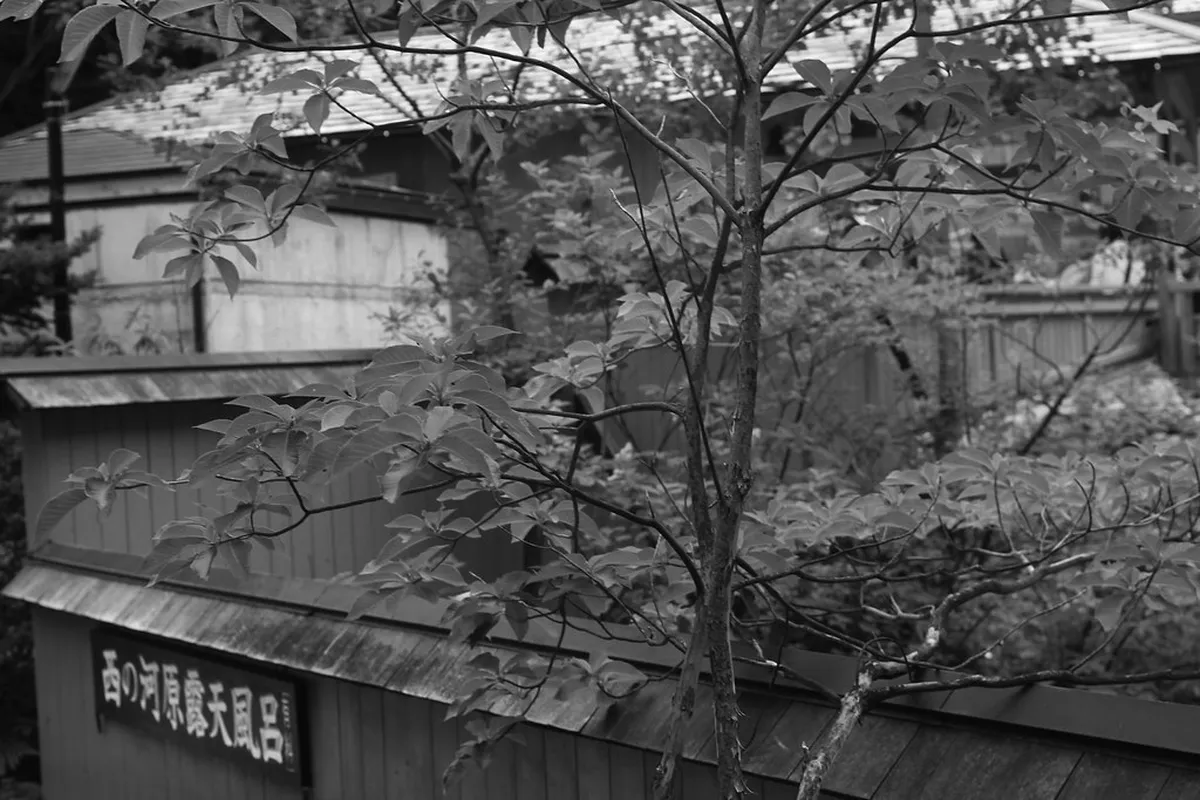
An Inari shrine with multiple torii gates stands in the early section of the park. In summer the approach is straightforward; winter snow can make the steep steps treacherous. The park's name translates loosely as "Riverbed of the Realm of the Dead," a reference to an old legend about a demon who was said to inhabit the springs. Locals warn against speaking loudly in the park, an etiquette tradition tied to that mythology.
The Sai-no-Kawara Rotenburo open-air bath occupies the far end of the park. It is one of the largest open-air communal baths in Japan. Even if you are not bathing, walking the full length of the park to see the steaming lagoons and hot spring rivers is worthwhile on its own — allow 30 to 40 minutes for a relaxed walk through.
What Else to See in Kusatsu
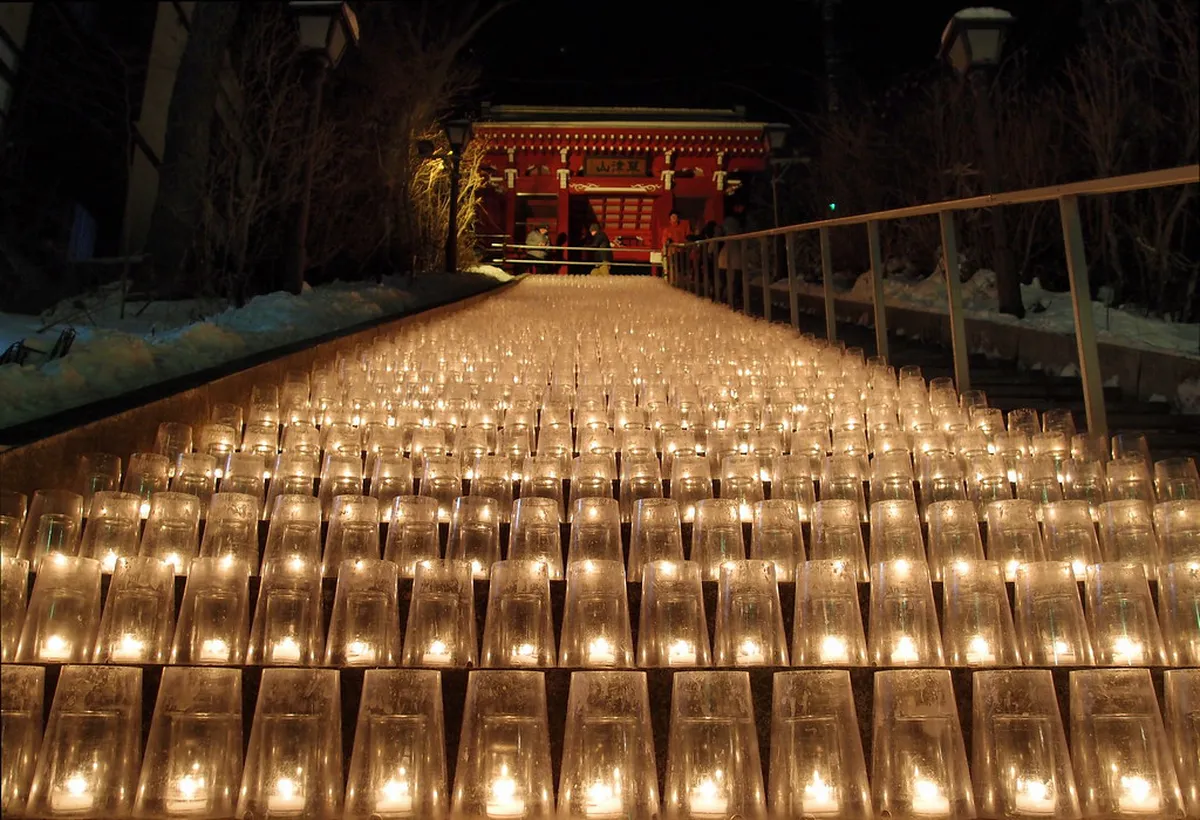
Kusatsu is primarily a hot spring town rather than a sightseeing destination, but a few additional spots are worth an hour of your time. Shirane Shrine sits a few minutes from the Yubatake at the top of a steep stone staircase and is dedicated to Yamato Takeru, the deity credited in local mythology with discovering the springs. The climb is short but the view back over the town is good.
Kosen-ji temple is directly behind Goza-no-Yu bath and similarly requires climbing a long staircase. It offers one of the better elevated views of the Yubatake square. A retro game center near the main shopping street is a quirky diversion if you have downtime between baths — it stocks older arcade machines and provides an interesting contrast with the otherwise traditional town aesthetic.
For outdoor activity beyond the town center, Mount Shirane offers hiking routes, though access is periodically restricted due to ongoing volcanic activity at Yugama Crater Lake. Always check the current restriction status before planning a hike. The Kusatsu Onsen Ski Resort operates in winter with a gondola that runs year-round for sightseeing purposes. The resort is accessible from the town center by shuttle.
Where to Stay in Kusatsu Onsen
Most visitors stay in a traditional ryokan, and this is the recommended approach for a first visit. A ryokan stay typically includes dinner and breakfast as part of the room rate, and almost all properties have their own private onsen that guests can use at any hour. The in-house bath is particularly convenient for early morning or late-night soaks when the public facilities are closed. Ryokan rates in Kusatsu range widely — budget options around Oyado Yukizumi (near the bus terminal) start from roughly 8,000–12,000 yen per person per night including meals; higher-end properties like Hotel Kanemidori run considerably more.
Many Kusatsu ryokan have limited or no English-language booking capabilities directly, so booking through a Japanese-language-capable platform is practical. JAPANiCAN lists a reasonable selection with English support. Availability on weekends and during winter ski season tightens considerably — book at least four to six weeks ahead for Saturday nights in December through February.
Budget-conscious visitors who prefer to use only the public baths can stay in guesthouses or smaller minshuku (family-run B&Bs), which are available at lower per-night costs without the included meals. The full Kusatsu Onsen accommodation guide covers specific property options, seasonal price ranges, and which neighborhoods put you closest to the key baths. For a Kusatsu visit that pairs with travel between Tokyo and Nagano, consider combining it with a stop in Karuizawa — they connect via the same bus route.
Kusatsu After Dark
Kusatsu is a countryside onsen town, not a nightlife destination. The majority of visitors are couples or families staying at ryokan, and most of the town quiets down by 21:00. The primary evening activity is simply soaking in the baths, and several public baths stay open until 21:00 specifically for this reason. The Yubatake square is illuminated at night and the colored steam rising from the channels creates a striking visual — an evening walk around the square is one of the best free things to do after dinner.
For those who want a drink, a few options exist. Cafe Bar R is one of the few venues open relatively late and is frequented by locals. The Daitokan ryokan has a second-floor arcade and a small bar where you can have a drink before playing dart boards or older arcade machines. If you are in a group, karaoke venues are dotted around the town — Japanese karaoke operates as private room rental rather than the open-mic format common in the West, which makes it a comfortable option even for first-timers. You can find current karaoke venue listings via local maps.
The broader point is that Kusatsu's evenings work best if you embrace the ryokan rhythm: dinner, outdoor bath under the night sky, and an early morning soak before breakfast. That pattern is the reason most visitors recommend at least one overnight rather than attempting Kusatsu as a same-day trip from Tokyo.
Planning Your Kusatsu Visit
One night is the minimum to experience Kusatsu properly; two nights is more comfortable. A single day is technically possible but requires departing Tokyo very early to catch the first morning buses, and you will need to leave before evening to make the last return connections. Staying overnight removes that pressure and allows for the full rhythm of an onsen town stay.
Spring (late April to May) and autumn (October to November) offer mild temperatures and are the most photogenic seasons. Summer is popular because Kusatsu's 1,200-meter elevation keeps it significantly cooler than Tokyo — it is a genuine heat escape. Winter is arguably the most atmospheric time to visit, with snow covering the rooftops and steam billowing from the Yubatake against cold air, though road conditions require extra planning if you are driving. For a full breakdown of crowd patterns and seasonal conditions, the Best Time To Visit Kusatsu Onsen Travel Guide guide covers each month in detail.
If you are traveling on a Tokyo-based itinerary, Kusatsu fits naturally as either a standalone overnight excursion or as a stop en route toward Nagano or Kanazawa via Karuizawa. The Tokyo day trips and excursions hub covers the logistics of combining Kusatsu with other Gunma and Nagano destinations. Keep your day flexible once you arrive — the town rewards wandering more than a tightly scheduled itinerary.
Going deeper on this theme? Our What to Eat in Kusatsu Onsen guide covers it in detail, with the practical planning this page leaves out.
Frequently Asked Questions
Is Kusatsu Onsen worth visiting?
Yes, Kusatsu Onsen is definitely worth visiting for its powerful hot springs and traditional charm. It consistently ranks among Japan's top onsen towns, offering unique cultural experiences. The town's compact nature also makes it easy to explore on foot.
What are the top 3 onsen towns in Japan?
While opinions vary, Kusatsu Onsen is frequently listed among the top three, alongside Arima Onsen and Gero Onsen. These towns are celebrated for their distinctive water properties and historical significance. Each offers a unique and memorable hot spring experience.
Does Kusatsu Onsen smell?
Yes, Kusatsu Onsen has a distinct sulfurous smell, which is a natural characteristic of its highly acidic hot spring water. This aroma is a sign of the water's rich mineral content and therapeutic properties. Most visitors find it adds to the authentic onsen experience.
How do you get to Kusatsu Onsen?
The most common way to reach Kusatsu Onsen is by bus from Tokyo, often via Karuizawa or Takasaki. Direct buses from Shinjuku are also available, offering a convenient option. Consider a Kusatsu Onsen From Tokyo Travel Guide for easy access. The journey typically takes about 3-4 hours.
How many days should I spend in Kusatsu Onsen?
Most visitors find 1 to 2 full days sufficient to experience Kusatsu Onsen thoroughly. A single day allows you to visit the main attractions and enjoy a few baths. Two days provide a more relaxed pace, allowing for deeper exploration and more onsen relaxation.
Kusatsu Onsen is one of the few places in Japan where the main attraction — the water itself — genuinely lives up to its reputation. The combination of the highest spring volume in the country, undiluted and unadjusted mineral content, and a town that has stayed compact and relatively uncrowded makes it stand apart from better-known onsen destinations. Planning around at least one overnight stay, arriving on a weekday where possible, and booking accommodation early are the three practical moves that make the biggest difference to the experience.
From the Yumomi performance at Netsunoyu to a late-evening soak at Sai-no-Kawara Rotenburo, the town's rhythm rewards visitors who slow down and work through it at an unhurried pace. For more Japan planning, visit the Tokyo day trips hub for excursion routes that pair Kusatsu with other Gunma and Nagano destinations.
Explore More Kusatsu Onsen Guides
In-depth guides for planning your Kusatsu Onsen trip.
Browse the Kusatsu Onsen attractions hub for detailed visitor guides:
Free guide: Japan's Hidden Gems
12 under-the-radar places beyond Tokyo & Kyoto — with the best season to visit each and a local tip you won't find in the guidebooks.
You might also like


Continue reading
More guides you'll find useful