

Netsu-no-yu Yumomi Hall is the easiest place in Kusatsu Onsen to understand why the town treats hot spring water as both a natural resource and a cultural performance. The hall sits beside the Yubatake, so most visitors can add the Yumomi show to a central Kusatsu walk without building a separate half-day plan.
The main draw is the Yumomi performance, where hot spring water is cooled with long wooden paddles instead of being diluted with cold water. The movements, songs, and setting make it one of Kusatsu's clearest introductions to onsen culture, especially for first-time visitors who want context before bathing.
This 2026 visitor guide focuses on the practical decisions that matter on site: when to arrive, how the ticket flow works, where to pair the hall with nearby stops, and whether the hands-on Yumomi Taiken or evening Rakugo performance fits your schedule.
Must-See Netsu-No-Yu Attractions
Netsu-no-yu is not a large museum-style attraction. It is a compact performance hall with one clear purpose: showing the Yumomi ceremony in the place most visitors already pass while exploring central Kusatsu. That makes it a strong first stop if you have just arrived and want a fast orientation to the town's hot spring identity.
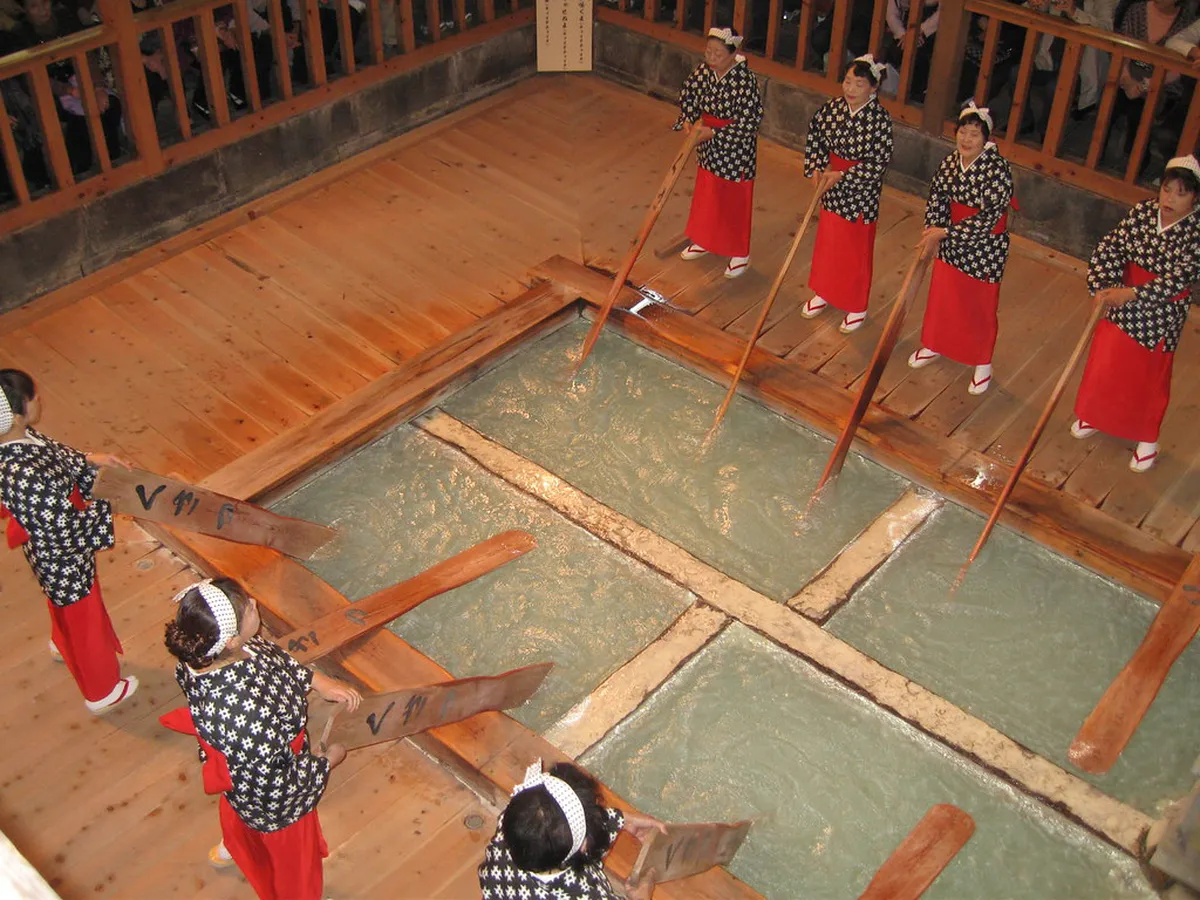
The Yumomi show combines paddle work, folk songs, and explanation of the traditional cooling method. It is short enough to fit between check-in, lunch, and a Yubatake stroll, but specific enough to make later visits to public baths and ryokan baths feel less abstract.
Build the visit around the surrounding hot spring district. The Yubatake is directly outside the hall, with steaming channels, photo spots, footbath areas, souvenir shops, and restaurants clustered nearby. From there, Sainokawara Park adds a more open-air walking route through hot spring scenery, while Shirane Shrine offers a quieter cultural stop above the busier town center.
For most travelers, the best sequence is simple: see the Yubatake first, watch a Yumomi performance at Netsu-no-yu, then walk toward Sainokawara Park or return to the Yubatake streets for food and shopping. This keeps transit time low and avoids treating Netsu-no-yu as an isolated attraction.
Netsunoyu’s Business Hours and Access Information
For 2026 planning, treat Netsu-no-yu as a timed performance rather than a walk-in exhibit. Performances usually occur at 10:00 AM, 10:30 AM, 11:00 AM, 3:30 PM, 4:00 PM, and 4:30 PM. Tickets for each session usually go on sale 30 minutes before the show starts. Arriving early is recommended, especially for popular morning shows.
Admission is ¥700 (show). The ticket counter is at the venue, so the practical choice is whether to commit to a specific session or keep your schedule loose and check availability when you are already near the Yubatake. If you only have a short Kusatsu stop, choose the performance time first and arrange meals or shopping around it.
The hall is centrally located in Kusatsu Onsen, right next to the Yubatake. It is easily accessible on foot from most hotels and ryokans in the area. No special transportation is needed if you are staying nearby. Travelers arriving by bus should walk from Kusatsu Onsen Bus Terminal toward the Yubatake, then use the hall as part of the same central loop.
Visitors can purchase tickets directly at the Netsu-no-yu ticket counter. Consider checking for any available coupons or discounts online before your visit. Some local passes might offer combined entry to attractions. Find more information on the official Netsunoyu website HERE.
To ensure a good view, aim to arrive at least 15 minutes before the show. This allows you to secure a seat in the front rows. Both the first and second floors offer excellent vantage points for the performance. If you are visiting on a weekend, during school holidays, or during peak onsen travel periods, give yourself more buffer because the ticket line and surrounding Yubatake paths can slow down at the same time.
- Best fit: first-time Kusatsu visitors, onsen culture fans, and travelers with limited time near the Yubatake.
- Plan around: fixed showtimes, ticket sales shortly before each session, and heavier demand around the first morning performances.
- Accessibility note: the hall is close to the central walking area, but winter surfaces around Kusatsu can be icy, so leave extra time if you are moving with luggage or children.
Experience Traditional Yumomi!
The Yumomi performance is more than a stage routine. It explains the local problem that shaped Kusatsu's bathing culture: the source water is very hot, but adding cold water would change the character of the spring. Yumomi cools the water by movement, air, rhythm, and repetition.
Performers, often women dressed in traditional attire, use long wooden boards to stir the water. These boards measure about 1.8 meters long. Their rhythmic movements and accompanying folk songs create a focused, easy-to-follow spectacle even if you do not understand every word of the narration.
The stirring action helps to lower the water temperature naturally. It also aerates the water, enhancing its therapeutic properties. This is the practical reason the show matters: it turns a local bathing technique into something visitors can see before stepping into Kusatsu's baths.
The performance is accompanied by traditional songs called Kusatsu Bushi. These songs describe the hot spring culture and local life. Sit where you can see both the paddles and the water surface; the details are more interesting when you can watch how the performers coordinate movement, timing, and sound.
Understanding the purpose behind Yumomi deepens your appreciation for Kusatsu Onsen. It highlights the community's respect for its natural resources. Learn more about the history of Yumomi HERE.
Giving Yumomi a Try (湯もみ体験)
Beyond watching the performance, visitors can also participate in the Yumomi Taiken. This interactive experience allows you to stir the hot spring water yourself. It is the better choice if you prefer a hands-on cultural stop instead of only taking photos from a seat.
The Yumomi Taiken sessions are typically held at specific times during the day. You can usually join between 11:30 AM and 1:00 PM. The last admission for participation is at 12:50 PM. Because the participation window is narrower than the show schedule, confirm it before promising the activity to children or a group.
Participants receive instructions on how to use the long wooden boards. They then join the performers in stirring the water and singing the Kusatsu Bushi. The movement is straightforward, but the paddle size makes the experience feel more physical than it looks from the audience.
This hands-on activity is suitable for most ages and fitness levels. It provides a deeper understanding of the effort involved in the traditional cooling method. If your Kusatsu plan includes only one paid cultural activity, choose the show for simplicity and the Yumomi Taiken for participation value.
Check the Netsu-no-yu official website for the exact schedule and any booking requirements. Sometimes, these interactive sessions can be quite popular. Arriving early for registration is always a good idea. You can also find information about special coupons HERE.
Kusatsu Onsen Rakugo (草津 温泉らくご)
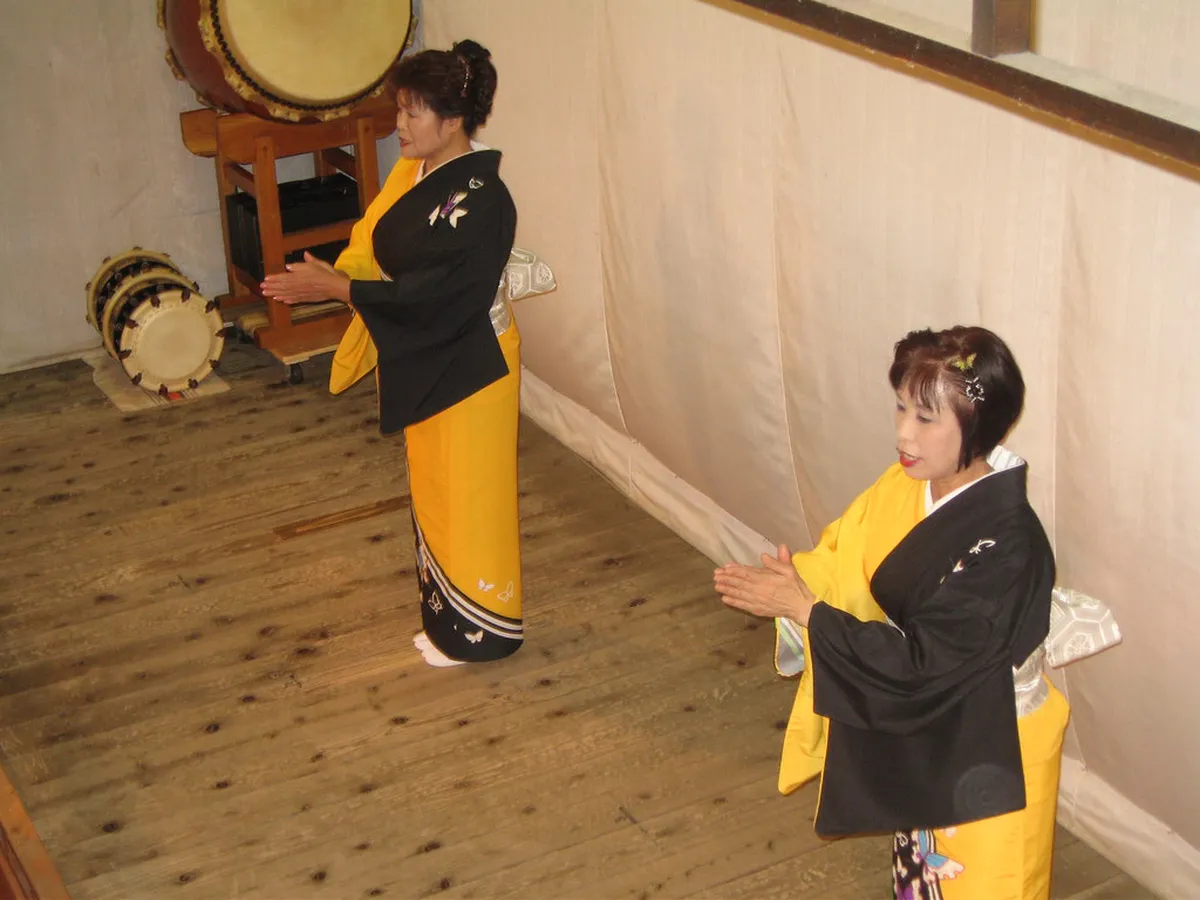
Netsu-no-yu Hall also hosts traditional Japanese Rakugo performances in the evenings. Rakugo is a form of comedic storytelling performed by a single storyteller. They sit on stage and use only a fan and a small cloth as props.
These evening shows offer a different cultural experience after a day of exploring hot springs. Rakugo performances typically start at 8:00 PM and last around 40 minutes. You can enter the hall from 7:30 PM.
For international visitors, Rakugo is less immediately visual than Yumomi, so expectations matter. The humor is primarily language-based, but the gestures, voices, timing, and audience atmosphere still make it a useful window into traditional performance culture if you have a free evening near the Yubatake.
Checking the schedule for Rakugo performances is advisable, as they may not run every night. Some tour packages, like this 2-day Kamikochi, Tateyama, Kurobe, Kusatsu Onsen tour, might include evening activities. This can be a relaxing way to end your day in Kusatsu. Check the Rakugo calendar HERE.
Rakugo provides a quieter contrast to the energetic Yumomi performance. It is most convenient for travelers staying overnight in central Kusatsu, since returning to the hall after dinner is much easier than making a late visit from outside town.
How to Plan a Smooth Netsu-No-Yu Attractions Day
To make the most of your Netsu-no-yu visit, combine it with other nearby attractions. Start with the Yubatake so you understand the town layout, then use the next available Yumomi performance as the anchor for the rest of your central Kusatsu plan.
A simple half-day route works well: Kusatsu Onsen Bus Terminal, Yubatake, Netsu-no-yu Yumomi Hall, lunch near the hot spring field, then Sainokawara Park for a slower walk and open-air bath scenery. If you want a quieter cultural pause, add Shirane Shrine before returning to the center.
For an optimal experience, avoid visiting during peak Japanese holiday seasons. Weekdays are generally less crowded than weekends. Early morning performances are often popular, so plan to arrive well in advance. In winter, prioritize shorter walking loops because snow, slush, and icy pavement can make the compact town center feel slower than it looks on a map.
Dining options are plentiful around the Yubatake area. You can enjoy traditional Japanese cuisine or casual cafes. Many establishments cater to tourists, offering various meal choices. If you are traveling with a group, eat before lining up for a session rather than assuming everyone can quickly find seats after the show.
If you are staying overnight, consider a ryokan near the Yubatake for easy access. This central location minimizes travel time between attractions and makes the evening Rakugo option more realistic. Explore more about Kusatsu to plan your full itinerary.
- Best time for efficiency: late morning if you want to combine a show, lunch, and the Yumomi Taiken window.
- Best time for atmosphere: late afternoon, when the Yubatake steam and town lights become more dramatic.
- Best nearby pairing: Yubatake for first-time visitors, Sainokawara Park for scenery, and Shirane Shrine for a short quiet detour.
Frequently Asked Questions
What should I wear to Kusatsu Onsen?
Wear comfortable clothing suitable for walking around town. If you plan to visit an onsen, bring a small towel and prepare to bathe naked. Many ryokans provide yukata, which are light cotton kimonos, for guests to wear around the town and to public baths.
What is the Yumomi experience?
The Yumomi experience is a traditional method of cooling hot spring water using long wooden paddles. This unique ceremony is performed at Netsu-no-yu Yumomi Hall in Kusatsu Onsen. Visitors can watch the performance or even participate in stirring the water themselves.
How do I go to a Japanese sento?
To visit a Japanese sento or public bath, first remove your shoes at the entrance. Proceed to the changing room, store your belongings in a locker, and undress completely. Wash thoroughly at a shower station before entering the main bath. Remember to relax and enjoy the experience.
Can you have tattoos at Kusatsu Onsen?
Historically, many Japanese onsen and sento did not allow tattooed individuals. However, policies are becoming more flexible, especially in tourist-heavy areas. It is best to check with individual establishments beforehand. Some may allow small tattoos if covered, while others have fully relaxed their rules.
Netsu-no-yu Yumomi Hall offers a captivating and educational experience in Kusatsu Onsen. Witnessing the traditional Yumomi performance is a highlight for many visitors. Participating in the Yumomi Taiken provides a deeper cultural immersion.
Beyond the daytime shows, the hall also presents evening Rakugo performances. This provides a different facet of Japanese culture to explore. Plan your visit carefully to enjoy all that Netsu-no-yu has to offer.
Kusatsu Onsen combines rich history with natural beauty, making it a must-visit destination. Your trip to Netsu-no-yu Yumomi Hall will surely be a memorable part of your Japanese adventure. Embrace the traditions and enjoy the therapeutic waters.
To verify current details, consult the Netsu-no-yu Yumomi Hall on Wikipedia and Netsu-no-yu Yumomi Hall official site.