
Kusatsu Konnyaku and Gunma Local Food: A 2026 Eating Guide
A 2026 guide to Kusatsu konnyaku and Gunma local food: tama konnyaku, Mizusawa udon, Joshu beef, Takasaki pasta, onsen manju, and where to find each dish.
On this page
Last updated August 2026. Kusatsu konnyaku and Gunma local food both trace back to volcanic soil and cold mountain water, the base of a wheat-and-konjac growing region that shapes nearly everything on a Gunma plate. Skewered tama konnyaku and miso dengaku turn up near the Yubatake, while Mizusawa udon, Joshu beef, and Takasaki pasta sit a short drive or train ride away.
Kusatsu Konnyaku: Gunma's Local Food Icon
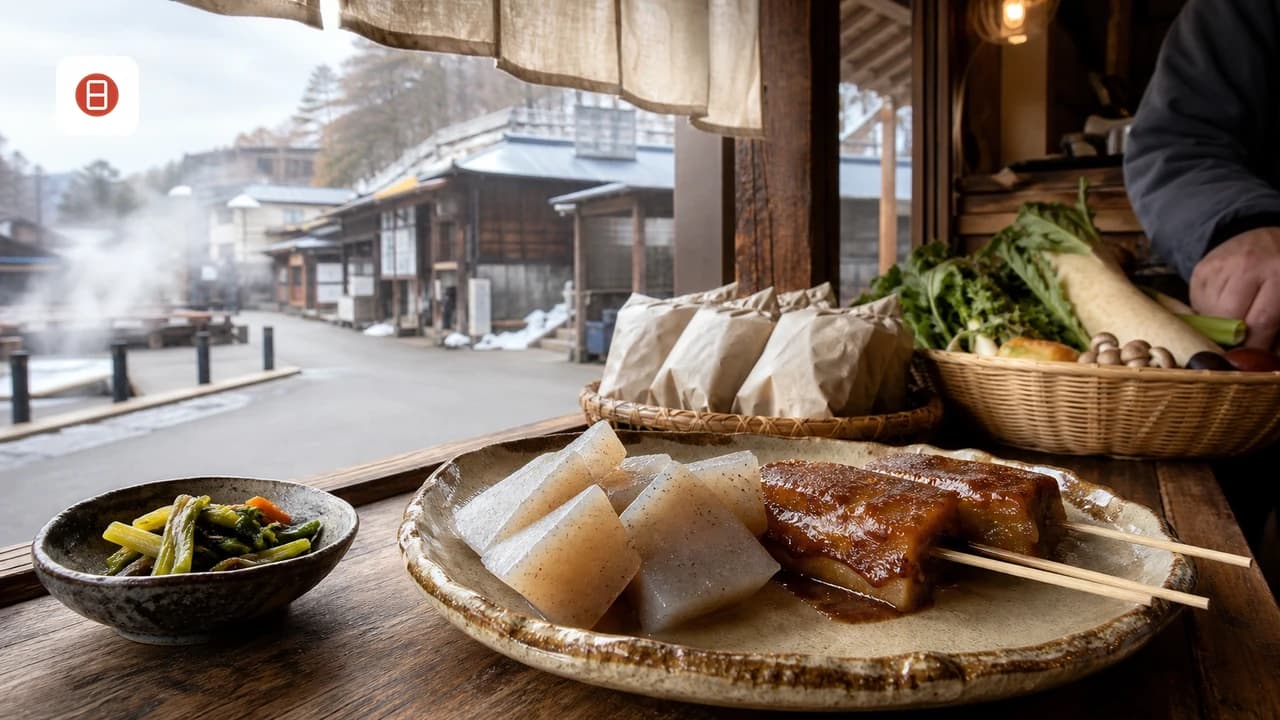
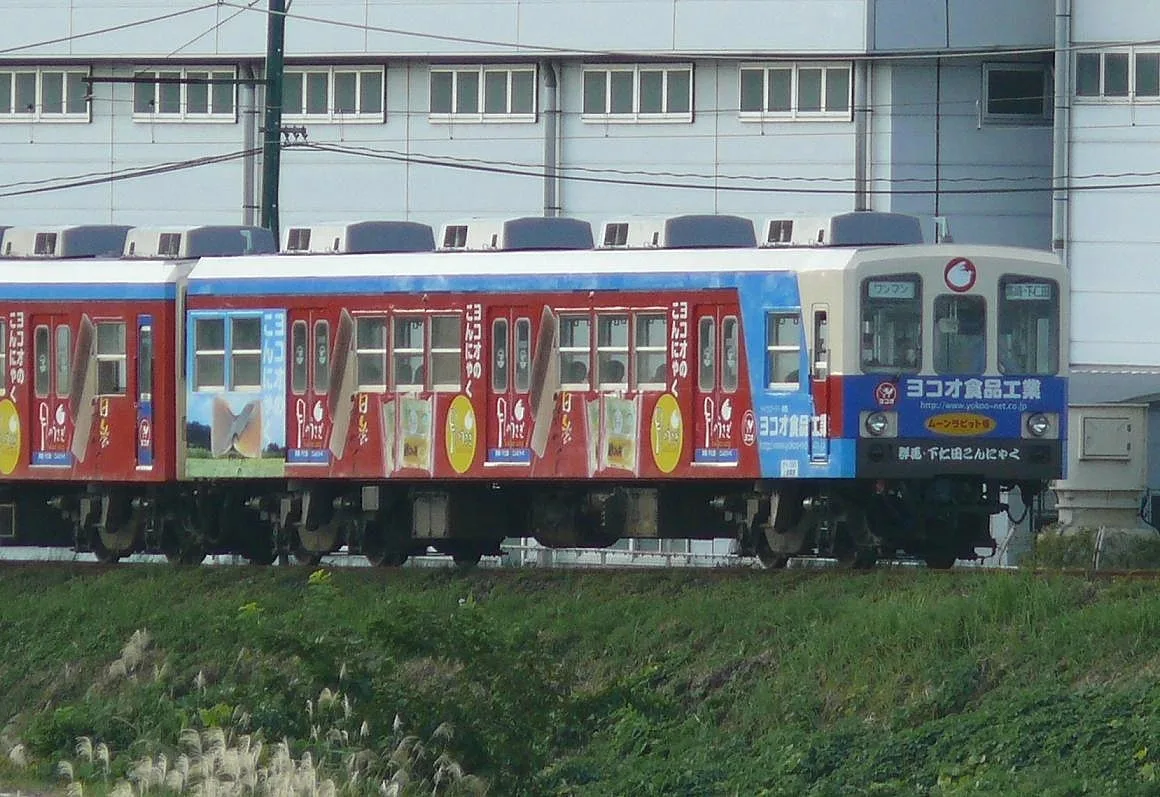
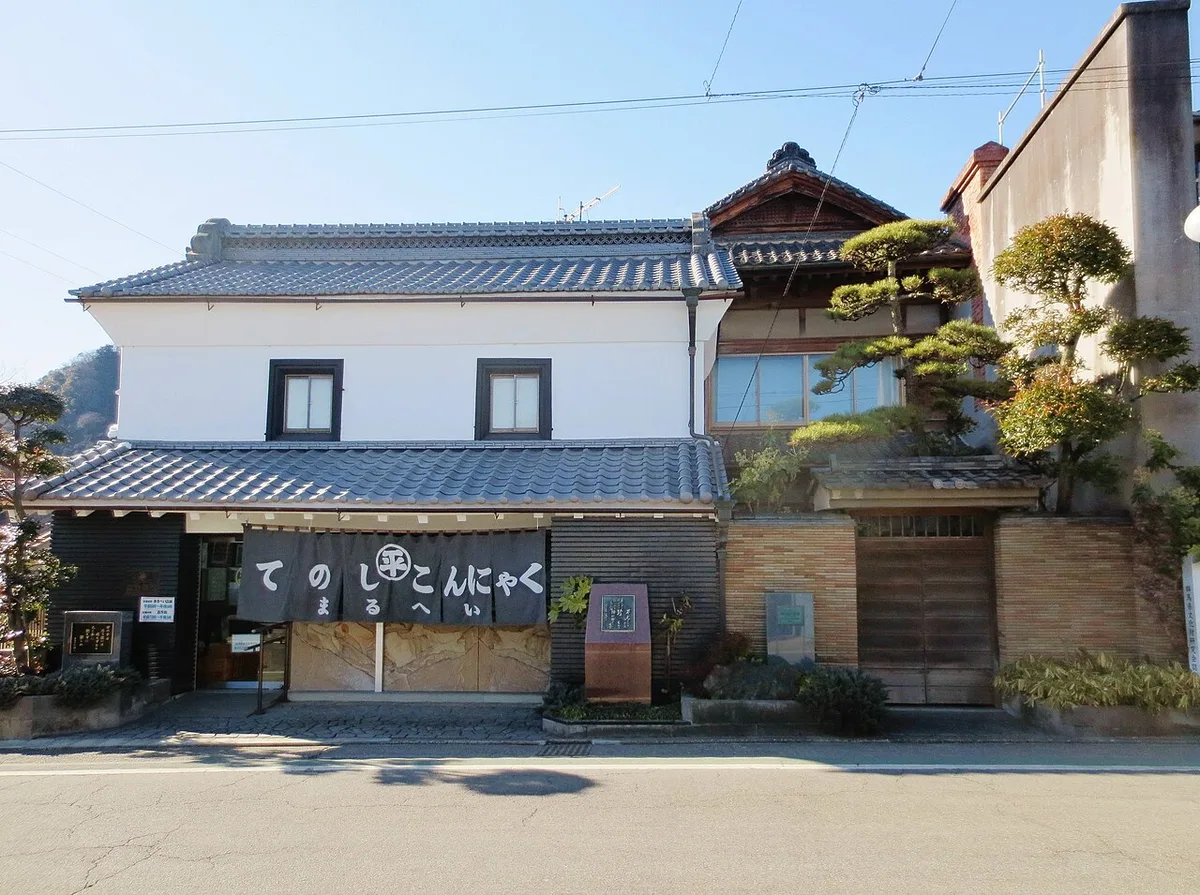
Gunma grows more than 90% of Japan's konjac potato, the root that becomes konnyaku once it is processed with calcium hydroxide. This produces a firm, jelly-like food with almost no calories and very little flavor of its own, so it absorbs whatever sauce or broth surrounds it. Near the Yubatake, vendors skewer tama konnyaku balls and glaze them with sweet miso, a snack known as miso dengaku. Ikaho Onsen, a short trip from Kusatsu, serves its own version: Ishidan Tama Konnyaku. Vendors steep it in soy sauce and sell three pieces to a skewer along the resort's 365 stone steps, with mustard or dried chili on the side. Shimonita, west of Kusatsu, favors sashimi konnyaku instead, served raw and cool rather than skewered and hot. Konnyaku dengaku skewers typically run around ¥100 each at markets and roadside stalls. Mayuzumi no Konnyakuya, a factory-direct shop, sells black, white, and aonori seaweed konnyaku by the piece, along with a miso oden skewer that can be ordered one at a time. This makes an easy stop for a souvenir pack to take home. For a deeper look at production, Konnyaku Park in Tomioka runs a free buffet of konnyaku dishes and sweets. Konnyaku Park also offers an all-you-can-pack deal recently priced at ¥648. Treat it as part of a car-based Gunma food day, not a standalone stop, since it sits far from Kusatsu.
Gunma grows 90% of Japan's konjac and is a major wheat producer, so Kusatsu's konnyaku and Takasaki's pasta both reflect the prefecture's distinct agricultural output rather than general Japanese cuisine.
- Tama Konnyaku: skewered balls glazed in miso or soy sauce, the standard Kusatsu and Ikaho snack.
- Miso Dengaku: konnyaku slices grilled or steamed and coated in sweet miso paste.
- Sashimi Konnyaku: served raw and chilled, a Shimonita specialty eaten with vinegar-miso.
- Shirataki: thin konnyaku noodles used in sukiyaki and hot pot broths.
Onsen Tamago at the Kusatsu Yubatake
Onsen tamago are eggs cooked slowly in hot spring water until the whites turn silky and barely set while the yolk firms to a custard-like center. In Kusatsu, vendors near the Yubatake hot spring field sell them in small cups with dashi broth for about ¥200 for two eggs. Vendors cook the eggs in the same spring water that feeds the town's bathhouses, so tasting one gives you a quick sense of the spring water's heat before bathing. Some ryokan in Kusatsu and Ikaho add onsen tamago to breakfast, but eating one standing at the Yubatake, straight from the vendor, is the more direct version of the experience.
Mizusawa and Himokawa Udon: Gunma's Noodle Traditions
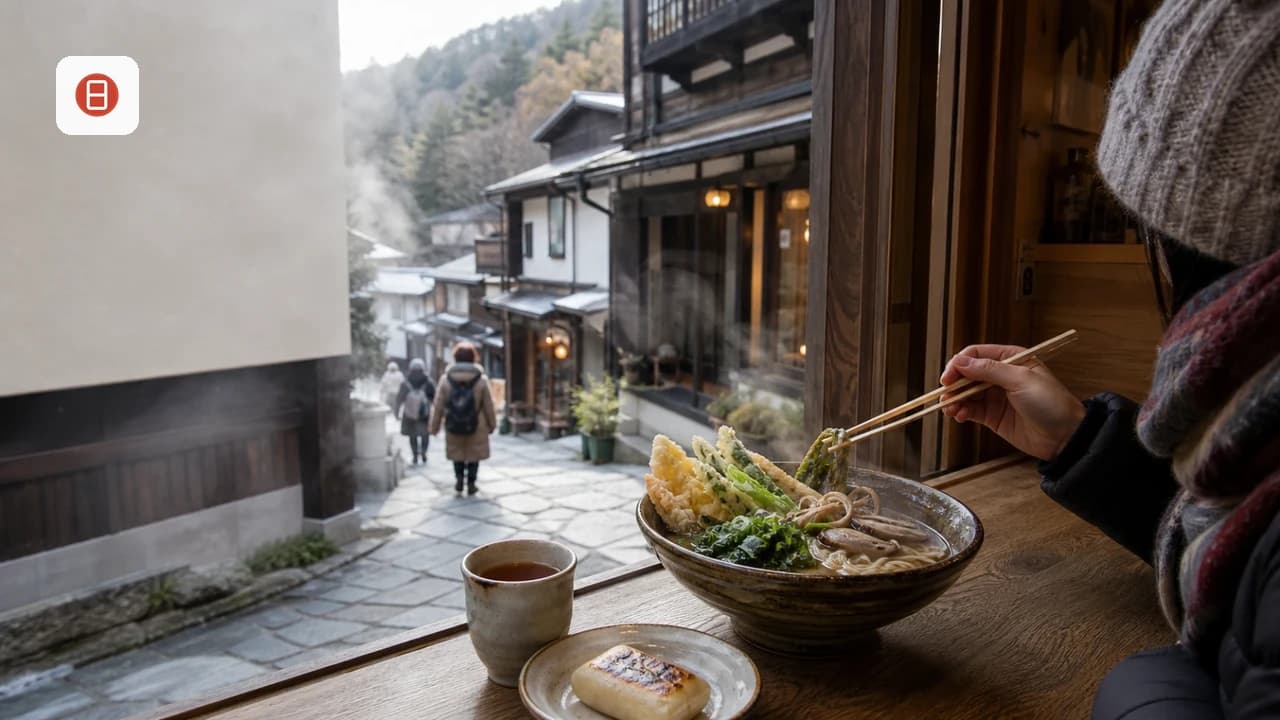
Mizusawa udon ranks among Japan's three great udon styles, alongside Sanuki udon from Kagawa and Inaniwa udon from Akita. Where Sanuki noodles are elastic and Inaniwa noodles are thin, Mizusawa udon runs thick, white, and translucent, with a firm chew. Its roots trace to the Mizusawa district near Ikaho Onsen, where udon-makers have worked for several hundred years using local spring water. Restaurants cluster along a single street compact enough to walk in about ten minutes, so you can compare a few before choosing. Most open at 11:00 and close by 14:30 or 15:00, whenever the noodles run out, and weekend visitors should aim to arrive by 11:30. Noodles usually come cold on a lacquered basket with dipping bowls of bonito broth and sesame sauce on the side, priced from ¥900 to ¥1,400. One shop traces its history to 1582, when it served udon to visitors on therapeutic baths at Ikaho Onsen. Another restaurant rests and kneads its dough over two days through 27 steps to build the noodle's signature chew. For maitake mushroom season in autumn, look for maitake tempura zaru udon, served with two dipping sauces at some Mizusawa shops. A dedicated maitake soba and udon guide covers where to find it. Kusatsu has its own noodle specialty too. Kamakichi, near Sainokawara Park, opened in 2024 and serves wide, flat himokawa noodles with pork shabu-shabu and an onsen egg on top. Kiryu, further east, is the other source of himokawa udon, recognizable by its extra-wide, flat cut.
Mizusawa udon's 14:30 closing time is standard across Gunma specialty shops, a midday cutoff that demands early arrival if you're planning multiple food stops in one day.
Joshu Beef and Sauce Katsudon
Jomo Gyu is Gunma's wagyu brand, raised in the mountain air of the prefecture's interior. Jomo is the old literary name for Gunma. This wagyu shares the same genetic stock as Kobe, Matsusaka, and Yonezawa beef, but regional feed and breeding lines set it apart. Where some wagyu brands lean toward heavy, fat-forward marbling, Jomo Gyu tends toward a more balanced ratio, suited to steaks and grilled preparations. Takasaki and Maebashi have the best access to it, with lunch sets running ¥2,000 to ¥4,000 and full dinner courses at upscale restaurants reaching ¥8,000 to ¥15,000. For a Kusatsu-based trip, the ryokan kaiseki dinner is the more practical way to taste Joshu beef without a separate excursion to Takasaki. Some Gunma sukiyaki restaurants also pair A5-rank wagyu with shirataki noodles made from local konnyaku potatoes, letting the noodles soak up the broth. Sauce katsudon, a breaded pork cutlet over rice in a sweet-savory sauce, traces its roots to Kiryu. One long-running diner there has served it for more than 80 years, frying tenderloin in a lard-and-oil blend until it cuts easily with chopsticks.
Takasaki Pasta and Yakimanju: Gunma's Wheat Culture
Gunma is a major wheat producer, and nowhere shows that more than Takasaki, known locally as Pasta Town. One restaurant has served homemade pasta there for about 50 years, its signature Shango-style spaghetti built on a thick meat sauce topped with a fried pork cutlet. Seafood eaters tend to order Vesuvius, a spicy pescatore piled with shellfish, a dish some credit to that same restaurant. Takasaki also holds an annual King of Pasta competition, and one restaurant, Buongiorno, has won it multiple times, with winning recipes sometimes landing on menus around the city afterward. Pasta lunch sets with salad and coffee typically cost ¥1,000 to ¥1,500. Many Takasaki pasta restaurants close on Tuesdays, so confirm hours before building a special trip around one address. Yakimanju is another wheat-based specialty, found mainly around Maebashi and Numata. Dumpling-like buns are skewered, grilled over charcoal, and coated in a sweet miso glaze. One Numata shop has made yakimanju since 1980, and a second nearby has run for more than 40 years since opening in 1981.
Onsen Manju and Sweet Souvenirs
Onsen manju are steamed buns filled with lightly sweet bean paste, colored brown with sugar, and sold in wooden box servings around Kusatsu's shopping streets. Ikaho Onsen is credited with the style, and Kusatsu shops each adjust their own recipe slightly, so comparing a few is worthwhile. Street snacks like onsen manju and konnyaku skewers generally run ¥100 to ¥300, letting you sample several stalls without committing to a full meal. Boxed sets travel well and work as a souvenir for the trip home. A dedicated manju and sweets guide lists specific shops along the Kusatsu shopping streets.
Mountain Vegetables and Local Produce Shops
Sansai, or mountain vegetables, are gathered from Gunma's slopes between early spring and early summer. Warabi (bracken fern), zenmai (royal fern), kogomi (ostrich fern), taranome (angelica tree shoots), and udo (mountain asparagus) are among the most common varieties. They appear most often at ryokan kaiseki dinners, plated in small portions alongside tofu, fish, and pickles, with an earthy, faintly bitter flavor. Mountain restaurants along routes to Oze National Park and Shima Onsen often build set lunches around sansai, priced from ¥1,200 to ¥2,000. In autumn, maitake mushrooms come into season around the Kusatsu and Minakami area, showing up in soba and udon broths and as a tempura topping. Roadside stations, called michi-no-eki, sell jars of pickled sansai that travel well as gifts. A budget and vegetarian food guide covers konnyaku and sansai as staples for travelers skipping meat.
Planning a Gunma Food Day from Kusatsu
Most rural specialty shops, including Mizusawa udon houses and yakimanju stands, work on a lunch-only schedule. Expect doors open around 11:00 and closed again by mid-afternoon, sometimes earlier if the day's batch sells out. Kusatsu itself is walkable, and the Kusatsu food guide covers dining options within town. Reaching Mizusawa's udon street or the Numata-area Tonkatsu Highway is easier with a rental car, since bus schedules on those routes run infrequently. One realistic Gunma food day starts with pasta in Takasaki, continues with udon near Ikaho at midday, and ends back in Kusatsu with onsen manju and a ryokan dinner. Typical costs by category appear in the table below.
| Category | Examples | Typical Price |
|---|---|---|
| Street snacks | Onsen manju, konnyaku skewers | ¥100–¥300 |
| B-Gourmet lunch | Mizusawa udon, Takasaki pasta, sauce katsudon | ¥900–¥1,500 |
| Premium dinner | Joshu beef course | ¥8,000–¥15,000 |
- Arriving at a Mizusawa udon shop after 14:30, when the day's noodles have often sold out.
- Underestimating Takasaki pasta portions, which run large and can crowd out a second food stop that day.
- Expecting Tomioka's horumon-age to be meat: it is actually breaded chikuwa fish cake, not offal.
- Planning a special trip to Takasaki on a Tuesday, a common closing day for pasta restaurants.
Numata Tonkatsu Highway: A Pork Lunch Detour
Numata’s Tonkatsu Highway is a useful detour for travelers driving between Kusatsu, Minakami, and the Kanetsu Expressway. The nickname refers to the concentration of pork-cutlet restaurants around Numata rather than one formal sightseeing route. It works best as a lunch stop before returning to Kusatsu or continuing toward Oze.
Look for tonkatsu made with Gunma pork, usually served as a thick loin or tenderloin cutlet with shredded cabbage, rice, miso soup, and pickles. This is different from Kiryu-style sauce katsudon. Standard tonkatsu is normally served with dipping sauce, while sauce katsudon arrives already seasoned over rice.
- Use a rental car for the easiest access from Kusatsu.
- Plan lunch early, as independent roadside restaurants may close after the midday rush.
- Choose loin for a richer cut, or tenderloin for a leaner and softer texture.
Pairing a Numata pork lunch with autumn maitake is especially fitting, since the mushroom often appears as tempura or a seasonal side dish in northern Gunma.
Frequently Asked Questions
What is Kusatsu konnyaku made from?
Konnyaku comes from the konjac potato, a root crop that Gunma grows in greater volume than any other prefecture in Japan. Processing it with calcium hydroxide produces a firm, jelly-like texture with almost no calories or inherent flavor. Near the Yubatake, that base becomes tama konnyaku skewers glazed with miso, known locally as miso dengaku.
Where can you find real Mizusawa udon near Kusatsu?
Core Mizusawa udon restaurants cluster on one street in the Mizusawa district near Ikaho Onsen. Most shops open around 11:00 and close by early afternoon once the noodles sell out, so plan a midday visit for the best selection. Kusatsu itself has its own noodle option too, with Kamakichi near Sainokawara Park serving wide himokawa noodles.
Is Joshu beef the same as Kobe beef?
Both are wagyu from the same genetic family, but they are not the same brand. Jomo Gyu is raised in Gunma's interior with feed and breeding lines specific to the region. Its marbling tends to run more balanced than the fat-forward style associated with some other wagyu brands.
When is the best season for Gunma's mountain vegetables and mushrooms?
Sansai, the mountain vegetables, are gathered mainly from early spring through early summer. Maitake mushrooms follow in autumn around the Kusatsu and Minakami area. Both show up on ryokan kaiseki menus and in noodle broths during their respective seasons.
How much should food cost per day around Kusatsu and wider Gunma?
Street snacks like onsen manju or konnyaku skewers run ¥100 to ¥300 each. A B-Gourmet lunch, such as Mizusawa udon or sauce katsudon, typically costs ¥900 to ¥1,500. A premium Joshu beef dinner course at an upscale restaurant can reach ¥8,000 to ¥15,000.
Free guide: Japan's Hidden Gems
12 under-the-radar places beyond Tokyo & Kyoto — with the best season to visit each and a local tip you won't find in the guidebooks.
You might also like


Continue reading
More guides you'll find useful


