Japan Packing List: Seasonal & Essential Travel Guide
Plan your Japan trip with our ultimate packing list. Discover year-round essentials, seasonal clothing guides, and expert tips for a stress-free adventure.
On this page
Japan's climate ranges from the subarctic winters of Hokkaido to the subtropical summers of Okinawa. That range — combined with cultural norms around shoes, tattoos, and modesty — means packing for Japan takes more thought than most destinations. This guide covers every category: year-round essentials, seasonal clothing, electronics, medications, luggage, and the small items that most lists skip entirely.
The core rule is simple: pack for where you are going, not for Japan as an abstraction. A two-week Tokyo-Kyoto-Osaka circuit in October calls for completely different gear than a ski trip to Niseko or a beach week in Okinawa. Read the seasonal sections that match your dates, then build from the year-round base.
Once you know the route, use the free Japan packing list generator for your exact dates and destinations. It turns trip length, laundry, luggage, travelers and activities into editable quantities you can save, copy or print.
Year-Round Japan Travel Essentials
These items matter regardless of season. Sort the documents and financial tools first, then technology. Getting these wrong — a missing visa, a card blocked by your bank, no data connectivity — causes the most costly disruptions.
- Passport with at least six months validity and one blank page
- Visa (check eligibility — many nationalities enter visa-free for up to 90 days in 2026)
- Travel insurance documents (print a summary; Japan's private medical care is excellent but not cheap)
- Credit and debit cards — notify your bank before departure; Visa and Mastercard are widely accepted, Amex less so
- Japanese yen in cash — many smaller restaurants, shrines, and rural shops are cash-only
- Universal power adapter (Japan uses Type A flat-pin outlets at 100V; most modern devices handle the voltage difference)
- Portable charger / power bank (must go in carry-on, not checked luggage, per airline rules)
- Unlocked smartphone with eSIM or a data SIM purchased at the airport
- Small, easy-to-remove shoes — you will take them off at temples, traditional restaurants, and ryokan multiple times a day
- Comfortable, broken-in walking shoes — Tokyo and Kyoto routinely involve 15,000–20,000 steps per day
One item almost every list skips: a small cloth handkerchief. Japanese public bathrooms — including at major train stations and temples — rarely have paper towels or hand dryers. Every Japanese person carries a hankachi for this reason. Pack two; they weigh nothing and eliminate the daily frustration of damp hands.
Pack a cloth handkerchief for bathroom drying — Japanese facilities rarely provide towels or dryers. Two lightweight hankachi occupy almost no space and solve a daily frustration for many travellers.
Luggage and Bags: Choosing the Right Gear
Japan's public transport is excellent, but it is not luggage-friendly. Shinkansen overhead racks have strict size limits (160cm total dimensions for the three sides); anything larger requires a reserved luggage space booked in advance. Measure the packed case with the Japan luggage forwarding and Shinkansen baggage calculator to check its Yamato price and train category before deciding what to bring. Narrow train aisles, crowded station corridors, and steep temple stairways make a hard-shell 30kg trolley a liability.
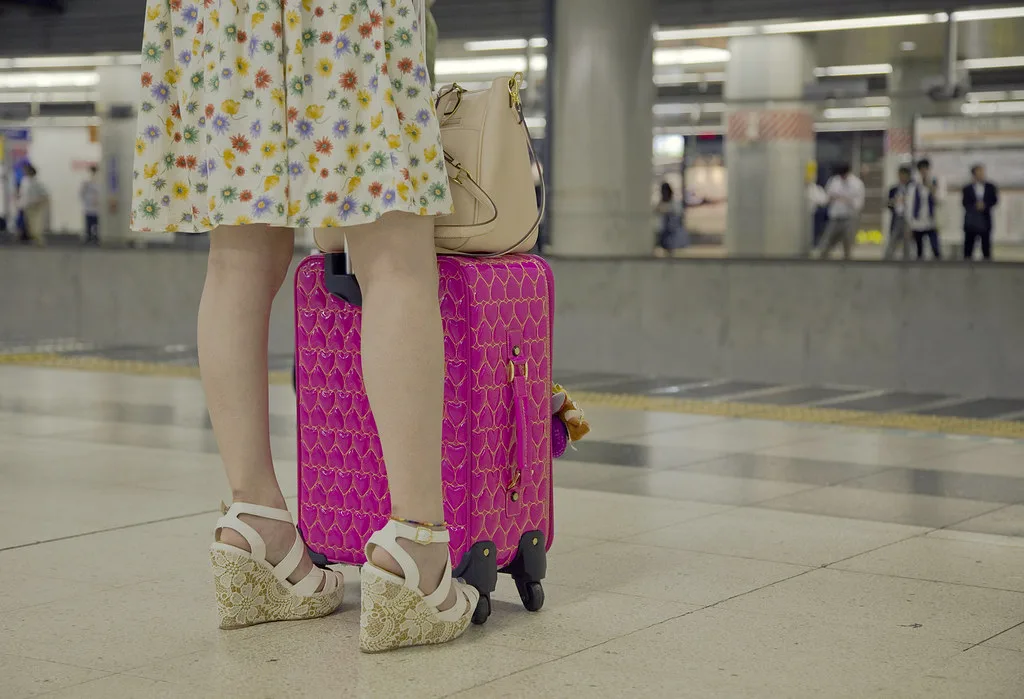
A medium-sized wheeled suitcase (around 55–65 litres) plus a 20-25 litre daypack covers most two-week itineraries. If you plan to move between cities frequently — especially on overnight buses or local trains — consider a soft-sided backpack around 40–50 litres instead. Coin-operated luggage lockers (300–700 JPY per day) at major stations let you drop your main bag and explore hands-free.
For daily use, a compact crossbody bag or a slim daypack works well. Japan is very safe but crowded transit is common, so a bag with a zip closure gives peace of mind. Leave the giant trekking pack at home unless you are doing multi-day hiking on the Kumano Kodo or Nakasendo trail. Check out the Bullet Train Japan: Ultimate Guide to Shinkansen Routes & Tickets for luggage transport rules between cities.
Electronics and Connectivity: Stay Powered in Japan
Japan runs on 100V at 50Hz (east Japan) or 60Hz (west Japan). Most modern electronics — phones, laptops, cameras — handle 100–240V without an issue; check your device label. You need an adapter for the physical plug shape (flat two-prong Type A) unless your device already uses that format.
For data, a pocket Wi-Fi device rented at the airport works for groups sharing one connection. A data-only SIM or eSIM is lighter, cheaper for solo travellers, and activates the moment you land. Compare eSIM and pocket WiFi for your group using trip length, phone compatibility, devices and expected usage. Carriers like IIJmio and Mobal offer prepaid SIMs at Narita, Haneda, and Kansai airports. See the 9 Best eSIM for Japan in 2026: Tourist Guide & Comparison guide for current rates and coverage comparisons.
A power bank rated at 10,000–20,000 mAh keeps a phone charged through a full sightseeing day. Note that power banks must travel in carry-on luggage — airlines now enforce this consistently on Japan routes. A compact multi-port USB charger (one plug, three or four ports) replaces individual chargers for phone, camera, and earbuds and saves adapter slots.
- Universal Type A plug adapter
- Power bank (10,000+ mAh; carry-on only)
- Multi-port USB charger
- Data SIM or eSIM activated before or at the airport
- Offline maps downloaded (Google Maps works well; download the Japan region before you fly)
- Google Translate with Japanese downloaded for offline use — essential for reading menus and signs
Personal Care and Medications: What to Pack
Japan has outstanding pharmacies (ドラッグストア, drugstore chains like Matsumoto Kiyoshi and Sugi Pharmacy) stocked with most everyday toiletries. You can buy shampoo, sunscreen, bandages, and pain relief on arrival. If you have brand preferences or use international-formula products, bring enough for your trip — Japanese versions of familiar products sometimes differ in formulation.
Prescription medications require extra planning. Some common Western drugs — including certain stimulants used for ADHD, pseudoephedrine-based cold medicines, and some codeine-containing products — are classified as controlled substances under Japanese law. Bringing them without prior authorisation can result in confiscation or arrest at customs. Check the Japanese Ministry of Health guidance before you pack any prescription drug, and carry a doctor's note for anything controlled.
For toiletries specific to Japan travel: bring a roll-on or stick deodorant (spray cans are bulkier and less effective in high humidity), high-SPF sunscreen for summer or spring (UV levels are intense April through September), and any antihistamines if you visit during cedar pollen season (late February through April — Japan's hay fever season affects millions of locals and many visitors). Tampons are available but the range is limited outside major cities; bring your own if you have a brand preference.
- Prescription medications with doctor's note (verify legality with Japanese customs)
- Antihistamines for pollen season (February–April)
- High-SPF sunscreen (SPF 50+ for spring and summer)
- Roll-on or stick deodorant
- Basic first-aid supplies: blister plasters, pain relief, digestive aids
- Any specialist toiletries you rely on
Japan Packing List for Spring (March to May)
Spring is Japan's most popular travel season, peaking during cherry blossom time (late March to mid-April in most of Honshu). Temperatures in Tokyo range from around 8°C in early March to 22°C by late May. The gap between a cold morning and a warm afternoon on the same day can be 10°C, so layering is essential rather than optional.
Golden Week (late April to early May) is the busiest domestic travel period in Japan. If your trip overlaps with it, book accommodation and transport months in advance and expect larger crowds at major sites. Hay fever season also peaks in spring — if you are sensitive to tree pollen, pack antihistamines and confirm they are legal to import.
- Light jacket or medium cardigan for mornings and evenings
- Long-sleeved shirts (3–4)
- T-shirts for warmer afternoons
- Comfortable jeans or lightweight trousers
- Water-resistant walking shoes
- Compact umbrella (spring showers are common)
- Light scarf for early-morning temple visits
- Sunglasses for sunny afternoons
- Antihistamines if pollen-sensitive
Japan Packing List for Summer (June to August)
Japan's summer is genuinely brutal in the major cities. Tokyo, Kyoto, and Osaka regularly hit 35°C with 80–90% humidity in July and August. Rainy season (tsuyu) runs through most of June and into mid-July — expect consecutive overcast, drizzly days rather than dramatic downpours. After tsuyu ends, the heat intensifies through August.
Breathable fabrics make a real difference. Linen and moisture-wicking synthetic blends dry faster than cotton and feel cooler against the skin. Bring a portable fan — they cost around 1,000 JPY at convenience stores, or bring one from home. A small spray bottle filled with water cools you down instantly at outdoor sites. Pack anti-chafing products or compression shorts if you plan long walking days; high humidity makes chafing a genuine problem.
Don't bring an umbrella for summer — buy a cheap one at a convenience store (around 700 JPY) and gift it or leave it in the hotel umbrella stand when you leave. Packing an umbrella into an already-stuffed summer bag is not worth it.
- Lightweight breathable tops (5–6; you will sweat through them quickly)
- Shorts, light skirts, or linen trousers
- Sandals and at least one pair of closed walking shoes
- Swimwear (for pools, beaches, or onsen resort facilities)
- Sunscreen SPF 50+
- Sun hat and sunglasses
- Mosquito repellent (August and early September)
- Portable fan or spray bottle
- Light cardigan or thin layer for air-conditioned interiors (trains and shopping centres are aggressively cold)
Japan Packing List for Autumn (September to November)
Autumn in Japan spans a wide temperature range. September often still reaches 30°C in Tokyo — recent years have seen October temperatures that feel closer to summer than fall. By November, temperatures drop to 10–15°C in Tokyo and colder in Kyoto's mountain temples. Pack for both ends of this range if your trip covers September through November.
Typhoon season runs through late September and occasionally into October. Check forecasts in the week before departure. A proper rain jacket (not just a packable poncho) is worth carrying in September and October — the rain can be heavy and sustained. Waterproof shoes or at minimum water-resistant sneakers are advisable for early autumn.
| Season | Temperature Range | Key Clothing | Footwear | Special Considerations |
|---|---|---|---|---|
| Spring (Mar–May) | 8–22°C | Light jacket, long-sleeved shirts, T-shirts | Water-resistant walking shoes | Layer for 10°C temperature swings; pollen season Feb–Apr |
| Summer (Jun–Aug) | 30–35°C, 80–90% humidity | Lightweight breathable tops, shorts, linen | Sandals + closed walking shoes | SPF 50+; portable fan/spray bottle; interiors aggressively air-conditioned |
| Autumn (Sep–Nov) | 10–30°C (wide range) | Medium-weight jacket, long-sleeves, sweaters | Water-resistant walking shoes | Typhoon risk Sep–Oct; pack rain jacket; 10°C temperature spread |
| Winter (Dec–Feb) | 2–10°C (cities); sub-zero (Hokkaido) | Puffer jacket, sweaters, thermal base layers (Hokkaido only) | Insulated waterproof boots (snowy regions) | Interiors overheated; remove easy-to-peel jacket indoors; avoid stacked thermals for city travel |
- Medium-weight jacket or versatile trench coat
- Long-sleeved shirts and light sweaters (2–3)
- T-shirts for warm September days
- Comfortable jeans or sturdy trousers
- Waterproof or water-resistant walking shoes
- Rain jacket for typhoon season (September–October)
- Scarf for cooler evenings
- Light gloves for late November
- Sunscreen and sun hat for early autumn
Japan Packing List for Winter (December to February)
Winter in Japan divides into two very different experiences. In Tokyo and Kyoto, temperatures hover between 2°C and 10°C — cold and sometimes icy, but manageable. Hokkaido, the Japanese Alps (Nagano, Hakuba), and the Sea of Japan coast see heavy snowfall and temperatures well below freezing. Pack for where you are actually going.
One counterintuitive truth about packing for a Japanese winter: Japanese buildings, trains, and shops are intensely overheated indoors. Thermal base layers feel comfortable for the first five minutes outdoors, then turn into a sweat trap the moment you step into a heated department store or packed subway car. A single excellent puffer jacket you can quickly peel off and stuff into a bag serves far better than multiple thermal layers stacked underneath thinner outerwear. Save thermals for Hokkaido ski trips or extended outdoor days — not for city itineraries.
Hand warmers (kairo) are sold in convenience stores for around 100 JPY each and are worth buying in Japan rather than packing from home. Lip balm and moisturiser for dry winter air are worth bringing, as are insulated waterproof boots if you are visiting snowy regions.
Japanese interiors are aggressively heated in winter — avoid heavy thermal base layers for city trips. Pack a single, easily-removable puffer jacket you can peel off when stepping into warm department stores or trains. Reserve thermal layers for outdoor-heavy activities like Hokkaido ski trips.
- High-quality puffer jacket (your primary outer layer; easy to remove)
- Warm sweaters (2–3)
- Long trousers (2–3 pairs)
- Warm hat, gloves, and scarf
- Insulated waterproof boots (for snowy regions) or sturdy leather shoes (city travel)
- Thermal base layers (for Hokkaido or Alpine ski trips only)
- Lip balm and moisturiser
- Wool or thermal socks
Japanese Fashion Norms and Cultural Considerations
Japan does not have strict dress codes for tourists, but a few situations require thought. Temples and shrines generally do not require covered shoulders or legs — this is a Southeast Asia expectation that most visitors incorrectly import. What matters is clean, tidy presentation: Japan is a fashion-conscious culture and very casual attire (think beachwear, torn clothes, or pyjama-style loungewear in public) reads as disrespectful rather than relaxed.
Shoes are the most practically important clothing choice. You will remove them multiple times a day — at ryokan, traditional restaurants (zashiki seating), some museums, and many temples. Laced boots with complex buckles become exhausting. Pack at least one pair of slip-on shoes or sneakers you can step out of cleanly without disturbing the people behind you. Also check your socks — Japanese culture notices holes or very worn socks, and you will be showing them constantly.
Onsen (hot spring baths) have strict rules about tattoos. Most traditional onsen facilities prohibit visible tattoos entirely, with no exceptions. If you have tattoos, research private-bath options (kashikiri buro) in advance, or look specifically for tattoo-friendly onsen — there are more options now than a decade ago, but they remain in the minority. See the first-time Japan travel tips guide for more cultural etiquette details.
- Modest, presentable clothing (no requirement for covered shoulders at most sites)
- Easy slip-on shoes for frequent indoor-outdoor transitions
- Clean socks without holes — you will show them often
- No heavily perfumed cologne or perfume (considered impolite in shared public spaces)
- Research tattoo-friendly onsen if needed before arrival
- Smart casual outfit for nicer dinner restaurants
Travel Documents, Passes, and Long-Haul Comfort
Keep digital and physical copies of your passport photo page, travel insurance policy number, and accommodation addresses. You need your first night's accommodation address to fill in the landing card before immigration — having it on your phone saves time at the counter. Japan also requires you to carry your passport at all times during your stay.
If you are visiting multiple cities by rail, the Japan Rail Pass may save money compared to buying individual shinkansen tickets. Calculate the break-even point against your actual itinerary before buying — it is not automatically cheaper for shorter trips. The pass must be purchased outside Japan (2026 rule) and exchanged for a physical pass on arrival.
For the flight itself, Japan is roughly 12 hours from Western Europe and 14 hours from the US West Coast. A neck pillow, noise-cancelling earphones, an eye mask, and a light cardigan for aggressive air conditioning all make a genuine difference on long-haul routes. Compression socks reduce swelling on flights over 8 hours. A small moisturiser and lip balm offset cabin dryness. Download content for offline viewing before you board — in-flight Wi-Fi on Japan routes is inconsistent.
- Passport (valid 6+ months, one blank page)
- Physical or digital copy of insurance documents
- First night's accommodation address printed or saved offline
- Japan Rail Pass (purchased before departure if applicable)
- Neck pillow and eye mask for long-haul flight
- Noise-cancelling headphones or earbuds
- Compression socks for flights over 8 hours
- Light cardigan for cabin air conditioning
Things to Avoid Packing for Japan
Japan is a well-supplied country. Convenience stores (7-Eleven, Lawson, FamilyMart) and large drugstores are open 24 hours and stock most everyday items at reasonable prices. Overpacking toiletries is the most common waste of space — buy shampoo, lozenges, and basic skincare on arrival rather than shipping it in your luggage.
Heavy books are another common mistake. Japan's convenience stores sell good English-language maps; Google Maps offline handles navigation; and a Kindle weighing 160g replaces a shelf of guidebooks. High heels and dress shoes with complex lacing are impractical — cobblestone temple paths and frequent shoe removal make them frustrating to wear and hard to pack around. Leave them home unless you have a specific formal event.
- Bulky toiletry sets (buy on arrival)
- More than two or three pairs of shoes (space vs. utility)
- Heavy printed guidebooks (use apps and a light map)
- Aerosol sprays in checked luggage over the airline limit
- Cordless or battery-operated hair straighteners in carry-on (they are confiscated at Japanese airport security)
- Clothing that is too revealing for mixed cultural settings
- Prohibited medications (verify before packing, not at customs)
Expert Packing Tips for a Smooth Trip
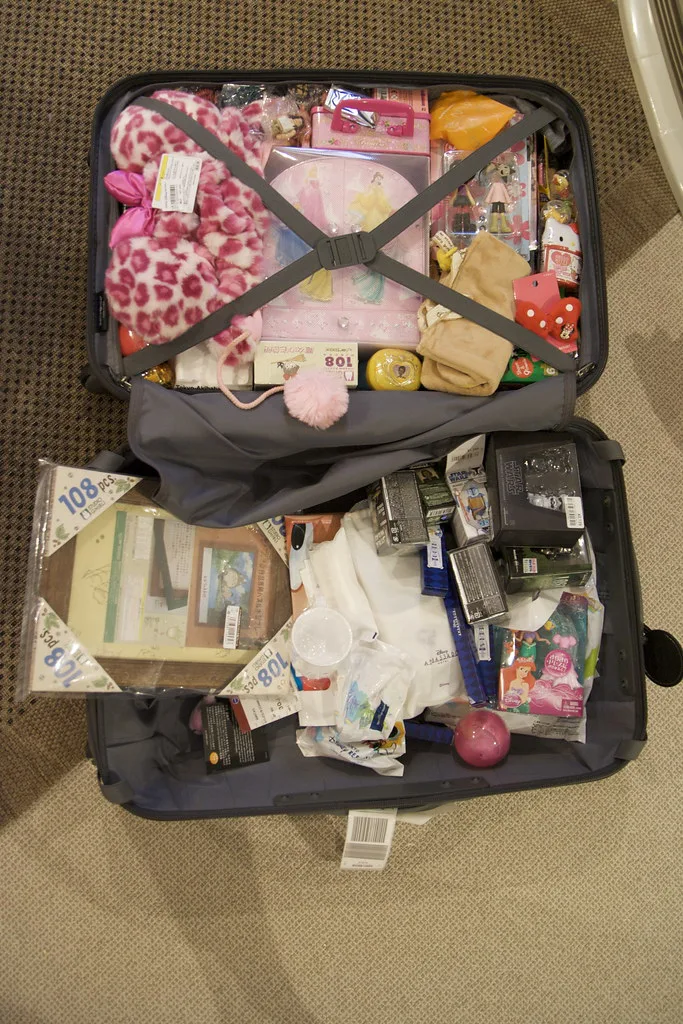
The best Japan packing strategy is leaving room to bring things back. Japan has extraordinary shopping — clothing, ceramics, kitchen tools, whisky, cosmetics — and luggage space is almost always the constraint on what you can take home. Pack 70–80% full on the outbound journey, or bring a foldable duffel bag that expands for the return flight.
Packing cubes compress clothing, separate categories, and speed up security checks. Roll soft items like T-shirts and underwear; fold structured pieces like blazers and trousers. Wear your heaviest shoes and thickest jacket on the plane to free up bag space. Using Japan's luggage forwarding service (takuhaibin) — available from most accommodation to airports, typically for 1,500–2,500 JPY per bag — means you can send your suitcase ahead and travel with just a daypack for part of your trip.
Coin laundromats are available at virtually every business hotel in Japan and in most neighbourhoods. Washing clothes every three to four days cuts your required wardrobe in half, which matters enormously for luggage weight on longer trips. Many accommodation types — from budget capsule hotels to luxury ryokan — provide yukata robes and toiletry basics, so you can pack fewer sleepwear items. Read our Best Time To Visit Japan: A Seasonal & Monthly Travel Guide guide to match your packing list to actual weather conditions for your travel dates.
- Pack 70–80% full on departure to allow for purchases
- Packing cubes for organisation and compression
- Roll clothes to save space and reduce wrinkles
- Wear heaviest items on the plane
- Use takuhaibin (luggage forwarding) between cities
- Use coin laundry every 3–4 days to pack fewer clothes
- Bring a foldable shopping bag or empty duffel for return journey
Frequently Asked Questions
What are the essential items for a Japan packing list?
Essential items include your passport, travel insurance, a universal power adapter, and comfortable walking shoes. Always carry a portable charger and an unlocked smartphone. Don't forget any necessary prescription medications.
How does the season affect what to pack for Japan?
Japan's seasons vary greatly, so adjust your packing accordingly. Spring and autumn require layers for fluctuating temperatures. Summer demands lightweight, breathable clothes for heat and humidity. Winter calls for thermal wear and waterproof outerwear for cold and snow.
What kind of shoes should I pack for Japan?
Pack comfortable, broken-in walking shoes as you will do extensive walking. Consider water-resistant options for spring and autumn. For summer, breathable sandals are good, while winter requires insulated, waterproof boots. Easy slip-on shoes are also convenient for entering establishments.
Do I need a power adapter for Japan?
Yes, you will need a power adapter for Japan. Japan uses Type A and Type B outlets, with a voltage of 100V. A universal travel adapter is highly recommended to charge all your electronic devices. This ensures seamless power access throughout your trip.
Can I bring my own medication to Japan?
You can bring personal medications, but some restrictions apply. Check with the Japanese Ministry of Health beforehand. Carry a doctor's note for prescription drugs to avoid issues. Some common medications are illegal in Japan, so research is crucial.
Armed with this ultimate Japan packing list, you are ready for your adventure. Thoughtful preparation ensures a smoother, more enjoyable experience. Remember to adapt your wardrobe to the season you are visiting. Embrace the journey and the unique culture of Japan.
Don't forget to pack light but smart, prioritizing versatility. Leaving some room for souvenirs is always a good idea. Your trip to Japan promises incredible memories and discoveries. Happy travels, and enjoy every moment of your journey!
Free guide: Japan's Hidden Gems
12 under-the-radar places beyond Tokyo & Kyoto — with the best season to visit each and a local tip you won't find in the guidebooks.
You might also like


Continue reading
More guides you'll find useful