
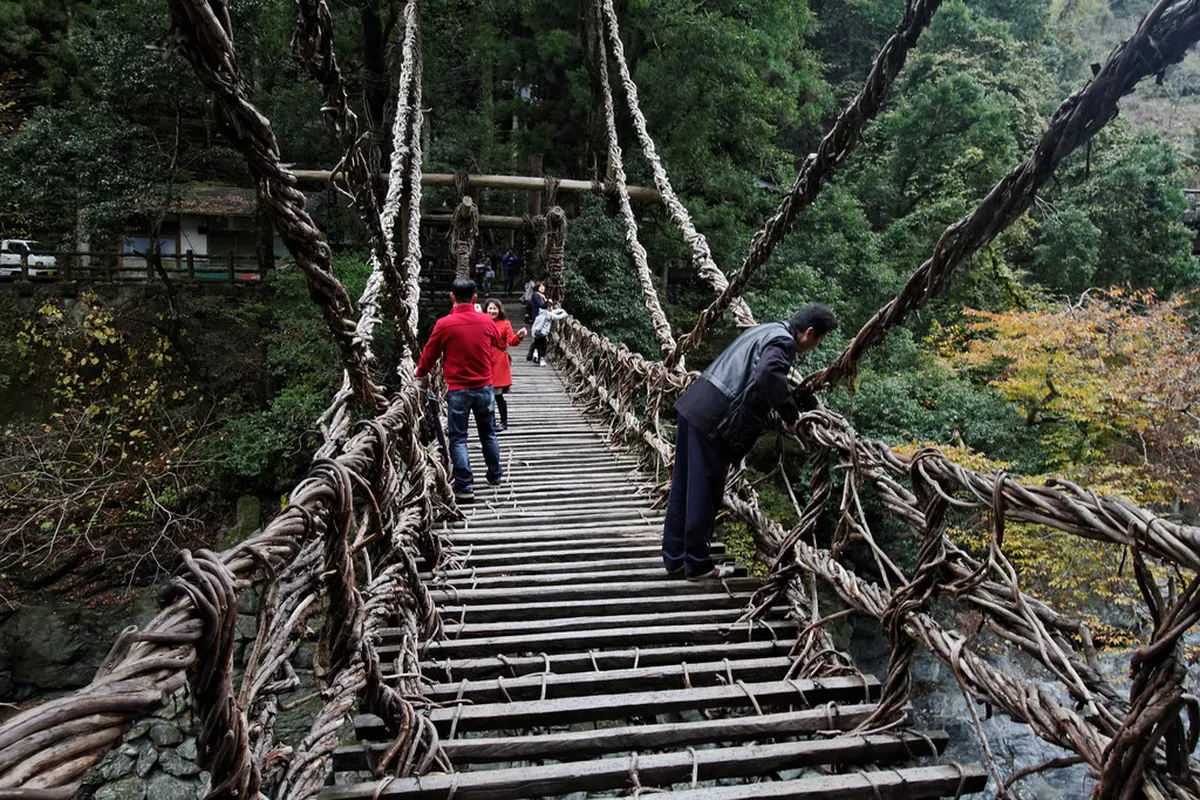
Iya Kazurabashi Vine Bridge
The most famous of Iya's vine bridges — a 45-metre span of woven wisteria vines swaying 14 metres above the emerald Iya River, rebuilt every three years in the old Heike way.
Visitor guide →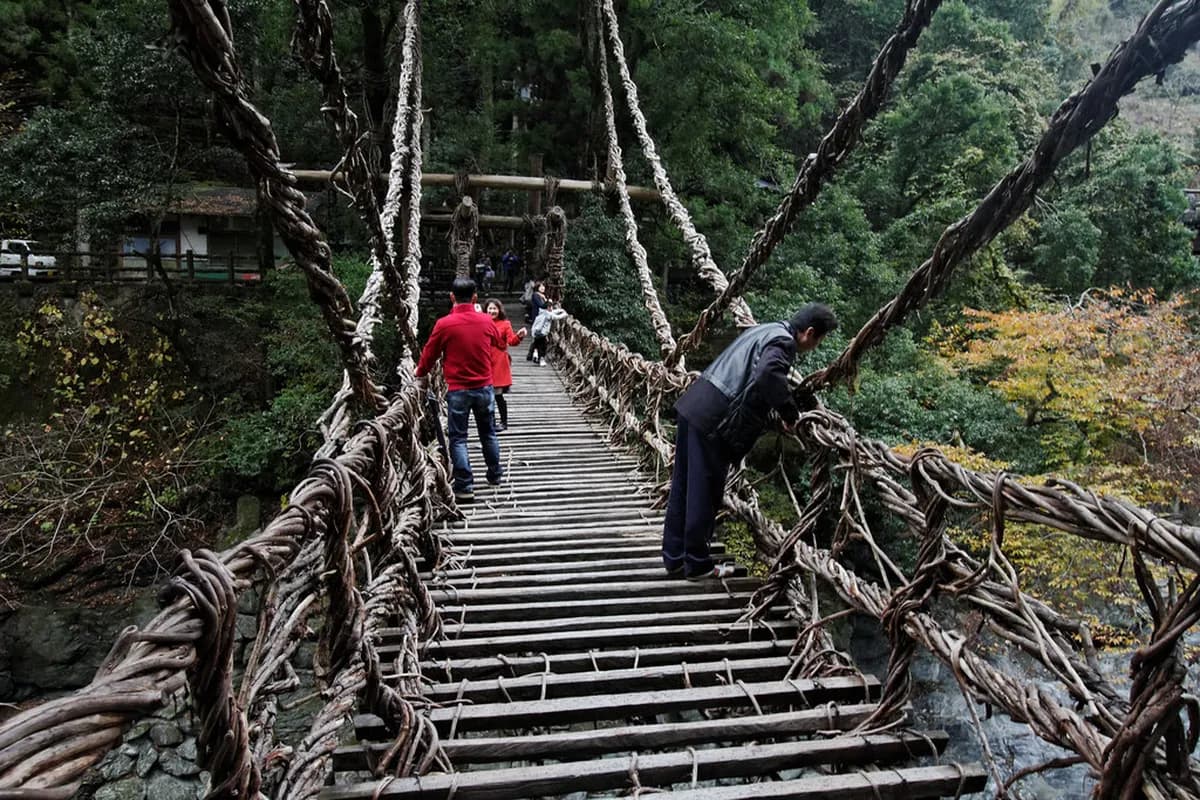
Everything to see in Japan's Iya Valley — vine bridges, Oboke Gorge cruises, Nagoro's scarecrow village, and how to plan a day trip or overnight stay in 2026.
The Iya Valley (祖谷渓谷) is one of Japan's last genuinely remote landscapes — a knot of near-vertical mountainside in Miyoshi, Tokushima Prefecture, where the Iya River has carved a ravine so steep that defeated Heike warriors are said to have hidden here after the Genpei War in the 12th century. Today the valley draws visitors for the same reason it once sheltered refugees: it's hard to reach, and that isolation preserved something rare. Vine bridges woven from mountain wisteria still sway over the gorge below. Oboke and its downstream twin Koboke cut a canyon of folded schist that boat captains have navigated for generations. In the deep hamlet of Nagoro, an artist has repopulated a dying village with more than 300 life-size scarecrows standing in for neighbors who moved away or passed on. Add a cheeky roadside statue, a hand-cranked river cart, and a handful of onsen ryokan built into the hillside, and it's easy to see why the Iya Valley is Shikoku's most talked-about detour. This guide covers where each attraction sits within the valley, what it costs in 2026, and how to build a realistic itinerary — whether you have a car for a full day or are working around Iya's thin bus schedule.
The most famous of Iya's vine bridges — a 45-metre span of woven wisteria vines swaying 14 metres above the emerald Iya River, rebuilt every three years in the old Heike way.
Visitor guide →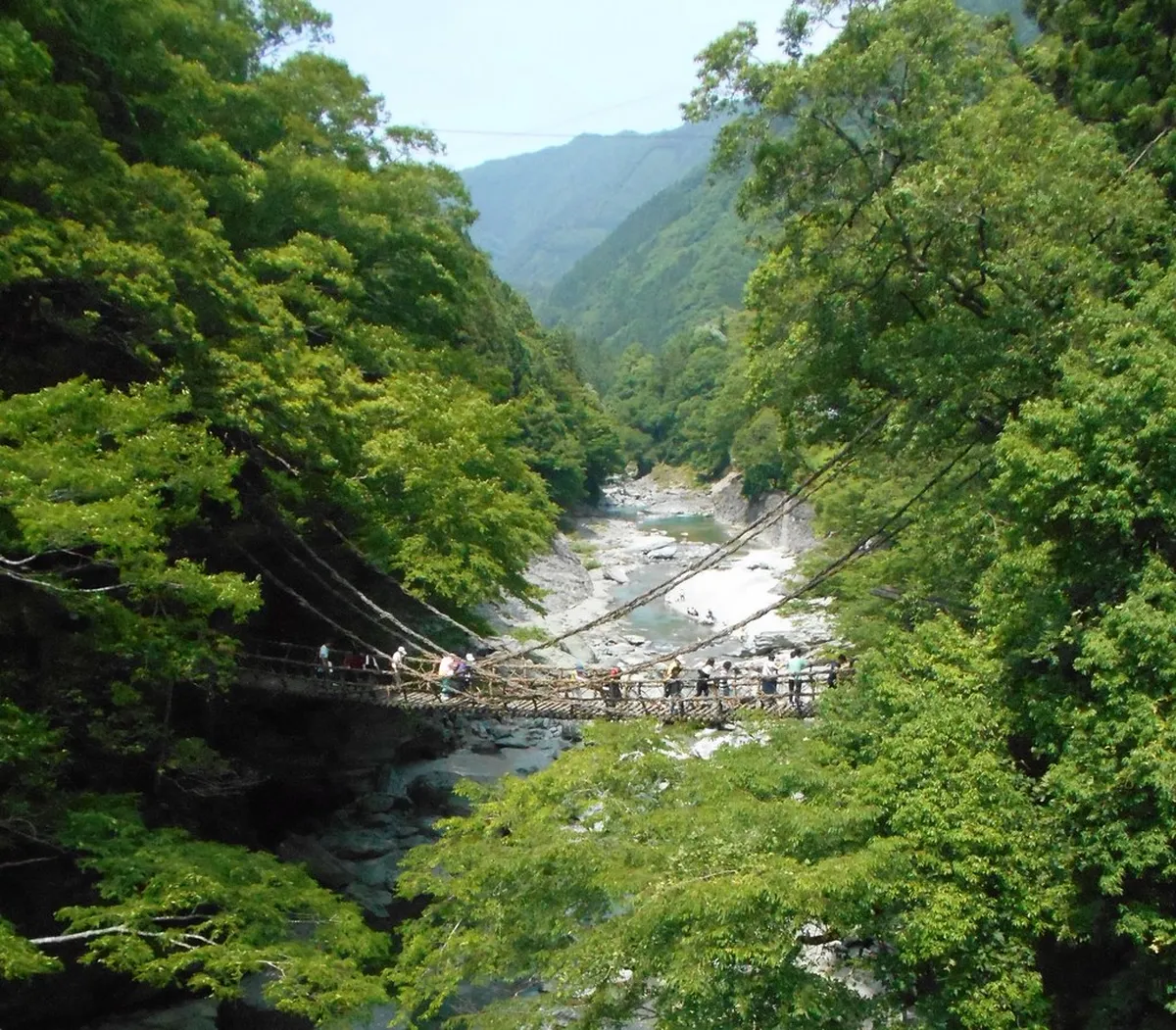
A two-kilometre gorge of sculpted schist on the Yoshino River, where a 30-minute wooden pleasure boat glides past towering rock walls and emerald-green rapids at the gateway to the Iya Valley.
Visitor guide →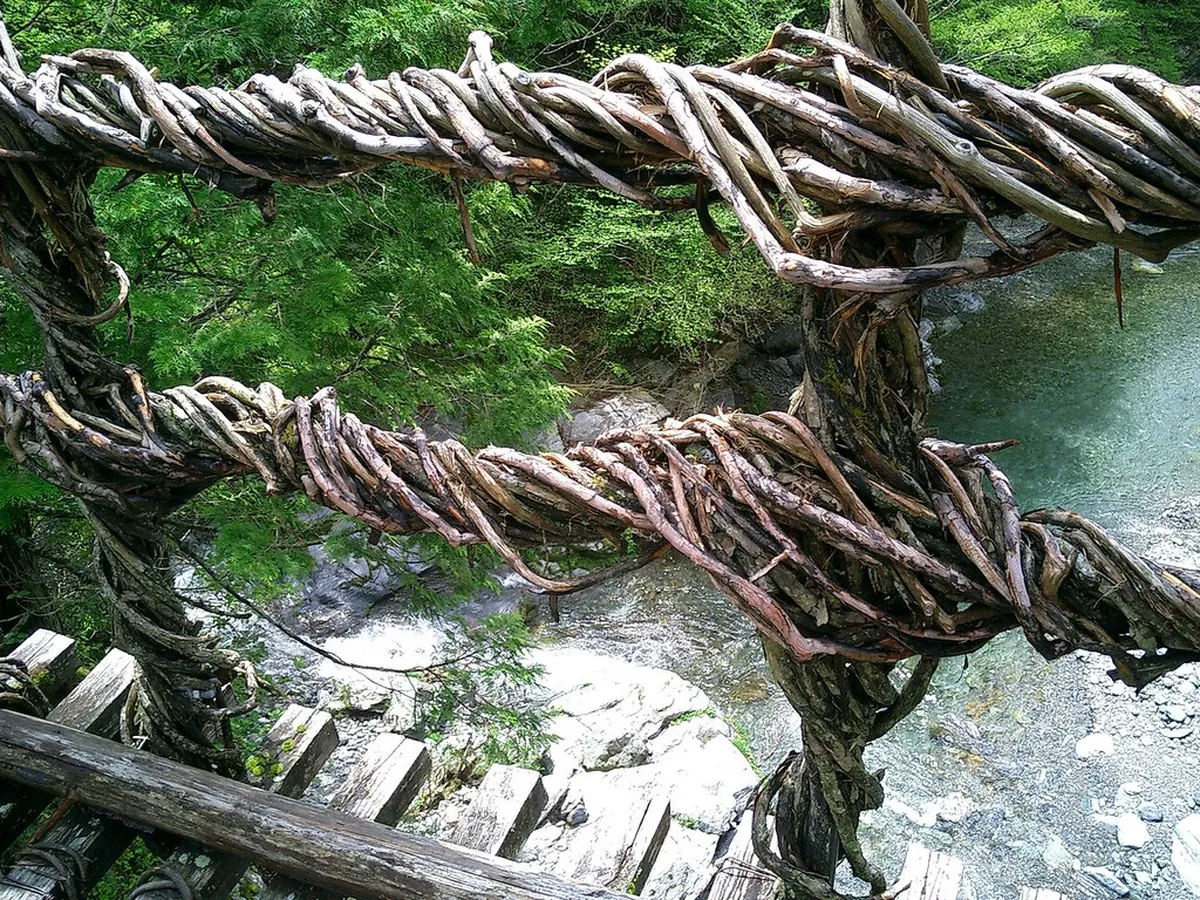
Two vine bridges deep in remote Oku-Iya — the 'husband and wife' pair — plus a hand-cranked open cable cart called the Yaen that hauls you across the river, far from the crowds of the main Kazurabashi.
Visitor guide →
A cheeky bronze boy relieving himself off the lip of a 200-metre precipice above the Iya River — the valley's most photographed viewpoint, marking the spot where local children once dared each other to pee off the cliff.
Visitor guide →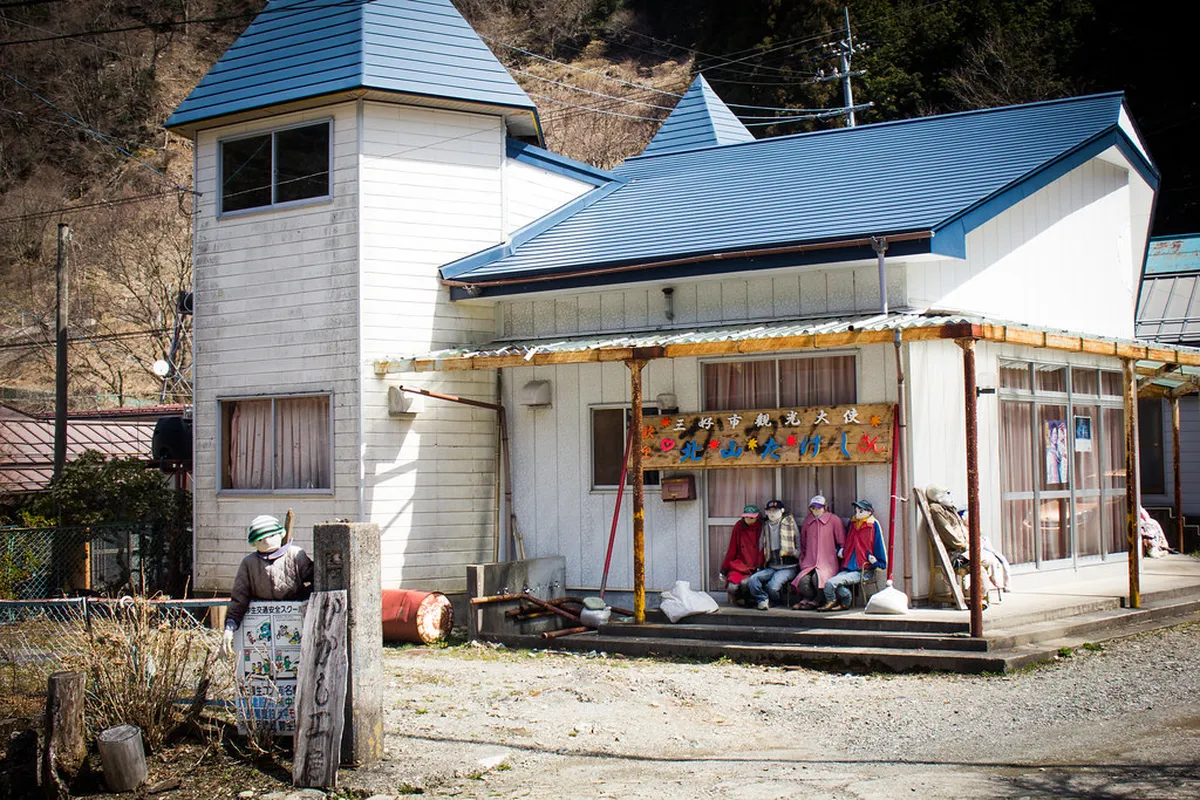
A near-abandoned Iya hamlet where more than 300 life-size handmade scarecrows — waiting at bus stops, working the fields, sitting in the old schoolroom — stand in for departed residents, the work of one returning artist.
Visitor guide →The Iya Valley splits into two distinct halves, and knowing which one you're in changes what's realistic to see in a day. Driving times between sights are longer than they look on a map — the roads are narrow, single-lane in places, and switchback constantly.
Oboke Gorge sits at the gateway between the two, right by the train station, and works as a natural first or last stop regardless of which half you prioritize.
Iya once had 13 vine bridges (kazurabashi), built from mountain wisteria vine because they could be cut down quickly if pursuing samurai ever found the valley. Only three survive today, and they're the reason most people come.
The Iya Kazurabashi Vine Bridge is the famous one: a 45-metre span swaying 14 metres above the river, rebuilt every three years in the old style but reinforced with steel cable for safety. Admission is ¥550 for adults (¥350 for elementary-school children), and it draws the bulk of the valley's day-trip crowds — arrive early or expect a queue on weekends.
The Oku-Iya Double Vine Bridges ("husband and wife," 44m and 22m) sit deep in Oku-Iya and see far fewer visitors. A single ¥550 admission (¥350 for children) covers both bridges plus a ride on the Yaen — a hand-cranked wooden cart that hauls itself across the river on a cable, a leftover from before either bridge existed. Note that Oku-Iya closes entirely from 1 December to 31 March, when the mountain road becomes unsafe; the single Kazurabashi bridge stays open year-round.
Oboke Gorge and its downstream twin Koboke form an 8-kilometre stretch of the Yoshino River where the water has cut through folded schist bedrock, leaving sheer walls and pale-emerald pools. It's also the practical gateway to the valley — Oboke Station, the bus stops, and most car-rental pickup points cluster right here.
The standard way to see it is the 30-minute pleasure-boat cruise: ¥1,500 for adults, ¥750 for children, tickets bought same-day at the Oboke boat terminal. In the warmer months (roughly April–October), the same stretch of river hosts commercial whitewater rafting for visitors who want more than a scenic float. Because Oboke sits at the valley entrance, it's the sight most itineraries hit first — see it on the way in, then push on to Nishi-Iya or Oku-Iya with the rest of the day.
How much of the valley you can realistically cover depends almost entirely on whether you have a car.
| Itinerary | Best for | What you'll see |
|---|---|---|
| Car day-trip loop | Visitors based in Tokushima or Kotohira with a rental car | Oboke Gorge cruise → Iya Kazurabashi Vine Bridge → Peeing Boy statue, with Oku-Iya added only if you start by 9am |
| 2-day with an onsen overnight | Anyone who wants to see both halves without rushing | Day 1: Oboke, Kazurabashi, check into an onsen ryokan; Day 2: full Oku-Iya loop — double vine bridges, Yaen cart, Nagoro Scarecrow Village |
| Half-day from Oboke Station | Rail travelers without a car | Oboke Gorge cruise + Iya Kazurabashi Vine Bridge by local bus/taxi; Oku-Iya is difficult without a car |
Trying to fit both Nishi-Iya and Oku-Iya into a single half-day, especially without a car, is the most common planning mistake — the road between them alone takes over an hour.
The gateway is Oboke Station on the JR Dosan Line, reachable by limited express train direct from Okayama, Takamatsu, and Tokushima. From Oboke, infrequent local buses run into Nishi-Iya as far as the Kazurabashi bridge, but service thins out fast — and doesn't reliably reach Oku-Iya or Nagoro at all.
A rental car is the practical way to see the valley properly, and it's close to essential for Oku-Iya and the Nagoro Scarecrow Village: the roads are narrow, single-lane in stretches, and the bus network simply doesn't go there on a schedule most travelers can use. Pick up a car at Oboke Station or in Tokushima city.
Because Oboke is well connected by rail, the Iya Valley works naturally as a day trip from the wider Tokushima region — or as a stop on a longer Shikoku loop that also takes in Kotohira and the Naruto whirlpools.
Autumn (late October–mid-November) is peak season: the maple and beech forest around the gorge turns deep red and gold, and it's the single most photographed time to cross the vine bridges. Summer (June–September) brings the valley's deepest green and is rafting season on the Yoshino River, though it's also the most humid stretch. Spring (April–May) gives fresh greenery with lighter crowds than autumn.
Winter (December–March) is the one season to plan around carefully: the Oku-Iya Double Vine Bridges close entirely from 1 December to 31 March, and mountain roads to Oku-Iya and Nagoro can ice over. The single Iya Kazurabashi Bridge and Oboke Gorge stay open year-round, but a winter visit effectively limits you to Nishi-Iya.
Staying overnight is what turns a rushed day trip into a proper visit to both halves of the valley. Iya Onsen is the standout choice for hot-spring lovers — its cable car descends into the gorge to riverside open-air baths with valley views. Hotel Kazurabashi sits close to the famous bridge itself, convenient for an early crossing before the day-trip crowds arrive. Travelers who'd rather stay near the train line often base themselves around Oboke, where guesthouses and ryokan sit a short drive from the gorge terminal. Book ahead in autumn foliage season — Iya's small ryokan sell out well before the leaves peak.
Yes — it's one of Shikoku's most distinctive destinations, combining vine bridges found almost nowhere else in Japan, a dramatic river gorge, and the singular Nagoro Scarecrow Village. It rewards travelers willing to spend a full day (or overnight) getting off the main Shikoku rail loop.
Take the JR Dosan Line limited express to Oboke Station from Okayama, Takamatsu, or Tokushima. From there, local buses reach Nishi-Iya and the Kazurabashi bridge, but a rental car is strongly recommended for Oku-Iya and Nagoro, which infrequent buses don't reliably serve.
A single, well-planned day with a car can cover Oboke Gorge, the Iya Kazurabashi Vine Bridge, and the Peeing Boy statue. Seeing Oku-Iya and Nagoro Scarecrow Village as well is realistic with an overnight stay, ideally at an onsen ryokan.
Yes, but only Nishi-Iya realistically. Oboke Gorge and the Iya Kazurabashi Vine Bridge are reachable by local bus or taxi from Oboke Station. Oku-Iya's double vine bridges and Nagoro Scarecrow Village are very difficult to reach without a rental car.
Late October to mid-November for autumn foliage, or June to September for lush green scenery and river rafting. Avoid relying on Oku-Iya access between 1 December and 31 March, when the double vine bridges close for winter.
Yes. Both the Iya Kazurabashi Bridge and the Oku-Iya Double Vine Bridges look precarious but are reinforced with hidden steel cable, with the vine wrapping renewed every three years. Wear closed-toe shoes with good grip, since the wooden slats are spaced widely apart.
A remote Iya hamlet where local artist Tsukimi Ayano has placed more than 300 life-size handmade scarecrows in fields, bus stops, and the old schoolhouse to stand in for the village's shrinking population. Entry is free, but the site is deep in Oku-Iya and needs a car to reach comfortably.
Start with the Iya Valley attractions guide for a fuller rundown of what to see, or read up on the wider Tokushima region if you're building a longer Shikoku itinerary. For the practical logistics, the how-to-get-to-Iya-Valley guide covers train and bus timings in more depth than fits here.