
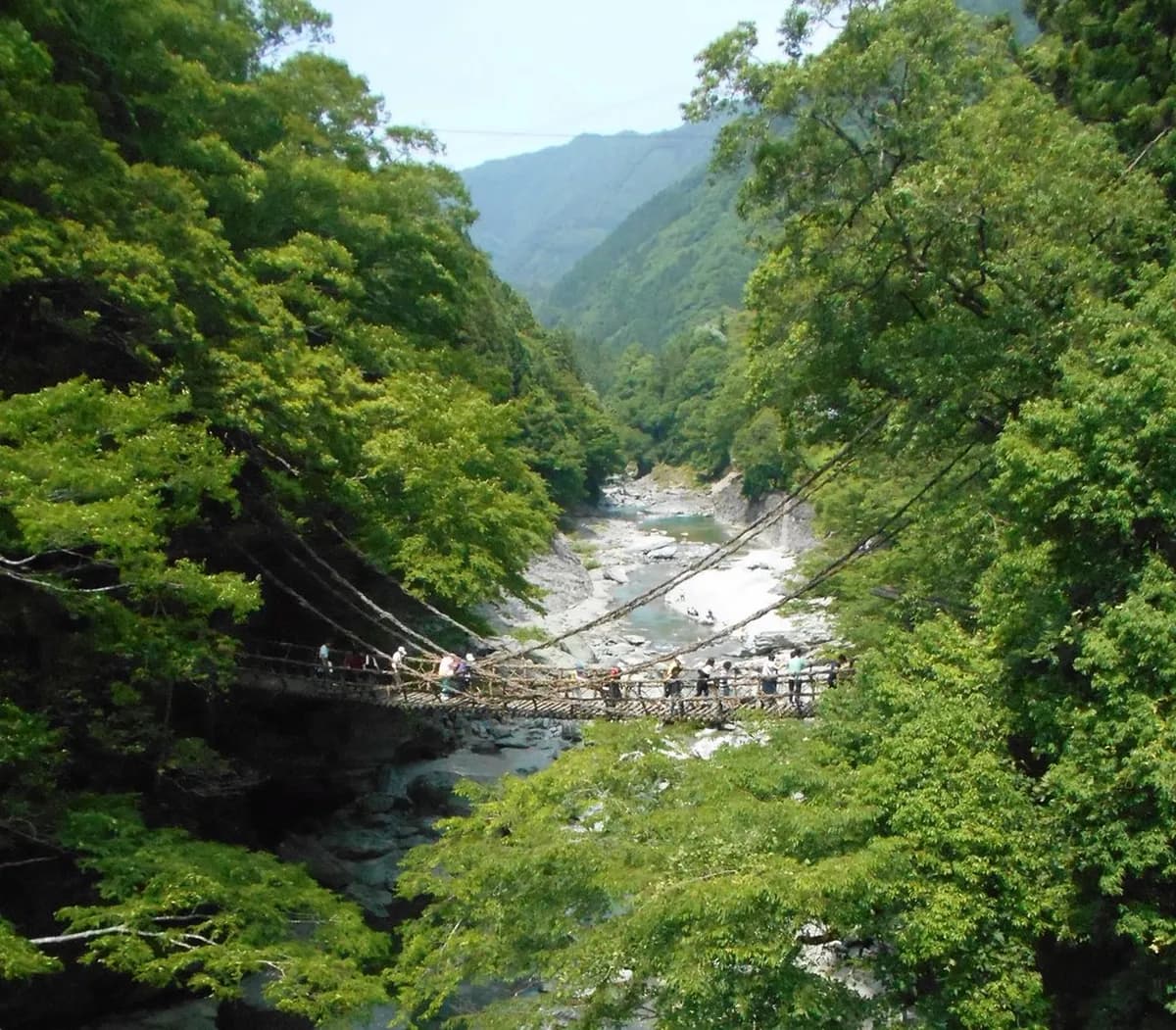
Oboke Gorge is the easiest Iya Valley gateway to pair dramatic Yoshino River scenery with a half-day of practical sightseeing.
This 2026 Oboke Gorge visitor guide focuses on the choices that matter on the ground: how to arrive by train, bus, or car, whether to choose the boat or rafting, when to visit, and which nearby Iya Valley stops are worth adding.
The gorge is best for travelers who want a compact mix of scenery, river activity, local folklore, and mountain-road adventure without committing to the deepest parts of Iya.
What Are Ōboke and Koboke Gorges?
Ōboke and Koboke are adjacent gorge sections on the Yoshino River in Miyoshi, Tokushima Prefecture. The official Miyoshi tourism guide describes the scenery as crystalline schist eroded into winding rock forms, while Wikipedia notes the area as part of the Oboke-Koboke gorge landscape.
Ōboke is the better-known visitor base because it has Oboke Station, the pleasure-boat terminal, rest areas, accommodation, and road access toward Iya Valley. Koboke lies downstream and is more closely associated with whitewater rafting on rougher parts of the river.
The practical difference for first-time visitors is simple: choose Ōboke for the boat cruise, station access, and easy scenery; choose Koboke or a rafting operator if your main goal is rapids. Many travelers see both as one Oboke-Koboke area because National Route 32 follows the river corridor.
Where is Ōboke Gorge Located? (Getting There)
Oboke Gorge sits along National Route 32 in western Tokushima Prefecture, on Shikoku Island, and works as the public-transport gateway into the Iya Valley. The official Miyoshi access guide lists JR, expressway bus, car, local bus, taxi, rental car, and bike-rental options for the wider area.
By train, JR Oboke Station is the main arrival point. Limited express services on the JR Dosan Line connect the area with Kochi, Takamatsu via Awa-Ikeda, Tokushima via Awa-Ikeda, and Okayama via Shikoku-bound limited express trains. For 2026 planning, check the latest JR timetable before locking in a boat, rafting, or bus connection.
By local bus, services link Oboke Station with key Iya Valley stops such as the sightseeing boat area, Michi-no-Eki Oboke, Kazurabashi, and deeper valley points. Buses are useful but infrequent, so build the day around the latest official timetable rather than assuming urban-style frequency.
By car, Oboke is much easier to combine with the Iya Kazurabashi vine bridge, viewpoints, local restaurants, and remote valley stops. Driving also reduces the biggest common mistake: spending too much of a short visit waiting for the next bus. Expect winding roads, slower speeds, and limited passing space once you leave the main gorge corridor.
Top Things to Do in Oboke Gorge
First-time visitors should prioritize the river cruise, a short walk around the rest area or yokai-themed stops, and one nearby Iya Valley attraction. That combination gives you scenery, culture, and practical logistics without overloading a mountain itinerary.
The boat cruise is the most relaxed choice and fits families, older travelers, photographers, and anyone arriving by train. Rafting is the better pick for travelers who want a full outdoor activity and are comfortable with wet gear, safety briefings, and weather-dependent plans.
| Activity | Best for | Time to allow | Planning note |
|---|---|---|---|
| Sightseeing boat | Scenery, families, first visit | About 1 hour including tickets and boarding | Check river conditions on the day |
| Rafting | Adventure, summer trips, groups | Half day or full day | Book ahead in peak season |
| Yokai walk or museum | Folklore, children, rainy-day backup | 30-90 minutes | Pair with Michi-no-Eki Oboke |
| Iya Valley add-on | Classic mountain sightseeing | 2 hours to full day | A car or taxi makes this much easier |
Nearby internal stops to consider include the Iya no Shoben Kozo (Peeing Boy) statue, the Oku-Iya Double Vine Bridges, and the broader Iya Valley attractions route.
Oboke Gorge Sightseeing Boat Cruise
The Oboke Gorge sightseeing boat offers the most direct way to see the gorge walls from river level. Cruising through the gorge allows for close-up views of the rock formations. Boats depart regularly, typically every 20-30 minutes, ensuring convenience. This relaxing activity is suitable for all ages and fitness levels.
The boat tour costs 1,080 yen per person. The ride lasts approximately 30 minutes, offering ample time to soak in the views. Passengers can admire the sheer cliffs and the clear, emerald waters of the Yoshino River. The boat provides an excellent vantage point for photography.
The official Oboke Gorge Pleasure Cruise listing places the terminal near the gorge facilities and notes that cruises may be canceled in strong wind or rising water. From Oboke Station, allow extra time for walking, buying tickets, and checking the day-of river status, especially after heavy rain.
A useful first-visit flow is station, boat terminal, cruise, lunch or souvenirs, then onward bus, taxi, or rental car toward Iya Valley. This keeps the boat at the front of the day, when a cancellation or delay is easier to work around.
Rafting and Outdoor Adventures in Oboke
The Yoshino River is one of Shikoku's best-known rafting areas, with Koboke especially associated with stronger rapids. The official Miyoshi tourism guide notes that the river supports both relaxing cruises and rafting, so the right choice depends on your comfort with water sports and your schedule.
Rafting tours typically range from half-day to full-day options. Prices vary depending on the tour length and operator, so compare options. Most tours include equipment rental, safety briefings, and experienced guides. Booking in advance, especially during peak season, is highly recommended.
For families or mixed-interest groups, split the day carefully: boat cruise for everyone, lunch near Oboke, then rafting only for the travelers who want the active portion. Do not assume you can add rafting spontaneously during busy summer weekends or holiday periods.
Always choose a reputable operator with strong safety records, clear cancellation terms, and weather procedures. River conditions can change after rain, and the safest operators will adjust or cancel trips when water levels are not appropriate.
Exploring the Yokai (Monster) Legends of Miyoshi City
Miyoshi City uses yokai folklore as one of the area's most distinctive cultural hooks. The Oboke area has signs, sculptures, and local stories connected with creatures such as Konaki-jiji, making it more memorable than a scenery-only gorge stop.
The easiest family-friendly plan is to pair the boat cruise with Michi-no-Eki Oboke, where the official Rest Area Oboke and Lapis Oboke listing highlights the tourist information center, souvenirs, cafe, local legends, and a yokai-related museum. This is also a useful rainy-day fallback when river conditions are uncertain.
If you want a short walk, stay close to the station, rest area, and gorge facilities rather than trying to cover every yokai sign in one pass. Paths can be uneven and the roads are not always designed like urban sidewalks, so families with strollers and travelers with limited mobility should keep the route short or move between key points by car or taxi.
Planning Your Visit: Practical Tips & Information
Careful planning matters in Oboke because the scenery is easy to enjoy but the transport is not as forgiving as a city route. In 2026, the strongest itineraries start with the fixed elements first: train arrival time, bus departure, boat status, rafting reservation, or rental-car pickup.
The best time to visit Oboke Gorge depends on your desired experience. Autumn (late October to early December) offers spectacular fall foliage. Spring (April to May) brings pleasant weather and fewer crowds. Summer (June to August) is ideal for rafting and water activities, but it can be hot.
Winter months (December to March) see fewer tourists and a tranquil atmosphere. Some facilities or activities might have reduced hours or be closed in winter. Always check specific attraction websites for the most current information. Rainy season (June-July) might affect river conditions for rafting.
For dining, the most convenient options are around the boat terminal, Michi-no-Eki Oboke, and RiverStation West West. Look for Iya soba, river fish, Tokushima ramen, and local set meals. If you are traveling by public transport, eat when food is available rather than assuming the next stop will have the same choice.
Common mistakes include planning too many remote Iya stops in one day, ignoring the final bus back to Oboke Station, underestimating mountain-road driving time, and leaving the boat cruise until the end of a rainy day. Pack cash, check weather, and keep a backup indoor stop such as the yokai museum or a local restaurant.
Is Oboke Gorge Worth Visiting?
Oboke Gorge is worth visiting if you are already traveling through Shikoku, want a scenic gateway to Iya Valley, or need a nature stop that works without an extreme hike. It is especially strong for first-time visitors because the train station, boat cruise, rest areas, and onward Iya route are relatively close together.
It is less ideal as a rushed detour from faraway cities if you only have one spare hour. The scenery is impressive, but the transport rhythm rewards travelers who give the area at least a half-day and ideally combine it with the Iya Kazurabashi vine bridge or an overnight stay.
For a short itinerary, Oboke is most worth including when you can arrive by late morning, take the boat, eat nearby, and still catch a realistic onward train or bus. For a longer itinerary, it becomes the practical starting point for the deeper Iya Valley.
Frequently Asked Questions About Oboke Gorge
For most 2026 visitors, the key questions are transport, timing, weather, and whether to prioritize the boat cruise or rafting. If this is your first time in the area, start with the boat cruise and one nearby add-on, then extend only if your bus, train, or rental-car plan leaves enough margin.
Nearby Attractions and Day Trips from Oboke Gorge
Oboke Gorge serves as an excellent base for exploring more of the stunning Iya Valley and Shikoku Island. The key is choosing the right radius: the nearest Iya sights work for a day trip, while Oku-Iya and Nagoro are better with a car and more daylight.
The Iya Kazurabashi vine bridge is the classic add-on from Oboke. This historic bridge stretches 45 meters across the Iya River, 14 meters above the rapids. It pairs well with Biwa Waterfall, local soba, and a return to Oboke Station if you are using public transport.
The Oku-Iya Double Vine Bridges and Nagoro Scarecrow Village are stronger for a full-day drive or overnight Iya itinerary. They add a more remote mountain atmosphere, but they also make timing, fuel, weather, and road conditions more important.
A practical half-day plan is Oboke Station, sightseeing boat, lunch, yokai museum or rest area, then departure. A full-day plan is Oboke boat in the morning, Kazurabashi and Biwa Waterfall midday, then one viewpoint or local meal before returning. An overnight plan lets you add Oku-Iya, Nagoro, or a hot-spring stay without rushing the mountain roads.
Frequently Asked Questions
How much time should you plan for an Oboke Gorge visitor guide?
Plan at least half a day to enjoy the Oboke Gorge sightseeing boat cruise and a short walk. A full day allows for rafting, exploring the Yokai Monster Walk, and visiting nearby attractions like the Iya Kazurabashi vine bridge. Consider an overnight stay to explore the deeper Iya Valley.
Which Oboke Gorge visitor guide option fits first-time visitors?
First-time visitors should choose the sightseeing boat, lunch near the terminal or rest area, and one nearby Iya Valley stop. This covers the gorge scenery, local food, and onward valley atmosphere without depending on too many infrequent bus connections or weather-sensitive activities.
How do you get to Oboke Gorge by public transport?
Take the JR Dosan Line to Oboke Station, then walk, use a local bus, or take a short taxi ride depending on your destination. Public transport works best when you check the latest train and bus schedules before arrival and plan the return connection first.
What is the best season to visit Oboke Gorge?
Autumn (late October to early December) is popular for vibrant fall foliage, offering stunning gorge views. Summer (June to August) is ideal for whitewater rafting and other water activities. Spring (April to May) provides pleasant weather and fewer crowds. Each season offers a unique perspective of the gorge.
Is Oboke Gorge worth including on a short itinerary?
Yes, if you can give it at least half a day and your transport connections line up. Oboke works well as a scenic stop between Kochi, Takamatsu, Tokushima, and Iya Valley, but it is less rewarding if you only have time to step off the train and leave.
Is Oboke Gorge accessible for strollers or wheelchairs?
The Oboke Gorge sightseeing boat is generally accessible, with assistance often available. However, many hiking trails and some parts of the Yokai Monster Walk may be challenging for strollers or wheelchairs due to uneven terrain. Check specific attraction accessibility details beforehand for accurate planning.
What should travelers avoid when planning an Oboke Gorge visit?
Avoid visiting without checking operating hours for attractions, especially during off-peak seasons or holidays. Do not rely solely on public transport for exploring remote parts of the Iya Valley; a rental car offers much more flexibility. Also, avoid underestimating travel times, as roads can be winding.
What to do if it rains during your Oboke Gorge visit?
If it rains, the Oboke Gorge sightseeing boat still operates, offering a unique misty atmosphere. Consider visiting the Yokai Museum or local souvenir shops. You can also enjoy a meal at a local restaurant. Some indoor attractions in nearby Miyoshi City provide alternative activities.
Oboke Gorge is at its best when treated as a practical Iya Valley gateway, not just a quick viewpoint. Plan the transport first, keep river conditions in mind, and choose between a relaxed boat day, an active rafting day, or a broader Iya Valley route.
With a half-day you can cover the essential gorge experience. With a full day or overnight stay, Oboke becomes the starting point for vine bridges, folklore, hot springs, and the deeper mountain scenery that makes western Tokushima memorable.
Planning the rest of your trip? See our things to do in Iya Valley, Oboke Gorge guide and Tokushima region guide.