
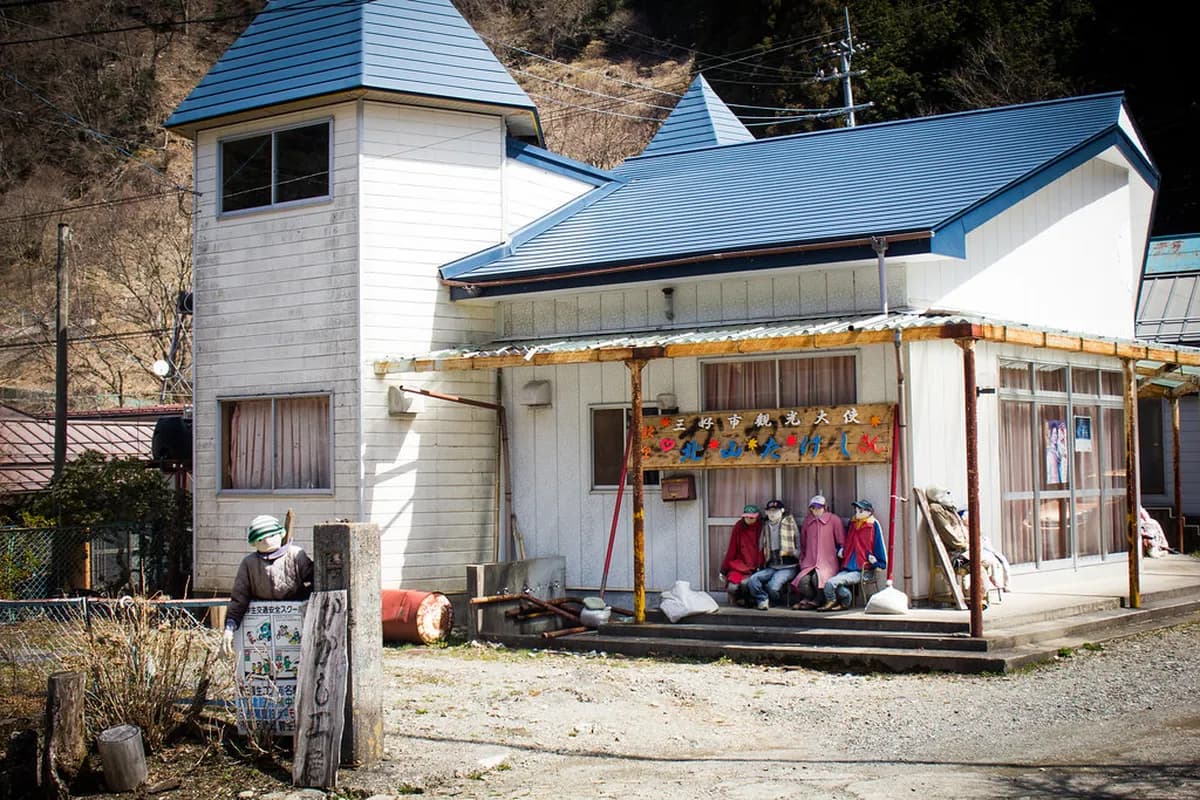
Nagoro Scarecrow Village is a remote Iya Valley hamlet where handmade kakashi dolls sit in classrooms, wait at bus stops, work in fields, and quietly outnumber the remaining residents. In 2026, it is still one of Shikoku's most unusual rural attractions: free to enter, open in daylight, and best approached with careful transport planning.
The appeal is not only its strangeness. Nagoro is also a moving portrait of rural depopulation and local memory, shaped by artist Tsukimi Ayano's long-running scarecrow project. The dolls are playful at first glance, but the old school, empty houses, and mountain roads give the village a reflective tone that rewards slow, respectful travel.
This visitor guide focuses on the practical decisions that matter most: whether you need a car, how public transport works, how much to budget, when to go, what to combine nearby, and what first-time visitors commonly underestimate.
What is Nagoro Scarecrow Village?
Nagoro Scarecrow Village, also called Nagoro Doll Village or Kakashi no Sato, is a small mountain community in Miyoshi, Tokushima Prefecture. The Japan National Tourism Organization describes Nagoro as a place revived by more than 350 handcrafted characters living alongside about 30 human residents.
The scarecrows are placed in ordinary village scenes: farming, doing road work, fishing, waiting for buses, gathering in the former school, and sitting in empty classrooms. Many represent former residents or imagined community members, so the village feels part outdoor folk-art installation and part memorial to a disappearing way of life.
Wikipedia's Nagoro entry notes that the village sits on Route 439 in the Iya Valley and that artist Tsukimi Ayano has made hundreds of dolls, including replacements for older figures. That detail matters for visitors: Nagoro changes over time, and some scarecrows look weathered because many live outdoors year-round.
Who Makes the Nagoro Scarecrows?
The creative force behind Nagoro Scarecrow Village is Tsukimi Ayano, a local artist who returned to her hometown after years away. Her first doll was made to protect a field from birds, but the project became personal as she began making figures that recalled neighbors, family members, and the everyday routines of the village.
Ayano-san builds the dolls with simple materials such as cloth, old clothes, stuffing, yarn, buttons, and handmade frames. The faces are intentionally individual, which is why visitors may need a second glance to tell whether a figure at a roadside or classroom desk is a person or a kakashi.
Because outdoor dolls decay, the village is not a static museum. Some figures are replaced, some are moved, and newer scenes appear near the former school and village roads. Treat the scarecrows as community art rather than props: photograph them respectfully, avoid moving them, and do not enter private houses or storage spaces just because a doll is visible inside.
Planning Your Visit: Essential Information
Visiting Nagoro Scarecrow Village requires advance planning because it is deep in Oku-Iya, far beyond the easiest parts of the valley. The village is open year-round, but the best times are spring and autumn. These seasons offer milder walking weather, clearer mountain scenery, and less risk of icy rural roads than winter.
There are no specific entrance fees to the village itself. However, you should budget for transportation and any activities. Nagoro has very limited amenities, so bring water, snacks, cash, and weather protection before you leave Oboke, Awa-Ikeda, or your Iya accommodation. Do not assume you will find a convenience store, full restaurant, ATM, or frequent bus once you arrive.
Allow at least 1-2 hours if you want to walk slowly, see the former school area, take photos, and read the village atmosphere properly. If you are only stopping en route to the Oku-Iya Double Vine Bridges, 30-45 minutes can work, but it will feel rushed after the long drive.
How to Get to Nagoro Scarecrow Village
Reaching Nagoro Scarecrow Village is the hardest part of the visit. A rental car or chartered taxi from Oboke is the most practical choice for most travelers, especially if you also want to see the Oku-Iya Double Vine Bridges, the main Kazurabashi area, or Oboke Gorge on the same day. Route 439 and the Oku-Iya roads are scenic but narrow, winding, and slow, so plan daylight driving and do not overpack your route.
Public transportation is possible, but it is a commitment. The official JNTO route from Shin-Osaka uses the JR Sanyo Shinkansen to Okayama, a JR Limited Express to Oboke, a Shikoku Kotsu Bus to Higashi-Iya Gakko-mae, then a Miyoshi City Bus on the Nagoro Line to the Nagoroshita stop. The bus legs alone involve about 1 hour to Higashi-Iya Gakko-mae and around 40 minutes onward to Nagoro, with limited departures.
The Japan Rail Pass can help with eligible JR train legs to Okayama, Awa-Ikeda, or Oboke, but it does not directly cover the local buses, taxi, rental car, fuel, or parking logistics needed for Nagoro. If you are not driving, confirm the exact outbound and return bus times before leaving your hotel; missing one connection can strand you for hours in a valley with few services.
Cost of Visiting Nagoro Scarecrow Village
The actual entrance to Nagoro Scarecrow Village is free of charge. Your main expenses will involve transportation, accommodation, and food. A rental car typically costs around 5,000-8,000 yen per day. This depends on the car type and rental period. Factor in gasoline costs as well, which can add up in rural areas.
Bus fares from Awa-Ikeda Station to Nagoro can be approximately 2,000-3,000 yen one-way. This makes round trips quite costly. Accommodation in the Iya Valley ranges from 5,000 yen for guesthouses to 15,000+ yen for ryokans. Booking in advance is highly recommended, especially during peak seasons. Use an Iya or Oboke base if you want to avoid a same-day rush from Honshu.
Some visitors may be interested in a scarecrow-making workshop with Tsukimi Ayano. These workshops are held on the fourth Wednesday of every month from 13:00-16:00. They are closed between December and March. The workshop fee is around 3,000 yen per person. Reservations are typically required, and visitors should confirm availability before planning a trip around the workshop alone.
Things to Do Near Nagoro Scarecrow Village
The easiest nearby pairing is the Oku-Iya Double Vine Bridges, which sit farther along the same mountain route toward Mount Tsurugi. They are the closest major attraction to Nagoro, so this combination makes the most sense if you have limited time or are already driving in Oku-Iya.
The main Iya Kazurabashi Vine Bridge, the Iya no Shoben Kozo (Peeing Boy) statue, and Oboke Gorge are better treated as part of a full Iya Valley driving day rather than quick add-ons. They sit west of Nagoro, and mountain-road distances take longer than they look on a map.
A scarecrow festival may be held around early October near the former Nagoro Elementary School, but dates and programming can vary. Do not build a trip around the festival without checking current local information; for most visitors, the stronger plan is to combine Nagoro with the Oku-Iya bridges, then overnight in Iya or return toward Oboke before dark.
Exploring Iya Valley: Kazurabashi (Vine Bridge)
The Iya Kazurabashi Vine Bridge is the valley's best-known bridge and a useful stop if you are building a full route through Iya Valley. It is not the same as the Oku-Iya Double Vine Bridges near Nagoro, so check which bridge your itinerary means before estimating drive time.
The bridge is approximately 45 meters long and 14 meters above the river. It is rebuilt every three years using local kiwi vines. There is a small admission fee to cross the bridge. Expect to pay around 550 yen per adult. The bridge can get crowded, especially on weekends and holidays. Arrive early to avoid long queues.
For a relaxed 2026 plan, visit Oboke Gorge or the Peeing Boy statue first, continue to the main Kazurabashi area, then drive deeper to Nagoro and the Oku-Iya bridges only if you have enough daylight. Wear comfortable shoes for uneven steps and bridge slats, and avoid scheduling the narrow mountain-road section after sunset.
Combining Your Trip with Naoshima Art Island
Naoshima Art Island can pair well with Nagoro only as part of a broader Shikoku or Setouchi itinerary. The two places are not close enough for a comfortable same-day sightseeing combination, but they do make a strong contrast: Nagoro is intimate rural folk art, while Naoshima is formal contemporary art spread across museums and outdoor installations.
To travel from Iya Valley toward Naoshima, first work back to Okayama or Takamatsu. From there, continue to Uno Port or Takamatsu Port and use the ferry network to reach Naoshima. The transfer can take several hours after you leave the valley, especially if you are returning a rental car or connecting from limited rural buses.
A realistic plan is Nagoro and Iya Valley on one day, an overnight near Oboke, Awa-Ikeda, Takamatsu, or Okayama, then Naoshima the next day. Allocate at least two full days for Naoshima if you want the major museums without rushing, and book accommodation early during weekends, holidays, and art-event periods.
Practical Tips for Your Japan Trip
When planning your Japan trip, consider the best time to visit for your interests. Spring (March-May) offers fresh greenery and flowers, while autumn (September-November) brings cooler walking weather and mountain color. Summers can be hot and humid, and winters can bring snow or ice to higher, shaded roads in Oku-Iya.
Common mistakes are assuming Nagoro works like an urban Japan attraction, arriving without return transport, starting the mountain drive too late, expecting restaurants in the village, or treating visible buildings as open exhibits. Keep your route simple, carry cash, and check weather and road conditions before heading deep into the valley.
For first-time visitors, an overnight base near Oboke, Awa-Ikeda, or central Iya is usually easier than a long round trip from Osaka, Kyoto, or Hiroshima. Japan's public transport is efficient in cities, but Nagoro is a rural exception where a rental car, taxi plan, or carefully confirmed bus timetable is the difference between a memorable detour and a stressful day.
Frequently Asked Questions
What is the best way to experience Nagoro Scarecrow Village?
The best way to experience Nagoro is by walking through the village at a leisurely pace. This allows you to discover the scarecrows in various settings. Allow at least 1-2 hours to truly appreciate the unique atmosphere. Combining it with other Iya Valley attractions makes for a memorable day.
Are there any facilities or shops in Nagoro Scarecrow Village?
Nagoro Scarecrow Village has very limited facilities. There are no convenience stores or major restaurants directly within the village. It is advisable to bring your own snacks and drinks. Plan to eat before or after your visit in larger towns. Public restrooms may also be scarce.
Can you visit Nagoro Scarecrow Village without a car?
Yes, but it is difficult. The public route requires JR trains to Oboke, a Shikoku Kotsu Bus connection, and a Miyoshi City Bus connection toward Nagoro. Most visitors should rent a car, book a taxi, or stay overnight in the Iya Valley so limited return times do not control the whole day.
Can I participate in making scarecrows in Nagoro?
Yes, Tsukimi Ayano sometimes offers scarecrow-making workshops. These usually take place on the fourth Wednesday of the month. They are held from 13:00 to 16:00. Workshops are closed from December to March. Reservations are typically required, and there is a fee of around 3,000 yen. This unique activity provides a deeper connection to the village's art.
Where should you stay when visiting Nagoro?
The most convenient bases are Oboke, Awa-Ikeda, or accommodation within the Iya Valley. Staying nearby helps if you want to combine Nagoro with Oku-Iya, Kazurabashi, or Oboke Gorge without driving narrow mountain roads after dark.
How long should I plan for a visit to Nagoro Scarecrow Village?
For Nagoro Scarecrow Village itself, plan about 1 to 2 hours. This gives you enough time to explore the main areas. If you combine it with nearby attractions in the Iya Valley, a full day is recommended. An overnight stay in the region allows for a more relaxed itinerary. Consider your travel pace and interests.
Nagoro Scarecrow Village remains one of Iya Valley's most memorable attractions in 2026 because it combines a remote mountain journey, handmade folk art, and a direct encounter with rural Japan's changing communities. It is free to visit, but it is not effortless to reach.
The best trips treat Nagoro as part of an Oku-Iya plan rather than a casual roadside stop. Arrange transport first, carry supplies, keep enough daylight for the mountain roads, and pair the village with the Oku-Iya Double Vine Bridges or a broader Iya Valley route if your schedule allows.
Go slowly once you arrive. The reward is not a single viewpoint or ticketed exhibit, but the cumulative detail of scarecrows in fields, bus shelters, classrooms, and quiet corners of a village that has turned memory into art.
For the latest official information, see the Nagoro Scarecrow Village official site.
Planning the rest of your trip? See our things to do in Iya Valley, Nagoro Scarecrow Village guide and Tokushima region guide.