
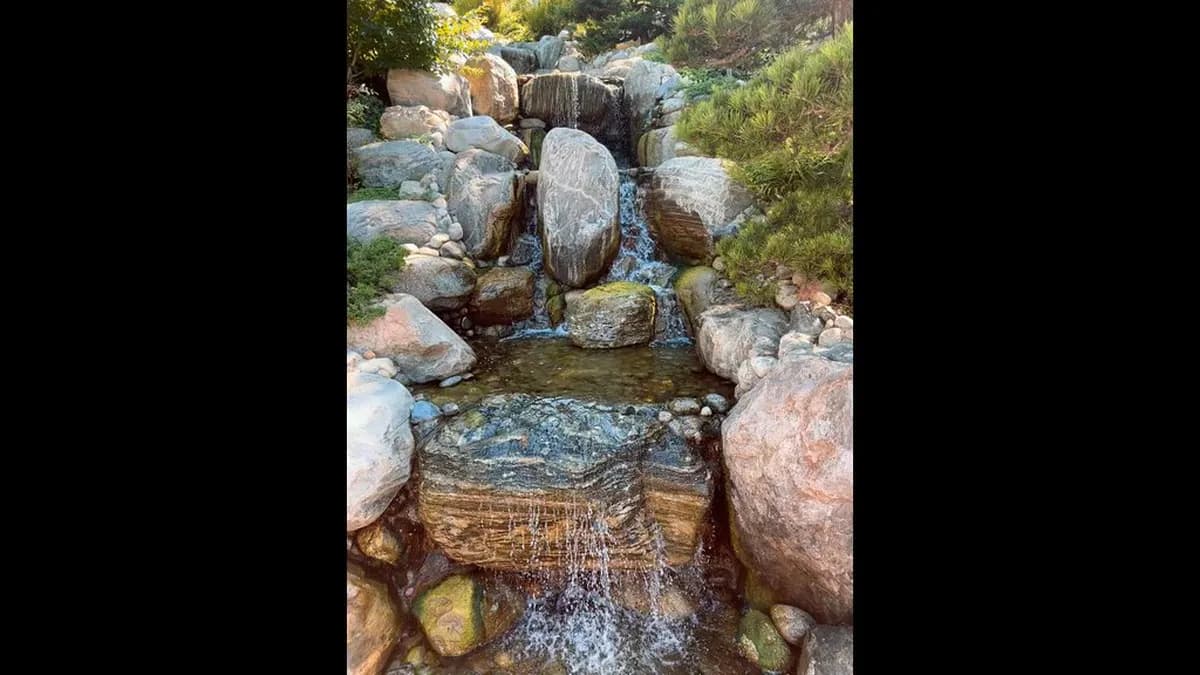
Sankeien Garden stands as a peaceful oasis within the bustling port city of Yokohama. This sprawling traditional landscape covers over 175,000 square meters of lush greenery and historic architecture. Visitors come here to escape the urban noise and immerse themselves in classic Japanese beauty.
The garden was created by Sankei Hara, a wealthy silk merchant who valued art and history. He spent years collecting historic buildings from across Japan and rebuilding them on this site. Today, it serves as a National Place of Scenic Beauty and a top highlight for any Yokohama itinerary.
Our guide provides everything you need for a perfect 2026 visit to this cultural treasure. You will find details on transportation, seasonal highlights, free admission policies, and the best photography spots. Prepare to discover a side of Japan that feels worlds away from the modern skyline.
Sankeien Garden Overview & Quick Summary
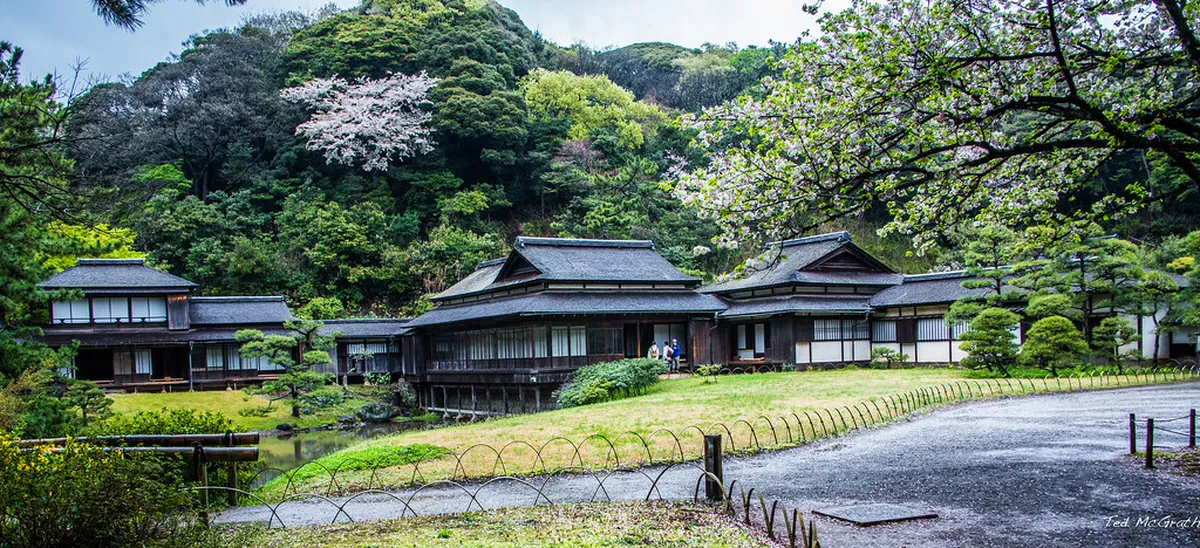
The history of Sankeien Garden is deeply tied to the success of the Japanese silk trade. Sankei Hara, whose real name was Tomitaro Hara (1868–1939), opened the outer garden to the public in 1906. He wanted to share his love for traditional aesthetics with the local community, and his vision created a sanctuary that preserved architectural styles from the Muromachi and Edo periods.
Walking through the gates feels like stepping back in time through different regions of Japan. The garden features seventeen historic structures brought from places like Kyoto, Kamakura, Wakayama, and Gifu. Ten of these buildings are designated as Important Cultural Properties by the national government, making the garden a living museum of Japanese history concentrated in one site.
The layout is divided into two main sections: the Inner Garden and the Outer Garden. The Outer Garden was always open to the public and features large ponds and wide open paths. The Inner Garden was originally the private residence of the Hara family and holds the most architecturally significant structures. In 1953 the Hara clan donated the entire property to the Sankeien Hoshokai Foundation, which manages it today.
Sankei Hara was also a great patron of the arts who hosted famous writers and painters within these grounds during the Meiji Era. The garden was designated a National Place of Scenic Beauty in 2007. This artistic legacy continues to influence the quiet, contemplative atmosphere visitors feel today.
Essential Visitor Information: Hours, Fees, and Best Time to Visit
The garden opens at 09:00 and closes at 17:00 daily, with last entry at 16:30. The only closure days are December 29, 30, and 31. During cherry blossom season (early March to mid-April) and firefly season (late May to early June), hours extend to 21:00, with last entry at 20:30. Check the Sankeien Garden official website before visiting to confirm any special event schedules.
Standard admission is 900 yen for adults (age 15 and above) and 200 yen for children (ages 6–14). There is no general senior discount. Groups of ten or more pay 800 yen per adult and 100 yen per child. Payment is accepted in cash or by IC card (Suica, Pasmo) at the main gate.
The best time to visit depends on what seasonal scenery you prefer. Late March to early April brings cherry blossoms that draw large crowds and warrant the extended evening hours. Late May to early June offers the rare firefly viewing events — an experience most visitors miss entirely because it falls outside the obvious spring and autumn peaks. Autumn (late November to early December) delivers brilliant maple foliage against the wooden buildings.
Early morning visits on weekdays are the quietest, especially outside peak seasons. Arrive before 10:00 to have the Outer Garden largely to yourself before tour groups arrive from central Yokohama.
Disability certificate holders enter free, and one companion is also admitted at no charge. Junior and senior high school students enter free on the 2nd and 4th Saturdays of each month — a useful saving if you are travelling with teenagers.
| Season | Highlight | Extended Hours |
|---|---|---|
| Late Mar – mid Apr | Cherry blossoms; illuminated pagoda at night | Until 21:00 |
| Late May – early Jun | Firefly viewing events on dimmed paths | Until 21:00 |
| Early Jul – early Aug | Early Morning Lotus Viewing (garden opens 06:00 on select dates) | From 06:00 |
| Late Nov – early Dec | Maple and ginkgo autumn foliage | Standard (until 17:00) |
| February | Plum blossoms; low crowds | Standard (until 17:00) |
- Standard Admission (2026)
- Adults (age 15+): 900 yen
- Children (ages 6–14): 200 yen
- Groups (10+): 800 yen / 100 yen per person
- Payment: Cash or IC card (Suica, Pasmo)
- Opening Hours
- Standard: 09:00–17:00 (last entry 16:30)
- Cherry blossom & firefly seasons: 09:00–21:00 (last entry 20:30)
- Closed: December 29–31 only
Free Admission: Who Gets In at No Cost
Several visitor groups enter Sankeien Garden free of charge — a detail that no competitor guide bothers to mention. Holders of a Japanese disability certificate (shougaisha techou) enter free, and one accompanying companion is also admitted without charge. This policy applies every day the garden is open.
Junior high and senior high school students enter free on the 2nd and 4th Saturdays of each month. If you are traveling with teenagers and can time your visit to one of those Saturdays, the savings are meaningful, especially if you plan to combine it with other paid attractions in Yokohama. No proof of enrollment is needed beyond a student ID or school card.
For accessibility, the Outer Garden is mostly flat and navigable with a wheelchair or pushchair. The Inner Garden and the hillside path to the Three-Story Pagoda involve stone stairs and uneven terrain that can be challenging without assistance. If mobility is a concern, focus your visit on the Outer Garden's main pond loop, which delivers the garden's most iconic views without any significant elevation change.
How to Get to Sankeien Garden (Bus and Train Routes)
Getting to Sankeien Garden requires a bus ride, as no train station sits close to the Honmoku district. The most straightforward route is from Yokohama Station's East Exit bus terminal, Stand No. 2. Board City Bus number 8 or number 148 and ride for approximately 35 minutes. Alight at the "Honmoku Sankeien-mae" stop and walk five minutes to the main gate. The one-way bus fare is 220 yen, payable with IC card or exact change.
A second option is to board from Sakuragicho Station or Motomachi-Chukagai Station (Chinatown area), both of which also have buses running toward Honmoku. This is convenient if you are combining the garden with a morning in Chinatown before heading to Sankeien for the afternoon. Check the Yokohama City Transportation Bureau website for current timetables.
A third route uses the JR Negishi Line. Take any train to Negishi Station, then board City Bus number 54, 58, 99, 101, or 108 toward Honmoku. This leg takes about ten minutes but requires a short walk of roughly ten minutes from the Honmoku stop to the garden. The Negishi route is useful if you are arriving from Kamakura or other JR Negishi Line stops.
Taxis from central Yokohama take 10 to 15 minutes and cost roughly 1,000 to 1,500 yen. There is no dedicated parking lot at the garden, so driving is not recommended on weekends or during peak seasons.
- Direct Bus from Yokohama Station
- Bus Numbers: 8 or 148
- Departure: East Exit, Stand No. 2
- Destination Stop: Honmoku Sankeien-mae
- Travel Time: ~35 minutes / Fare: 220 yen
- Bus from Sakuragicho or Motomachi-Chukagai Station
- Useful if combining with Chinatown
- Destination Stop: Honmoku Sankeien-mae
- Access via Negishi Station
- Train: JR Negishi Line
- Bus Numbers: 54, 58, 99, 101, or 108
- Destination Stop: Honmoku, then ~10 min walk
Exploring the Outer Garden: The Three-Story Pagoda and Key Structures
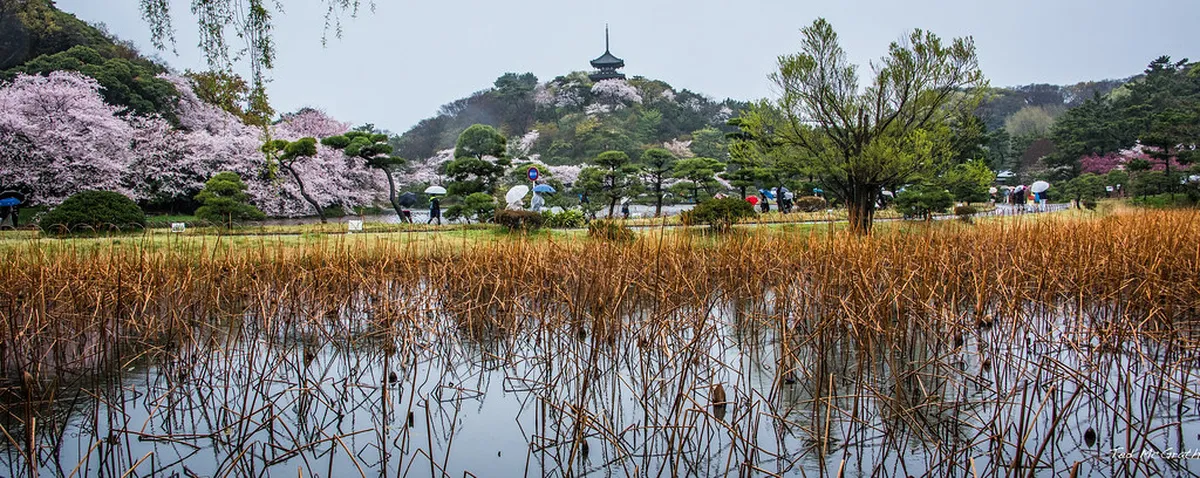
The Outer Garden is the most accessible part of the grounds and its most famous feature is the Three-Story Pagoda of Old Tomyoji, perched on a small hill. This structure was built in Kizugawa (Kyoto Prefecture) in 1457 during the Muromachi Period, making it the oldest wooden pagoda in the Kanto region. It was relocated to Sankeien in 1914. For the classic photograph, walk to the far side of the Great Pond and frame the pagoda above the water — early morning light hits the structure from the east and produces the sharpest shadows on the wood grain.
The Great Pond itself anchors the Outer Garden walk. Its banks are lined with weeping willows, and the water supports koi, turtles, and in summer a thick carpet of lotus blossoms. The Buddhist Sanctum of Old Tokeji, a thatched-roof Zen sanctum founded in 1634 and relocated from Kamakura in 1907, sits nearby and is notable for its historical role sheltering women escaping unwanted marriages.
Kakushokaku is the large private residence (950 square meters) built by Sankei Hara in 1902 as his family home. Many cultural and political figures visited him here during the Meiji and Taisho eras. The building is open during the summer and can also be rented for private events. The Sankeien Memorial Museum, built in 1989, stands close by and provides deeper context on Hara's life, the silk trade, and the garden's construction — well worth 20 minutes inside.
The Old Yanohara Family House is the only building open to visitors year-round. It was built in Shirakawago (Gifu Prefecture) around 1750 in the traditional gassho-zukuri steep-thatched style and relocated to the garden in 1960 to save it from being submerged by a new dam. Inside you can see handicraft articles from the Hida region of Gifu.
- Key Outer Garden Structures
- Three-Story Pagoda of Old Tomyoji: built 1457, oldest pagoda in Kanto
- Buddhist Sanctum of Old Tokeji: founded 1634, relocated from Kamakura 1907
- Kakushokaku: 1902 private residence, 950 sq m, summer access
- Old Yanohara House: c. 1750 gassho-zukuri house, open year-round
- Sankeien Memorial Museum: 1989, tea ceremony and exhibitions
The Inner Garden: Historic Buildings and Private Landscapes
The Inner Garden offers an intimate look at traditional Japanese architecture and was once the private domain of the Hara family. Rinshunkaku is the centerpiece — a villa originally belonging to the Kishu-Tokugawa clan, built in 1649 near the Kino-kawa River in Wakayama Prefecture and relocated in 1906. Its fusuma (sliding doors) are covered in celebrated ink paintings, and the overall proportions represent the height of early Edo residential design. Entry into this section requires passing through the Gomon gate, built around 1708 during the Edo Period and moved from Kyoto's Higashiyama district in the Taisho Era.
Choshukaku is a small pavilion built in 1623, believed to have come from Nijo Castle in Kyoto, and relocated to Sankeien in 1922 by the third Tokugawa Shogun Iemitsu. Its wooden carvings and compact proportions contrast sharply with the larger villa nearby. Juto Oido of Old Tenzuji dates to 1591 and was built by Hideyoshi Toyotomi as a monument to his mother's health and long life. It arrived at Sankeien from Kyoto in 1905 and is one of the garden's most historically charged structures — look for the distinctive half-bird, half-human figures in the carved friezes.
Gekkaden, originally from Fushimi Momoyama Castle in Kyoto (1603), was relocated in 1918. Tenjuin, the private Zen Buddhist hall of the Hara family (1651), came from a temple near Kamakura in 1916. The terrain in the Inner Garden is more uneven than the Outer Garden, with narrow winding paths and occasional stone stairs. Visit this section early in the afternoon before the Inner Garden closes, which sometimes happens before the main gate.
- Key Inner Garden Structures
- Rinshunkaku: 1649 Tokugawa clan villa, relocated 1906
- Choshukaku: 1623 Nijo Castle pavilion, relocated 1922
- Juto Oido of Old Tenzuji: 1591 Toyotomi monument, arrived 1905
- Gekkaden: 1603 Fushimi Momoyama guest hall, relocated 1918
- Tenjuin: 1651 family Zen hall, relocated 1916
Seasonal Highlights: Cherry Blossoms, Fireflies, and Autumn Leaves
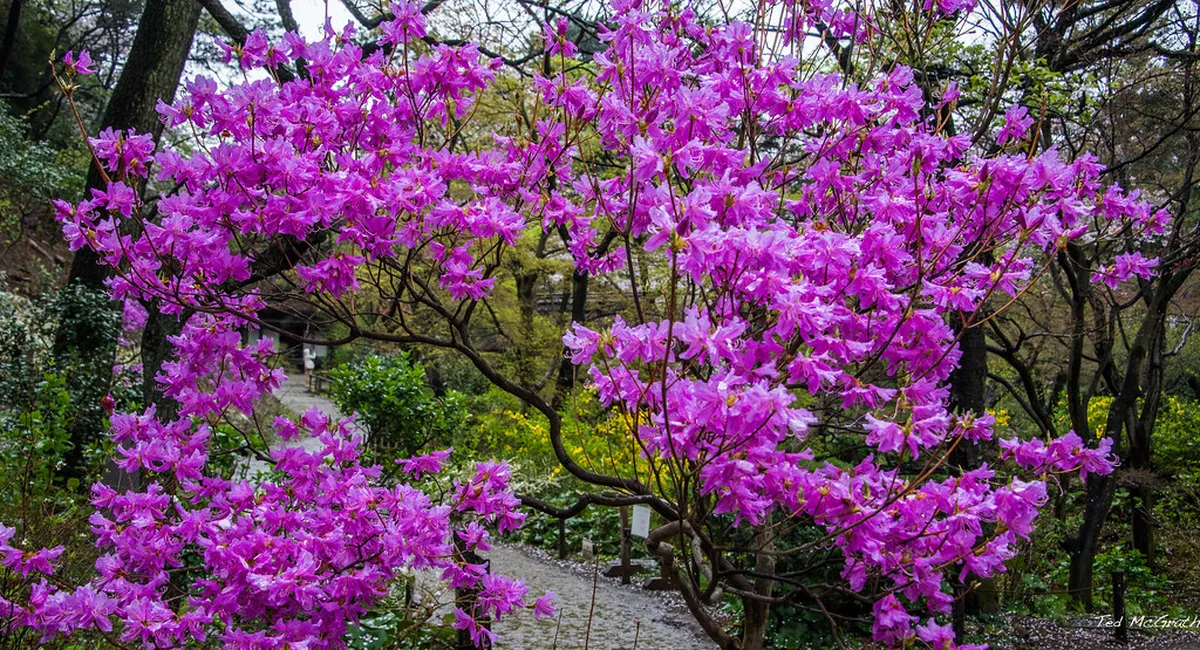
Each season brings a distinct atmosphere to Sankeien Garden. Late March to mid-April is the cherry blossom peak. The garden stays open until 21:00 during this period, and the Three-Story Pagoda is illuminated after dark — seeing the white blossoms glow against the lit pagoda is the garden's single most dramatic visual. Arrive mid-week if possible, as weekends draw heavy crowds from across the Kanagawa region.
Late May to early June is firefly season, a window most visitors overlook completely. The garden holds dedicated early-evening firefly viewing events when the paths are dimmed and the insects drift across the ponds. Firefly populations in Yokohama are rare enough that this event draws enthusiasts from across the Tokyo metropolitan area. Hours again extend to 21:00 during these nights. Check the official website in spring for the exact dates, as they shift with weather each year.
July and early August bring Early Morning Lotus Viewing events — the garden opens at 06:00 on specific dates so visitors can watch the lotus blossoms open and then close by noon. The pond near the entrance is covered in vibrant pink flowers at peak bloom. Summer is also a good time to access Kakushokaku, the large Hara family residence normally closed to the public.
Autumn, from late November to early December, offers fiery maple and ginkgo foliage that frames the historic wooden buildings perfectly. February brings delicate Ume (plum blossoms) before the cherry season — subtle fragrance, fewer crowds, and the occasional dusting of snow that turns the garden into a monochrome landscape.
Tea Ceremony, Photography Tips, and Visitor Advice
The Sankeien Memorial Museum in the Outer Garden offers a simplified tea ceremony open to all visitors. It typically costs 500 to 600 yen and includes a bowl of matcha and a seasonal wagashi sweet. No etiquette expertise is required — the staff explain each step, and the whole experience takes about 30 minutes. This is a good first tea ceremony experience precisely because of its relaxed, welcoming format.
For photography, the most productive route is the main pond loop. The classic shot positions the Three-Story Pagoda above the pond's surface and works best with a wide-angle lens in the 24–35mm equivalent range. Early morning provides the cleanest reflections before any wind disturbs the water. Bring a polarizing filter in summer to cut glare on the lotus-filled ponds. Large tripods are not allowed in crowded path areas — use a compact travel tripod or shoot handheld in good light.
Wear comfortable, closed-toe walking shoes: the Inner Garden path involves stone stairs and irregular paving. There are a few small noodle shops and tea houses within the Outer Garden serving udon and dango, but the options are limited. For a full meal after your visit, the Honmoku area and Yokohama Chinatown are both a short bus ride away.
Allow two to three hours for a thorough visit covering both gardens. If you plan to attend a tea ceremony, add 30 minutes. Visitors with limited time should prioritize the Outer Garden pond loop and the Inner Garden's Rinshunkaku — those two areas contain the garden's most celebrated views and buildings.
The Inner Garden involves stone stairs and uneven terrain that can be challenging with a wheelchair or pushchair. Stick to the Outer Garden pond loop for a fully accessible visit — it still delivers the garden's most iconic views.
Top Things to Do Near Sankeien Garden in Yokohama
After exploring the garden, a short bus ride delivers you to Yokohama Chinatown for lunch or dinner. It is one of the largest Chinatowns in the world and offers hundreds of dining options across every price range. The vibrant atmosphere provides a vivid contrast to the quiet garden you just left.
Another nearby highlight is Yamashita Park, which runs along the city's waterfront. You can enjoy a relaxing walk with views of the harbor and large ships, and the park sits close to the Red Brick Warehouse shopping complex. Together these two stops make a straightforward half-day addition after your garden visit.
If you want modern views, head to the Minato Mirai 21 district, where the Yokohama Landmark Tower observation deck gives a sweeping panorama of the bay and, on clear days, Mount Fuji. The Yokohama Air Cabin adds a rooftop gondola view of the waterfront. It is a good place to end the day with a sunset over the skyline.
For families, the Cup Noodles Museum in the waterfront area lets visitors design and take home a custom cup of noodles. It is easy to reach by bus and keeps children engaged after a longer cultural visit. Yokohama delivers a full day itinerary that moves naturally from traditional Japan at Sankeien to the modern harbor district without backtracking.
Frequently Asked Questions
How much is the entrance fee for Sankeien Garden?
The standard entrance fee for adults is 900 yen as of 2026. Children under 15 pay 200 yen, and seniors over 65 can enter for 700 yen. You can pay using cash or major Japanese IC cards at the main gate.
How do I get to Sankeien Garden from Yokohama Station?
Take City Bus number 8 or 148 from the East Exit bus terminal at Yokohama Station. The ride takes about 35 minutes and costs 220 yen. Get off at the Honmoku Sankeien-mae stop and walk for five minutes.
Is Sankeien Garden worth visiting in the winter?
Yes, winter offers a peaceful and minimalist atmosphere with fewer crowds. You can see the delicate plum blossoms starting in February. It is also a great time to visit the Cup Noodles Museum nearby if it gets too cold.
How long does it take to walk through Sankeien Garden?
Most visitors spend between two and three hours exploring the full grounds. This gives you enough time to see the pagoda, the Inner Garden, and the museum. If you plan to attend a tea ceremony, add another 30 minutes to your visit.
Are there places to eat inside Sankeien Garden?
There are a few small noodle shops and tea houses located within the Outer Garden. They serve simple Japanese dishes like udon and dango sweets. For more substantial meals, many visitors head to the nearby Honmoku area or Chinatown.
For more Yokohama planning, see our things to do in Yokohama and Sankeien Garden guide.
Sankeien Garden is a must-see destination for anyone interested in Japanese culture and history. It offers a rare chance to see historic buildings from all over the country in one beautiful location. Whether you visit for the flowers, the fireflies, or the architecture, you will leave with a deeper appreciation for Japan's past.
The garden provides a perfect balance to the modern and high-tech attractions found elsewhere in Yokohama. It remains a testament to the vision of Sankei Hara and his dedication to preserving heritage. Make sure to include this peaceful sanctuary on your next trip to the Kanagawa prefecture.
Remember to check the official website for special events — especially the firefly viewing nights in late May and early June — and seasonal extended hours before you go. Wear comfortable shoes and bring your camera to capture the timeless beauty of the landscape. We hope this 2026 visitor guide helps you have a memorable and inspiring experience at Sankeien Garden.