

Yokohama Chinatown stands as Japan's largest and one of Asia's most vibrant Chinese districts. This historic neighborhood packs over 400 restaurants, hundreds of shops, ten ornate gates, and two major temples into a walkable grid in Yokohama's Naka Ward. The official Chinatown website showcases the merchant association's events and dining highlights. Many travelers find that a visit to Yokohama is incomplete without spending at least a few hours here.
Known to locals as Chukagai, the district has operated continuously since the port opened in 1859. You can eat your way down Chukagai-Odori, the main street lined with Chinese restaurants and food stalls, then duck into side lanes to find temples, souvenir stores, and lantern-strung alleys that look completely different after dark. This guide covers everything you need to visit confidently in 2026.
The Rich History of Yokohama Chinatown
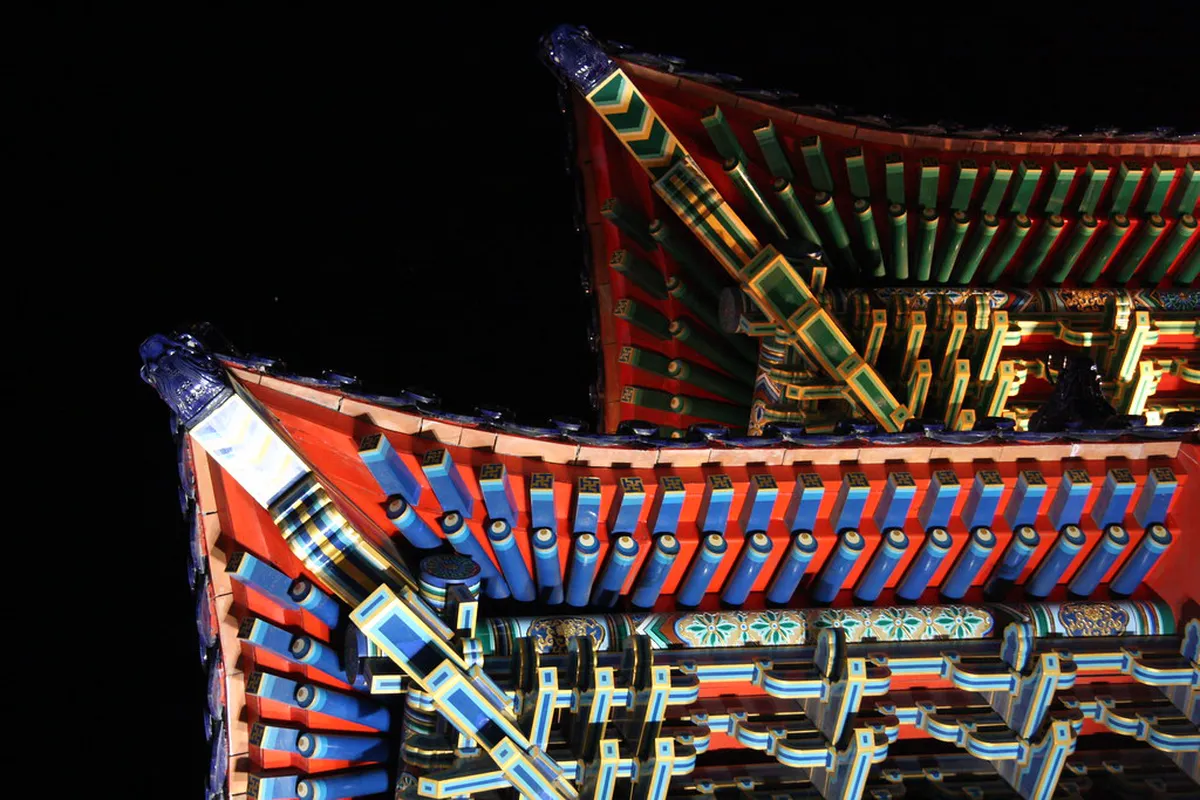
The origins of the district trace directly to 1859, when Yokohama port opened to international trade under the Harris Treaty. Chinese merchants from Shanghai and Hong Kong were among the first foreign settlers, establishing a commercial and residential enclave that has survived for more than 160 years. Their presence shaped the city's identity as a cosmopolitan port far more than any other foreign group.
The neighborhood showed remarkable resilience over the following century. The Great Kanto Earthquake of 1923 leveled much of Yokohama, and World War II brought further destruction. Each time, the Chinese community rebuilt, preserving the cultural identity of what had become Japan's most distinctive ethnic enclave.
Today Chinatown functions simultaneously as a living neighborhood for several thousand residents and as one of Japan's most visited tourist destinations, drawing an estimated 18 million visitors per year. The layered history — visible in the architecture of Kanteibyo Temple founded in 1862 and in street names that haven't changed since the Meiji era — adds genuine depth to what might otherwise feel like a theme park experience.
Navigating the Ten Gates: Symbols and Directions
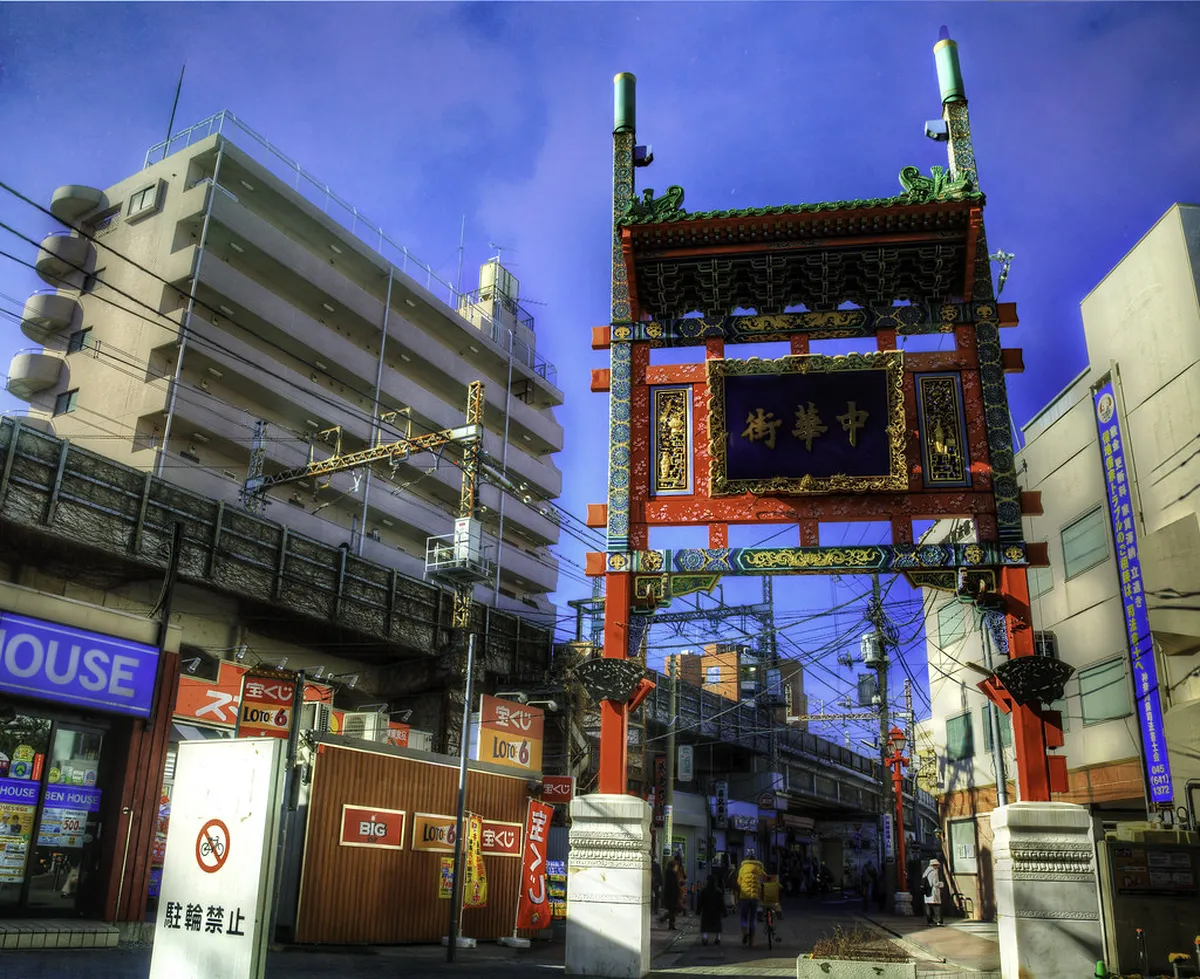
Yokohama Chinatown has ten colorful paifang gates scattered throughout the district, but four large main gates mark the cardinal boundaries and carry the deepest symbolic weight. Each gate aligns with Feng Shui principles, assigning a direction, a guardian animal, and a specific blessing to protect the community inside.
The East Gate (Choyomon, "Sunrise Gate") is associated with the Azure Dragon and represents prosperity and new beginnings. The South Gate (Suzakumon) is colored vermilion red and tied to the legendary Vermilion Bird, symbolizing fortune and protection from misfortune. The North Gate (Genbumon) honors Genbu, the Black Tortoise of the North, a guardian figure linked to longevity. The West Gate (Enpeimon, "Long Peace Gate") is decorated in white tones and represents peace and safe passage.
Beyond the four boundary gates, five smaller gates stand inside the district marking neighborhood divisions, and the Good Neighbour Gate (Zenrinmon) near the Yamashita Park side signals the edge of the district toward the waterfront. Spending ten minutes walking gate to gate before eating is an easy way to see the full footprint of Chinatown and orient yourself before the main streets get crowded.
Spiritual Landmarks: Kanteibyo and Masobyo Temples
Two major temples anchor the spiritual life of the district. Kanteibyo, established in 1862 by the first wave of Chinese settlers, is dedicated to Guan Yu, the god of prosperity, business success, and righteous conduct. Its bright red and gold exterior is one of the most photographed spots in the district. Smoke from incense burners fills the courtyard all day, and you will often see local shopkeepers stopping in before opening their stores.
Masobyo, opened in 2006, honors Mazu, the goddess of the sea and protector of travelers. Given Yokohama's identity as a port city, this temple carries particular resonance. The entrance is decorated with three layers of intricate roof tiles and flanked by vivid guardian figures. Yamashita Park lies directly behind the temple, making it a natural stopping point before a walk along the waterfront.
Both temple grounds are free to enter. Kanteibyo suits visitors interested in business luck and vibrant ceremonial aesthetics — the nighttime lantern lighting here is especially striking. Masobyo is quieter and better for those seeking a meditative pause. You can buy fortune slips and colored charms at either site; prices run around ¥300–¥500.
The Street Food Guide: Tabearuki Rules and What to Order
| Street Food Item | Price (approx.) |
|---|---|
| Panda-shaped steamed bun (chocolate/custard) | ~¥400 each |
| Xiaolongbao soup dumplings | ~¥500 (small basket) |
| Shark Fin Shaobin (Edosei) | ~¥600 |
| Tapioca milk tea | ~¥500 |
| Lunch set (sit-down) | ¥1,000–¥1,500 |
| All-you-can-eat dinner (90 min) | ¥2,500–¥4,000 |
Street food is the main draw for most first-time visitors. The core items to try are the panda-shaped steamed buns (filled with chocolate or custard, around ¥400 each), xiaolongbao soup dumplings from stalls near the main street (¥500 for a small basket), and the Shark Fin Shaobin at Edosei — a deep-fried bao with a crispy outer shell and savory filling that runs about ¥600. Milktea and tapioca drinks are available at several shops and make a good finish to the food walk. For a deeper dive into the culinary scene, check out our Chinatown food guide.
One etiquette point worth understanding: eating while walking (tabearuki) is generally frowned upon in Japan. Yokohama Chinatown is a partial exception because the district explicitly caters to food tourism and many vendors have small standing counters or designated eating spots just outside their stalls. The practical rule is to stop at the counter or step aside off the main pedestrian flow before eating. Never walk and eat simultaneously on Chukagai-Odori — you will stand out immediately. Most stalls make this easy by providing a small ledge or a few plastic stools.
Walking and eating simultaneously on Chukagai-Odori (the main street) is considered poor etiquette. Stop at the vendor's counter or step off the pedestrian flow before eating — most stalls provide a small ledge or stools for exactly this purpose.
Trash bins are scarce in Japan, but Chinatown has a higher density than most areas. Vendors will usually accept back wrappers from items they sold you, which is the cleanest solution when no public bin is nearby. Keeping the streets tidy is taken seriously by the merchant association.
Where to Shop: Best Souvenirs and Gift Stores
The district's largest themed gift store is Yokohama Hakurankan Market, located in the heart of Chinatown. It stocks Yokohama-branded cookies, teas, and packaged snacks alongside small trinkets and keychains, making it the most efficient single stop if you need souvenirs for multiple people. Prices are reasonable by tourist attraction standards.
For something more specialized, look for the Chinese tea shops that allow sampling before purchase — several carry pu-erh, oolong, and jasmine teas in decorated tins that pack well for travel. Traditional clothing stores sell Qipao (Chinese dresses) and silk accessories. The Panda Memorabilia shop is a district institution: every item in the store relates to the panda, which has served as Chinatown's mascot for decades, from panda-shaped goods to panda-themed sweets. It's particularly popular with children and anyone looking for a distinctly local souvenir.
Specialty grocery stores along the side streets stock Chinese spices, preserved ingredients, and sauces not commonly found in Japanese supermarkets. If you cook Chinese food at home, these shops are worth a slow browse.
Sit-Down Dining: Finding the Best Mapo Tofu
If you prefer a full meal over grazing on street food, Chinatown has hundreds of sit-down restaurants ranging from casual counter spots to multi-floor banquet halls. Mapo Tofu is the signature dish: silken tofu in a chili-bean sauce with a meatiness from ground pork and a numbing heat from Sichuan peppercorn. Several restaurants here have been serving their version for generations.
Lunch sets offer the best value, typically combining a main dish, rice, soup, and a small dessert for ¥1,000–¥1,500. Evening meals at full-service restaurants run significantly higher, often ¥3,000 or more per person. Look for restaurants with queues outside — the district has too many choices for first-timers to research in advance, and a visible queue is a reliable signal.
All-you-can-eat (tabehoudai) restaurants are popular with groups and families. They typically run ¥2,500–¥4,000 for 90 minutes at dinner. Many require reservations on weekends, so walk-ins should aim for before 12:00 or after 14:30 to avoid a wait.
Logistics: How to Get to Yokohama Chinatown from Tokyo
Two train routes connect central Tokyo to Chinatown, and they differ in convenience depending on where you start. The Tokyu Toyoko Line from Shibuya becomes the Minatomirai Line once inside Yokohama and terminates at Motomachi-Chukagai Station — the closest station to the district, roughly one minute on foot from the East Gate. Total journey time from Shibuya is 35–45 minutes. This is the easiest route for most tourists.
Travelers using a Japan Rail Pass Official should take the JR Negishi Line from Tokyo or Shinagawa stations to Ishikawacho Station. The walk from Ishikawacho to the South Gate takes about five minutes through a shopping street. The JR route adds a few minutes of walking but is fully covered by the pass, saving the ¥210 Minatomirai Line fare. From Yokohama Station itself, the Minatomirai Line reaches the district in about eight minutes.
Both routes are straightforward, well-signed in English, and run frequently throughout the day. IC cards (Suica, Pasmo) work on all lines. A return day trip from central Tokyo including transport costs roughly ¥1,000–¥1,500 in train fares alone, before food and shopping.
Ichiba-Dori and the District at Night
Chinatown transforms visibly after dark. The four main gates are illuminated against the night sky, and the restaurant signs glow in reds and golds. Most daytime visitors miss the evening atmosphere entirely by catching the last afternoon train back to Tokyo.
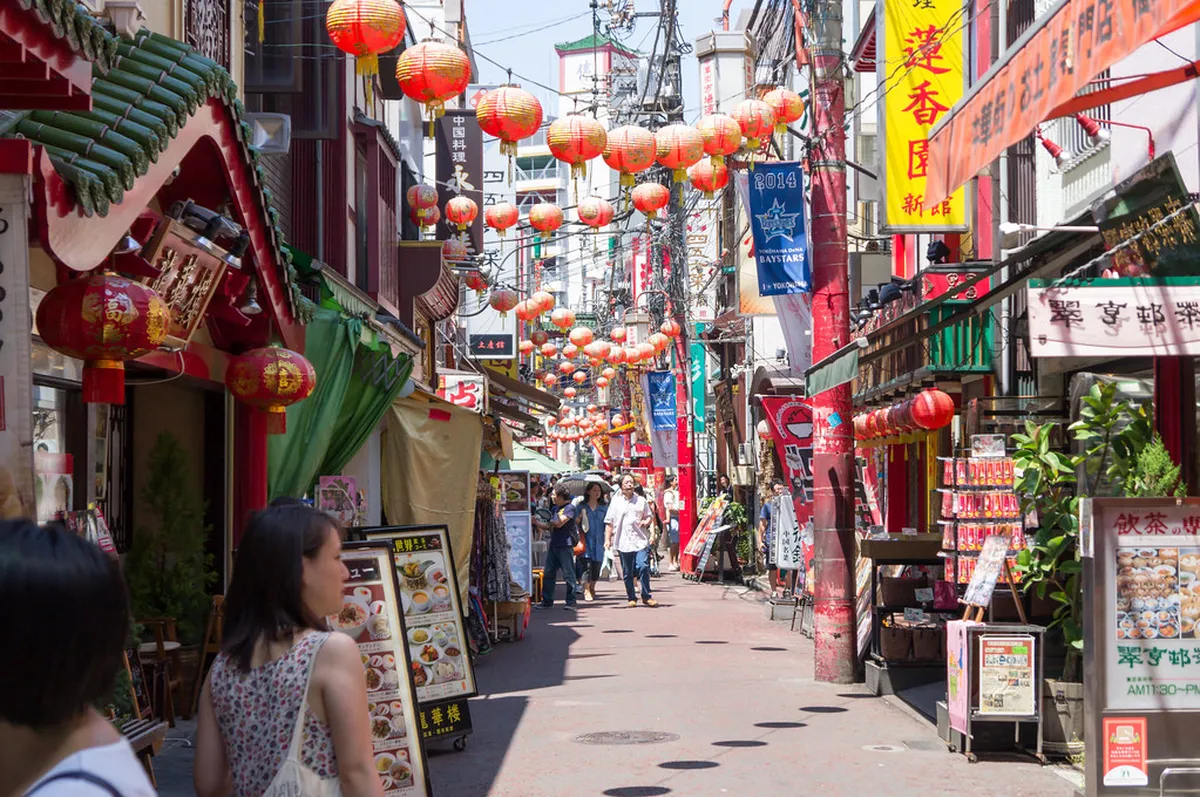
The single best spot after dark is Ichiba-dori, a side street draped end-to-end in strings of red lanterns. The lanterns are lit from dusk onward and create one of the most atmospheric alleyways in Japan — far more intimate than the main street and much less crowded in the evening. It is a short walk from the Kanteibyo Temple. Kanteibyo itself is worth a second look at night when the lanterns around the entrance are lit.
From Chinatown it is a short walk to Minato Mirai 21 for the Cosmo Clock 21 ferris wheel light show, which runs every 15 minutes after dark. You can also take a ride on the Yokohama Air Cabin cable car, which costs ¥1,000 and operates until 21:00, for views over the illuminated harbor. The combination of Chinatown at night followed by the Minato Mirai waterfront is one of the most complete evening itineraries Yokohama offers.
Crowd Timing and Budget Planning
Yokohama Chinatown is busiest on weekends and Japanese public holidays, when lines at popular food stalls can stretch 20–30 minutes. School groups typically arrive on weekday mornings between 09:00 and 11:30. The quietest window for weekdays is late morning from around 10:00 to 11:30, before the lunch crowd arrives and after any early school groups move on. Weekday afternoons between 14:00 and 16:30 offer another relatively calm window.
As a rough budget benchmark: ¥2,000 is enough for a satisfying food walk without a sit-down meal. That comfortably covers two panda buns (¥800), a xiaolongbao portion (¥500), a Shark Fin Shaobin (¥600), and a tapioca milk tea (¥500) — with change left over. Factoring in a sit-down lunch set pushes the food budget to ¥3,000–¥3,500. The district itself is free to enter, so the only fixed cost is transport from Tokyo.
Cash remains important in Chinatown. Many larger restaurants and the main gift stores accept credit cards and PayPay, but street stalls and smaller shops are typically cash-only. Bring at least ¥5,000 in yen to avoid scrambling for an ATM mid-visit. The closest reliable ATMs are at the convenience stores near Motomachi-Chukagai Station.
Planning Your Visit: Is Yokohama Worth It?
For a solo traveler or couple, Chinatown alone occupies two to three hours comfortably. Adding the waterfront walk through Yamashita Park, a stop at the Cup Noodles Museum nearby, and a Minato Mirai evening makes for a full and varied day trip. The variety of experiences — historic temples, world-class street food, illuminated architecture at night — makes this one of the most rewarding day trips from Tokyo for international visitors.
Yokohama Chinatown works as a standalone half-day destination or as the anchor of a longer Yokohama itinerary. The area pairs naturally with Yamashita Park and the harbor, the Red Brick Warehouse, and the Motomachi shopping street, all within a 15-minute walk. Combining these means you see a layered city rather than a single theme-park-style enclave.
Frequently Asked Questions
Is Yokohama Chinatown worth visiting on a day trip?
Yes, it is definitely worth visiting for the unique cultural atmosphere and incredible food variety. You can easily see the main gates and temples within a few hours. It is one of the most popular day trips from Tokyo for international travelers.
What is the best street food to try in Yokohama Chinatown?
You should definitely try the famous Panda Buns and juicy Xiaolongbao soup dumplings during your visit. Many stalls also offer delicious fried sesame balls and savory shark fin snacks. These items are affordable and provide a great taste of the local culinary scene.
How do I get to Yokohama Chinatown from Shibuya Station?
Take the Tokyu Toyoko Line directly from Shibuya Station toward the Motomachi-Chukagai Station. The journey is very simple and takes approximately 35 to 45 minutes on an express train. This route is the most convenient way to reach the heart of the district.
What do the different gates in Yokohama Chinatown represent?
The four main gates represent the cardinal directions and follow ancient Feng Shui principles for protection. Each gate has a specific color and animal symbol, such as the Blue Dragon for the East. They are designed to bring prosperity and good fortune to the neighborhood.
Are the temples in Yokohama Chinatown free to enter?
Most temples allow visitors to enter the grounds for free to admire the architecture and take photos. However, some specific areas or participation in rituals may require a small donation or fee. Always be respectful of worshippers while you are exploring these spiritual and historic sites.
Yokohama Chinatown offers an unforgettable journey through history, culture, and some of the best food in Japan. From the illuminated entrance gates to the lantern-hung alley of Ichiba-dori, every corner of this district rewards exploration. We hope this guide helps you make the most of your visit in 2026.
Plan your timing around the crowd rhythms, budget at least ¥2,000–¥3,500 for food, and stay into the evening if at all possible. The district looks and feels entirely different after dark, and most day-trippers leave before experiencing it.
For a complete overview of all activities in the area, explore our guide to things to do in Yokohama.