
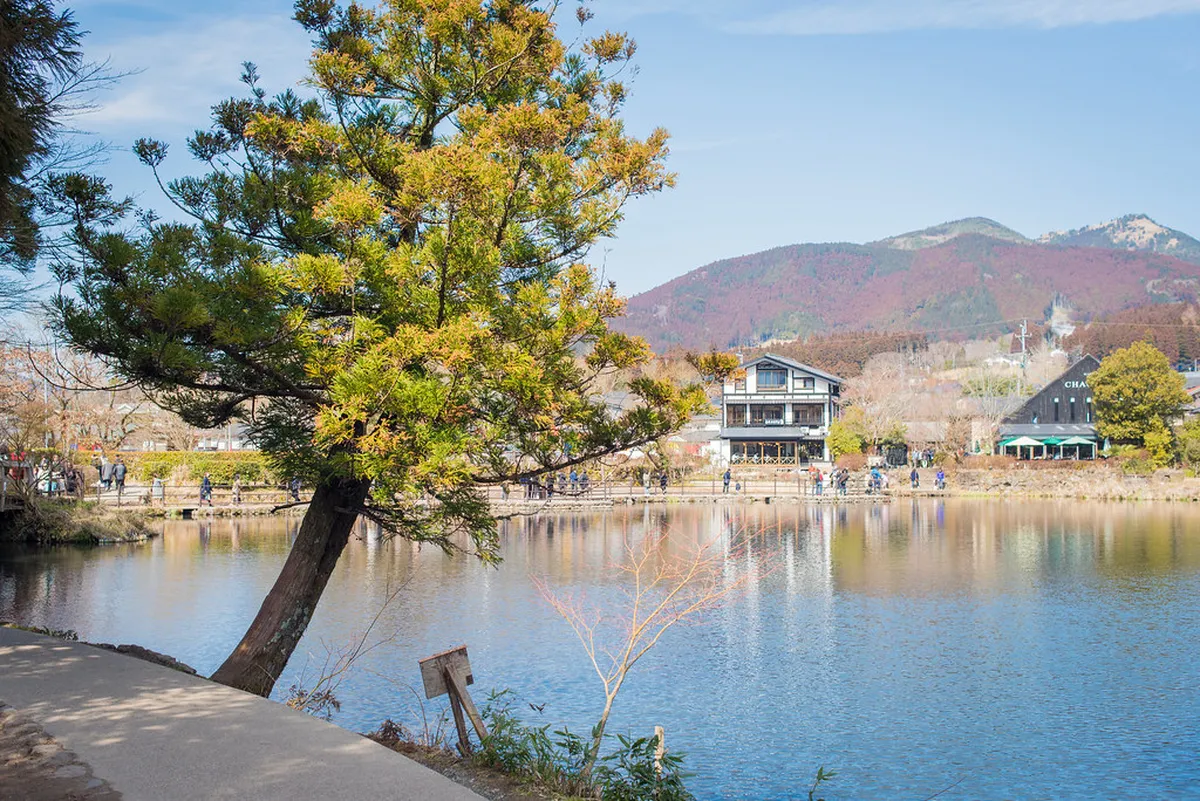
Lake Kinrin
Yufuin's iconic little lake — fed by warm and cold springs so it releases a photogenic morning mist in the cold months, with a 400-metre lakeside stroll past a red torii, an old bathhouse and cafes under Mount Yufu.
Visitor guide →
Yufuin attractions guide: Lake Kinrin, Yunotsubo Yokocho, Mount Yufu, COMICO Art Museum, Floral Village — tickets, hours, itinerary and onsen tips for 2026.
Yufuin is Kyushu's gentler answer to nearby Beppu — a hot-spring town in the hills of Ōita Prefecture where the main draw is as much the mist rising off Lake Kinrin and the craft shops along Yunotsubo Yokocho as the 900-plus onsen sources bubbling under the streets. Unlike Beppu's industrial "hell" spectacle, Yufuin trades on a genteel, almost boutique identity: art museums designed by name architects, storybook gardens, a scenic twin-peaked volcano called Mount Yufu watching over it all, and ryokan built around private, in-room hot-spring baths. Most visitors see it as a half-day or full-day trip from Fukuoka (Hakata) or Beppu, though staying overnight in a ryokan is where the town actually delivers its best experience. Below are the five attractions worth building a Yufuin visit around, how they connect on foot, what's free versus paid, and a suggested itinerary for both day-trippers and overnight guests.
Yufuin's iconic little lake — fed by warm and cold springs so it releases a photogenic morning mist in the cold months, with a 400-metre lakeside stroll past a red torii, an old bathhouse and cafes under Mount Yufu.
Visitor guide →
A whimsical Cotswolds-in-Kyushu lane of storybook cottages, Ghibli- and Peter-Rabbit-themed shops, petting corners and an owl forest — free to wander, with paid mini-attractions inside.
Visitor guide →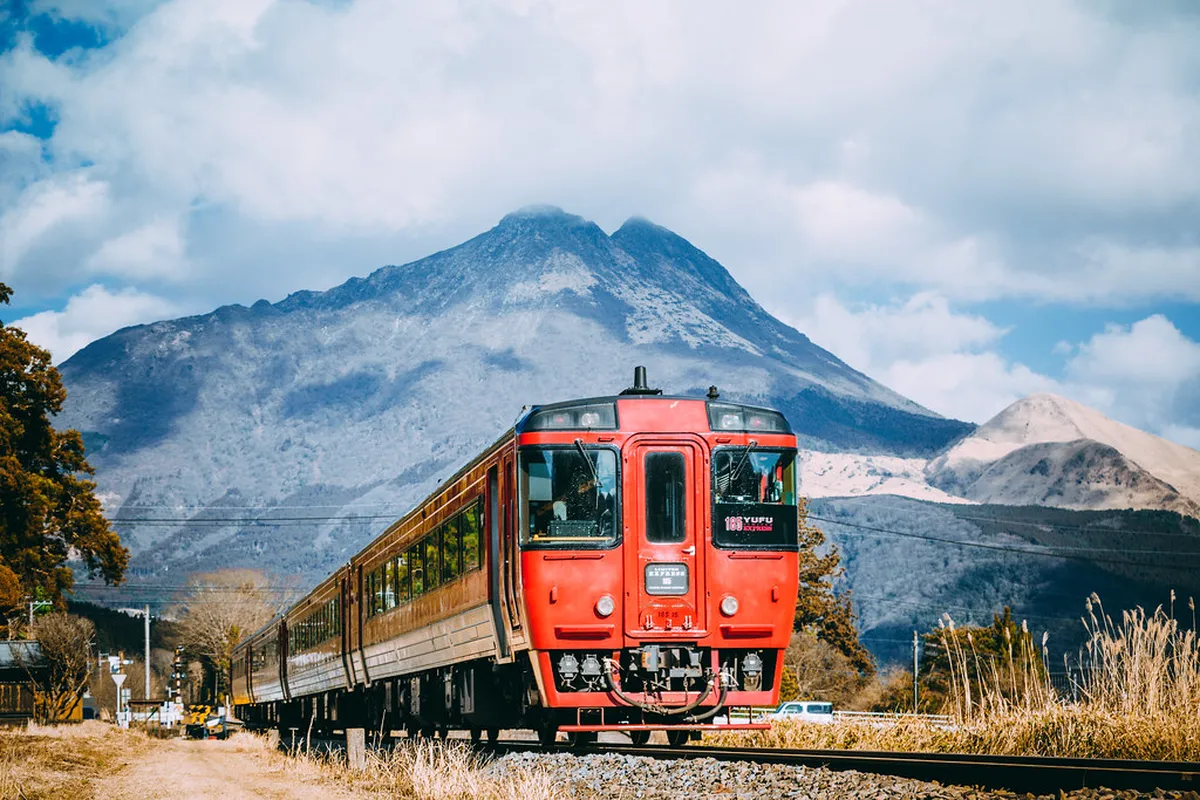
The twin-peaked 1,583-metre volcano nicknamed 'Bungo Fuji' looming over Yufuin — a popular half-day climb from the Yufu Tozanguchi trailhead to panoramic summit views over the onsen town and the Kuju range.
Visitor guide →
A Kengo Kuma-designed contemporary art museum in central Yufuin showing heavyweight Japanese artists (Murakami, Nara, Sugimoto) in dramatic timber-and-stone spaces — visited by timed reservation.
Visitor guide →
The lively main street of Yufuin, running from the station toward Lake Kinrin — a stroll-and-snack lane of craft boutiques, character shops, cafes and street food (Yufuin rolls, croquettes, pudding) that is the town's shopping heart.
Visitor guide →The classic Yufuin walk runs about 1.5 km from JR Yufuin Station to Lake Kinrin, and it's the single easiest way to see most of the town's attractions without a car or bus. Step out of the station and you're immediately on Yunotsubo Yokocho, a stroll-and-snack lane of craft boutiques, character shops, and street food stalls selling Yufuin rolls, croquettes and pudding. A few minutes further in, side lanes branch off toward the COMICO Art Museum, a Kengo Kuma-designed gallery, and the Yufuin Floral Village, a Cotswolds-styled lane of storybook cottages and an owl forest. Keep walking and the shopping street thins out into a quieter path that opens onto Lake Kinrin itself, where a 400-metre lakeside loop passes a red torii gate and an old bathhouse under the silhouette of Mount Yufu. Most visitors cover the whole route — station to lake and back — in 90 minutes to two hours at a relaxed pace, longer with museum stops.
The attractions above are what bring people to Yufuin, but the hot springs are why they stay overnight. Yufuin Onsen draws from roughly 900 individual sources — reportedly the second-highest count of any hot-spring town in Japan — and the ryokan built around them range from simple guesthouses to luxury properties with a private, in-room rotenburo (open-air bath). If you're only passing through for the day, several ryokan and dedicated facilities sell day-use access to their baths for a few hours, letting you soak without booking a room; see our guide to public onsen baths in Yufuin and our onsen etiquette tips before your first visit if you haven't bathed communally in Japan before. For an overnight stay, our best ryokan in Yufuin roundup and our ryokan with private onsen picks cover both budget and splurge options — and our full Yufuin onsen guide breaks down the town's bathing scene district by district. This hub page focuses on the sights; treat the links above as the companion guides for where to actually soak and sleep.
If you're prioritizing by interest rather than geography:
For families, our Yufuin with kids guide flags which of these are the easiest wins for younger children (Floral Village and the lake walk, mostly), and our Yufuin hidden gems guide covers a handful of quieter spots beyond this list if you have more than a day.
Yufuin is inexpensive to sightsee in even if you splurge on a ryokan stay. Free to visit: walking the length of Lake Kinrin, browsing Yunotsubo Yokocho (you only pay for what you eat or buy), the hike up Mount Yufu (no trail fee, though the Yufu Tozanguchi trailhead bus costs a fare), and simply wandering the Floral Village lane itself. Paid attractions: the COMICO Art Museum charges ¥1,700 for adult admission by timed reservation, and inside the Floral Village the Owl's Forest sub-attraction costs ¥700 for ages 13 and up (¥500 for children 4–12) — the rest of the village is free to browse. Budget roughly ¥2,000–¥3,000 per person for a day that includes both paid attractions plus snacks, on top of transport and any onsen day-use fee.
Two ways to structure a visit, depending on how much time you have:
See our full Yufuin itinerary for hour-by-hour planning, and our day trip from Fukuoka guide if you're basing yourself in Fukuoka rather than staying overnight. If you're deciding between Yufuin and its larger neighbor, our Beppu vs Yufuin comparison lays out which suits your trip style.
The most scenic way in is the Yufuin no Mori limited express, a reservation-only sightseeing train running from Fukuoka's Hakata Station and from Beppu, with large windows built for the mountain scenery en route. Regular (non-scenic) limited express trains cover the same routes more frequently and cheaply if you don't need the observation-train experience — see our how to get to Yufuin guide for the full breakdown of train and bus options, our Fukuoka to Yufuin route guide, and our Beppu to Yufuin route guide (a short, frequent bus and train hop between the two onsen towns). Once you've arrived, the town itself — Yunotsubo Yokocho, the Floral Village, COMICO Art Museum and Lake Kinrin — is entirely walkable; see our Yufuin Station area guide for what's immediately around the station. The one exception is Mount Yufu, whose trailhead is a short bus or taxi ride out of town rather than a walk.
Lake Kinrin's signature morning mist forms when the lake's warm spring water meets cold air, so it's most reliable on clear, cold mornings from late autumn through winter — arrive before 8am to beat both the crowds and the sun burning the mist off. Autumn (November) also brings foliage color to the slopes of Mount Yufu, making it a strong month to combine the hike with the lake's mist. Spring is popular for mild hiking weather and cherry blossoms around the town. Whatever the season, the main shopping street gets genuinely crowded with day-trip tour groups from late morning through mid-afternoon; visiting the lake and street early or staying overnight lets you see both without the crowds. Our best time to visit Yufuin guide and Yufuin in winter guide go deeper on seasonal planning.
Yufuin is famous as a hot-spring (onsen) resort town with an unusually high concentration of art museums, boutique shops and cafes for its size, plus Lake Kinrin's photogenic morning mist and the twin-peaked Mount Yufu that overlooks the town.
A half-day is enough to walk the main street and see one or two attractions. A full day covers all five attractions on this page at a relaxed pace. One night is ideal if you want to add a ryokan onsen stay or the Mount Yufu hike.
Yes — it's one of Kyushu's most rewarding small-town stops, combining a walkable historic street, several genuinely good art museums and gardens, a scenic lake and mountain, and some of Japan's most abundant hot springs in one compact area.
Yes. Yufuin is a popular day trip from both Fukuoka (about 2 hours by direct train) and Beppu (about 15–30 minutes by train or bus), and the main street, Floral Village, COMICO Art Museum and Lake Kinrin can all be covered in a single day without an overnight stay.
The mist is most reliable on cold, clear mornings from late autumn through winter, and it's usually most visible before 8am before the rising sun and daytime warmth clear it away.
The main routes are direct limited express trains (including the scenic Yufuin no Mori) from Hakata Station in Fukuoka, and a short train or bus ride from Beppu. There is no shinkansen station in Yufuin itself.
They serve different trips: Beppu has a larger scale and the "hell" hot-spring sightseeing circuit, while Yufuin is smaller, quieter and more boutique, built around walkable shopping streets, art museums and a lake. Many visitors pair the two rather than choosing — they're a short hop apart.
Use the five attraction guides above for tickets, hours and photo tips on each individual sight, our Yufuin attractions blog guide for a broader roundup of the town, and our Yufuin itinerary for full-day and overnight planning. If onsen bathing is the real reason for your trip, start with our Yufuin onsen guide and best ryokan in Yufuin picks.