10 Best Things to Do in Hirosaki (2026)
Discover the best things to do in Hirosaki, from the historic castle and apple parks to winter snow festivals and the famous Nokke-don seafood bowls.
On this page
Our editorial team has spent years exploring the northern reaches of the Tohoku region to find Japan's most authentic cultural hubs. Hirosaki stands out as a city where feudal history meets a surprisingly modern art scene and a deep love for all things apple. Whether you are chasing the world-famous cherry blossoms or seeking a quiet winter escape, this city offers a unique northern charm. This guide was last updated in June 2026 to ensure all pricing and renovation statuses are current for your next trip.
Most travelers arrive via the train from Aomori, but the city deserves more than a quick walkthrough. We recommend staying at least one night to witness the stunning evening illuminations that bring the castle grounds to life. Hirosaki is often called the 'Kyoto of the North' because of its well-preserved samurai districts and historic Zen temples. You will find that the local pace of life is slower and more rewarding than the crowded streets of Tokyo or Osaka.
Before you set off, it is helpful to consult the Hirosaki Tourism and Convention Association (Official) site for real-time event updates. The city is quite walkable, though a rental bicycle or local bus can save you time when visiting outlying apple orchards. Prepare for a mix of traditional Tsugaru culture and Meiji-era Western architecture that defines this fascinating northern outpost.
Useful resources: Japan Guide's Hirosaki page and Wikipedia's Hirosaki overview have up-to-date access and background details.
Key Takeaways
- Best overall: Hirosaki Castle Park for its historical depth and seasonal beauty.
- Best for families: Hirosaki City Apple Park for fruit picking and Mount Iwaki views.
- Best rainy-day: Hirosaki Museum of Contemporary Art or the Neputa Village.
- Best free activity: Walking the Zenringai Temple District or viewing the Winter Cherry Blossom light-up.
- Practical tip: Buy a combination ticket for the Castle, Fujita Garden, and Botanical Garden to save on admission fees.
Explore the Historic Hirosaki Castle and Park
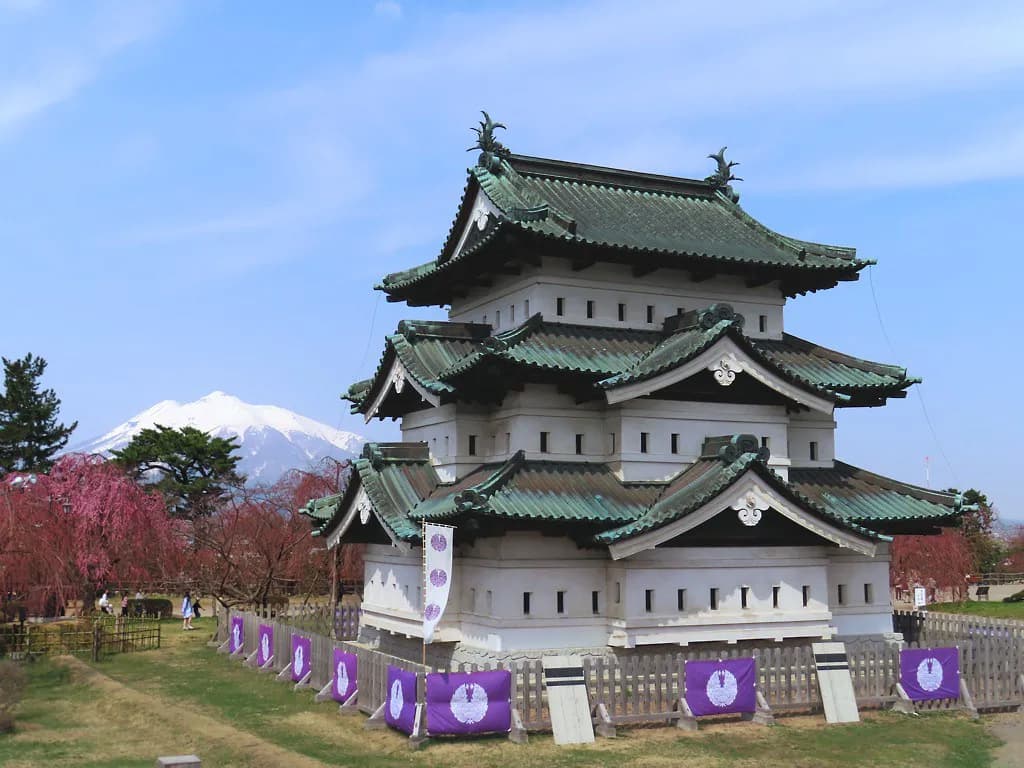
Hirosaki Castle is perhaps the most charming castle in the whole of Japan — not for its scale, but for its authenticity. Built in 1810, the compact three-story tower is one of a very small number of original surviving keeps that were never rebuilt from concrete after World War II. Its situation in the middle of Hirosaki Park, surrounded by inner and outer moats, makes for one of the most photographed scenes in northern Japan.
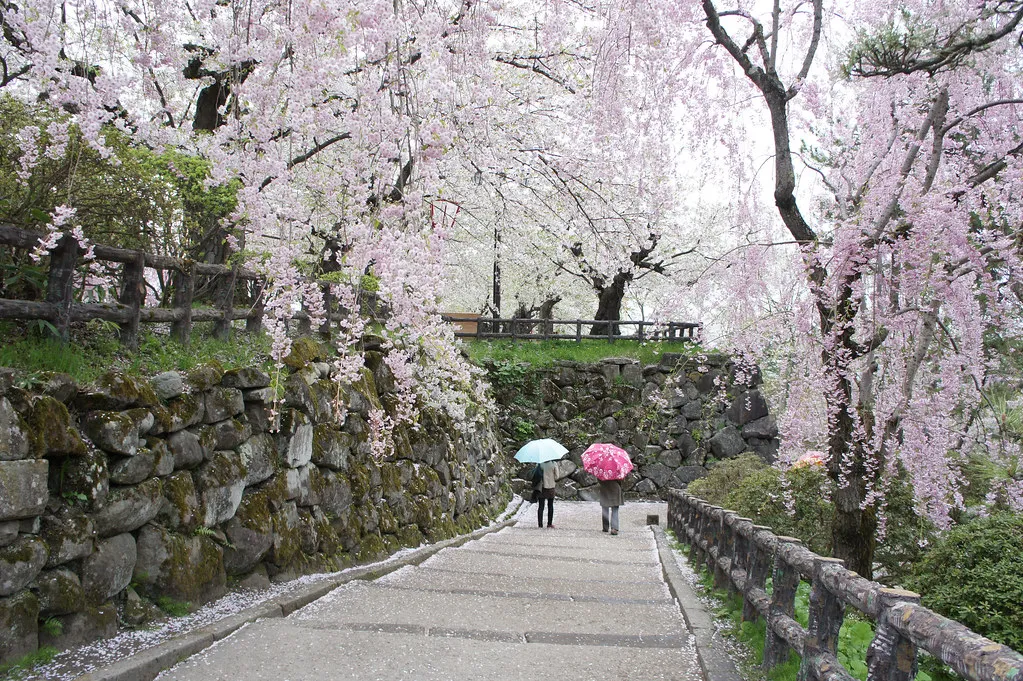
Admission to the inner castle area costs 310 yen per adult (children 100 yen) and the grounds are open daily from 09:00 to 17:00. During winter months when no festivals are scheduled, entry to the outer park is free. In spring, the park's 2,500 cherry trees rank among the top three blossom spots in Japan according to the Japan Cherry Blossom Association — a credential that draws visitors from across the country each late April and early May.
One important note for 2026: the castle tower is currently undergoing a major stone wall renovation and remains about 70 meters from its original picturesque spot over the moat. The tower is still open and fully accessible, but expect a different viewing angle than the classic postcard image. Check the Hirosaki Castle and its park status page for the latest updates on the relocation timeline, as the restoration is an ongoing multi-year project. Even in its temporary position, the tower offers a fascinating window into Edo-period engineering rarely seen this close.
Experience Local Culture at Tsugaru Clan Neputa Village
Located just northeast of Hirosaki Park, Tsugaru Clan Neputa Village (Tsugaru-han Neputa Mura) is the best place to encounter the city's distinctive festival culture even when the real event is not happening. The museum displays the enormous fan-shaped floats that parade through the streets each August — and here you need to know a local nuance that trips up many first-time visitors. Hirosaki's festival is called Neputa, not Nebuta. Nebuta (with the 'bu') is the Aomori City version, featuring warrior-shaped floats. Neputa (with the 'pu') uses flatter, round fan shapes and carries a more contemplative, melancholy feel rooted in Tsugaru folk tradition.
Inside the village, live Tsugaru jamisen performances take place throughout the day. The jamisen is a three-stringed instrument played with an oversized plectrum — its sound is raw, percussive, and nothing like the delicate shamisen of Kyoto. You can also try taiko drumming alongside the musicians. Entry is 550 yen for adults, 350 yen for middle and high school students, and 200 yen for younger children. The attached craft shops sell some of the finest lacquerware and Kogin-zashi embroidery in the region, both genuinely useful souvenirs rather than generic airport trinkets.
Taste the Apple Capital at Hirosaki City Apple Park
Hirosaki is Japan's undisputed apple capital, responsible for a significant share of the country's annual harvest, and the City Apple Park is where you experience that identity up close. Over 80 varieties grow across the sprawling orchard grounds, ranging from the familiar Fuji to heirloom cultivars found nowhere else in the country. Entry to the park itself is free year-round, which makes it an excellent option for budget travelers. Apple picking runs from early August through mid-November at a charge of 35 yen per 100 grams for fruit you pick yourself.
Take the 'Tametobu' bus from Hirosaki Station to reach the park in about 20 minutes. On a clear day, the backdrop of Mount Iwaki (Iwakisan) — a near-perfect volcanic cone sometimes called the 'Tsugaru Fuji' — makes for exceptional photos behind the loaded apple branches. Beyond picking, you can also browse a small market selling fresh apple juice, dried apple snacks, and varieties that never make it to supermarket shelves.
The park is also a good spot to begin understanding Hirosaki's apple pie culture. There are over 50 bakeries and cafes across the city serving their own versions, each with a distinct style: some use a flaky French-style pâte feuilletée crust, others bake a denser cake-style filling, and a few serve warm slices with a scoop of local apple gelato. Pick up a free Apple Pie Map from the Hirosaki tourist office at the station to navigate the options.
Walk Through the Zenringai Temple District
South of the castle grounds, a long cedar-lined street leads through the Zenringai district, home to 33 Zen Buddhist temples all belonging to the same Soto sect. They were placed here deliberately in the Edo period to form a spiritual barrier protecting the castle. The combined effect of the ancient cedars and the temple gates creates a corridor of quiet that feels entirely removed from the rest of the city. Most grounds are free to enter from dawn until dusk.
At the far end of the road stands Chosho-ji, the most significant temple in the district and the official mausoleum of the Tsugaru clan lords who ruled this region for generations. Unlike the mid-street temples, Chosho-ji has a formal entrance fee and its inner grounds contain the ornate grave markers of successive generations of the ruling family. Traditional craftsmen can sometimes be seen working on one of the structures using joinery techniques unchanged for centuries — an unscripted glimpse of living heritage.
Also worth a short detour is Saisho-in Monastery, slightly east of the main Zenringai street, which houses a five-story pagoda built in 1667. Pagodas of this age and construction quality are rare outside the major heritage cities, and most visitors walk straight past it. If you are covering the district on foot, budget 90 minutes to walk the full length and back without rushing.
Relax in the Fujita Memorial Garden
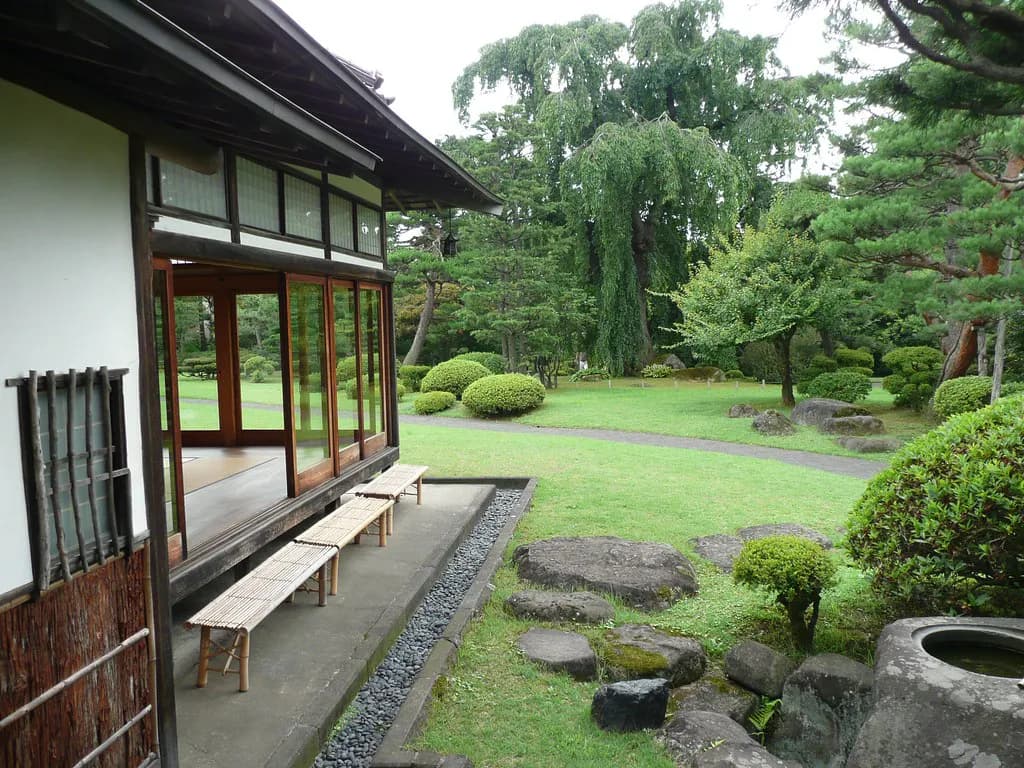
A short walk south of the castle, the Fujita Memorial Garden is one of Hirosaki's most refined spaces. Built by a successful local merchant family in the Taisho era, the garden layers a traditional Japanese stroll garden — with a central pond, stone lanterns, and a small waterfall — against a Western-style house that reflects the architectural experimentation of early 20th-century Japan. The combination is uniquely northern in character and far less crowded than comparable gardens in Kyoto or Kanazawa.
Entry costs 320 yen and the garden is open from 09:00 to 17:00 on most days. The Western house inside the grounds has been converted into a tea room where you can sit at lace-curtained windows and order a slice of local apple pie with coffee or matcha. It is one of the more atmospheric cafes in the city and worth the entry fee on its own. Visit in late September or October when the garden's maples turn and the crowds are thinner than spring.
Discover Modern Art at the Hirosaki Museum of Contemporary Art
Opened in 2020 inside a converted Meiji-era brick cider warehouse, the Hirosaki Museum of Contemporary Art represents a bold institutional commitment to placing serious contemporary work in a small northern city. The building itself is striking — a tall red-brick industrial shell updated with precise Japanese minimalism. In the courtyard stands a golden dog sculpture by Yoshitomo Nara, the artist who grew up in Hirosaki and became one of the most internationally recognized figures in postwar Japanese art. The sculpture is free to view even without entering the museum.
Special exhibition tickets typically cost around 1,300 yen. The museum is closed on Tuesdays and on certain days between exhibition changeovers, so check the schedule before arriving. The permanent collection is modest but the rotating programming is consistently strong, often bringing in major international installations not seen elsewhere in the Tohoku region. If you have even a passing interest in contemporary art, this museum justifies a two-hour visit on its own terms.
Seasonal Festivals: Cherry Blossoms, Snow Lanterns, and More
Hirosaki's festival calendar is one of the densest in Tohoku and understanding it shapes the entire logic of when to visit. Spring brings the Cherry Blossom Festival in late April and early May, when the 2,500 trees in Hirosaki Park are ranked among Japan's finest three blossom sites. Timing matters intensely here: the peak bloom lasts only about a week, and the northern wind can strip the petals quickly. However, if you arrive two to three days after full peak, the fallen petals collect on the moat and form a drifting flower carpet — known as 'hanaikada' — that many photographers consider more beautiful than the peak itself.
Summer brings the Neputa Festival in the first days of August, when the fan-shaped floats parade through the city to the sound of Tsugaru jamisen and festival drums. This is a more intimate experience than the massive Aomori Nebuta a short train ride away — smaller crowds, deeper local character. Winter offers two distinct events. The Snow Lantern Festival in early February fills Hirosaki Park with hundreds of snow lanterns and small igloo-like structures lit from within, transforming the castle grounds into something otherworldly. A few weeks later, the Sawada Candle Festival takes place at the city's outskirts in the Sawada district, where rows of candles inside tiny snow huts predict the year's harvest by how they burn — a rural Tsugaru folk tradition that draws only a few hundred visitors but leaves a lasting impression.
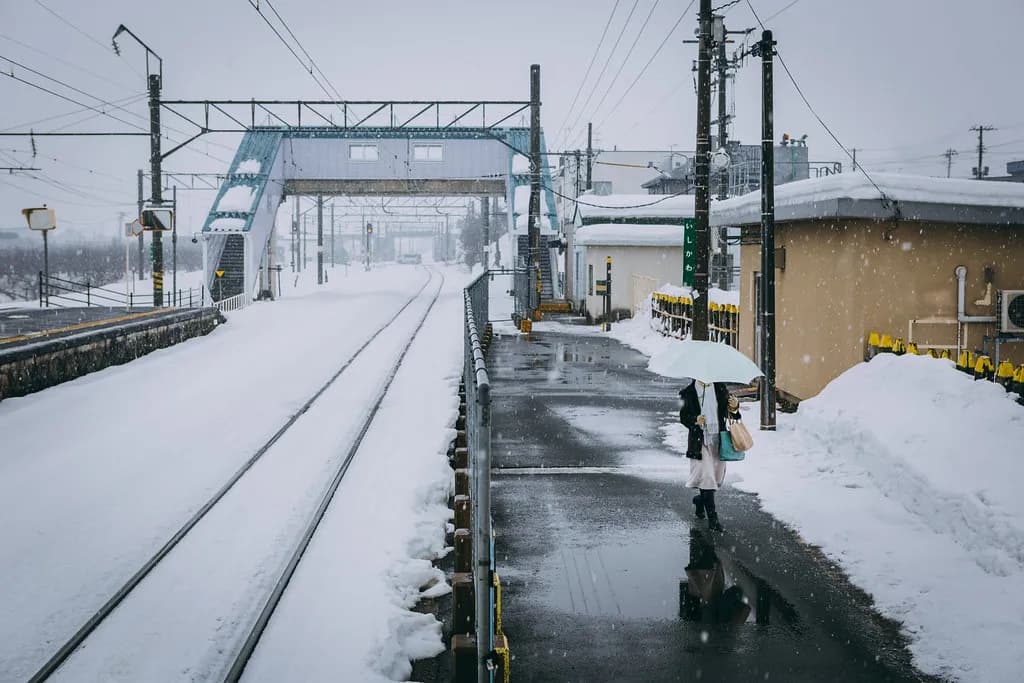
Between December and February, the Winter Cherry Blossom Light-Up runs each evening along the castle's outer moat starting at 16:00. Pink LED lights illuminate the snow resting on the bare branches, creating the visual illusion of blooming sakura in midwinter. The event is free and often completely crowd-free on weekday evenings. Check the Winter Cherry Blossom Light-Up Official Site for exact start dates each December.
The Nakacho Samurai District and Meiji Western Architecture
Immediately north of the castle park, the Nakacho district preserves a block of residential streets where samurai families lived behind distinctive black wooden fences and low gateways. Several homes — including the Ito House — are free to enter between 10:00 and 16:00, offering a look at the interior layout and daily objects of feudal-era households. The area requires no ticket, no queue, and no tour guide. Just walk in and take your time.
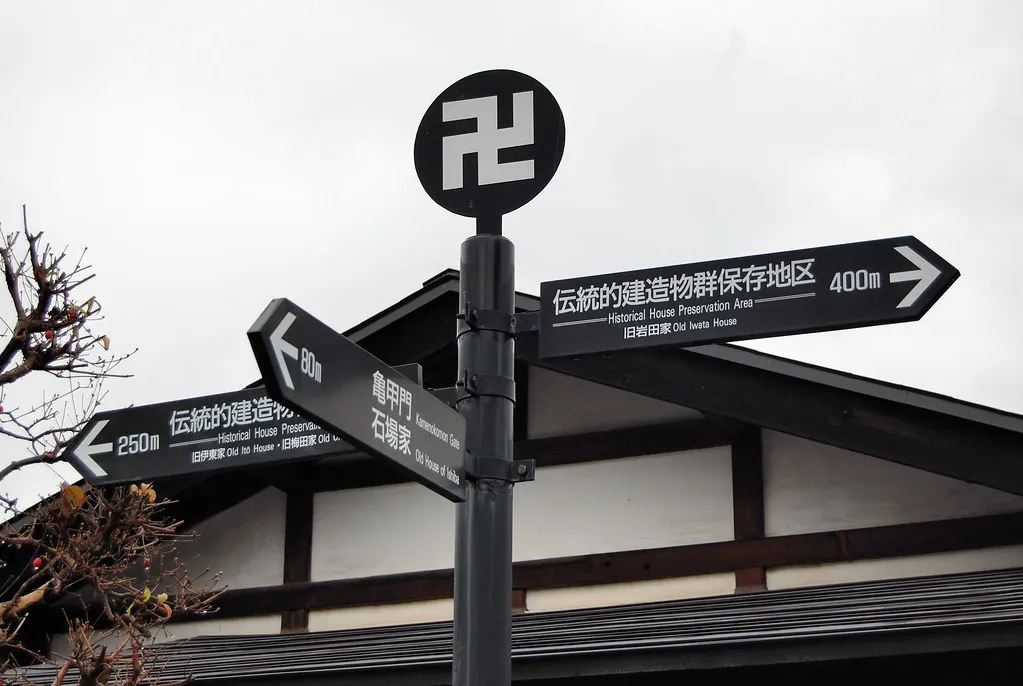
South of the castle, Hirosaki contains a remarkable concentration of Meiji-era Western buildings — a legacy of the government's drive to adopt foreign architectural styles after the 1868 Restoration. The former Hirosaki Municipal Library is a rare wooden example of this movement, built in an era when most similar structures were later destroyed by wartime firebombing elsewhere in Japan. Admission is free. The Catholic Hirosaki Church, completed in 1910, adds Gothic wooden arches and stained glass to the trail. The full route covering eight key buildings is mapped in our 8 Must-See Hirosaki Western Meiji Architecture Sites guide and can be walked comfortably in an afternoon.
The Aomori Bank Memorial Hall — formerly the 59th National Bank branch built in 1904 — is another standout: a Renaissance-style building with a decorative tower that displays an unusual Indian temple motif at its peak. It is designated as important intangible cultural heritage and sits within easy walking distance of the castle park's southern gate.
Practical Guide: How to Get to Hirosaki
Reaching Hirosaki from Tokyo takes approximately four hours using the Tohoku Shinkansen. Ride the bullet train to Shin-Aomori Station — the northernmost Shinkansen stop on Honshu — then transfer to the JR Ou Main Line for a 40-minute ride into Hirosaki. The entire journey is covered by the JR East Pass, making it a cost-effective choice for international travelers. From Aomori City, local trains take about 45 minutes on a standard service or 30 minutes on the limited express; trains run frequently throughout the day.
For a more scenic approach, book a seat on the Resort Shirakami sightseeing train. This limited-service train runs along the Gono Line — the coastal route connecting Hirosaki with Akita via the Sea of Japan — and passes through the Shirakami Sanchi UNESCO natural heritage zone. Large panoramic windows, reclining seats, and occasional on-board shamisen performances make it one of the most enjoyable rail journeys in Tohoku. Reservations are mandatory and sell out weeks in advance during peak seasons; book at any JR ticket office or through the JR East online portal. Note that the Resort Shirakami runs only a few times daily in each direction, so plan around its schedule rather than the other way around.
Within Hirosaki, most central sights are reachable on foot or by bicycle. The tourist information office at Hirosaki Station rents bicycles for 500 yen per day (1,000 yen for an electric-assist model). For the Apple Park, take the 'Tametobu' bus from the station. Taxis are available but the local Tsugaru dialect can make communication with drivers challenging even for Japanese speakers — write your destination in advance.
Food Guide: From Nokke-don to Apple Pies
A stop at the Furukawa Fish Market (Aomori Gyosai Center) in Aomori City en route to or from Hirosaki is strongly recommended. The Nokke-don system works like this: buy a sheet of tickets at the information desk, then hand one ticket to a shop displaying an orange flag to receive a bowl of steaming rice. Walk the market stalls trading individual tickets for toppings — fresh-cut sashimi, scallops, sea urchin, crab legs — until your bowl is as full as you want it. There is no menu and no fixed price per item; you control the composition entirely. The market opens at 07:00 and the Nokke-don service runs until 16:00, closing every Tuesday and on January 1st and 2nd. The address is 1-11-16 Furukawa, Aomori City (telephone 017-763-0085).
Back in Hirosaki itself, look for Tsugaru cuisine on dinner menus: Igamenchi (minced squid patties pan-fried until crispy), Kayaki-nabe (a stew served in a scallop shell), and hearty miso-based hotpots that reflect the heavy winters of the region. Many traditional izakayas along the Dotemachi shopping street host live Tsugaru jamisen performances at 19:00 and 21:00 nightly. The raw, driving sound of the instrument — played with what looks like a large wooden spatula — is the defining sensory memory most visitors take home from this city.
The apple pie trail deserves its own afternoon. Collect the free Apple Pie Map from the station tourist office and plan a short walking circuit hitting at least three contrasting styles. Among the most discussed: the French-style pâte feuilletée crust versions from heritage bakeries near the castle, the dense steamed-filling style popular at retro kissaten cafes on Dotemachi, and the apple-and-cream tart variants from the converted brick cafe inside the Hirosaki Museum of Contemporary Art. Wash any of them down with a glass of Aomori cidre — the dry variety pairs remarkably well. See the full breakdown in our Hirosaki apple cider and pie guide.
Day Trip vs. Overnight Stay: How to Decide
If your only goals are the castle and the Neputa Village, a day trip from Aomori is perfectly feasible. The 40-minute train ride lets you arrive by 10:00 and return comfortably before dinner. However, the evening illuminations at the castle moat — whether spring cherry blossoms, summer festival lights, or winter sakura — are the experiences that most visitors cite as the highlight of Hirosaki. None of them are visible on a day trip that ends before dark.
An overnight stay is the right call if you want to combine the cherry blossom festival with the moat illuminations, attend the evening jamisen performance at a local izakaya, or simply explore the Apple Park and the Zenringai district without the pressure of catching an afternoon train. During the Sawada Candle Festival and the Snow Lantern Festival in February, staying overnight is almost essential — both events peak in the evening hours and the evening commute back to Aomori in winter weather adds real logistical difficulty.
Summer visitors attending both Hirosaki Neputa (August 1–7) and the Aomori Nebuta Festival (August 2–7) benefit from a night in each city rather than commuting daily. Hirosaki's business hotels near the station offer comfortable rooms from approximately 7,000–9,000 yen per night; the where to stay in town guide covers the main options near the castle and station.
Browse the Hirosaki attraction directory for individual visitor guides, access details, and practical tips.
Frequently Asked Questions
What is the best time to see cherry blossoms in Hirosaki?
The peak bloom typically occurs between late April and early May. We recommend checking the when to visit Hirosaki guide for annual forecasts. The flower carpet on the moats is usually best in the first week of May.
Is Hirosaki Castle back in its original position?
No, the castle tower is currently sitting in a temporary location 70 meters away from its original spot. This is due to ongoing stone wall repairs. The tower is expected to move back to its picturesque original position no earlier than 2026.
How do you get from Tokyo to Hirosaki?
Take the Tohoku Shinkansen from Tokyo to Shin-Aomori Station, which takes about three hours. From there, transfer to a local JR Ou Main Line train for a 40-minute ride. The entire journey is covered by the JR East Pass.
Hirosaki is a destination that rewards those who look beyond the typical tourist path of central Japan. From the historic samurai lanes to the modern cider houses, the city offers a rich tapestry of northern culture. We hope this guide helps you navigate the best things to do in Hirosaki during your next Tohoku adventure. Whether you come for the blossoms or the apples, you are sure to leave with a deep appreciation for this resilient northern city.
Continuing through Tohoku? See our guides to the samurai town of Kakunodate, on the Akita Shinkansen Komachi line.
Heading into Fukushima/Tohoku? Don't miss the samurai castle town of Aizuwakamatsu — the Tsuruga Castle, the Byakkotai story, and the thatched post town of Ouchi-juku.
Free guide: Japan's Hidden Gems
12 under-the-radar places beyond Tokyo & Kyoto — with the best season to visit each and a local tip you won't find in the guidebooks.
You might also like
Continue reading
More guides you'll find useful