8 Things to Know About the Hirosaki Cherry Blossom Festival
Plan your trip to the Hirosaki Cherry Blossom Festival with 2026-2027 dates, peak bloom tips, transport guides, and the best night illumination spots.
On this page
Last updated June 2026. The hirosaki cherry blossom festival is a premier spring event in Japan. Late spring (late April to early May) is the sweet spot for Hirosaki. You will find the best time to visit during this peak bloom window.
Typical climate data indicates spring temperatures of 5–15°C / 41–59°F. This period offers stunning peak bloom and the famous flower rafts. The festival atmosphere transforms the entire city into a pink wonderland. Visitors often consider this the most beautiful park in northern Japan.
Useful resources: Japan Guide's Hirosaki page and Wikipedia's Hirosaki overview have up-to-date access and background details.
2026–2027 Festival Dates and Peak Bloom Timing
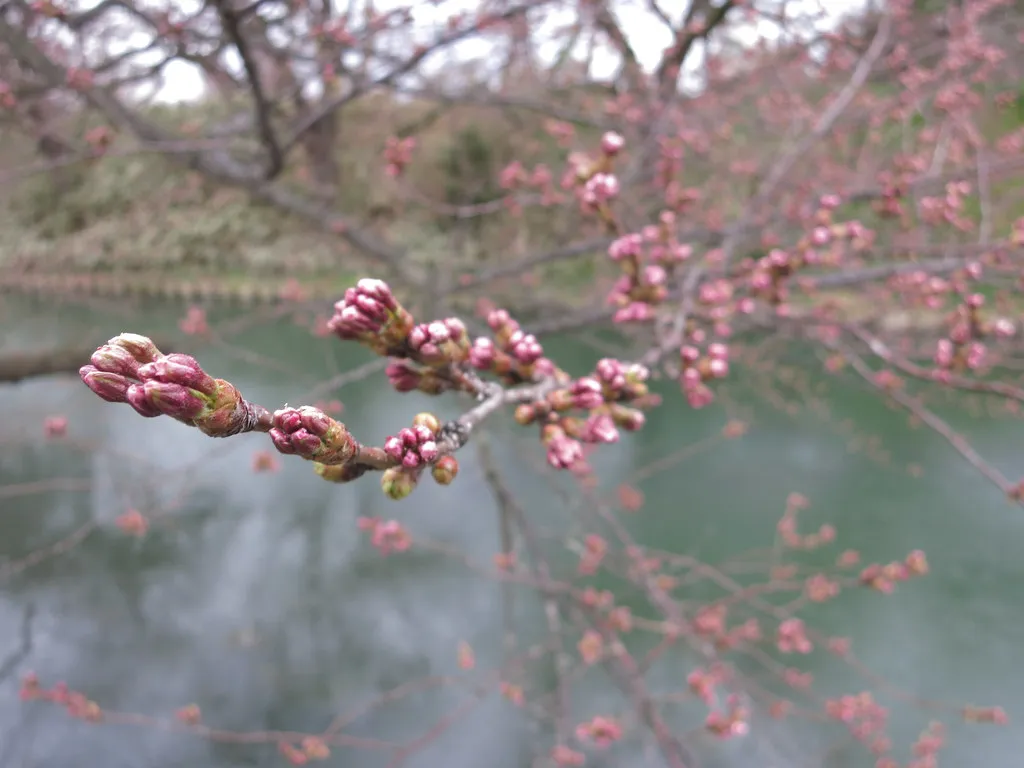
The 2026 festival ran from April 17 to May 5, with peak Somei Yoshino bloom around April 20–26. For 2027, the festival typically opens when the first buds break — usually mid-to-late April — and runs through early May. Exact dates shift by one to two weeks depending on winter temperatures, so check the official Hirosaki City tourism calendar in early March each year.
Full bloom for the main Somei Yoshino variety lasts only about five to seven days under ideal conditions. Once petals begin to fall — typically the final week of April — the moats fill with the pink petal carpet known as Hana-ikada. Late-blooming Yaebenishidare (weeping cherry) trees then take over as the main attraction through early May, extending the overall viewing window considerably.
Crowds are heaviest during the Golden Week holidays, which run from late April to May 5. Weekday mornings before 09:00 offer the quietest conditions for photography. The festival's inner Honmaru area is open from 07:00 to 21:00 each day. Most food stalls operate from 09:00 to 21:00, so arriving early gives you first pick of the best apple pies before they sell out.
Getting to Hirosaki Park: Transport Options and Tips
From Tokyo, take a Hayabusa Shinkansen on the Tohoku Shinkansen line to Shin-Aomori Station — roughly three hours. From Shin-Aomori, board the JR Ou Main Line for the 40-to-50-minute ride to JR Hirosaki Station. Alternatively, a 70-minute flight from Haneda to Aomori Airport connects to a Konan Bus directly to Hirosaki Bus Center, which deposits you closer to the castle than the station does. If you plan to combine Hirosaki with other Tohoku spots, the JR East Pass (Tohoku Area) at ¥30,000 saves significantly on point-to-point fares.
From Hirosaki Station, you have two realistic options: walk or take the Dotemachi Loop bus. The walk takes 25 to 30 minutes along a flat, well-signed route, and lets you pass local shops without the stop-start frustration of festival traffic. The Dotemachi Loop bus covers the same distance in about 15 minutes under normal conditions — but during peak bloom the bus runs packed and traffic can stretch the ride to 30 minutes or more. Walking is often faster and always less stressful unless you are carrying heavy bags.
One critical logistics detail: the last train back to Aomori departs Hirosaki Station at 22:08. Night illuminations end at 22:00, which leaves just eight minutes to walk from the park gate to the station. Budget 15 minutes for the walk, leave the park by 21:45, and you'll make it without rushing. Taxis are available at the station but queues during festival nights are long, and fares to Aomori City approach ¥10,000. If you miss the train, spending the night in Hirosaki is the better option — book a backup hotel in advance.
| Route | Time | Notes |
|---|---|---|
| Tokyo → Shin-Aomori (Shinkansen) | ~3 hrs | Reserve seats early; sells out in sakura season |
| Shin-Aomori → Hirosaki (JR Ou Line) | ~45 min | Views of Mt. Iwaki en route |
| Aomori Airport → Hirosaki (Konan Bus) | ~60 min | Drops at Hirosaki Bus Center, nearer to park |
| Hirosaki Station → Park (walk) | 25–30 min | Flat; faster than bus during peak days |
| Hirosaki Station → Park (loop bus) | ~15 min | Crowded; alight at Shiyakusho-mae stop |
Must-See Highlights: Sakura Tunnel and Hana-ikada
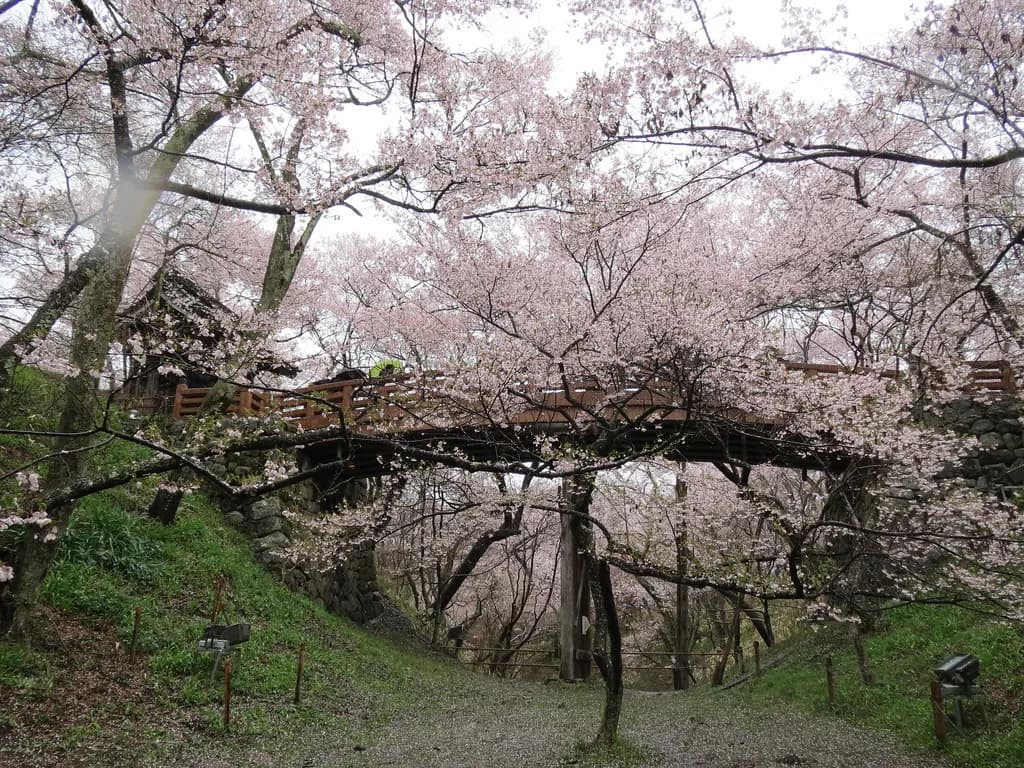
The western moat is the iconic heart of the festival. Cherry tree branches arch over the footpath on both sides to form a pink tunnel roughly 360 metres long. Petals fall onto the still water below to create the Hana-ikada — a dense, unbroken carpet of pink that Hirosaki's moat geometry enables better than any other sakura site in Japan. The best locations to photograph it are the Outer Moat (Soto-bori) and the West Moat (Nishi-bori), where the water is calmest.
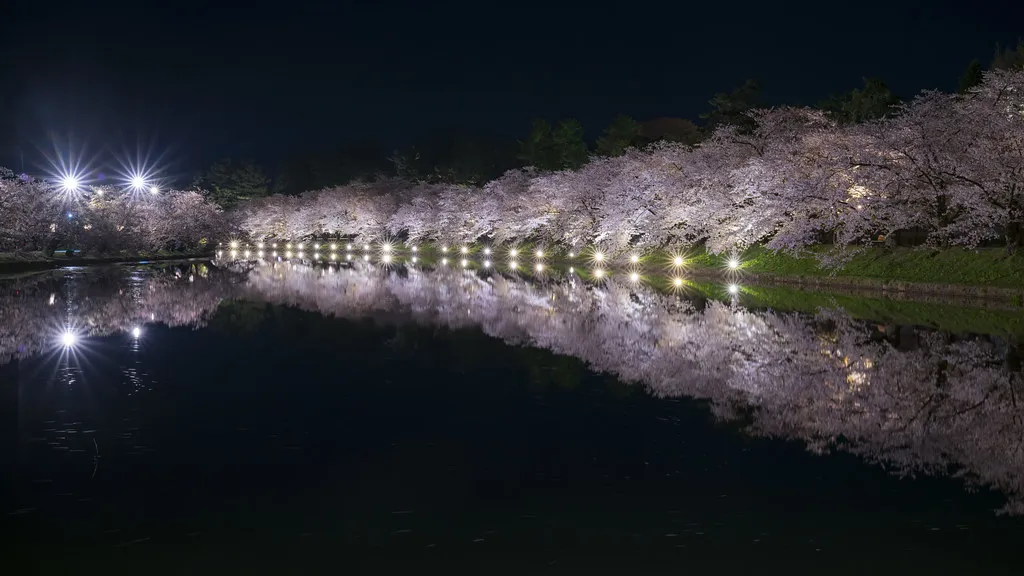
Shunyobashi (Shunyo Bridge), the red bridge spanning the western moat, is the single most photographed viewpoint in the park. During the evening illumination period, a queue of 20 to 30 minutes to cross it is normal — the wait is worth it. The reflections of pink-lit trees on both sides of the bridge create what many photographers consider the best night-sakura composition in Tohoku.
The Heart Spot is a quieter but beloved detail. Two cherry trees near the park's south section have been pruned so their overlapping canopies form a perfect heart shape against the sky. Look for the tree stump at ground level with a carved heart — that is the exact standing position. Arrive before 09:00 to photograph it without a crowd in frame. This spot does not appear on the official park map, so ask a staff member or look for the cluster of photographers near the Sugi-no-Ohashi Bridge.
The "Hirosaki Style" Pruning and Unique Tree Varieties
What makes Hirosaki's blossoms visually denser than those at Ueno Park or Maruyama Park in Kyoto is not just quantity — it is technique. Local horticulturalists applied pruning methods developed for Aomori's apple orchards to the park's cherry trees. Apple-style pruning removes competing interior branches to redirect nutrients outward, which produces more buds per branch and a cloud-like, full silhouette. Trees pruned this way look noticeably fluffier than standard festival cherries elsewhere in Japan.
The park hosts 2,600 trees across 50 varieties, and the "Sakura Doctors" who maintain them have kept Japan's oldest surviving Somei Yoshino tree alive and blooming since 1882. You will find it in the Ni no Maru area. Standard Somei Yoshino live 60 to 80 years; this one has been maintained for over 140 years through attentive pruning and root care — a testament to the same horticultural expertise that shapes the festival's character. Labels on each tree identify the variety, which helps visitors track the staggered bloom sequence across species.
Weeping cherry trees (Shidarezakura) bloom slightly later than the main Somei Yoshino flush, extending the peak viewing window by several days. The inner Honmaru area concentrates the weeping varieties closest to the castle keep. By the time the main moat blossoms have faded to leaf, the weeping cherries in the Honmaru are often still at full flower — a reason to visit after Golden Week if crowds are a concern.
Night Illuminations and Evening Moat Views
The park is illuminated from sunset until 22:00 each night during the festival. The western moat's still water doubles the cherry blossoms into a mirror reflection, and the lights make the scene brighter and more colour-saturated than most daytime shots. Many photographers who visit during the day return in the evening specifically for the western moat reflection. Temperatures in Hirosaki drop to around 5–8°C after dark, so bring a windproof layer regardless of how warm the afternoon felt.
The Shunyobashi Bridge queue builds from around 19:00 onwards. If you want the reflection shot without waiting, position yourself along the moat bank rather than on the bridge itself — the angle is slightly lower and avoids the bridge railings in the frame. Food stalls remain open until 21:00, so the evening is a good time to eat while the light is still fading and the Shunyobashi queue has not yet peaked.
One planning note specific to evening visits: the Botanical Garden closes at 17:00 (last entry 16:30), so it cannot be combined with the night illuminations on the same visit. Plan Botanical Garden access during an afternoon visit and dedicate a separate evening trip to the illumination circuit around the moats and Honmaru area.
Hirosaki Castle Keep and Botanical Garden
Hirosaki Castle is one of only twelve original medieval keeps to survive into the modern era — a genuine Edo-period structure rather than a concrete reconstruction. The current three-story keep was rebuilt in 1810 after its predecessor was struck by lightning, and along with its gates and turrets it holds Designated Important Cultural Property status. On clear days the snow-capped profile of Mt. Iwaki (sometimes called "Tsugaru Fuji") frames the castle from the north, producing one of the most photographed compositions in Aomori Prefecture.
2026 marks a significant moment for the castle's history. The 400-tonne keep was shifted approximately 70 metres to a temporary position in 2015 so that the leaning stone base could be repaired. As of mid-2026, the castle is scheduled to begin its journey back to its original foundation in July 2026, with the move expected to complete by November 2026. The main keep was moved about 70 metres off its stone base in 2015 for a multi-year Honmaru stone-wall restoration and is being returned toward its original position in the mid-2020s; it stays open to visitors (around ¥320). If you want to photograph the castle in its current temporary position with the cherry blossoms — a composition that will not exist again after autumn 2026 — the next spring festival in 2027 will likely be your last opportunity.
Entry to the outer park is free. A combined admission ticket for the Honmaru inner area and the Hirosaki Castle Botanical Garden costs ¥520 for adults and ¥160 for children. The Botanical Garden alone costs ¥320 for adults and ¥100 for children, and is open 09:00–17:00 (last entry 16:30). It covers more than 1,500 plant species across ten distinct garden areas and is noticeably less crowded than the main moat paths during peak festival days — a practical refuge for those wanting quieter photography conditions.
Festival Activities: Rowboats, Food, and Culture
Rowboat rentals in the western moat cost approximately ¥1,500 per 60 minutes and run from 09:00 to 17:00. Booking in person is first-come, first-served, and popular slots on peak-bloom weekends sell out before noon. From the boat you can photograph the petal carpet (Hana-ikada) from below the branches — an angle impossible from the footpaths. A separate traditional wooden punt tour, steered by a pole-guide, covers a different moat section and is worth the additional cost if it is still running in your visit window.
More than 200 food stalls operate across the park grounds from 09:00 to 21:00. Classic festival fare — yakitori, yakisoba, takoyaki — is well represented, but the Aomori-specific items are the reason to linger. Look for igamenchi (crispy minced-squid patties), hot apple pie from temporary bakery stalls, and apple cider from local producers. Aomori Prefecture produces roughly 60% of Japan's entire apple harvest, and festival vendors take full advantage of this — apple-infused ramen and apple curry are also available at rotating stalls. Most apple pie vendors sell out by mid-afternoon, so buy early.
A small performance stage in the park hosts traditional Tsugaru shamisen music and folk dancing throughout the festival period. Tsugaru shamisen is a distinctly northern Japanese style — harder, faster, and more percussive than the classical form — and hearing it played against the backdrop of falling petals is one of those details that distinguishes Hirosaki from any other sakura festival in Japan.
Where to Stay: Art Hotel Hirosaki City and Beyond
Hotels in Hirosaki City are limited and sell out months in advance for the sakura season. Art Hotel Hirosaki City, directly adjacent to Hirosaki Station, is the most convenient option — expect rates above ¥30,000 per night during peak bloom, roughly double the off-season price. The buffet breakfast includes local Aomori specialties such as apple curry and apple ice cream. Book as soon as your travel dates are confirmed, ideally six months ahead. You can find more accommodation options in Hirosaki across different price points.
If Hirosaki properties are fully booked, Aomori City is the next-best base. The 45-minute JR Ou Main Line commute is manageable, and Aomori has a significantly wider selection of hotels at lower prices. This is a common workaround used by repeat visitors who time their trips late and still want to attend the festival. Hachinohe and even Sendai are further fallback options, though Sendai adds roughly two hours of travel each way.
Practical Visitor Guide: Tickets, Hours, and Facilities
Most of the park area is free for all visitors. The Honmaru and Hirosaki Castle Park (Japan-Guide) require a ticket. A combined ticket for the Honmaru and Botanical Garden costs ¥520 for adults and ¥160 for children. The Botanical Garden-only ticket is ¥320 for adults and ¥100 for children.
The Honmaru inner area is open from 07:00 to 21:00 daily during the festival. Rowboat rentals run 09:00–17:00 at approximately ¥1,500 per 60 minutes. Night illuminations operate from sunset to 22:00 — the last entry for the illuminated moat circuit is effectively 21:45 if you want enough time to see it before the lights shut off. Public restrooms are located at several points around the park.
Information centers near the main gate provide maps and can direct visitors to the nearest IC card reader for bus payment. Using a Suica or PASMO card makes boarding the Dotemachi Loop bus seamless. You can find many popular Hirosaki attractions within walking distance of the park, and the transport from Aomori is straightforward on the JR Ou Main Line.
A practical photographer's schedule that works well: arrive by 07:30 to shoot the Heart Spot in soft morning light, walk the Sakura Tunnel before 09:00 crowds arrive, rent a rowboat between 09:00 and 11:00 for the petal-carpet angle, visit the Botanical Garden in the afternoon, then return to the western moat and Shunyobashi Bridge from 19:30 onwards for the illumination reflections. This schedule covers every major visual of the festival in a single long day without rushed transitions.
Frequently Asked Questions
When is the best time to see cherry blossoms in Hirosaki?
Late April is the best time for peak bloom. The festival usually runs from April 23 to May 5. You should check the yearly forecast for exact dates.
How do I get from Aomori to the Hirosaki Cherry Blossom Festival?
Take the JR Ou Main Line from Aomori Station. The train ride takes about 40 to 50 minutes. From Hirosaki Station, walk 30 minutes to the park.
Is the Hirosaki Cherry Blossom Festival free?
Most of the park is free to enter. The Honmaru and botanical garden require a small fee. You can enjoy the main moats without a ticket.
What is the flower raft at Hirosaki Castle?
It is a layer of fallen petals on the water. This creates a pink carpet across the castle moats. It happens toward the end of the festival.
Are there other festivals in Hirosaki?
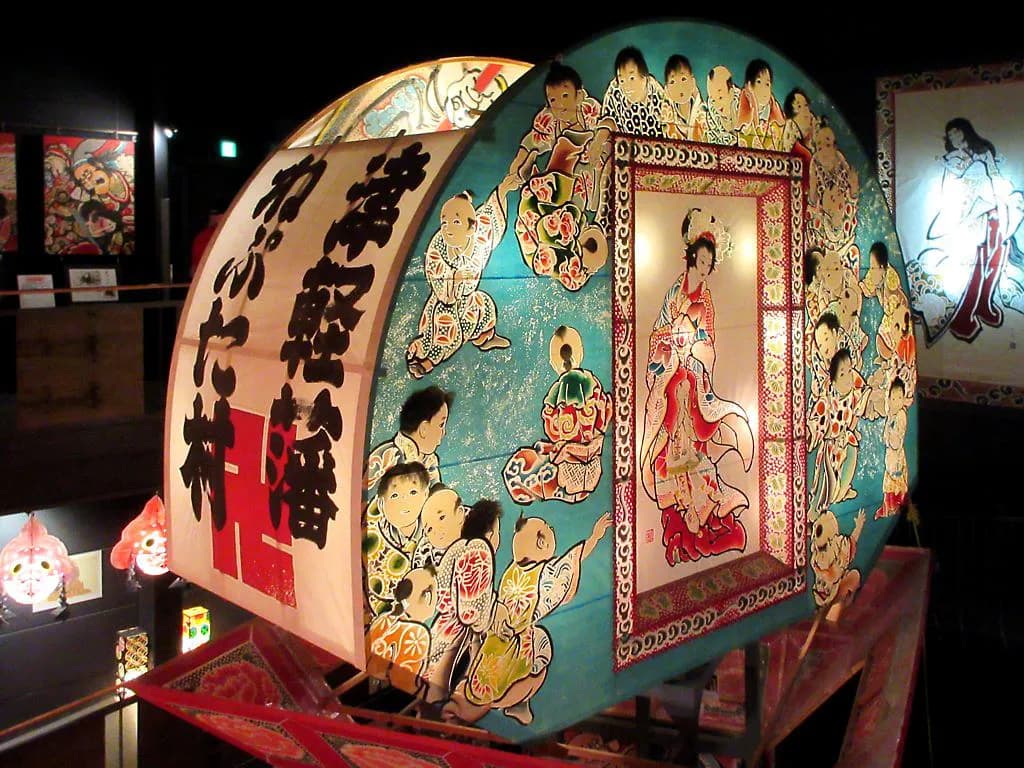
The city hosts the Neputa festival every August. This event features massive illuminated floats and parades. It is a highlight of the summer season.
The Hirosaki cherry blossom festival is a bucket-list experience for many. Planning your visit around the peak bloom window ensures maximum beauty. Don't forget to try the local apple cider while you are there. The combination of history and nature makes this park truly special.
Free guide: Japan's Hidden Gems
12 under-the-radar places beyond Tokyo & Kyoto — with the best season to visit each and a local tip you won't find in the guidebooks.
You might also like

Continue reading
More guides you'll find useful