
Inuyama Matsuri Festival Travel Guide
Plan your Inuyama Matsuri festival visit with a complete schedule, karakuri puppet tips, lantern parade timing, and how to reach Inuyama from Nagoya.
On this page
Every spring, the castle town of Inuyama transforms into one of Japan's most spectacular festival stages. The Inuyama Matsuri, held on the first weekend of April, draws visitors from across Aichi Prefecture and beyond. Dating back to 1635, the celebration is nearly 390 years old and carries UNESCO recognition as an Intangible Cultural Heritage.
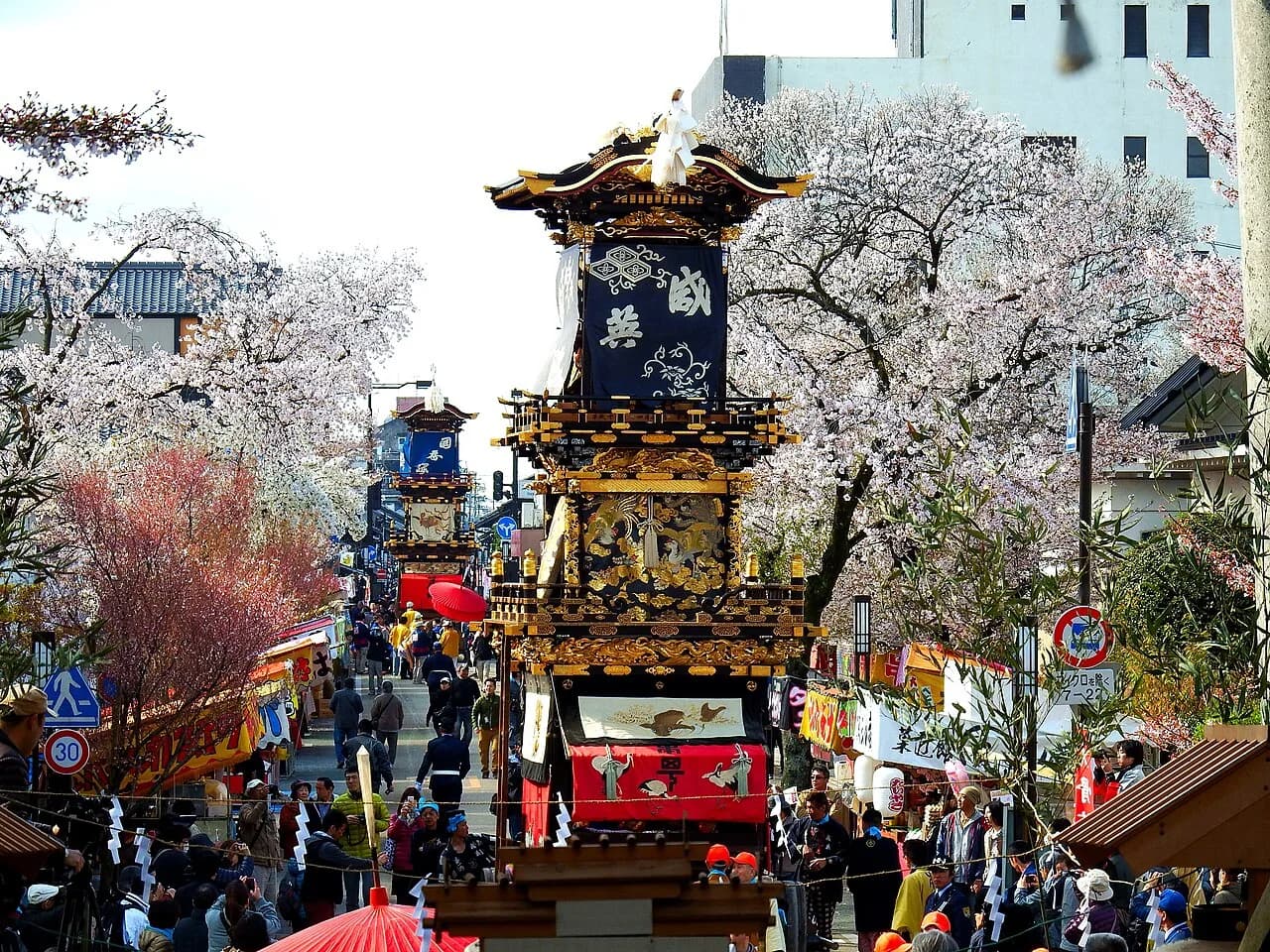
Thirteen three-tiered wooden floats, called yama, fill the narrow streets with drumbeats and flute music. Each float carries karakuri mechanical marionettes that perform on the upper tier while crowds line the streets below. By night, 365 paper lanterns hung on each float illuminate the castle-town streets for the evening procession.
Last updated June 2026.
390 Years of Festival Tradition
The Inuyama Matsuri began in 1635 as a ritual offering to the deity at Haritsuna Shrine. What started as a modest local ceremony grew over nearly four centuries into the grand two-day celebration visitors see today. UNESCO formally inscribed the festival in 2016 as part of the Yama-Hoko-Yatai float-festival group, placing it alongside celebrated events from Kyoto and Takayama.
The thirteen yama floats each represent a different neighborhood of the historic castle town. Local districts maintain their own floats across generations, and the karakuri puppet mechanisms inside each float date to the Edo period. These intricate mechanisms use strings, levers, and baleen springs — and still function without electricity after hundreds of years.
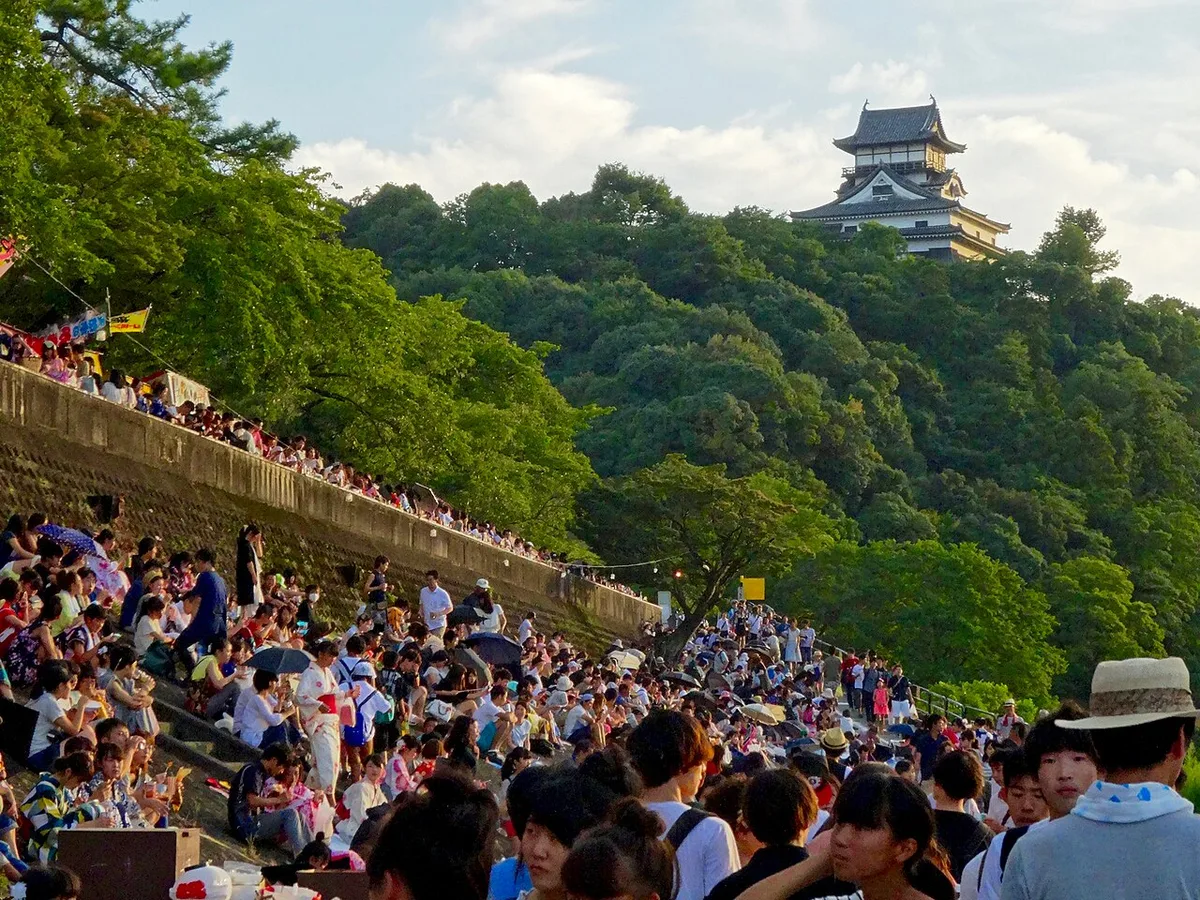
The festival parade winds through Honmachi's historic streets before all thirteen floats gather at Haritsuna Shrine plaza, just below Inuyama Castle: A Complete. Cherry blossom trees frequently bloom at the same time, framing the castle and floats in pink and white. This overlap of UNESCO heritage floats and sakura against a hilltop castle is what draws photographers from across Japan.
The Karakuri Puppet Performances
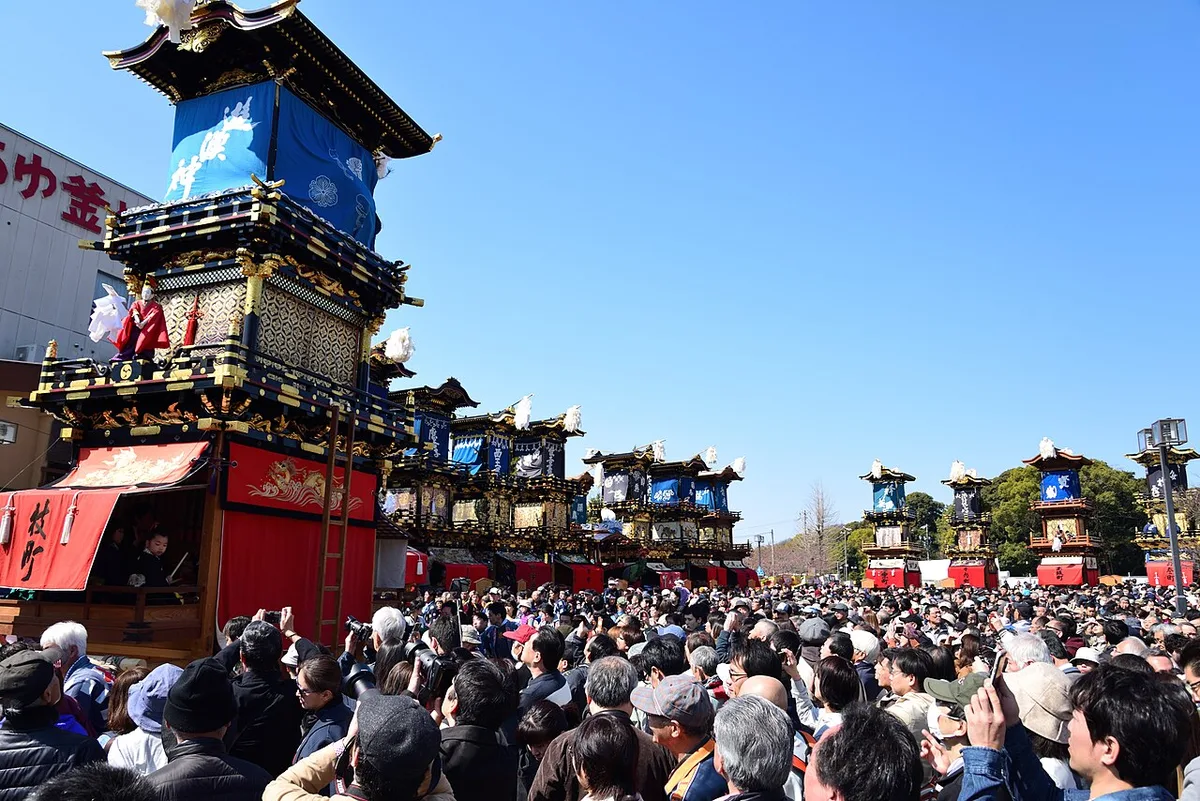
Karakuri are mechanical marionettes crafted during the Edo period from wood, silk thread, and baleen springs. Each float's upper tier serves as a small stage where the puppets perform routines including tea-pouring, archery, and acrobatic sequences. No electronics are involved — every movement is triggered by a hidden operator pulling strings from inside the float.
The main karakuri performances happen when all thirteen floats gather at Haritsuna Shrine around midday on each festival day. Crowds pack the plaza at this point, so arriving at least one hour before the scheduled performance is strongly advised. Each district's puppets perform slightly different routines, and watching multiple floats in sequence reveals how much craft varies between neighborhoods.
One experience competitors rarely describe is the donden, where a float pivots sharply in place to change direction on a narrow street. Spectators on the sidewalk feel the float swing within inches of the crowd, and securing a corner intersection spot offers the best view. Plan to find your corner early on the morning parade route — these positions fill up well before the floats arrive.
Inuyama Matsuri Festival Schedule
The festival unfolds over two full days, each with a distinct name and program. Saturday is the Shigaku-sai (Rehearsal Festival) and Sunday is the Hongaku-sai (Main Festival). Both days run from roughly 8:00 in the morning until 21:45 at night.
Sunday is recommended for first-time visitors because it features longer karakuri performances and the official mikoshi procession. Saturday draws slightly smaller crowds and gives more room to photograph the floats in motion. Verify the latest schedule on the official Inuyama tourism site as timings can shift slightly each year.
Karakuri performances at Haritsuna Shrine are the hardest to photograph because the plaza crowds pack densely around each float. Positioning yourself along the float parade route earlier in the morning lets you photograph individual puppets up close before the crowds thicken. Both days offer this window, so early-morning arrival pays off regardless of which day you attend.
- Day 1 — Shigaku-sai (Rehearsal Festival, Saturday)
- Floats parade through each neighborhood district from 8:00 to 11:00, accompanied by traditional music.
- All thirteen floats gather at Haritsuna Shrine from 11:50 to 13:50 for the midday karakuri puppet performances.
- The evening lantern procession runs from 18:00 to 22:00 through the illuminated castle-town streets.
- Day 2 — Hongaku-sai (Main Festival, Sunday)
- Extended float parades and karakuri performances continue around the castle town from 8:00 to 15:00.
- The shrine's deity travels through subsidiary shrines in a portable mikoshi procession during the afternoon.
- Evening lantern parades resume from 18:00 to 22:00, marking the festival's ceremonial close.
The Evening Lantern Procession
The yomatsuri, or evening procession, is often called the most visually striking part of the Inuyama Matsuri. When darkness falls, each yama float lights 365 paper lanterns — one for each day of the year as a continuous offering to the shrine deity. The glow of thirteen lantern-covered floats drifting through the narrow Honmachi streets is a sight unlike almost anything else in Japanese festival culture.
The yomatsuri runs from 18:00 to 22:00 on both festival days, giving visitors plenty of time to find a good position. Evening crowds are dense near the shrine plaza and the castle, so staking out a spot along the main Honmachi street early in the afternoon is a smart move. Photographers should plan for low-light shooting, as the orange lantern glow rewards slower shutter speeds over flash.
Combining the daytime float parade with the evening yomatsuri in a single trip from Nagoya is very manageable. The historic Honmachi district retains its Edo-period streetscape year-round, making it worth exploring between the daytime and evening programs. Small restaurants along the district streets offer a natural dinner break during the gap between the two sessions.
One practical tip: leave the shrine plaza after the daytime puppet performances and take a meal along the Honmachi side streets. This puts you in position for the yomatsuri without fighting through the dinner-hour crowds that build near the plaza around 17:30. Both festival days close with the same procession pattern, so either evening gives the full lantern experience.
Getting to Inuyama from Nagoya
Inuyama is about 30 minutes by train from central Nagoya, making the festival one of the most accessible day trips in the region. Take the Meitetsu Inuyama Line from Meitetsu Nagoya Station and ride to Inuyama Station; the one-way fare is ¥630 and trains run every few minutes. During the festival weekend, trains fill up fast, so aim to board before 8:30 to get a comfortable position for the morning parades.
From Inuyama Station, exit through the West Exit and walk straight toward the castle town. Follow the main Honmachi street all the way to Haritsuna Shrine and Inuyama Castle, a walk of about 15 to 20 minutes. The Inuyama Castle Town Ticket (¥1,630) bundles a round-trip train from Nagoya, admission to Inuyama Castle, and discount vouchers for local shops.
Driving is strongly discouraged: the area has fewer than 500 parking spaces and local roads gridlock heavily on both festival days. Our complete guide to getting to Inuyama covers rail pass compatibility, journey times, and transport options from Kyoto and Osaka.
Tips for Visiting the Inuyama Matsuri
Arriving early is the single most important piece of advice for any Inuyama Matsuri visitor. Prime spots near Haritsuna Shrine plaza fill up well before the midday karakuri performances begin. Choosing a corner position along the parade route from the start of the morning gives the best view of both the floats and the donden turns.
April in Inuyama often brings cherry blossoms alongside the festival floats, which rewards planning but also draws larger crowds. Check bloom forecasts in advance — the Best Time to Visit Inuyama: 2026 Guide covers seasonal conditions and peak dates. If blossoms are at their peak, expect the town to be even busier than a typical festival weekend.
The festival draws substantial crowds, so pairing it with a nearby attraction makes the most of the journey from Nagoya. Our Meiji Mura open-air museum guide covers the architectural museum just 30 minutes from Inuyama Castle. Visiting Meiji Mura in the early afternoon, between the daytime and evening programs, gives a natural break without wasting the trip.
- Arrive Early to Secure Good Viewing Spots
- Get to Haritsuna Shrine at least 60 minutes before the midday karakuri performances begin.
- Corner positions along Honmachi Street offer unobstructed views of both the floats and the sharp donden turns.
- Use Public Transport Instead of a Car
- Festival-day parking is limited to under 500 spaces, and roads around Inuyama gridlock for hours.
- Meitetsu trains from Nagoya run frequently and reach Inuyama in 25 to 30 minutes for ¥630 one-way.
- Plan for the Weather and Rain Policy
- The festival is canceled entirely if heavy rain falls on either day, so check the forecast before traveling.
- April mornings in Inuyama can be cool — bring a light layer for the early-morning parade start.
- Bring Cash for Festival Food Stalls
- Festival food stalls line the parade route on both days and do not accept credit or IC cards.
- Yakitori, taiyaki, and festival snacks are widely available at typical matsuri prices.
Festival Rules and Manners
The Inuyama Matsuri is free to watch, but it runs on narrow castle-town streets where the floats need room to turn. We keep bags close to the body, stay behind staff lines near Haritsuna Shrine, and avoid stepping into the route for photos, especially during the donden turns. The floats are heavy wooden structures pushed by local crews, so even a small crowd surge can slow the procession.
For karakuri performances, plan on standing for 60 to 90 minutes if you want a front-row view. Tripods are awkward in the shrine plaza and can block people behind you; a phone or handheld camera is easier in the crowd. Food stalls are best handled with cash, and keeping ¥1,000 to ¥2,000 in small notes or coins covers snacks without slowing vendor lines. If rain is forecast, check before leaving Nagoya because the festival can be canceled rather than moved indoors.
Avoid stepping into the float route during the donden sharp turns and processions. The floats are heavy wooden structures pushed by local crews, so even a small crowd surge can slow the procession. Keep bags close to your body and stay behind staff lines near Haritsuna Shrine to ensure both your safety and the smooth flow of the parade.
Frequently Asked Questions
Is the Inuyama Matsuri festival free to attend?
Yes, the Inuyama Matsuri is free to watch from the public streets and shrine grounds. Food stalls and souvenir vendors line the route and add to the atmosphere. The Inuyama Castle itself charges a separate entry fee, but the ¥1,630 Castle Town Ticket bundles the round-trip train from Nagoya and castle admission.
When exactly is the Inuyama Matsuri held each year?
The festival takes place on the first Saturday and Sunday of April every year. Saturday is the Shigaku-sai (Rehearsal Festival) and Sunday is the Hongaku-sai (Main Festival). The event is canceled in heavy rain, so check the forecast and the official Inuyama tourism site before making the trip.
How long does the Inuyama Matsuri run each day?
Each festival day runs from roughly 8:00 in the morning until 21:45 at night. Daytime float parades and karakuri puppet performances wrap up around 15:00, and the lantern-lit yomatsuri evening procession runs from 18:00 to 22:00. Arriving early and staying for the evening procession gives the fullest experience of both sessions.
Which day of the Inuyama Matsuri is best for first-time visitors?
Sunday (Hongaku-sai) is recommended for first-time visitors, as it offers longer karakuri performances and the official mikoshi procession. Saturday is slightly less crowded and suits those who want easier photography. If time allows, attending both days and combining the visit with a full Inuyama day-trip itinerary is the best approach.
What are the karakuri puppets at the Inuyama Matsuri?
Karakuri are Edo-period mechanical marionettes built into the upper tier of each yama float. They perform tea-pouring, archery, and acrobatic routines using strings, levers, and baleen springs — no electronics are used. Each float's puppet has a distinct routine, and the main performance happens when all thirteen floats gather at Haritsuna Shrine around midday.
The Inuyama Matsuri is one of the few Japanese festivals that combines Edo-period engineering, a UNESCO-inscribed tradition, and cherry blossoms in a single afternoon. It costs nothing to watch, runs a full two-day schedule, and sits only 30 minutes from Nagoya by train. That combination of accessibility and cultural depth makes it one of the most rewarding day trips in Aichi Prefecture.
Going once is enough to understand why this tradition has continued for nearly 390 years. The yomatsuri lantern procession is the image most visitors carry home long after the festival ends. For everything else Inuyama offers beyond the matsuri, the complete Inuyama attractions guide covers the castle, historic teahouses, and the Meiji Mura museum.
Free guide: Japan's Hidden Gems
12 under-the-radar places beyond Tokyo & Kyoto — with the best season to visit each and a local tip you won't find in the guidebooks.
You might also like


Continue reading
More guides you'll find useful


