Cherry Blossom Season Japan: Your Guide to Timing & Top Spots
Plan your perfect cherry blossom season Japan trip with our guide to bloom forecasts, best viewing spots, cultural tips, and planning advice.
On this page
Japan's cherry blossom season is one of the most anticipated natural events in the world. Every spring, millions of travelers time their trip around a narrow window of full bloom — a period that can last as little as five days in any single city. This guide covers the 2026 bloom forecast, the best spots from Okinawa to Hokkaido, hanami culture, and practical booking advice so you can plan with confidence.
Understanding Japan's Cherry Blossom Season
The cherry blossom season in Japan, known as sakura, is a deeply cherished cultural event. The flowers symbolize the beauty and transience of life — a concept the Japanese call mono no aware, the bittersweet awareness that beautiful things pass quickly. Millions of people flock to Japan each spring to witness this spectacle, and the blossoms appear on food packaging, cafe menus, and storefronts long before the first petal opens. Japan-guide's sakura reference provides in-depth historical context and seasonal details.
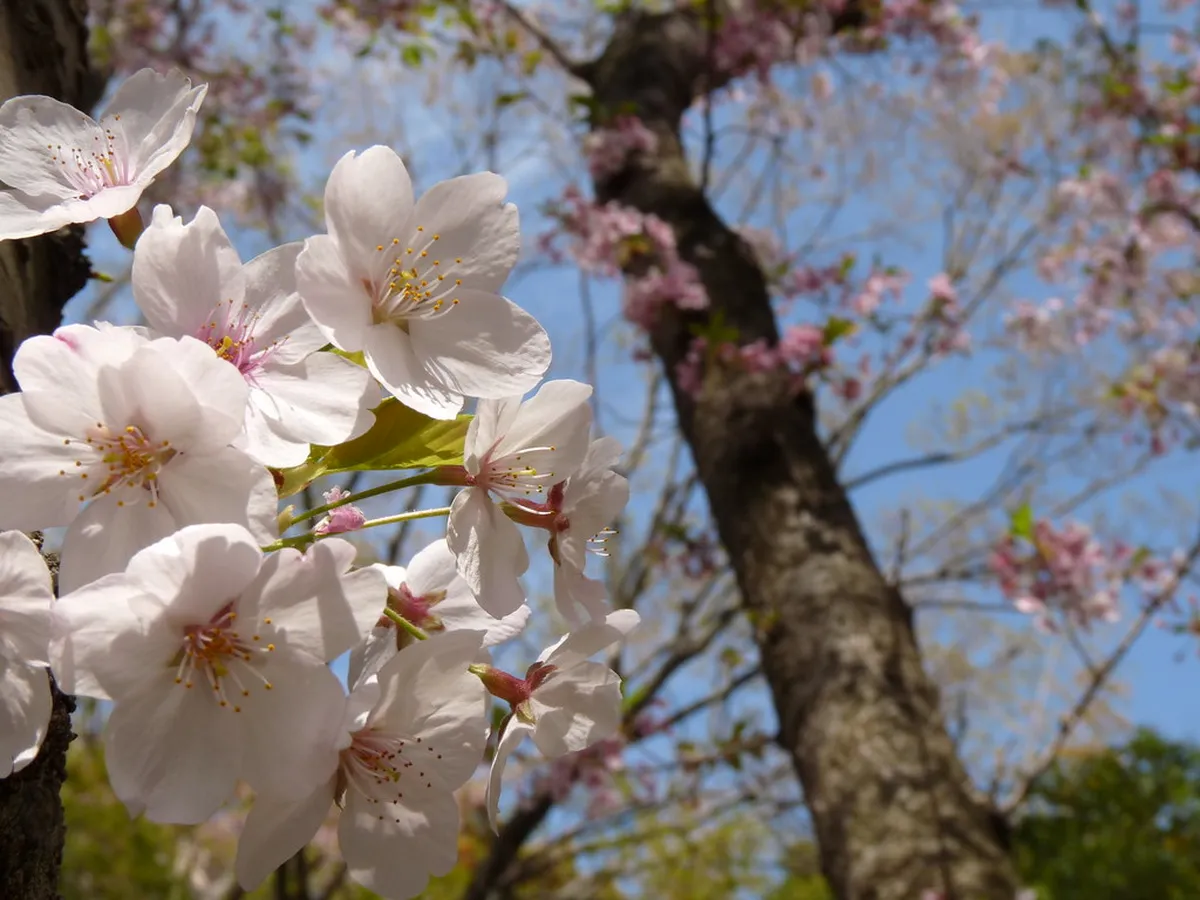
The most common species is the Somei Yoshino, a pale white-pink hybrid planted in parks, along riverbanks, and around castle moats across the country. It is this tree — not any specific festival — that most travelers are chasing. When it blooms, the effect of thousands of trees erupting simultaneously is what makes Japan's sakura season unlike anything else in the world.
Japan's long, narrow geography means the season unfolds gradually over nearly four months, starting in subtropical Okinawa in mid-January and finishing in subarctic Hokkaido in early May. Planning around this wave is the key to a successful trip.
When Does Cherry Blossom Season Start and End in Japan?
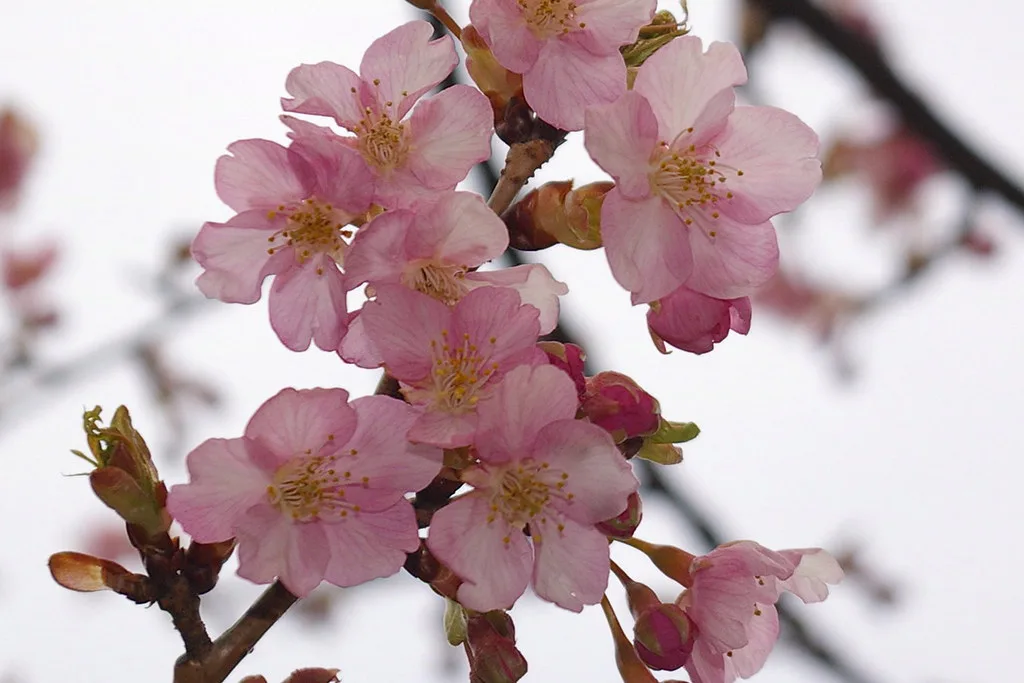
The main cherry blossom season for most travelers runs from late March to early May 2026. Timing varies significantly by region. Okinawa sees the earliest blooms in mid-January, but these are a different species — the deep-pink Kanhizakura — and bloom at a very different time to the classic Somei Yoshino that blankets the rest of Japan in spring.
For the major cities, full bloom (mankai) in an average year follows this pattern:
- Fukuoka and Kumamoto (Kyushu): first bloom around 22 March, full bloom around 29–31 March
- Hiroshima and Kyoto: first bloom around 24–26 March, full bloom around 31 March – 4 April
- Tokyo: first bloom around 21–24 March, full bloom around 27 March – 3 April
- Nagoya: first bloom around 27 March, full bloom around 4 April
- Kanazawa: first bloom around 31 March – 2 April, full bloom around 7–8 April
- Sendai and Fukushima (Tohoku): full bloom around 8–10 April
- Hirosaki (Aomori): full bloom typically around 26 April
- Hakodate and Sapporo (Hokkaido): full bloom late April to early May
These are historical averages. In recent years, seasons in Tokyo and Kyoto have started earlier than these figures due to warmer winters. A cold snap or heavy rain can also push dates back by a week. Always check the official forecast from Japan.travel in January or February for the most current predictions before you book.
| City | Region | Typical Full Bloom (Mankai) |
|---|---|---|
| Fukuoka | Kyushu | 29–31 March |
| Kyoto | Kansai | 31 March – 4 April |
| Tokyo | Kanto | 27 March – 3 April |
| Kanazawa | Chubu | 7–8 April |
| Sendai | Tohoku | 8–10 April |
| Hirosaki | Aomori | 26 April |
| Sapporo | Hokkaido | Late April to early May |
The peak full bloom period in any single location lasts roughly five to seven days. Add a few days either side of peak, and you have about two weeks where viewing is still excellent. That narrow window is why flexibility in your travel dates is so valuable.
The 2026 Japan Cherry Blossom Forecast (and How to Use It)
Official forecasts for 2026 began appearing in late January and were updated regularly through March. Forecasts are issued by meteorological agencies and private services like the Japan Meteorological Corporation and Weathermap. They publish first-bloom and full-bloom estimates city by city, and these figures are what travel planners and tour operators use to finalise itineraries.
To use the forecast well, focus on the mankai (full bloom) date for your destination, not the first bloom. First bloom means roughly 20–30% of flowers are open; mankai is when the trees are completely covered and visually at their best. The gap between first bloom and mankai is typically five to ten days, though some cities like Kanazawa reach mankai in just three or four days once blooming starts.
Three factors drive the forecast accuracy. Temperature matters most — blooms are triggered when cumulative warmth after winter reaches a threshold. Precipitation delays opening and can shorten the display once petals are out. Microclimates within a city also create real variation: Kyoto's Maruyama Park weeping cherry blooms before Kiyomizu-dera by several days, and the Philosopher's Path falls in between.
The practical advice: lock in flights and hotel no later than September for the year you're travelling, but leave the specific city-by-city days of your itinerary flexible until forecasts sharpen in February. Booking accommodation with free cancellation until that point gives you the ability to shift north or south by a few days as the picture becomes clearer.
The sakura front moves northward at roughly 20–30 km per day. By tracking this movement through forecast updates, you can plan a multi-city route that keeps you inside peak bloom for up to three weeks instead of being locked into a single city's five-to-seven day window. Monitor Japan.travel's updates in February to time your travel flexibly.
Top Destinations for Cherry Blossoms in Japan
Japan has hundreds of celebrated viewing spots, but a handful consistently dominate travellers' bucket lists for good reason. In Tokyo, Chidorigafuchi moat is one of the finest spots in the country — the canal is lined with Somei Yoshino trees that overhang the water, and rowing boats are available so you can drift under the canopy of petals. Ueno Park is more festival-like in atmosphere, with food stalls and evening illuminations, though it gets extremely crowded on weekends.
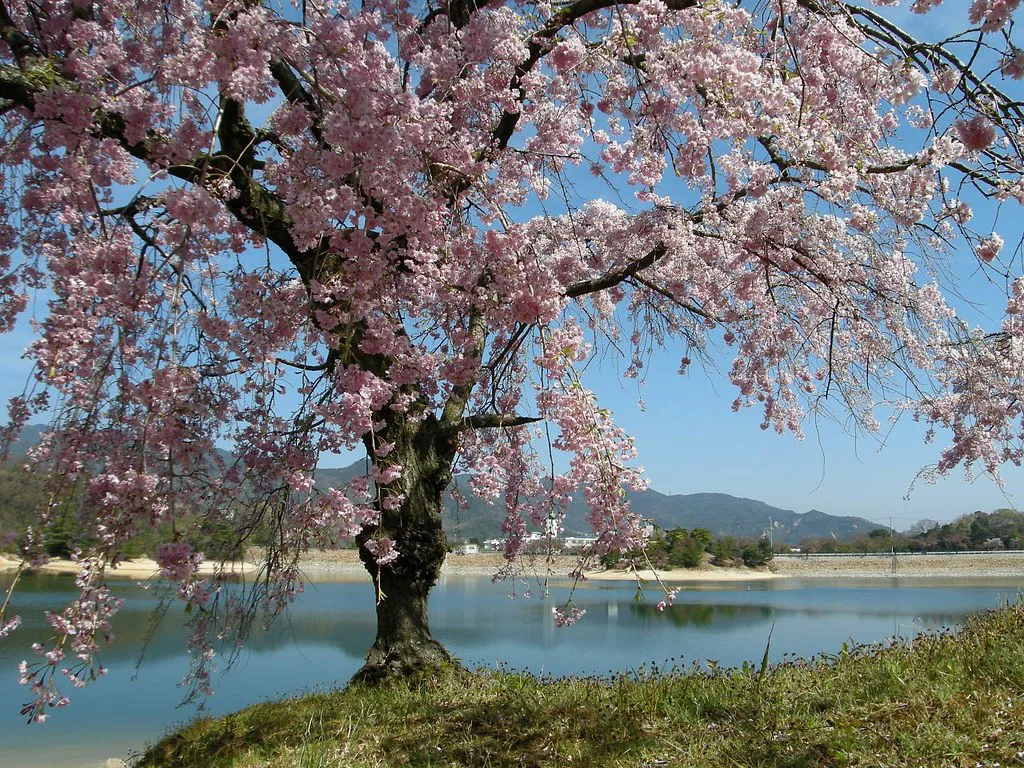
In Kyoto, the Philosopher's Path is a 2-kilometre canal-side walk between Ginkakuji and Nanzenji temple that becomes otherworldly in late March to early April. Maruyama Park is the place for a classic hanami picnic beneath Kyoto's most famous weeping cherry tree, which is illuminated at night throughout peak season. Arashiyama's Togetsukyo Bridge frames the blossoms against a forested hillside and is worth visiting at dawn before crowds arrive.
Outside the main cities, Mount Yoshino in Nara Prefecture stands apart. Over 30,000 cherry trees of several varieties cover the mountainside, and the tree line shifts from white to deep pink as you climb higher. Hirosaki Castle in Aomori is equally spectacular but later: the outer moat fills so completely with fallen petals in late April that the surface turns pink. Himeji Castle, with its stark white fortifications framed by blossoms, produces the most photographed castle-and-sakura image in Japan.
For a less-crowded alternative, the Hanamiyama park in Fukushima combines sakura, peach blossoms, and rapeseed flowers across its hillside trails from early to mid-April — and visitor numbers are a fraction of what you'll find at Yoshino or Arashiyama.
Regional Cherry Blossom Guides: From Okinawa to Hokkaido
Okinawa and Kyushu. Okinawa's Kanhizakura blooms mid-January to early February with vivid deep-pink flowers that hang downward — a distinct look from the mainland variety. In Kyushu, Kumamoto Castle and Fukuoka's Maizuru Park reach full bloom around late March to early April. Mifuneyama Rakuen in Saga Prefecture is a hidden gem: 2,000 cherry trees across 120 acres, followed immediately by a wave of 200,000 azaleas.
Kansai (Kyoto, Osaka, Nara). Kansai typically reaches peak in early April. Osaka Castle Park has 3,000 trees including a stand of Yoshino cherries in the Nishinomaru Garden. Mount Yoshinoyama in Nara is in full bloom from early to mid-April. Himeji Castle grounds are free to walk and the castle entrance fee is worth it for the rooftop view across the sea of blossoms below.
Kanto (Tokyo, Kanagawa) and Chubu. Tokyo reaches full bloom around the last week of March to the first days of April. Shinjuku Gyoen charges a small entry fee but offers a longer bloom window than most parks due to its mix of tree varieties. Kanazawa, in Chubu, blooms around 7–8 April; its Kenrokuen garden is one of the three great traditional gardens of Japan and a premier viewing spot. Near Mount Fuji, Lake Kawaguchiko combines blossoms with the mountain backdrop and is best visited on a clear-sky weekday morning.
Tohoku and Hokkaido. Sendai and southern Tohoku reach full bloom around 8–10 April. Hirosaki Castle (full bloom around 26 April) is exceptional: the moat fills with petals that form a literal pink carpet. In Hokkaido, Goryokaku fort star-shaped moat in Hakodate reaches full bloom in late April, while Sapporo's parks bloom in early May. Golden Week (late April to early May) brings large crowds to Hokkaido, so book accommodation early.
The Sakura Front Strategy: How to See Blossoms for Three Weeks Instead of One
Every year, Japan's meteorological agencies track what they call the sakura zensen — the cherry blossom front — as it moves northward at roughly the pace of 20–30 km per day. Most visitors plan around a single city, which gives them a five-to-seven day window before the petals fall. But travellers who plan their itinerary to move with the front can stay inside that window for three weeks or more.
A practical south-to-north route starts in Kyushu (Kumamoto or Fukuoka) in late March, then shifts to Tokyo and Kyoto in early April, moves to Kanazawa or Nagano in the second week of April, and finishes in Hirosaki or Hokkaido in late April to early May. This is not a tight schedule — the front is wide enough that you have two to three days of flexibility at each stop before needing to move on.
The inverse strategy also works: if you can only travel in mid-to-late April, skip the famous spots (long past peak) and head directly to Tohoku or Hokkaido. These regions see far fewer foreign visitors during their bloom period, accommodation is easier to find, and spots like Hirosaki or Matsumae Castle in Hokkaido are on par aesthetically with anything in Kyoto. Check the Japan itinerary guide for regional transit advice on building a north-following route.
Experiencing Hanami: What to Do at a Cherry Blossom Festival
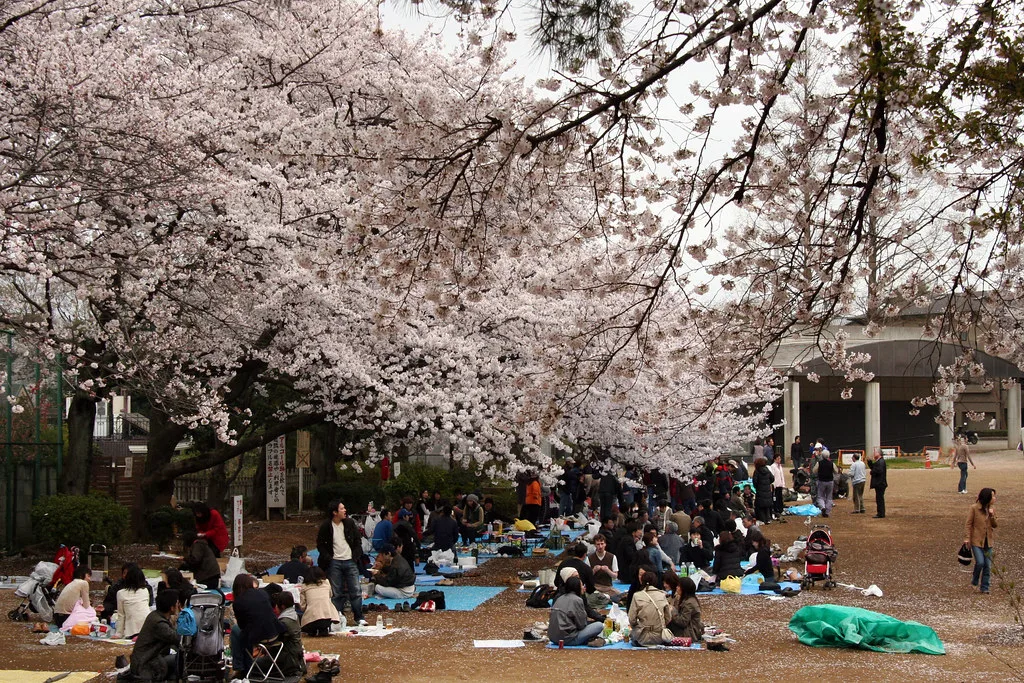
Hanami — literally "flower viewing" — is the tradition of gathering under blooming trees with food and drinks. It is practiced by everyone from families with young children to company colleagues on obligatory outings. The experience varies enormously depending on where and when you go. At Ueno Park in Tokyo on a Saturday afternoon, expect shoulder-to-shoulder crowds, tarpaulins marking reserved spots since early morning, and food stalls stretching the length of the path. At a park in a smaller city on a Tuesday morning, you may have a bench and a whole tree to yourself.
To enjoy hanami well, pick up food at a nearby convenience store or supermarket — onigiri, sandwiches, and canned drinks are ideal. Carry your rubbish with you; most parks have no public bins during sakura season, and leaving trash is a serious breach of etiquette. Bring a small tarp or picnic sheet. Arrive at popular parks on weekdays or before 09:00 on weekends if you want space to sit.
Evening viewing, called yozakura, is equally compelling. Many parks illuminate the trees with warm lighting from dusk until around 21:00 during peak bloom. Maruyama Park in Kyoto, the Meguro River in Tokyo, and Hirosaki Castle are among the best night viewing locations. The light through the petals from below produces a visual effect that daylight cannot replicate. Observe local etiquette during these events — keep noise levels reasonable, stay off restricted areas, and be patient in queues.
Book accommodation in your cherry blossom destination as early as possible — no later than September the year before. Hotel rates in central Tokyo and Kyoto can double during peak season, and popular ryokan and smaller city options fill up months in advance. For flexibility, choose properties with free cancellation until February so you can adjust once forecasts firm up.
How to Plan Your Cherry Blossom Trip to Japan
Cherry blossom season is the busiest travel period in Japan. Flights, accommodation, and popular tours sell out months in advance. The standard advice is to book flights and hotels no later than September or October the year prior. For 2026, most of those early-booker slots are already taken; if you are still planning, search for mid-week availability and consider secondary cities where accommodation pressure is lower than Tokyo and Kyoto.
Rail travel is the best way to move between cities during the season. A Japan Rail Pass is cost-effective if you are covering multiple regions — the JR Pass guide covers the current pass rules and how to calculate whether it makes sense for your itinerary. Book reserved seat tickets on the Shinkansen as early as possible; unreserved cars fill up at peak times on the Tokyo–Kyoto–Osaka corridor.
Budget for higher costs across the board. Hotel rates in central Tokyo and Kyoto can double compared to off-season. Restaurant and activity prices remain stable, but popular experiences like tea ceremonies, Kaiseki dinners, and certain temple visits require reservation well in advance. If your dates are fixed and cannot shift, target smaller cities (Kanazawa, Matsumoto, Hirosaki) where demand is lower and the scenery is equally impressive.
Beyond Sakura: Other Beautiful Spring Flowers in Japan
If you arrive slightly before or after peak cherry blossom season, Japan offers an equally rich spring floral calendar. Ume (plum blossoms) precede sakura by three to four weeks and bloom in late February to early March. Osaka Castle's plum grove and Mito's Kairakuen garden are among the finest spots for ume.
Wisteria (fuji) blooms from late April to mid-May in cascades of purple and white. Ashikaga Flower Park in Tochigi Prefecture has century-old wisteria tunnels that are lit at night — advance tickets are required, and it sells out weeks ahead. Shibazakura (moss phlox) turns hillsides in shades of pink, white, and purple during April and May; the Fuji Shibazakura Festival near Lake Kawaguchiko runs through May and pairs the flowers with Mount Fuji as a backdrop.
Azaleas bloom a week or two after cherry blossoms in many of the same parks, extending the visual season into late April. Peach blossoms in the Achi village in the Japanese Alps bloom around the same time as sakura but in a brighter, more saturated pink — a less-known alternative for travellers passing through Nagano Prefecture. These options are worth weaving into your itinerary if your travel dates do not align perfectly with cherry blossom peak.
The Cultural Significance of Sakura in Japan
The word sakura carries meaning far beyond the botanical. In Japanese, it is used to refer to the flower, the tree, the flavor, and the broader cultural moment of spring. Cherry blossoms appear in ukiyo-e woodblock prints, on kimonos, lacquerware, and bento boxes. They are referenced in Japanese poetry stretching back a thousand years, and each spring they flood social media, television, and daily conversation in a way that has no real parallel in Western cultures.
The timing of bloom corresponds to the start of Japan's academic and fiscal year in April — a new beginning. This layering of cultural transition onto the fleeting bloom is what gives the flower its emotional weight. Students photograph their school gates in full bloom on graduation day. Salary workers gather under the same trees they sat under with colleagues for decades. Cherry blossoms are inseparable from the Japanese concept of beginnings and endings.
During the season, special sakura-flavored products appear everywhere: sakura mochi, sakura lattes, sakura Kit Kats, and pink-tinted sake. These are genuine seasonal offerings, not tourist gimmicks — they disappear from shelves once the petals fall. Trying them is part of the full sakura experience, and Starbucks Japan's annual sakura-themed drinks have themselves become a collector's event within Japanese popular culture.
Frequently Asked Questions
How long do cherry blossoms typically last in Japan?
Cherry blossoms typically last for about one to two weeks from first bloom to petal fall. The peak full bloom period, known as mankai, usually lasts for just 5-7 days. Weather conditions, like strong winds or heavy rain, can shorten this duration.
Is late March or early April better for cherry blossoms in Japan?
Early April is generally better for seeing cherry blossoms in major cities like Tokyo and Kyoto. Late March can be good for earlier blooming regions, but early April offers a higher chance of full bloom in central Japan. Always check the latest forecasts for specific dates.
What is the best way to predict the 2026 cherry blossom bloom dates?
The best way to predict 2026 bloom dates is to consult official forecasts released by meteorological agencies. These forecasts begin in late winter and are updated regularly. They provide estimated first bloom and full bloom dates for various cities across Japan.
Are cherry blossom festivals crowded in Japan?
Yes, cherry blossom festivals are extremely popular and can be very crowded, especially in major cities and on weekends. Arriving early, visiting on weekdays, or exploring less-known spots can help manage the crowds. My experience in Kyoto confirmed significant crowds.
What's closed during the low season for cherry blossoms?
Outside of cherry blossom season, particularly in deep winter (November-February) or late summer, some seasonal attractions might be closed. This includes certain outdoor cafes in parks, small island ferries to less popular destinations, and some remote mountain guesthouses. Major city attractions remain open year-round.
Japan's cherry blossom season rewards careful planning and a degree of flexibility. Book accommodation and flights early, watch the forecast through January and February, and consider whether a multi-city, north-following itinerary could extend your window from one week to three. The fleeting nature of the bloom — five to seven days of perfection in any single spot — is what makes the trip worth planning months in advance. Whether you chase the front from Kyushu to Hokkaido or spend a focused few days under the trees at Yoshino, the sakura season offers one of the most genuinely distinctive travel experiences available anywhere in the world.
Free: The Tokyo Essentials guide
Top things to do, where to stay, a perfect day plan, getting around, and the best time to go — a Tokyo mini-guide you can take offline.
You might also like

Continue reading
More guides you'll find useful