

Kakunodate From Tokyo Travel Guide: Plan Your Trip
Plan your trip to Kakunodate from Tokyo with our comprehensive guide. Discover transport, top attractions, itineraries, and local tips for a memorable visit.
On this page
Kakunodate is one of Japan's best-preserved samurai towns, sitting in the mountains of Akita Prefecture about four hours north of Tokyo by Shinkansen. Its Edo-period streetscape — lined with weeping cherry trees and ancient samurai residences — has barely changed since 1620. This guide covers everything you need to plan the trip: which train to take, how much it costs, what to see, where to eat, and how to combine Kakunodate with nearby Akita City in a single efficient loop.
Introduction to Kakunodate: Japan's Samurai Town
Kakunodate was founded in 1620 by Ashina Yoshikatsu of the Satake clan as a castle town. After fires and floods destroyed the original hilltop settlement, the town was rebuilt along the banks of the Hinokinai River. The samurai district that emerged from that rebuilding has survived with extraordinary completeness — some 80 samurai families once lived on the broad earthen avenues, and today the bones of that world are still visible in gated residences, storehouses, and long corridors of weeping cherry trees.
Often called the "Little Kyoto of Tohoku," Kakunodate draws comparisons to Japan's imperial capital not because of its size but because of its layered cultural depth. The samurai district (Buke Yashiki) coexists with a separate merchant quarter dating from the same period, the two zones reflecting the strict class divisions of feudal Japan. Walk between them in under fifteen minutes and you cross four centuries.
Beyond the historical streetscape, the town is renowned for kabazaiku, a craft tradition of working cherry-tree bark into tea caddies, jewelry boxes, and furniture. This craft began in the eighteenth century when a samurai named Fujimura Hikoroku started using the bark as a hobby. Today kabazaiku is registered as a national traditional craft, and the workshops in the merchant quarter are among the best places in Japan to buy it direct from the maker.
Getting to Kakunodate from Tokyo: Your Transport Options
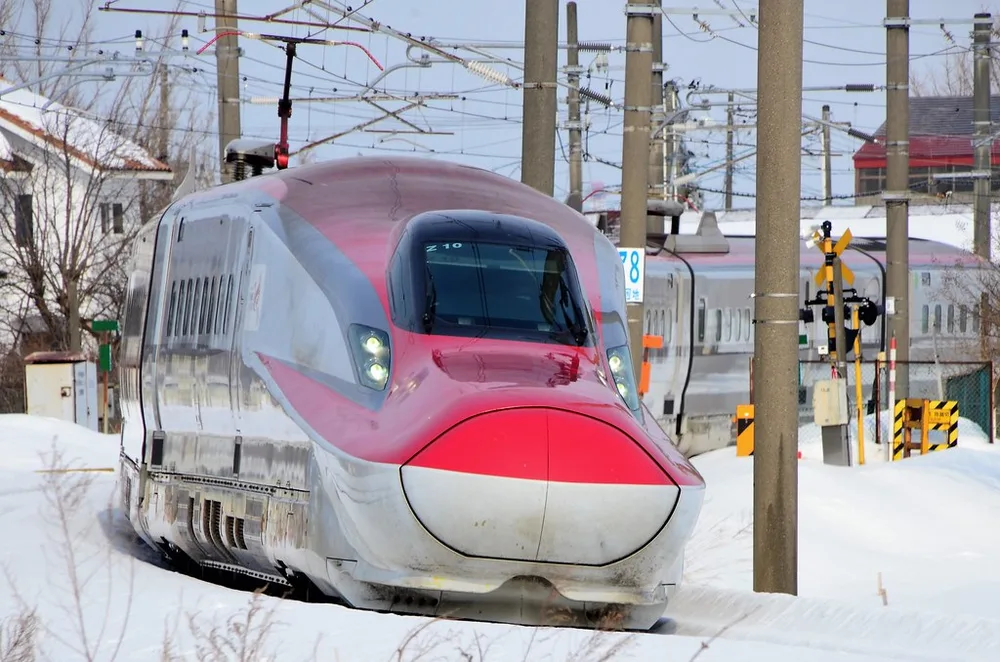
The fastest and most practical route is the Akita Shinkansen Komachi from Tokyo Station. The Komachi departs Tokyo coupled to a Hayabusa train — the two share track as far as Morioka, then separate. The Hayabusa continues north toward Shin-Aomori; the Komachi peels off west onto the Akita Shinkansen line, which runs on conventional (non-dedicated) track through the mountains and Akita countryside at lower speed. That section explains why the overall journey takes roughly 3 hours 45 minutes to 4 hours, not the faster times you see on other Tohoku Shinkansen routes. Kakunodate Station is the stop before Akita City on this line.
Because the Komachi runs on conventional track after Morioka, seat reservations are effectively mandatory — the train is often fully booked weeks in advance during cherry blossom season (late April–early May) and autumn foliage season (late October–mid-November). Reserve seats the moment you know your travel dates. From Tokyo to Kakunodate, the standard one-way fare is approximately 17,000–18,000 yen in 2026, combining the base fare and limited express surcharge. A Green Car (first class) upgrade adds around 5,000 yen on top.
| Origin | Duration | Approx. Fare (2026) |
|---|---|---|
| Tokyo | ~3h 45min–4h | 17,000–18,000 yen |
| Morioka | ~50 min | ~6,000–7,000 yen |
| Akita City | ~45 min | ~5,000–6,000 yen |
The Komachi switches to conventional track west of Morioka, running slower through mountainous Akita terrain. This section explains the ~4-hour journey time from Tokyo, not the faster speeds of other Tohoku Shinkansen routes. The trade-off is that you travel on a single train with no change required.
Both the national Japan Rail Pass and the JR East Tohoku Area Pass cover this route in full. If you plan to travel widely around Japan, the national pass is the better value; if your itinerary is limited to eastern Japan, the Tohoku Area Pass is often cheaper. Either way, you still need a free seat reservation, which you can make at any JR ticket office or through the JR app. Reserve for the specific Komachi train number, not just the date.
If you own a JR Pass, the Tokyo–Kakunodate journey is fully covered (no additional fare), but you must still make a free seat reservation in advance. The Shinkansen is popular during peak seasons, so book your reserved seat as soon as your travel dates are confirmed. This applies whether you hold the national Japan Rail Pass or the JR East Tohoku Area Pass.
An alternative is to fly from Haneda to Akita Airport — about 1 hour in the air — and then take a local train or bus 45 minutes to Kakunodate. This can be cheaper on sale fares, but the combined door-to-door time with airport check-in rarely beats the Shinkansen. There is no direct overnight bus from Tokyo that serves Kakunodate; bus options involve multiple changes and are not recommended for this route.
Pairing Kakunodate with Akita City: The Efficient Loop
Most visitors treat Kakunodate as a stand-alone side trip, but the Komachi line makes combining it with Akita City almost effortless. Kakunodate to Akita City is just 45 minutes by Shinkansen and around 1 hour by local train (cheaper but slower). This means you can spend a full morning in the samurai district, take a midday Komachi to Akita, explore the city in the afternoon, and still catch an evening Shinkansen back to Tokyo — all within a single day if you start early.
Akita City offers a genuinely different experience from Kakunodate. The Akita Museum of Art holds the largest canvas painting in the world (Ikuo Hirayama's 3.65 × 20.5m panorama), and the Neburi Nagashi Kan museum reconstructs the city's famous August lantern festival in vivid detail year-round. The castle park (Senshu Park) is compact and walkable, and the covered shopping arcade downtown has several excellent local izakayas serving Akita specialties that are harder to find in smaller Kakunodate. If you have two nights to spend in the region, night one in Kakunodate and night two in Akita City is a natural sequence that avoids backtracking.
Both Kakunodate and Akita City sit on the same Komachi Shinkansen line, making them natural pairing candidates. A two-night loop (samurai district in Kakunodate, museums and dining in Akita City) efficiently uses the line's design and avoids any backtracking to Tokyo. Travelers often combine these two with a Lake Tazawa stop for a comprehensive Akita Prefecture loop.
Lake Tazawa is another nearby option — also on the same rail line, about 20 minutes from Kakunodate toward Tokyo. Japan's deepest lake (423 meters) sits in a caldera and stays unfrozen even in winter thanks to its depth. The Tatsuko bronze statue stands at the water's edge, and from the lakeside you can book a 30-minute sightseeing boat. Nyuto Onsen, a cluster of mountain hot-spring inns accessible by bus from Tazawako Station, is the best place in the region for a traditional onsen stay. A Lake Tazawa pairs naturally with Kakunodate as a two-destination day.
Best Time to Visit Kakunodate: Seasons & Festivals
Spring is the peak season, and for good reason. The weeping cherry trees in the samurai district were brought from Kyoto by samurai families in the seventeenth century and are now registered as natural monuments. These trees bloom roughly one to two weeks later than Tokyo — typically late April to early May. At the same time, hundreds of Somei Yoshino cherry trees line the Hinokinai Riverbank in a two-kilometre corridor of pale pink. Over a million visitors come for the blossoms each year; book trains and accommodation in Kakunodate by January at the latest for this window.
Autumn is the second-best season and far less crowded. Foliage peaks from late October to mid-November, when the maple and zelkova trees around the samurai houses turn deep red and orange. The contrast of those colours against dark timber gates and white earthen walls is one of the most photogenic scenes in Tohoku. Temperatures sit between 5°C and 15°C — comfortable for walking. Hotel rates are lower than during sakura season, and trains are easier to book.
September brings the Kakunodate Festival, one of the town's most important annual events. Dating back over 350 years, the festival centres on massive wooden floats weighing up to 7 tonnes that are paraded through the streets by teams in traditional dress while performers play drums and flutes. The route passes directly through the merchant quarter. If you visit in early September, check the exact festival dates against the local calendar before booking, as they shift slightly year to year.
Winter offers the most serene experience. Snow blankets the samurai district from December through February, and the visual contrast of white snow against dark cedar gates is striking. Foot traffic drops sharply — you may have entire sections of the district to yourself on a weekday morning. Some smaller houses close or reduce hours, so check with the tourist information centre near the station before visiting in January or February.
Top Things to Do & See in Kakunodate
The the Bukeyashiki Samurai Quarter is the core of any visit. Six residences are open to the public. The Aoyagi House (500 yen) is the largest complex, with multiple buildings, a family museum, a small café, and craft shops spread across a wide compound — budget at least an hour. the Ishiguro House (300 yen) is the most intimate: direct descendants of the samurai family still live on site and often conduct the tours themselves, describing actual family history rather than a scripted narrative. A few other houses — including the Matsumoto, Kawarada, and Iwahashi residences — can be entered for free because the gates simply remain open. Pick up the detailed samurai district map at the tourist information office by the station; the free-entry houses are not always signposted.
The Denshokan Museum (500 yen) sits at the edge of the samurai district and holds the best collection of kabazaiku craftsmanship in town, including live demonstrations when craftspeople are in residence. Nearby, the Ando Jozo Miso building in the merchant quarter is worth a stop — the brick storehouse dates from the nineteenth century and produces soy sauce and miso using century-old recipes. Free tastings are available and the quality is noticeably different from supermarket versions.
For a short hike, the path up to the ruins of Kakunodate Castle on Mount Furushiro takes about 20 minutes from the samurai district. No structure survives, but the hilltop offers a panoramic view of the entire town and the surrounding Akita mountains. During cherry blossom season, the view from the summit looking down at the pink cloud over the town is exceptional. Walk back via the west side of the hill to loop through a quieter residential area most visitors skip.
The Hinokinai Riverbank is best experienced on a bicycle. Rental bikes are available near the station for around 500–700 yen for a half-day. The riverbank path is flat and follows the cherry tree corridor south from the bridge near the tourist office. In any season, this is the most pleasant way to cover distance in the town without rushing. For a full breakdown, see our guide to Things to Do in Kakunodate.
Sample Kakunodate Itineraries: 1-Day & 2-Day Plans
A day trip from Tokyo is feasible but requires an early start. Take the first or second Komachi of the day from Tokyo Station — departures run from around 06:32, with the earliest arrivals in Kakunodate by approximately 10:15. That gives you roughly five to six hours on the ground before you need to catch a return Komachi to arrive back in Tokyo by 22:00. Focus on the samurai district (Ishiguro and Aoyagi Houses), the Denshokan Museum, and the Hinokinai Riverbank. Skip the castle ruins hike unless you're a fast walker. Eat lunch at a local restaurant in the merchant quarter and buy kabazaiku before heading back.
With one overnight stay, the pace relaxes considerably. Arrive in the afternoon, check in, and walk the samurai district in the late-afternoon light when tour groups have thinned. Dinner in town. The following morning, open the day at the Ando Jozo Miso factory before it gets busy (it opens at 09:00), then complete any remaining samurai houses and the castle ruins hike. Afternoon departure gives you time for a stop at Lake Tazawa before continuing to Tokyo if your return is flexible.
A two-night itinerary allows you to combine Kakunodate with Akita City properly. Night one in Kakunodate covers the samurai district thoroughly. Night two in Akita City covers the museum, Senshu Park, and a proper dinner at a downtown izakaya. A morning return Komachi from Akita reaches Tokyo by midday — useful if you have onward travel the same afternoon. This two-city structure avoids retracing steps and uses the Komachi line as it was designed to be used.
Where to Stay in Kakunodate: Accommodation Guide
The accommodation options in Kakunodate are limited but well-chosen. The most convenient base is Hotel Folkloro Kakunodate, a clean, modern hotel situated directly across from the station exit. Rates run roughly 7,000–10,000 yen per person per night. The hotel offers both Western-style and Japanese-style rooms, a laundry facility, and luggage storage — useful if you want to walk to the samurai district with nothing in hand. It is the only full-service hotel in the immediate town centre.
For a more traditional experience, a small number of ryokan operate in and around Kakunodate. These typically include tatami rooms, a futon service, and a set dinner featuring local Akita ingredients. Some offer private baths rather than shared facilities, which is worth specifying when booking. Ryokan rates with two meals tend to run 15,000–25,000 yen per person. During cherry blossom season, these sell out months in advance — book as soon as the sakura forecast is published, usually in January.
If availability in Kakunodate is tight — which it often is during peak periods — Tazawako town (near Lake Tazawa, 20 minutes by train) has additional ryokan options and is a workable alternative base. The Nyuto Onsen ryokan in the mountains above Tazawako are more remote but offer a distinctly different atmosphere for travelers who want an onsen retreat alongside the cultural sightseeing.
Kakunodate Food Guide: What to Eat & Where
Akita Prefecture has one of the most distinctive regional food cultures in Japan. The dish most closely associated with the area is Kiritanpo Nabe — a hot pot built around grilled rice sticks (kiritanpo) cooked with local chicken (hinai-jidori), burdock root, maitake mushrooms, and seri (Japanese parsley) in a chicken stock base. The hinai-jidori chicken is one of Japan's three designated premium chicken breeds, and its flavour in this dish is noticeably richer than standard chicken. Several restaurants in the merchant quarter serve it year-round, though it is most popular from autumn through winter.
Inaniwa Udon is the other Akita staple you should try. These hand-stretched noodles are far thinner and silkier than regular udon — closer in texture to somen — and are typically served cold with a dipping broth or hot in a light dashi. Inaniwa Udon has been produced in Akita for over 350 years and was once presented as tribute to the Edo shogunate. Look for restaurants that specify hand-stretched (te-noboshi) noodles rather than machine-made versions.
For local sweets, morokoshi is the one item specific to the Kakunodate area. Made from refined adzuki bean flour pressed into small moulded shapes, morokoshi has a dry, delicate sweetness that pairs well with green tea. You will find it in confectionery shops in the merchant quarter, often sold in wooden gift boxes. It is one of the few souvenir foods you cannot easily find outside Akita Prefecture. Akita sake is also worth sampling — the cold mountain water and locally grown rice produce sake with a clean, soft character that food writers consistently rank among Japan's finest.
Most restaurants in Kakunodate close by 20:00 and several close on Wednesdays. If you arrive on a late evening Shinkansen, eat at Hotel Folkloro or stock up at the convenience store near the station, as dining options thin out quickly after dark in this small town.
Practical Tips for Visiting Kakunodate
The Tourist Information Centre sits immediately outside the station exit and is open daily. Staff speak basic English and have free maps of both the samurai district and the merchant quarter with all open houses marked. Collect the samurai district walking map here — it identifies the free-entry houses that are not signposted from the street. The centre also posts real-time closure notices for individual houses, which do occasionally close for private events or maintenance.
The samurai district and the Hinokinai Riverbank are both flat and walkable. The distance from the station to the far end of the samurai district is about 15 minutes on foot. Renting a bicycle at the station cuts that to 5 minutes and makes the riverbank path much more enjoyable. Taxis are available at the station rank for the castle ruins trailhead or for visitors with mobility limitations. Note that the path up to the castle site is unpaved and moderately steep — not suitable for wheelchairs or strollers.
English signage in the samurai district is adequate for navigation but thin on historical context. Downloading the official Kakunodate Tourism Guide before your visit gives you background on each house and its family history, which significantly enriches the walking tour. Cash is the primary payment method at most small shops and the free-entry houses do not have payment facilities at all. The ATM inside the post office near the station accepts international cards.
During cherry blossom peak, pedestrian traffic on the samurai district avenue can become dense by 10:00. Arriving before 09:00 — which is possible from a local Kakunodate base but not from a Tokyo day trip — gives you an hour of near-empty streets before the tour buses arrive. Similarly, the riverbank is most beautiful in early morning light. If you are doing a day trip, the trade-off between early Shinkansen departure and crowd avoidance is a real one to consider.
Is Kakunodate Worth Visiting? Final Thoughts
Kakunodate is one of the few places in Japan where samurai-era urban planning remains genuinely intact rather than reconstructed. The experience of walking the Buke Yashiki in early morning light — before tour groups arrive, with the weeping cherry branches still or the snow muffling everything — is not reproducible anywhere else in Tohoku. The town is small enough to cover thoroughly in a single day, but rewarding enough to justify an overnight stay if your schedule allows.
The Komachi Shinkansen makes the logistics straightforward. Tokyo to Kakunodate is a single train with no transfer required; Kakunodate to Akita City is 45 minutes further on the same line. If you are already planning Tohoku travel, building a Kakunodate–Lake Tazawa–Akita City loop into your itinerary adds three distinct experiences with minimal backtracking. If you are coming specifically from Tokyo for the cherry blossoms, book early — this is serious: accommodation sells out before the bloom dates are even confirmed.
Frequently Asked Questions
How long does it take to get to Kakunodate from Tokyo?
The Shinkansen (bullet train) journey from Tokyo to Kakunodate typically takes about 3 to 4 hours. The Akita Shinkansen Komachi offers direct service. Travel times can vary slightly based on the specific train schedule and any potential transfers at Morioka Station.
What is the best way to travel from Tokyo to Kakunodate?
The best way to travel from Tokyo to Kakunodate is by taking the Akita Shinkansen (Komachi train) from Tokyo Station. This direct route is the fastest and most convenient option. It offers a comfortable ride with scenic views.
Is the JR Pass valid for Kakunodate from Tokyo?
Yes, the Japan Rail Pass is valid for the Shinkansen journey from Tokyo to Kakunodate. The JR East Pass (Tohoku Area) also covers this route. Remember to make seat reservations, especially for the Komachi train, as it can get busy.
What are the must-see attractions in Kakunodate?
Must-see attractions in Kakunodate include the historic Samurai District (Buke Yashiki) with houses like Ishiguro and Aoyagi. The Hinokinai Riverbank is famous for its cherry blossoms. Exploring local Kabazaiku cherry bark craft shops is also highly recommended for unique souvenirs.
Can you do a day trip to Kakunodate from Tokyo?
Yes, a day trip to Kakunodate from Tokyo is entirely possible, though it makes for a long day. An early start on the Shinkansen allows ample time to explore the samurai district and riverbank. Many travelers choose this option for a quick cultural immersion.
Kakunodate truly stands as a captivating destination, offering a genuine glimpse into Japan's samurai past. Its stunning natural beauty, rich history, and delicious local cuisine create an unforgettable experience. Planning your trip from Tokyo is straightforward with efficient Shinkansen connections. Embark on this journey to discover the charm of Japan's 'Little Kyoto.'
The same line continues to Akita city; many travelers arrive via the Tohoku hub of Sendai.
Free: The Tokyo Essentials guide
Top things to do, where to stay, a perfect day plan, getting around, and the best time to go — a Tokyo mini-guide you can take offline.
You might also like


Continue reading
More guides you'll find useful


