Getting to Akita from Tokyo: Shinkansen & JR Pass Guide
Tokyo to Akita takes about 3h45m by Shinkansen (Komachi), or take an overnight bus to cut the fare by more than half — full fares, routes and JR Pass tips inside.
On this page
Getting from Tokyo to Akita is straightforward once you know your options. The Akita Shinkansen (Komachi) is the go-to for most travelers — it runs directly from Tokyo Station and reaches Akita in around 3 hours 45 minutes to 4 hours. Budget travelers have a genuine alternative in overnight buses, which cut the fare by more than half. Flights exist but add airport transfer time that largely cancels out the speed advantage. This guide covers every route, real costs for 2026, and the practical booking details you need before you go.
Quick answer: The Komachi Shinkansen departs Tokyo Station roughly every hour, costs about ¥17,000 (~$115) one-way for a reserved seat, and is fully covered by the Japan Rail Pass. Overnight buses run ¥5,000–¥9,000 (~$35–$60) and take 8–10 hours. Flights from Haneda to Akita Airport run ¥10,000–¥25,000 (~$70–$170) but require a 30–40 minute bus transfer to Akita City on the far end.
Overview: Getting to Akita from Tokyo
Akita Prefecture sits in the northern Tohoku region, roughly 670 kilometres from Tokyo. Three transport options exist: the Shinkansen, domestic flights, and overnight highway buses. Each suits a different type of traveler. Speed-first travelers pick the Shinkansen; budget-first travelers pick the bus; those on short timelines with flexible airport logistics might consider flying.
Here is a quick comparison for 2026 based on typical fares and schedules. All prices are one-way and are subject to demand and seasonal fluctuation — check JR East or airline sites before booking.
- Akita Shinkansen (Komachi): ~3 h 45 min to 4 h from Tokyo Station. Reserved seat ¥17,000 (~$115). Covered by JR Pass. Departs roughly every hour from early morning to evening.
- Domestic flight: ~1 h flight time from Haneda (HND) to Akita Airport (AXT), plus 30–40 min bus to Akita Station. Total door-to-door: 3–4 h. Fares ¥10,000–¥25,000 (~$70–$170) depending on advance purchase and airline.
- Overnight bus: 8–10 h from Tokyo Station area (Shinjuku or Tokyo highways). Fares ¥5,000–¥9,000 (~$35–$60). Saves one night of accommodation but requires tolerance for limited sleep.
For most first-time visitors, the Komachi Shinkansen wins. It deposits you in central Akita, requires no airport transfers, and is convenient enough that you can book same-week without worrying about sold-out flights. The sections below go deeper on each option.
Akita Shinkansen: Your Primary Option
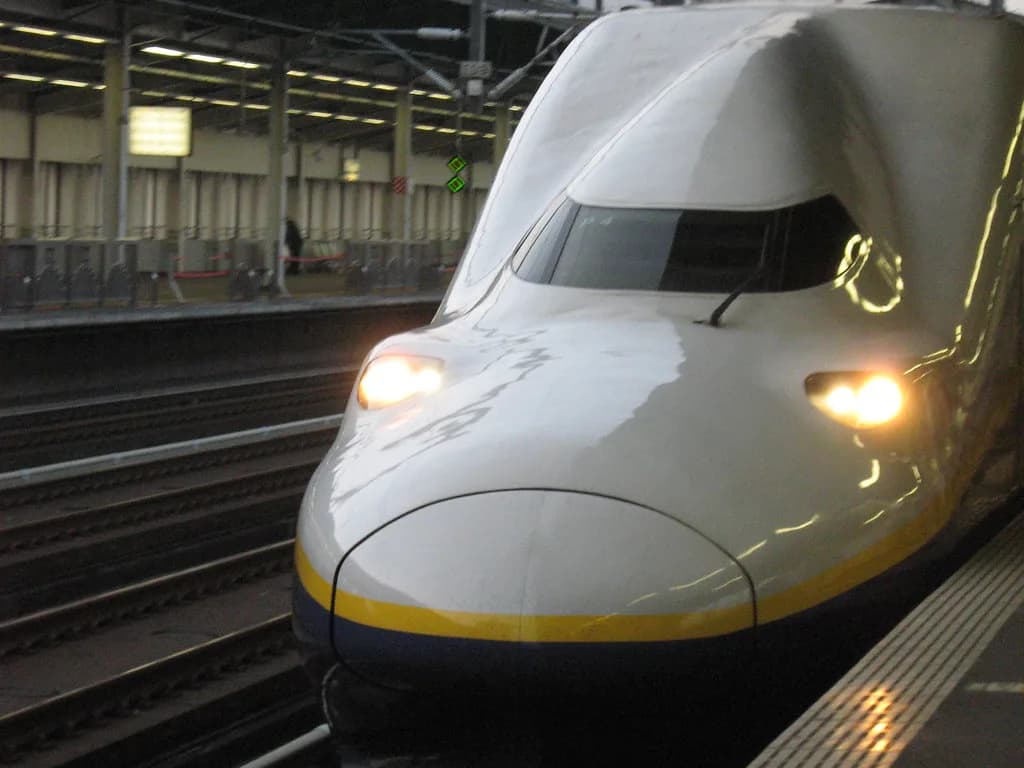
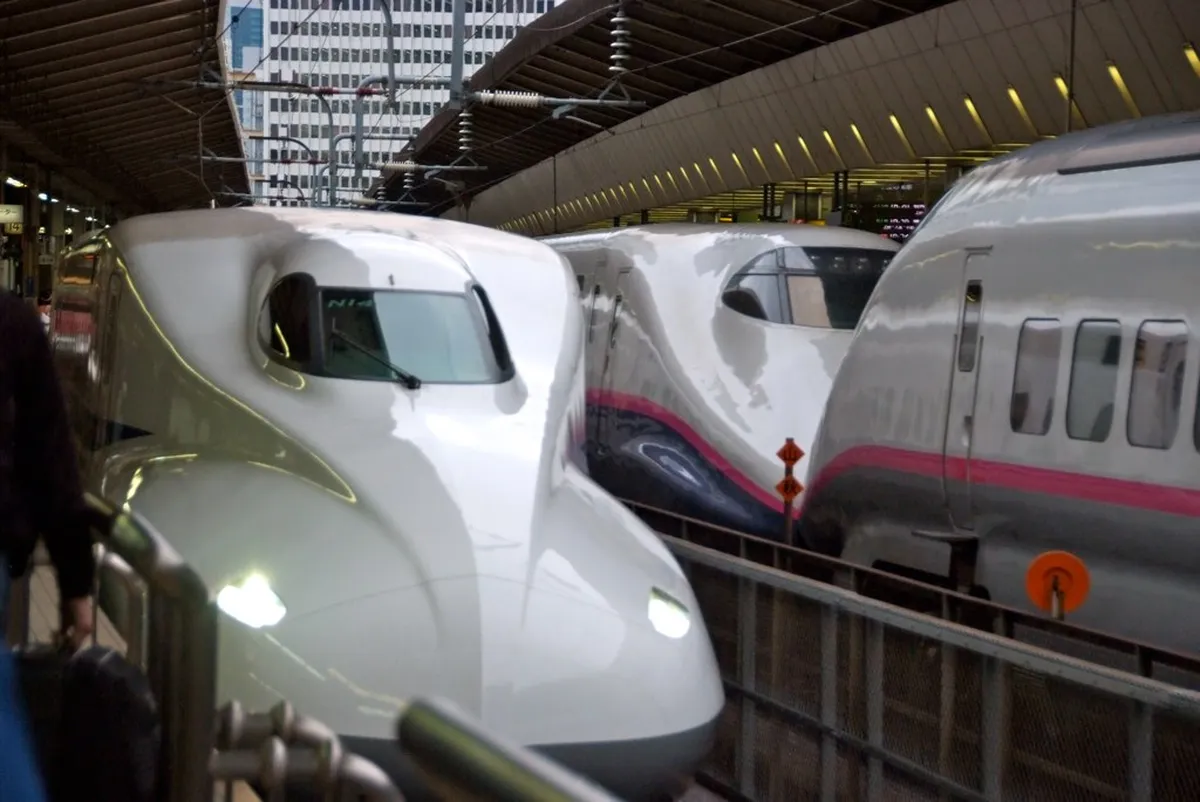
The Komachi Shinkansen runs the full distance from Tokyo Station to Akita Station without requiring any transfer. Between Tokyo and Morioka, the Komachi is physically coupled to the Hayabusa Shinkansen — both trains travel together as one long formation at up to 300 km/h. At Morioka, the two trains separate. The Hayabusa continues north toward Hakodate on Hokkaido; the Komachi branches west toward Akita on dedicated standard-gauge tracks at a reduced maximum of 130 km/h.
This slower Morioka–Akita leg — roughly 2 hours of the total journey — is what makes the Akita Shinkansen genuinely different from the pure bullet trains on the Tokaido or Sanyo lines. The trains are smaller E6 series sets designed to fit narrower regional tracks. This "mini-shinkansen" design allows the service to stop directly in Kakunodate and Tazawako, towns that could never support a full-size Shinkansen platform. You trade a little speed for a lot of convenience.
One detail that surprises many first-timers: the Komachi reverses direction at Omagari. The track layout means the train must change orientation before continuing into Akita Station. The E6 seats swivel 180 degrees automatically at this point, so you stay facing forward throughout the journey. There is nothing you need to do — the seats rotate on their own. It is a neat mechanical quirk worth knowing so it does not catch you off guard.
The Komachi's E6 train cars couple to the Hayabusa Shinkansen from Tokyo to Morioka, traveling as one physical formation at up to 300 km/h. At Morioka, the two trains separate automatically — no action needed on your part. The Komachi then branches west on a narrower-gauge track at a reduced speed of 130 km/h, which is why you stop in regional towns like Kakunodate and Tazawako that full-size Shinkansen cannot serve.
All seats on the Komachi are reserved. You cannot board with a free-seating or unreserved ticket. Make your seat reservation before arriving at the platform. During the Akita Kanto Festival in August or cherry blossom season in late April, trains fill up quickly — reserve at least a week in advance during those periods.
Akita Shinkansen Stations and Key Stops
The Akita Shinkansen shares the Tohoku Shinkansen corridor from Tokyo through Morioka, calling at Ueno, Omiya, Sendai, and Morioka. Not every Komachi train stops at every intermediate station on the Tohoku section, so confirm your specific service's stopping pattern before boarding — the JR East website lists each train's stops clearly.
After Morioka, the Komachi-only stops are: Shizukuishi, Tazawako, Kakunodate, Omagari, and finally Akita. Two of these are worth flagging for travelers planning more than a direct run to Akita City. Tazawako is the nearest Shinkansen-accessible stop to Lake Tazawa, one of Japan's deepest and most scenic lakes. Kakunodate is a historic samurai district town with exceptionally well-preserved black-walled samurai residences and weeping cherry trees that draw large crowds every spring. Many travelers treat Kakunodate as a half-day stop on the way into or out of Akita City — the local Tazawako Line connects back to Akita Station in about 45 minutes. For a broader Akita Itinerary Ideas, building in a Kakunodate stop adds real depth without much extra effort.
Akita Station itself is the line's terminus and is well connected to local buses, taxis, and bicycle rental points. The station building has a small shopping area, coin lockers in several sizes, and tourist information with English-language maps. Senshu Park Guide, the main green space in the city center, is a 10-minute walk from the station's east exit.
Using the Japan Rail Pass for Akita Travel
The Japan Rail Pass covers the entire Tokyo–Akita Komachi journey with no surcharge. You travel on the same reserved seats as ticket-buying passengers — the only difference is that you visit the JR ticket office (Midori-no-Madoguchi) to obtain a physical seat reservation slip rather than paying for a separate ticket. Present your activated pass and request the Komachi service for your travel date. Reservations are free for pass holders.
Whether the JR Pass pays off for an Akita trip depends on your wider itinerary. A round-trip Tokyo–Akita on the Shinkansen costs approximately ¥34,000 (~$230). A 7-day JR Pass currently costs around ¥50,000 (~$340). If you are only making the Akita round-trip, individual tickets are cheaper. If you are also visiting Sendai, Morioka, or the broader Tohoku region — or adding Kyoto, Hiroshima, or Hokkaido to your Japan trip — the pass pays for itself rapidly.
One practical note: activate your JR Pass at a major JR station before your travel day, not on the day you want to board the Komachi. Activation takes 10–20 minutes at a ticket office, and you may need to queue. If you plan to catch an early morning Komachi on day one, activate the pass the afternoon before. Also note that the JR East Pass (Tohoku area) is a cheaper regional alternative if your trip stays within Tohoku — it covers the Komachi and costs less than the nationwide pass.
Book your Komachi seat reservation in advance during peak seasons (cherry blossom late April, Kanto Festival early August) — trains sell out weeks ahead. During these periods, use the online JR East reservation system or a ticket office to secure your car and seat before arrival. Outside festival periods, you can usually book 1–2 weeks ahead without supply pressure. Early morning departures (before 07:00) are your best bet for same-week booking if you are traveling last-minute.
Alternative Ways to Get to Akita (Flights, Buses)
Flights from Haneda Airport (HND) to Akita Airport (AXT) are operated by JAL and ANA with several departures daily. The flight itself takes about 1 hour. The practical catch is the airport transfer at the Akita end: a limousine bus runs from Akita Airport to Akita Station in roughly 35 minutes and costs ¥950 (~$6.50). Factor in check-in time at Haneda and that bus ride, and the total journey time approaches 3–4 hours — competitive with the Shinkansen only if you manage to book a cheap early-morning flight and travel with carry-on only. Flights from Narita (NRT) also exist but add significant Tokyo-side transfer time and are rarely the best choice.
Overnight buses are operated by several companies including Akita Chuokotsu, with departures from Shinjuku Highway Bus Terminal and the Tokyo Station Yaesu south exit. Journey time is 8–10 hours, typically arriving in Akita around 05:30–07:00. Tickets run ¥5,000–¥9,000 depending on the service grade — standard reclining seats at the lower end, 3-row wide-seat buses with more legroom and a privacy curtain at the higher end. The bus is genuinely viable if you are traveling light, don't mind a disrupted night of sleep, and want to save the cost of one hotel night. It is not a good choice if you have large suitcases or are traveling with young children.
Cost Comparison: Shinkansen vs. Other Transport
Here is a realistic cost breakdown for a one-way trip from Tokyo to Akita in 2026. These figures assume a standard adult fare without any advance-purchase discounts beyond what is listed.
- Komachi Shinkansen reserved seat: ¥17,070 (~$115). Fixed price — no early-bird discounts on standard reserved seats. JR Pass holders pay ¥0 (pass cost aside).
- Domestic flight (JAL/ANA): ¥10,000–¥25,000 (~$70–$170). Cheapest fares require booking 3+ weeks ahead and accepting restrictive cancellation terms. Add ¥950 (~$6.50) for the airport bus to Akita Station.
- Overnight bus: ¥5,000–¥9,000 (~$35–$60). No supplement for luggage, but bags go in the hold — not overhead racks.
| Transport Mode | Duration (Door-to-Door) | One-Way Fare (2026) | Best For |
|---|---|---|---|
| Komachi Shinkansen | ~3h 45–4h | ¥17,070 (~$115) | JR Pass covers | Speed, comfort, central arrival, regional connections |
| Domestic Flight (JAL/ANA) | ~3–4h (includes airport transfer) | ¥10,000–¥25,000 (~$70–$170) + ¥950 bus | Last-minute travel, early-morning departures from Haneda |
| Overnight Bus | 8–10h | ¥5,000–¥9,000 (~$35–$60) | Budget travelers, saving accommodation, flexible schedule |
Hidden costs matter here. If you fly, add the Akita Airport bus fare. If you take the overnight bus, factor in the cost of coffee or a morning meal on arrival (most buses deposit you before local restaurants open). If you use a JR Pass, the pass cost itself is the relevant number, not the per-ride fare — do not count the Akita Shinkansen as "free" if it's the only long-distance train you take.
The Shinkansen is rarely the cheapest option outright, but it offers the best combination of total door-to-door time, reliability, and central station arrival. For travelers combining Akita with Sendai or Morioka, the incremental cost of the Shinkansen versus a flight is smaller once you account for the extra routing flexibility the rail network provides.
Booking Tickets and Navigating Your Journey
You can buy Komachi Shinkansen tickets through several channels. In person, JR ticket offices (Midori-no-Madoguchi) at major stations are the most reliable — staff speak enough English to process a Tokyo–Akita booking, and you can pay by credit card. Automated vending machines at larger stations also handle Shinkansen tickets and have English-language menus. Online, the JR East Shinkansen reservation system at tickets.jr-odekake.net accepts international credit cards and lets you pick your car and seat on a visual seat map before confirming — the ticket can then be collected from any JR ticket machine.
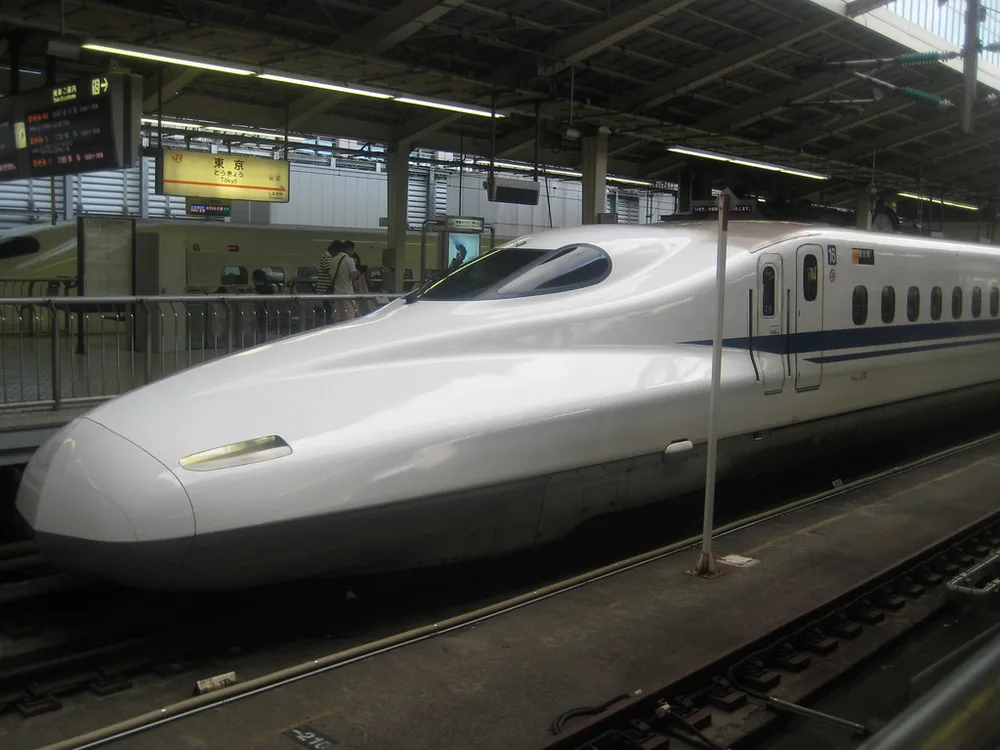
At Tokyo Station, the Shinkansen gates are separate from the regular JR lines and are located at the north and south ends of the main concourse. Follow overhead signs for "Shinkansen" rather than "JR Lines." Allow at least 20 minutes before departure to clear the gates and find your platform. The Komachi departs from platforms 20–23 on the Tohoku/Hokkaido Shinkansen tracks. Your ticket or seat reservation slip will show the platform and car number. Stand in the numbered waiting box marked on the platform floor — they correspond precisely to where your car door will stop.
If you have a JR Pass, do not try to insert it into the automated ticket gates. Use the staffed gate and show the pass to the attendant along with your seat reservation slip. This is also how you exit at Akita Station. The process takes seconds once you know the flow.
Where to Stay in Akita
Akita's hotel stock is modest compared to larger Japanese cities. Most visitors stay near Akita Station, which puts you within walking distance of the Senshu Park and the main downtown dining strip along Kawabata-dori. Options range from standard business hotels (APA, Dormy Inn, Daiwa Roynet) to a handful of mid-range properties. Rates for a standard room typically run ¥8,000–¥15,000 per night outside festival periods.
If you are visiting during the Kanto Matsuri in August, book accommodation at least six months in advance. Hotels near Akita Station sell out months ahead, and prices spike significantly. Some visitors opt to stay in Morioka and take a day trip into Akita for the festival — a viable workaround that keeps accommodation costs lower, though it means a late-night Shinkansen back.
Travelers planning to visit Kakunodate or Nyuto Onsen should consider whether to base themselves in Akita City or further afield. For Kakunodate, Hotel Folkloro Kakunodate is the most convenient in-town option and books out during cherry blossom season (late April). For the Nyuto Onsen area, Tsuru-no-yu is the most famous ryokan but is consistently sold out months in advance — check the official booking page for last-minute cancellations rather than third-party sites. Staying inside the onsen village rather than commuting from Akita City dramatically improves the atmosphere. For ideas on what to do once you arrive, our guide to Things to Do in Akita covers the key sites across the prefecture.
How to Divide Your Time in Akita
Akita rewards spreading your time across the city and the prefecture rather than staying anchored in the capital. A reasonable 3-day structure: one day in Akita City, one day in Kakunodate, and one day on the Oga Peninsula. This covers the main cultural layers — urban, historical, and coastal/folkloric — without requiring a rental car, though a car opens up the peninsula significantly.
In Akita City, Senshu Park Guide is the most obvious first stop, particularly in spring when the castle grounds fill with cherry blossoms. The Akita Museum of Art nearby holds a permanent collection including Fujita Tsuguharu's monumental canvas "Story of Akita," worth seeing even if you are not a dedicated museum visitor. The the Akita Kanto Matsuri runs for four evenings in early August and features performers balancing 12-metre bamboo poles hung with dozens of glowing paper lanterns — it is one of the Tohoku region's most visually striking summer festivals and worth planning a trip around.
For food, local specialities include Kiritanpo Nabe (hot pot made with pounded rice sticks and chicken broth), Inaniwa Udon (thin, silky noodles traditionally made by hand), and Shottsuru (a fermented fish sauce used in local cooking). Several izakayas around Kawabata-dori serve all three in the same evening. Read more about what to eat in our Akita food guide.
Is Akita Worth Visiting?
Akita is genuinely worth visiting, though it rewards travelers who do a little research rather than those who show up expecting a polished tourist circuit. The prefecture lacks the famous sites of Kyoto or the dramatic scenery of Hokkaido, but it has a concentrated cluster of experiences that work well together: Kakunodate's samurai architecture, Lake Tazawa's blue-green depths, Nyuto Onsen's rustic hot springs, the Oga Peninsula's coastal scenery and Namahage culture, and the Kanto Matsuri festival in the city itself.
What makes Akita stand out in 2026 is precisely its lower tourism density relative to the quality of its attractions. You can walk the samurai lanes of Kakunodate on a Tuesday in October with almost no other foreign tourists. Tsuru-no-yu onsen sits in a forest clearing that looks unchanged from a century ago. These experiences are available in Kyoto in theory but buried under crowds in practice. Akita's crowd levels are one of its best features for travelers who have already seen Japan's headline destinations.
The honest caveat: Akita City itself is a practical base more than a destination. Its attractions — Senshu Park, the Akita Museum of Art, the Akita Dog Visitor Center in Odate — are worthwhile but not world-class on their own. The prefecture's real draw lies outside the city. Budget at least three days to make the journey worthwhile, and combine Akita with at least one prefecture stop on the Tohoku Shinkansen — Sendai, Morioka, or Aomori — for a complete northern Japan trip. For full planning, see our comprehensive Akita itinerary guide.
Seasonal Considerations for Visiting Akita
Spring (late April to early May) is the most popular time to visit, driven by cherry blossoms in Kakunodate. The weeping cherry trees lining the samurai district's main street are among the most photographed in Tohoku. Crowds are real during Golden Week (late April to early May) — Shinkansen seats and accommodation book out weeks ahead. Outside Golden Week, late April is manageable.
Summer (July to August) brings the Kanto Matsuri in early August, Akita's biggest annual event. Temperatures in Akita City reach 28–32°C in August. Outside festival time, summer is good for hiking around Lake Tazawa and exploring the Oga Peninsula's coastal roads. Book the festival period far in advance — hotels near the venue sell out six months or more ahead.
Autumn (September to November) is arguably the best time for first-timers. Foliage peaks around Lake Tazawa and Nyuto Onsen in mid-to-late October. Crowds are lighter than spring, prices are stable, and the weather is cool and dry. Winter (December to March) transforms the prefecture — Nyuto Onsen in snow is extraordinary, and the Yokote Kamakura Festival in February builds snow lantern huts across the town. Winter travel requires checking Shinkansen schedules for any weather-related delays, though the Komachi's track record in snow is generally strong. For full seasonal planning, check our When to Visit Akita guide.
Connecting Akita to Your Wider Japan Itinerary
Akita sits at the western end of the Tohoku Shinkansen network, making it natural to combine with other northern stops. A typical Tohoku loop from Tokyo: take the Hayabusa to Morioka (about 2 h 20 min), spend a day in Morioka for its wanko soba and castle ruins, then board the Komachi west to Akita. From Akita, local express trains connect north to Aomori in about 2 hours on the Ōu Main Line — Hirosaki Castle and Lake Towada are both accessible from Aomori. Return to Tokyo via the Tohoku Shinkansen from Aomori or Morioka. This loop works well as a 6–8 day Tohoku itinerary.
If you are combining Akita with a standard Japan trip (Tokyo–Kyoto–Osaka), add Akita as a northern extension before or after the main route. Take the Shinkansen north at the start of your trip when energy is high, then work your way south. The JR East Pass (Tohoku area) covers the Komachi and connections within the region at a lower price than the national JR Pass — viable if your southern journey does not include Shin-Osaka or beyond. Regional pass details and validity zones are listed on the JR East official site. For more on building your northern Japan trip, the Japan travel blog has destination-specific guides for the major Tohoku stops.
Frequently Asked Questions
What is the fastest way to get to Akita from Tokyo?
The Akita Shinkansen (Komachi) is the fastest way, taking approximately 3 hours 45 minutes directly from Tokyo Station. This high-speed train offers comfort and efficiency for your journey. All seats require a reservation.
Can I use the Japan Rail Pass on the Akita Shinkansen?
Yes, the Japan Rail Pass covers the Akita Shinkansen (Komachi service), but you must make a seat reservation. Head to a JR ticket office to secure your reserved seat before boarding. The pass offers great value for extensive train travel.
How long does the Shinkansen take from Tokyo to Akita?
The Komachi Shinkansen typically takes about 3 hours and 45 minutes to travel from Tokyo Station to Akita Station. This duration includes stops at major stations along the route. It is a direct and comfortable ride.
What are the main stations on the Akita Shinkansen line?
Key stations on the Akita Shinkansen route include Tokyo, Ueno, Omiya, Sendai, and Morioka. After Morioka, the Komachi branches off, stopping at Shizukuishi, Tazawako, Kakunodate, and Omagari before reaching Akita Station.
What's the cheapest way to travel to Akita from Tokyo?
The cheapest way to travel from Tokyo to Akita is by overnight bus, with tickets ranging from ¥5,000-¥9,000 / ~$35-$60. This option takes 8-10 hours, making it significantly longer than the Shinkansen or flights.
Traveling from Tokyo to Akita offers various options, but the Akita Shinkansen (Komachi) stands out for its speed and comfort. Whether you prioritize efficiency, budget, or scenery, Japan's excellent transport network has you covered. Planning ahead ensures a smooth and enjoyable journey. Remember to consider your overall itinerary, especially if using a Japan Rail Pass. Akita awaits with its unique charm, from historic samurai districts to delicious local cuisine. Your adventure to this beautiful Tohoku prefecture is just a train ride away.
By following this guide, you are well-equipped to choose the best transport method for your needs. Enjoy the stunning landscapes and rich culture that Akita has to offer. Safe travels on your journey to northern Japan.
For trip-planning details, see the Akita Shinkansen on Wikipedia.
The same Komachi Shinkansen also serves Kakunodate, and connects through the Tohoku gateway of Sendai.
Free: The Tokyo Essentials guide
Top things to do, where to stay, a perfect day plan, getting around, and the best time to go — a Tokyo mini-guide you can take offline.
You might also like


Continue reading
More guides you'll find useful