

Best Time To Visit Akita: Your Seasonal Travel Guide
Plan your best time to visit Akita with top seasonal picks, weather insights, and practical tips for an unforgettable Japan trip.
On this page
Akita sits in the tightest corner of northeastern Japan, and most foreign visitors never make it here. That is a mistake. The prefecture delivers some of the country's most distinctive seasonal experiences: one of Japan's great summer lantern festivals, weeping cherry trees along a samurai-era streetscape, milky-blue onsen water healing cracked winter skin, and autumn foliage that lights up mountain valleys with almost no crowds. Choosing the best time to visit Akita depends entirely on which of these you want most.
For most travelers, late April through early May and mid-September through October represent the sweet spots. The weather is agreeable, transport runs smoothly, and the major seasonal draws are at their peak. But every season has a genuine case, including winter, which rewards visitors willing to dress for it. This guide breaks down the calendar honestly so you can match Akita to your trip, not the other way around.
Akita's Seasons at a Glance
Akita experiences four sharply distinct seasons. Summer is warm and humid, with peak temperatures around 28–30°C in August. Winters are severe — the region is part of Japan's yukiguni (snow country), and Akita City regularly records more than 100 cm of snowfall over the season. Spring and autumn are the shoulder seasons: mild, manageable, and increasingly popular with travelers who have already done Kyoto and Tokyo.
| Season | Temperature | Crowds | Prices | Key Events |
|---|---|---|---|---|
| Spring (Apr–May) | 10–20°C | Moderate; high Golden Week | Moderate–High | Kakunodate cherry blossoms, Senshu Park sakura |
| Summer (Jun–Aug) | 22–30°C | High in early August | High (Kanto week) | Akita Kanto Festival (3–6 Aug), summer fireworks |
| Autumn (Sep–Nov) | 12–23°C | Moderate | Moderate | Fall foliage, harvest festivals, sake brewery tours |
| Winter (Dec–Feb) | −5–5°C | Low (except ski resorts) | Low–Moderate | Namahage Sedo Festival (Feb), Yokote Kamakura (Feb) |
The table above is a starting point, not a verdict. Read each season section below before booking. The "crowds are low in winter" row, for instance, conceals the fact that Tsuru-no-yu Onsen — Akita's most celebrated hot spring — is consistently fully booked months in advance regardless of season.
Spring in Akita (March–May): Cherry Blossoms and Samurai Districts
Late April is arguably Akita's finest window. The shidarezakura — weeping cherry trees — bloom along Kakunodate's preserved samurai streetscape, creating one of the most photographed scenes in the Tohoku region. Temperatures sit around 10–18°C, comfortable for long walks without the humidity of summer. Senshu Park Guide in Akita City is also worth visiting at this time: the ruins of Kubota Castle are ringed with cherry trees, and the park fills with local families for hanami picnics.
Golden Week (late April through early May) is the complication. This national holiday cluster brings domestic tourists in volume. Hotels in Kakunodate sell out weeks in advance and prices spike. If you want the cherry blossoms without the chaos, aim for the last week of April before May 3. Kakunodate's peak bloom usually falls around April 25–May 5, though the exact dates shift by five to ten days depending on the winter that precedes them. Check the Japan Meteorological Corporation's forecast before you commit to dates.
Book Kakunodate ryokans at least 6–8 weeks in advance if visiting during cherry blossom season (late April). The samurai district only has a handful of small hotels, and they sell out almost immediately once rooms open for direct booking. Waiting for OTA availability often means zero options at any price point.
March is technically spring but Akita does not behave like it. Snow remains on the ground in most years through mid-March, and temperatures rarely climb above 8°C. The upside: accommodation is cheap and the prefecture is genuinely uncrowded. Early June extends the spring-like mood — fresh greenery, cool air, no humidity yet — and is one of the best-value times to visit.
Summer in Akita (June–August): Festivals, Beaches, and the Kanto
The the Akita Kanto Matsuri runs from 3–6 August each year and is the reason many visitors plan their trip around summer. Performers balance bamboo poles up to 12 metres long, hung with up to 46 paper lanterns, on their foreheads, shoulders, hips, and lower backs. The evening parade down Kanto Odori draws tens of thousands of spectators. It is genuinely spectacular and unlike any other festival in Japan.
Book your accommodation for Kanto week as early as possible — ideally 10 to 12 months before the festival. The supply of hotel rooms in Akita City is thin for a prefectural capital, and this is the single period when every room fills. Budget travelers who cannot book that far out sometimes base themselves in Morioka (about 75 minutes by Shinkansen) and commute in for the evening parade. The Akita Tourism Support Center Website at akitafan.com publishes annual event schedules and can help with logistics.
During the Kanto Festival (August 3–6), every hotel room in Akita City fills months in advance and rates double from standard prices. Start booking 10–12 months ahead or plan to stay in Morioka and take the Shinkansen in for the evening parade—a scenic 75-minute ride.
Outside Kanto week, June and July offer lush green mountain scenery, moderate crowds, and lower prices. Japan's rainy season (tsuyu) touches Akita from mid-June into mid-July, bringing overcast skies and occasional heavy downpours. It does not make outdoor exploration impossible, but pack a compact rain jacket. The Oga Peninsula is excellent in summer for scenic coastal drives; the rugged cliffs and fishing villages look their best against summer blue skies. A day trip to the Oga Peninsula pairs well with a visit to the Namahage Museum.
Autumn in Akita (September–November): Foliage, Rice Harvest, and Sake
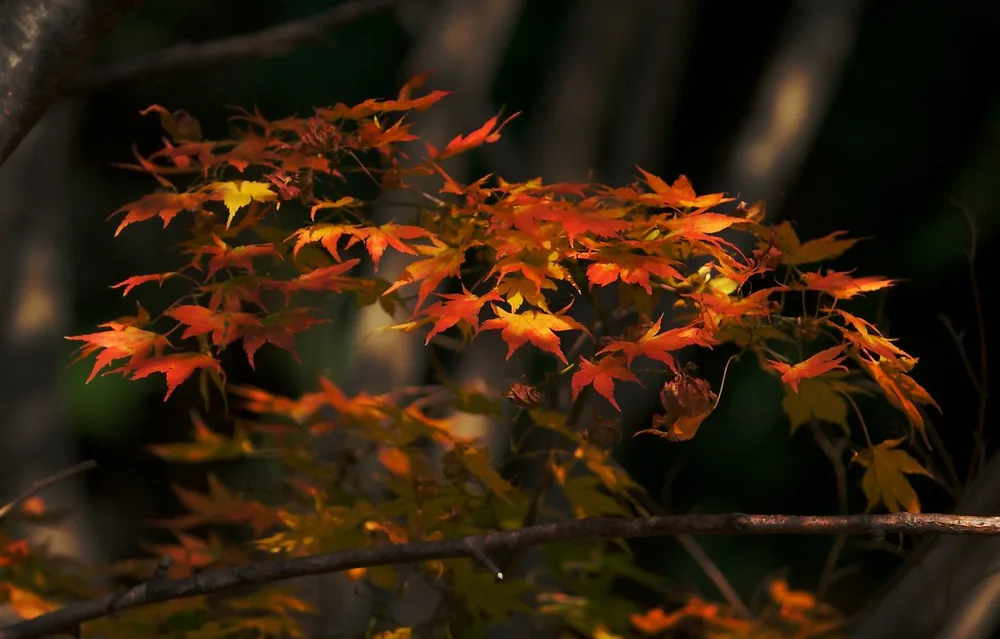
September through October is the other peak window and, for many independent travelers, the better choice. Temperatures drop to a comfortable 12–23°C, the humidity breaks, and the mountainous interior of Akita turns red and gold. Peak foliage in the Towada-Hachimantai National Park area typically falls in mid-October, running slightly later than in Nikko or Nikkō-adjacent Tohoku destinations to the south. Kakunodate in autumn shows a different face from spring: the same preserved streetscape framed by crimson maple leaves instead of pink blossoms.
October also coincides with the rice harvest. Akita is Japan's most celebrated rice-producing prefecture — Akita Komachi rice is sold as a premium brand across the country — and the harvest season brings local food festivals and open brewery events. Several sake breweries in Akita City and the surrounding towns offer tours and tastings from October through November as the new-season brewing cycle begins. This is a low-key but genuinely rewarding side of the prefecture that most visitors miss entirely. Local cuisine like kiritanpo hotpot is best eaten fresh in autumn when the new rice comes in.
| Season | Weather Highlights | Main Attractions | Best For |
|---|---|---|---|
| Spring (April–May) | 10–20°C, mild mornings and cool evenings | Kakunodate cherry blossoms, Senshu Park sakura festival, mountain hiking awakens | Photography, nature walks, first-time visitors |
| Summer (June–August) | 22–30°C, humid June–July, warm August | Akita Kanto Festival (Aug 3–6), Oga Peninsula coastal drives, summer fireworks | Festival culture, coastal scenery, adventure seekers |
| Autumn (September–October) | 12–23°C, crisp mornings, clear skies | Towada-Hachimantai foliage, sake brewery tours, Kakunodate fall colors, rice harvest | Photographers, food travelers, solo explorers |
| Winter (December–February) | −5–5°C, heavy snow 100–120 cm | Namahage Sedo Festival (Feb), Yokote Kamakura (Feb), Tazawako ski resort, onsen culture | Winter sports, festival lovers, hot-spring seekers |
Crowds are moderate in autumn. Foliage weekends in mid-October can be busy at well-known viewpoints, but nothing like Golden Week or Kanto week in scale. Prices are generally reasonable. Book a week or more ahead for popular onsen ryokans — they fill on weekends even outside the peak months.
Winter in Akita (December–February): Snow, Onsen, and Namahage
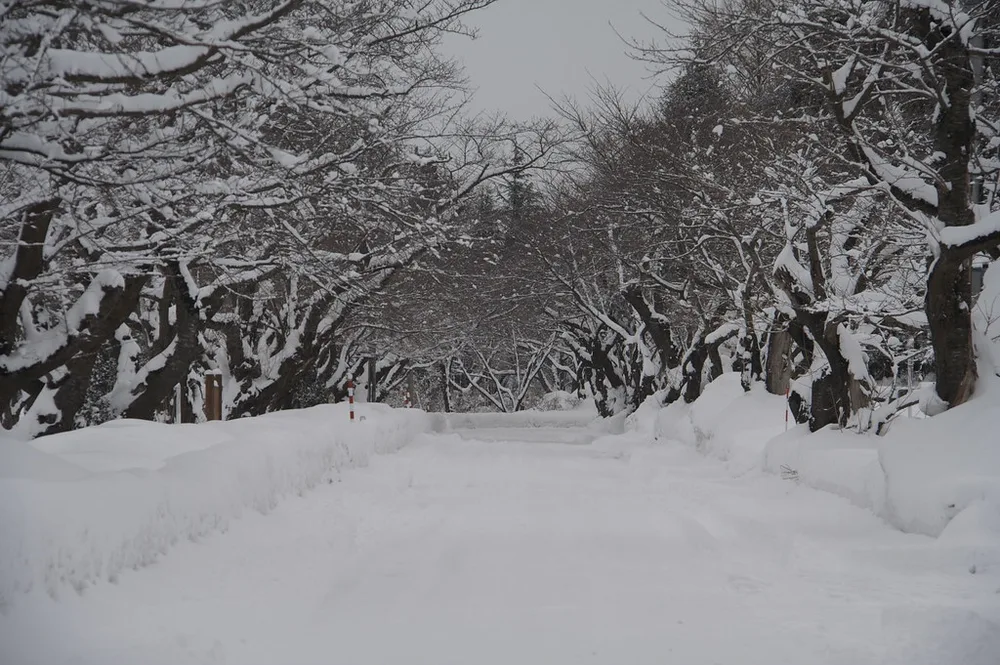
Akita winters are genuinely cold and genuinely snowy. Temperatures average −2–3°C in January, and the prefecture receives substantial snowfall: Akita City alone averages around 100–120 cm per season, while inland areas near Tazawako and Kakunodate receive considerably more. This is not a concern if you pack correctly — waterproof boots, thermal layers, a proper down coat — but it is a constraint if you are unprepared.
The reward is twofold. First, the landscape. Snow-covered samurai houses in Kakunodate, a frozen-edged Lake Tazawa, cedar forests bent under their white load — Akita in winter looks like a different country. Second, the festivals. The Namahage Sedo Festival at Oga's Shinzan Shrine runs in early February, where men costumed as the red-faced demon-gods parade with torches and perform ritual dances. It is raw, loud, and nothing like a curated tourist show. Yokote's Kamakura Festival, also in February, fills the city with snow huts lit by candles inside — families invite passersby to sit inside and share warm amazake.
Ski resorts at Tazawako and Akita Yuzawa open from late November through late March. Tazawako Ski Resort sits near the Shinkansen stop and is accessible from Akita City in under an hour. Onsen culture reaches its peak appeal in winter: soaking in a rotenburo (outdoor bath) while snow falls around you is one of those experiences that is difficult to explain to someone who has not done it. The challenge, addressed in the planning section below, is actually getting a room at the best ones.
Akita Weather: Month-by-Month and What to Pack
The table below gives monthly average high and low temperatures with a practical packing note. Akita sits on the Sea of Japan side of Honshu, which means it receives more cloud cover and precipitation than Pacific-coast cities at the same latitude. Summers are warm but shorter than in Tokyo; winters are longer and snowier.
| Month | High (°C) | Low (°C) | Conditions | Pack |
|---|---|---|---|---|
| January | 3 | −3 | Heavy snow, overcast | Heavy coat, waterproof boots, thermals |
| February | 4 | −3 | Snow easing late month | As January; add yuki-geta (snow sandals) optional |
| March | 9 | 1 | Lingering snow, cold rain | Mid-layer coat, waterproof shoes |
| April | 15 | 6 | Mild, cherry blossom peak late April | Light jacket, compact umbrella |
| May | 21 | 11 | Warm, breezy, low rain | Layers, light waterproof |
| June | 24 | 16 | Rainy season starts mid-June | Rain jacket, breathable clothing |
| July | 27 | 20 | Humid, rainy season ends | Lightweight clothes, hat, sunscreen |
| August | 30 | 23 | Hot and humid; Kanto Festival | Light clothing, fan, hydration pack |
| September | 25 | 17 | Warm days, cooling evenings | Layers, light jacket for evenings |
| October | 17 | 10 | Crisp, foliage peak mid-month | Mid-weight jacket, scarf |
| November | 10 | 4 | Cold, first flurries possible | Warm coat, gloves |
| December | 5 | −1 | Snow begins, ski season opens | Winter coat, waterproof boots |
May and October consistently offer the most agreeable weather for general sightseeing. August and January sit at the extremes, but both have compelling reasons to visit. Check the Japan Meteorological Agency forecast at jma.go.jp in the week before travel — Akita weather can shift significantly day to day, especially in spring and autumn.
Top Things to Do in Akita by Season
The activities available in Akita shift substantially with the calendar. Below is a practical breakdown by season so you can match your interests to your travel window.
- Spring (April–May): Cherry blossom viewing at Kakunodate's samurai district; hanami picnics at Senshu Park Guide; visiting the Akita Museum of Art (designed by Tadao Ando, entrance around 1,000 yen); walking the Kubota Castle ruins; day trip to Lake Tazawa as the ice thaws.
- Summer (June–August): Akita Kanto Festival (3–6 August, free to watch from the street); coastal drives on the Oga Peninsula; swimming at Sea of Japan beaches near Akita City; attending local obon fireworks shows in July and August.
- Autumn (September–November): Foliage hiking in Towada-Hachimantai; sake brewery tours in October; nokkedon rice-bowl experience at Akita Citizens' Market; Kakunodate in fall color; cycling the flat riverside routes around Akita City.
- Winter (December–February): Skiing and snowboarding at Tazawako Resort; soaking in outdoor onsen at Nyuto Onsen village; Namahage Sedo Festival (early February, Shinzan Shrine, Oga); Yokote Kamakura snow-hut festival (mid-February); ice fishing on Lake Tazawa.
The Akita Dog Visitor Center in Odate is open year-round and is worth building into any seasonal plan, especially for families. The center lets you interact with Akita dogs; hours are 09:00–17:00 daily, closed Tuesdays. Getting there requires about 40 minutes on the Ou Line from Akita Station.
How to Divide Your Time in Akita
Three days is the practical minimum for seeing Akita's main draws. Five days allows for a more complete picture. A week is only necessary if you are combining Akita with serious winter sports or planning to hike multiple routes in Towada-Hachimantai. Here is how to structure each length.
3-day trip: Day 1 in Akita City — the Senshu Park, the Akita Museum of Art, and the Citizens' Market for lunch. Day 2 as a day trip to Kakunodate (40 minutes by Shinkansen from Akita Station) and Lake Tazawa. Day 3 to the Oga Peninsula by rental car or bus from Akita Station, stopping at the Namahage Museum and the clifftop viewpoints before returning.
5-day trip: Add a night in Kakunodate at one of the ryokans near the samurai district, and build a half-day in Odate to visit the Akita Dog Visitor Center. If traveling in autumn, swap one Akita City day for a foliage drive through the Towada-Hachimantai highlands north of Kazuno.
7-day trip: Add two nights based at Nyuto Onsen for a proper onsen retreat. In winter, swap one onsen night for the ski slopes at Tazawako. Combine with a side trip to Morioka (Iwate) or Hirosaki (Aomori) if your JR Pass allows — both are under 90 minutes by Shinkansen and complement what Akita lacks in urban sightseeing.
Where to Stay in Akita
Akita City is the most practical base. Akita Station is the Shinkansen terminal, and most buses to Oga and day-trip routes depart from nearby. Business hotels cluster within walking distance of the station. The Daiwa Roynet near Kawabata-dori, roughly a kilometre west of the station, is a reliable mid-range choice. Rates outside Kanto week and Golden Week typically run 8,000–14,000 yen per night for a single room.
For Kakunodate, Hotel Folkloro and Wanoi Kakunodate are the two main options in the samurai district itself. Both are small and sell out during cherry blossom season within days of rooms opening. Book directly on the hotel websites rather than waiting for OTA availability — they are often fully released first to direct bookers. Alternatively, stay in Morioka and take the 25-minute Shinkansen hop to Kakunodate for the day.
Nyuto Onsen village near Tazawako is where you find the famous Tsuru-no-yu. This milky blue-green outdoor bath, fed by water from a mountain spring, is one of the most atmospheric onsen in Japan. The reality: Tsuru-no-yu is almost always fully booked. Rooms open for booking two months in advance; call or book online the moment they open. If you cannot get Tsuru-no-yu, the neighboring ryokans in the Nyuto cluster — Tsurunoyu Alternative, Ogama, and Magoroku — offer similar outdoor baths in the same forested valley at slightly more accessible availability.
Planning Details Most Visitors Discover Too Late
The Kanto Festival accommodation problem is more severe than most travel guides convey. Akita City has a relatively small hotel stock for a prefectural capital — around 300,000 people, with a limited number of upper-mid and business hotel rooms. During the four Kanto nights in early August, every room fills and prices double. Travelers who try to book two or three months out routinely find nothing available at any price point. The practical solution is to start looking in September or October of the year before, or accept that you will commute from Morioka or Sendai by Shinkansen for the evening parade.
The nokkedon experience at Akita Citizens' Market is one of the city's best-value meals and barely appears in English-language travel content. You buy a bowl of rice at the designated counter (around 200 yen), then walk the market stalls selecting sashimi, uni, ikura, or cooked toppings from individual vendors to pile on top. The total cost for a well-loaded bowl runs 800–1,500 yen. Critically, nokkedon ends at 14:00 daily. Arrive before 13:00 to get full selection; arriving after 14:00 means you missed it entirely. The market is a 10-minute walk southwest of Akita Station.
English signage outside Akita City is limited. In Kakunodate and on the Oga Peninsula, assume restaurants, bus schedules, and smaller museum exhibits are Japanese-only. Download the Google Translate app with the Japanese offline pack, and carry the address of your destinations written in kanji — taxi drivers outside the city may not recognise romanised place names. The Akita International Association runs an information desk and can help with local queries in English.
Is Akita Worth Visiting?
Yes, with appropriate expectations. Akita is not a city destination. The city itself — Akita-shi — is functional and pleasant but not a place you come to for urban energy or restaurant density. What makes the prefecture worth visiting is the combination of things that no other single region in Japan offers in the same configuration: one of the country's great summer festivals (Kanto Matsuri), the most scenically atmospheric onsen village outside of Beppu (Nyuto/Tsuru-no-yu), the best-preserved inland samurai streetscape in Tohoku (Kakunodate), and a winter folklore tradition (Namahage) that is genuinely frightening and culturally specific.
Compared to Yamagata or Iwate, Akita covers more ground and requires more planning, but rewards it more distinctly. It is not a prefecture you pass through — it needs to be the destination. First-time visitors to Japan should pair it with a larger city (Tokyo or Sendai as a gateway) rather than treating it as a standalone trip. Travelers on their second or third Japan trip who want to get off the Kyoto-Osaka-Hiroshima circuit will find Akita delivers exactly the authentic, crowd-free experience they are looking for. You can explore the full range of Things to Do in Akita with a well-structured itinerary.
FAQ About Planning Your Akita Trip
These questions come up consistently for first-time Akita visitors. Read the full season sections above for deeper context before booking. You can also consult our Akita itinerary guide for day-by-day structure.
- How do I get from Tokyo to Akita? Take the Akita Shinkansen (Komachi service) from Tokyo Station. The journey takes around 4 hours and is covered by the JR Pass. The train splits from the Hayabusa in Morioka and changes direction in Omagari before reaching Akita. Alternatively, daily flights from Haneda (HND) to Akita (AXT) take about 70 minutes.
- Do I need a rental car? For Akita City and Kakunodate, no — the Shinkansen and local trains cover the main stops. For the Oga Peninsula, yes. Buses exist but run infrequently and make day-trip logistics awkward. Pick up a car at Akita Station.
- What is Akita famous for among Japanese people? The Akita dog breed (originating in Odate), Akita Komachi rice, the Kanto Matsuri festival, the Namahage tradition, and the area's heavy snowfall. Many Japanese associate Akita with bijin (beauties), a regional stereotype based on the clear skin historically attributed to cold climate and clean water.
- Is English widely spoken? In Akita City's main hotels and tourist information centers, English is manageable. Outside the city, assume Japanese-only. The Akita International Association provides English-language support.
Frequently Asked Questions
Is Akita Worth Visiting for First-Time Travelers to Japan?
Yes, Akita is worth visiting for first-time travelers seeking authentic culture. It offers a quieter, traditional Japan experience. Combine it with a major city for a balanced trip.
How Much Time Should You Plan for a Trip to Akita?
Plan 3-5 days to experience Akita City and a day trip to Kakunodate or Oga Peninsula. A longer stay, 7 days, allows for deeper exploration. This includes winter sports or extensive hiking.
What Should Travelers Avoid When Planning a Trip to Akita?
Avoid visiting during Golden Week (early May) without booking far ahead due to crowds. Also, do not expect extensive English signage outside of major tourist spots. Prepare for heavy snow in winter.
Which best time to visit akita options fit first-time visitors?
First-time visitors should consider late spring or early autumn. These shoulder seasons offer pleasant weather and moderate crowds. They are ideal for exploring Akita's diverse attractions comfortably.
Akita rewards visitors who choose their timing deliberately. Late April brings the most photographed sakura scene in Tohoku. Early August delivers the Kanto Festival — book a year out or plan a Morioka commute. October offers quiet foliage and fresh sake with almost no crowds. February combines two of Japan's most distinctive winter festivals with onsen culture at its most elemental. There is no bad season, only seasons that fit different travelers. Decide what matters most, match it to the calendar above, and Akita will almost certainly exceed your expectations.
Free guide: Japan's Hidden Gems
12 under-the-radar places beyond Tokyo & Kyoto — with the best season to visit each and a local tip you won't find in the guidebooks.
You might also like


Continue reading
More guides you'll find useful


