Akita Sake Breweries: 6 Rice Wine Tours and Tastings
Six Akita sake breweries you can visit without a car: Takashimizu, Hideyoshi and Kimura, plus tour times, reservations and food pairings.
On this page
Last updated July 2026: Akita turns snowmelt-fed rivers and long, cold winters into some of Tohoku's most distinctive rice wine. Travelers researching the best sake in Akita want to know which breweries welcome visitors and how to reach them without a car. This guide profiles six breweries across Akita City, Yuzawa, Ugo-Nagano, Daisen, Yokote, and Katagami, with tour times, reservations, and food pairings for each.
Why Akita Is Called Sake no Kuni
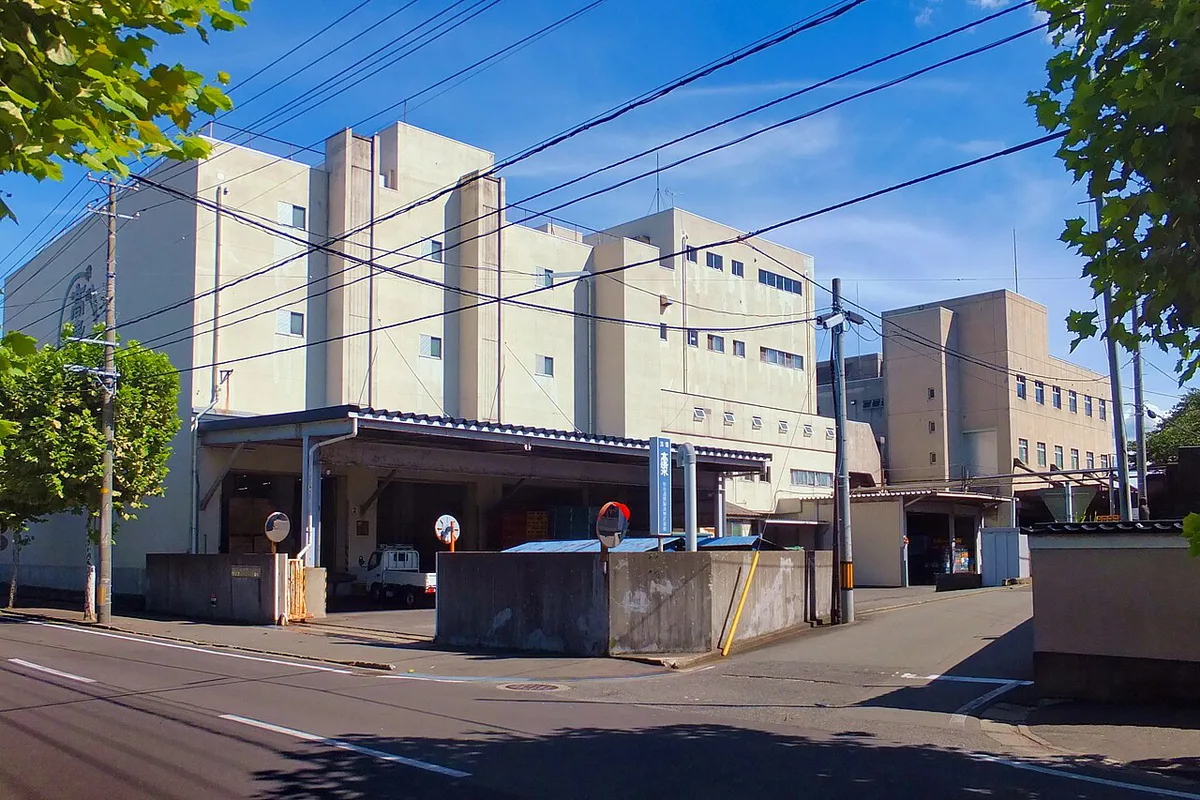
Akita sits among Japan's top rice-growing prefectures, and a regional catchphrase sums it up as sake no kuni, the land of sake. Sake shipments from Akita rank fourth largest in Japan, and its sake rice production ranks fifth nationally, according to regional trade figures. Three rivers, the Omono, the Yoneshiro, and the Koyoshi, carry snowmelt down from the mountains and supply the clear water breweries need. Akita City's own Takashimizu neighborhood takes its name from a spring said to have first flowed in the seventh century, and the area still supplies water breweries use today. Around 35 to 40 breweries operate across the prefecture, from Akita City to the Yokote Basin towns farther south. Akita sake brewery tours range from large-scale operations like Takashimizu to family-run breweries in the Yokote Basin, each with its own reservation rules. Those breweries feed into a broader food scene the Akita food guide covers in more depth.
The Soft-Water Style That Defines Akita Sake
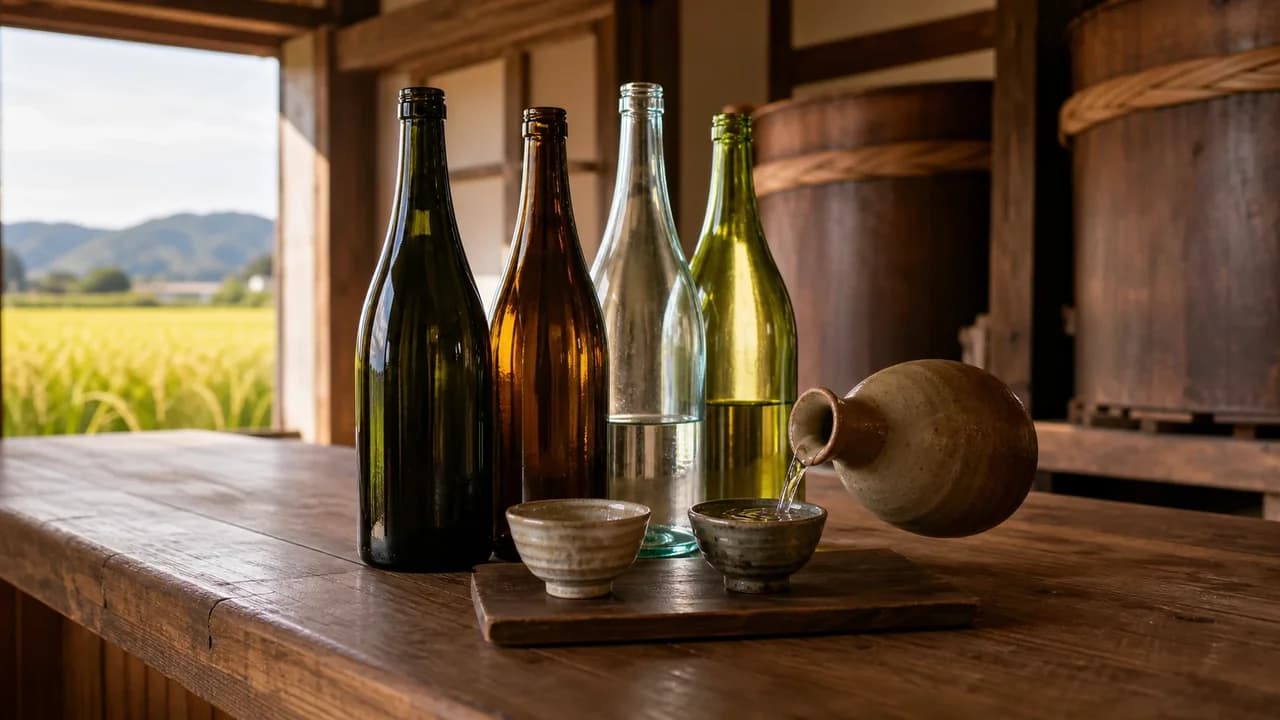
Akita's brewing water is generally soft, low in minerals, unlike the harder water found in Nada, Japan's largest sake region. Soft water ferments more slowly, and that slower fermentation tends to produce a mellower, more delicate sake. The result reads as smooth rather than sharp, with less mineral edge than hard-water styles produce. Flavor still varies a lot by brewery, from clean and dry styles to aromatic, almost dessert-wine-like bottlings. Yokote is also home to the old sannai school of sake brewing, a lineage of toji brewmasters credited with much of the region's award-winning sake. That soft-water style shows up across parts of Tohoku, but Akita's rivers make it especially pronounced. That mellowness is part of why Akita sake pairs so easily with delicate dishes like Inaniwa udon or fresh sashimi, rather than overpowering them.
6 Best Sake Breweries in Akita to Visit
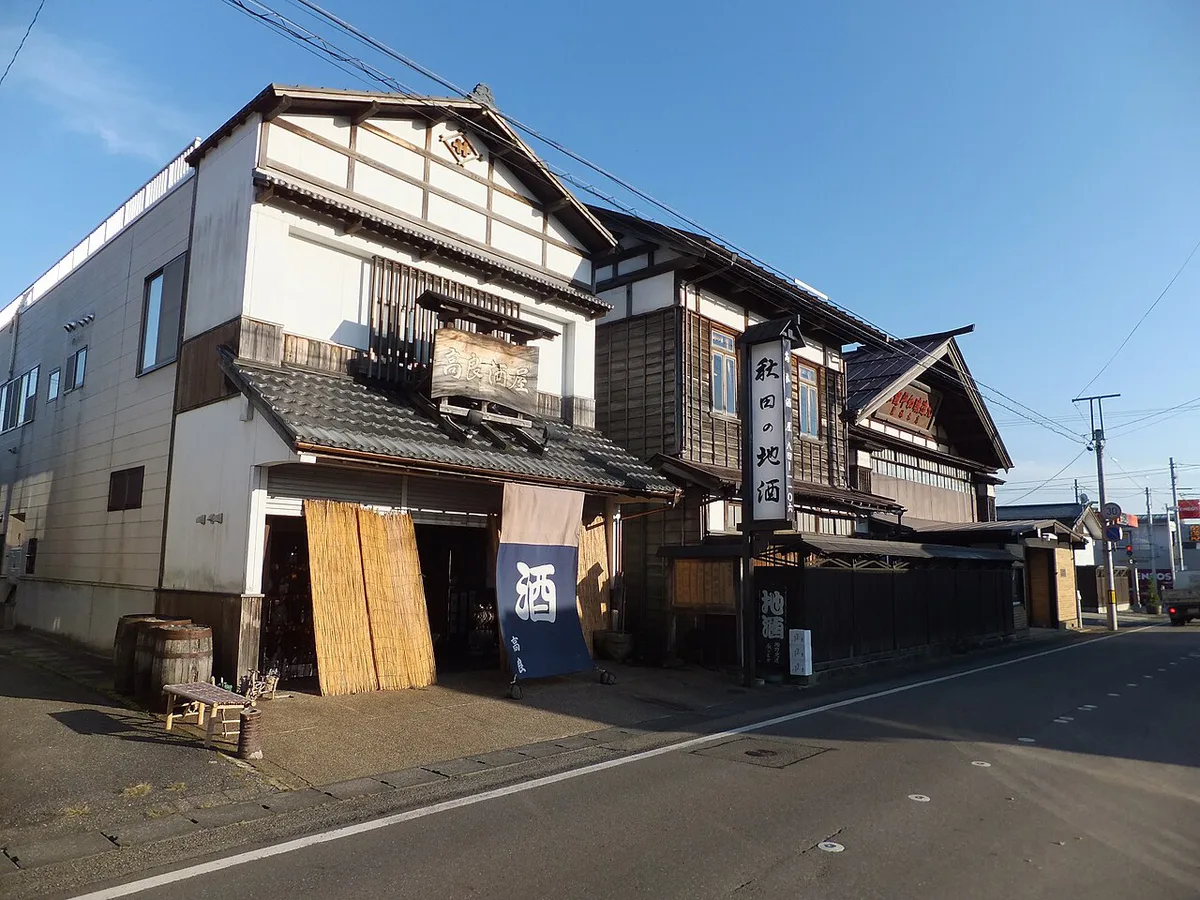
Each of these six breweries welcomes visitors, though policies differ on reservations, tour times, and closures. Check current hours before a trip, since holiday closures and reservation windows can change. Yuzawa alone supports several more breweries beyond Kimura. Akita Meijo, founded in 1922 by 88 local investors, operates in the Yokote Basin without published English tour details. Ryozeki Shuzo, also in Yuzawa, was the first Akita brewery to earn a grand prize from Japan's National Research Institute of Brewing.
| Brewery | Nearest Station | Access | Reservation Needed |
|---|---|---|---|
| Takashimizu | JR Akita Station | About 20 min by bus | Yes |
| Hideyoshi | JR Ugo-Nagano Station | About 10 min on foot | Yes |
| Kimura Brewery | JR Yuzawa Station | About 15 min on foot, or 5 min by taxi | Yes |
| Dewatsuru | Daisen City | Contact brewery for current access | Check with brewery |
| Hinomaru Jozo | Yokote | Contact brewery for current access | Check with brewery |
| Kodama Sake Brewery | Katagami City | Contact brewery for current access | Check with brewery |
- Takashimizu (Akita Shurui Seizoh)
- About 20 minutes by bus from JR Akita Station, inside Akita City itself.
- Tours run at 10:30 am, 1:30 pm, and 3 pm, and the brewery tour requires advance reservation.
- Closed Saturdays, Sundays, national holidays, and Dec 29 through Jan 3.
- Hideyoshi (Suzuki Sake Brewery)
- Founded in 1689, once the official brewery of the Satake clan that ruled Akita.
- About a 10-minute walk from JR Ugo-Nagano Station; advance reservation is required for the tour.
- Open 9 am to noon and 1 pm to 4 pm, closed Dec 31 through Jan 3 and other irregular holidays.
- Kimura Brewery
- A roughly 400-year-old brewery in Yuzawa, the prefecture's second-oldest, and maker of the Fukukomachi label.
- Fukukomachi won the Champion Sake award at the International Wine Challenge in 2012.
- About 15 minutes on foot from JR Yuzawa Station, or 5 minutes by taxi, and advance reservation is required.
- Dewatsuru Sake Brewery
- Founded in 1865 in what is now Daisen City, in the mountains of southern Akita.
- The name means a sake from the old Dewa region, chosen to evoke the elegance of a crane.
- Contact the brewery directly to check current tour availability and hours.
- Hinomaru Jozo
- Founded in 1689 in Yokote and designated a nationally recognized cultural property in 2002.
- Draws water from four wells connected to the Kurikoma Mountain national park watershed.
- Visit hours are not published in English; contact the brewery to check current tour availability.
- Kodama Sake Brewery
- Founded in 1879 in Katagami City, and named its flagship Taiheizan label after Mt. Taihei, a peak considered the area's symbol.
- The brewery also makes miso and soy sauce under its Yamakyu brand, a holdover from its original business.
- Contact the brewery to confirm current tour access, since English-language tour details are not widely published.
Pairing Akita Sake With the Region's Signature Dishes
Akita's sake is built to sit next to specific regional dishes, not just any bar snack. These four pairings show up on menus across Akita City and the brewery towns south of it.
Hinai-Jidori chickens require more than 100 days to raise, peaking in readiness during brewing season (November through February), so sake tastings sync naturally with the region's most celebrated poultry.
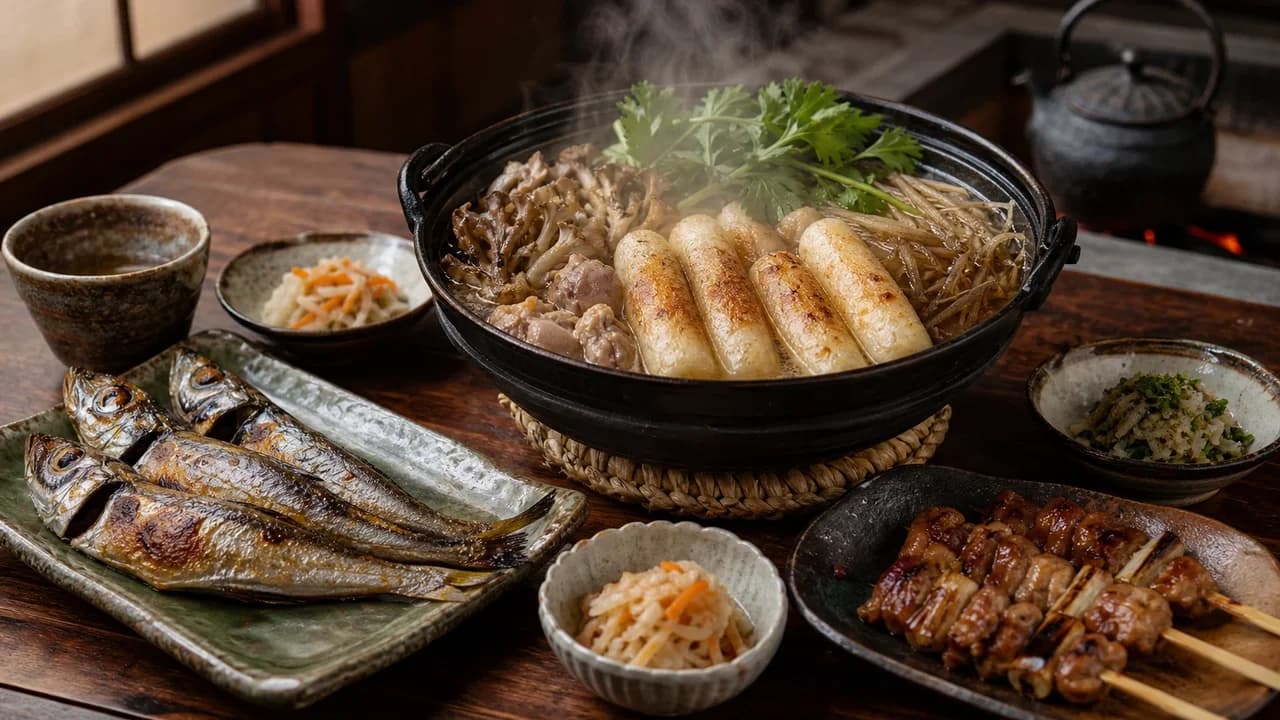
- Kiritanpo Hot Pot
- Toasted, mochi-like rice skewers simmered in a broth made with Hinai-Jidori chicken and mountain vegetables.
- Best from October through February, when new-crop rice and fattened chickens are both in season.
- The full recipe and where to order it appears in the Kiritanpo guide.
- Hinai-Jidori Chicken
- A free-range chicken raised more than 100 days, prized for its firm, umami-rich meat.
- Also the key ingredient in oyako-don, simmered in soy sauce and served over rice.
- Read more in the Hinai-Jidori chicken guide.
- Inaniwa Udon
- Thin, translucent handmade noodles from the Inaniwa area near Yuzawa, made with local wheat flour and spring water.
- Counted among Japan's three great udon styles.
- Iburigakko
- Smoke-cured daikon pickles with a distinct smoky bite that cuts through richer, drier sake.
- Read more about the pickling process in the Iburigakko guide.
Tasting Akita Sake Without a Brewery Reservation
Not every trip allows time for an advance-reservation tour. Restaurants and izakayas across Akita City pour multiple labels by the glass, so comparing styles without visiting a single brewery is possible. Labels worth asking for on a menu include Takashimizu, Hideyoshi, Kimura's Fukukomachi, Dewatsuru, Kodama, and Hinomaru Jozo, alongside Yuzawa's Akita Meijo and Ryozeki Shuzo. Most restaurants pour tasting flights rather than full bottles, an easy way to sample several breweries in one sitting. Staff at a hotel near the station can usually point toward a shop or bar carrying harder-to-find bottles. Seafood pairs well with Akita sake, too. Coastal catches like hatahata sandfish show up on the same menus, and the hatahata sandfish guide covers specifics. A single stop covering several of these pairings appears in the restaurants in Akita City list.
When to Go: Brewing Season and Local Treats
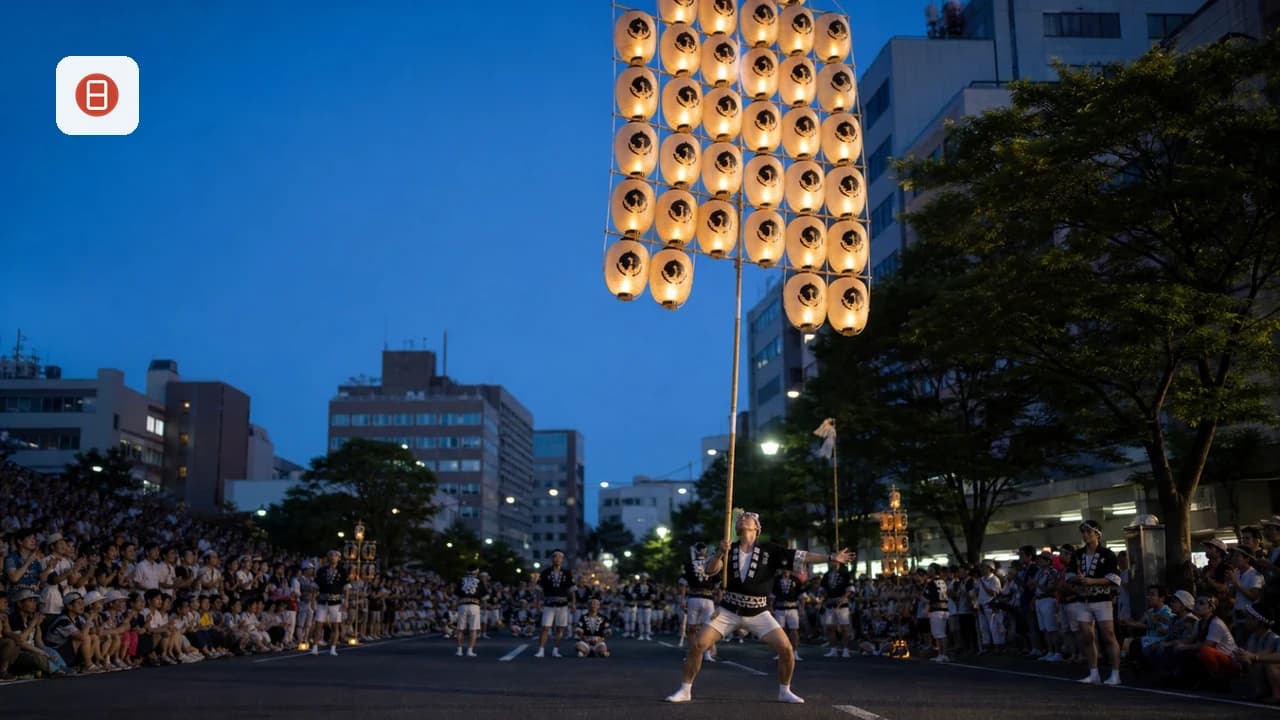
Winter is brewing season in Akita, running roughly November through February. Snowfall purifies the air, and the snow around a brewery helps keep the room temperature steady, which suits sake brewing. Toji brewmasters oversee the process by hand through the coldest months, adjusting temperature and timing as the rice ferments. Summer brings a different treat. Baba-hera ice cream is sold from roadside stands by vendors called Baba in the local dialect. Vendors shape scoops into roses or tulips using a metal spade called a hera. Summer travelers can check whether dates line up with the Akita Kanto Festival Travel Guide for a combined trip. A full seasonal calendar, including festivals, appears in the best time to visit Akita guide.
Peak brewing season spans November through February when temperature and snow suit fermentation, yet breweries close Dec 29 through Jan 3, concentrating advance-booked tour availability in shorter windows.
Getting There and Planning a Brewery Day Trip
Akita City, Yuzawa, and Ugo-Nagano work as three separate hubs for brewery visits, each reachable by JR trains. Most breweries keep weekday hours around 9 am to 4 pm, with many closed on weekends, national holidays, and around New Year's. Dewatsuru, Hinomaru Jozo, and Kodama sit in Daisen, Yokote, and Katagami, smaller towns without published English tour schedules. Local bus or taxi from each town's station is the practical option. Confirming hours by phone or through a hotel concierge helps avoid a wasted trip. Basing a trip in Akita City keeps all three main JR hubs within a day-trip radius. Neighborhoods near the station are covered in the where to stay in Akita guide. Flight and train options into the region appear in the getting to Akita guide. One brewery day pairs naturally with the Kakunodate day trip. Sake tastings fit into a longer Tohoku trip, as the Akita itinerary guide shows. Travelers with an extra day can add the Oga Peninsula Day Trip From Akita Travel Guide, a separate excursion built around coastal folklore rather than sake. The Akita attractions guide rounds out sightseeing options beyond the breweries themselves. Three mistakes trip up first-time visitors. Skipping the advance reservation is the most common one, since Takashimizu, Hideyoshi, and Kimura all require it. Assuming every guide speaks English trips up plenty of visitors, since only some breweries provide English-language tours. Overlooking the smaller Yokote Basin breweries is the third mistake. Dewatsuru, Hinomaru Jozo, and Kodama sit outside the three main JR hubs, but they still reward a visit.
| Hub Station | Nearby Brewery | Typical Access |
|---|---|---|
| JR Akita Station | Takashimizu | About 20 min by bus |
| JR Ugo-Nagano Station | Hideyoshi | About 10 min on foot |
| JR Yuzawa Station | Kimura Brewery | About 15 min on foot, or 5 min by taxi |
Akita Sake Rice Varieties to Look For
Water shapes Akita sake, but the rice variety also helps determine aroma, texture, and finish. Bottle labels and tasting menus may identify the brewing rice as shuzō kōtekimai, meaning rice cultivated specifically for sake.
- Akita Sake Komachi: Developed in Akita for local conditions. Brewers value its large starch center and low protein content. It often supports fragrant sake with a clean, smooth finish.
- Miyama Nishiki: A cold-tolerant variety widely used across northern Japan. It commonly produces light, crisp sake that works well with sashimi, Inaniwa udon, and other delicate dishes.
- Misato Nishiki: An Akita-bred cross involving Yamadanishiki and Miyama Nishiki. It can produce refined aroma and balanced structure in premium ginjo styles.
Rice variety does not predict flavor by itself. Milling ratio, yeast, water, and fermentation choices also matter. During a tasting, compare bottles made with different local rice while keeping the brewery or sake grade similar.
For trip-planning details, see Sake - Wikipedia.
Frequently Asked Questions
What is the best sake brewery to visit in Akita?
Takashimizu is the most accessible, about 20 minutes by bus from JR Akita Station, with tours at 10:30 am, 1:30 pm, and 3 pm. Hideyoshi and Kimura Brewery are strong alternatives near Ugo-Nagano and Yuzawa, but all three require advance reservations.
Do Akita sake breweries offer tours in English?
Some breweries do, though not all guides speak English. Akita's tourism office lists which breweries offer English-language tours, so confirm before booking.
When is the best time to visit for sake brewing season?
Brewing season runs roughly November through February, when cold air and snow help control fermentation temperature. Visiting then does not guarantee a tour, since most breweries require advance reservations regardless of season.
What food pairs best with Akita sake?
Kiritanpo hot pot, Hinai-Jidori chicken dishes, and iburigakko smoked daikon are the three most common pairings. Inaniwa udon works well with lighter, drier styles.
How do you get to Akita's sake breweries without a car?
JR Akita, Ugo-Nagano, and Yuzawa stations each anchor a cluster of breweries reachable on foot, by bus, or by short taxi ride. Basing a trip in Akita City keeps all three within day-trip range.
Can you visit Akita sake breweries as a day trip from Tokyo?
A day trip is possible for some travelers, though it leaves little time for more than one brewery tour. The getting to Akita guide covers transit options for planning arrival and departure times.
What makes Akita sake different from other Japanese sake regions?
Akita's soft water produces a mellower, more delicate style than the harder water used in Nada, Japan's largest sake-producing region. Three rivers, the Omono, the Yoneshiro, and the Koyoshi, supply that water across the prefecture's breweries.
Free guide: Japan's Hidden Gems
12 under-the-radar places beyond Tokyo & Kyoto — with the best season to visit each and a local tip you won't find in the guidebooks.
You might also like

Continue reading
More guides you'll find useful