Hinai Jidori Chicken in Akita: A 2026 Traveler's Guide
Hinai jidori chicken is one of Akita's signature foods. Learn its history as a protected breed, its flavor, and where to eat it in Odate and Akita City in 2026.
On this page
Last updated July 2026. Hinai jidori chicken from Akita ranks among Japan's three great native chicken breeds, raised near Odate in the prefecture's north. This guide covers the breed's history, its signature dishes, and where to eat hinai jidori chicken in Odate and Akita City.
What Is Hinai Jidori Chicken? Akita's Native Breed Explained
Jidori is a legal category for Japanese chicken raised free-range under set government standards, not just a marketing label. Hinai jidori ranks as one of Japan's three great jidori breeds, alongside Nagoya Kochin from Aichi Prefecture and Satsuma Jidori from Kagoshima. The name comes from Hinai, a district in northern Akita Prefecture near Odate City, where the original bloodline was first raised. Farmers today raise the breed under guidelines set by the Akita prefectural government, which set minimum space and rearing-time standards summarized in the table below. Compared with a standard broiler, the meat is denser, the color runs deeper, and the flavor is noticeably richer, enough that first-time visitors to Akita often notice the difference within a single bite. The wider Akita food guide covers how hinai jidori fits alongside other regional dishes. Two related specialties worth knowing are hatahata sandfish and smoked daikon pickles.
| Factor | Standard Broiler | Hinai Jidori |
|---|---|---|
| Rearing period | About 40 to 50 days | Around 100 to 150 days |
| Stocking density | High-density commercial sheds | Under 5 birds per square meter after 28 days |
| Texture | Soft, mild flavor | Firm, pheasant-like chew, high natural umami |
From Feudal Tax to National Monument: The History Behind Hinai Jidori
Hinai jidori traces back to the Edo period, when farmers in Akita's Hinai district raised a native breed called Hinaidori. Prized for its meat, eggs, and feathers, Hinaidori was valuable enough to be offered as tax payment to feudal lords. Imported foreign breeds displaced native chickens during the Meiji period, and Hinaidori numbers fell sharply. In 1942, the Japanese government designated the surviving Hinai chicken bloodline a National Natural Monument, protecting it from commercial slaughter. That status solved one problem and created another: the protected bird was too small, too low in meat yield, and too slow to reproduce for restaurant use. Researchers at the Akita Livestock Experimental Farm addressed that gap by selecting a productive rooster breed from hundreds of candidates. Breeders then developed the Hinai Jidori eating breed in the 1970s, crossing a male Hinai chicken with a female Rhode Island Red. That cross kept the original bird's flavor while producing offspring productive enough to reach restaurant tables. Akita Hinai-ya, one of the businesses built around the breed today, operates several shops and restaurants centered on hinai jidori, carrying that Hinai-region history into the present.
Hinai Chicken vs Hinai Jidori: Why You Can't Order the Original Breed
Hinai chicken, written 比内鶏, is the original protected breed and a National Natural Monument. Farmers keep it today mainly for conservation rather than food production, since its growth rate and reproduction are too slow for commercial use. Its small size and minimal meat yield also made it impractical to sell even before the 1942 protection. Hinai jidori, written 比内地鶏, is the separate crossbred bird that Akita restaurants actually serve. When a menu lists hinai jidori, it always means this crossbred eating breed, never the protected original. Confusing the two is the single most common mix-up travelers make in Akita.
Taste and Texture: What Makes Hinai Jidori Different
Hinai jidori has a firmer bite than standard broiler chicken, closer to the chew of pheasant than to supermarket poultry. Muscle fibers stay tighter than a broiler's, since the birds are raised longer and move more freely during rearing. Flavor builds as you chew, and the meat carries more natural umami than farmed broiler meat. That savoriness comes largely from inosine acid and arachidonic acid, compounds present in higher concentrations in the breed's muscle tissue. Simmer the bones and meat together and the broth turns golden and clear, with fat that reads as flavorful rather than greasy. Farmers who raise the breed attribute the clear fat to the birds getting more exercise than caged broilers. Look for that golden color and a deep orange egg yolk on the plate; both are visual cues that a kitchen is using genuine hinai jidori. Chefs outside Japan, including in Italian and French kitchens, have started incorporating hinai jidori into their menus, a sign of its reputation beyond Akita.
Around 100 to 150 days of rearing produces tighter muscle fibers and a firmer, pheasant-like chew compared to standard broiler chicken, yielding the distinctive texture that defines the breed's appeal.
How to Eat Hinai Jidori: Kiritanpo Nabe, Oyakodon, and Yakitori
Four dishes account for most of the hinai jidori that travelers order in Akita. The breed's fat pairs well with dry, unfiltered sake styles, detailed further in the site's Akita sake and rice guide.
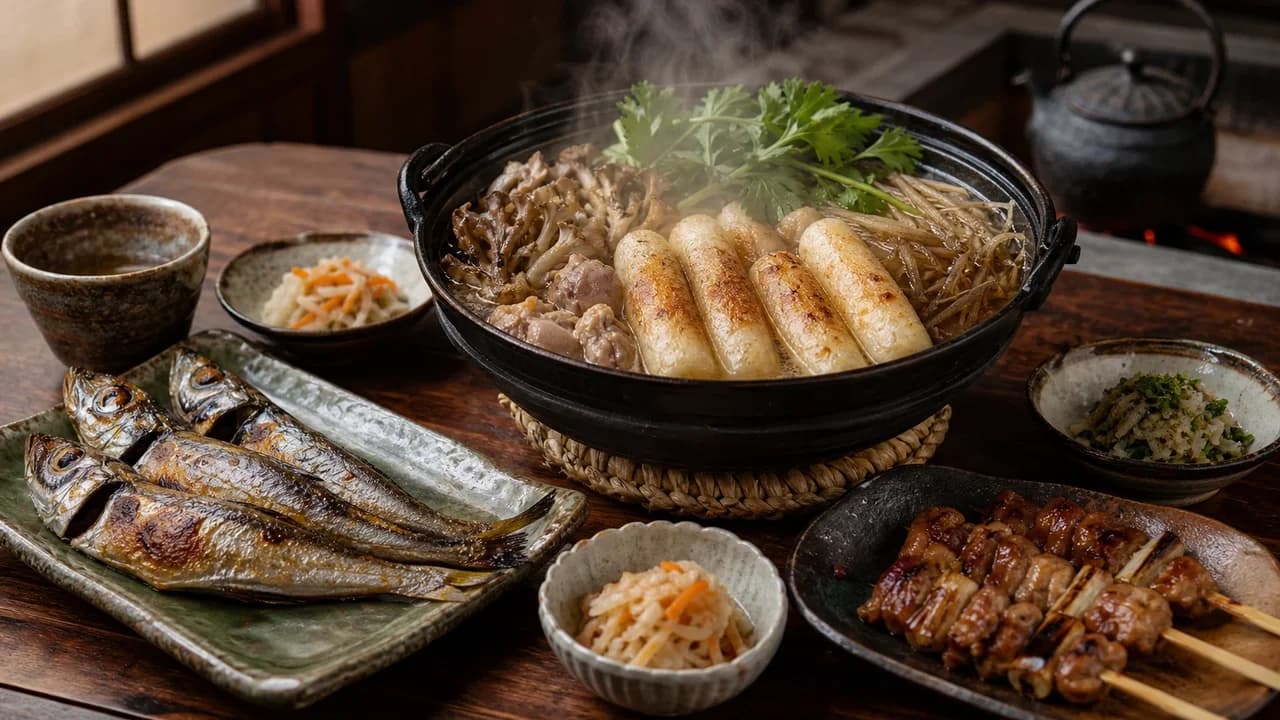
- Kiritanpo nabe: grilled rice sticks simmered in a hinai jidori broth base, covered in more depth in the site's kiritanpo hot pot guide. The broth carries the dish, not the rice.
- Oyakodon: the parent-and-child rice bowl, pairing hinai jidori meat with the breed's own deep orange-yolk eggs over rice. It is the simplest single order for tasting both the meat and the eggs together.
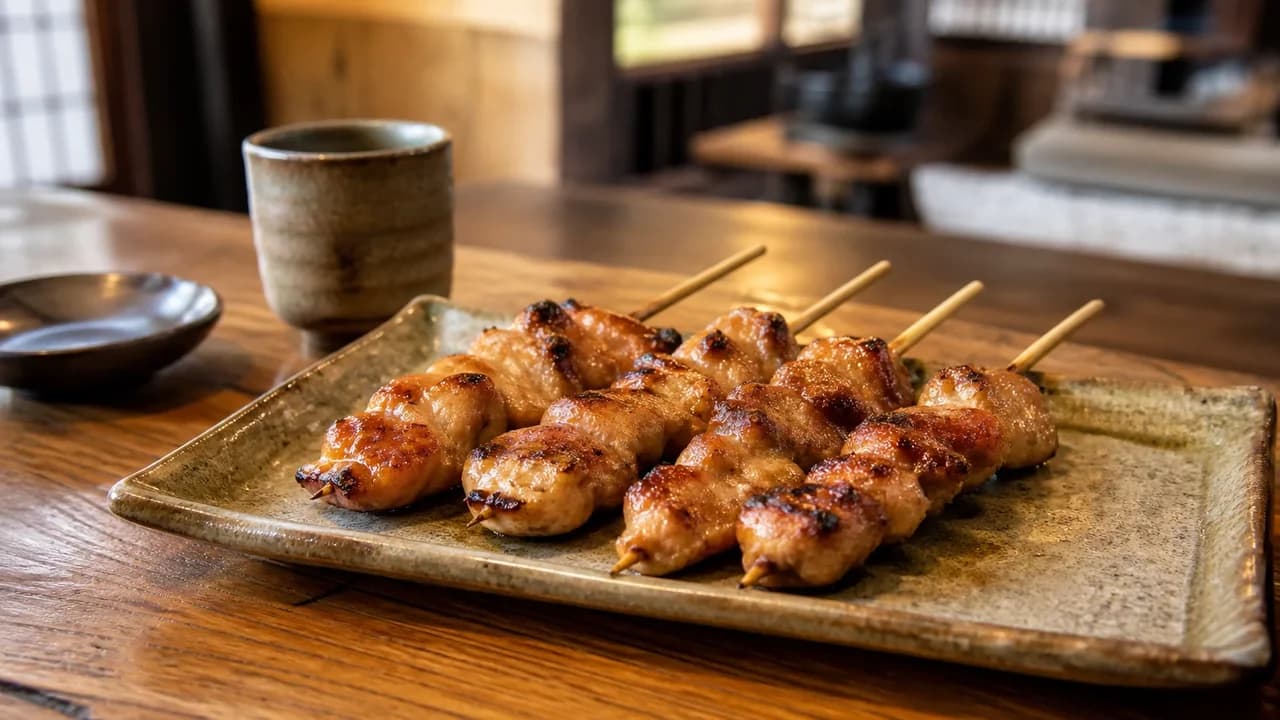
- Yakitori: skewers that show off the meat's texture on its own, especially leber (liver) and negima (thigh and scallion) cuts. Seasoning stays minimal, since the chicken already carries enough umami.
- Takikomi gohan: a seasoned rice dish where hinai jidori flavor absorbs into every grain. Some specialist restaurants offer it as a lighter alternative to the hot pot.
Where to Eat Hinai Jidori in Akita: Odate vs Akita City
Two towns cover most hinai jidori dining in the prefecture. Odate City is the breed's home region. Akita City is more convenient for most itineraries. Odate is worth the detour for travelers building a full day around the breed's origin. The town sits inside the district where the Hinai bloodline was first raised. Akita City is the practical choice for a single meal, since Honke Abeya delivers the same core dishes without the extra travel. Travelers who skip the trip north can spend that day on a different regional outing instead. One option is the Kakunodate day trip. Another is the Oga Peninsula day trip.
- Akita Hinai-ya Odate Main Store sits at 21 Omachi in Odate City and serves hot pots and oyakodon made from certified hinai jidori. It is open 11:00 to 22:00, with last orders at 21:00.
- Honke Abeya's Akita City branch sits near the city center and focuses entirely on hinai jidori cooking, part of the wider lineup in the site's Akita City restaurant guide. Its oyakodon has a loyal local following, and kiritanpo nabe runs seasonally, so confirm it is currently offered before building a trip around it. The dining room is casual enough for a solo lunch or a small group.
Getting to Odate and Budgeting for a Hinai Jidori Meal
Odate sits in northern Akita Prefecture and is reachable from Akita City by train on the JR Ou Main Line, or by car. Exact schedules and fares are best checked through the site's Akita access guide before planning a same-day round trip. A lunch oyakodon costs meaningfully less than a full kiritanpo nabe dinner, since the hot pot is built to share and takes longer to prepare. Menus and current prices are best confirmed directly with Akita Hinai-ya Odate Main Store or Honke Abeya before a visit, since both adjust seasonally. Both restaurants serve lunch and dinner, so a midday visit is an easy way to try the breed without committing to a full evening meal. Travelers staying overnight around a festival or a full Odate day can check 10 Best Hotels & Ryokans in Akita for Your Stay (2026) for options near the station.
When to Go: Timing a Trip Around Hinai Jidori
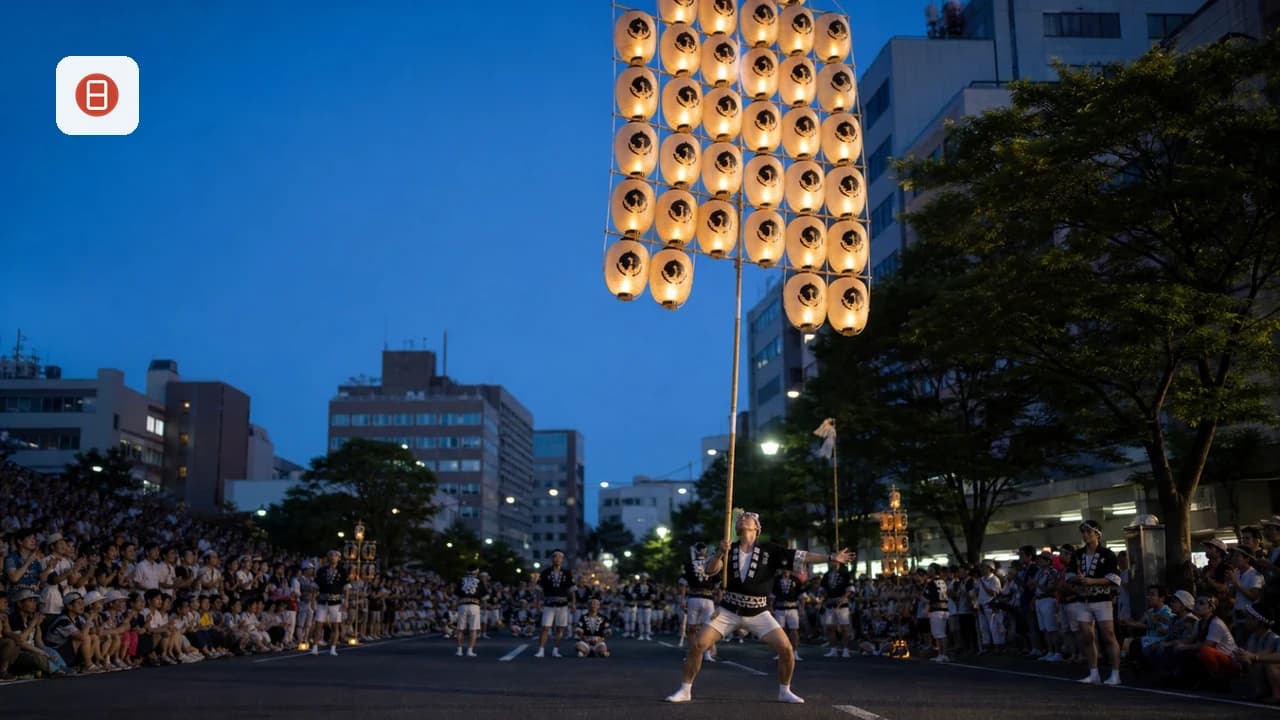
Akita's summer Kanto Festival dates draw crowds into restaurants and hotels across the city. Book ahead or arrive early during that stretch, since Honke Abeya's central location gets busy at peak times. Outside festival season, walk-in seating is more realistic at both restaurants, and midweek visits tend to be easiest to plan around. Check the best time to visit Akita before locking in dates, since travel demand shifts around festival season. Pairing the meal with broader Akita itinerary planning helps fit Odate or Akita City dining around the rest of a trip. A stop at nearby 12 Best Things to Do in Akita (2026): Your Essential Guide can round out the day.
Mistakes to Avoid When Ordering Hinai Jidori
A few mix-ups trip up first-time visitors ordering hinai jidori in Akita.
- Hinai chicken and hinai jidori are not interchangeable. Hinai chicken is the protected original breed, never served as food. Hinai jidori is the crossbred version served at restaurants.
- Do not expect soft, tender meat. Hinai jidori is valued for a firm, chewy texture, closer to game bird than to a supermarket broiler.
- Do not overlook the eggs and the broth. Both showcase the breed as much as the meat, so skipping oyakodon or a broth-based dish misses part of the point.
- Do not assume it is easy to find outside Akita. Hinai jidori occasionally appears in select restaurants in Tokyo and other major cities, but Akita Prefecture remains the most reliable place to order it.
- Do not trim away the fat automatically. Farmers point to the clear, flavorful fat as a sign of a well-raised bird, not a flaw.
Frequently Asked Questions
What is Hinai jidori chicken?
This breed is one of Japan's three great native chicken breeds, raised in Akita Prefecture near Odate. It is prized for a firm texture and a richer, more savory flavor than standard broiler chicken.
Can travelers eat the original Hinai chicken?
No. The original Hinai chicken has been a National Natural Monument since 1942 and is raised for conservation, not food. Hinai jidori, the crossbred version, is what restaurants actually serve.
What does Hinai jidori taste like?
The meat has a firm, pheasant-like chew and a deep natural umami, driven by compounds including inosine acid and arachidonic acid. Broth made from the bones turns golden and clear rather than greasy.
Where can you eat Hinai jidori in Akita?
Akita Hinai-ya Odate Main Store in Odate City serves the breed close to its origin region. Honke Abeya's Akita City branch offers the same core dishes without the trip north.
Is it worth traveling to Odate just for the chicken?
That depends on the itinerary. Travelers building a full day around food history get more from the Odate trip, while a single meal is easier to arrange at Honke Abeya in Akita City.
How does Hinai Jidori compare to Nagoya Kochin?
Both are among Japan's three great jidori breeds, but Hinai Jidori is raised longer. Nagoya Kochin typically reaches about 120 days, while Hinai Jidori often goes to around 150 days before processing.
What is the best first dish to try?
Oyakodon is the easiest starting point, since one bowl includes both the meat and the breed's own eggs. Kiritanpo nabe is the better choice for tasting the broth on its own.
Free guide: Japan's Hidden Gems
12 under-the-radar places beyond Tokyo & Kyoto — with the best season to visit each and a local tip you won't find in the guidebooks.
You might also like

Continue reading
More guides you'll find useful