Akita Seafood Hatahata: Where to Eat Sandfish and Shottsuru
Plan a trip around akita seafood hatahata: where to try hatahata-zushi and shottsuru, hon-zuke versus modern versions, and the best coastal towns to visit in 2026.
On this page
Last updated July 2026, this guide explains akita seafood hatahata for travelers planning a Sea of Japan coastal stop. Hatahata is a scaleless sandfish that surfaces off Akita's coast each winter, and locals treat it as the prefecture's official fish. Three preparations dominate local menus: fermented hatahata-zushi, aged shottsuru fish sauce, and simple grilled or salted fillets.
What Makes Akita Seafood Hatahata Different
Hatahata (Arctoscopus japonicus) is a scaleless, deep-sea fish that spawns in shallow water along Akita's coast from late November into December. Local lore ties its arrival to winter storms. Fishermen once linked the pounding surf and thunder to the fish's appearance, giving it the nickname hatahatagami, or thunderbolt fish. Its kanji combines the characters for fish and god, a nod to its status as a gift from the gods during lean winters. Akita Ondo, a local folk song, references the fish too, underscoring how central it is to regional identity. The prefecture named hatahata its official fish, and the dish anchors the wider Akita food traditions built around winter preservation. Stocks are not unlimited. Akita's annual hatahata catch once topped 10,000 tons before overfishing and warming Sea of Japan waters cut hauls sharply through the 1970s and 1980s. Fishermen agreed to a three-year fishing ban from September 1992 to September 1995 to let stocks recover. In 1993, the Council for Hatahata Resources formed to monitor the catch, and it still tracks stocks today. Coastal waters around the Oga Peninsula remain the fish's main spawning ground.
The Three Ways Locals Eat Hatahata
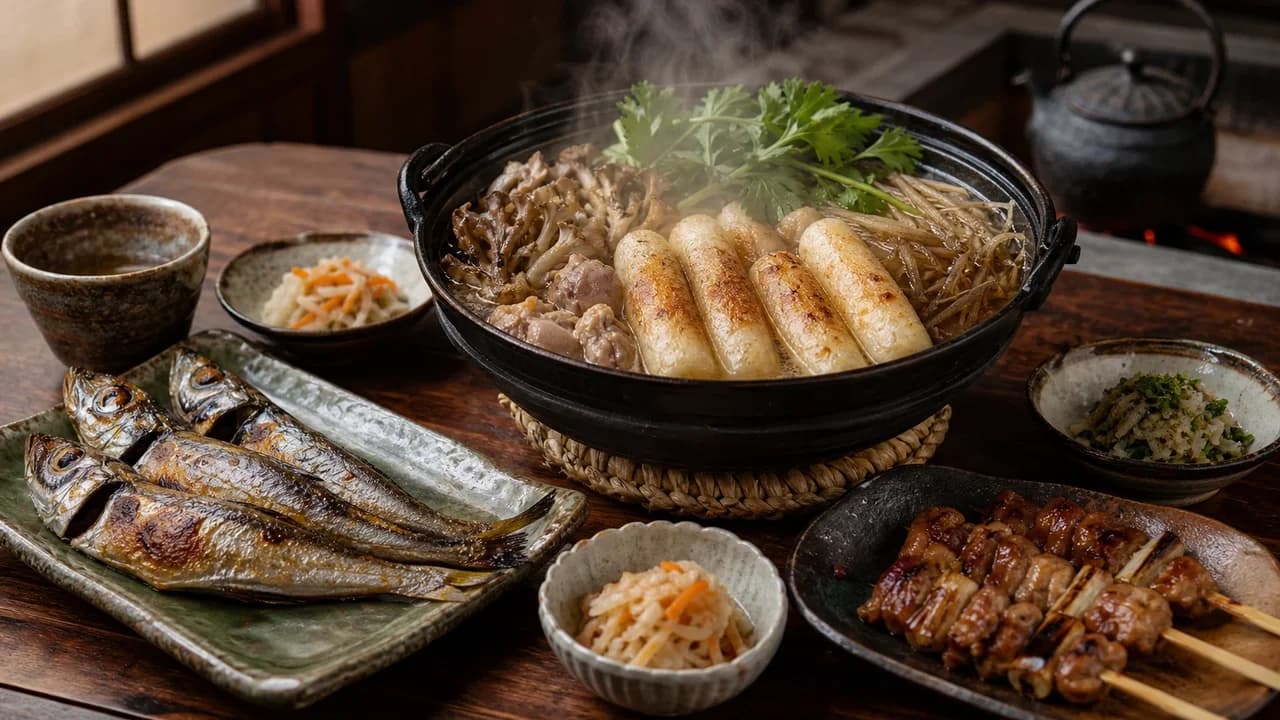
Akita's hatahata culture splits into three distinct preparations, each suited to a different kind of trip. It sits alongside other cold-weather staples in the prefecture's winter food culture. Hinai-jidori chicken is one such staple. So is kiritanpo, grilled rice on a cedar skewer. For a first taste, start with grilled hatahata, which reads closer to a mild white fish than anything fermented. Move to hatahata-zushi once you're ready for koji's tang, and save shottsuru-kayaki hot pot for last, since the fish sauce carries the strongest fermented flavor of the three. Izushi-style fermentation isn't unique to Akita. Neighboring Aomori and Hokkaido ferment other fish the same way, using sockeye salmon and Pacific herring instead of hatahata. Shottsuru sits alongside smoked daikon pickles as one of Akita's signature fermented foods, though the fish sauce leans savory rather than smoky. Both grew from the same need to preserve food through snowbound winters. Rice and koji fermentation also underpin Akita's sake production, which is why local sake pairs naturally with hatahata dishes. Takashimizu, an Akita City brewery, is one widely available option to pair with the meal.
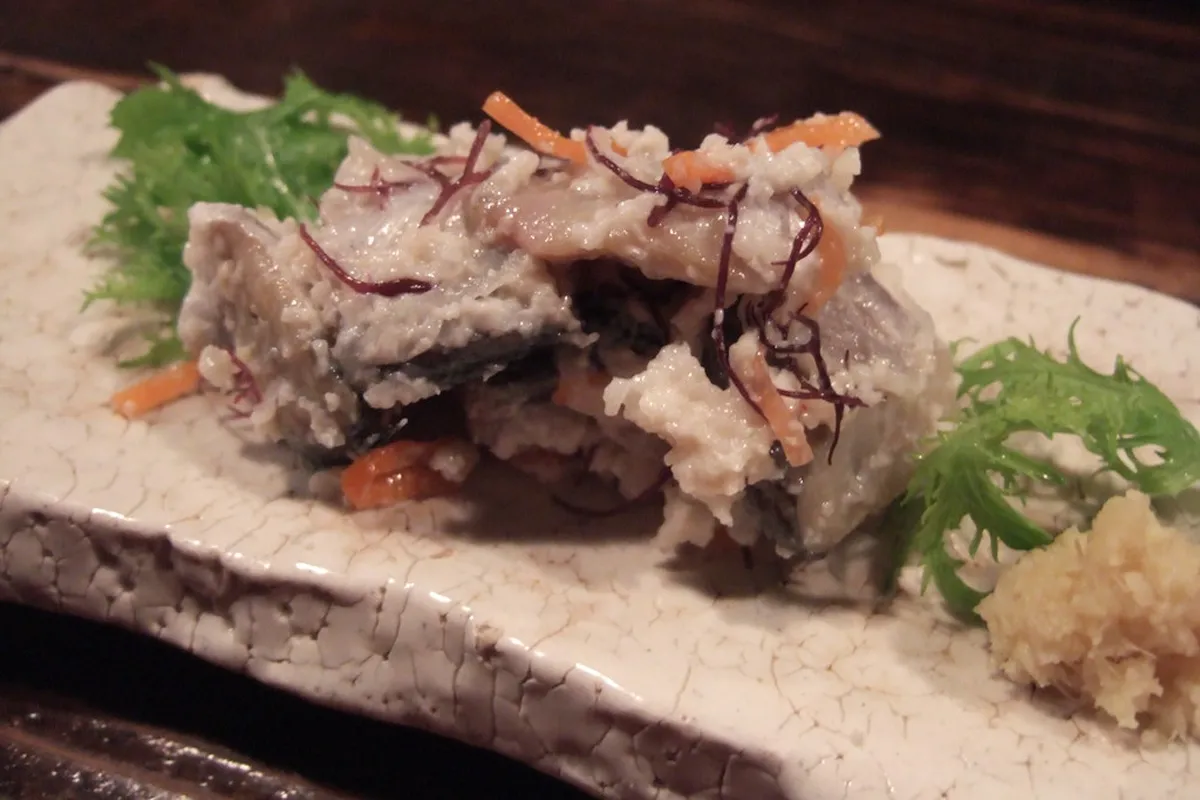
- Hatahata-zushi: whole fish fermented with koji rice, carrots, funori seaweed, and yuzu zest in a style called izushi, distinct from standard nigiri sushi.
- Shottsuru: hatahata salted and fermented for up to a year and a half. Producers use roughly five tons of fish to yield about 2,500 liters of finished sauce, used to flavor the winter hot pot shottsuru-kayaki.
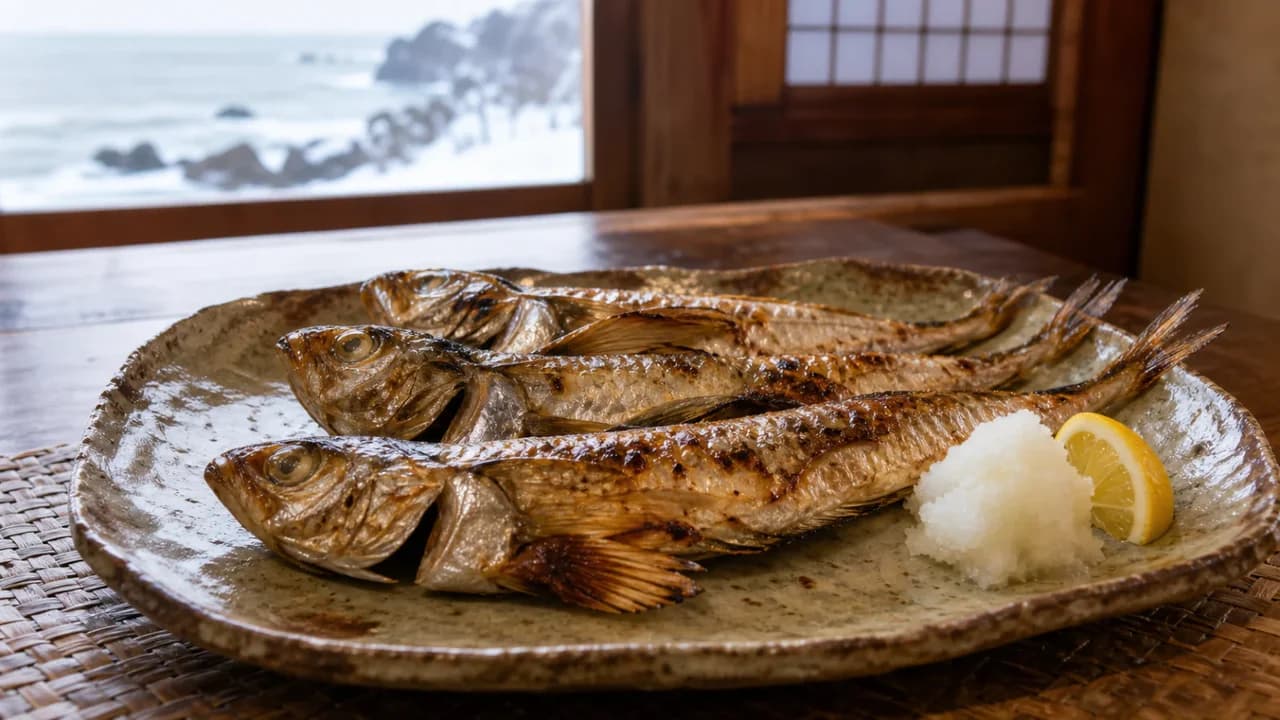
- Fresh hatahata: grilled with salt or glazed as miso-dengaku, often served with burikko, the fish's egg sacs, which have a firm, rubbery pop. Burikko turns up most in shottsuru-kayaki, where the eggs firm up further as they cook.
What Hatahata-zushi Looks and Tastes Like on the Plate
A finished tray of hatahata-zushi is layered by color, and each layer signals a different ingredient. The flavor matches the layered look: funky from the koji, softly fishy, and balanced between sweet and sour rather than sharply one or the other. Most households and restaurants serve it as an appetizer alongside a drink, not as a main course. One traditional version, ippiki-zushi, keeps the fish whole after removing the head, gills, and entrails, prepared specifically for Omisoka and New Year's Day offerings. Producers describe the dish as notably rich in amino acids and omega-3 fats like DHA and EPA, since eating the whole fish keeps nutrients a filleted cut would lose.
- White: steamed rice mixed with koji
- Grey-trimmed: the hatahata itself
- Red: funori seaweed
- Orange: carrot
- Yellow: yuzu zest
- Green: bamboo leaves wrapping each layer
Hatahata-zushi: Traditional Hon-zuke vs Modern Shortcuts
Not every tub labeled hatahata-zushi uses the same process. Producers split into two camps, and knowing the difference changes what's on your spoon. Miura Yonetaro Shoten, a hatahata-zushi producer set in front of the Hirasawa fishing port in Nikaho, represents the 13th generation of the same family business. The shop salts fresh hatahata for four to five days, then workers hand-slice each fish before layering it with koji rice, funori seaweed, carrots, and yuzu. Some newer producers skip that multi-week fermentation and use vinegar and sugar to approximate the flavor instead. Ask whether a shop uses hon-zuke, the traditional main-pickling method, before buying if the fermented version matters to you. Like other koji-fermented foods, hon-zuke hatahata-zushi is often described locally as gentler on digestion than the fresh fish, though treat that as traditional wisdom rather than a medical claim. Shottsuru's traditional method has drawn conservation attention too. The Slow Food Foundation lists Akita hatahata shottsuru in its Ark of Taste, an inventory of foods worth preserving, following a nomination tied to Kitaura-area researcher Hideki Sugiyama and chef Shinobu Namae. The recognition points to the same small pool of producers who still use only hatahata and salt, without shortcuts.
Traditional fermentation uses 25 to 30 kg of weight for pressing the dish, while modern producers skip this step entirely and use vinegar and sugar instead.
| Style | Method | Flavor | Where to look |
|---|---|---|---|
| Traditional (Hon-zuke) | Salted, hand-sliced, then fermented for about three weeks with koji rice, carrots, funori seaweed, and yuzu under weighted pressure | Complex, tangy, gently sweet from the koji | Small producers such as Miura Yonetaro Shoten in Nikaho |
| Modern quick-pickled | Vinegar and sugar substitute for weeks of fermentation | Sharper, more direct acidity | Supermarkets and souvenir counters across Akita |
How Traditional Hon-zuke Fermentation Works
The full hon-zuke process takes about a month from fresh fish to finished sushi. Home cooks and small shops adapt exact ratios, but the sequence below reflects a standard recipe documented by Japan's agriculture ministry. It breaks into three stages: cleaning, salting, and fermenting.
- Clean: remove the head, entrails, and tail, then rinse the fish in cold salted water to strip the sliminess.
- Drain: soak the fish in fresh water for three days and nights, changing the water twice daily, to draw out blood.
- Cut and press: slice the fish into two or three pieces, soak another day, then drain under a light weight of about 2 kg.
- Pack: layer the fish in a vat with bamboo grass leaves, cooked rice mixed with koji, salt, sake, and mirin.
- Weight and wait: press the vat with 5 to 6 kg of weight for two days, then increase to 25 to 30 kg as liquid rises.
- Ferment: leave the vat in a cool place for about three weeks before tasting and portioning.
Where to Try Hatahata Around Akita
Where you eat hatahata depends on how much time the itinerary allows. Akita Station connects to both coastal areas by train, so a hatahata detour fits around a longer Tohoku itinerary. See how to get to Akita for route options. If hatahata is one stop among several, slot it into a broader Akita Itinerary Travel Guide: Plan Your 3-Day Trip to Akita, Japan alongside inland stops. Coastal detours work well as a single add-on day rather than a full separate trip, since Akita City remains the logistical base for most visitors.
- Akita City: the fastest option for a short stay. Restaurants around the Nakaichi and Omachi districts serve hatahata-zushi, shottsuru-kayaki, and grilled fillets, both within walking distance of Akita Station. Check the Akita City restaurant guide for current picks.
- Nikaho and Kisakata: the source-region option on the southern coast, home to legacy producers such as Miura Yonetaro Shoten, set in front of the Hirasawa fishing port.
- Oga Peninsula: the most atmospheric option in winter, when hatahata spawn just offshore and Sea of Japan squalls match the storm imagery long linked to the fish's name. Pair a coastal meal with the Oga Peninsula day trip.
Planning Your Visit: Season, Cost, and Access
Fresh hatahata peaks from December through early January, when boats land the fish just after it moves into shallow water to spawn. Fermented hatahata-zushi and bottled shottsuru stay on shelves and menus year-round, so a summer trip does not rule out either. Plan a winter visit for the freshest catch, and check the Best Time To Visit Akita: Your Seasonal Travel Guide guide before booking. Exact menu prices vary by shop and season. As a rule of thumb, a takeaway tub of hatahata-zushi costs less than a sit-down shottsuru-nabe set, and both fall well under a multi-course kaiseki dinner. Confirm current pricing directly with restaurants around Akita City or with coastal producers before visiting. Two Akita City information points carry current hours and recommendations. Base a coastal hatahata day around 10 Best Hotels & Ryokans in Akita for Your Stay (2026). Combine it with an inland stop at Kakunodate. Round out the trip with other 12 Best Things to Do in Akita (2026): Your Essential Guide.
The 10,000 tons that Akita once caught annually before overfishing shrank are now harvested only in fresh form from December through early January, when timing becomes crucial for travelers.
- Akita City Tourist Information Center, inside Akita Station: 9:00 a.m. to 7:00 p.m. April to October, 9:00 a.m. to 6:00 p.m. November to March, closed December 31 to January 2.
- Akita Convention and Visitors Bureau, 1-2-37 Omachi: 9:00 a.m. to 6:00 p.m., closed weekends, holidays, and December 29 to January 3.
Mistakes to Avoid With Hatahata
A few expectations trip up first-time visitors. None of these are dealbreakers; they're just the adjustments that make a first hatahata meal land the way locals intend.
- Expecting standard sushi: hatahata-zushi is fermented and sour-sweet, closer to a pickle than nigiri. Treat the first bite as a tasting, not a full meal.
- Skipping burikko: the fish's egg sacs have a firm, rubbery texture that pops when you bite down. That texture is normal, not a sign the dish has gone off.
- Assuming every tub is fermented: vinegar-and-sugar versions are common and taste noticeably different from hon-zuke. Ask before buying if authenticity matters to you.
- Skipping the sake pairing: dry Akita sake cuts through the richness of the fermentation. Look for a local option through the Akita sake and rice guide before choosing a bottle.
- Assuming every restaurant serves it in winter only: fermented versions are on menus year-round, so don't wait for December if a trip falls in summer.
Getting to Nikaho and Oga Without a Car
Akita Station is the easiest base, but the two coastal options require different planning. For Nikaho and Kisakata, take the JR Uetsu Main Line south. Limited Express Inaho trains serve both stations, while local services usually take longer. Nikaho Station is the nearest rail stop for Hirasawa fishing port and Miura Yonetaro Shoten. Confirm the producer’s opening hours before making a dedicated trip.
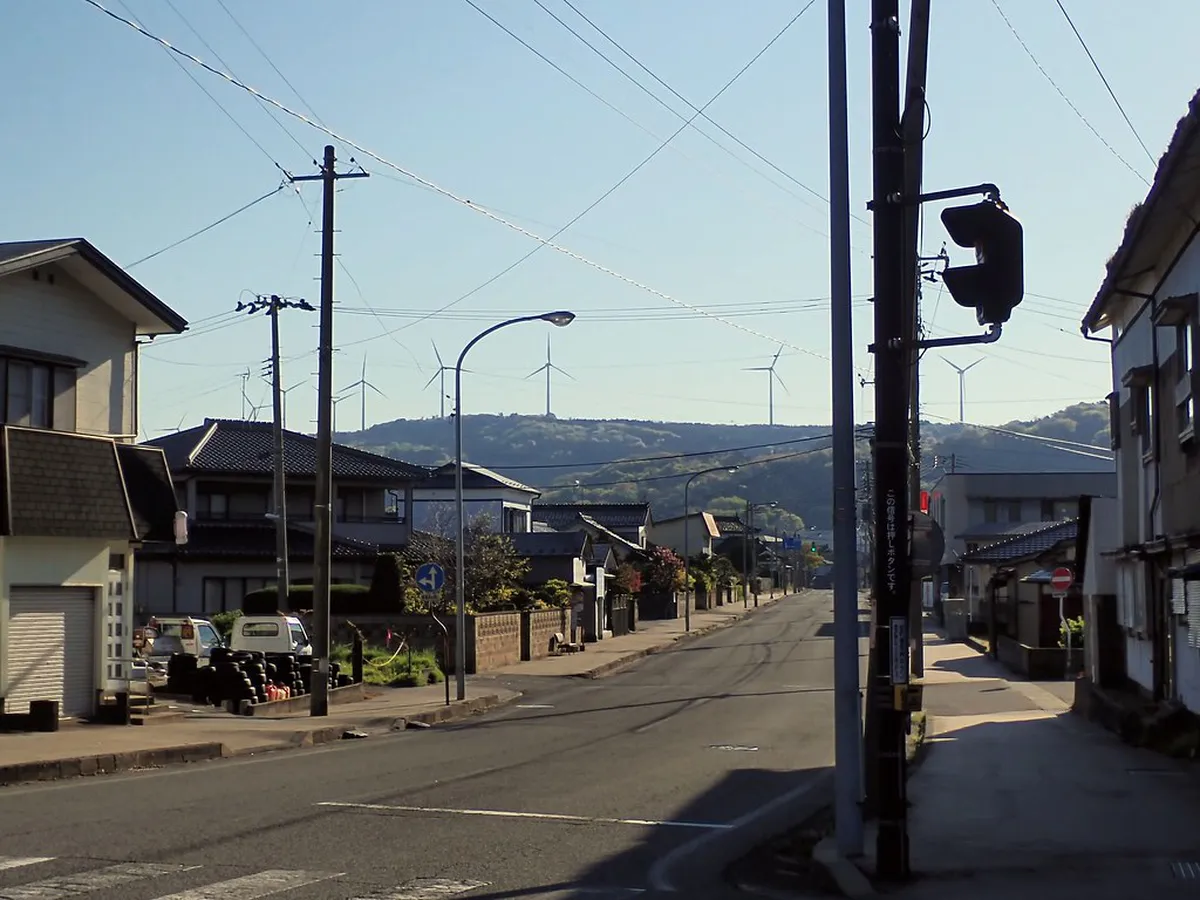
For Oga, take the JR Oga Line from Akita Station to Oga Station. The peninsula’s fishing communities, viewpoints, and Namahage attractions are spread beyond the station. Local buses are limited, so a taxi or rental car provides more flexibility for a coastal meal. Check connections carefully before an evening restaurant booking.
Winter storms and snow can disrupt trains and road travel along the Sea of Japan. Review JR East and local transport notices on the morning of departure. Travelers with only a few hours should eat in Akita City. Choose Nikaho for producer visits and Oga for a broader coastal day trip.
For trip-planning details, see Japanese sandfish - Wikipedia.
Frequently Asked Questions
What does hatahata taste like?
Fresh grilled hatahata tastes mild and delicate, closer to whiting than salmon. Fermented hatahata-zushi adds a tangy, koji-driven sourness that reads as an acquired taste to newcomers.
Is fermented hatahata-zushi safe to eat?
Yes. Hon-zuke fermentation relies on salt, koji rice, and weighted pressure over about three weeks, the same principle behind other fermented Japanese staples like miso. Buy from an established producer and keep it refrigerated as directed.
When is the best time to see fresh hatahata?
Boats land most of the catch from December through early January, when the fish moves into shallow water off the Oga Peninsula and the southern coast to spawn.
What is burikko?
Burikko are hatahata egg sacs, served grilled or in hot pot. They have a dense, rubbery texture that releases a distinct pop, unlike the soft roe found in other fish.
Can you find hatahata outside winter?
Yes. Fresh hatahata is a winter-only catch, but fermented hatahata-zushi and bottled shottsuru sauce stay on shelves and restaurant menus year-round.
Where can travelers buy hatahata-zushi to take home?
Producers in Nikaho and Kisakata sell vacuum-packed tubs directly, and souvenir counters in Akita City carry both artisan and commercial versions. Check labels for hon-zuke or traditional fermentation if authenticity matters, since vinegar-based versions are sold alongside them.
What's the difference between hatahata-zushi and regular sushi?
Regular sushi pairs raw or lightly prepared fish with vinegared rice, ready to eat immediately. Hatahata-zushi ferments the whole fish with koji rice and vegetables for weeks, producing a sour, funky flavor closer to a pickle than to nigiri.
Is hatahata-zushi very fishy?
It's fishy but not overpowering; koji rice and yuzu balance the fish's brine with sweetness and citrus. First-timers often find it milder than expected once they get past the fermented smell.
Free guide: Japan's Hidden Gems
12 under-the-radar places beyond Tokyo & Kyoto — with the best season to visit each and a local tip you won't find in the guidebooks.
You might also like

Continue reading
More guides you'll find useful