

Oga Peninsula Day Trip From Akita Travel Guide
Plan your Oga Peninsula day trip from Akita with top attractions, suggested itineraries, transportation tips, and practical advice for a smoother visit.
On this page
The Oga Peninsula sits about 60 kilometres west of Akita City, jutting into the Sea of Japan like a clenched fist of volcanic rock. In a single day you can take in demon folklore registered as a UNESCO Intangible Cultural Heritage, walk up to a climbable lighthouse on the 40th parallel, and watch polar bears swim at one of Tohoku's best aquariums. Few day trips from Akita pack this much variety into eight hours.
This guide focuses on first-time visitors travelling in 2026. It covers the exact order to visit attractions, how to get there without a car, where the schedule gets tight, and one underrated stop that most visitors miss. Read it end to end before you book, because the routing decision you make in the first hour of the day shapes everything else.
Why Visit Oga Peninsula for a Day Trip from Akita?
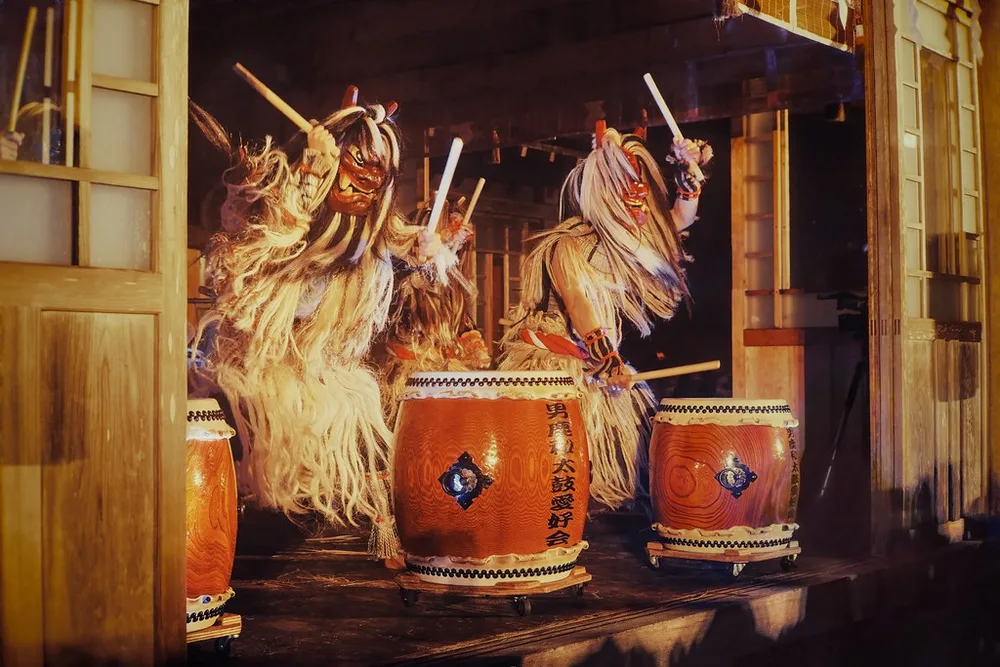
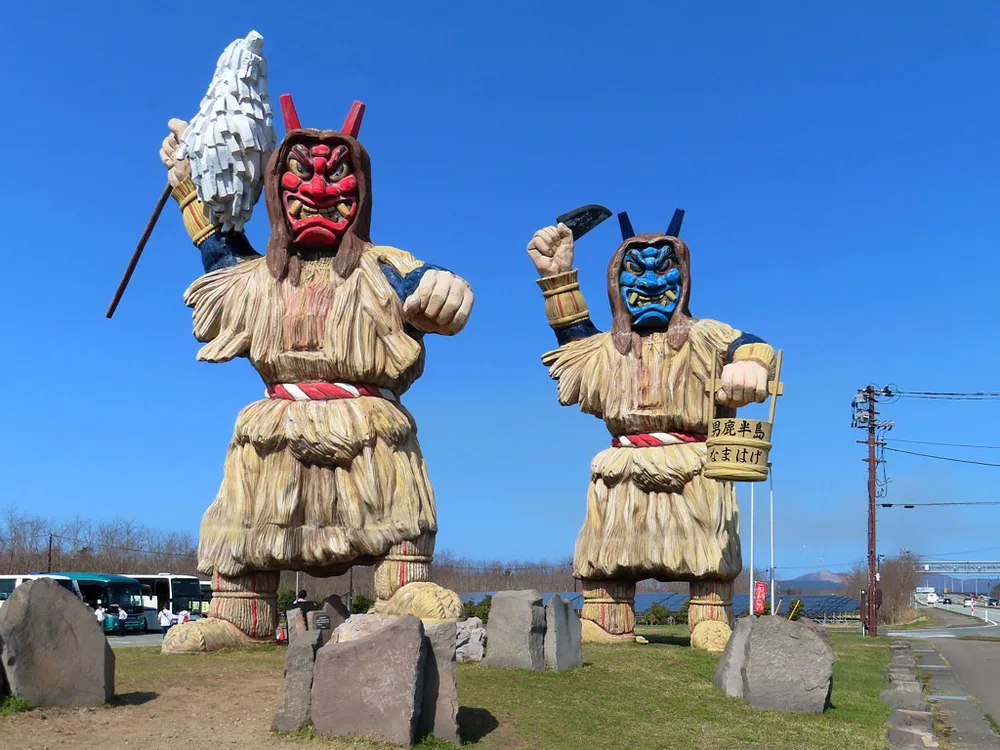
Oga is the only place in Japan where the Namahage tradition has survived intact as a living ritual rather than a reconstructed performance. The Namahage — fierce ogre-like deities who descend from the mountains on New Year's Eve to warn households against laziness — were added to the UNESCO Representative List of Intangible Cultural Heritage of Humanity in 2018. That status puts Oga in a short list of genuinely irreplaceable cultural experiences in Tohoku.
Beyond folklore, the peninsula's terrain is volcanic and varied. The western cliffs drop sharply into the Sea of Japan, while the interior rises to green highland plateaus that give way to fishing villages on the north shore. The contrast between dramatic coast and quiet rural Japan is the visual appeal. On a clear day from Kanpuzan, you can see across to the Shirakami Sanchi UNESCO mountains in the north and snow-capped Mount Chokai to the south.
Compared to other day trips from Akita — Kakunodate's samurai district or Lake Tazawa — Oga is distinctly less visited by international travellers. That works in your favour. Queues at the Namahage Museum are manageable even in peak autumn weeks, and the coastal road is quiet enough to pull over wherever you want for photos.
Getting to Oga Peninsula: Transportation from Akita
A rental car is the practical choice for a day trip. The drive from Akita Station to the Namahage Museum area takes about 60–70 minutes on Route 101. Rental agencies cluster around Akita Station; a compact car runs ¥6,000–¥10,000 for the day before fuel. Book at least two weeks ahead in autumn and during Golden Week. Parking at all main attractions is free.
Without a car, the JR Oga Line runs from Akita Station to Oga Station in roughly 45 minutes (around ¥750 each way). Trains run every 1–2 hours — check the Akita/Oga timetable before you travel, as the gap between trains can exceed 90 minutes in the middle of the day. From Oga Station, local Namahage Liner buses serve the Namahage Museum, Shinzan Shrine, and the Oga Aquarium GAO from late April through November. Service is reduced outside that window; confirm dates at Oga Station tourist information.
A taxi from Oga Station to the Namahage Museum costs around ¥2,500–¥3,000 one way. If you plan to hop between multiple stops without a car, budget for taxis rather than trying to time the infrequent buses. Some travellers hire a driver for the full day from Akita; ask your hotel concierge for locally-recommended operators.
One practical note: fuel up before leaving Akita City. Petrol stations exist on the peninsula, but they are scarce on the western coastal road near Nyudozaki. Running low there will cost you time you do not have on a day trip.
Book car rentals two weeks ahead. Akita Station rental agencies offer compact cars for ¥6,000–¥10,000 per day, but autumn Golden Week periods and cherry blossom season fill quickly. Booking in advance also locks in better rates than walk-up counter pricing.
Crafting Your Oga Peninsula Day Trip Itinerary
The key to a smooth day is doing the museums first, before families with children arrive mid-morning, and finishing at Nyudozaki Lighthouse in the late afternoon when the angle of light on the cliffs is best. Below is a sequence that works whether you drive or take the bus.
08:30 — Depart Akita Station. Aim to reach the Namahage Museum at opening time (08:30). This gives you roughly 30–40 minutes ahead of the first tour bus groups. If driving, park at the museum; if using the bus, check the first Namahage Liner departure from Oga Station.
08:30–11:00 — Namahage Museum and Shinzan Folklore Museum. The two museums are immediately adjacent. Spend 45–60 minutes in the Namahage Museum first, then cross to the Shinzan Folklore Museum for the live Namahage performance. The performance runs approximately 20 minutes and is the centrepiece of the visit. Allow 2–2.5 hours total for both.
11:15 — Shinzan Shrine. Walk five minutes from the museums to Shinzan Shrine. The main hall sits at the top of roughly 70 stone steps through cedar forest. Allow 20–30 minutes. It is quiet and worth the short climb.
12:00 — Lunch near Oga Aquarium GAO. The aquarium sits on the northern coast near Toga Bay. Several small restaurants around the aquarium serve Oga's famous Ishiyaki cuisine — broth poured over super-heated volcanic stones, which cooks the seafood in the bowl at the table. Expect to pay ¥1,500–¥2,500 for a set meal.
13:00–15:00 — Oga Aquarium GAO. Allow 90 minutes minimum inside. Last entry is 30 minutes before closing (typically 17:00 in peak season, 16:30 in winter). After the aquarium, the coastal road north brings you past Godzilla Rock — visible from the road.
15:30–17:00 — Nyudozaki (Cape Nyudo) and Lighthouse. End the day at the cape. Walk the lighthouse, check the 40th parallel monument, and watch the sun drop toward the horizon over open sea. Drive back to Akita via Route 101, arriving around 18:30–19:00.
| Attraction | Opening Time | Closing Time | Entry Fee | Time Needed |
|---|---|---|---|---|
| Namahage Museum | 08:30 | 17:00 | ¥1,000 | 45–60 min |
| Shinzan Folklore Museum | Varies | Varies | ¥880 | 30–40 min |
| Shinzan Shrine | Always open | Always open | Free | 20–30 min |
| Oga Aquarium GAO | 09:00 | 17:00 (16:30 winter) | ¥1,300 | 90–120 min |
| Kanpuzan Observatory | 09:00 | 18:00 | ¥500 | 45 min |
| Nyudozaki Lighthouse | Always accessible | Always accessible | ¥300 | 30–40 min |
| Godzilla Rock | Always accessible | Always accessible | Free | 5–10 min |
Must-See Oga Attractions: Museums and Culture
The Namahage Museum holds 150 hand-carved masks, each sourced from a different village on the peninsula. No two are identical; the faces range from wrathful red to icy white, and the craftsmanship is genuinely striking up close. One exhibit runs a short film showing a Namahage procession on New Year's Eve inside a traditional farmhouse. Admission is ¥1,000 for adults (verify current pricing). The museum opens at 08:30 daily and closes at 17:00.
The adjacent Oga Shinzan Folklore Museum operates inside a thatched-roof Magariya farmhouse — the L-shaped style where the stable connects to the living quarters. Visitors sit on tatami beside an irori (sunken hearth) while two Namahage performers stomp through the room demanding to know whether any lazy children are hiding. It is deliberately loud and physically close. The performance is in Japanese but the intent is unmistakable. Admission to both museums is ¥880 adult separately or combined with the Namahage Museum. Admission details are available at Oga Shinzan Folklore Museum.
Shinzan Shrine, a few minutes' walk from the museums, predates the folklore tradition by centuries. Mountain worshippers have used it since antiquity. A kaya tree on the grounds is estimated to be over 1,000 years old. In February each year, the Namahage Sedo Festival is held here — Namahage performers from different villages gather on the shrine grounds in a rare public display that normally happens only inside private homes. If your trip falls in the first or second weekend of February, this festival is worth building the entire itinerary around.
Parks, Gardens, and Outdoor Spots on Oga Peninsula
Mount Kanpuzan sits at the geographic centre of the peninsula, rising to 355 metres. Its summit holds a rotating observatory — the platform completes a full 360-degree circuit in 13 minutes — with views that span from the reclaimed paddy fields of Lake Hachirogata in the east to the Sea of Japan in the west. On a clear winter day the observatory's restaurant serves food while Chokai-san's snow cone fills the southern horizon. Admission to the observatory is around ¥500 for adults. Paragliding tandem flights are available with advance booking for visitors who want to see the green volcanic plateau from above.
Nyudozaki cape occupies the northernmost tip of the peninsula at exactly 40 degrees north latitude. The lighthouse here — officially the Irimizaki Lighthouse, known locally as Nyudozaki — wears a distinctive black-and-white striped pattern and is one of only 16 lighthouses in all of Japan (out of more than 3,000 in total) that visitors can actually climb. The climb gives an unobstructed view of open sea on three sides. Admission to climb the lighthouse is ¥300. Near the base, several small restaurants sell Oga-style Ishiyaki seafood; the combination of a lighthouse climb and a bowl of stone-cooked seafood makes this a worthwhile 60–90 minute stop even if the sky is grey.
Godzilla Rock sits on the northern coastal road between the aquarium and Nyudozaki. The rock formation earns its name only when the light angle is right — specifically in the hour around sunset, when the silhouette reads clearly as the kaiju's head facing the sea. There is no admission fee. Pull off at the marked lay-by on the coastal road; the formation is visible from the road without a short hike. Time your drive past it on the way to or from Nyudozaki for the best light.
Oga Aquarium GAO: What to Expect Inside
Oga Aquarium GAO exhibits roughly 400 species and 10,000 individual specimens, with an emphasis on creatures from the Sea of Japan and local Akita waters. The star draws are two polar bears — named Gouta and Yuki — who live in a large outdoor enclosure with an underwater viewing panel. The "Oga's Big Tank" recreates the local sea bottom during spring and autumn, complete with the grouper (hatahata), Akita's prefectural fish and the key ingredient in local shottsuru fish sauce.
General admission in 2026 is ¥1,300 for adults, ¥650 for children (verify at Oga Aquarium GAO before visiting). The aquarium opens at 09:00 and closes at 17:00, with last entry at 16:30. During winter months hours shorten slightly. The aquarium faces the sea and there is a small terrace where you can watch the sunset over the water — if your schedule allows lingering past 16:00, it is a genuinely good view.
Families should allow 90–120 minutes inside. There is a small play area and the polar bear feeding schedule (check the board at the entrance) is worth timing your visit around. The aquarium also has a souvenir shop and a café; the latter is a good option for a quick lunch if you skip the Ishiyaki restaurants on the coastal road.
Last entry closes 30 minutes before official closing time. The aquarium shuts down at 17:00 most months (16:30 in winter), meaning last entry is 16:30 or 16:00 respectively. If your day trip schedule slips and you are running late from earlier stops, call ahead to confirm you have enough time; entry restrictions are firm.
Planning Your Oga Day Trip: Essential Tips
Route your day clockwise from Akita: museums in the morning (interior of the peninsula), then head north to the aquarium, along the coast to Godzilla Rock and Nyudozaki, and return via the southern coastal road past the Oga Onsen area. This avoids backtracking and naturally ends at the lighthouse with afternoon light. The entire drive circuit, not counting stop time, is about 100 kilometres.
Budget roughly ¥4,000–¥5,000 per adult in admission fees for the full day: Namahage Museum (¥1,000), Shinzan Folklore Museum (¥880), Kanpuzan Observatory (¥500), Oga Aquarium GAO (¥1,300), Nyudozaki Lighthouse (¥300). Natural stops — Godzilla Rock, the cape grassland, the Shinzan Shrine grounds — are all free. Add ¥1,500–¥2,500 for one sit-down Ishiyaki meal and you are looking at a comfortable ¥8,000–¥10,000 all-in per person, excluding transport and the rental car.
For families travelling with young children, skip Kanpuzan Observatory if time is tight — the polar bear exhibit at GAO is a stronger draw for kids, and the observatory requires a separate drive inland. The Shinzan Folklore Museum performance is genuinely scary for children under about six years old; the Namahage deliberately target "badly behaved children" and the actors play it authentically. Older children tend to love it. Budget travellers can cut the observatory and skip paid lighthouse entry to reduce costs without missing the core experience.
The best seasons are late April through early November, when the Namahage Liner bus runs and the coastal road is fully accessible. Late September through early November adds autumn foliage to the cedar forests around Shinzan Shrine. Winter visits are viable by rental car but require careful weather monitoring — coastal roads can ice overnight and the bus service is reduced. February is worth considering specifically for the Namahage Sedo Festival.
A Local Detail Worth Knowing Before You Visit the Folklore Museum
When the Namahage performers stomp through the Shinzan Folklore Museum's tatami room, their straw costumes shed as they move. This is not incidental — the fallen straw is considered a charm against evil spirits, and collecting a piece is a quiet tradition for visitors who know to look for it. Staff will not stop you. Simply pick up a strand from the floor after the performance ends. It is a small thing, but it connects you to the ritual in a way that photographs do not.
The other detail worth knowing concerns the Nyudozaki Lighthouse itself. Most travel articles call it scenic and move on. What they skip is that the lighthouse is among a very small number in Japan — 16 out of more than 3,000 — that the public can actually climb to the top. The climb takes only a few minutes but the view from the lantern room level, looking straight down the striped tower to the rocky cape below and out to open sea, is different from any ground-level viewpoint. If you visit only for the grassland view and miss the tower itself, you have missed the main event.
Considering an Overnight Stay? Extending Your Oga Visit
A single day covers the core attractions without feeling rushed if you start by 08:30. Staying overnight makes sense in two scenarios: you want to visit the Namahage Sedo Festival in February (held over two days on the first or second weekend), or you want to spend a full morning hiking the Kanpuzan plateau trails without skipping the aquarium.
The Oga Onsen area on the southern coast has several ryokan with sea-facing onsen baths. Rates run from around ¥15,000 per person per night with two meals, which is competitive for a traditional Japanese inn in Tohoku. Evening at a ryokan gives you an experience that directly echoes the Namahage tradition — the feeling of a household at rest in a rural Japanese winter, which is the atmosphere the museums try to recreate. Booking three to four months ahead is advisable for the February festival period.
If you have one more day after Oga, the the Akita Kanto Matsuri context and Akita City's central sights — the Senshu Park, the Michi-no-Eki Port Tower Selion on the waterfront — fill a half-day without repeating the peninsula's themes. See also our full Akita Itinerary Ideas and the Getting to Akita by Train guide for arrival logistics.
Frequently Asked Questions
Is an Oga Peninsula day trip worth it from Akita?
Yes, an Oga Peninsula day trip is highly recommended for its unique Namahage culture and stunning coastal scenery. It offers a distinct Japanese experience, especially for first-time visitors to the Akita region. The trip is manageable within a day with proper planning.
How do I get to Oga Peninsula from Akita?
The most convenient way to get to Oga Peninsula from Akita is by renting a car, which takes about 60-75 minutes. Alternatively, you can take the JR Oga Line to Oga Station, then use local buses or taxis to reach the attractions. A rental car provides the most flexibility.
What is Namahage?
Namahage are legendary demon-like deities from Oga Peninsula folklore, traditionally visiting homes on New Year's Eve to admonish laziness and bring good fortune. The Namahage Museum and Shinzan Folklore Museum provide excellent insights into this unique cultural tradition. It is a fascinating part of Akita's heritage.
An Oga Peninsula day trip from Akita delivers something most day trips cannot: a cultural tradition that is genuinely irreplaceable and a coastal landscape that the rest of Japan has not discovered at scale. Start early, route your day clockwise, and do not skip the lighthouse climb or the Folklore Museum performance. Those two experiences — one ancient, one quietly remarkable — are what separate a day trip worth taking from a day trip worth remembering.
Free guide: Japan's Hidden Gems
12 under-the-radar places beyond Tokyo & Kyoto — with the best season to visit each and a local tip you won't find in the guidebooks.
You might also like


Continue reading
More guides you'll find useful


