
Lake Tazawa Day Trip: Your Essential Travel Guide
Plan your lake tazawa day trip with top picks, timing tips, and practical booking advice for a smoother journey from Kakunodate.
On this page
A Lake Tazawa day trip from Kakunodate is one of the most rewarding half-day excursions in Tohoku. Japan's deepest lake sits at 423.4 meters and turns a cobalt blue that shifts to indigo depending on the light and weather. You reach it in under 15 minutes by Shinkansen from Kakunodate — enough time for a full morning at the water's edge and an afternoon exploring either the legendary shrine circuit or Nyuto Onsen's mountain hot springs.
This guide covers the transport options from Kakunodate, Morioka, and Akita City with real fares and times, the key sights in order around the lake, the TAKKO MaaS pass that simplifies bus travel, and two seasonal itineraries for 2026. It also flags the one timing trap that catches most first-timers and costs them the last bus back to the station.
Why Choose Lake Tazawa for a Day Trip?
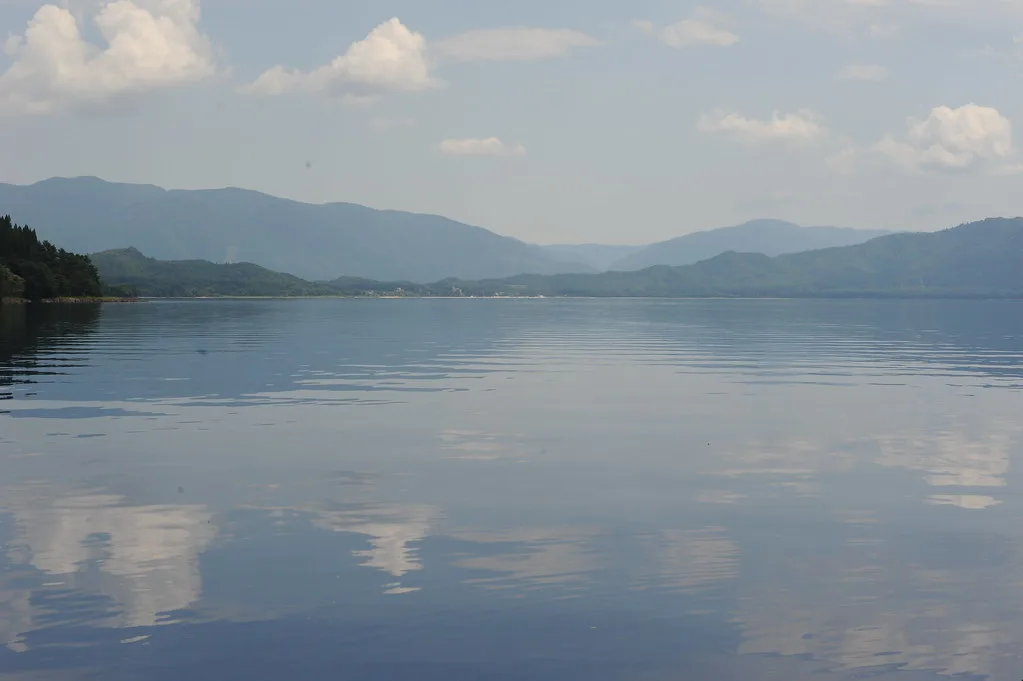
Lake Tazawa is the deepest lake in Japan and one of only about 30 in the world that never freezes in winter — a trait explained, in local legend, by the dragon gods Tatsuko and Hachiro Taro warming the water from below. The surface colour cycles through lapis lazuli, azure, and deep indigo across a single afternoon, making it unlike any other lake in Tohoku. It has been designated one of Japan's 100 most scenic spots.
For day-trippers from Kakunodate, the combination of samurai district in the morning and lakeside landscape in the afternoon is hard to beat. The two towns are separated by one Shinkansen stop, which removes the usual travel fatigue of Tohoku day trips. You are at the water's edge within 25 minutes of leaving Kakunodate Station.
The lake also suits different types of visitors. Families gravitate toward the dock at the eastern shore to feed ugui (carp-like freshwater fish) that follow people back and forth along the pier — an activity that can absorb 40 minutes without anyone noticing. Active visitors cycle the lakeside road or rent kayaks. Those who prefer a slower pace take the 40-minute sightseeing boat cruise that passes the Tatsuko Statue and circles the western shore.
Getting to Lake Tazawa: Transport Options and Fares
Tazawako Station is the gateway to the lake and sits on the Akita Shinkansen Komachi line. From Kakunodate, the Shinkansen takes approximately 10 minutes and a non-reserved seat costs around ¥1,000–¥1,500. From Morioka, the ride is roughly 30 minutes at a similar fare structure of about ¥2,500–¥3,000. From Akita City heading east, the journey runs about 50 minutes. If you hold a JR Pass (East or nationwide), the Shinkansen is fully covered — this is the route where a pass pays for itself quickly.
A local train (the Tazawako Line) also connects these cities but runs less frequently and takes around 70 minutes from Morioka. The local train fare from Morioka runs about ¥860, versus ¥2,800 or more by Shinkansen without a pass. For a day trip starting early in Kakunodate, the Shinkansen is worth the small premium: it lets you arrive at the lake by 09:00 and gives you a full seven hours before the last bus back to the station at around 17:10.
If you are combining the lake with Kakunodate's samurai district, plan the samurai walk first (it opens around 09:00 and is best before noon), then catch a mid-morning Shinkansen to Tazawako. This sequencing avoids the crowd surge at the Tatsuko Statue between 10:00 and 13:00 when tour buses arrive.
| Route | Duration | Fare (Regular) | Best for |
|---|---|---|---|
| Kakunodate → Tazawako (Shinkansen) | 10 min | ¥1,000–¥1,500 | Day trips from Kakunodate; covered by JR Pass |
| Morioka → Tazawako (Shinkansen) | 30 min | ¥2,500–¥3,000 | Multi-city itineraries |
| Morioka → Tazawako (Local Tazawako Line) | 70 min | ¥860 | Budget travelers; less frequent service |
| Akita City → Tazawako (Shinkansen) | 50 min | ¥2,500–¥3,000 | Starting from Akita City |
| Station → Lakeside (Bus: Lake Circular Line) | 10–12 min | ¥370 one-way | Single-stop trips; TAKKO MaaS better for multiple stops |
Morning at Lake Tazawa: Iconic Sights and Activities
Step off the bus at the eastern shore pier and spend time at the dock before anything else. The water here is shallow enough to see the bottom, and schools of ugui crowd the surface when they spot visitors. A box on the pier sells bags of fish food for a small fee. This is not a tourist gimmick — the fish are genuinely trained and remarkably responsive, following people along the dock in packs. It is worth 20–30 minutes before you move on.
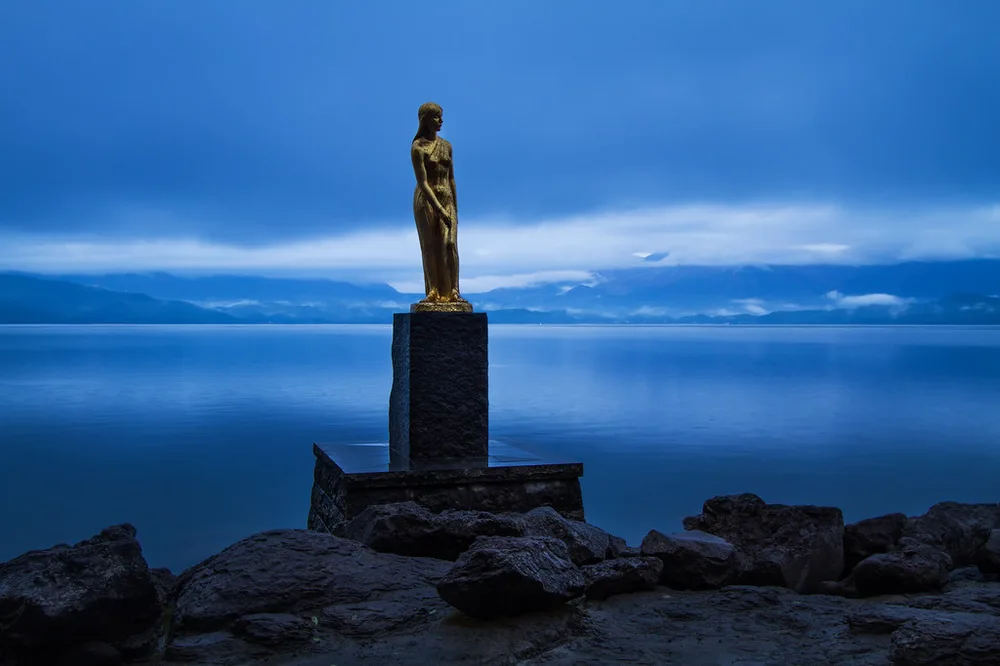
The most famous sight at the lake is the Statue of Tatsuko on the southwestern shore, reachable by bus in about 10–12 minutes from the eastern pier. The golden statue depicts Tatsuko, a young woman from the Senboku area who, according to legend, wished so fervently to preserve her beauty forever that she was transformed into a dragon and sank into the lake. The deeper legend connects her to Hachiro Taro, a dragon from Hachirogata lagoon who fell in love with Tatsuko. As the two made Lake Tazawa their home, the lake grew deeper and stopped freezing; Hachirogata, losing its master, gradually became shallower until it was reclaimed for farmland in the 20th century. There are actually three Tatsuko statues around the lake — the golden one here, Tatsuko Kannon on the east shore, and Tatsuko Hime on the grounds of Gozanoishi Shrine to the north. The small Kansagu Shrine immediately beside the golden statue is considered a power spot for marriage.
The three Tatsuko statues are spread around the lake: the iconic golden statue on the southwestern shore (near Kansagu Shrine), Tatsuko Kannon on the east shore, and Tatsuko Hime on the grounds of Gozanoishi Shrine to the north. Grouping your shrine visits in a northern loop via Gozanoishi saves travel time and deepens the dragon goddess legend across multiple sites.
Gozanoishi Shrine on the northern shore is the second major stop and is often combined with a short lakeside walk. The shrine enshrines Tatsuko Hime no Kami and its red torii gate is a popular photo spot. At the entrance you will pass the Spiritual Fountain of Katagashira, the spring where Tatsuko is said to have drunk the water that began her transformation. Allow 20–30 minutes here. The rocky shoreline beyond the shrine holds a second torii gate right at the water's edge — the best photograph of the day for most visitors.
The Lake Tazawa Kunimasu Trout Museum sits on the southern shore near the mid-lake harbour. The Kunimasu trout was believed extinct for over 70 years until a living population was discovered in Lake Saiko in Yamanashi in 2010 — descendants of fish transferred from Lake Tazawa before the lake's pH was deliberately lowered by an upstream hydroelectric project in the 1940s. The museum covers this story in detail and opens approximately 09:00–16:00. Admission runs around ¥310 for adults. Many lakeside restaurants in 2026 now serve Kunimasu dishes — grilled or as part of a set meal — since restocking efforts have made the fish commercially available again.
Getting Around the Lake: Buses, TAKKO MaaS, and Bike Rental
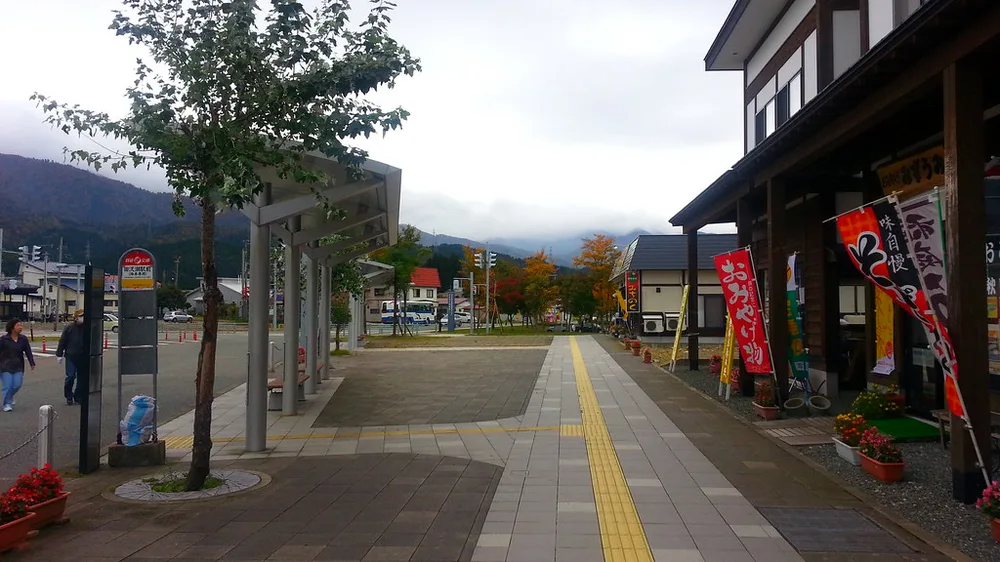
Ugo Kotsu operates the Lake Circular Line bus that loops from Tazawako Station around the lake and back, stopping at the Tatsuko Statue, Gozanoishi Shrine, and a handful of other lakeside points. Buses run approximately every 30–60 minutes from around 08:30 to 17:10. A single one-way ticket from the station to the lakeside is around ¥370. The full loop takes about 50 minutes without stops. Bus times are posted at Tazawako Station's tourist information desk, where staff speak enough English to help you plan your route.
The TAKKO MaaS digital pass is the most convenient option if you plan to hop on and off the bus multiple times. It covers unlimited rides on the Lake Circular Line and the Nyuto Line to Nyuto Onsen for a set daily price — typically around ¥1,200–¥1,500 for a one-day lake area pass in 2026. You can purchase it through the TAKKO MaaS smartphone app before departure or at the information counter at Tazawako Station on arrival. If you are combining lake sightseeing with Nyuto Onsen in the same day, the pass pays for itself after two or three segments.
Bike rental is available at the shop near the bus stop at the eastern shore. Prices in 2026 run around ¥1,500 per hour or ¥4,000 for a full day for a standard bicycle; e-bikes typically cost ¥2,000–¥2,500 per hour. The lakeside road is mostly flat and scenic on the western and northern shores, where the road runs closer to the water. Renting for two to three hours covers the best stretch — from the Tatsuko Statue area to Gozanoishi Shrine and back — without the time pressure of walking the full 20-kilometre perimeter. If you plan to cycle the full loop, allow four to five hours and know that the shop closes around 17:00 (verify on the day).
Afternoon Options: Nyuto Onsen or a Return to Kakunodate
Nyuto Onsen Village sits about 20 minutes by bus from Tazawako Station via the Nyuto Line, deeper into the mountains north of the lake. It consists of seven separate hot spring resorts — Tsuru no Yu, Ganiba Onsen, Magoroku Onsen, and four others — each with its own water source and character. Tsuru no Yu is the most famous and most photographed, with outdoor baths in a forest clearing, but it requires advance booking for overnight stays. Day bathers can usually enter for around ¥600–¥800 per person at most of the seven baths during off-peak hours.
The Yumeguri Map pass (¥600 in 2026) covers unlimited rides on the Yumeguri-go bus that circles the seven resorts for one day. A combined pass called the Yumeguri-cho booklet (¥1,800) bundles the bus pass with bathing fees for all seven springs. Both are available at the front desk of any Nyuto inn. If you are only stopping at one or two baths before heading back, the individual entrance fees are cheaper. Afternoon light in the forest at Nyuto is particularly good from October through mid-November when the foliage peaks.
If you prefer to return to Kakunodate rather than extend to Nyuto, you have time in the afternoon for Kabazaiku cherry bark craft workshops in town or a second pass through the samurai street at golden hour. The light on the black-walled residences between 15:00 and 17:00 is noticeably better for photography than midday. A craft session at the Semboku City Kakunodate Kabazaiku Center requires a reservation (Tel. 0187-43-3353) and takes about 60–90 minutes.
The Timing Trap Every First-Timer Should Know
The most common mistake at Lake Tazawa is misjudging the last bus back to Tazawako Station. The Lake Circular Line runs its final departure from the lakeside stops at around 17:10 (verify the 2026 schedule at Tazawako Station on arrival, as exact times shift seasonally). If you are walking the full 20-kilometre lake perimeter, you need to start no later than 10:00 and maintain a steady pace — the walk takes four to five hours, and side trips to shrines add more. Walkers who dawdle at the dock or the Tatsuko Statue area through midday routinely miss the last bus by five to fifteen minutes.
The consequence is a long wait: evening bus frequency drops sharply, sometimes to one bus per hour or less after 17:00. In quieter months outside summer, some evening services are cancelled entirely. Taxis are available at Tazawako Station but not always immediately at the lakeside — mobile data for booking is reliable, but the response time may add 20–30 minutes. Building in a 30-minute buffer before the last bus is the simplest fix. If you are cycling or using the circular bus to hop between stops, this is not a concern — but walkers should track their position relative to the clock from midday onward.
The Lake Circular Line's final bus departs the lakeside stops around 17:10. If you are walking the full 20-kilometre perimeter, start no later than 10:00. Missing the last bus by even 10 minutes traps you in an evening wait — frequency drops to one bus per hour after 17:00, and taxis from the lakeside may take 20–30 minutes to arrive. Cyclists and bus hoppers have flexibility; walkers must build in a 30-minute buffer and track the clock from midday onward.
The ORAE craft brewery near the eastern shore is worth a stop but keep its hours in mind. Opening times have been inconsistent and the brewery has occasionally closed early without updating online listings. Check their current social media the morning of your visit before building an end-of-day plan around it.
Seasonal Guide: What to Expect at Lake Tazawa in 2026
Spring (late April to late May) brings the best cycling weather before the summer humidity arrives. Cherry blossoms bloom in Kakunodate from late April — the weeping cherries along the samurai street are nationally protected — but the lake itself has little blossom coverage. Combine a morning in Kakunodate for the cherries with an afternoon at the lake for the best of both.
Summer (July to August) is peak season for water activities. The lake cruise runs full schedules, kayak and SUP rentals are available at the eastern shore, and the water is warm enough for swimming in designated areas. This is also the most crowded period; tour buses arrive between 10:00 and 13:00, and the Tatsuko Statue area fills quickly. Arriving before 10:00 or after 14:00 makes a noticeable difference.
Autumn (mid-October to early November) is widely considered the best time to visit. The hills around the lake turn red and gold, the temperature drops to comfortable walking range, and the lake's blue surface deepens in tone against the foliage. The Gozanoishi Shrine path is particularly striking with fallen leaves. Nyuto Onsen baths feel especially rewarding after a cool afternoon at the lake.
Winter (December to March) sees reduced bus frequency and some lakeside facilities close or cut hours. The lake does not freeze — the Tatsuko legend is borne out by the science — but snow covers the surrounding hills and roads can be icy. Visitors who come specifically for the snow-and-water contrast find it dramatic; for everyone else, this is the season to skip unless you are staying overnight at a Nyuto ryokan.
Sample Day Trip Itineraries for Lake Tazawa
Two itineraries cover the most common visitor profiles. Both start from Kakunodate Station and target a full seven-hour day at the lake.
Itinerary A — Culture and Water (recommended for first-timers): 08:30 Shinkansen from Kakunodate to Tazawako Station. 08:45 Take the first bus toward the eastern shore pier; spend 20–30 minutes at the dock feeding the fish. 09:30 Bus to Tatsuko Statue area (about 10–12 minutes); 45 minutes for the statue, Kansagu Shrine, and a coffee at one of the nearby cafes. 11:00 Bus to Gozanoishi Shrine on the northern shore; 30 minutes at the shrine and the waterside torii. 12:00 Return bus to the mid-lake harbour area; lunch at a lakeside restaurant (try Kunimasu set meal if available). 13:30 40-minute lake cruise from the eastern pier. 15:00 Visit Kunimasu Trout Museum (until 16:00). 16:30 Final bus from eastern shore back to Tazawako Station. 17:00 Shinkansen to Kakunodate or onward.
Itinerary B — Active Day with Nyuto Onsen: 09:00 Shinkansen from Kakunodate to Tazawako Station. 09:20 Rent a bicycle at the eastern shore shop. 09:30–12:30 Cycle from the eastern shore clockwise to the Tatsuko Statue, Gozanoishi Shrine, and back — approximately 12–15 kilometres with stops. Return bike by 13:00. 13:30 Bus from Tazawako Station on the Nyuto Line to Nyuto Onsenkyo (about 30–40 minutes). 14:00–16:00 Bathe at one or two of the seven springs using the Yumeguri Map pass. 16:30 Bus back to Tazawako Station. 17:15 Shinkansen return to Kakunodate or Morioka.
Local Food and Souvenirs at Lake Tazawa
Kunimasu trout is the most distinctive food specific to Lake Tazawa and the one dish no competitor consistently highlights for where to eat it. The fish was considered extinct from 1940 until 2010, when a population was found in Lake Saiko. Restocking efforts have made it commercially available again, and as of 2026 several lakeside restaurants near the Tatsuko Statue area and the mid-lake harbour offer Kunimasu grilled or in a lunch set. Prices typically run ¥1,500–¥2,500 for a set. If you see it on a menu, order it — it is genuinely local to this lake in a way no other dish here is.
Kiritanpo is the regional staple of Akita Prefecture — grilled rice moulded onto a skewer, often simmered in a miso-based hotpot with chicken and burdock root. In autumn and winter it appears at restaurants around Tazawako Station and in Kakunodate. Inaniwa Udon, a thin, silky noodle from southeastern Akita, is available year-round at most stations and restaurants across the prefecture. Akita sake is brewed with some of Japan's coldest snowmelt water, producing a soft, clean style; look for bottles from Tazawako Brewery at the souvenir shops near Tazawako Station.
For souvenirs, Kabazaiku cherry bark woodcraft is the signature product of the Kakunodate area — tea caddies, trinket boxes, and accessories finished with the distinctive reddish-brown bark. The Cafe & inn That Sounds Good near the lake also stocks local jams and preserves made from Akita fruits. Rice crackers using Akita Komachi rice, considered among the best short-grain varieties in Japan, are compact and make practical gifts for the train home.
Frequently Asked Questions
Which lake tazawa day trip options fit first-time visitors?
First-time visitors should focus on the Tatsuko Statue, Gozanoishi Shrine, and a lake cruise. These iconic spots offer a comprehensive introduction to Lake Tazawa's beauty. Consider using the TAKKO MaaS pass for easy bus travel around the lake.
How much time should you plan for a lake tazawa day trip?
Plan for a full day, ideally 7-8 hours, including travel from Kakunodate. This allows ample time for sightseeing, a lake activity, and enjoying a local meal. An earlier start maximizes your exploration time at the lake.
What should travelers avoid when planning a lake tazawa day trip?
Avoid underestimating bus travel times around the lake or skipping advance booking for peak season activities. Also, do not rely solely on walking the lake's perimeter; it is quite large. Always check bus schedules and attraction hours.
Is a lake tazawa day trip worth including on a short itinerary?
Absolutely. A lake tazawa day trip is a fantastic addition to any short itinerary, especially if you are based in Kakunodate or Akita. It offers a beautiful natural contrast to historical sites and is easily accessible by Shinkansen.
A Lake Tazawa day trip from Kakunodate packs Japan's deepest lake, a golden dragon goddess, outdoor activities, and one of the country's most celebrated hot spring villages into a single manageable day. The Shinkansen connection keeps logistics simple. The main variable is how you use the hours between 09:00 and 17:00 — bus, bike, boat, or a combination — and knowing where the last bus departs so the day does not end on a missed connection.
Pick up the TAKKO MaaS pass at Tazawako Station on arrival, build your route around the Tatsuko Statue and Gozanoishi Shrine as anchor points, and leave room for the dock fish-feeding that first-timers always wish they had discovered earlier. Whether you extend to Nyuto Onsen or return to Kakunodate for an evening meal, the lake will have done what it does best: slow everything down for a few hours while the water changes colour in the background.
For trip-planning details, see Lake Tazawa on Wikipedia and the official Akita travel guide.
Lake Tazawa sits on the Komachi line between Kakunodate and Akita.
Free guide: Japan's Hidden Gems
12 under-the-radar places beyond Tokyo & Kyoto — with the best season to visit each and a local tip you won't find in the guidebooks.
You might also like


Continue reading
More guides you'll find useful


