

Kakunodate Cherry Blossoms Travel Guide: Best Time, Spots & Tips
Plan your Kakunodate cherry blossoms trip with our comprehensive guide. Discover best viewing times, top spots like the Samurai District and Hinokinai Riverbank, festival details, and essential travel tips.
On this page
Kakunodate in Akita Prefecture holds one of Japan's most celebrated cherry blossom experiences. The town is preserved almost exactly as it was during the Edo period, with wide avenues lined by dark wooden samurai residences. When the sakura arrive each spring, the contrast between those black earthen walls and cascading pink blossoms is unlike anything else in Tohoku. The town is famously called "Michinoku's Little Kyoto," and in late April, the nickname feels entirely justified.
What makes Kakunodate genuinely special — and what most visitors don't realize until they arrive — is that it has two completely distinct cherry blossom displays that peak at slightly different times. Around 400 weeping cherry trees (Shidare-zakura) fill the samurai district. A matching 400 Someiyoshino trees line the two-kilometer Hinokinai Riverbank nearby. Understanding which trees bloom when is the single most important planning decision you'll make for this trip.
Bloom timing runs roughly two weeks later than Tokyo. Plan for mid-to-late April (April 15–25) as the most reliable window. The Shidare-zakura in the samurai district typically peak April 17–20, while the Someiyoshino along the riverbank peak April 20–25, creating a 3–5 day overlap ideal for catching both in a single visit.
Best Time to Visit: Cherry Blossom Festival Schedule & Blooming Forecasts
The Kakunodate Cherry Blossom Festival typically runs from mid-April through early May, timed to coincide with both the weeping cherry and Someiyoshino peaks. In 2026, the Shidare-zakura in the samurai district were confirmed past peak by April 20, while the Hinokinai Riverbank Someiyoshino were still at "petals starting to fall" on the same day — meaning full bloom along the river ran roughly April 14–19. In 2025, the full bloom report was filed on April 23 for both sites simultaneously. In 2024, peak was logged on April 17. This gives you a working window: plan for mid-to-late April, targeting April 15–25 as the most reliable span.
The festival brings food stalls along the riverbank open from 10:00 to 22:00 daily. Evening illuminations run from 17:30 to 22:00 in the samurai district and from 17:30 to 24:00 along the Hinokinai Riverbank, both typically through May 5. These dates hold fairly consistently year to year but should be confirmed via the official Tazawako-Kakunodate tourism site before you book. For real-time bloom forecasts, Japan-Guide.com publishes field reports from Kakunodate every year during the season, usually with updates every two to three days when conditions are changing fast.
Weather is the biggest variable. A warm March pulls peak blooms into early April; a cold spring can delay them past April 25. Check forecasts in the final two weeks before you travel rather than locking in dates four months out. If your schedule is fixed, aim for April 20–22 — this is statistically the safest window based on historical data from 2011 onward, with confirmed full bloom recorded in that range across most years.
Weeping Cherries vs. Someiyoshino: The Blooming Offset That Changes Your Plans
Every competitor guide treats these two sets of trees as essentially simultaneous. They are not. The Shidare-zakura (weeping cherry) in the samurai district consistently peak three to five days ahead of the Someiyoshino along the Hinokinai Riverbank. This is normal botanical behavior: weeping cherries are a cultivated variety that responds earlier to accumulated heat. In a typical year, the samurai district hits full bloom around April 17–20, while the riverbank hits full bloom around April 20–25.
In 2026 this gap was especially visible: the samurai district weeping cherries were already past their best by April 20, while the riverbank Someiyoshino were still near their peak on the same day. In 2025, both sites happened to peak simultaneously on April 23. In 2024, the field report was filed on April 17 covering both. The lesson is that same-day joint peak is possible but not guaranteed — you should build at least two days into your trip to improve your odds of catching both.
If you have only one day and must choose: arrive April 17–19 and you prioritize the weeping cherries in the samurai district at their best, with the riverbank at or approaching full bloom. Arrive April 21–24 and you get the riverbank at peak but risk finding the samurai district already thinning. For most visitors, the samurai district is the signature image of Kakunodate — if you can only nail one peak, lean earlier.
Peak weekends bring significant crowds and tour buses to both viewing areas. Arrive on the first or second shinkansen of the day (07:30–08:30 arrival) to avoid peak congestion, or visit on weekdays when the samurai district and riverbank remain noticeably quieter. Parking lots at the riverbank fill by 09:00 on sunny days during peak season.
Kakunodate Samurai District: Michinoku's Little Kyoto and the Weeping Cherries
The the Bukeyashiki Samurai Quarter is where the cherry blossom experience reaches its highest point. Wide avenues run between walled estates, with roughly 400 Shidare-zakura planted inside and alongside the properties. The trees were reportedly brought from Kyoto over 300 years ago, which is why their variety and form feel different from the sakura you see elsewhere in Tohoku. Their long, drooping branches arch toward the ground, creating canopies of pink that frame the dark wooden gates and earthen walls beneath them.
Six historic residences are open to the public. the Ishiguro House and Aoyagi House are the most visited, both offering a look at Edo-period samurai domestic life alongside some of the largest and most dramatic weeping cherry specimens in the district. The Cherry Bark Woodcraft Museum (Kakunodate Denshokan) sits on the northern edge and is surrounded by Someiyoshino trees — useful to note because it can still look impressive even after the Shidare-zakura in the main district have peaked. Entry to most residences costs between 300 and 500 JPY per site; the outer avenues and gardens are free to walk.
The best photographs in the samurai district come in the morning before 09:00, when tour buses haven't yet arrived and the light is low and directional. By 10:30 on a good weather day, the main avenue is packed. The observation deck at one of the elevated garden points gives aerial views of cherry trees extending over the roofline — worth the small entry fee for that angle alone. Explore the side lanes east of the main avenue too: fewer crowds and some of the oldest individual trees.
Hinokinai Riverbank: The Someiyoshino Tunnel and Festival Atmosphere
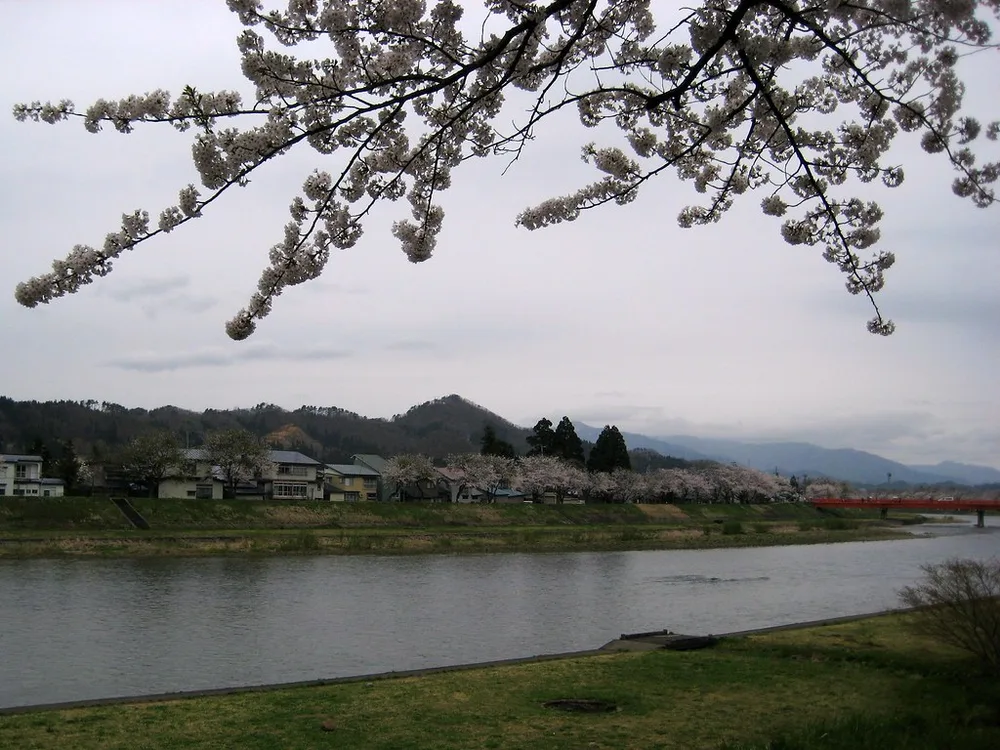
A short walk from the samurai district — roughly 10 minutes on foot — the Hinokinai Riverbank delivers a completely different visual experience. Around 400 Someiyoshino cherry trees line a two-kilometer stretch of the river's western bank, their branches meeting overhead to form the tunnel of blossoms that has become one of Kakunodate's most-photographed scenes. At full bloom, the tunnel effect is best seen from the southern entry point, walking north, with the river visible through gaps in the trees on your right and mountains visible in the distance on clear days.
| Viewing Spot | Tree Type | Tree Count | Peak Bloom | Signature Feature | Best Time |
|---|---|---|---|---|---|
| Bukeyashiki Samurai District | Shidare-zakura (Weeping) | ~400 | April 17–20 | Dark wooden gates framed by drooping pink canopies | Before 09:00 (fewer crowds) |
| Hinokinai Riverbank | Someiyoshino | ~400 | April 20–25 | Two-kilometer tunnel of blossoms over the river | 17:30–18:30 (post-illumination light) |
During the festival period, food stalls operate along the parking area near the riverbank from 10:00 to 22:00. Local vendors sell Akita specialties including kiritanpo (grilled rice skewers), local sake, and yakisoba. The riverbank is also well suited to picnics: the grass strips between the road and the water stay accessible during daylight hours. This is a more open, sun-exposed spot than the samurai district, so it gets crowded quickly on good weather days. Tour buses counted in the dozens during peak years — 20 or more on a single morning is documented.
The best riverbank access points are at the southern end near Kakunodate Station (a 10-minute walk) and from the northern end via bicycle, which you can rent near the station for around 300 JPY per hour. Cycling the full two-kilometer length and back takes about 30 minutes and lets you cover the tunnel in both directions without doubling back on foot. The northern end of the riverbank is consistently less crowded than the southern stretch closest to the festival stalls.
Cherry Blossoms at Night: Illuminations in the Samurai District and Riverbank
From the start of peak bloom through May 5, both viewing areas are illuminated after dark. The samurai district lights run from 17:30 to 22:00, casting warm uplighting on the weeping cherry trees and the wooden walls behind them. The riverbank illuminations run longer — from 17:30 to 24:00 — and create a sustained pink glow along the full length of the Someiyoshino tunnel. Food stalls stay open through the illumination period, so the riverbank remains lively well into the evening.
Night viewing in the samurai district has a different mood from the daytime crowds. The streets quiet down noticeably after 20:00 as day-trippers head back to Akita or Morioka. If you are staying overnight in Kakunodate — or arriving late from a shinkansen connection — the evening hours between 20:00 and 21:30 offer something close to a private viewing of the lit weeping cherries. The contrast of soft light against dark wooden fences is especially photogenic in this window.
For photography at night, a tripod is essential. The illumination levels are sufficient for atmosphere but not bright enough for handheld shots at acceptable shutter speeds. Wider aperture primes in the 24–35mm range work well for capturing individual trees and their surroundings in a single frame. The riverbank at 17:30–18:30, just after the lights switch on while there's still ambient dusk light in the sky, gives the most usable exposures without full darkness and the most color depth in the blossoms.
Getting There, Staying Over, and Managing the Crowds
Kakunodate is a stop on the Akita Shinkansen line. From Tokyo (Tokyo Station), the Komachi service reaches Kakunodate Station in approximately 3 hours and 10 minutes. From Sendai, you can connect via the Tohoku Shinkansen to Morioka and then the Akita Shinkansen southbound, with total journey time around 2 hours. From Akita City, a local limited express takes about 45 minutes. The Japan Rail Pass covers all Shinkansen access and is cost-effective if you're combining Kakunodate with other Tohoku stops. Kakunodate Station itself is about 10 minutes on foot from the samurai district entrance.
Accommodation inside Kakunodate is limited — a handful of ryokan and small hotels — and books out months in advance for the cherry blossom window. Check availability by January for an April trip. If you can't secure a room in town, Akita City has a wider hotel supply and makes a workable base for a day trip to Kakunodate. Akita City is 45 minutes by train, and the first shinkansen from Tokyo typically arrives mid-morning, making a same-day return feasible if you leave by 17:00. Alternatively, Morioka to the north is a similarly sized base and is closer to Hirosaki, which lets you combine both towns across two days during peak sakura season.
On peak weekends in late April, Kakunodate receives significantly more visitors than its infrastructure was designed for. Tour buses arrive early, parking lots fill by 09:00, and the main avenues of the samurai district become congested by mid-morning. Practical mitigation: arrive on the first or second shinkansen of the day (typically 07:30–08:30 arrival at Kakunodate), visit the samurai district first while it's calm, then move to the riverbank as crowds shift. Weekday visits are noticeably quieter. Avoid the central food stall area of the riverbank between noon and 15:00 — it's the single densest point of the whole site during festival hours.
Beyond the Blossoms: Kabazaiku Craft and Lake Tazawa
Kakunodate is Japan's center for Kabazaiku, a traditional craft that uses wild cherry bark to produce lacquered boxes, tea caddies, and containers. The technique has been practiced here for over 200 years, and the town has a protected designation as the home of this craft. The Kakunodate Denshokan (Tradition and Culture Museum) has a workshop area where you can watch artisans at work, and the gift shop sells pieces ranging from small keychains at around 1,000 JPY to premium lacquerware boxes above 30,000 JPY. For more detail on local crafts and historic sites, see our Things to Do in Kakunodate guide.
Lake Tazawa is 20 minutes from Kakunodate Station by local bus and offers a completely different character. Japan's deepest lake sits at a higher elevation and is known for its intensely blue water — a result of exceptional clarity rather than sky reflection. A rental bicycle loop around part of the lakeshore takes around 90 minutes. The Tatsuko Hime golden statue near the water is one of the most recognized landmarks in Akita Prefecture. Lake Tazawa typically has not yet thawed into full seasonal activity during cherry blossom weekend, but the backdrop of the surrounding mountains with lingering snow makes it scenic in its own right.
Essential Tips for Your Visit
Book your shinkansen and accommodation as early as possible — ideally by January or February for an April visit. Tickets on the Akita Shinkansen sell out on peak weekends, particularly over the Golden Week bridge period (late April into early May). The Japan Rail Pass is worth calculating against point-to-point fares if you plan to visit multiple Tohoku cities; Tohoku-only itineraries sometimes favor individual ticket purchases, so check both.
Dress in layers. Kakunodate in late April averages 10–15°C during the day and can drop below 5°C after dark. The riverbank is exposed to wind off the water, which makes evenings colder than the temperature reading suggests. Comfortable walking shoes matter — you will cover at minimum three to four kilometers between the samurai district and riverbank, plus the station approaches, often on uneven stone paths inside the historic residences.
Watch the weather in the two days before and after your planned visit. Rain strips petals rapidly, and a single heavy overnight rain during peak bloom can end the display within 24 hours. Mild overcast is actually favorable for photography (softer shadows, richer petal color) and for viewing comfort. Wind on clear sunny days causes petal fall ("hanafubuki") which is beautiful to watch but shortens the viewing window. A weather check at 48–72 hours out is more reliable than long-range forecasts for making any last-minute travel adjustments.
Frequently Asked Questions
When is the best time to see cherry blossoms in Kakunodate?
The best time is typically late April to early May. Weeping cherries in the Samurai District often peak around April 25th to May 5th. Someiyoshino trees along the Hinokinai Riverbank bloom slightly earlier.
How long do cherry blossoms last in Kakunodate?
Each type of cherry blossom typically lasts about one week at its peak. However, with two main types, the overall viewing season in Kakunodate can extend for up to two weeks. Weather conditions can shorten or lengthen this period.
Are there night illuminations for cherry blossoms in Kakunodate?
Yes, both the Samurai District and the Hinokinai Riverbank feature evening illuminations. These usually coincide with the Kakunodate Cherry Blossom Festival dates. Check local tourism sites for exact timings and locations.
What are Shidare-zakura (weeping cherry) in Kakunodate?
Shidare-zakura are weeping cherry trees, known for their elegant, drooping branches. Kakunodate's samurai district is famous for its historic Shidare-zakura. These trees create a distinct and beautiful floral display.
How to avoid crowds during cherry blossom season in Kakunodate?
Visit popular spots early in the morning or late in the afternoon. Explore lesser-known side streets in the samurai district for quieter moments. Consider visiting on weekdays if your schedule allows.
Kakunodate's cherry blossoms offer an unparalleled blend of natural beauty and historical charm. Whether you are captivated by the elegant weeping cherries or the river's pink tunnel, it is a truly magical experience. Planning your visit during late April to early May ensures you witness this spectacle. The vibrant atmosphere of the festival adds to the allure.
Remember to book early, pack wisely, and immerse yourself in the local culture. Kakunodate is more than just cherry blossoms; it is a journey into Japan's rich samurai past. Make your trip memorable by exploring all the town has to offer.
For trip-planning details, see Kakunodate on Wikipedia and the official Akita travel guide.
Free guide: Japan's Hidden Gems
12 under-the-radar places beyond Tokyo & Kyoto — with the best season to visit each and a local tip you won't find in the guidebooks.
You might also like


Continue reading
More guides you'll find useful

