Kabazaiku Cherry Bark Craft: History, Techniques & Products Guide
Explore Kabazaiku, the traditional Japanese cherry bark craft. Learn its rich history, intricate production process, unique techniques, and beautiful products. Discover its cultural significance and how to care for these exquisite pieces.
On this page
Kabazaiku cherry bark craft is one of Japan's most distinctive traditional arts, made exclusively in Kakunodate, a small historic town in Akita Prefecture. Artisans work the bark of wild cherry trees — called Yamazakura — into tea canisters, trays, boxes, and accessories that carry a deep, silk-like luster no synthetic material can replicate.
The craft has a history of roughly 250 years, was officially recognized as a traditional Japanese craft in 1976, and today only a handful of ateliers keep it alive. Understanding what kabazaiku is, how it is made, and where to see it in person transforms a visit to Kakunodate from a pleasant walk through a samurai town into something genuinely memorable.
What is Kabazaiku Cherry Bark Craft?
Kabazaiku is a craft made from the bark of Yamazakura, the Japanese mountain wild cherry tree. The name combines "kaba" (cherry bark) and "zaiku" (craftsmanship), though a quirk of the Japanese language means the literal reading suggests birch — birch is never used. The bark produces a smooth, warm finish with a faint metallic sheen, quite unlike lacquerware or ceramics.
What sets cherry bark apart as a material is its natural structure. The bark is airtight, antibacterial, and moisture-regulating, which is why tea canisters remain the craft's most celebrated product — they keep sencha and gyokuro leaves fresh far longer than glass or tin. The material is also exceptionally strong along the grain, meaning a well-made kabazaiku box can last for generations.
Kakunodate is the only place in the world where authentic kabazaiku is produced. Learn more about Kakunodate's attractions, including the samurai streets and workshops that line the historic district. Only items made here by trained artisans using traditional methods qualify as genuine kabazaiku.
A Glimpse into History: The Origins of Kabazaiku
The craft is believed to have begun around the 1780s when a Shugendo practitioner from the Ani region of northern Akita introduced bark-working techniques to Kakunodate. The Satake clan, who governed the area, recognized its commercial potential and encouraged low-ranking samurai to learn kabazaiku as a supplementary income. Early products were practical and small — medicine boxes, tobacco pouches, small containers — made to sell to travelers passing through what was already a busy post town.
The Meiji Restoration of 1868 dismantled the samurai class. Rather than abandon the craft, many former samurai committed to it fully, refining techniques and expanding the range of products. The new Meiji-era distribution networks spread kabazaiku beyond Akita, and its reputation as a refined regional specialty grew steadily through the late 19th and early 20th centuries.
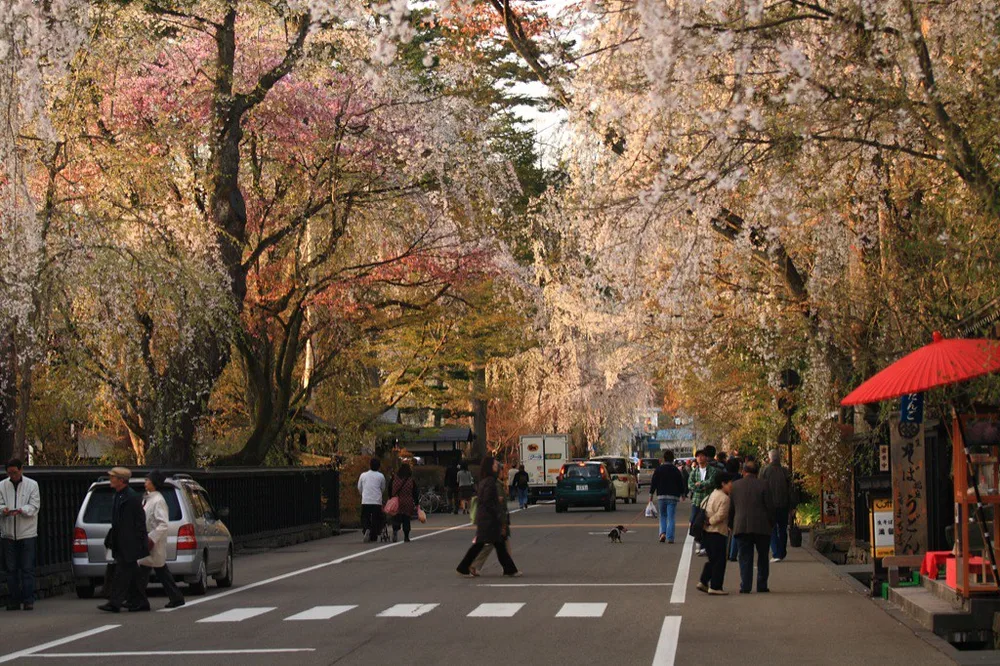
A nationwide folk art revival in the mid-20th century brought further attention to kabazaiku. The craft was formally designated a traditional Japanese craft by the national government in 1976, giving it the same protected status as Kyoto textiles and Edo glasswork. Today, visitors can walk the historic the Bukeyashiki Samurai Quarter and see the very streets where those early artisans worked.
The Art of Crafting: Kabazaiku Production Process and Techniques
Making kabazaiku requires patience measured in years, not hours. The bark must come from wild Yamazakura trees at least 70 to 80 years old — bark from younger trees or cultivated varieties lacks the density and pattern quality that defines the craft. Scouts search mountain forests in spring, when cherry blossoms make the trees easy to locate, then harvest bark in late summer after Japan's rainy season, when the trunk's high moisture content makes the bark softer and easier to peel cleanly. Only about one third of the bark is removed per tree, allowing it to regenerate for future harvests.
After harvesting, the stripped bark dries for roughly two years. Artisans then moisten it, stretch it flat with a heated iron to remove warping, and shave it to uniform thinness with a knife. This shaving step reveals the bark's characteristic metallic luster. A coating of nikawa — a natural animal-based gelatin glue — is applied to strengthen the surface and lock in the color.
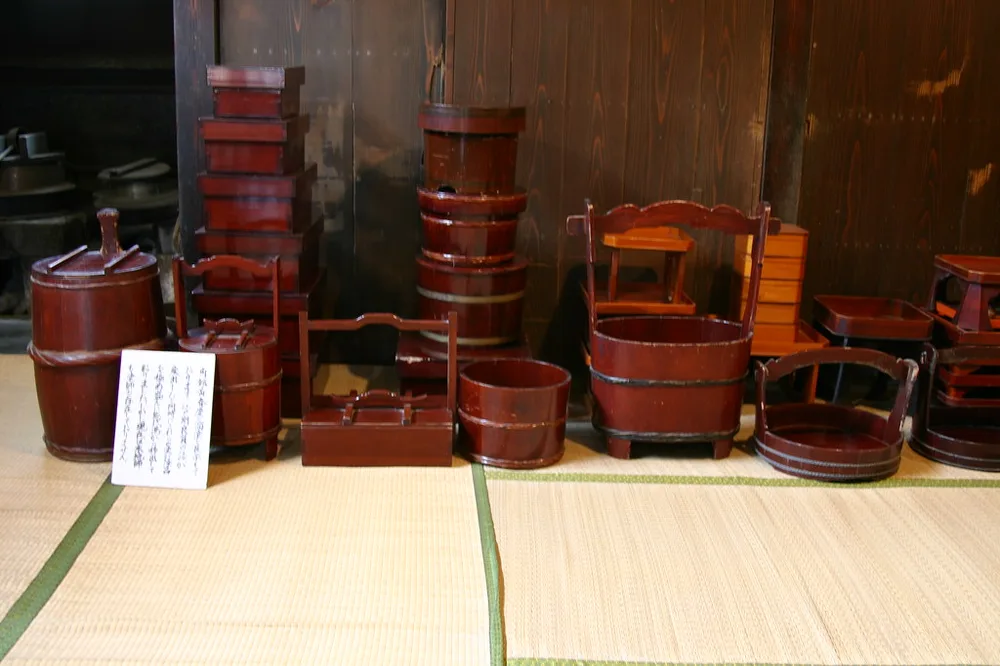
Three primary techniques define kabazaiku construction. Katamono is used for cylindrical pieces such as tea canisters: thin sheets of bark and wood are wrapped around a cylindrical wooden mold and bonded with nikawa while a hot metal trowel keeps the layers smooth. Kijimono covers flat-sided items like letter boxes and trays, where bark strips are applied carefully to a pre-made wooden base. Tatamimono builds up multiple layers of polished bark to create a dense slab, which is then carved to produce intricate surface patterns.
Finishing is equally demanding. The piece is polished in stages using tokusa, a horsetail fern native to northeastern Japan. Finally, a small amount of bintsuke — a traditional blend of wax and rapeseed oil — is rubbed in and buffed to achieve the final luster. No synthetic adhesives or chemical finishes are used at any stage, which is one reason authentic kabazaiku pieces age so gracefully.
The Unique Charm of Cherry Bark
Cherry bark comes in two main visual types, and knowing the difference helps when choosing a piece. Shimofuri gawa ("frosted bark") has a mottled, speckled surface caused by natural deposits in the bark — it looks like a winter frost pattern and gives pieces a rustic, textural quality. Muji gawa ("plain bark") is smooth and uniformly toned, valued for items where the design calls for restraint and quiet elegance.
Bark from different tree sources also varies. Ooyama trees yield the most commonly used bark, prized for its consistent quality and deep color. Kasumi bark carries a distinctive horizontal grain that runs parallel across the surface, creating a subtle banded effect. Artisans select bark type and source to match the intended product — Kasumi grain on a tea canister lid, for example, can be genuinely beautiful when the grain wraps seamlessly around the cylinder.
The bark's natural antibacterial and airtight properties also change how the material performs over time. A kabazaiku tea canister will develop a deeper, richer tone with regular handling — oils from the hands slowly enhance the luster in the same way a patina develops on fine leather. This is not wear; it is improvement, and longtime owners often say their pieces look better at twenty years than at two.
Beyond Tea Canisters: Exploring Kabazaiku Products
Tea canisters (chadansu or chazutsu) remain the signature product and make the most practical souvenir — they work, they are immediately useful, and their moisture-control properties mean any serious tea drinker in your life will use one every day. Entry-level canisters from established workshops start around ¥5,000–¥8,000; hand-carved or inlay pieces (such as shell-inlay sakura canisters) can reach ¥15,000–¥25,000 or more.
| Product Type | Description | Rough Price Range (¥) |
|---|---|---|
| Tea Canisters | Signature product; keeps sencha and gyokuro leaves fresh with natural moisture regulation | ¥5,000–¥25,000+ |
| Coasters | Checkerboard or sakura patterns; most budget-friendly entry point | ¥1,500–¥2,500 |
| Trays & Serving Platters | Practical for daily use or tea ceremony; robust and display-worthy | ¥3,000–¥10,000 |
| Cardholders & Pen Cases | Modern compact accessories; portable souvenir | ¥2,000–¥5,000 |
| Chopstick Rests | Decorative functional pieces for tableware | ¥1,000–¥2,000 |
| Inlay Pieces (Shell) | Hand-carved sakura or geometric designs; premium craftsmanship | ¥10,000–¥30,000 |
| Hybrid Items (Bark on Ceramic) | Cherry bark applied to ceramic cups or wooden cutlery | ¥2,500–¥8,000 |
Trays, serving platters, and lacquered spoons and knives are the next most common category. Kabazaiku trays are practical for daily use — robust enough for kitchen or tea ceremony settings, and attractive enough to display. Coasters with checkerboard or sakura patterns run ¥1,500–¥2,500 each and are among the most accessible kabazaiku items for budget-conscious visitors.
Modern workshops have expanded into cardholders, pen cases, chopstick rests, and small decorative figurines including kokeshi-style dolls covered in cherry bark. These items tend to appeal to buyers who want something smaller and more portable. Some artisans have also started producing bark-decorated porcelain cups, where a thin kabazaiku collar wraps the base of a ceramic vessel — a hybrid that reflects the craft's ongoing evolution.
Consider exploring the options during your day trip to Kakunodate. Budget at least ninety minutes to browse the main shops, since artisans often have stock not shown in any online catalogue and prices are the same or lower than buying through importers abroad.
Where to See and Buy Kabazaiku in Kakunodate
The Kakunodate Cherry Bark Woodcraft Museum (Denshokan) on Omotemachi is the essential first stop. The museum charges a small admission fee of around ¥300 and contains both historical pieces dating to the Edo period and a working demonstration area where you can watch artisans at the bench. The attached shop sells items from several local workshops and guarantees authenticity — it is the safest place to buy if you are uncertain about quality or pricing.
Entry-level kabazaiku tea canisters start around ¥5,000–¥8,000, while coasters with checkerboard or sakura patterns are the most affordable entry point at ¥1,500–¥2,500. For budget-conscious visitors, coasters offer genuine kabazaiku quality at an accessible price.
Denshiro, one of Kakunodate's oldest kabazaiku workshops, operates a shop and atelier on the main samurai street. The showroom displays work across all three techniques and price ranges, and artisans are usually visible through the workshop window. Fujiki Denbei Shoten, another long-established maker, is worth visiting for its inlay work — the shell-inlay sakura designs are particularly fine and not available everywhere. Both workshops are within a five-minute walk of each other along Omotemachi.
For visitors who cannot travel to Kakunodate, several reputable online retailers carry genuine kabazaiku from these same workshops, including Musubi Kiln and the Nihon Ichiban export platform. Prices in USD or EUR will be higher than buying direct due to shipping and import margins, but the items are authentic. When buying online, look for the workshop name (Denshiro, Yatsuyanagi, Tomioka, or Fujiki) as the maker identification — generic "Japanese cherry bark craft" listings without a named maker should be approached with caution.
Ask the shopkeeper where their bark comes from — Ooyama bark is the most commonly used and prized for consistent quality, while Kasumi bark creates a distinctive horizontal grain pattern. A confident, specific answer about bark source is a sign of authenticity and quality.
Workshop Visits and Hands-On Kabazaiku Experiences
Several Kakunodate workshops offer short hands-on sessions for visitors in 2026. These typically run 60–90 minutes and involve applying a piece of prepared bark to a simple wooden base under artisan guidance — you leave with a coaster or small tray. Sessions generally cost ¥1,500–¥3,500 per person and need to be booked at least a day in advance, either through the workshop directly or via the Semboku City tourism office. Numbers are limited, usually four to eight participants, so booking ahead matters more in cherry blossom season (late April) and autumn foliage season (October).
Even without a hands-on booking, most workshops allow visitors to watch production through a glass partition or open workshop door. Kakunodate is a small town and the atmosphere is unhurried — arriving on a weekday morning gives you the best chance of seeing a full production sequence, from the ironing stage through to final polishing. Artisans are generally willing to answer questions through shop staff interpreters, and many workshops have brief English-language information panels.
The Denshokan museum also runs periodic demonstration events on weekends and national holidays. These are free to observe with museum admission and require no booking. The museum staff can provide a current schedule on arrival. Getting to Kakunodate is straightforward — see the Getting to Kakunodate by Train guide for train and access details from Akita and Tokyo.
Meet the Masters: Insights from Kabazaiku Artisans
Fewer than five companies in the world produce kabazaiku today. The artisan pool is small and aging, and the craft faces a real succession challenge. Each practitioner typically spends a decade mastering even basic techniques — the precision required to apply bark to a cylindrical mold without wrinkles, and to judge the exact temperature of the heated iron by dipping it briefly in water, takes years of daily practice to internalize.
Pattern artisans and tea canister artisans are effectively distinct specializations within the craft. Pattern work (tatamimono) requires a sculptor's eye — the artisan stacks, presses, and carves bark to produce repeating motifs such as kikko (tortoiseshell) or checker designs, and a miscut ruins the entire layer sequence. Tea canister artisans work with katamono, where the challenge is consistency: the lid must fit perfectly with no gap, and the seam where the bark ends must be invisible.
Apprenticeship typically runs three to five years under a single master before any independent work is allowed. Most active artisans learned from a parent or relative, and family workshop lineages are common — Fujiki Denbei Shoten has been family-run for multiple generations. This structure preserves techniques but also means knowledge can disappear when a workshop closes without a successor, which has happened at least twice in the past three decades.
Bark Scarcity and What It Means for Buyers
Securing enough bark is the craft's biggest operational problem, and it is worth understanding as a buyer. Only bark from wild Yamazakura trees aged 70 years or older has the density and grain quality kabazaiku requires. Cultivated or younger trees produce bark that is too pliable and lacks the natural luster. These old-growth wild trees are not a renewable resource on any short timeline — a tree suitable for harvest today took seven decades to reach that point.
Unpredictable weather patterns have made bark harvests increasingly inconsistent over the past decade. Wet summers affect when bark can be stripped cleanly; warm winters reduce the freeze-thaw cycles that help the bark grain tighten. Some workshops have reported meaningful harvest shortfalls in recent years, and the result is visible: production volumes are declining, and certain product lines are being made in smaller quantities or discontinued.
For buyers, this translates to two practical points. First, prices for high-quality kabazaiku have risen and will likely continue rising as supply tightens — a tea canister bought in Kakunodate today may be meaningfully cheaper than the same item five years from now. Second, pieces made from Ooyama or Kasumi bark (which the workshop should be able to identify for you) represent the upper tier of material quality. Asking where the bark comes from is not an unusual question in a reputable shop, and a confident, specific answer is a good sign of authenticity.
Caring for Your Kabazaiku: Maintenance and Longevity
Kabazaiku is durable but sensitive to moisture extremes and direct heat. For day-to-day cleaning, a soft dry cloth is all you need — the bark surface resists dust and does not require regular washing. If you need to wipe off a spill or sticky residue, use a cloth barely dampened with plain water and dry the piece immediately. Never submerge kabazaiku or put it through a dishwasher.
Keep kabazaiku away from direct sunlight, radiators, and air conditioning vents. Prolonged UV exposure fades the bark's color, and temperature fluctuations cause the bark to expand and contract unevenly, which can loosen the adhesive at seams over time. A stable indoor environment — typical room temperature, 40–60% relative humidity — is ideal. If you live in a very dry climate, a room humidifier in winter extends the life of the piece.
The luster deepens naturally with handling. Occasional polishing with a soft dry cloth buffs the bintsuke oil already in the bark and maintains the sheen without adding anything foreign. There is no need to apply additional oils or waxes unless a workshop specifically recommends it for a particular piece. With basic care, a well-made kabazaiku tea canister will last decades and become more attractive over time.
The Future of Kabazaiku: Preserving Tradition, Embracing Innovation
Contemporary kabazaiku workshops are actively experimenting with form and application to stay commercially viable. Hybrid pieces — bark applied to ceramic cups, bark-trimmed wooden cutlery, bark-faced cardholders — appeal to buyers who want the material's aesthetic without committing to a full tea canister purchase price. Several workshops now sell directly to international buyers through English-language online stores, which has opened the craft to audiences in Europe and North America who had no access to it a decade ago.
Design collaborations with product designers and architects have produced some of the more striking recent pieces, including bark-surfaced desk accessories and architectural panels. These push kabazaiku into spaces beyond the tea ceremony or gift shop, though traditionalists debate whether such applications properly respect the craft's origins. The tension between reach and authenticity is real, and individual workshops navigate it differently.
What remains consistent is that the core technique has not changed since the Edo period. Nikawa glue, tokusa polishing, bintsuke finishing — the same materials and methods in the same sequence. This is what the 1976 national designation protects, and it is what makes kabazaiku genuinely irreplaceable among Japan's traditional crafts. The craft will evolve, but the hand and the bark remain at the center of it.
Frequently Asked Questions
What is the primary material used in Kabazaiku cherry bark craft?
The primary material for Kabazaiku is the bark of the Yamazakura, or wild cherry tree. Artisans carefully harvest this bark without harming the tree, allowing it to regenerate. This sustainable practice ensures the craft's longevity and respect for nature.
Where does Kabazaiku cherry bark craft originate?
Kabazaiku originates from Kakunodate, a historic town in Akita Prefecture, Japan. The craft developed during the Edo period, with samurai playing a significant role in its early promotion. Kakunodate remains the primary center for this unique art form. Visitors can explore its rich history and see artisans at work in the the Bukeyashiki Samurai Quarter.
What are the main techniques used in Kabazaiku?
Three main techniques are fundamental to Kabazaiku: Katamono, Kijimono, and Tatamimono. Katamono involves pressing bark onto a mold, Kijimono applies bark strips to a wooden base, and Tatamimono layers bark pieces. Each technique creates distinct textures and forms, showcasing the artisan's skill.
How should I care for my Kabazaiku products?
To care for Kabazaiku, gently wipe it with a soft, dry cloth to remove dust. Avoid water or chemical cleaners, as they can damage the bark. Store items away from direct sunlight and extreme temperature changes to prevent cracking. Proper care helps preserve its natural luster and durability.
What types of products are made with Kabazaiku cherry bark?
Kabazaiku creates a wide range of products, from traditional tea canisters, trays, and boxes to modern accessories. You can find items like cardholders, pens, and even jewelry. The craft's versatility allows for both utilitarian and decorative pieces, blending ancient techniques with contemporary designs.
Kabazaiku cherry bark craft stands as a remarkable testament to Japanese artistry and tradition. Its deep roots in Kakunodate, intricate techniques, and natural beauty make it truly special. Each piece tells a story of skill, patience, and reverence for nature. This craft continues to captivate hearts worldwide.
From the careful harvesting of Yamazakura bark to the meticulous crafting of diverse products, Kabazaiku is a living art. It balances ancient practices with modern innovation, ensuring its legacy endures. Understanding this craft offers a unique glimpse into Japan's rich cultural tapestry. It connects us to generations of dedicated artisans.
Whether you are admiring a tea canister or a modern accessory, Kabazaiku offers timeless elegance. Its unique properties and sustainable origins make it a truly exceptional craft. We hope this guide inspires you to explore and appreciate this beautiful art form. Consider adding a piece to your collection.
For trip-planning details, see kabazaiku on Wikipedia and the official Kakunodate guide.
Free guide: Japan's Hidden Gems
12 under-the-radar places beyond Tokyo & Kyoto — with the best season to visit each and a local tip you won't find in the guidebooks.
You might also like


Continue reading
More guides you'll find useful