Akita Itinerary Travel Guide: Plan Your 3-Day Trip to Akita, Japan
Plan your Akita itinerary with top picks, neighborhood context, timing tips, and practical booking advice for a smoother trip.
On this page
Akita Prefecture sits in the northern Tohoku region, roughly 450 kilometres north of Tokyo, and it rewards travelers who make the effort to reach it. This guide builds a realistic 3-day Akita itinerary around the three areas that matter most: the samurai town of Kakunodate, the hot-spring cluster at Nyuto Onsen and the wild Oga Peninsula, and Akita City itself. All logistics are based on 2026 timetables and current admission prices. Read this before you open a booking app.
Is Akita Worth Visiting?
Akita Prefecture is one of the least-visited prefectures in Japan by international tourists, and that is precisely its strength. You get a preserved samurai district, Japan's deepest lake, milky-white mountain hot springs, a dramatic peninsula, and the Akita Inu breed — all without the crowds that swamp Kyoto or Nikko. The region's population is just over 900,000, giving it a rural pace that feels genuinely different from Japan's urban circuits.
The one honest caveat: Akita requires more planning than a Tokyo day trip. Public transport links exist but they are infrequent outside Akita City. A rental car unlocks the best parts of the prefecture — Nyuto Onsen, the Oga Peninsula, and the Dakigaeri Valley — and is strongly recommended if you are comfortable driving in Japan. If you prefer to stay car-free, grouping your days by train line (Akita Shinkansen stops are well-spaced) still works.
First-time visitors to Japan sometimes skip Tohoku entirely. That is a mistake. Akita offers a depth of cultural experience that is hard to replicate. The annual the Akita Kanto Matsuri in early August is among Tohoku's most spectacular festivals, and the prefecture's food culture — built around rice, freshwater fish, mountain vegetables, and award-winning sake — stands on its own.
Getting to Akita From Tokyo
The Akita Shinkansen (Komachi service) runs from Tokyo Station to Akita Station in approximately 3 hours 37 minutes. Trains depart roughly every hour during peak periods. The fastest departures leave Tokyo in the morning and arrive in Akita before lunch, giving you a usable first afternoon. A reserved seat (non-JR Pass) costs around ¥17,000–¥18,500 depending on the time of day.
There is one detail that catches first-timers: the Komachi service couples with the Hayabusa (Hokkaido-bound) service between Tokyo and Morioka. At Morioka, the train physically splits. You must be seated in the Komachi cars (E6 series, cars 11 through 17) — boarding the Hayabusa portion of the same train means you arrive in Sendai or Hokkaido, not Akita. Check your ticket carefully; it will specify the car range. Station staff can point you to the correct boarding zone if you are unsure.
The Komachi train couples with the Hayabusa at Morioka and physically splits. You must board E6 series cars 11–17 for Akita or you will end up in Hokkaido. Always verify your seat assignment before boarding and ask station staff if unsure which car is correct.
The JR East Tohoku Area Pass covers five consecutive days of unlimited travel on JR bullet trains and local lines across Akita, Aomori, Iwate, Yamagata, and Miyagi. It makes financial sense if your Akita itinerary is part of a wider Tohoku loop. The pass costs around ¥30,000 (adult, 2026). Domestic flights from Haneda to Akita Airport take about one hour and can be cheaper during sales, but the airport sits 30–40 minutes outside the city by bus, which adds transfer time.
Once in Akita, the Akita Shinkansen line doubles as the main artery for reaching Kakunodate (30 minutes from Akita Station) and Tazawako (45 minutes). Local buses serve Nyuto Onsen from Tazawako Station. The Oga Peninsula is best reached by car or by the Resort Shirakami sightseeing train on certain days. Full transport details for Akita Prefecture are covered separately.
Where to Stay in Akita
Akita City is the most practical base. It has the widest hotel selection — from budget business hotels clustered near Akita Station to mid-range options around the Senshu Park — plus the best dinner choices after a long day of travel. Hotels near the station make early-morning train departures to Kakunodate and Tazawako straightforward. Expect to pay ¥8,000–¥14,000 per night for a comfortable business hotel in the city centre.
For a more immersive experience, split your nights. Spend night one in Kakunodate at Hotel Folkloro Kakunodate (directly opposite the station, rates from ¥9,000) or a small ryokan in the samurai district. Then move to Nyuto Onsen for night two. Staying overnight at Tsurunoyu Onsen — the oldest of the seven Nyuto springs, dating to the 1600s — means you get the milky white outdoor bath at dusk and dawn when day visitors are gone. Reservations at Tsurunoyu Onsen should be made six months in advance; it books out fast for weekends and autumn.
Budget travelers can use Akita City as a single base throughout, catching Kakunodate and Lake Tazawa on day trips by Shinkansen, and doing Nyuto Onsen as a day-use (¥600 entry for the mixed-gender outdoor bath). The Oga Peninsula is harder to reach without a car, so non-drivers may want to book a day tour from Akita City rather than trying to piece together limited bus connections. A full breakdown of Akita accommodation options by area and budget is available if you need more detail.
3-Day Akita Itinerary: How to Divide Your Time
The three-day structure below groups attractions geographically and by travel logic. Day 1 runs the southern Akita Shinkansen corridor — Kakunodate and Lake Tazawa sit 13 minutes apart by local Shinkansen and share the same transport hub at Tazawako Station. Day 2 pivots north to Nyuto Onsen (accessible from Tazawako) and the Oga Peninsula. Day 3 focuses on Akita City, with an optional side trip to Odate for the Akita Inu. Adjust by one day in either direction if you have four or five days available.
| Day | Focus | Key Stops |
|---|---|---|
| Day 1 | Samurai heritage & lakes | Kakunodate samurai district, Dakigaeri Valley, Lake Tazawa, Tatsuko Statue |
| Day 2 | Hot springs & peninsula | Nyuto Onsen (Tsurunoyu), Oga Peninsula, Namahage Museum, Godzilla Rock |
| Day 3 | City culture & art | Senshu Park, Akita Museum of Art, Neburi Nagashi Kan, Kiritanpo dinner |
- Day 1: Kakunodate samurai district, Dakigaeri Valley, and Lake Tazawa — base in Kakunodate or Tazawako area
- Day 2: Nyuto Onsen morning soak, Oga Peninsula afternoon, Namahage Museum, Godzilla Rock at sunset — base in Akita City or Oga
- Day 3: Akita City — Senshu Park, Akita Museum of Art, Neburi Nagashi Kan, dinner featuring Kiritanpo Nabe — optional detour to Odate for Akita Inu
Day 1: Kakunodate Samurai District and Lake Tazawa
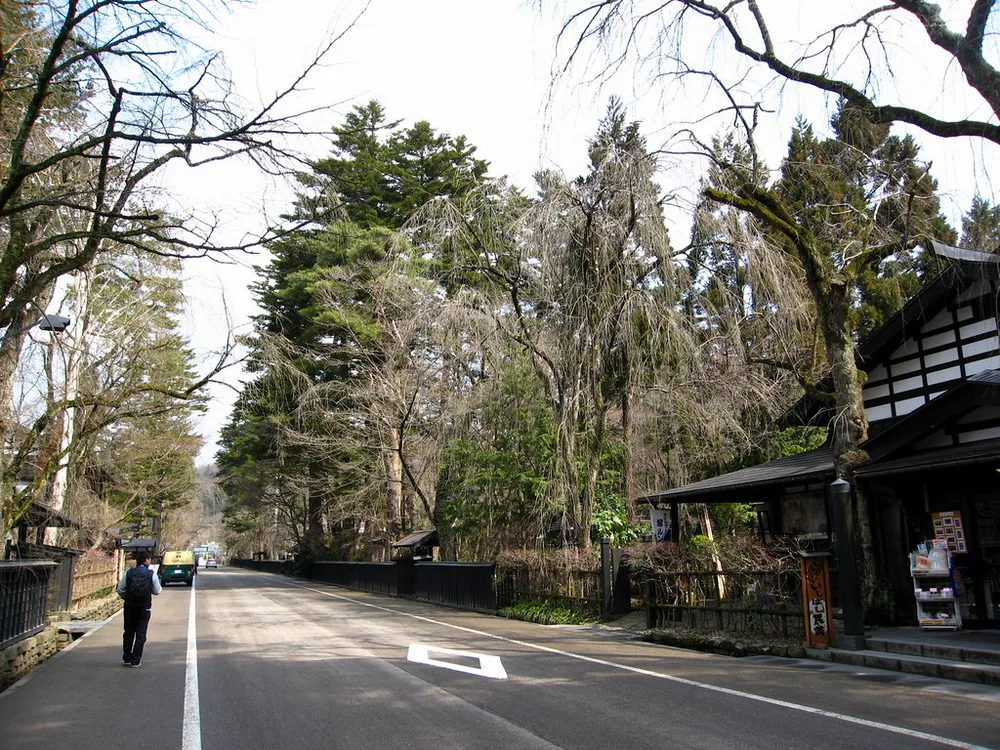
Arrive at JR Kakunodate Station by 09:00 for the best chance of a quiet samurai district. The Bukeyashiki-dori samurai residences are a 15-minute walk from the station. Kakunodate was founded as a castle town in 1620 and earned its nickname "the Little Kyoto of Tohoku" from the density of intact Edo-period architecture. Several residences — including the Aoyagi House and Ishiguro House — charge ¥300–¥500 entry and let you walk through rooms and gardens. The rest of the street is free to explore on foot. Allow two hours to walk the district comfortably.
Before heading to Lake Tazawa, detour 15 minutes by car (or by on-demand Yobunoru Kakunodate bus) to the Dakigaeri Valley. This is an emerald river gorge most Akita guides skip entirely. A 40-minute walking trail follows the river through dense forest to the Mikaeri-no-taki Waterfall (30-metre drop) and crosses the Kami-no-Iwahashi suspension bridge, built in 1926 and still the oldest in the prefecture. The valley is at its most dramatic during autumn colour (early October to early November) but it is worth the detour year-round. Entry is free.
For lunch, Sakura no Sato on Bukeyashiki-dori serves Inaniwa udon and Hinai chicken — both Akita staples. Inaniwa udon is a centuries-old style of hand-stretched noodles, thinner and silkier than the thick udon common elsewhere in Japan, and it originated in Akita. A set meal costs around ¥1,200–¥1,800.
Book accommodation at Nyuto Onsen and Tsurunoyu Onsen at least six months in advance during peak seasons (April-May and October-November). Weekends and autumn fill up fast, and limited room availability means late bookings can lock you into poor time slots or force cancellations.
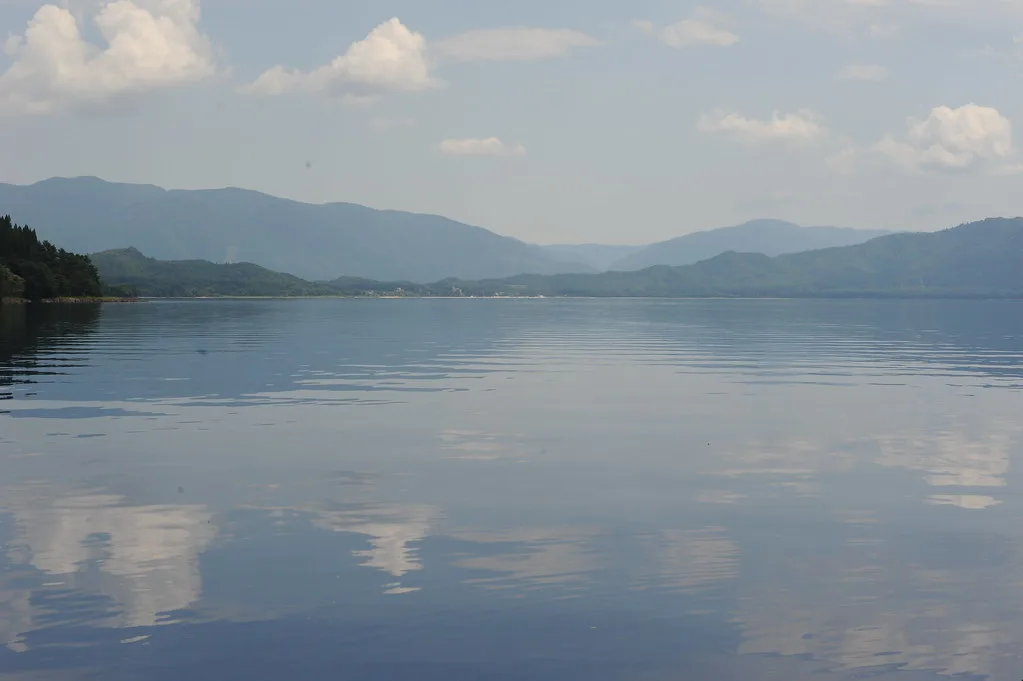
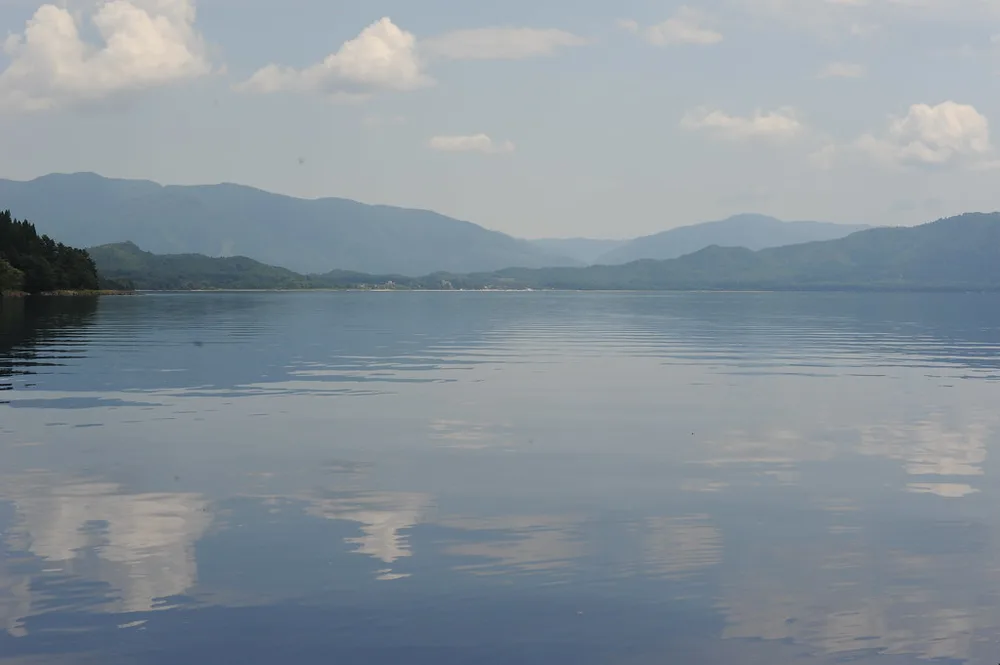
Lake Tazawa is 30 minutes by car or via the Shinkansen (Tazawako Station, then 15 minutes by loop bus). Japan's deepest lake — 423 metres — has a striking cobalt blue surface that shifts colour through the day. Walk to the golden Tatsuko Statue, rent a bicycle at Tazawako Rest House (¥300/hour) for a lakeside loop, or take the sightseeing boat (¥1,000, departing at 11:00, 13:00, and 15:00 from late April to early November). The Gozanoishi Shrine red torii gate at the lake edge makes a good late-afternoon stop before dinner.
Day 2: Nyuto Onsen and the Oga Peninsula
Start early. Nyuto Onsen is a cluster of seven hot spring resorts at the foot of Mt. Nyuto, reached by bus from Tazawako Station (around 50 minutes, ¥560). The oldest and most famous is Tsurunoyu Onsen, established in the 1600s. Its outdoor mixed-gender bath is filled with non-transparent milky-white water that gets its colour from a high sulphur and calcium content. Day-use access is ¥600 and opens from 10:00 (weekday arrivals give you the best chance of a quieter soak). The thatched Honjin building — where the Akita clan lord's guards once stayed — still stands on the grounds and is worth photographing.
If you want to experience multiple springs, the Nyuto Onsen Meguri Pass (¥1,800) covers one-time day-use access to all seven resorts and comes with a shuttle bus between them. This is the best value option for a dedicated onsen day. The seven springs each have different mineral compositions: Tsurunoyu's milky white, Magoroku's clear and slightly acidic, Kuroyu's iron-rich dark brown. Spending a half-day sampling two or three gives a better sense of the range than committing to one overnight.
After Nyuto Onsen, drive north to the Oga Peninsula (car: 50–70 minutes; bus connections exist but are very infrequent). The Namahage Museum (open 08:30–17:00, ¥550 entry) explains the peninsula's defining folk tradition: ogre-masked deities who visit homes on New Year's Eve to warn against idleness. The adjacent Oga Shinzan Folklore Museum hosts live Namahage re-enactments at set times — check the schedule when booking your visit. The collection of 150 hand-carved masks is the most compelling exhibit. End the day at Godzilla Rock on the peninsula's western coast. The rock formation resembles the film monster in silhouette, most dramatically at sunset when the light catches it from behind. Parking is free; the viewpoint itself takes five minutes to reach on foot.
Day 3: Akita City and the Kanto Heritage
Akita City repays a full morning on foot. Senshu Park occupies the former site of Kubota Castle and is best visited early when the grounds are quiet. The park is particularly famous for its cherry blossoms in late April to early May, when more than 800 trees flower simultaneously. The adjacent the Akita Museum of Art (open 10:00–18:00, ¥310 general admission, closed Tuesdays) houses a strong collection of Western and Japanese modern art, including works by Akita-born painter Tsuguharu Foujita.
The Akita City Folk Performing Arts Heritage Center — locally called Neburi Nagashi Kan — is a 10-minute walk from Senshu Park. It houses life-size Kanto festival lantern poles, some rising six metres, and visitors can try balancing them on a palm or forehead with guidance from staff. This is the clearest way to understand the physical skill behind the Kanto Matsuri, where performers balance illuminated poles on their chins and shoulders. Open daily 09:30–19:30 (closed Mondays in winter), ¥100 entry. The festival itself runs 3–6 August each year; grandstand viewing tickets sell out months ahead.
If meeting an Akita Inu is a priority, note that the Akita Dog Visitor Center (Akita Inu no Sato) is in Odate, 1.5 hours by limited express train from Akita Station each way. The center is open daily 09:00–16:00 (closed Wednesdays) and admission is free. The building's exterior was designed to resemble the old Shibuya Station where Hachiko once waited. Budget the full day if you want to go, or treat it as a standalone day-trip if you have a fourth day to spare. The Things to Do in Akita guide covers the Odate detour in more detail.
Akita's Food: What to Eat and Where
Akita's food identity is built on rice agriculture, freshwater fish from rivers and the Sea of Japan, and mountain foraging. The result is a cuisine that is hearty, seasonal, and distinctive even within Japan.
Kiritanpo Nabe is the dish most associated with Akita: a hot pot of Hinai chicken broth, burdock root, leek, maitake mushrooms, and kiritanpo — rice pounded around cedar sticks and then grilled. It is a winter dish by tradition but served year-round in Akita restaurants. A full pot for two costs ¥3,000–¥5,000 at a sit-down restaurant. Many places near Senshu Park specialise in it; look for small venues with handwritten menus rather than tourist-facing chains.
Inaniwa Udon is Akita's other defining dish — a thin, hand-stretched noodle with a silky, slightly chewy texture, eaten either chilled with dipping sauce in summer or hot with a light broth in winter. It is a completely different eating experience from the thick udon of Sanuki or Osaka. Akita also produces Iburi Gakko (smoked daikon pickles, which make an excellent accompaniment to sake), Hata Hata (a fatty sandfish caught in autumn and winter), and some of Japan's highest-regarded nihonshu. The Yamamoto Shuzo brewery near Akita City offers tastings; call ahead to confirm hours.
Meeting the Akita Inu: Where and How
The Akita Inu is a large, dense-coated spitz-type breed with national monument status in Japan. It gained global recognition through Hachiko, the dog born in Odate who famously waited at Shibuya Station for nearly ten years after his owner's death. The breed is central to Akita's identity and appears on local packaging, souvenirs, and tourist materials throughout the prefecture.
The most reliable place to see Akita Inu dogs is the Akita Dog Visitor Center (Akita Inu no Sato) in Odate. The center opened in 2019 and typically has several resident dogs available for supervised viewing. Staff rotate which dogs are on display, so a call ahead is worthwhile if seeing a specific dog is important. The experience is respectful rather than a petting zoo — visitors observe from a designated area, and the dogs' welfare is clearly prioritised. Getting there requires a limited express train from Akita Station to Odate (around ¥2,000 one way, 75 minutes).
If Odate is too far for your schedule, Akita City's Atorion department store and some restaurants near the station occasionally host Akita Inu meet-and-greet events — check the city tourism board's event calendar for 2026 dates. You can also ask your hotel if any local owners bring their dogs to Senshu Park on weekend mornings; informal dog-watching at the park is a genuine local habit.
When to Visit Akita: Season by Season
Late April to early May is the most popular window. Kakunodate's 400 weeping cherry trees — 162 of them designated Natural Monuments — flower against black-walled samurai residences in one of Japan's more photogenic spring scenes. Lake Tazawa's swimming area opens in this period. Accommodation books out fast; reserve at least two months ahead.
July and early August bring the Kanto Matsuri (3–6 August), a must-see if your schedule allows. Thousands of illuminated lantern poles are balanced and paraded through Akita City's main street each evening. It is one of Tohoku's four great summer festivals alongside Aomori's Nebuta, Sendai's Tanabata, and Yamagata's Hanagasa. Temperatures in Akita in August reach 28–31°C, which is warm but manageable.
October is arguably the best overall month. Autumn colour peaks at Dakigaeri Valley from early October, at Nyuto Onsen from mid-October, and around Lake Tazawa from late October. Crowds are lighter than spring, prices hold steady, and the cool air makes outdoor walking comfortable. Hata Hata fishing season also opens in autumn — the best time to eat the fish fresh.
Winter (December through March) brings significant snowfall — Akita City averages 120–150 cm of snow per season. Hot springs become even more appealing, and the snow-blanketed Kakunodate samurai district is striking. However, driving requires snow-tyred vehicles, bus schedules thin out, and some outdoor attractions close. Pack accordingly and check road conditions before driving to Nyuto Onsen in winter.
Practical Planning Tips for Akita
The most common first-timer mistake is underestimating distances. Kakunodate, Nyuto Onsen, the Oga Peninsula, and Odate are all well over 30 minutes from each other and from Akita City. Trying to hit all of them in a single day leads to a lot of bus-waiting and rushed visits. This is why the 3-day structure above dedicates one full day to each geographic zone.
Car rental is strongly recommended for Day 2 (Nyuto Onsen to Oga Peninsula). The bus from Tazawako Station to Nyuto Onsen runs about five times a day in each direction, and the connection to Oga is essentially non-existent without changing modes multiple times. A compact car for a day costs ¥5,000–¥8,000 from Toyota Rent-a-Car or Nippon Rent-a-Car at Tazawako or Akita Station. Reserve at least a week ahead during peak season.
Families with children will find Kakunodate and Lake Tazawa the most accessible areas — both are flat, well-signed, and have café facilities nearby. The Namahage Museum's costume corner is popular with children, though the ogre imagery can frighten younger ones. The Dakigaeri Valley trail is manageable for older children (8+) but the suspension bridge is narrow and exposed. For a DMC or guided option, consider a guided day tour from Akita City that covers Kakunodate and Lake Tazawa with an English-speaking guide — several operators offer these for ¥10,000–¥15,000 per person, which makes sense for groups who want context without the logistics.
Cash remains necessary in rural Akita. Many onsen, smaller restaurants, and roadside stalls do not accept cards. Withdraw at 7-Eleven or Japan Post ATMs in Akita City before heading to the countryside. Most major hotels accept credit cards.
Frequently Asked Questions
Is Akita worth visiting for first-time travelers to Japan?
Yes, Akita offers a unique blend of history, nature, and culture perfect for first-timers. It provides a peaceful contrast to major cities. You will experience authentic Japanese traditions.
What is the best way to get around Akita Prefecture?
Within Akita City, walking and local buses are sufficient. For exploring rural areas like Oga or Nyuto Onsen, a rental car offers the most flexibility. Trains connect major towns like Kakunodate.
Can I see Akita Inu dogs easily in Akita?
The best place to reliably see Akita Inu dogs is the Akita Dog Visitor Center in Odate. It is a dedicated facility for the breed. While not in Akita City, it is a worthwhile detour for dog lovers.
Akita, Japan, offers an enriching journey into a less-traveled region. This 3-day Akita itinerary provides a solid framework for experiencing its samurai heritage, therapeutic onsen, and unique cultural charm. You will leave with a deep appreciation for this special part of Japan. Whether you're savoring local delicacies or admiring the majestic Akita Inu, every moment here is memorable. Use this guide to plan your adventure and discover the captivating beauty of Akita. Start planning your unforgettable trip today.
For trip-planning details, see the official Akita travel guide and Akita Prefecture on Wikipedia.
With an extra day, add Kakunodate — 45 minutes east on the Komachi line.
Free guide: Japan's Hidden Gems
12 under-the-radar places beyond Tokyo & Kyoto — with the best season to visit each and a local tip you won't find in the guidebooks.
You might also like


Continue reading
More guides you'll find useful