Iburigakko: A Guide to Akita's Smoked, Pickled Daikon
Iburigakko is Akita's smoked and pickled daikon. See how it's made, where to taste it in Akita City and Kakunodate, and what to buy to take home.
On this page
Last updated July 2026, iburigakko is Akita's smoked and pickled daikon, born from iburi, meaning smoked, and gakko, the Akita dialect word for pickles. Deep snow buried Akita's fields for months, so farmers hung daikon above the irori hearth fire instead of drying it in the sun. That practical fix over generations turned into one of the signature flavors covered in this Akita food scene guide.
What Is Iburigakko? Akita's Smoked, Pickled Daikon Explained
Iburigakko carries Geographical Indication (GI) status in Japan. That designation reserves the name for daikon smoked and pickled using traditional methods within Akita Prefecture. In practice, the system exists to stop smoked daikon pickles made outside that process from using the iburigakko name, even if the recipe looks similar. Check the current GI registry for exact protection terms, since rules can be updated over time. Farmhouses first made iburigakko out of necessity, not fashion. Snow closed off outdoor drying for roughly half the year, so smoking over an irori hearth preserved the harvest instead. Whole daikon hung from wooden racks near the fire, absorbing smoke for days at a time. Salt and grain shortages made preservation a survival skill rather than a craft choice. Home cooks eventually refined the timing, testing wood types and hang heights until the pickle became consistent enough to sell rather than just eat at home. Today the same golden-brown pickle shows up on breakfast tables, in izakaya small-plate menus, and in gift shops across Akita's main sightseeing areas. It has moved from a household necessity into a curated regional specialty, packaged and sold as a gift item rather than treated as everyday storage food alone. Visitors who taste it for the first time at a festival stall or izakaya counter are often surprised by how much it resembles smoked meat more than a typical pickle.
From Hearth to Jar: How Iburigakko Is Smoked and Pickled
Making iburigakko still follows two distinct stages, smoking and then pickling. Producers first smoke whole daikon for two to three days over hardwood. Cherry and oak are the two most common choices. Cherry wood gives a lighter, sweeter smoke. Oak leans heavier and more resinous, closer to a campfire than a kitchen. The daikon hangs above smoldering coals rather than an open flame, so the heat stays low and the smoke stays constant. Daikon's high water content made it the vegetable of choice for this method. Smoke and salt together drew out moisture that would otherwise cause rot during long winter storage. Smoked daikon then goes into a mash of rice bran, known as nuka, mixed with salt and sugar. Fermentation runs for several months in that mixture, turning the flesh a deep golden-brown. The process builds the pickle's umami and a gentle sourness that balances the smoke. The finished daikon keeps a firm, audible crunch and carries a campfire aroma noticeable before the first bite. Producers vary the ratio of salt to sugar and the length of fermentation. That's why two jars from different makers can taste noticeably different, even though both start from the same daikon and the same hardwood smoke.
Smoking takes 2-3 days over hardwood, building flavors that now pair seamlessly with cream cheese and Akita sake—a shift from winter-survival preservation to modern gourmet pairings.
- Smoking stage: 2-3 days, hung over hardwood coals rather than direct flame
- Wood choice: cherry for a lighter, sweeter smoke; oak for a heavier, resinous profile
- Pickling stage: rice bran (nuka), salt, and sugar
- Fermentation length: several months before the daikon reaches its final color and crunch
Flavor Profile and Modern Pairings
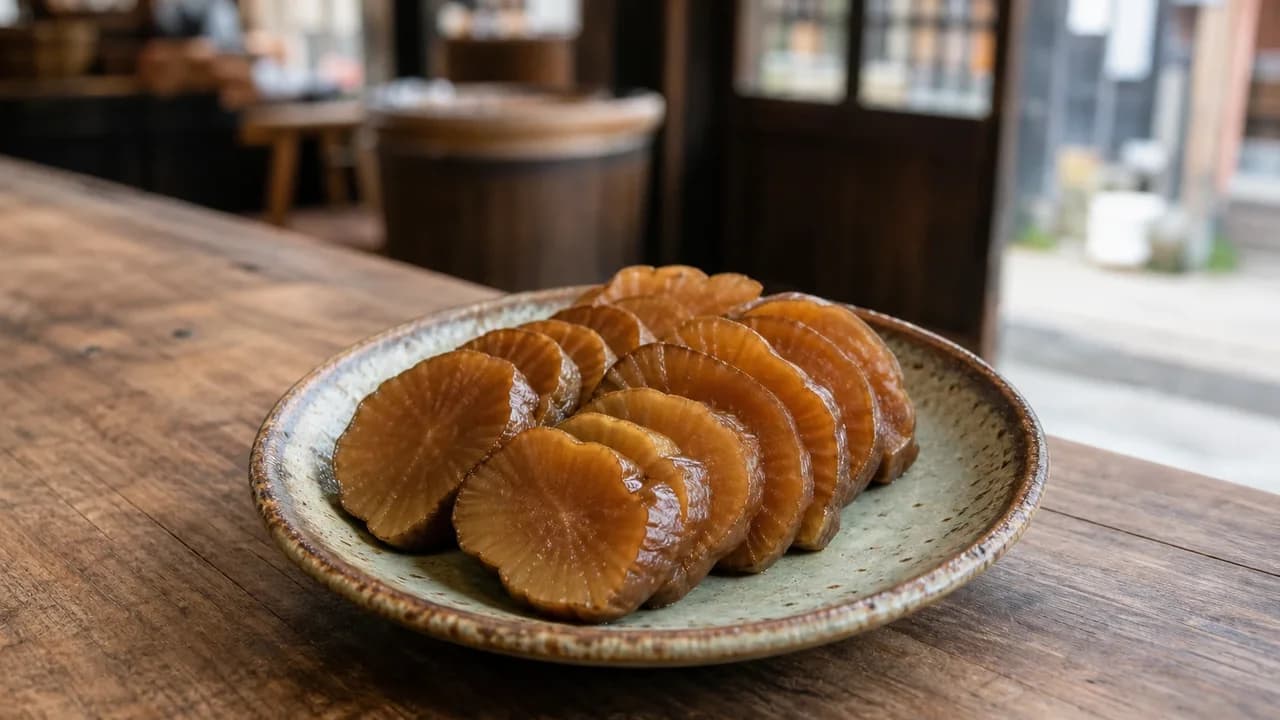
Iburigakko tastes smoky first, then salty, sweet, and quietly sour as the fermentation comes through. Sliced pieces snap rather than bend, closer to a pickled apple than a soft pickle. That crunch, combined with the smoke, is what separates it from most other Japanese tsukemono. Restaurants typically serve iburigakko cold, straight from the refrigerator. Chilling keeps the crunch firm and mutes the saltiness slightly. In Akita's izakayas, thin iburigakko slices layered onto cream cheese are now a standard order, not a novelty. Smoky pickle cuts through the cheese's fat. The cheese, in turn, softens the daikon's saltiness and mellows the smoke. This pairing has become common enough that some restaurants sell pre-assembled iburigakko cream cheese as a fixed menu item, plated with crackers or bread. Local sake mirrors the same contrast. A dry, clean pour from Akita's dry sake styles matches the pickle's smoke without competing with it, since both share a clean, mineral finish. The same shift shows in the ingredient's reputation. What began as a way to survive winter now appears on wine lists and pairs with dairy in ways a hearth-side farmer decades ago would not have imagined. Some Akita restaurants now plate iburigakko with soft cheeses beyond cream cheese, or fold small pieces into rice dishes for texture rather than flavor alone. The core appeal stays consistent across every version: smoke, crunch, and a controlled amount of salt.
Where to Try Iburigakko in Akita
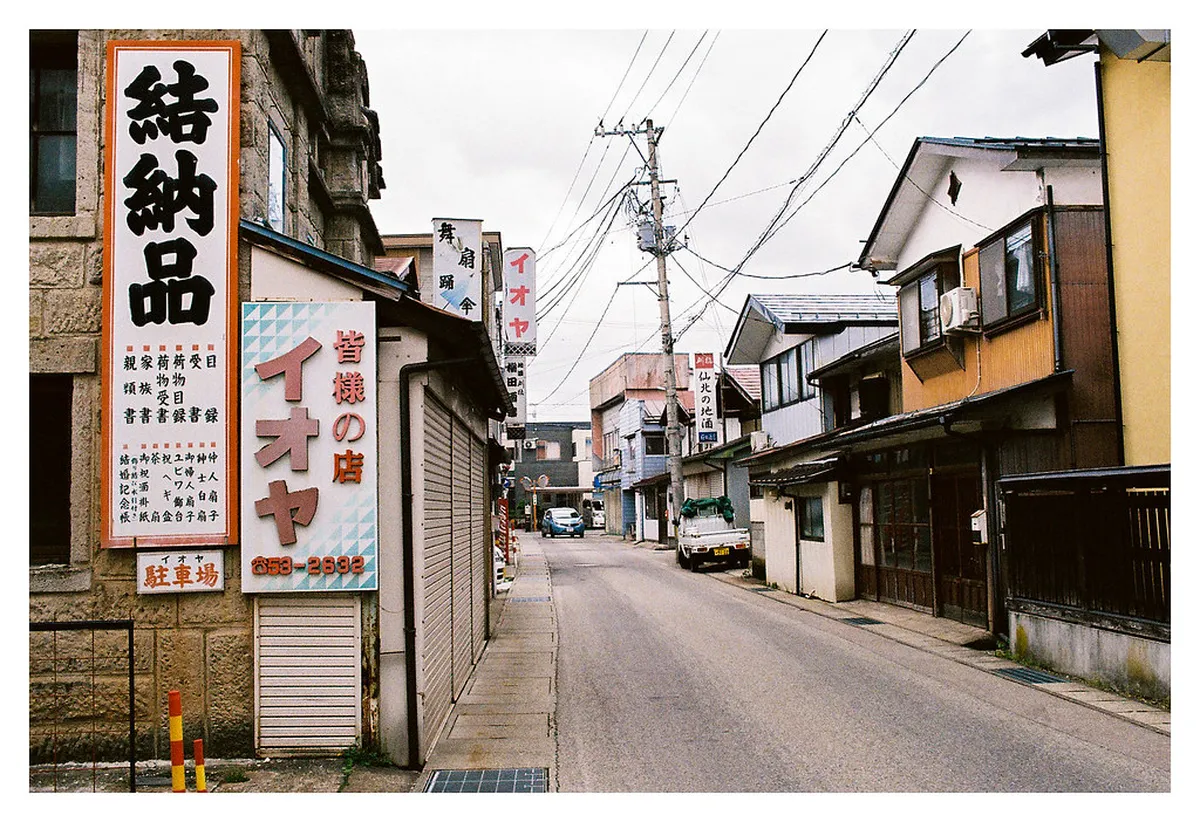
Most iburigakko production happens in small, rural workshops rather than tourist-facing facilities. Many operate outside Akita City, including around Yokote, and are not generally set up for casual drop-in visits. The multi-day smoking process needs constant tending near an open flame, which keeps most operations small and family-run rather than built for tour groups. That makes buying and tasting in the city itself the more realistic plan for most itineraries. Akita City offers the easiest starting point. Several izakayas and set-menu spots among the well-regarded Akita City restaurants serve iburigakko as a starter, often already paired with cream cheese. Kakunodate adds a different angle. Its preserved samurai district has shops selling vacuum-sealed jars alongside other local specialties, making it a natural stop on a day trip to Kakunodate. For souvenir shopping without a special trip, try Topico. It's the shopping complex attached to Akita Station, and it stocks multiple iburigakko brands and pack sizes near the platforms travelers use when arriving in Akita by train. Travelers staying at hotels near Akita Station can pick up a pack on the way to checkout without detouring. Timing matters less for buying than for freshness expectations. Producers do most of their smoking during the coldest months, so stock at markets stays consistent through the rest of the year, regardless of when your trip falls within the seasons covered in most Akita travel-timing guides.
| Location | What You'll Find | Best For |
|---|---|---|
| Akita City izakayas | Tasting plates, often paired with cream cheese | A first taste in a restaurant setting |
| Kakunodate samurai district | Artisanal, small-batch vacuum-sealed jars | Souvenir shopping alongside sightseeing |
| Topico, Akita Station | Multiple brands and pack sizes | Last-minute purchases before departure |
Buyer's Guide: Bringing Iburigakko Home
Vacuum-sealed packs travel well inside Japan and typically need no refrigeration until opened. International travelers should check their destination country's customs rules before packing pickled vegetables, since restrictions on bringing in produce and fermented foods vary by country. Expect two main formats at most shops. Pre-sliced packs suit immediate eating, while whole daikon suits cooks who want to cut it themselves at home. Some producers also sell a long-aged version, fermented longer for a deeper, more sour profile than the standard pickle. Reading the label helps here, since aging length is not always obvious from the packaging alone. Prices for vacuum packs typically run about ¥600 to ¥1,200, depending on brand, size, and aging. Smaller gift-style packs sit toward the lower end of that range, while larger family packs and long-aged varieties push toward the top. Many travelers buy two packs, one to eat during the trip and one sealed for later, since the vacuum packaging holds up well in checked luggage. Once opened, refrigerate iburigakko and eat it within the timeframe printed on the package, since fermentation continues slowly even after the vacuum seal is broken. Working iburigakko into a multi-day Akita itinerary alongside the Oga Peninsula day trip is straightforward, since both routes pass through Akita Station, giving travelers a natural point to buy on the way out.
Priced at ¥600 to ¥1,200 per vacuum pack, iburigakko exemplifies the product's journey from winter necessity to gourmet specialty, now valued for pairing with cream cheese and Akita sake rather than mere subsistence preservation.
- Packaging: vacuum-sealed packs, shelf-stable until opened
- Formats: pre-sliced for eating now, whole daikon for home cooks
- Aging: standard vs long-aged, for a deeper sour note
- Price range: roughly ¥600 to ¥1,200 per vacuum pack, depending on brand and size
- Storage: refrigerate after opening and eat within the printed window
- Customs: confirm your home country's rules on bringing in pickled or fermented vegetables
Iburigakko in Akita's Larger Food Culture
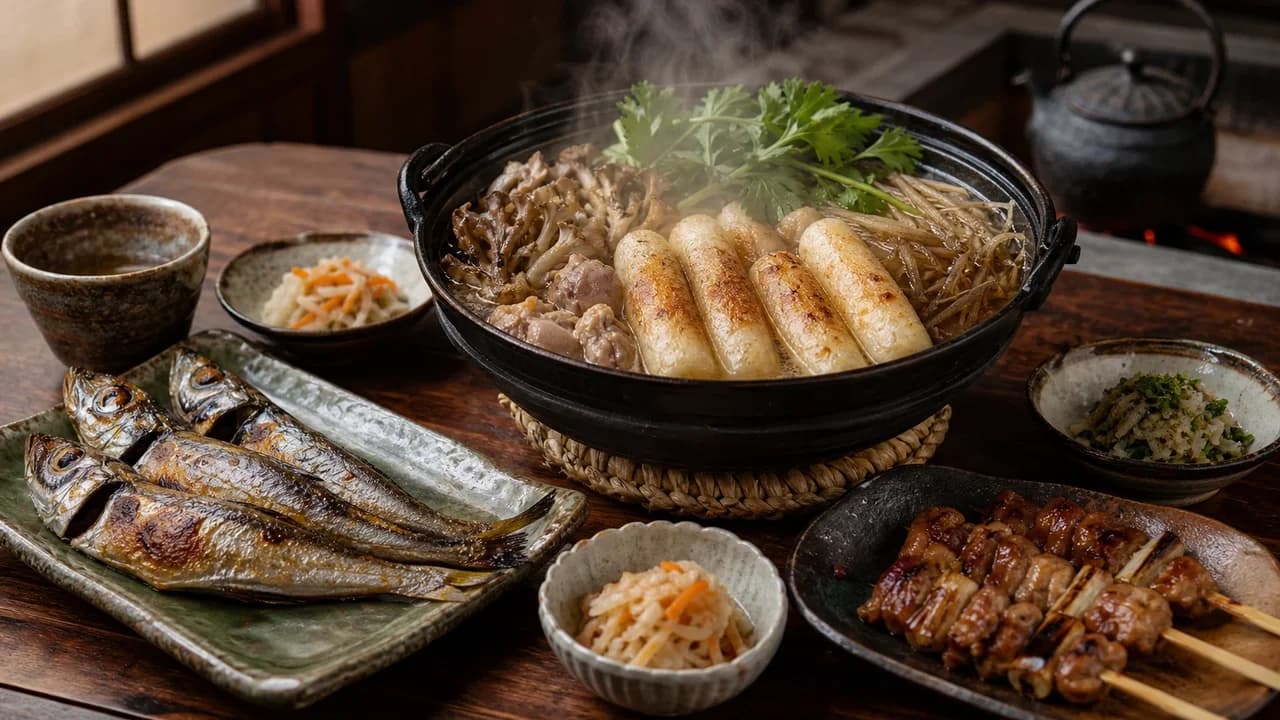
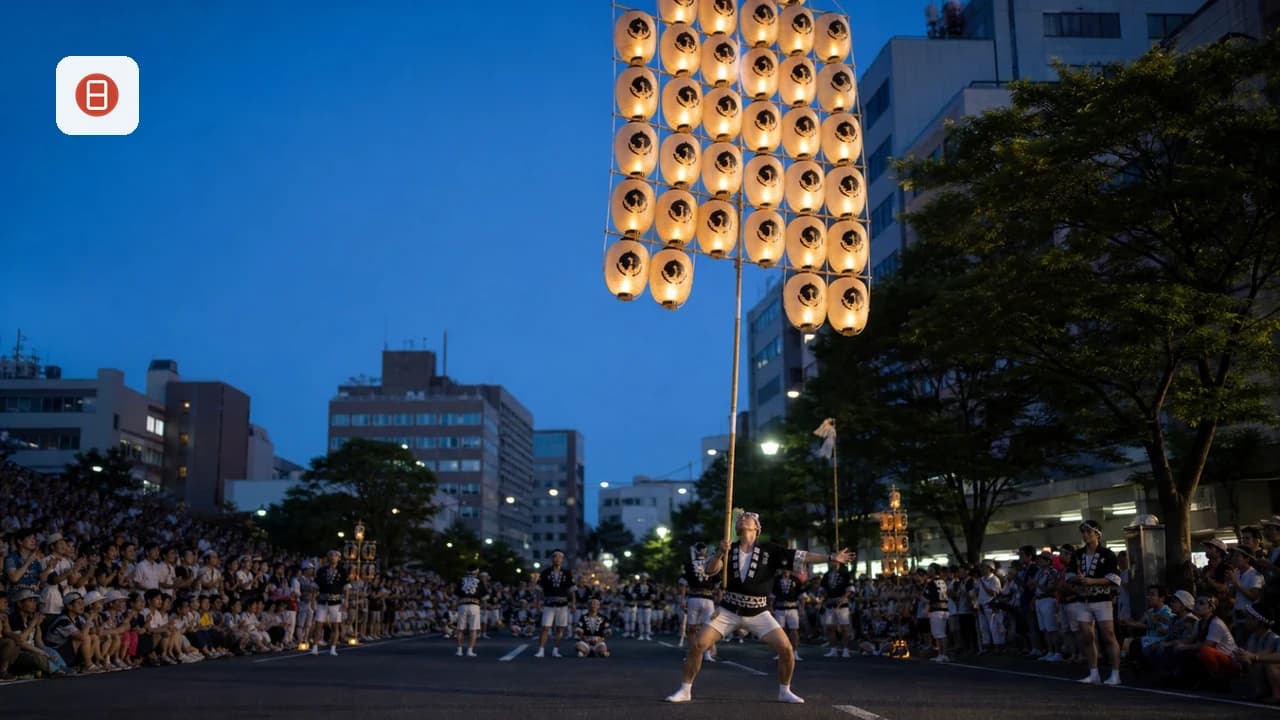
Iburigakko rarely appears alone on an Akita table. It shows up as a starter or palate cleanser alongside Hinai-jidori chicken, one of Japan's named regional chicken breeds. Kiritanpo beef hot pot, the prefecture's signature rice-and-broth dish, is another common pairing. Its smoke and acidity reset the palate between rich bites, a role Akita's pickled vegetables have played at winter meals for generations. During the Kanto Festival in Akita, food stalls near the main viewing areas sell iburigakko alongside grilled skewers and other festival snacks. The festival runs over several summer evenings, so visitors have more than one chance to find a stall if the first night is missed. That makes it a low-commitment way to try it between performances, without a full sit-down meal. Pair it with Akita's hatahata sandfish dishes for a meal that covers two of the prefecture's best-known preserved and seasonal foods in one sitting. Building a short food-focused day around these dishes works well alongside a day of sightseeing in the city center, since restaurants serving iburigakko tend to sit close to the main visitor areas rather than requiring a separate trip. Ordering it early in a meal, before heavier dishes, gives the smoke and crunch room to stand out instead of getting lost after richer flavors. Together, these pairings show iburigakko working as more of a flavor tool than a single dish, the way a strong condiment functions in other cuisines.

Frequently Asked Questions
Is iburigakko vegetarian or vegan?
Most iburigakko is vegetable-only: daikon, rice bran, salt, and sugar. Some producers use a fish-based dashi in the pickling liquid, so vegetarians and vegans should check the label or ask before ordering.
How long does iburigakko last?
Unopened vacuum-sealed packs often keep for several months at room temperature. Once opened, refrigerate the pack and eat it within the window printed on the label.
Can you eat the skin?
Yes. The entire slice, skin included, is edible and part of the intended texture.
What's the best drink to pair with iburigakko?
A dry, clean Akita sake is the traditional match, since its acidity balances the pickle's smoke and salt. Some izakayas also pair iburigakko cream cheese with a smoky whiskey for a similar contrast.
Is iburigakko spicy?
No. It's smoky, salty, and slightly sweet-sour, without any chili heat.
Does iburigakko go with rice, or is it a standalone snack?
It works both ways. Many Akita households serve small slices as a side with steamed rice, while izakayas often plate it on its own as a drinking snack.
Can travelers visit an iburigakko smokehouse?
Most production happens in small, rural workshops outside Akita City, including around Yokote, and many are not set up for casual drop-in visits. Buying from Akita City restaurants, Kakunodate shops, or Topico at Akita Station is the more reliable way to experience it without arranging a special visit.
Free guide: Japan's Hidden Gems
12 under-the-radar places beyond Tokyo & Kyoto — with the best season to visit each and a local tip you won't find in the guidebooks.
You might also like

Continue reading
More guides you'll find useful