

10 Best Hotels & Ryokans in Akita for Your Stay (2026)
Discover the best places to stay in Akita, Japan. Explore top neighborhoods, hotels, ryokans, and practical tips for choosing your ideal accommodation.
On this page
Akita Prefecture sits in Japan's Tohoku region, offering a mix of samurai history, milky volcanic hot springs, deep mountain lakes, and rugged coastal folklore. Where you stay here matters more than in most Japanese destinations — the prefecture is large, transport connections between regions are limited, and the wrong base can cost you two or three hours of daily commuting. This guide breaks down the five key areas, explains who each suits, and gives you practical booking advice for 2026.
Understanding Akita: Key Regions for Your Stay
Akita Prefecture stretches from the Sea of Japan coast in the west to the Ou Mountains in the east, covering around 11,600 square kilometers. Five distinct zones each attract a different type of traveler: Akita City (the urban hub), Kakunodate (the samurai town), Nyuto Onsen Village (secluded hot springs), the Lake Tazawa area (alpine lake and outdoor activities), and the Oga Peninsula (coastal folklore). No single base lets you reach all five comfortably on day trips — plan your itinerary first, then choose your base accordingly.
A useful rule of thumb: if you have three nights or fewer, anchor in one region rather than trying to move every day. If you have four or more nights, a split stay — one or two nights in Akita City, then a night at Nyuto Onsen or Kakunodate — works well. The Akita Shinkansen line runs through Kakunodate and Tazawako stations before reaching Akita City, so you can structure arrivals and departures to match your priorities without backtracking.
Akita City: Urban Hub for Convenience and Culture
Akita City is the prefectural capital and the most practical first base, especially for visitors arriving by Shinkansen. The station area is compact and walkable, with most city hotels within a 10-minute walk of the platforms. From Akita Station you can reach Kakunodate in about 40 minutes by Shinkansen, making it feasible as a day trip, though an overnight there is better.
Hotel Metropolitan Akita connects directly to the station by covered walkway — useful in winter when snow arrives early. Rooms run ¥8,000–¥18,000 per night. Daiwa Roynet Hotel Akita, about a 10-minute walk west toward Kawabata-dori, is the most commonly recommended mid-range option. It is clean, modern, and typically priced ¥7,000–¥15,000. Both are business-hotel style, meaning compact rooms but reliable amenities. Neither offers onsen baths, so Akita City is not the place to linger — it's a logistics base.
The city earns its own visit during the the Akita Kanto Matsuri in early August, when performers balance towering bamboo poles topped with dozens of paper lanterns along the main streets. Book festival-period accommodation a full year in advance; rooms sell out reliably by September the prior year. Outside festival season, availability is rarely a problem and prices stay reasonable.
the Senshu Park, a short taxi ride from the station, offers pleasant walks around the old castle moat. The Akita Museum of Art houses a permanent Fujita Tsuguharu collection. Both can be covered in a half-day, leaving the afternoon free for a Shinkansen to Kakunodate or a bus toward Oga.
Kakunodate: Historic Charm and Traditional Inns
Kakunodate is often called "the Little Kyoto of the Tohoku region" — a nickname that undersells how different it actually feels from Kyoto. The samurai district along Bukeyashiki-dori Street is compact (about 2 kilometers end to end) and remarkably intact, with black-walled residences dating to the Edo period. Several, including the Aoyagi House and Ishiguro House, allow visitors inside. In late April and early May the street's weeping cherry trees — 162 of which are designated Natural Monuments — bloom alongside the black walls in a combination unique in Japan.
Staying overnight in Kakunodate rather than day-tripping from Akita City is worthwhile for one specific reason: the samurai streets are almost empty before 09:00 and after 17:00, when tour buses have gone. Hotel Folkloro Kakunodate sits directly next to Kakunodate Station, charges ¥9,000–¥18,000 per night, and rents bicycles for exploring the town. Wanoi Kakunodate is a small ryokan within walking distance of the samurai district, with tatami rooms and meals centered on local Akita ingredients; expect ¥15,000–¥30,000 per person including dinner and breakfast. Wanoi books out early, particularly during cherry blossom season — reserve two to three months ahead for April/May dates.
Kakunodate is also a gateway to the Dakigaeri Valley, a 40-minute walk through dense forest along an emerald river, with peak autumn color from early October to early November. The valley is easily reached by car or the on-demand shared transport "Yobunoru Kakunodate" from central Kakunodate. If you stay one night in Kakunodate, you can fit the samurai district in the afternoon and the valley the following morning before catching the Shinkansen onward.
Visit Kakunodate's samurai district before 09:00 or after 17:00. Tour buses dominate midday hours; the black-walled Bukeyashiki-dori Street is nearly empty in early morning and evening. An overnight stay in town (rather than a day trip from Akita City) is worthwhile specifically for this reason — you get the atmospheric experience without the crowds.
Nyuto Onsen Village: Secluded Hot Spring Retreats
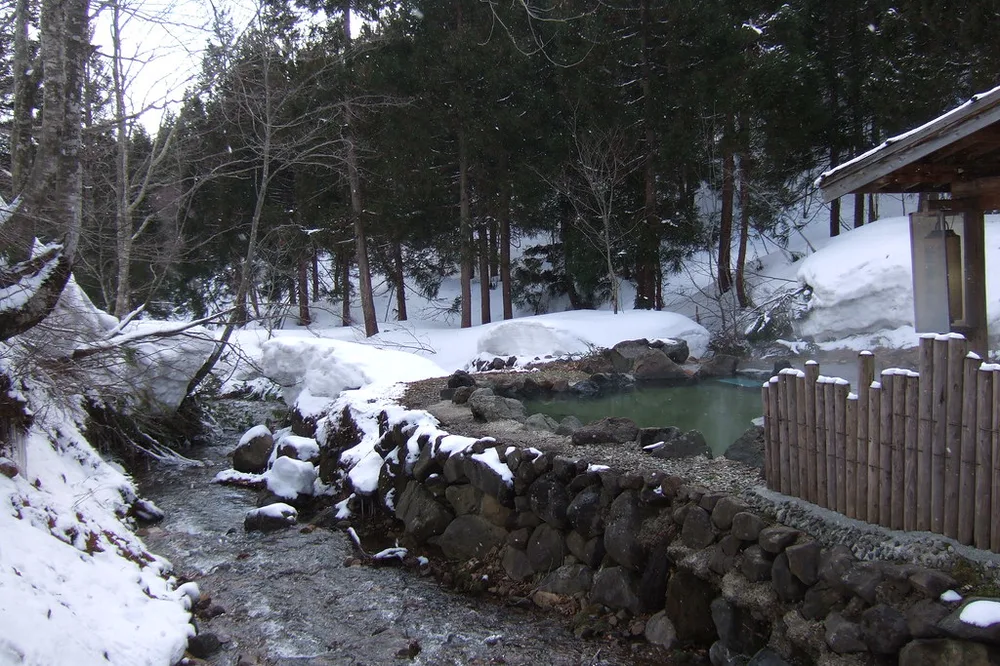
Nyuto Onsen is a cluster of seven individual hot spring inns scattered at the foot of Mt. Nyuto inside Towada-Hachimantai National Park. Each inn has its own source with distinct mineral properties — some waters run milky white from sulfur, others amber, others clear. The oldest and most famous is Tsurunoyu Onsen, established in the 1600s and once used as a therapeutic bath by the lord of the Akita domain. Its thatched-roof main building and outdoor mixed-gender bath surrounded by forest are unlike anything else in Japan.
Getting to Nyuto Onsen without a car requires a bus from Tazawako Station (about 50 minutes), followed by a short walk or shuttle to your specific inn. Services are infrequent — check timetables in advance at the Nyuto Onsen official site and plan arrival and departure times carefully. The last buses back to Tazawako leave in the early evening, making an overnight stay almost essential.
Tsurunoyu Onsen runs ¥15,000–¥30,000 per person including two meals, and the rooms are simple and traditional — no TV, no air conditioning, shared baths. The experience is the point. Kuroyu Onsen nearby offers a similarly rustic atmosphere at ¥12,000–¥25,000 per person with meals. Kyukamura Nyuto-Onsenkyo is the most modern and family-friendly option, better equipped for children, at ¥9,000–¥18,000 per person. Check the Things to Do in Akita page for seasonal timing advice on each area.
The Tsuru-no-yu Booking Situation — What Competitors Don't Explain
Every travel article recommends Tsurunoyu Onsen. Almost none explains how hard it actually is to book. The inn accepts reservations by phone only, does not use online booking platforms, and typically becomes fully booked within days of opening availability for popular dates. For weekend stays between October and March (peak season for snowy outdoor baths), it is common to call repeatedly for weeks before finding availability. If you cannot secure an overnight room, there is an alternative: day visitors can use the baths for ¥600 (as of 2026) on weekdays between 10:00 and 15:00. The outdoor mixed bath is accessible to day visitors, which lets you experience the most iconic feature without the overnight booking challenge.
The other option few travelers know about is the Yumeguri-cho pass, which costs ¥2,500 and grants bathing access at all seven Nyuto Onsen inns for one visit per inn. This is the best way to compare the distinct mineral waters across the cluster in a single day, and it is available at each inn's front desk. It does not include accommodation, but it transforms a logistically difficult overnight into a worthwhile day trip from Tazawako Station.
Booking Nyuto Onsen requires advance planning. Tsurunoyu Onsen, the signature destination, accepts reservations by phone only and fills months ahead for peak dates (Oct–Mar weekends). If a specific date matters, call weeks in advance. If you cannot secure an overnight room, day-visitor baths (¥600, 10:00–15:00 weekdays) or the Yumeguri-cho pass (¥2,500 for all seven inns in one day) are practical alternatives that still deliver the core experience.
Lake Tazawa and Tazawako Area: Nature's Embrace
Lake Tazawa is Japan's deepest lake at 423.4 meters, and its cobalt-blue color — which never freezes due to mineral content — is striking in every season. The lake's circular shoreline runs about 20 kilometers and can be cycled in two to three hours using rentals from the Tazawako Rest House near the Tazawako Kohan bus stop. Landmarks along the shore include the golden Statue of Tatsuko (a local legend figure), the red torii gate of Gozanoishi Shrine jutting over the water, and a lakeside swimming area with sandy beaches open in summer.
Tazawako Station is the transport hub for both the lake and Nyuto Onsen — it lies on the Akita Shinkansen line, making it reachable from Tokyo in about 3 hours 20 minutes or from Kakunodate in 13 minutes. Staying in the Tazawako area gives you easy morning access to the lake and afternoon access to Nyuto Onsen without the long bus rides from Akita City.
Tazawako Lake Resort and Spa is the main hotel option near the lake, offering lakeside views, onsen facilities, and local Akita cuisine at ¥10,000–¥20,000 per night. For families looking to combine outdoor activities with onsen comfort, the Tazawako area works better as a base than Nyuto Onsen itself, which lacks any facilities beyond the inns. Oga Peninsula is about 90 minutes from Tazawako by car, which is manageable as a day trip if you have a rental vehicle.
Oga Peninsula: Coastal Beauty and Namahage Folklore
The Oga Peninsula juts into the Sea of Japan from Akita's western coast, offering dramatic cliff scenery, fishing villages, thick forests, and the origin point of the Namahage tradition — the masked demon figures that visit homes on New Year's Eve to discipline lazy children. The Namahage Museum and Oga Shinzan Folklore Museum sit together on the peninsula and provide context that makes the tradition genuinely compelling rather than just a photo opportunity.
Godzilla Rock, a coastal rock formation that resembles the creature's profile at sunset, has become one of Akita's most-photographed spots. It is best seen around 17:00–18:00 when the angle of light is favorable — plan your afternoon accordingly if you are based on the peninsula. The Oga Peninsula Namahage day trip guide covers the full logistics for visitors approaching from Akita City.
Transport to the Oga Peninsula runs via the Oga Line train to Oga Station, then local buses to the hotels and museums. Services are infrequent, and a rental car is strongly recommended. Seiko Grand Hotel offers ocean-view rooms and onsen baths at ¥12,000–¥25,000 per night. Oga Onsen Kanko Hotel, also on the peninsula, runs Namahage-themed events suitable for families and costs ¥10,000–¥20,000 per person including meals. Both are genuine coastal hotels with fresh seafood menus and onsen facing the sea.
Choosing Your Akita Accommodation: Hotels vs. Ryokans
Hotels in Akita City are Western-style business hotels: compact rooms, private bathrooms, flexible meal arrangements, and easy early check-in or late check-out. They are the right choice if you are moving fast, using the city as a transit base, or traveling for the Kanto Festival. Ryokans — found mainly in Kakunodate, Nyuto Onsen, and the Oga Peninsula — offer tatami rooms, futon bedding, shared or private onsen baths, and almost always include dinner and breakfast in the rate. Meals at a good ryokan are a genuine highlight: multi-course kaiseki using local Akita ingredients, including Hinai chicken (one of Japan's three prized chicken breeds), Inaniwa udon, and sansai mountain vegetables.
Budget hotels in Akita City start around ¥5,000 per night. Mid-range hotels run ¥8,000–¥15,000. Ryokans with meals fall in the ¥15,000–¥30,000 per person range, and the most in-demand onsen inns can exceed ¥30,000. The per-person-with-meals structure of ryokans can make them seem expensive against a hotel rack rate, but the cost becomes comparable once you add two restaurant meals per day in a city hotel.
A practical traveler profile guide for Akita in 2026: first-timers and those on tight schedules should base in Akita City. Couples seeking the signature Japan experience should prioritize one night at Tsurunoyu Onsen or a Kakunodate ryokan. Families with children work best from the Tazawako area or the Oga Peninsula hotels. Nature-focused travelers who want to hike and explore multiple hot springs should use Tazawako Station as the anchor and day-trip to Nyuto Onsen with the Yumeguri-cho pass.
| Area | Best For | Vibe | Price Range | Key Accommodation |
|---|---|---|---|---|
| Akita City | First-timers, transit base, Kanto Festival | Urban, practical, convenient | ¥5,000–¥18,000/night | Hotel Metropolitan, Daiwa Roynet |
| Kakunodate | History lovers, couples, cherry blossoms | Samurai charm, quiet streets at dawn/dusk | ¥9,000–¥30,000/person | Hotel Folkloro, Wanoi Ryokan |
| Nyuto Onsen | Couples, hot spring purists, nature seekers | Rustic, secluded, immersive | ¥12,000–¥30,000/person (with meals) | Tsurunoyu, Kuroyu, Kyukamura |
| Lake Tazawa / Tazawako | Families, outdoor enthusiasts, balanced itineraries | Natural beauty, accessible onsen amenities | ¥10,000–¥20,000/night | Tazawako Lake Resort and Spa |
| Oga Peninsula | Families, Namahage folklore interest, coastal scenery | Coastal, cultural, seafood-focused | ¥10,000–¥25,000/person | Seiko Grand Hotel, Oga Onsen Kanko Hotel |
How to Get to Akita From Tokyo
The Akita Shinkansen Komachi service departs Tokyo Station and reaches Akita Station in approximately 3 hours 37 minutes at its fastest. The Komachi couples with the Hayabusa service until Morioka, where the trains split — if you board the wrong car, you will end up in Hakodate. Confirm your car number at Tokyo Station. En route, the train stops at Tazawako Station (for Lake Tazawa and Nyuto Onsen) and Kakunodate Station, allowing you to structure your itinerary around arrival sequence: start in Kakunodate on the way in, end in Akita City before returning.
The JR East Tohoku Area Pass covers unlimited travel on JR bullet trains and local lines in the Tohoku region for five consecutive days. If you plan to visit Akita alongside Aomori or Yamagata, this pass typically saves money. For a focused Akita-only trip of two to three days from Tokyo, calculate against the individual Shinkansen fares before buying a full JR Pass.
Domestic flights from Haneda Airport to Akita Airport take about one hour, but airport transfers add time on both ends. From Akita Airport, limousine buses run to Akita Station in about 40 minutes. Flights are worth considering if you find a discounted fare and are not combining Akita with other Tohoku destinations on a rail pass. Akita experiences heavy snowfall from December through March — if driving or renting a car in winter, confirm the vehicle has snow tyres before leaving the rental lot.
Once in Akita, local buses and trains connect the main sights, but schedules are sparse in rural areas. Renting a car from Akita Station or Tazawako Station unlocks the Oga Peninsula, Dakigaeri Valley, and the back roads of Nyuto Onsen territory that buses don't reliably serve. Check the full getting to Akita guide for transport options and passes in detail.
Is Akita Worth Visiting?
Akita is worth visiting if you want Japan beyond the standard circuit. It has no UNESCO World Heritage site, no famous castle, and no internationally recognized restaurant scene. What it has instead is variety: you can soak in a 400-year-old hot spring in the morning, cycle a volcanic lake at noon, walk through a samurai district in the afternoon, and watch masked Namahage performers in the evening. Few prefectures of its size compress that range of experience into a four-day trip.
The honest caveat is accommodation scarcity. As a competitor who has written about Akita for years has noted, the prefecture simply does not have enough hotels for its visitor volume. Popular ryokans like Tsurunoyu and Wanoi Kakunodate book months in advance for peak dates. If you arrive in Akita without reservations in April, August, or October, you will struggle. Plan ahead, book early, and treat the booking process as part of the trip rather than an afterthought.
For most foreign visitors, Akita is best combined with at least one other Tohoku prefecture — Aomori for Hirosaki Castle and the Nebuta Festival, or Yamagata for the Yamadera temple and Ginzan Onsen. A Tohoku loop of five to seven days, moving by Shinkansen, is the most efficient structure and gives Akita's slower pace the time it needs to land properly. See the Akita food guide for what to eat while you're there — kiritanpo hot pot and Hinai chicken are reason enough to make the journey.
Frequently Asked Questions
Which Akita neighborhoods are best for first-time visitors?
For first-time visitors, Akita City is generally the best base. It offers excellent transport connections, a wide range of hotels, and urban amenities. You can easily take day trips to other regions from here.
What types of accommodation are available in Akita?
Akita offers diverse accommodation, including modern Western-style hotels in urban areas, traditional Japanese ryokans, and rustic onsen inns. There are also guesthouses and a few resort-style options near natural attractions like Lake Tazawa.
How much does it cost to stay in Akita?
Accommodation costs in Akita vary from ¥5,000–¥8,000 per night for budget hotels to ¥15,000–¥30,000+ per person per night for mid-range to luxury ryokans. Prices often include meals at ryokans and onsen inns.
Is it better to stay in Akita City or a rural area?
The choice depends on your focus. Akita City is better for convenience and transport, while rural areas like Nyuto Onsen or Kakunodate offer more immersive cultural or natural experiences. For a balanced trip, consider splitting your stay between a city base and a rural inn.
Akita Prefecture rewards travelers who plan carefully. Book Tsurunoyu Onsen months ahead or use the day-visitor option and the Yumeguri-cho pass instead. Anchor in Akita City for flexibility, or split nights between Kakunodate and the Tazawako area for a more immersive trip. The Shinkansen makes the prefecture surprisingly accessible — the difficulty is not getting here, it is resisting the urge to rush through it.
For trip-planning details, see the official Akita travel guide and Akita on Wikipedia.
Free guide: Japan's Hidden Gems
12 under-the-radar places beyond Tokyo & Kyoto — with the best season to visit each and a local tip you won't find in the guidebooks.
You might also like


Continue reading
More guides you'll find useful


