Senshu Park Akita Travel Guide
Plan your visit to Senshu Park Akita with top picks, historical context, seasonal highlights, and practical tips for a smoother trip.
On this page
the Senshu Park sits in the center of Akita City on the ruins of Kubota Castle, a feudal stronghold that shaped the region for nearly three centuries. The park blends castle history, forested walking paths, seasonal scenery, and a rare chance to meet Japan's iconic Akita dogs — all within a 15-minute walk of JR Akita Station.
Most visitors need two to three hours to cover the main sights. The park is free to enter, though a few facilities inside charge a small admission. This guide covers everything you need: what to see, how the seasons change the experience, how to get there, and a few details that first-time visitors often overlook.
What Is Senshu Park?
Senshu Park (千秋公園) was built on the former site of Kubota Castle in 1896, following a design by Yasuhei Nagaoka, one of Japan's early modern park designers. The name "Senshu" — meaning roughly "thousand autumns" — was given by the Confucian scholar Ryoichi Kano. Today the park functions as Akita City's main public green space, used daily by local residents and visited by travelers from across Japan.
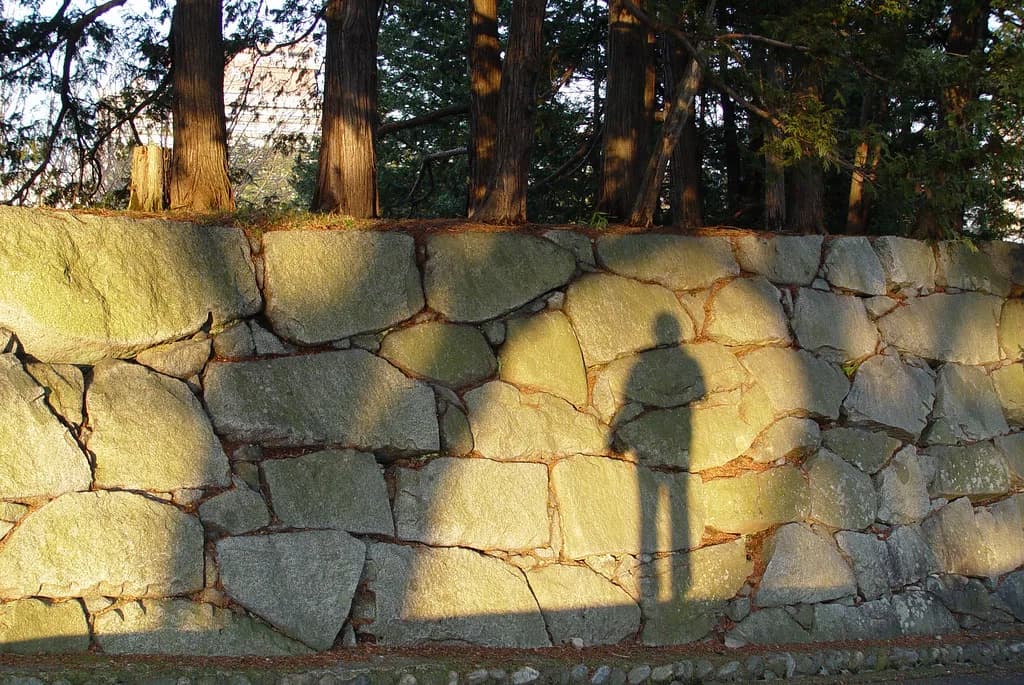
What makes it historically unusual is Kubota Castle itself. Built in 1603 by Yoshinobu Satake, the first lord of the Akita Domain, the castle was constructed without stone walls and without a main keep — extremely rare for a domain lord of 200,000 koku. Historians believe this reflected political deference to the Tokugawa shogunate, as well as the Satake clan's tradition from their former territory in Hitachi Province. The result is a hirayama-style earthen castle that relied on moats, earthen ramparts, and natural plateau terrain instead of the stone fortifications common at most major Japanese castles. Walking the park today, you are walking on those same earthworks.
The Satake clan ruled for 12 generations over 267 years until the Meiji Restoration. The park preserves several structures from that era and connects them with well-maintained paths, ponds, and gardens that are open around the clock.
Kubota Castle Ruins: What to See
The Omotemon Gate — the castle's reconstructed main entrance — is the most photographed structure in the park. The original gate was lost to fire; this two-story turret gate with a tiled roof was rebuilt in 2000 using historical documents and archaeological research. It marks the boundary between the outer approach and the honmaru (central bailey), and the stone approach leading up to it sets the tone for the rest of the castle grounds.
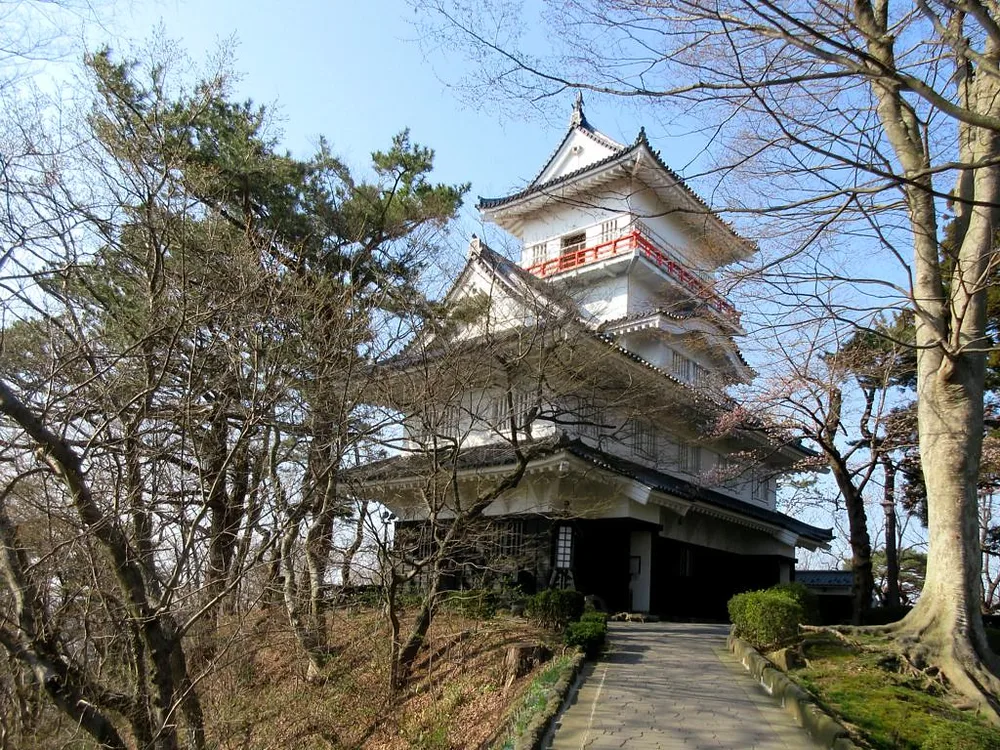
The Osumi-yagura is the corner turret at the northwest of the honmaru. It was reconstructed in 1989 for the city's 100th anniversary and serves as both a museum and an observation deck. The upper floor gives a wide view of the Akita cityscape. Inside, panel exhibits cover Satake clan history and castle architecture. Hours are 09:00–16:30 (extended to 19:00 during the summer school break and during the Cherry Blossom Festival; closed 1 December–31 March). Admission is ¥150 for adults, free for high school students and younger.
The Osumi-yagura turret (¥150 adults, free for high school students and younger) is only open 09:00–16:30 from April–November; it closes entirely December–March for snow protection. If you are visiting in winter, plan to skip the turret but enjoy the exterior architecture and the quieter park atmosphere instead. Extended summer hours to 19:00 are available during school breaks and the Cherry Blossom Festival.
The Omonogashira-gobansho guardhouse is easily overlooked but worth a stop. It is the only surviving original structure from the feudal-era castle — estimated to have been built between 1758 and 1778 — and is designated as an Akita City cultural property. It served as the office for officials who managed the second gate and coordinated fire-fighting. Seeing it next to the reconstructed turret makes the difference between original and replica immediately clear.
For historical context, the Akita City Satake Historical Museum in the ninomaru (second bailey) covers the Satake clan and the Akita Domain through artifacts and video exhibits. Permanent exhibition admission is ¥500 for adults; free for high school students and younger. Some affiliated facilities accept cashless payment.
Meeting Akita Dogs at the Fureaidokoro
A truly unique attraction within Senshu Park Akita is the Akita Dog Fureaidokoro, an interaction facility where visitors can meet the famous Akita breed up close. This is one of the easiest places to see the dogs without making a trip to Odate City in the north, and for many visitors it becomes the most memorable part of the park.
The facility is supervised to ensure both visitor and dog safety. Staff provide guidelines and the interaction is calm and structured — not a petting zoo situation. Check the official Akita City tourism site for current operating days and hours, as they can vary seasonally (Akita City official site).
If you want a deeper look at the breed's history and breeding program, the Akita Inu Village in Odate City is about 1.5 hours north by limited express and offers a much larger facility. But for a visit that fits into a half-day at Senshu Park, the Fureaidokoro is the right call. Dog lovers should budget 30–40 minutes here.
Senshu Park Through the Seasons
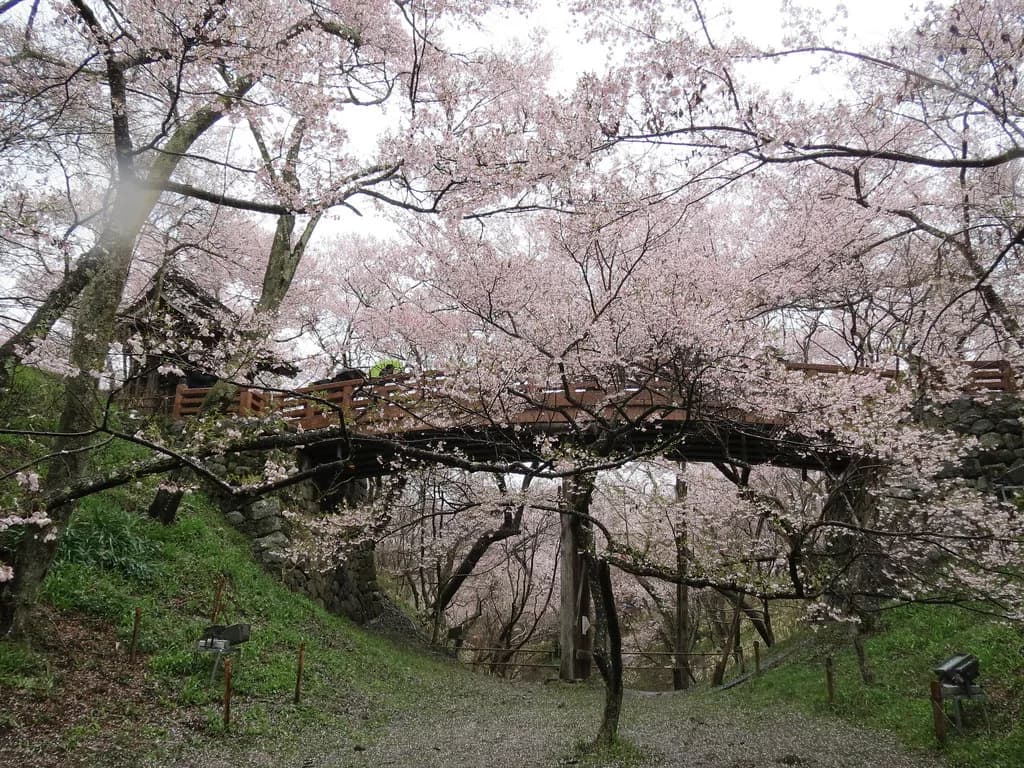
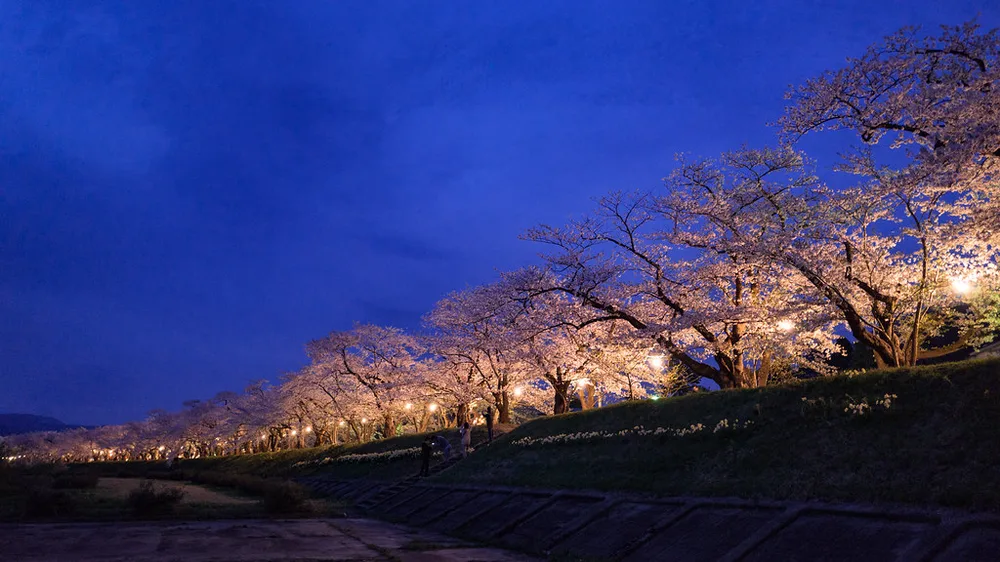
Spring is the most visited season. About 630 Somei Yoshino cherry trees bloom from mid to late April, earning the park a place on the Japan Cherry Blossom Association's list of Japan's Top 100 Cherry Blossom Spots. During the Sakura Festival — usually held across several weeks in mid-to-late April depending on the bloom — paper lanterns are lit and illumination runs from around 18:00 to 22:00, turning the honmaru and the moat into one of Akita's best evening scenes. The Senshu Park Sakura Festival details are updated annually on the Akita Yulala site. If you can only visit once, timed for the night illumination, do it.
Cherry blossom peak bloom in Akita arrives later than Tokyo and Kyoto — typically mid to late April. Night illumination during the Sakura Festival (18:00–22:00) transforms the castle ruins and moat into one of Akita's most photogenic scenes. Plan your visit for a weekday if possible to avoid the heaviest weekend crowds during peak bloom.
Summer brings a different spectacle that most visitors miss. The moat around the Otemon fills with "Gyozan Koren" lotus flowers — a pale-pink variety — from around early July to mid-September. The 254-meter Otemon Moat Promenade, a floating-pier-style walkway that opened in 2024, puts you at water level directly beside the lotus blooms. Early morning gives the best light and the least heat. Note that the promenade is closed in winter (December through March) and closes to pedestrians at 22:00 nightly.
Autumn arrives from late October to mid-November as zelkova and maple trees in the park turn red and yellow. The combination of the Omotemon Gate framed by autumn foliage is one of those shots that justifies a longer lens. From the Osumi-yagura observation deck you can see the foliage and the Akita skyline simultaneously.
Winter is the quietest season but has its own character. From December, the park's trees are fitted with yukitsuri — the traditional rope-and-pole system used to protect branches from heavy snow. It is most associated with Kenroku-en in Kanazawa, but Senshu Park's snow-country version is equally striking against a grey Akita sky. The Osumi-yagura closes through March, but the park grounds stay open and are much calmer than the spring crowds.
| Season | Timing | Main Attractions | Best For |
|---|---|---|---|
| Spring | Mid-April to early May | 630 Somei Yoshino cherry trees; Sakura Festival with night illumination 18:00–22:00 | Cherry blossom photography; crowds expected |
| Summer | Early July to mid-September | Pale-pink lotus flowers in Otemon Moat; 254-meter floating Promenade walkway (newly opened 2024) | Early morning visits for best light; fewer crowds |
| Autumn | Late October to mid-November | Zelkova and maple trees turn red and yellow; Omotemon Gate framed by foliage | Landscape photography; moderate crowds |
| Winter | December to March | Yukitsuri (rope protection on branches); serene snowscapes; Osumi-yagura closed | Quietest season; cultural scenery; avoid if mobility-challenged due to snow |
A Walking Route for First-Time Visitors
Start at JR Akita Station's west exit and walk toward the park — it takes about 13–15 minutes on foot. If you have luggage, the central city loop bus "Guru-Ru" stops at "Milhas-mae," which is convenient for reaching the park's outer area. Wayfinding signs in the city center are mostly in Japanese, so having a map app open with the stop name visible is the practical move.
From the station side, approach via the Otemon Moat Promenade if you're visiting between April and November. The 254-meter floating walkway runs alongside the outer moat and delivers you to the main gate approach with the water and seasonal scenery on your left. It's a far better entrance than the roadside path. The promenade is closed to bicycles, scooters, and smokers, and closes at 22:00.
Once through the Omotemon Gate, head up into the honmaru. Visit the Omonogashira-gobansho guardhouse first — it's small and quick, and being the only genuine Edo-era building in the castle complex, it earns its five minutes. Then walk to the Osumi-yagura for the observation deck view and the clan history exhibits (¥150 adults). From there, descend to the ninomaru for the Satake Historical Museum (¥500 adults) if you want a full historical picture.
After the museum, loop back across the park to the Akita Dog Fureaidokoro, allocating 30–40 minutes. Exit back toward the station or continue south toward the Akita Museum of Art if you have the afternoon. The full loop — promenade, gate, turret, museum, Fureaidokoro — runs 2.5 to 3 hours at a comfortable pace.
The Hachiman Shrine, Ponds, and What Else the Park Holds
Tucked inside Senshu Park is the Hachiman Shrine (Akita-jinja), a small Shinto shrine that tends to get skipped when visitors follow the castle-focused route. It sits beside one of the park's ponds and is particularly atmospheric in cherry blossom season when petals drift onto the water's surface. During the Sakura Festival the shrine also offers cherry-blossom-themed omikuji fortune papers.
The ponds themselves are worth the detour. The main pond below the honmaru is one of those calm spots where koi move beneath reflected trees, and during the cherry blossom peak the surface fills with fallen petals. It is the kind of scene you don't see at most Japanese castle parks because most of them have been developed more aggressively. Senshu Park's scale — large but not overwhelming — keeps these quieter corners genuinely quiet.
There are restrooms and benches throughout the park, and the Satake Historical Museum offers climate-controlled rest time. Open flames and bicycles are prohibited across the park. No on-site parking is available, so car visitors should check nearby paid lots in advance.
Practical Information: Hours, Access, and Fees
The park grounds are open 24 hours and free to enter. Individual facilities have their own hours and fees. The Osumi-yagura is open 09:00–16:30 (extended during events and summer school breaks), closed 1 December–31 March, admission ¥150 for adults. The Satake Historical Museum is open during standard city facility hours; admission ¥500 for adults, free for high school students and younger. The Omonogashira-gobansho guardhouse has its own entry fee (¥150 adults per older listings — verify on-site as this may be updated in 2026). The Akita Dog Fureaidokoro operates on specific days with seasonal hours; check the official Akita City page before visiting.
From JR Akita Station, walk 13–15 minutes from the west exit. The Guru-Ru central city loop bus stops at "Milhas-mae" and is useful if you are carrying bags. For drivers, there is no parking inside the park; paid lots are available in the surrounding Nakadori district. A park map is posted at the main entrances, though most signage is in Japanese — download a map app with the Senshu Park pin before you arrive.
A few etiquette points: Senshu Park is a daily-use public park, not just a tourist attraction. Walk at a comfortable pace, step aside on narrow paths, and do not block pedestrian flow during busy periods. Open flames are prohibited everywhere in the park. On the Otemon Moat Promenade, bicycles, skateboards, electric scooters, and smoking are banned. Pre-school children must be accompanied by a guardian at all times. For getting to Akita from other cities, consult our dedicated transport guide.
Nearby Attractions Worth Adding to Your Day
South of Senshu Park, a cluster of cultural venues makes a natural extension to a morning at the castle ruins. The Akita Museum of Art, designed by architect Tadao Ando, is a short walk away. It holds a permanent collection of Western paintings including large-scale works by Fujita Tsuguharu, and the building itself — with its reflecting pool and concrete geometry — is an attraction in its own right. Combined with the Senshu Park visit, it rounds out a full half-day of culture without needing transport.
The Area Nakaichi complex near the museum has cafes, restaurants, and a small shopping area, making it the easiest place for lunch or a coffee break after the park. This part of the city center also has several spots serving Akita's local cuisine — try kiritanpo hotpot or hinai-jidori chicken at one of the nearby restaurants if you are visiting at mealtimes.
For the broader Akita cultural calendar, the Akita Kanto Festival — held each August and featuring performers balancing 12-meter bamboo poles strung with paper lanterns — is the city's defining summer event. The Akita Kanto Festival guide covers dates, viewing spots, and what to expect. If your trip coincides with it, the festival changes what the city feels like entirely.
Things to Know Before You Go
The park's central paths are paved and relatively flat, making the main circuit accessible with a stroller or wheelchair. The Omotemon Gate approach and honmaru area involve some incline, but the main sightseeing loop is manageable. The Otemon Moat Promenade is flat and wide. For steeper terrain around the park's outer edges, consult the map posted at the main entrance.
Dining inside the park is limited to vending machines and seasonal kiosks during peak events. The best food options are within a 5–10 minute walk toward Akita Station or in the Nakadori shopping district south of the park. Bringing snacks for a picnic on the grass near the pond is a perfectly local thing to do — you will see plenty of office workers doing the same on weekday lunches.
Cherry blossom timing in Akita is later than Tokyo and Kyoto. Peak bloom runs mid to late April, and the nighttime illumination during the Sakura Festival is genuinely worth planning around if you have any flexibility in your dates. Arriving midweek avoids the heaviest weekend crowds. For everything you need to plan around the season, the best time to visit Akita guide breaks down month-by-month conditions across the prefecture.
Frequently Asked Questions
What is the best time of year to visit Senshu Park Akita?
The best time to visit Senshu Park is during spring (mid-April to early May) for cherry blossoms or autumn (late October to mid-November) for vibrant fall foliage. Both seasons offer pleasant weather and stunning natural beauty. Winter provides a serene, snowy landscape for a quieter experience.
How much time should I allocate for visiting Senshu Park?
Most visitors find 2 to 3 hours sufficient to explore the main historical sights, enjoy a leisurely stroll, and visit the Akita Dog Fureaidokoro. If you plan to visit the Satake Historical Museum or simply relax in the gardens, allow for a bit more time.
Are there any entrance fees to enter Senshu Park?
No, there is no entrance fee to enter Senshu Park itself, making it a free attraction for all visitors. However, specific facilities like the Satake Historical Museum or special exhibitions might have a small admission charge. Always check current information.
Is Senshu Park suitable for families with children?
Yes, Senshu Park is very suitable for families with children. Its open spaces, gentle paths, and historical elements offer an engaging environment. The highlight for many children is meeting the Akita dogs at the Fureaidokoro. It's a great spot for a family outing.
Can I find food and drink options inside Senshu Park?
While there are no full-service restaurants within Senshu Park, you might find vending machines or small kiosks selling snacks and drinks, especially during peak season. Many cafes and restaurants are conveniently located just outside the park, particularly towards Akita Station, offering diverse culinary choices. Consider bringing your own snacks for a picnic among the scenic spots.
Senshu Park rewards visitors who take their time. The castle ruins layer over each other — an original Edo-era guardhouse here, a faithfully reconstructed turret there, a moat now filled with lotus flowers and a new floating walkway — and none of it feels like a theme park. It feels like a city that has simply kept its history intact and planted trees around it.
Whether you come for the cherry blossoms in April, the lotus flowers in July, the autumn color in November, or the yukitsuri snowscapes in January, the park offers something different each time. The Akita dogs, the Hachiman Shrine, the quiet ponds — these are the details that make a Senshu Park visit feel complete rather than just checked off. Plan two to three hours, bring cash for the small facility fees, and come back if you can.
Free guide: Japan's Hidden Gems
12 under-the-radar places beyond Tokyo & Kyoto — with the best season to visit each and a local tip you won't find in the guidebooks.
You might also like



Continue reading
More guides you'll find useful