10 Best Akita Festivals: A Complete Seasonal Guide for 2026
Plan around Akita's 10 best festivals: dates for Kanto, Omagari fireworks, and Yokote Kamakura, plus hotel and train logistics for 2026.
On this page
Last updated August 2026: Akita festivals run year-round, from fire-lit summer nights to snow-domed February evenings on the Sea of Japan coast. This guide ranks the ten essential events in Akita Prefecture, with the seasonal logistics travelers need most. Expect hotel timing, train reservations, and which festival nights sell out first.
Why Akita's Festival Calendar Spans the Whole Year
Akita Prefecture runs festivals in every season, not just one headline weekend. Summer opens with fire and noise. Akita Kanto Festival fills central Akita City with lantern poles in early August. Omagari Fireworks Festival closes out the month as a national pyrotechnics competition. Winter flips the mood entirely. Snow-hut candlelight lights the Yokote Kamakura Snow Festival, and masked demons perform at the Namahage Sedo Festival on the Oga Peninsula. Both run in mid-February, alongside the Kamihinokinai Paper Balloon Festival in Semboku. Spring and early summer add a third layer. Senshu Park's cherry blossoms bloom in April, an azalea illumination follows in May, and float processions like the Tsuchizaki Shinmeisha Shrine Festival round out early summer. Autumn brings a smaller lineup too, including the Yokote Chrysanthemum Festival in late October and early November. That range is why a single-season visit only shows part of what the prefecture does. This list covers the ten events worth building a trip around.
10 Best Akita Festivals: The Complete Seasonal Calendar
Akita City and its outlying towns run more than a dozen notable festivals a year, but ten stand out for scale, accessibility, or a genuinely distinct experience. This list moves roughly in calendar order, starting with the winter events international guides often underplay and ending with the spring gatherings that round out a longer Tohoku trip. Each entry includes the practical numbers needed to plan around it: dates, rough costs, and a link to a deeper guide where one exists.
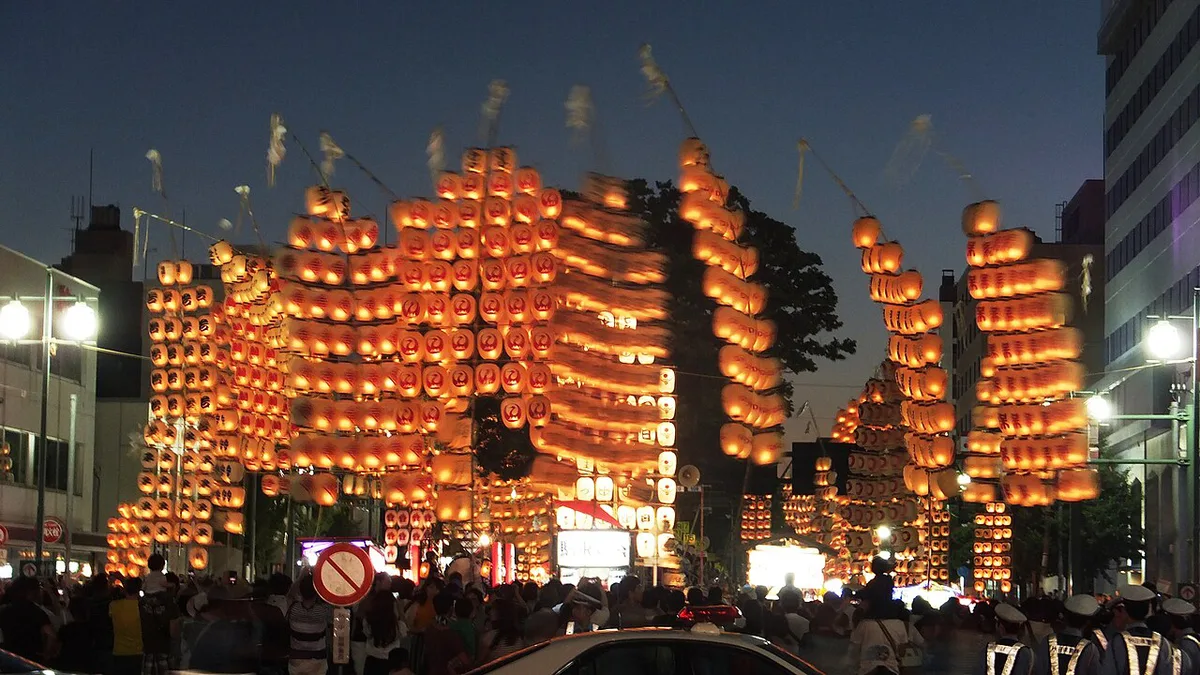
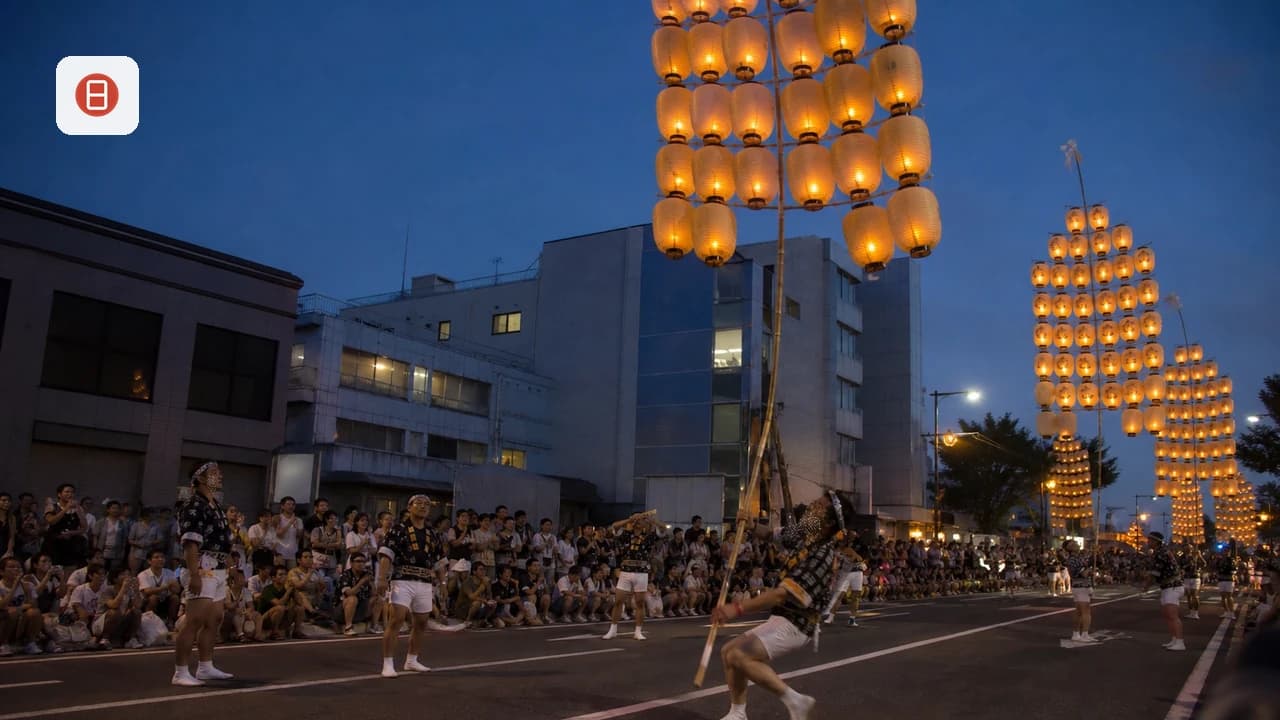
August 3–6 Kanto Festival features 200 bamboo-pole lanterns in evening parades, but the daytime Myogikai competition showcases the actual technical judging that evening-only visitors miss.
- Akita Kanto Festival (Akita City, August 3–6)
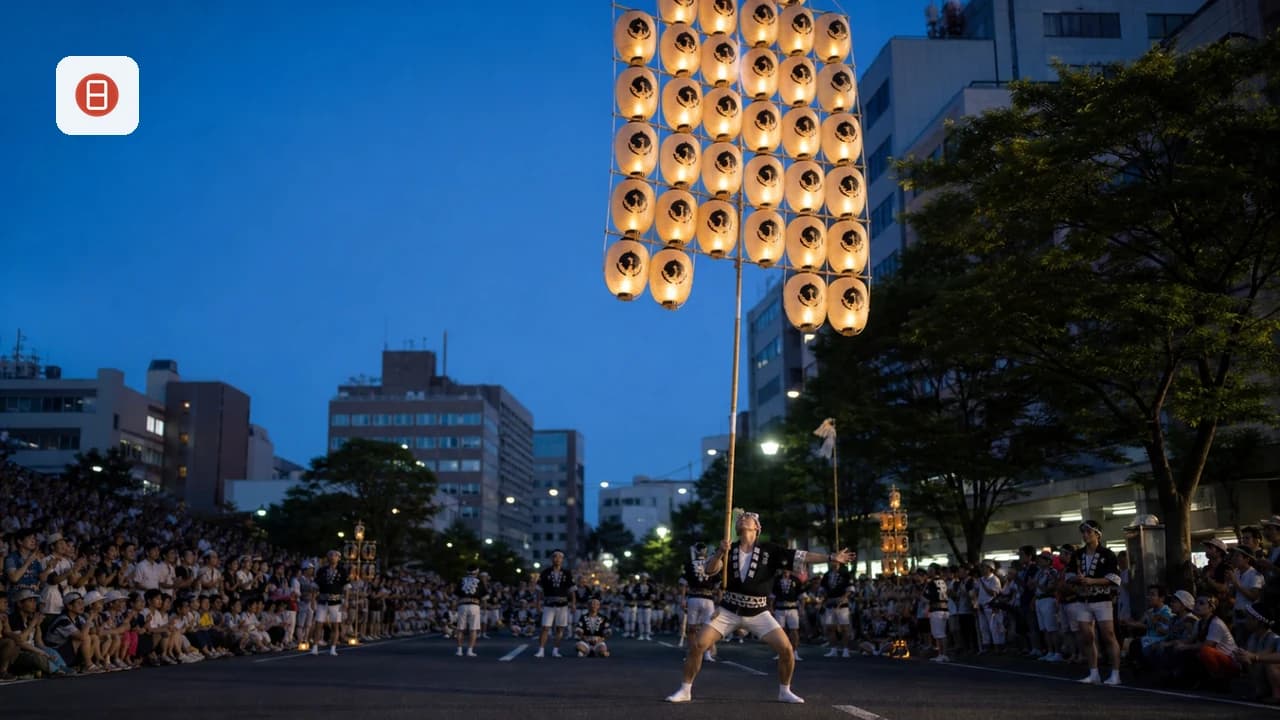
- About 200 bamboo poles headline the parade, built in four official sizes. The smallest, youwaka, stands about 16 feet, weighs around 11 lb, and carries 24 lanterns. The largest, oowaka, reaches 39 feet, weighs up to 110 lb, and carries 46 lanterns.
- Performers balance the poles on their palms, foreheads, shoulders, and lower backs along Kanto Odori in central Akita City. The tradition traces back to a 1789 travel diary and earned national Important Intangible Folk Cultural Property status in 1980.
- Stay after the evening parade for informal photos with performers, and check the Kanto balancing techniques guide for the daytime Myogikai competition schedule.
- Omagari Fireworks Festival (Daisen, last Saturday of August)
- Omagari is formally a national fireworks competition, not just a display, and pyrotechnic teams have competed here for more than 100 years.
- It runs a daytime technical round plus an evening display on the last Saturday of August, about a 30-minute walk from Omagari Station.
- Return trains can mean a two-hour wait, so check the Omagari fireworks planning guide before choosing reserved seats over free riverside viewing spots.
- Yokote Kamakura Snow Festival (Yokote, mid-February)
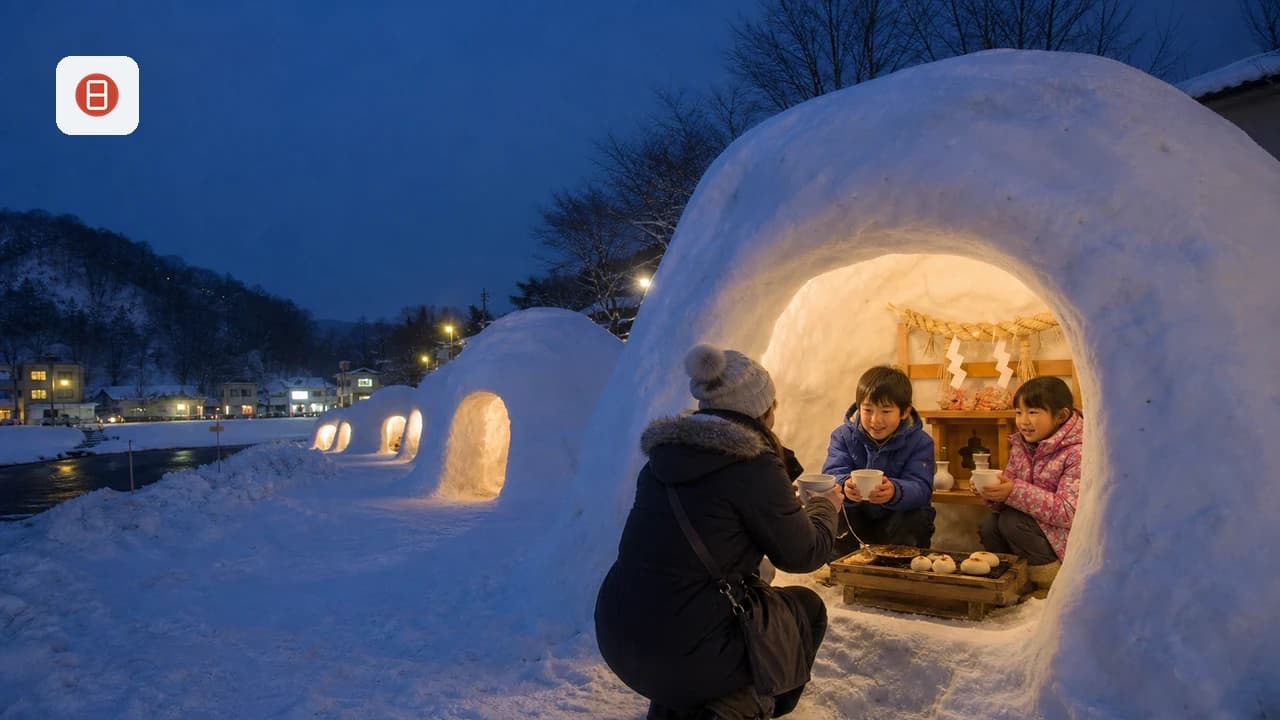
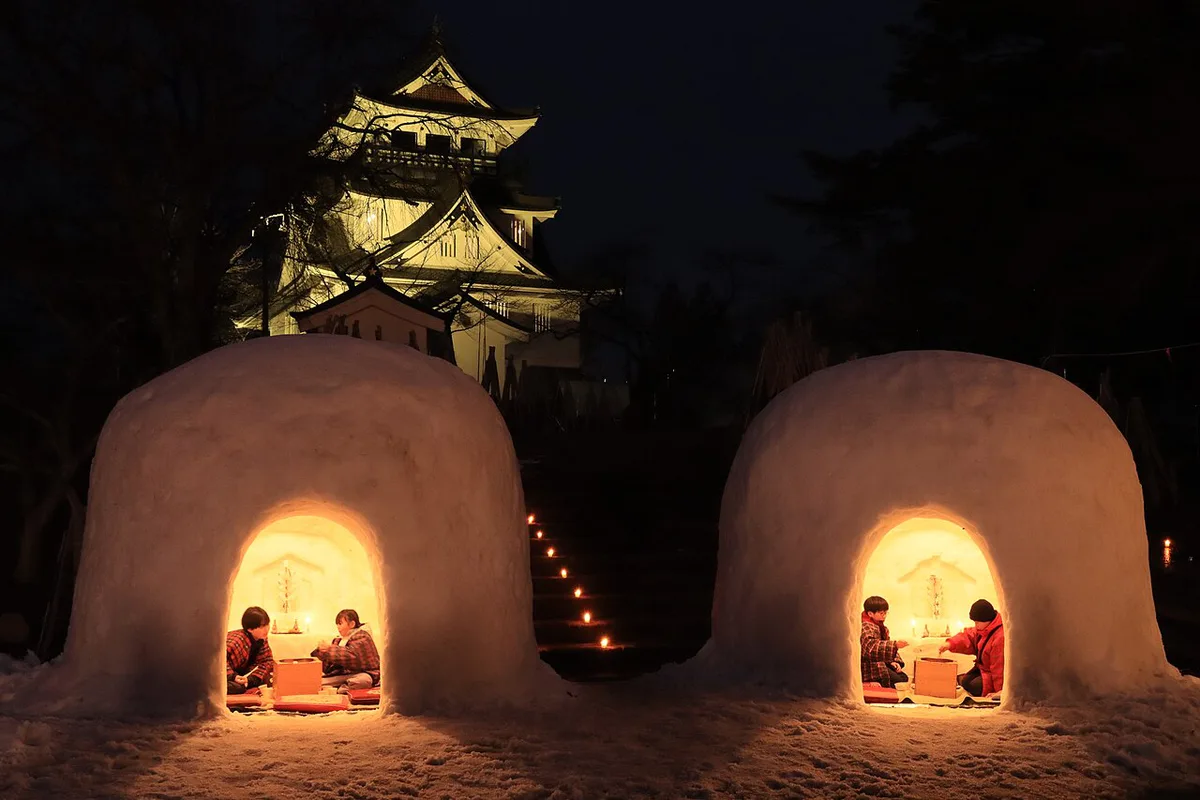
- Yokote's snow-hut festival dates back roughly 400 years and turns the city into a field of igloo-like kamakura, each lit from inside by candles after dark.
- Local hosts invite visitors inside to eat mochi and drink warm amazake rice wine, a custom tied to prayers for the local water deity.
- Traditional dates fall in mid-February. Verify exact 2026 dates and find photography vantage points in the Yokote Kamakura photography guide.
- Namahage Sedo Festival (Oga Peninsula, mid-February)
- Straw-clad demons called namahage stomp through a recreated mountain village on the Oga Peninsula, combining a Shinto purification ritual with folk theater.
- The performance runs roughly 6:00pm to 8:30pm most years, and entry costs around ¥1,000 at the door.
- It blends mountain-deity folklore with genuine scares for kids, so read the Namahage Sedo ritual guide before bringing young children.
- Kamihinokinai Paper Balloon Festival (Semboku, February)
- Hand-painted paper balloons, some large enough to need several people to hold steady before release, launch into the night sky over Semboku each February.
- Entry is free, but the village sits well off the main rail network, so arrange transport before dark.
- Pair it with the full seasonal festival calendar to see which nearby February events line up on the same trip.
- Hiburi Kamakura (Niida, early winter)
- Performers swing burning bundles of straw rope in wide arcs through the night air, a fire ritual meant to purify the new year in the Niida area.
- It runs earlier in the winter calendar than the main Yokote Kamakura Festival and draws a smaller, more local crowd.
- Confirm the current-year date with local tourism offices, since timing shifts slightly from year to year.
- Tsuchizaki Shinmeisha Shrine Float Festival (Akita City, summer)
- Elaborately decorated float trains, known as hikiyama, move through the Tsuchizaki district to live music. The tradition is recognized as UNESCO Intangible Cultural Heritage, and provincial event listings are maintained by the Akita Prefectural Government.
- The festival combines a shrine's annual celebration with a procession of floats, drawing a mostly local, less-touristed crowd than the Big Three summer events.
- It runs in summer, so confirm current dates before adding it to a longer festival trip.
- Miyoshi Bonden Festival (Akita City, January)
- Teams race to be first to plant a decorated bonden pole at the shrine. Onlookers jostle to touch the charms as the poles pass by.
- It's held on a Sunday in January, starting around 10:30am, with free entry.
- The physical jostling makes it a good one to watch from the edges rather than the middle of the crowd.
- Cherry Blossom Festival in Senshu Park (Akita City, April)
- Senshu Park, built on the former Kubota Castle grounds, fills with blooming cherry trees each April.
- Evening illumination extends viewing hours after dark, a contrast to the fire-and-snow festivals that dominate the rest of the calendar.
- Combine it with a stop on the Akita City attractions list, since the park sits close to central Akita Station.
- Azalea Illumination at Senshu Park (Akita City, May)
- The same castle-ruin park changes theme in May, when large numbers of azalea blooms are lit after sunset.
- It's a quieter, low-cost evening option for travelers visiting Akita City outside the big summer and winter festival windows.
- Check the same seasonal calendar used for the cherry blossom dates, since both events run in the same park.
Season vs. Vibe: Which Akita Festival Fits Your Trip
Akita's calendar splits cleanly by season and energy level. Summer brings fire, noise, and packed sidewalks. Winter brings quiet, snow-lit scenes and small-town intimacy instead. Match a festival to the trip you want using the table below. Akita City's own Omonogawa River Fireworks Festival is a smaller alternative to Omagari, launching about 4,000 fireworks most years for travelers who miss the main late-August date. Omagari also runs a smaller spring fireworks edition in late April, with reserved seats priced ¥7,000 to ¥30,000, for a shoulder-season option. None of the winter festivals charge more than about ¥1,000 for entry, which makes a winter trip noticeably cheaper than a summer one built around reserved fireworks seating.
| Festival | Season | Primary Appeal | Access Difficulty | Typical Cost |
|---|---|---|---|---|
| Akita Kanto Festival | Summer (Aug 3–6) | High-energy skill performance | High — hotels book out early | Free to watch; paid seating available |
| Omagari Fireworks Festival | Late summer (last Saturday of August) | National pyrotechnics competition | Extreme — long walk, packed trains | Free viewing; reserved seats extra |
| Yokote Kamakura Snow Festival | Winter (mid-February) | Candle-lit snow huts | Moderate | Free |
| Namahage Sedo Festival | Winter (mid-February) | Folklore, mildly frightening for kids | Moderate | About ¥1,000 at the door |
| Kamihinokinai Paper Balloon Festival | Winter (February) | Hand-painted balloons at night | High — remote village | Free |
Local Food to Pair With Akita's Festivals
Festival food in Akita tracks the season as closely as the events themselves. Winter events cluster around kiritanpo, pounded rice formed onto cedar skewers and simmered in a chicken-and-vegetable hotpot. It pairs naturally with a cold night watching kamakura huts glow at Yokote. Odate runs its own Kiritanpo Festival each mid-October, drawing crowds specifically for the dish before winter sets in. Yokote also runs a dedicated yakisoba festival each September, on the 26th and 27th, with entry tickets around ¥2,000. That event reflects a local rivalry over which town fries the better noodles. Look for both dishes at festival food stalls rather than only at restaurants, since stall versions tend to be freshest and cheapest. Amazake, the warm, low-alcohol rice drink served at Yokote Kamakura, pairs well with either dish if the night runs long.
¥2,000 yakisoba festival in Yokote each September (26–27) pairs with the town's February kamakura snow-hut festival, giving visitors dual seasonal food experiences.
Building Akita Festivals Into a Longer Tohoku Trip
Akita rarely works as a single-city visit when festival dates are the goal. The two biggest events, Kanto in August and Omagari days later, sit weeks apart from the winter cluster of Yokote Kamakura and Namahage Sedo in February. Most travelers pick one season and build the rest of a Tohoku trip around it, adding stops like Morioka or Sendai depending on transport connections. A dedicated multi-day Akita itinerary is worth mapping before booking flights. Festival nights fix your location for at least one evening and limit how much day-tripping fits around them. Building slack days before and after a headline festival also absorbs delays if the Shinkansen books out on your first-choice date. Travelers doing a winter trip can pair Yokote Kamakura with Namahage Sedo in the same week, since both run in mid-February within a similar travel radius of Akita City.
Logistics: How to Plan an Akita Festival Trip
Akita City hotels routinely sell out six months ahead of the Kanto Festival dates, so treat that booking window as a hard deadline rather than a guideline. Yokote fills up on a similar timeline before its February snow festival, especially rooms near the main viewing streets. Reserve rail seats early too. The Akita Shinkansen, marketed as the Komachi, connects Akita City directly to Tokyo. Local Oga Line and Ou Line trains reach Namahage country and smaller festival towns on a much thinner schedule, so check timetables well before travel. Full route names and reservation windows are covered in the Akita transport guide. If Akita City rooms are gone, Omagari and Morioka both work as regional bases with better last-minute availability, at the cost of a longer commute in on festival night. Compare monthly weather and crowd patterns in the Best Time To Visit Akita: Your Seasonal Travel Guide guide before locking in dates. Winter festival nights can drop to around 23°F on the coast, so budget for cold-weather layers as well as train tickets.
Mistakes to Avoid at Akita Festivals
A few recurring errors trip up first-time visitors to Akita's festivals. Avoid these before locking in dates and tickets.
- Booking Shinkansen seats at the last minute
- The Akita Shinkansen requires seat reservations during festival weeks, and reserved cars fill fast around August 3 to 6 and the last Saturday of August.
- Book as soon as festival dates are confirmed rather than assuming a same-week ticket will be available.
- Full route and reservation guidance is covered in the Akita transport guide.
- Underestimating the winter cold
- February festival nights can drop to around 23°F on the coast facing the Sea of Japan.
- Pack insulated boots and real winter layers built for standing outside for an hour or more, not a city coat.
- Namahage Sedo and Yokote Kamakura both run outdoors after dark, so cold gear matters as much as camera gear.
- Skipping the daytime Myogikai
- The daytime Myogikai skill competition is where the real balancing contests happen, judged on accuracy, posture, and stability.
- Performers compete in five techniques, from palm balance to forehead balance, well before the evening parade begins.
- Missing it for the evening parade alone means missing the technical side of the Kanto Festival entirely.
- Assuming every festival needs a paid ticket
- Most Akita festivals, including Yokote Kamakura and the Kamihinokinai Paper Balloon Festival, are free to watch from public streets.
- Namahage Sedo is one of the few with a door charge, at around ¥1,000.
- Check each event's current entry policy before assuming free viewing, since small charges can appear or change from year to year.
Explore festivals and events in other cities
Frequently Asked Questions
When is the Akita Kanto Festival held?
The Akita Kanto Festival runs August 3 to 6 each year in central Akita City, with the main lantern-pole parade held after dark along Kanto Odori. Confirm the exact 2026 schedule with the national tourism organization before booking travel, since festival committees occasionally adjust hours. Arrive by late afternoon if you want a spot near the parade route.
Which Akita festival is best for photography?
Yokote Kamakura Snow Festival is the strongest pick, with candle-lit snow huts photographed after dark in mid-February. Akita Kanto Festival also works well at night, when around 200 lantern-strung poles light up Kanto Odori. Bring a tripod for both, since low light and moving crowds make handheld shots difficult.
How far ahead should you book a hotel for Omagari Fireworks?
Aim for at least six months ahead, the same booking window Akita City hotels use for the Kanto Festival. Omagari's own hotel stock is limited, so demand spikes even faster close to the last Saturday of August. If Akita City and Omagari are both full, Morioka works as a regional base, at the cost of a longer commute in on festival night.
Is the Namahage Sedo Festival too scary for young children?
The straw-masked namahage are built to startle, and some children find them genuinely frightening rather than fun-scary. Entry costs around ¥1,000 and the performance runs roughly 6:00pm to 8:30pm, so plan an early dinner beforehand. Watch from the back of the crowd on a first visit, and read the Namahage Sedo ritual guide for what the performance actually involves.
What should you wear to winter festivals in Akita?
Plan for temperatures around 23°F after dark, especially near the coast facing the Sea of Japan. Insulated boots, waterproof layers, and hand warmers matter more than a stylish coat at Yokote Kamakura or Namahage Sedo. Bring an extra layer specifically for standing still, since both photography and viewing involve long stretches without moving.
Explore Akita's Festival Calendar
From snow-hut rituals in February to fireworks over the Omono River in August, dig deeper into the events that define Akita Prefecture's year.
Winter Snow & Folk Rituals
- Akita attractions hub: tickets, hours & maps
- Yokote Kamakura Festival, Akita
- Namahage Sedo Matsuri in Oga, Akita
Summer Spectacles
- Omagari Fireworks Festival Akita: Tickets, Dates & Getting There (2026)
- Akita Kanto Festival Travel Guide
Plan Your Trip
Free guide: Japan's Hidden Gems
12 under-the-radar places beyond Tokyo & Kyoto — with the best season to visit each and a local tip you won't find in the guidebooks.
You might also like


Continue reading
More guides you'll find useful