Kusatsu Onsen From Tokyo Travel Guide
Plan kusatsu onsen from tokyo with top picks, neighborhood context, timing tips, and practical booking advice for a smoother trip.
On this page
Kusatsu Onsen sits in Gunma Prefecture at 1,200 metres elevation, about 150 kilometres northwest of central Tokyo. It ranks alongside Gero Onsen and Arima Onsen as one of Japan's three great hot-spring towns, and its highly acidic water is among the most abundant and potent in the country. Getting there from Tokyo requires no shinkansen to Kusatsu itself — the town is not on the Shinkansen network — but four practical routes exist, each with a clear best-fit traveller profile.
This guide covers every access route with 2026 fares and times, explains the Naganohara-Kusatsuguchi bus transfer, and flags the practical details — IC card limitations, luggage lockers, winter footing — that trip up first-timers. It also covers what to do once you arrive, since Kusatsu rewards those who plan a night or two rather than rushing back to Tokyo the same day. See our full Tokyo day trips guide for other Kanto escapes worth pairing with this trip.
Choosing Your Route: Four Ways from Tokyo to Kusatsu Onsen
There is no single best route — the right choice depends on your budget, schedule, and how much luggage you carry. The table below summarises 2026 approximate costs and times for a one-way journey.
- Direct express bus (Shinjuku / Tokyo Station): 3,800–4,300 yen, 3.5–4 hours, no transfers. Best for budget travellers and anyone with heavy luggage.
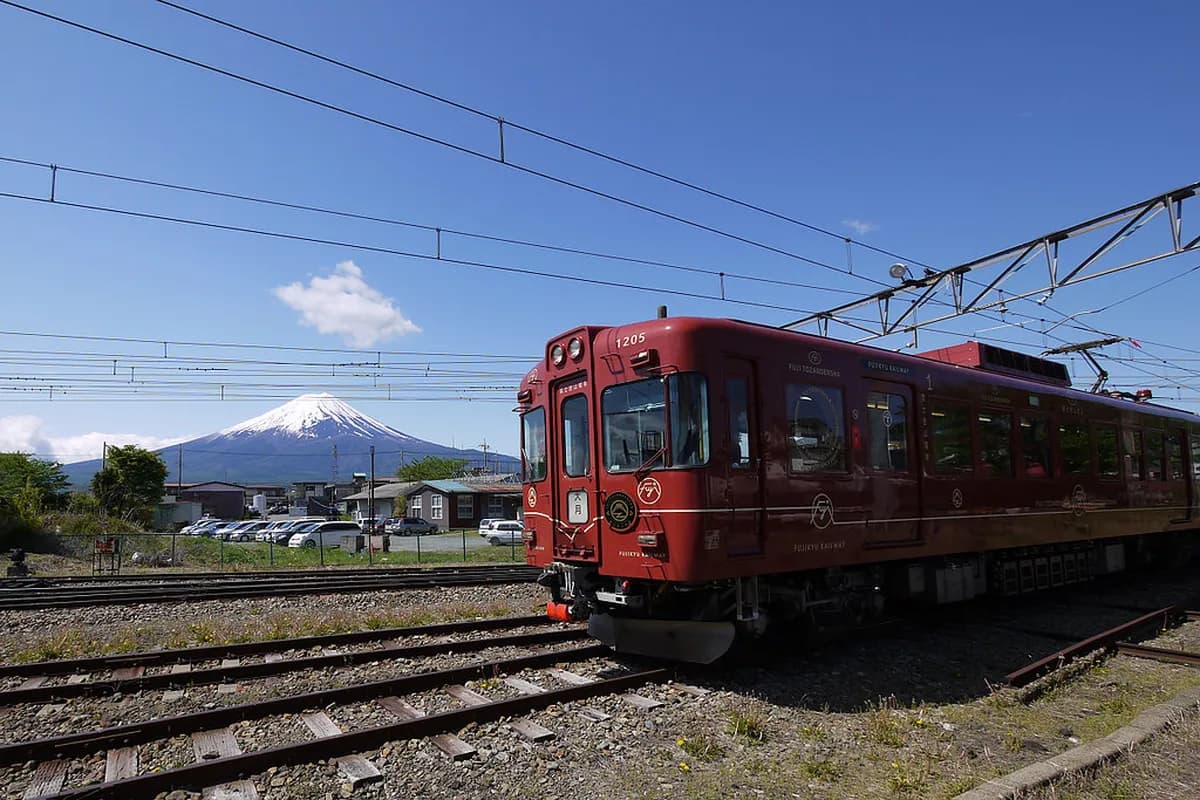
- Limited Express Kusatsu-Shima (Ueno → Naganohara-Kusatsuguchi + bus): 6,260 yen total, approximately 3 hours. Fastest train-based option; JR East's showpiece route for this corridor.
- JR conventional lines + bus (Ueno/Shinjuku → Takasaki → Naganohara-Kusatsuguchi + bus): 3,970 yen, 4–4.5 hours. Most economical if you do not hold a JR Tokyo Wide Pass; slowest.
- Hokuriku Shinkansen to Karuizawa + bus: 7,840 yen, around 3 hours including transfer waiting time. Best if you want a sightseeing stop in Karuizawa en route; highest fare.
If you hold the JR Tokyo Wide Pass (16,000 yen for 3 consecutive days in 2026), the economics shift significantly — all train segments and the JR bus from Naganohara-Kusatsuguchi are covered. This pass makes financial sense only if you also plan to visit Nikko, GALA Yuzawa, or Izu on the same trip; for a Kusatsu-only trip, you would need to spend more than 16,000 yen in JR fares across three days for the pass to pay off.
Direct Express Bus from Shinjuku or Tokyo Station
The direct highway bus is the cheapest and simplest option for most travellers. In 2026, the main service on the "Joshu Yumeguri" line departs from Shinjuku Busta (Busta Shinjuku, the South Exit highway bus terminal) and Tokyo Station's Yaesu South Exit. On weekdays, most departures originate from Shinjuku; Tokyo Station sees fewer weekday buses. Fares run 3,800–4,300 yen depending on season and booking method, and the ride takes 3.5–4 hours including a roughly 20-minute rest stop at Kamisato Service Area.
The bus from Shibuya Mark City also operates, departing at 08:20 and 09:20, and takes approximately 4–5 hours with a stop at Kamisato. Buses on all routes have onboard toilets, free Wi-Fi, and charging outlets. Seats are assigned, so you can travel solo without worrying about standing. Book online at the Japan Expressway Bus Net well in advance — during Golden Week and autumn colour season, buses sell out days ahead. Cancellations cost just ¥100 online versus the full fare at the counter.
Traffic congestion is the main risk. On holiday weekends, the bus can run 30–60 minutes late reaching Kusatsu. If your schedule is tight, the Limited Express Kusatsu-Shima is more predictable. Otherwise, the bus gives the best value per yen on this route.
Ueno Station: Gateway for the Limited Express Route
Ueno Station in Tokyo is the starting point for the Limited Express Kusatsu-Shima train, the fastest train-based connection to Kusatsu Onsen. Ueno is on the JR Yamanote Line, Keihin-Tohoku Line, and multiple subway lines, making it easy to reach from most Tokyo accommodation. Allow extra time to navigate the station during morning rush; the JR limited express platforms are clearly signed in English but require walking to a separate section of the building.
On weekdays two round trips run; on weekends and public holidays the service increases to three. Check the JR East Kusatsu-Shima timetable before booking, as departure times shift seasonally. Purchase reserved seats at any JR ticket office or through the JR East online booking portal — the train can fill up on Friday evenings and Sunday afternoons heading back to Tokyo.
Limited Express Kusatsu-Shima: Times, Fares, and What to Expect
The Limited Express Kusatsu-Shima departs Ueno and runs northwest through Saitama and Gunma Prefecture, reaching Naganohara-Kusatsuguchi Station in approximately 2 hours 30–40 minutes. The 2026 fare is 5,480 yen one way (3,190 yen base fare plus 2,290 yen for the limited express reserved-seat supplement). Green Car upgrades are available for a small additional charge if you want more legroom.
The train is comfortable and punctual — a major advantage over the bus when traffic congestion is a concern. Seating is 2+2 across most carriages with good overhead storage for bags. The scenery shifts from suburban Tokyo to open farmland and then mountain terrain as you approach Gunma. A food cart passes through; alternatively, pick up a bento at Ueno Station's vendors before boarding.
One note for JR Pass holders: the standard JR Pass (Japan Rail Pass) does not cover this train — you need the JR Tokyo Wide Pass (3-day, regional pass) or pay the fare separately. Confirm pass coverage before assuming you can board without purchasing a supplement ticket.
Naganohara-Kusatsuguchi Station: The Final Transfer
Naganohara-Kusatsuguchi Station is the last train stop before Kusatsu Onsen. All train-based routes — both the Limited Express Kusatsu-Shima and the JR conventional line — end here, requiring a bus transfer to complete the journey. The JR bus to Kusatsu Onsen Bus Terminal takes 25 minutes and costs 780 yen for adults (390 yen for children). During busy periods, two buses run per hour; timing is generally coordinated with train arrivals so waits are short.
A critical practical detail: IC cards such as Suica and PASMO may not be accepted on the bus from Naganohara-Kusatsuguchi. This varies by the specific bus operating at the time, but cash is the safe choice. Withdraw cash at Ueno or Shinjuku before travelling, as ATM access near the station is limited. The bus terminal at Naganohara-Kusatsuguchi is small — there are basic facilities but not much to do if you have a long wait.
Both Naganohara-Kusatsuguchi Station and Kusatsu Onsen Bus Terminal have coin lockers, though large locker spaces are limited and fill quickly on weekends. If you plan to sightsee before checking into your ryokan, drop bags at the bus terminal counter's luggage storage service rather than relying on the coin lockers being available.
JR Conventional Lines plus Bus: The Budget Train Option
For travellers without a rail pass who want to keep fares low, the JR conventional line route costs 3,970 yen one way — cheaper than the Limited Express but with 2–3 transfers and a total journey of 4–4.5 hours. From Ueno, Tokyo, or Shinjuku, take the JR Takasaki Line to Takasaki Station, then transfer to the JR Joetsu Line or Agatsuma Line to reach Naganohara-Kusatsuguchi. A final bus covers the last 25 minutes to Kusatsu Onsen Bus Terminal.
The route is straightforward if you use a navigation app, but the connections at Takasaki require knowing which platform to use. Google Maps Japan and the NAVITIME app both handle this routing accurately. The key trade-off versus the direct express bus: the bus is slightly cheaper at 3,800 yen, requires zero transfers, and gives you a direct door-to-door connection. The conventional train route mainly makes sense if you are continuing from a JR line already and want to avoid Shinjuku or Shibuya.
If you hold the JR Tokyo Wide Pass (16,000 yen for adults, 8,000 yen for children), all conventional JR trains plus the JR bus from Naganohara are covered. Run the break-even math: if your round trip by conventional lines costs about 7,940 yen, you need another 8,060 yen or more in JR travel within three days to justify the pass. Adding Nikko (round trip ~5,700 yen) or GALA Yuzawa in ski season tips the balance comfortably. For Kusatsu alone, the pass rarely pays off unless you are already committed to several other day trips.
Karuizawa Shinkansen Detour: Two Destinations, One Journey
If you want to combine two of Nagano and Gunma's most popular destinations, take the Hokuriku Shinkansen from Tokyo Station to Karuizawa (approximately 60–70 minutes, 5,600 yen) and then catch a bus from Karuizawa Station's North Exit bus stop to Kusatsu Onsen. The bus takes 1 hour 20 minutes to 2 hours and costs 2,240 yen. Total door-to-door: approximately 3 hours and 7,840 yen — the most expensive option.
The key constraint is bus frequency. Buses from Karuizawa to Kusatsu run roughly once per hour, and evening services stop early. If you spend more than a couple of hours in Karuizawa, you risk missing the last bus and needing to overnight there rather than in Kusatsu. Plan your Karuizawa time carefully: Shiraito Falls (20 minutes by taxi from the station) and the Prince Shopping Plaza are the two most efficient stops. Both can be covered in two to three hours. Depart Karuizawa no later than 15:00 to arrive in Kusatsu with enough evening time for a proper soak and dinner.
The JR Tokyo Wide Pass covers both the Shinkansen leg and the JR conventional lines, but not the Karuizawa-to-Kusatsu bus (that bus is operated by a non-JR company). Budget the 2,240 yen bus fare separately if you hold the pass.
Arriving in Kusatsu Onsen: What to Do First
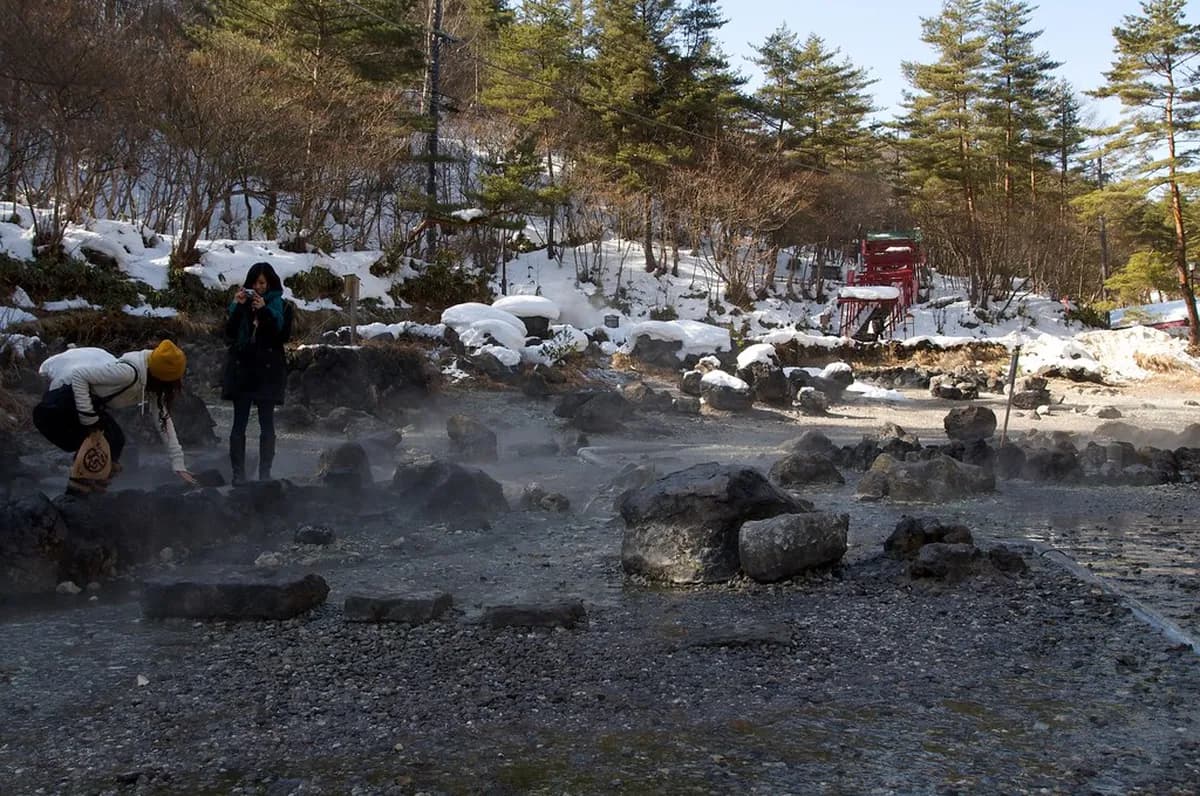
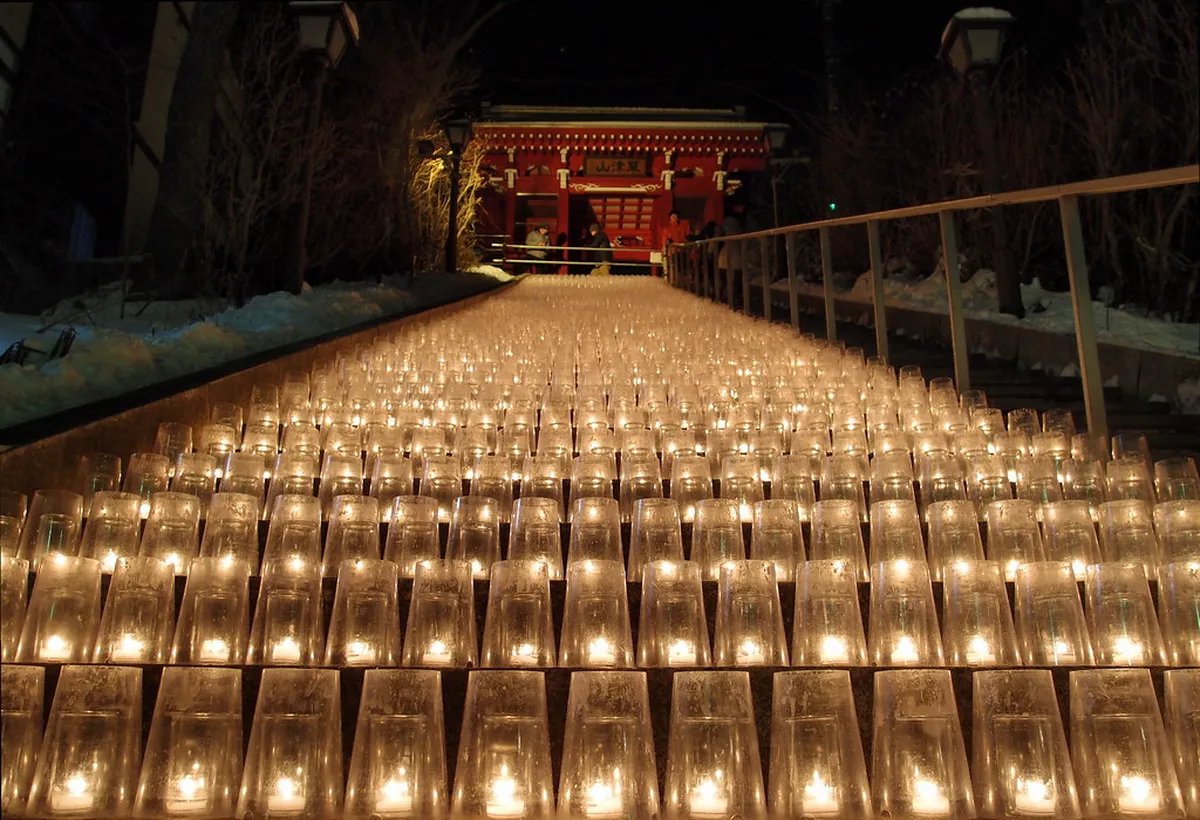
Kusatsu Onsen Bus Terminal is a three-floor facility with toilets, an information desk, coin lockers, and a souvenir shop on the first floor. Just outside the terminal entrance, a small free foot bath (ashiyu) lets you dip tired feet immediately after the journey. From the terminal, Yubatake — the steaming open-air hot-water field at the town's heart — is five minutes on foot downhill. The slope from the terminal to Yubatake is steep; it is easy going down but a workout on the way back up.
Winter visitors need specific preparation. Kusatsu sits at 1,200 metres, and from December through March temperatures regularly drop below 0°C — significantly colder than central Tokyo. The downhill path from the bus terminal to Yubatake freezes and becomes genuinely slippery. Waterproof, slip-resistant boots are not optional in winter. Pack a down jacket, hat, and gloves regardless of what Tokyo's forecast shows.
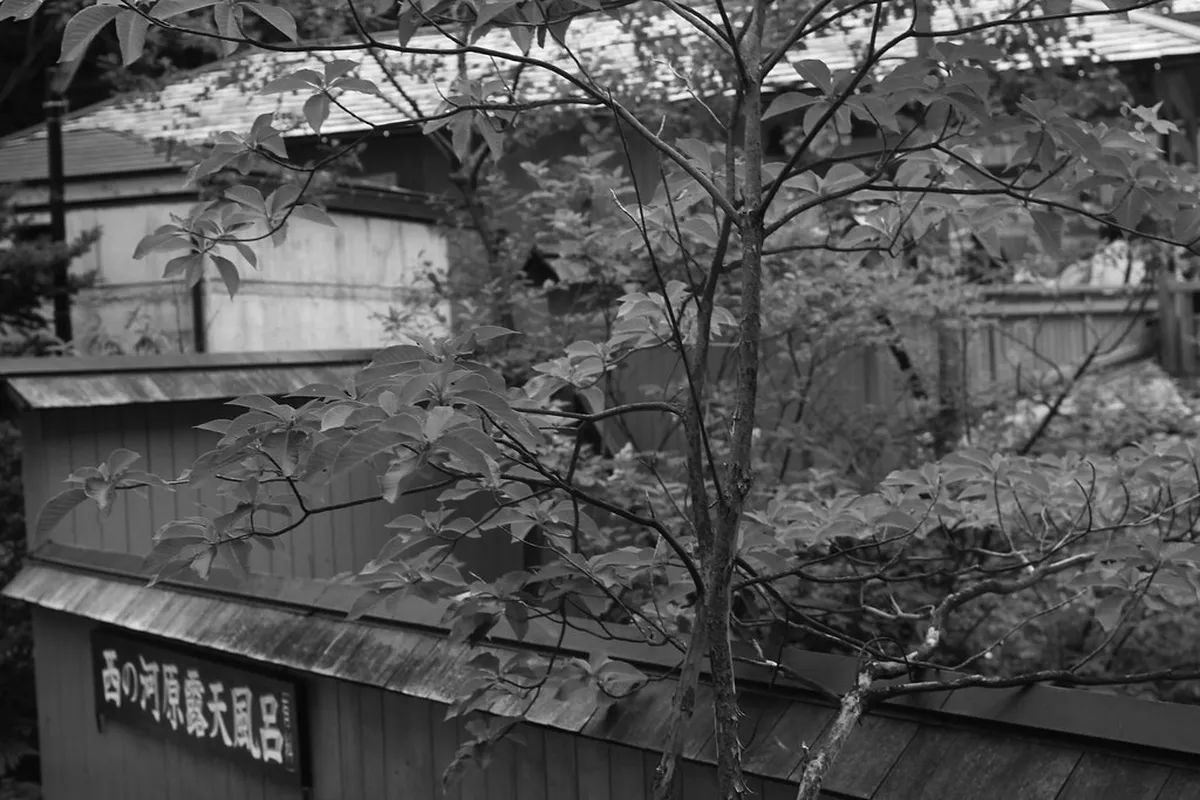
Most ryokan check-in begins no earlier than 14:00. Drop bags at the ryokan reception on arrival to explore hands-free. Bring a small waterproof bag with a towel and toiletries so you can use public baths throughout the day without returning to your room each time. The public baths in Kusatsu — including Sainokawara Rotenburo (800 yen, tattoo-friendly) and the free Shirahata-no-Yu — are central to what makes the town worth visiting.
What to See and Do in Kusatsu Onsen
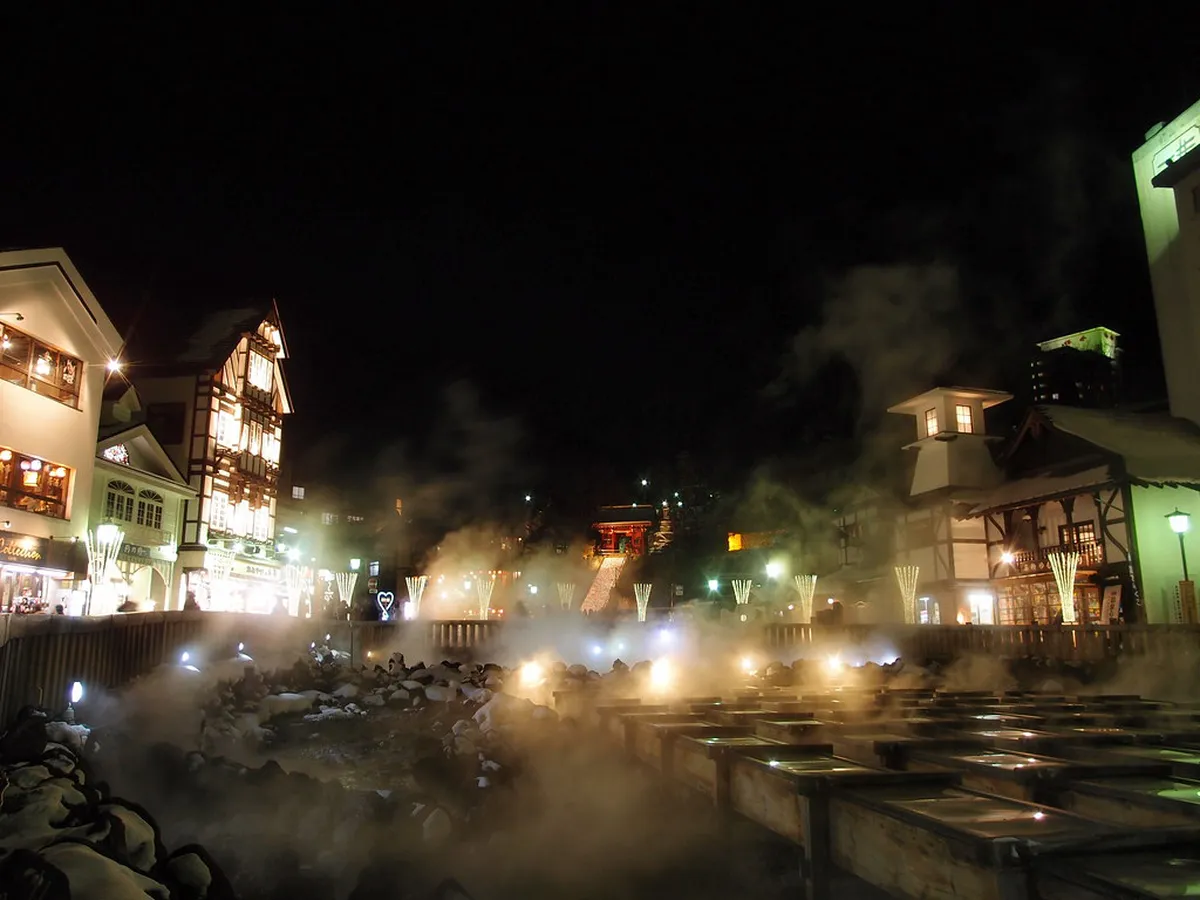
Kusatsu Onsen is celebrated as one of Japan's top three hot spring resorts. The town's highly acidic water — pH around 2 — is believed to have therapeutic properties and flows at over 4,000 litres per minute from the Yubatake alone. The Yubatake is free to view at any hour, and the night-time light-up after 19:00 transforms the steam and wooden channels into something genuinely atmospheric.
The Yumomi show at Netsunoyu (700 yen) is the town's most distinctive cultural experience — performers use wide wooden paddles to cool the dangerously hot spring water through rhythmic stirring, accompanied by folk chants. No advance reservations are accepted; shows run daily at 09:30, 10:00, 10:30, 13:30, 15:30, 16:00, and 16:30. Arrive 15 minutes before your target show as tickets sell out at the counter.
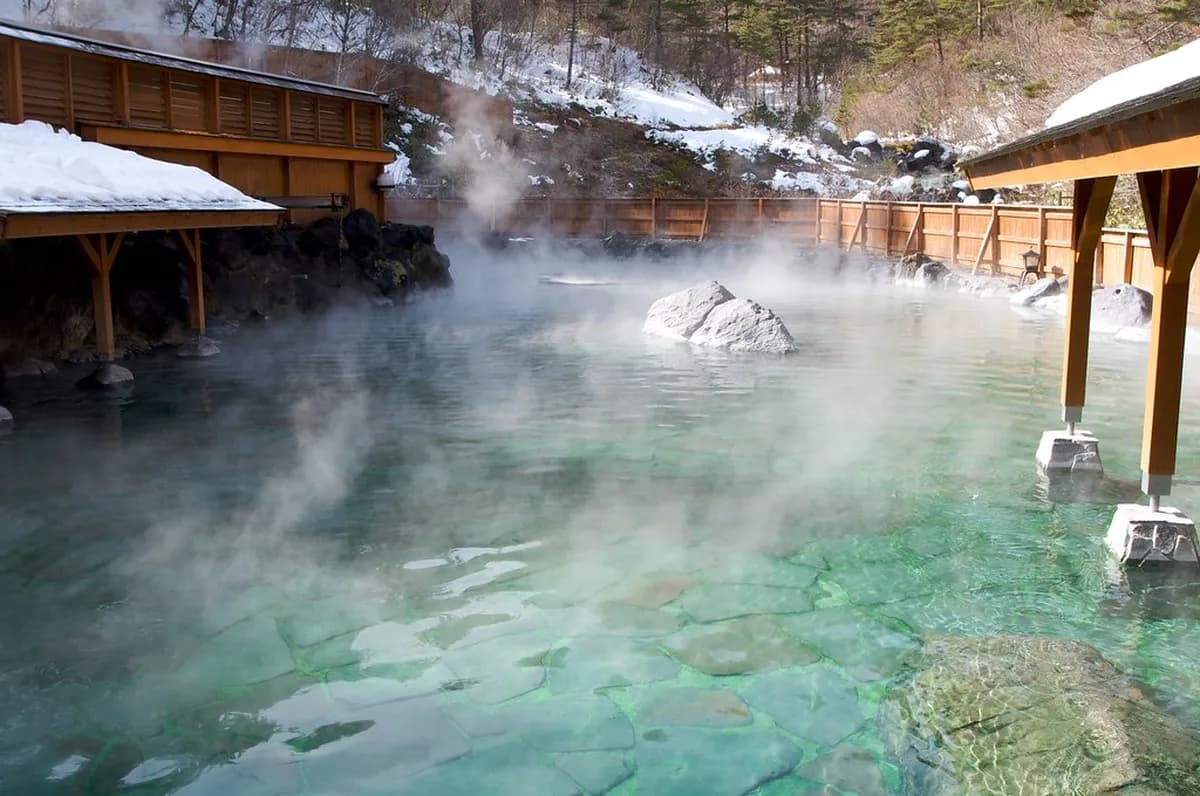
Sainokawara Park, a 10-minute walk from Yubatake, contains dozens of open-air hot-spring pools and leads to one of Japan's largest rotenburo (outdoor baths), spanning roughly 500 square metres with sections at varying temperatures. The park itself is free; the rotenburo admission is 800 yen. Kusatsu Onsen Ski Resort operates year-round: in summer and autumn the Tenguyama area offers the BanZip TENGU zipline (500 metres, up to 70 km/h) and the SkySwing, reachable by free shuttle from town. See more at Kusatsu Onsen Travel Guide for a full activity breakdown.
For food, the town specialises in Gunma's Joshu beef and pork — best experienced at one of the yakiniku restaurants near the Yubatake. Himokawa udon, made with extremely wide flat noodles milled from local flour, is a regional staple worth seeking out. Onsen manju — soft buns steamed by hot-spring vapour — make the ideal snack while walking between baths.
Day Trip or Overnight? Making the Call
A same-day return to Tokyo is technically possible — the return bus from Kusatsu to Shibuya departs at 14:45, getting you back in the early evening — but you will have fewer than three hours in the town after arriving at noon. That is enough for Yubatake and one bath, but onsen culture is not meant to be rushed. Most visitors who do the day-trip version later say they wished they had stayed.
One night gives you an evening soak, a morning bath before checkout, and time to explore Ura-Kusatsu (the newer, quieter quarter developed in 2021 around the free Jizonoyu public bath) and Sainokawara Park without watching the clock. Two nights opens up the ski resort / Tenguyama activities, the yumomi show at a relaxed pace, and an optional side trip to Jigokudani Monkey Park in Yudanaka — a two-hour bus ride from Kusatsu that can be added during the green season (note: the bus to Jigokudani does not operate in winter).
If budget is a constraint, the three free public baths open to visitors (Shirahata-no-Yu, Chiyo-no-Yu, and Jizonoyu) mean you can soak multiple times per day without adding to your accommodation costs. The paid options — Sainokawara Rotenburo, Otaki-no-Yu, Goza-no-Yu — each offer something the free baths do not: scale, private baths, or side facilities. One paid bath plus the free options is the sweet spot for a one-night stay.
Frequently Asked Questions
Is Kusatsu Onsen worth visiting?
Yes, Kusatsu Onsen is definitely worth visiting for its high-quality hot springs and traditional Japanese atmosphere. The famous Yubatake and various public baths offer unique experiences. It is considered one of Japan's top onsen towns. Many travelers find it a deeply relaxing escape.
How do you get to Kusatsu Onsen?
You can reach Kusatsu Onsen from Tokyo primarily by train and bus. The Limited Express Kusatsu-Shima train from Ueno Station to Naganohara-Kusatsuguchi is a popular option. From there, a short bus ride takes you to Kusatsu. Direct highway buses from Tokyo also offer convenience.
Can you do a day trip to Kusatsu Onsen from Tokyo?
While possible, a day trip to Kusatsu Onsen from Tokyo can be quite long. The round trip travel time is at least 6-8 hours. Many visitors prefer an overnight stay to fully enjoy the hot springs and town. This allows for a more relaxed and immersive experience.
What are the top 3 onsen towns in Japan?
Kusatsu Onsen is consistently ranked among Japan's top three onsen towns. The other two frequently mentioned are Gero Onsen in Gifu Prefecture and Arima Onsen near Kobe. Each offers unique water properties and distinct regional charm. These towns provide exceptional hot spring experiences.
Getting to Kusatsu Onsen from Tokyo in 2026 is straightforward once you match your route to your priorities. Budget travellers and those avoiding transfers should take the direct highway bus from Shinjuku Busta or Shibuya Mark City. Travellers who value speed and punctuality should take the Limited Express Kusatsu-Shima from Ueno. The Karuizawa detour works well if you genuinely want both destinations; run the bus timetable before committing to that option. Whichever route you choose, arrive before 13:00 to get a full day in town — and consider booking at least one night to experience Kusatsu the way it deserves.
For tickets, hours and visitor details, see our Kusatsu Onsen Ski Resort Visitor Guide & 2-Day Itinerary and Kusatsu Onsen attractions hub.
Free: The Tokyo Essentials guide
Top things to do, where to stay, a perfect day plan, getting around, and the best time to go — a Tokyo mini-guide you can take offline.
You might also like

Continue reading
More guides you'll find useful