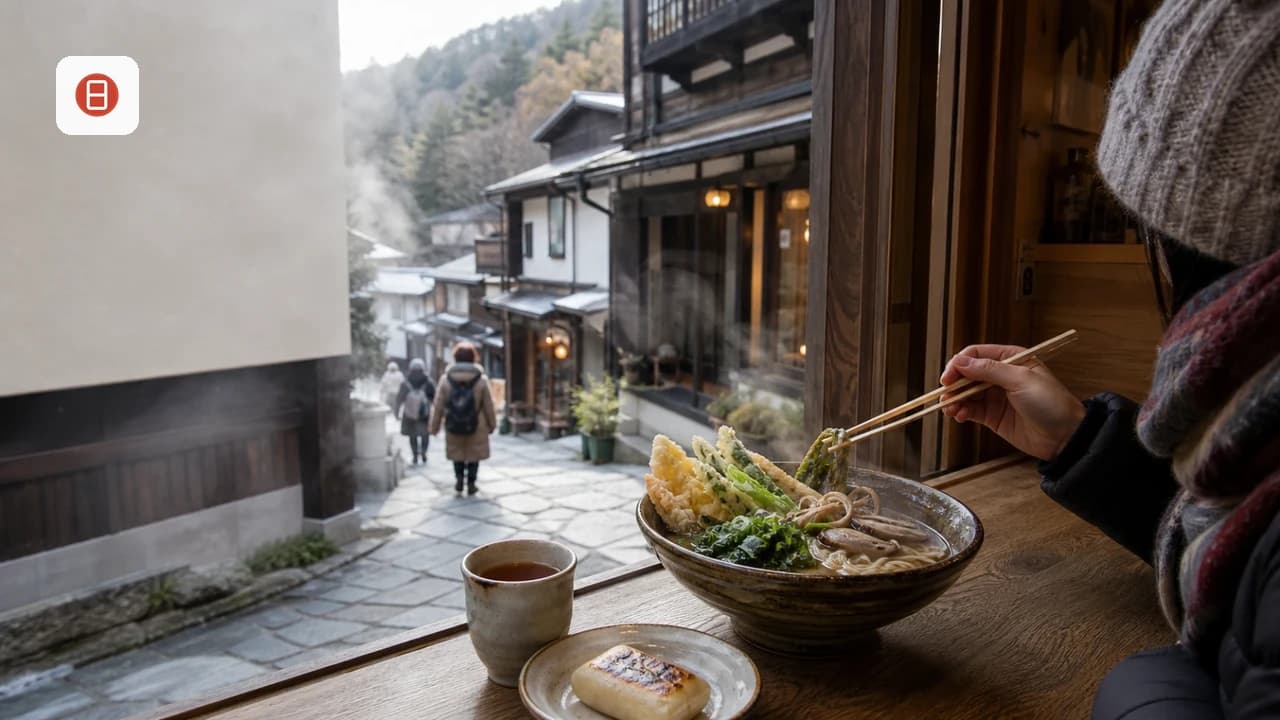
Kusatsu Onsen Manju and Sweets: A Local Tasting Guide
Plan a Kusatsu Onsen manju and sweets crawl along the Yubatake and Sainokawara-dori, from steamed onsen manju to grilled yaki manju and onsen tamago.
On this page
Last updated August 2026, this guide to Kusatsu Onsen manju and sweets starts with the short answer: eat a fresh steamed manju first. Sainokawara-dori is the street to walk for both steamed and grilled versions, plus onsen tamago and other Gunma sweets. Expect a fluffy white or brown skin on the steamed bun, and a chewier, miso-glazed texture on the grilled skewer.
The Sweet Traditions Behind Kusatsu Onsen Manju and Sweets
Kusatsu's central feature is the Yubatake, a series of wooden troughs that cools geothermal water flowing through the town center. Steam rises visibly off the runoff, and several manju shops sit close enough to fill their bamboo steamers with it. That direct link between the hot spring and the steamer is what locals cite most often. It is part of why Kusatsu Onsen manju and sweets taste different from bakery versions found elsewhere in Japan. According to Japan Travel's official guide, Kusatsu has the highest hot-spring water discharge of any onsen town in Japan. That volume of steam is part of why steaming became the default way to prepare buns here, rather than baking or frying. Walking the lanes between the Yubatake and Sainokawara Park in a cotton yukata and wooden geta is part of the ritual. Most vendors position their steamers where the smell reaches the street.
Kusatsu's geothermal system produces both the steam for steaming manju and water running at roughly 55 degrees Celsius for soft-cooking eggs. Two distinct preparations define the town's snack culture.
Onsen Manju vs. Yaki Manju: What's the Difference
Two snacks share the word manju in Kusatsu, and they are easy to tell apart once you know what to look for. Onsen manju is steamed and served warm, with a soft, fluffy bun and a filling of sweetened red bean paste, called anko. Yaki manju is a Gunma prefecture specialty. It starts as a plain steamed bun, then gets skewered, glazed, and grilled to order. Onsen manju is generally the simpler item for a shop to produce quickly, while yaki manju takes more prep time for the miso glaze and grilling step. Miso-glazed grilling is a broader Gunma habit, not unique to manju. The Gunma local food guide covers other miso-forward dishes like konnyaku.
| Feature | Onsen Manju | Yaki Manju |
|---|---|---|
| Cooking method | Steamed over hot-spring steam or a standard steamer | Skewered, coated in miso, then grilled |
| Texture | Soft and fluffy | Chewy with a caramelized edge |
| Typical filling | Sweetened red bean paste (anko) | Bean paste under a miso glaze |
| Skin color | White (plain flour) or brown (brown sugar/kokuto) | Browned from the grill and miso glaze |
| How it's served | By hand, straight from the steamer | Off the skewer, eaten with chopsticks |
Where to Find the Best Sweets Along Sainokawara-dori
Sainokawara-dori is the shopping street that runs from the Yubatake toward Sainokawara Park, and it carries most of the town's manju shops and snack counters. A logical crawl starts at the Yubatake end, where steam-fed steamers are easiest to find. It moves toward the park end, where the crowd thins out. Shops along the way display sample trays near the entrance, so the fastest way to compare textures is to taste before buying a full box. The alley beside the Netsunoyu hall also has small craft shops selling milk-white glassware inspired by the spring water, according to Japan Travel. It's a good midway stop to break up the snack crawl before continuing toward the park. Shops closest to the Yubatake tend to draw the longest queues, especially during early afternoon. Arriving earlier in the day usually means a shorter wait at the busiest counters. For a fuller dinner plan once the snack crawl winds down, see the Kusatsu Onsen food guide.
A Suggested Sweets Crawl Route from the Yubatake
The following route strings the stops above into one walk, moving from the Yubatake to Sainokawara Park.
- Start at the Yubatake, where the steam is strongest and the first steamers of the day come out warm.
- Walk onto Sainokawara-dori and stop at the first shop with a visible sample tray for a plain white-skin onsen manju.
- Continue past the Netsunoyu hall, timing the stop around a yumomi water-cooling performance if one is running.
- Detour into the craft-shop alley beside Netsunoyu for milk-glass souvenirs before the next food stop.
- Try a brown, kokuto-skin manju at a second shop and compare the deeper sugar flavor against the plain version.
- Stop for yaki manju if a stall has it, for a grilled, miso-glazed, savory-sweet contrast.
- Finish at Sainokawara Park, where the open-air foot baths are a good place to let a heavy snack settle.
Onsen Tamago and Other Local Delicacies
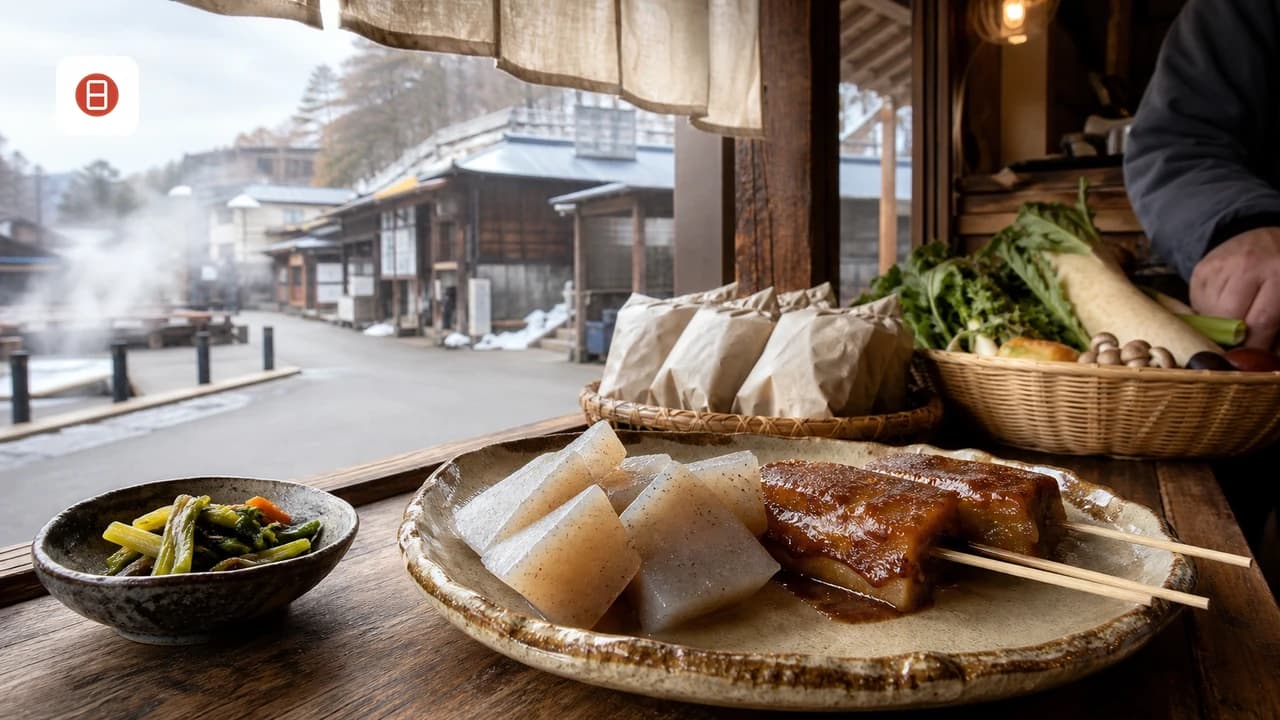
Onsen tamago is the savory counterpart to manju: an egg soft-cooked in the hot spring water itself rather than in a pot on a stove. Kusatsu's water runs at roughly 55 degrees Celsius and is highly acidic, which is exactly what gives the hot spring water its egg-cooking properties. The result is a custard-soft white and a runny yolk, usually served with a light soy or salt seasoning rather than sugar. Shopfronts along the strip also carry Gunma honey and soft-serve ice cream, both good ways to break up a run of dense, sweet buns. If maitake soba or udon sounds more appealing than another sweet, the Kusatsu maitake soba and udon guide covers the savory lunch options nearby.
Free Sample Etiquette Along the Snack Crawl
Several shops along Sainokawara-dori set out small trays of tea or bite-sized manju samples near their entrance. Taking a sample does not obligate a purchase, but many travelers feel pressure to buy something after tasting, especially at a small counter with the shopkeeper watching. Declining after a sample is completely normal, and shopkeepers do not expect a purchase every time. A reasonable approach is to sample at two or three shops before deciding which version you like best, then buy from the one that wins. Near the Netsunoyu hall, snack breaks pair naturally with the yumomi water-cooling performance. Timing a stop around a show means less standing around waiting for the next one.
Buying Manju as Souvenirs: Shelf Life and Packing Tips
A fresh, warm manju eaten on the spot is a different product from a boxed one bought to carry home, and both have their place. Freshly steamed buns are best eaten within the hour, while their skin is still soft and the filling hasn't firmed up. Boxed gift sets are sold specifically for travel. Shop staff can tell you how many days a given box is meant to last if you ask at the register. Some ryokan leave a small box of local manju in guest rooms as a welcome snack. That custom pairs naturally with the multi-course dinners covered in the ryokan kaiseki guide. Pack boxed manju flat in a cooler bag if the return trip runs longer than a few hours, since Kusatsu's summer heat is not kind to bean-paste filling.
Costs, Timing, and Getting Around Kusatsu
Kusatsu has no train station of its own, so every route into town ends with a bus or a rental car for the last stretch. According to Japan Travel's official Kusatsu Onsen guide, the direct bus from Shinjuku costs ¥3,200 one way and ¥5,600 round trip. Snack prices are posted per piece near the register at most shops, and a boxed gift set costs more than a single warm bun eaten on the spot. Travelers without a car should compare the direct bus and the train-plus-bus route before booking, since schedules and connection times vary by day. Getting to Kusatsu costs more in time than money, so plan the travel day around whichever option below fits the itinerary best. Few individual shops publish set hours online, so treat mid-afternoon as the safer arrival window if a specific stall matters to the plan.
| Route | Journey Time | Fare |
|---|---|---|
| Shinjuku Bus Terminal to Kusatsu (JR Joshu Yumeguri-go bus) | Direct bus | ¥3,200 one way, ¥5,600 round trip |
| Ueno to Naganohara-Kusatsuguchi Station | About 2.5 hours by limited express | ¥4,620 |
| Naganohara-Kusatsuguchi Station to Kusatsu | 25 minutes by connecting bus | ¥670 |
| Tokyo to Kusatsu by car (Romantic Road) | About 3 hours | Fuel and tolls only |
| Takasaki Shinkansen Station to Kusatsu by car | About 1.5 hours | Fuel and tolls only |
Mistakes to Avoid When Snacking in Kusatsu
A few small missteps separate a smooth snack crawl from an awkward one. Japan has very few public trash cans, and Kusatsu's shopping streets are no exception. Plan to carry wrappers and skewers rather than looking for a bin. Freshly steamed manju can be lava-hot in the center, even when the skin feels only warm. Let it sit for a minute before biting in. Vegetarian and vegan travelers should check ingredients carefully. Traditional manju recipes typically contain wheat, soy, and red bean paste. Some also use honey or egg in the dough, so ask before assuming a bun is vegan. The Kusatsu budget and vegetarian food guide has more detail on what to check.
- Return skewers and wrappers to the shop where you bought the item, since public bins are scarce.
- Let a freshly steamed manju sit for a minute before biting into the center.
- Pair heavy anko fillings with unsweetened local green tea or bottled milk from a nearby vending machine.
- Ask before assuming a bun is vegan, since honey or egg sometimes go into the dough.
- Eat near the shopfront rather than mid-stride through a crowded lane, since some vendors prefer it that way.
Frequently Asked Questions
What is the difference between onsen manju and yaki manju in Kusatsu?
Onsen manju is a steamed bun with a soft, fluffy texture and a red bean paste filling, often cooked using heat from the hot spring itself. Yaki manju is a Gunma prefecture specialty. It starts as a steamed bun, then gets skewered, glazed with miso, and grilled until caramelized. It's usually slid off the skewer and eaten with chopsticks, rather than by hand.
How much does Kusatsu onsen manju cost?
Exact prices vary by shop, and most counters post them near the register rather than online. A single fresh manju eaten on the spot typically costs less than a packaged gift box meant for travel. If a price isn't posted, ask before sampling, since some shops treat a sample as the start of a sale.
How do you get to Kusatsu Onsen from Tokyo?
Kusatsu has no train station, so the trip ends with a bus or a car either way. According to Japan Travel, a direct bus from Shinjuku Bus Terminal costs ¥3,200 one way and ¥5,600 round trip. The train option runs from Ueno to Naganohara-Kusatsuguchi Station in about two and a half hours for ¥4,620, then a 25-minute connecting bus for ¥670. Driving via the Romantic Road takes roughly three hours from Tokyo or about one and a half hours from the Takasaki shinkansen station.
Are Kusatsu onsen manju vegetarian or vegan-friendly?
Traditional manju is usually vegetarian, since the filling is typically sweetened red bean paste rather than meat. It is not reliably vegan. Some doughs use honey or egg, and shops rarely label ingredients in English. Ask directly at the counter if a specific ingredient is a concern before buying.
How long do Kusatsu manju souvenirs stay fresh?
Freshly steamed manju is best eaten within the hour, before the skin dries out and the filling firms up. Boxed gift sets are made for travel and last longer, but the exact shelf life depends on the shop and any preservatives used. Ask at the register how many days a specific box is meant to last before deciding how many to buy.
What is the best time of day to snack in Kusatsu?
Morning and early evening tend to have shorter lines at the shops nearest the Yubatake. Early afternoon draws the heaviest foot traffic from day-trip tour groups, so the popular counters get busiest then. Visiting slightly off that peak window makes it easier to watch buns steam without a crowd blocking the view.
Free guide: Japan's Hidden Gems
12 under-the-radar places beyond Tokyo & Kyoto — with the best season to visit each and a local tip you won't find in the guidebooks.
You might also like


Continue reading
More guides you'll find useful