

What to Eat in Kusatsu Onsen: 7 Local Foods You Can't Miss
Discover what to eat in Kusatsu Onsen, from Maitake soba to onsen-steamed manju, plus queue tips, prices, and where to eat before shops sell out.
On this page
Last updated August 2026: what to eat in Kusatsu Onsen starts with the spring water itself. Its acidity limits local vegetable farming, so the menu leans on mountain mushrooms, imported high-altitude beans, and hot-spring-cooked dishes. This guide covers seven specialties, the Mikuni Soba queue, and ryokan kaiseki versus street food near the Yubatake.
Why Kusatsu's Acidic Water Shapes the Menu
Kusatsu Onsen is traditionally counted among Japan's three most famous hot springs, alongside Gero Onsen and Arima Onsen. The town sits in Agatsuma District, Gunma Prefecture, in the mountains northwest of Tokyo. Its spring water tests at roughly pH 2.1, one of the most acidic readings of any hot spring town in the country. At the source, the water can be hotter than 70°C, which is part of why Kusatsu developed the Yumomi hand-stirring tradition to cool it before bathing. That same heat shapes the food, too: dishes like onsen tamago and onsen manju are cooked directly in or over the spring rather than on a stove. The acidity also makes it hard to farm many vegetables close to town. Maitake mushrooms are one of the few crops that grow well nearby, and they're considered a healthy ingredient in Japanese cooking. That combination is why maitake shows up on nearly every soba-shop menu near the Yubatake. Much of the rest of the local pantry travels in from elsewhere in Gunma Prefecture, including konnyaku dishes served alongside the mushroom-heavy specialties below.
What to Eat in Kusatsu Onsen: 7 Local Specialties to Try
These seven dishes and snacks define what to eat in Kusatsu Onsen. Most are sold within a five-minute walk of the Yubatake. A single loop through the shopping streets covers the whole list, from savory tempura to sweet fried buns.
- Maitake Mushroom Tempura
- Maitake, meaning dancing mushroom, is one of the few crops that the region's acidic soil supports well.
- Soba shops near the Yubatake fry it fresh to order and serve it with salt or a dip in soba broth.
- Order it as a side to a soba set rather than on its own, since portions are sized for sharing with noodles.
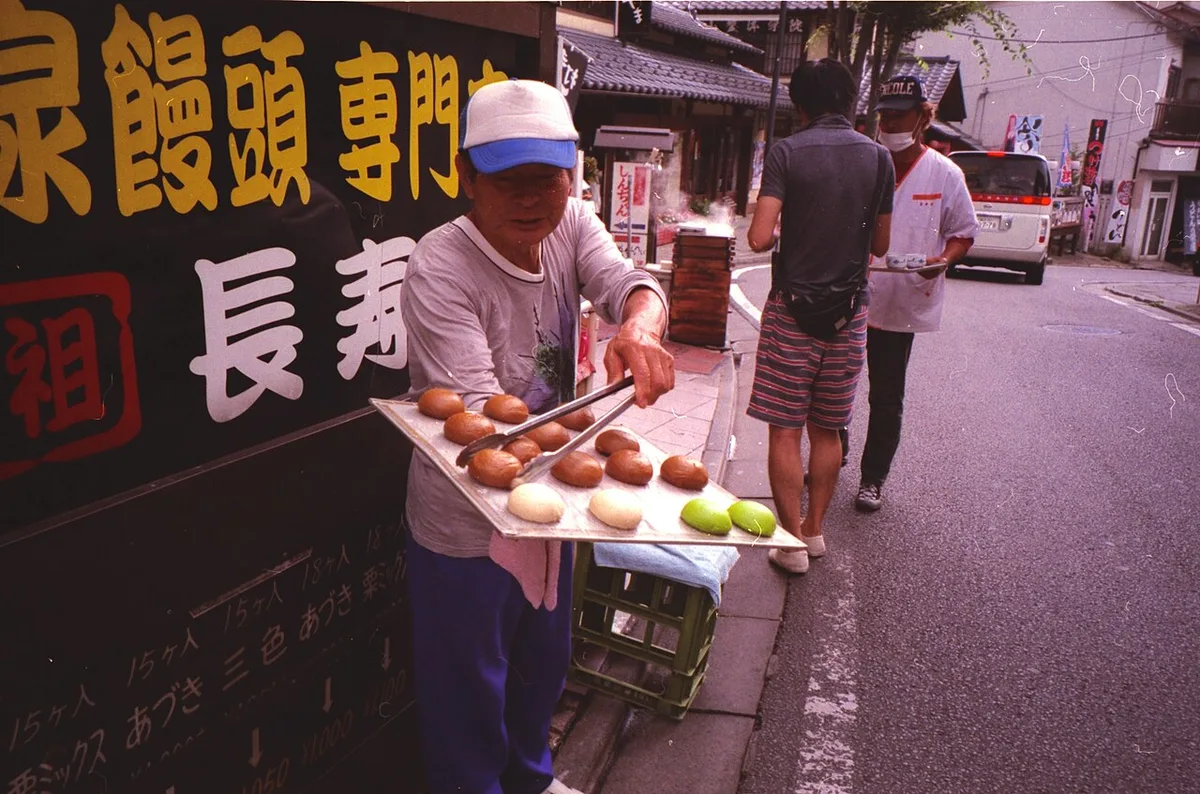
- Onsen Manju and Karintou Manju
- Standard onsen manju are steamed buns with a thin brown-sugar skin wrapped around sweet azuki bean paste.
- Karintou manju swaps that steamed skin for a crisp, deep-fried one around the same filling.
- Matsumura Manju, on the shopping streets near Yubatake, hands out a free sample with green tea before you buy.
- Onsen Tamago and Onsen Egg Soft Serve
- Onsen tamago are eggs slow-cooked in spring water until the white just sets and the yolk stays soft.
- Shops along the path to Sainokawara Park sell them with a splash of soy sauce for easy eating on foot.
- Onsen egg soft serve is not egg-flavored; despite the name, it tastes closer to a custard pudding than to egg.
- Mikuni Soba (三國家), Handmade Noodles
- Mikuni Soba hand-makes its noodles daily and is the shop most guides mention first.
- The sharing platter typically serves two to three people, with dipping sauce and tempura ordered separately.
- Pairs or solo diners often do better with individual bowls, since the shared platter is sized for a group.
- Nureokaki, Grilled Rice Cracker Skewers
- Nureokaki are grilled rice cracker skewers brushed with a soy-and-scallion glaze, or a spicier chili version.
- They're a walk-and-eat snack, sized for a bite or two rather than a full meal.
- Vacuum-sealed packs also make a compact souvenir, unlike the fresh-eaten sweets on this list.
- Amanatto, Sweetened High-Altitude Beans
- Amanatto are sugar-glazed beans that, by local account, only bear fruit above roughly 700 meters.
- The beans are dried, soaked, then simmered in sugar for a chewy texture and a light sweetness.
- They travel well, so they double as a take-home snack from the shopping streets near Yubatake.
- Agemanju, Deep-Fried Manju
- Agemanju takes the same steamed bean-paste bun and deep-fries it, so the outside turns crisp while the center stays warm.
- Treat it as a once-a-day treat rather than a repeat snack, since it's heavier than the steamed or crunchy versions.
- A coffee or green tea afterward cuts through the richness better than a second helping would.
The Mikuni Soba Queue: When to Eat and What to Order
The Mikuni Soba queue is the most talked-about wait in town. Midday lines often pass an hour. Summer visitors face that wait in heat that can reach 35°C. Both Mikuni Soba and Soba Hanashigara make their noodles fresh each morning. That means either shop can sell out of the day's batch before dinner. Soba Hanashigara sits a short walk up the same street and is worth trying when the main line is long. Arriving close to opening improves your odds of a short wait and a full menu. Groups of four or more can share a large soba platter with tempura on the side. Pairs and solo diners usually do better ordering individual bowls, since the shared platter is priced and sized for a group.
Ryokan Kaiseki Dinners vs Street Food Around Yubatake
A ryokan kaiseki dinner is a multi-course, formally plated meal. It's often built around a dozen or more small dishes served one at a time. Expect regional vegetables, mountain fish, and seasonal preparations rather than a single entree. One reported package, in a room with its own private bath, priced dinner and breakfast at around ¥48,750 per person. Simpler rooms without a private bath cost less. Breakfast is typically included in the same overnight package, served either in-room or in a shared dining hall. Some travelers note that the food at a given ryokan can feel less distinctly local than the setting suggests, so it's worth asking whether a kitchen features Gunma specialties like maitake or konnyaku before booking. Street food around the Yubatake runs a fraction of a kaiseki package's price. Travelers on a tighter budget can eat well without booking a kaiseki plan at all. The ground-floor tea cafe at Naraya Ryokan serves drip-style coffee, including an unusual version mixed with umeshu, or plum liqueur. It's open to visitors who aren't staying overnight.
Local Drinks: Beer, Cider and Coffee in Kusatsu
Kusatsu pairs its food with a short list of local drinks and cafes. Some use the same spring water that feeds the baths, filtered and processed for drinking. Bars and izakaya around town also sell cold draft beer to go, for a slower walk back to your ryokan.
- Kusatsu Onsen Monogatari Beer
- Three locally brewed labels, typically priced around ¥500 a bottle at shops around town.
- Each label has a slightly different flavor profile, so shops often let you sample before buying.
- Karuizawa Beer
- Brewed in the neighboring resort town and served on nearly as many menus as the local label.
- It's common enough that some restaurants offer more Karuizawa options than Kusatsu-brewed ones.
- Yu-kemuri Cider
- A sweet, spring-water-based soda pop rather than an alcoholic drink.
- In Japan, cider means soda, not fermented apple juice, so expect a sugary, carbonated drink.
- Tea Houses and Coffee Shops
- Numerous spots around town serve green tea, cafe lattes, and smoothies, many with cakes or snacks to go.
- The tea cafe at Naraya Ryokan is one example, open to non-guests during the day.
Getting to Kusatsu Onsen and Timing Your Food Crawl
Most visitors reach Kusatsu by one of a few routes.
The 3 to 3.5 hours from Tokyo by car brings visitors into summer heat near 35°C, which makes planning early visits and cold-dish options critical.
| Route | Typical travel time | Notes |
|---|---|---|
| Private car from Tokyo | 3 to 3.5 hours | Mountain roads; check conditions in winter |
| JR Limited Express from Ueno, plus bus | About 2 hours 15 minutes | Change to bus at Naganohara-Kusatsuguchi station |
| Highway bus from Shinjuku | About 3 hours 45 minutes | Runs via the Joshu Yumeguri service, around ¥3,510 |
A Half-Day Food Walk From Yubatake to Sainokawara Park
This route strings together the dishes above into a single afternoon, without doubling back through town.
- Late Morning: Yubatake and Onsen Manju
- Start at the Yubatake to see the hot spring field before the streets fill up.
- Pick up onsen manju from a shop like Matsumura Manju while it's freshly steamed.
- Midday: Choosing a Soba Shop
- Head for Mikuni Soba if you're prepared for a possible wait past an hour.
- Choose Soba Hanashigara instead if the line looks long or the heat is heavy.
- Early Afternoon: The Path to Sainokawara Park
- Walk the shopping streets toward Sainokawara Park, stopping for onsen tamago along the way.
- Try an onsen egg soft serve here if you want a cool, custard-flavored break.
- Late Afternoon: Netsunoyu Yumomi Performance
- Time your walk back toward Yubatake for the Yumomi performance at Netsunoyu, which runs at 15:30, 16:00, and 16:30.
- Tickets cost ¥600 and are sold at the door rather than online.
- Evening: Ryokan Dinner or a Local Beer
- Head back to your ryokan for a kaiseki dinner if it's included in your stay.
- Otherwise, pick up a bottle of Kusatsu Onsen Monogatari beer or Yu-kemuri Cider to end the day.
Eating in Kusatsu by Season
Summer visitors face temperatures near 35°C, especially in the queue outside Mikuni Soba. Cold soba and soft serve are especially popular during these months, and shops sell out faster once demand rises. Winter brings its own waits, despite the cold, as travelers move between baths and hot food. Hot soba, maitake tempura, and kaiseki dinners see the most demand once the temperature drops. Whichever season you visit, plan lunch close to opening. Both summer and winter crowds can empty the day's batch early.
Budgeting for Food in Kusatsu Onsen
Food costs in Kusatsu span a wide range depending on how you eat.
| Meal type | Typical cost |
|---|---|
| Street snack (manju, nureokaki, tamago) | ¥200–¥500 each |
| Soba lunch set with tempura | ¥1,500–¥2,500 |
| Ryokan kaiseki dinner and breakfast | From around ¥48,000 per person |
Explore food in other cities
Frequently Asked Questions
What is the most famous food in Kusatsu Onsen?
Maitake mushroom tempura and onsen manju are the two dishes most associated with Kusatsu. Both show up on menus within a few minutes' walk of the Yubatake.
How long is the wait at Mikuni Soba?
Midday lines often pass an hour, especially in summer heat. Soba Hanashigara nearby serves a similar handmade style when the main line is too long.
Is Kusatsu Onsen a good destination for vegetarians?
Mushrooms, noodles, and manju give vegetarians plenty of options. Wheat-based soba and shared fryers are common, so check ingredient lists at each shop, and see the budget and vegetarian food guide for specifics.
How much does a ryokan kaiseki dinner cost in Kusatsu?
Packages that include a kaiseki dinner and breakfast have been reported at around ¥48,750 per person for a room with a private bath. Simpler rooms without a private bath cost less.
Do restaurants in Kusatsu have English menus?
Not all of them do. Look for shops listed as Taberukoto-certified, which guarantee English-language menus for travelers.
What soft serve flavors can you find in Kusatsu?
Besides the custard-like onsen egg flavor, stands around town also sell vanilla, honey, and black sesame soft serve.
Does the food scene change between summer and winter in Kusatsu?
Summer brings 35°C heat and long soba lines. Winter brings its own waits despite the cold, with hot dishes and kaiseki dinners drawing the most demand after a soak.
Is Kusatsu Onsen walkable for a day of eating?
Yes. Most of the food in this guide sits within a five-minute walk of the Yubatake, and the path to Sainokawara Park adds about fifteen minutes each way.
Explore Kusatsu Onsen Food and Dining
Use these guides to compare local dishes, dining areas and practical food experiences in Kusatsu Onsen.
Food and Dining Guides
Free guide: Japan's Hidden Gems
12 under-the-radar places beyond Tokyo & Kyoto — with the best season to visit each and a local tip you won't find in the guidebooks.
You might also like

Continue reading
More guides you'll find useful


