
Matsuyama Botchan Dango: Flavors, History, and Where to Buy It in 2026
Matsuyama Botchan dango explained: the three flavors, the Natsume Soseki backstory, top Dogo Onsen shops, and 2026 souvenir prices.
On this page
Last updated August 2026: Matsuyama Botchan dango is the skewered, three-color sweet that defines this Shikoku city's food scene. Natsume Soseki's 1906 novel Botchan made the treat famous, and each skewer pairs matcha, egg or white bean, and adzuki pastes around a small mochi or gyuhi center. This guide covers the flavors, where to buy it fresh in Dogo Onsen, and how to choose a box that survives the trip home.
What Is Matsuyama Botchan Dango?
Botchan dango is Matsuyama's best-known meibutsu, the local specialty most closely tied to the city itself. Three small balls of bean paste sit stacked on a single skewer: green matcha, yellow egg or white bean, and brown adzuki. Many versions hide a chewy core of mochi or gyuhi rice cake underneath the paste. Shops sell it fresh by the stick in Dogo Onsen, or pack it into boxed sets built for travel.
Culinary travelers, fans of Japanese literature, and souvenir shoppers all end up trying it, usually for different reasons. Some come for the taste, some for the literary connection, and some simply need a gift to bring home from Ehime Prefecture. The dango sits in the same category as other Shikoku snack foods, but the three-color format and the literary branding set it apart from a plain mitarashi or kushi dango sold elsewhere. Vendors around Dogo Onsen typically sell it both loose, by the stick, and pre-boxed for gifting, so you can taste before committing to a full set. Expect a soft, slightly sticky texture rather than a crisp one, since the paste coats the mochi center completely.
The Literary Legend Behind Botchan Dango
The sweet takes its name from Natsume Soseki's 1906 novel Botchan, a story set in Matsuyama. In the book, the young teacher-narrator eats a treat called yuzarashi dango. Confectioners later branded their three-color version after the novel's title, turning a minor detail in the book into the city's signature sweet. That literary tie is why many visitors head to Dogo Onsen specifically to try it, the same neighborhood the story's protagonist frequents. Dogo Onsen Honkan, the historic bathhouse at the center of that scene, remains the classic place to pair a skewer with hot tea after bathing. Confirm current hours before a visit, since heritage bathhouses periodically adjust access for maintenance. For more on the surrounding sights, the Dogo Onsen Honkan area is covered in the city's attractions guide.
Reading Botchan before a trip is not required to enjoy the dango, but it explains why Matsuyama leans so heavily on the connection. Signs, packaging, and shop names across the city reference the novel, and the three-color dango has become shorthand for the story itself. Fans of Japanese literature often treat a stop at Dogo Onsen as a small pilgrimage, tea and dango included. For everyone else, the backstory is simply a good reason to try a sweet that might otherwise look like any other dango on a shelf.
Tasting Guide: Flavors and the Hidden Gyuhi Center
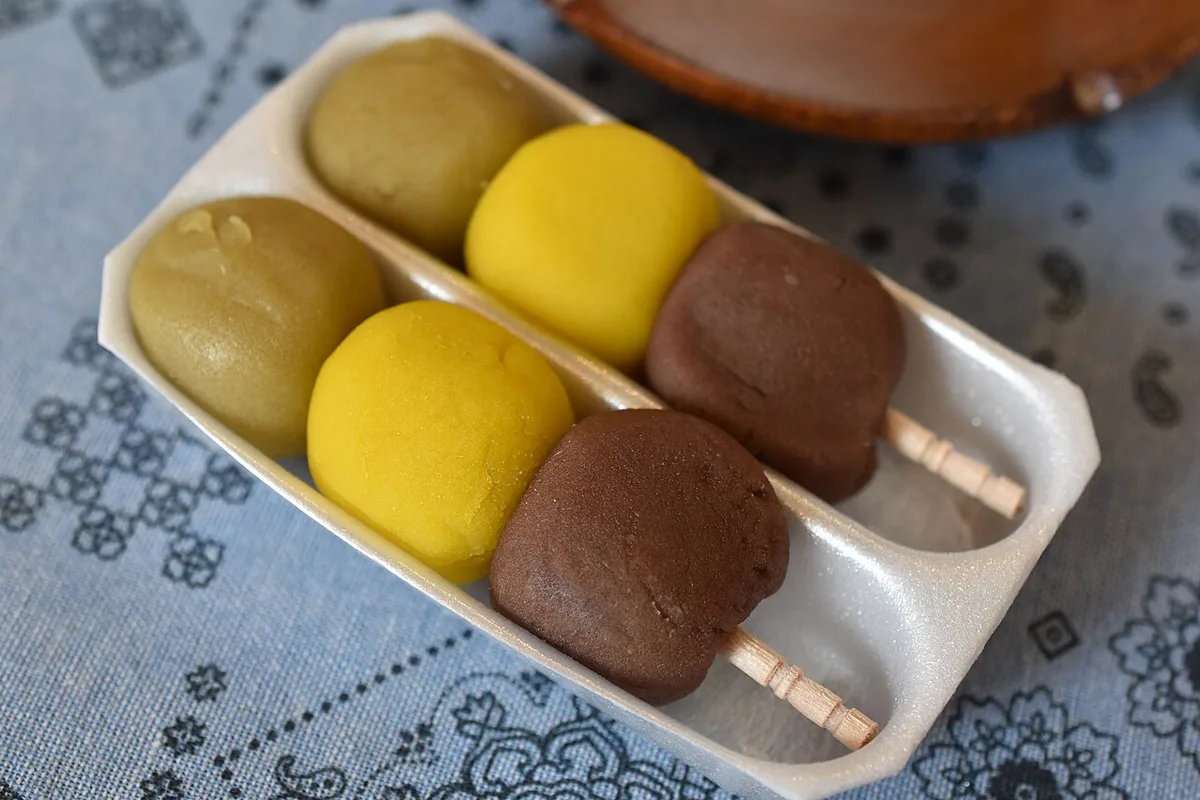
Each Botchan dango skewer carries three distinct pastes, worth knowing before you pick a favorite box. The order usually runs green, yellow, brown, though a few shops rotate the sequence slightly.
Premium versions also hide a small core of mochi or gyuhi, a softer rice-flour dough, inside each paste ball. That center adds a chewy contrast to the smooth paste around it. Utsuboya's version uses gyuhi rather than plain mochi, which keeps the center soft even after the dango cools. According to Utsuboya's own description of its recipe, the paste is balanced to avoid tasting overly sweet, and it can be enjoyed either chilled or at room temperature. That makes it a reasonable snack for warmer months in Ehime, when a chilled dango is more appealing than a room-temperature one. Texture varies slightly by maker: some pastes are silkier, and others have more bite from whole bean skins left in the mix. If you plan to sample more than one brand, start with a single stick from each rather than a full box, so you can compare texture and sweetness before buying more.
- Green: matcha (green tea) bean paste, the mildest and least sweet of the three.
- Yellow: traditionally egg yolk paste (kimi-an) at some makers, or white bean paste at others, including Utsuboya.
- Brown: adzuki (red bean) paste, the flavor closest to standard dango found elsewhere in Japan.
Where to Eat Matsuyama Botchan Dango
Three names come up most often when travelers ask where to eat Botchan dango in Matsuyama.
Despite originating from a 1906 novel, Utsuboya's dango earned consecutive awards in 2022 and 2023 through Japan's Omotenashi Selection, proving its culinary merit extends beyond literary tradition.
Utsuboya and Ichiroku Honpo are the two producers travelers compare most. Utsuboya's recipe leaves out egg yolk in the yellow paste, which matters if anyone in your group has an egg allergy. Utsuboya's dango has also been recognized in Japan's Omotenashi Selection awards for two consecutive years, 2022 and 2023, according to the award program's own listing. Other producers may follow the more traditional egg-based recipe instead, so check the label if that matters to you. Ichiroku Honpo's dango is easier to find away from Dogo Onsen, since it is stocked near the station and in shopping arcades around central Matsuyama. That makes it a practical pickup on the way out of the city, even if you skip Dogo Onsen entirely. Neither recipe is wrong; they simply target different textures and different shopping habits. Sampling a stick from both, if time allows, is the simplest way to decide which one to bring home in bulk. If you want to compare it against other grab-and-go options, the street food and budget eats guide covers more of the city's snacks.
- Dogo Onsen Honkan: order a skewer at the historic bathhouse and pair it with green tea after bathing.
- Utsuboya (main store): look for the gyuhi center and the egg-free yellow paste made from white bean.
- Ichiroku Honpo: widely stocked near Matsuyama's train station and shopping arcades, useful if you are short on time.
Buying Botchan Dango as a Souvenir: Prices and Packaging
Pricing scales with stick count, and Utsuboya's published price ladder, excluding tax, gives a useful 2026 baseline for budgeting. Boxed sets follow a clear ladder by stick count, based on Utsuboya's own published pricing.
A ¥1,400 box is a large commitment. Individual sticks from different makers reveal how the yellow paste varies—from egg-free to traditional egg yolk—affecting allergies and taste preferences.
Individual packaging suits solo travelers who want to try one stick without buying a full box. Hitokushi packs bundle two sticks per pack, a bite-sized format aimed at gifting rather than personal snacking. Expect a small consumption-tax addition at checkout, since the prices above exclude tax. Fresh dango bought loose at Dogo Onsen has a short shelf life, typically best eaten the same day. For a flight home, look for vacuum-sealed boxed sets at the station or airport instead of loose sticks from a stall. Vacuum-sealing extends the shelf life to several days or longer, though the exact date varies by manufacturer, so check the printed expiration before buying. Gift-minded travelers should also consider splitting a purchase: one small box to eat during the trip, and a separate vacuum-sealed box packed away for the flight home. That way a same-day box does not sit forgotten in a suitcase for a week. Botchan dango also pairs well with other Ehime specialties. Try it alongside a pour from the Dogo beer and Ehime sake guide. For a citrus-forward contrast, compare it with the mikan citrus desserts guide.
| Feature | Fresh, In-Shop (Dogo Onsen) | Boxed Souvenir (Station or Airport) |
|---|---|---|
| Texture | Softest, served with hot tea | Slightly firmer once packaged |
| Experience | Eaten on site after bathing | Convenient for gifting |
| Price | Lower, sold by the single stick | Medium, sold as bulk boxes |
| Shelf life | Same day | Several days to weeks if vacuum-sealed |
- Boxed sets: 6 sticks ¥630, 8 sticks ¥750, 10 sticks ¥952, 12 sticks ¥1,000, 16 sticks ¥1,400, all excluding tax.
- Individual packaging: 1 stick ¥100, 5 sticks ¥580, 10 sticks ¥1,200, excluding tax.
- Hitokushi (2-stick bundles): 2 sticks ¥200, 6 sticks ¥600, 12 sticks ¥1,200, 18 sticks ¥1,800, excluding tax.
Botchan Dango vs. Standard Dango: What Makes It Different
Standard dango found elsewhere in Japan is usually rice-flour heavy, with the paste as a thin coating. Botchan dango flips that ratio: the paste layer is thick, and the mochi or gyuhi core stays small. Each bite tastes more of bean paste than of rice cake as a result. That paste-forward texture, plus the three-flavor format on one skewer, is unusual outside Ehime. It remains a distinct souvenir choice even for travelers who have tried dango elsewhere in Japan. Mitarashi dango, the soy-glazed version common at shrines and train stations nationwide, relies on a sweet-savory glaze rather than layered bean paste. Botchan dango skips the glaze entirely and lets each paste flavor stand on its own. For a wider view of the city's dishes, including savory specialties, see the Matsuyama Food Guide: What to Eat in 2026. That same guide links to Matsuyama tai meshi, the city's other signature dish, for a savory counterpoint. Trying both on the same trip gives a fuller picture of Ehime's food identity, sweet and savory side by side.
Mistakes to Avoid When Buying Botchan Dango
A few small mistakes account for most souvenir regrets.
Matching box size to your remaining travel days is the simplest way to avoid waste. When in doubt, ask shop staff which packaging travels best for your itinerary. A same-day box from Dogo Onsen and a sealed box for the flight home solve most of these problems at once.
- Large boxes bought right before a long flight: fresh, unsealed dango can spoil before you land.
- Assuming every brand is identical: Utsuboya's yellow paste is egg-free, but other makers may use egg yolk, so check the label if allergies matter.
- Skipping the expiration date: vacuum-sealed boxes travel far better than loose sticks bought at a stall.
- Judging quality by color alone: yellow paste can be bean-based or egg-based depending on the maker, so ingredients matter more than appearance.
- Buying only one box for a whole group: hitokushi packs and individual sticks let you sample flavors before committing to a bulk purchase.
Frequently Asked Questions
What exactly is Matsuyama Botchan dango?
It's a skewered sweet made of three bean-paste balls, one each in matcha green, egg or white bean yellow, and adzuki brown. Many versions also hide a small mochi or gyuhi core inside each ball.
Why is it called Botchan dango?
The name comes from Natsume Soseki's 1906 novel Botchan, set in Matsuyama. In the story, the narrator eats a treat called yuzarashi dango, and confectioners later adapted the three-color version under the novel's title.
Where is the best place to try it fresh?
Dogo Onsen Honkan is the classic spot, where you can pair a skewer with hot tea after bathing. Utsuboya's main store is also worth seeking out for its egg-free yellow paste and soft gyuhi center.
How much does a box of Botchan dango cost?
At Utsuboya, prices excluding tax start around ¥630 for six sticks and rise to about ¥1,400 for sixteen sticks. Individual sticks and small hitokushi packs are also available, from about ¥100 to ¥200 each.
How long does Botchan dango stay fresh for travel?
Fresh dango bought loose is best eaten the same day. For a flight home, choose a vacuum-sealed boxed set and check its printed expiration date before you buy.
Is Botchan dango safe for someone with an egg allergy?
Utsuboya's yellow paste is made without egg yolk, using white bean paste instead. Other producers may use a traditional egg-based recipe, so read the ingredient label if allergies are a concern.
Is Botchan dango the same as regular dango sold elsewhere in Japan?
No. Standard dango is usually rice-flour heavy with a thin paste coating, while Botchan dango reverses that ratio around a thick three-color paste and a small mochi or gyuhi core. The three-flavor format on one skewer is also unusual outside Ehime Prefecture.
Free guide: Japan's Hidden Gems
12 under-the-radar places beyond Tokyo & Kyoto — with the best season to visit each and a local tip you won't find in the guidebooks.
You might also like


Continue reading
More guides you'll find useful


