Getting Around Matsuyama: 2026 Transport Guide
Getting around Matsuyama is simple once you know the Iyotetsu tram, buses, the Botchan Ressha, IC cards, and airport transfers for your 2026 trip.
On this page
Getting around Matsuyama is far simpler than first-time visitors expect, thanks to a compact tram network that ties the whole city together. Ehime prefecture's capital packs Dogo Onsen, Matsuyama Castle, and a lively downtown arcade into an area easily covered without a rental car. Expect coverage of the Iyotetsu tram lines, the retro Botchan Ressha, city buses, IC cards, and the fastest routes from Matsuyama Airport.
Most travelers arrive by plane, JR train, or overnight ferry, and our guide to getting to Matsuyama covers those long-haul routes in full. Once you land at JR Matsuyama Station or Matsuyama Airport, the local network below takes over for every short hop around town. We cover fares in typical ranges rather than fixed figures, since transit prices creep up a little most years.
Last updated July 2026.
Getting Around Matsuyama: Options at a Glance
Matsuyama runs on a handful of transport layers that overlap neatly across the city center. The Iyotetsu company operates the trams, most city buses, and the local trains, so schedules and passes often work together. JR Shikoku, meanwhile, runs the mainline trains that connect Matsuyama to Okayama, Takamatsu, and the rest of Japan. The list below breaks down cost, speed, and best use case for each mode.
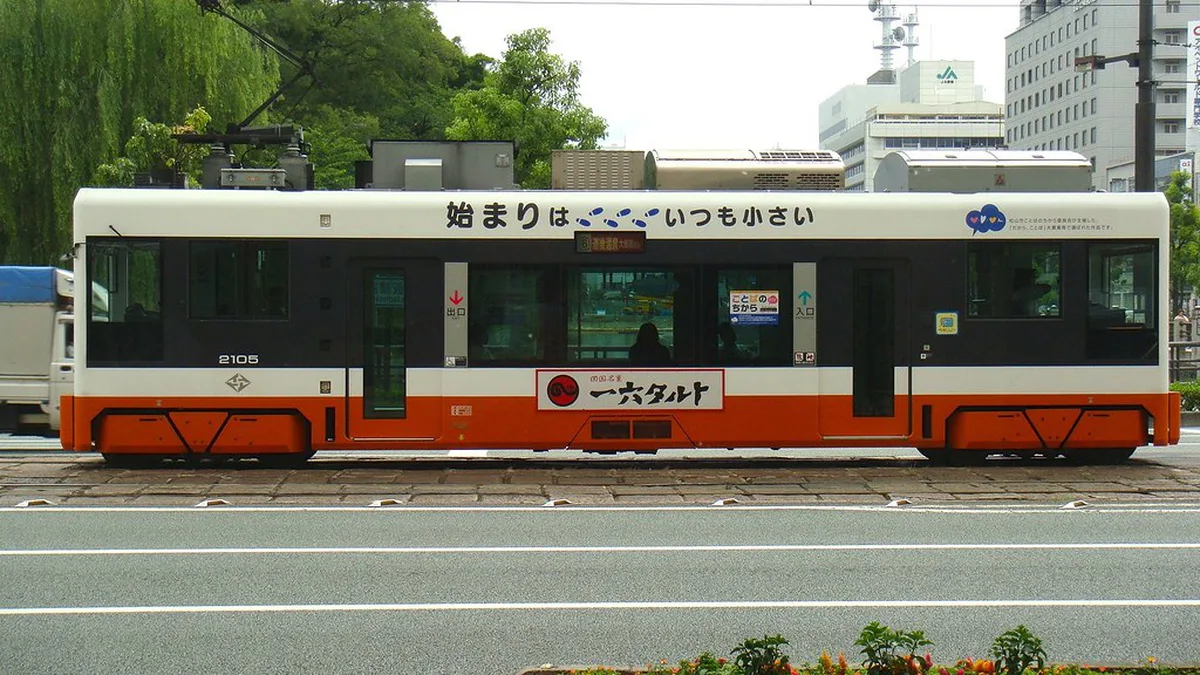
For most itineraries, the tram alone gets you everywhere that matters, from the castle ropeway entrance to the Dogo Onsen arcade. Add the bus network only when a specific sight, like Ishite-ji Temple, sits outside the tram's reach. Save the taxi and rental bike options for late nights, heavy luggage, or days when you want a slower pace along the river.
Cash still works everywhere, but a local IC card speeds up boarding once you understand how the fare system splits between operators. We break down IC cards, day passes, and typical costs in the sections below, so budgeting for getting around Matsuyama stays simple.
- Iyotetsu city tram (streetcar)
- Trams link Dogo Onsen, downtown Okaido, and both train stations every few minutes.
- A single ride costs a flat fare no matter how far you travel.
- Botchan Ressha sightseeing train
- This diesel replica steam train runs a handful of scenic trips most days.
- Seats sell out quickly, so reserve a spot soon after you arrive in town.
- City buses and the airport limousine bus
- Iyotetsu buses reach neighborhoods the tram lines skip, including the temple district.
- A limousine bus meets arriving flights at Matsuyama Airport and heads straight downtown.
- Taxis and rental bicycles
- Taxis wait outside both stations and cost more but save real time at night.
- Rental cycles suit visitors who want to explore riverside paths at their own pace.
| Mode | Fare/Cost | Best For | Frequency |
|---|---|---|---|
| Iyotetsu Tram | ~¥200 flat fare | Downtown, Dogo Onsen, castle | Every few minutes |
| City Bus | ~¥200–400 | Outer neighborhoods, temples | Regular schedule |
| Botchan Ressha | ~¥1,200–1,600 | Scenic sightseeing trip | Few times daily |
| Airport Limousine | Several hundred yen | Airport to downtown | Meets flights |
| Taxi | ¥600–700+ flag, distance-based | Late night, luggage, quick trip | On-demand |
| Rental Bicycle | Hourly or daily rate | Riverside paths, slower pace | Shop hours |
The Iyotetsu Tram Network Explained
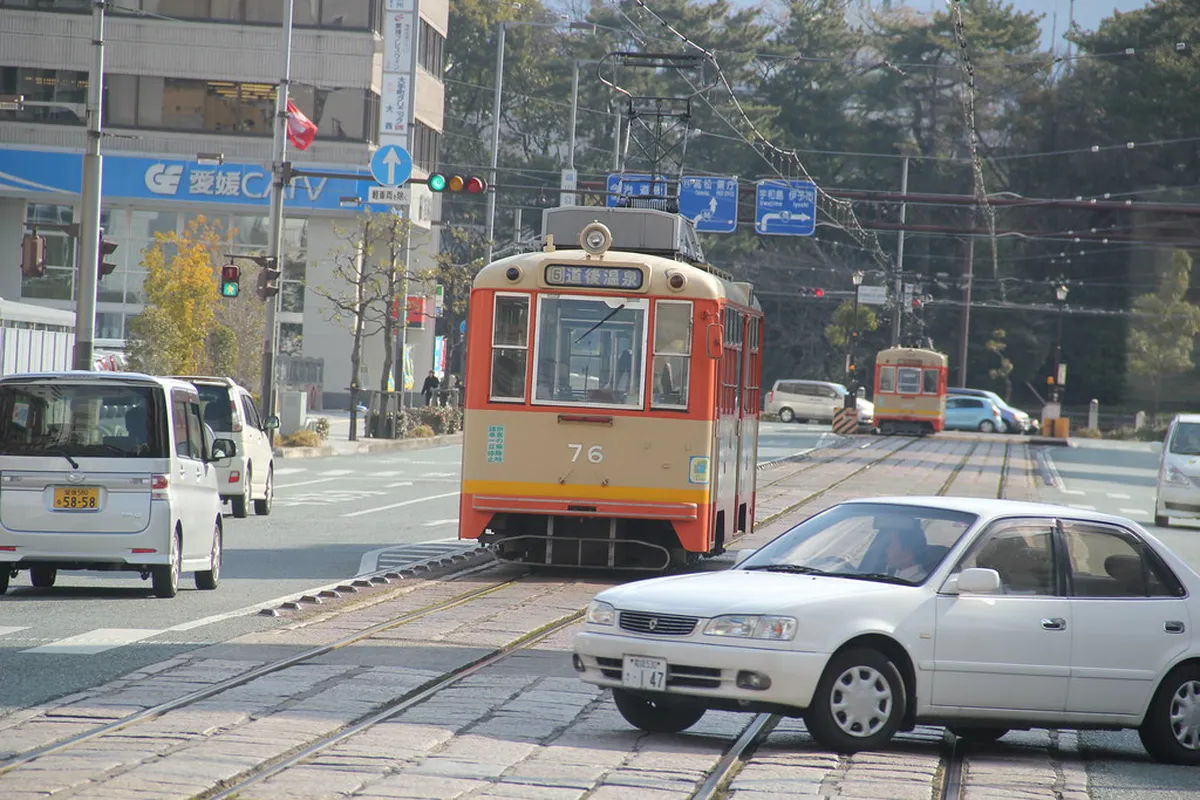
The Iyotetsu tram network forms the backbone of getting around Matsuyama, with five lines threading through the compact downtown core. Two routes matter most for visitors: the line running to Dogo Onsen and the line linking Matsuyama-shi Station with JR Matsuyama Station. Trams run every few minutes through the day, so you rarely wait long at any stop.
Matsuyama-shi Station is Iyotetsu's own terminal, sitting right beside the Okaido and Gintengai covered arcades in the heart of downtown. JR Matsuyama Station is a separate building a short tram ride away, serving the mainline trains that reach Okayama and Takamatsu. Mixing up the two names confuses plenty of first-time visitors, so double-check which station your hotel or bus is closest to.
Between the two stations, trams and full-size JR trains actually cross paths at grade near Otemachi, a rare sight worth watching for. A single tram ride costs a flat fare no matter the distance. That means the short hop to Dogo Onsen's hot spring district costs the same as a ride clear across downtown. Pay the driver in cash as you exit, since most trams collect fares on the way off rather than on the way in.
Get off at the Okaido stop for the quickest walk to the Matsuyama Castle ropeway entrance. The castle sits on a hill just beyond the arcade, and a chairlift carries you up in a few minutes. Confirm current hours and the chairlift fare on the official Matsuyama Castle site before you go.
The Botchan Ressha Sightseeing Train
Named after Natsume Soseki's novel set in Matsuyama, the Botchan Ressha is a diesel replica of the steam trains that once served the city. The little locomotive pulls open-air style carriages along a short stretch between Matsuyama-shi Station and Dogo Onsen a few times a day. Some runs also continue on to JR Matsuyama Station, so check the schedule board before you plan your day around it.
Riding the Botchan Ressha costs noticeably more than a regular tram, since it operates as a sightseeing attraction rather than daily transit. Expect roughly six to eight times the standard flat fare, and note that seats can sell out on weekends and holidays. If your main goal is simply reaching Dogo Onsen quickly, the regular tram gets you there for less and runs far more often.
Reservations open at the tram office near Matsuyama-shi Station, and staff there speak enough English to help visitors book a seat. Choose an outward-facing bench seat if you can, since the carriage windows frame the coastline and rice paddies as you head toward Dogo. Photographers gather at Otemachi to catch the little train crossing the JR tracks, so arrive a few minutes early for a clear shot.
City Buses, IC Cards, and Day Passes
Iyotetsu buses fill in the gaps the tram lines don't reach, connecting neighborhoods like Ishite-ji Temple and the outer suburbs to downtown. Board through the rear door, take a numbered ticket, and pay based on distance when you step off at the front. Fares typically start around two hundred yen and climb a little with distance, similar to the flat tram rate. For current tram and bus timetables, check the official Tourism Matsuyama site before you travel.
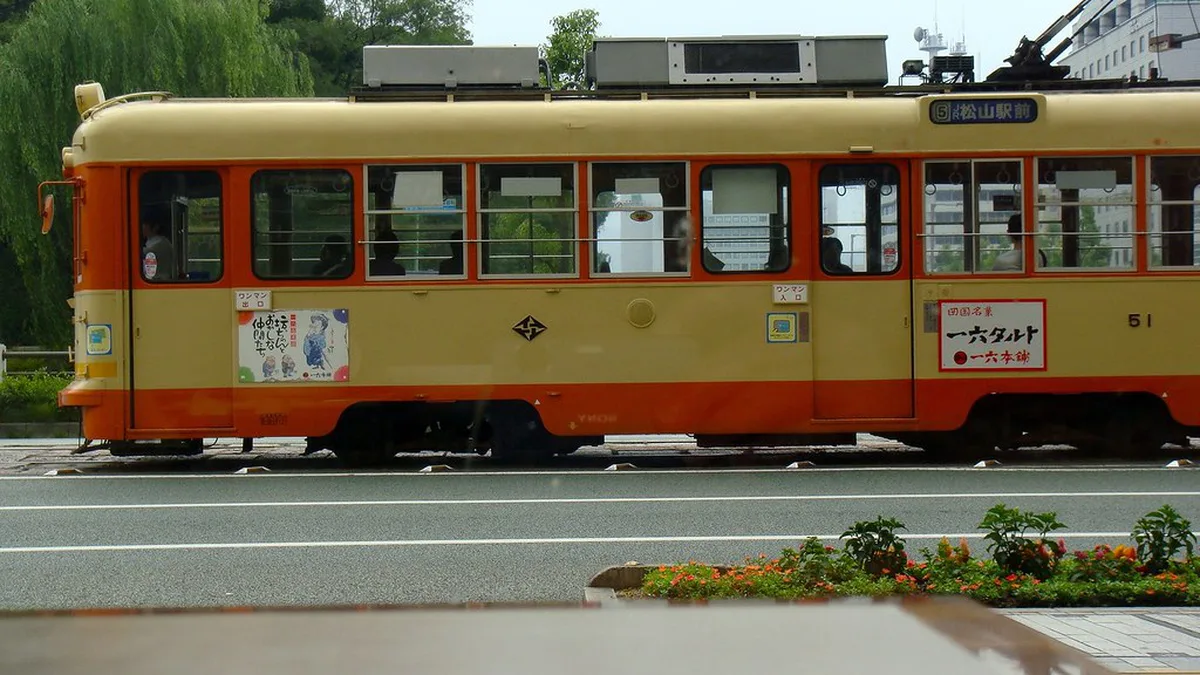
Here is a detail plenty of guidebooks miss: nationwide IC cards like Suica, ICOCA, and Pasmo do not work on Matsuyama's trams or buses. Iyotetsu instead uses its own regional IC card, so visitors carrying only a Tokyo-issued Suica should plan to pay cash for local rides. Bring coins or small bills for the tram and bus, since drivers cannot always break large notes on board.
A one-day tram pass covers unlimited rides on the regular streetcars, and it pays for itself after about four short trips. It does not cover the Botchan Ressha or city buses, so factor those separately if your day includes both. Staying along the tram line keeps most attractions within a few stops, and our Matsuyama neighborhood guide lists the best base areas.
Nationwide IC cards like Suica, ICOCA, and Pasmo do not work on Matsuyama's trams or buses. Iyotetsu uses its own regional IC card, so carry small coins or bills for each ride.
From Matsuyama Airport: Trains, Buses, and Taxis
Most international visitors reach Matsuyama by connecting through Tokyo, where JAL domestic flights run frequent short hops to Matsuyama Airport. The flight takes just over an hour, making it the fastest way in for anyone short on time.
Matsuyama Airport sits about eight kilometers from downtown, and a limousine bus meets most arriving flights for the ride into the city. The bus takes roughly twenty to twenty-five minutes and drops passengers at both JR Matsuyama Station and Matsuyama-shi Station. A one-way fare typically runs several hundred yen, though it is worth checking current pricing before you fly.
If you are arriving overland, JR limited express trains connect Matsuyama to Okayama and Takamatsu in roughly two and a half hours. Those trains pull into JR Matsuyama Station, which sits a few tram stops away from the downtown core near Matsuyama-shi Station. Remember that JR passes cover the mainline trains only, not the Iyotetsu trams, buses, or the Botchan Ressha.
Taxis line up outside both stations and the airport, and they make sense for late arrivals, heavy luggage, or a quick castle-bound trip. Flag fares start around six to seven hundred yen and climb steadily with distance, so short hops stay reasonably affordable. If you plan to explore beyond the city, our day trips from Matsuyama guide covers train and bus options to nearby towns.
Cycling and Practical Transport Tips in Matsuyama
Central Matsuyama is flat and compact enough that walking connects many sights once you are off the tram. Rental bicycles wait at counters near both train stations, typically available by the hour or for a full day. Cycling suits the riverside paths and the route out to Ishite-ji Temple, though a direct bus covers the same distance faster.
A common mistake is assuming every payment method works everywhere, so keep small bills ready even if you carry a national IC card. Another is underestimating the Otemachi crossing area, where trams, trains, and cars all share the road, so cross carefully. Rush hour barely registers in Matsuyama compared with Tokyo or Osaka, so trams rarely feel crowded outside festival weekends.
Coin lockers near both stations hold luggage cheaply, which helps if you are changing trains for a same-day trip elsewhere in Shikoku. Offline maps help too, since the tram map at each stop lists stops in Japanese first and English second. With these basics covered, getting around Matsuyama becomes second nature within your first afternoon in the city.
Pay tram fares in cash as you exit, not when you board. Keep small bills and coins ready, since drivers cannot always break large notes on board.
Renting a Car and Driving in Matsuyama
We rarely recommend a rental car for the city center itself, since the tram covers every major sight and downtown parking near Okaido and the castle base is scarce and metered. A car earns its keep once you look past downtown toward Ehime's coastline, the Shimanami Kaido cycling route, or the pottery town of Tobe. Rental counters sit inside Matsuyama Airport and near JR Matsuyama Station, with international chains and local operators side by side.
Japan drives on the left, and most visitors need an International Driving Permit under the 1949 Geneva Convention alongside their home license; travelers from a handful of countries, including France, Germany, and Switzerland, use an official Japanese translation of their license instead. Streets around the arcades narrow quickly and mix trams, cyclists, and pedestrians, so we would leave the car at the hotel for downtown errands and save driving for day trips out of the city.
Frequently Asked Questions
Does a Suica or ICOCA card work on the Matsuyama tram?
No, nationwide IC cards like Suica, ICOCA, and Pasmo do not work on Matsuyama's Iyotetsu trams or city buses. The network uses its own regional IC card instead, so visitors should carry cash for fares. A flat fare of around two hundred yen covers any single tram ride, paid as you exit.
How do I pay for the tram in Matsuyama?
Board through any door and pay the flat fare in cash as you step off, since Iyotetsu trams collect money on exit rather than entry. Keep small coins or bills ready, because drivers cannot always break large notes. A one-day pass is worth buying if you expect to ride more than four times.
Is there a day pass for getting around Matsuyama?
Yes, a one-day tram pass covers unlimited rides on the regular Iyotetsu streetcars and pays for itself after roughly four trips. It does not include the Botchan Ressha sightseeing train or city buses, so budget those separately. Buy the pass at tram offices near Matsuyama-shi Station or JR Matsuyama Station.
How do I get from Matsuyama Airport to downtown?
A limousine bus meets most arriving flights and reaches JR Matsuyama Station or Matsuyama-shi Station in about twenty to twenty-five minutes. Taxis wait outside the terminal for a faster but pricier ride. Fares change occasionally, so confirm current pricing with your airline or the airport information desk before you fly.
What is the difference between JR Matsuyama Station and Matsuyama-shi Station?
JR Matsuyama Station serves mainline trains to Okayama and Takamatsu, while Matsuyama-shi Station is Iyotetsu's own terminal beside the downtown arcades. Both connect by tram in a few minutes, and both sit within reach of the Matsuyama Castle ropeway entrance. Confirming which one your accommodation is near saves confusion when you arrive.
Getting around Matsuyama comes down to a few simple habits: ride the tram for most trips. Save the bus for outer sights, and keep small cash on hand. The Botchan Ressha and a one-day pass add a bit of charm when you have extra time to spare.
Whichever combination you choose, Matsuyama rewards a relaxed pace better than a rushed one. Give yourself time to watch a tram trundle past Otemachi or to sit a while at Dogo Onsen after the crowds thin out. With the routes above mapped out, you are ready to explore Ehime's capital at your own speed in 2026.
Pair this with our main Matsuyama attractions guide to plan the rest of your trip.
Free guide: Japan's Hidden Gems
12 under-the-radar places beyond Tokyo & Kyoto — with the best season to visit each and a local tip you won't find in the guidebooks.
You might also like


Continue reading
More guides you'll find useful