Dogo Onsen Guide: Bathhouses, Prices & Tips (2026)
Dōgo Onsen's 1894 Honkan vs Asuka no Yu vs Tsubaki no Yu: current 2026 bath prices, hours, etiquette and how to get there by tram from Matsuyama.
On this page
Dōgo Onsen anchors any trip to Matsuyama, and this dogo onsen guide breaks down exactly how to visit in 2026. Wooden bathhouses here have welcomed bathers for centuries, and the main hall dates back to 1894. We'll cover the three public bathhouses, how to reach them, and what a typical soak actually costs.
Matsuyama sits on the island of Shikoku, and Dōgo Onsen sits just a short tram ride from the city center. Beyond the baths, a covered arcade, free footbaths, and a retro steam tram fill out an easy half-day visit. Read on for bathhouse comparisons, transit options, etiquette rules, and tips on timing your visit to dodge the crowds.
Last updated July 2026.
What Is Dōgo Onsen? Japan's Oldest Hot Spring Story
Dōgo Onsen appears in the Nihon Shoki, one of Japan's oldest written chronicles, and local tradition traces its history back roughly 3,000 years. Legend adds an older layer, claiming an injured heron soaked its leg in the spring and flew off healed. That story still shows up in shop signs and folk art around the neighborhood today.
The bathhouse everyone photographs, Dōgo Onsen Honkan, opened in 1894 as a three-story wooden building with a tiled roof. In 1994 it became the first working public bathhouse in Japan to earn Important Cultural Property status. A long preservation project ran from 2019 through 2024, and the historic building has since fully reopened to bathers. Some areas may still see occasional maintenance in 2026, so it helps to confirm current access before you go.
Inside the Honkan, two baths draw the crowds: Kami no Yu, or Bath of the Gods, and Tama no Yu, Bath of the Spirits. A separate hall called Yushinden once served only the imperial family and still opens for a small viewing fee. Novelist Natsume Sōseki soaked here often while teaching in Matsuyama, and that link still shapes the neighborhood's identity.
Comparing Dōgo Onsen's Three Bathhouses
Choosing among Dōgo Onsen's three public bathhouses comes down to budget, time, and how much history you want with your soak. Honkan delivers postcard architecture, Asuka no Yu adds an open-air bath, and Tsubaki no Yu keeps things simple and cheap. All three draw from the same mineral springs, so the water itself feels similar no matter which door you choose.
Honkan and Asuka no Yu both publish current entry tiers and reservation windows online, since prices shift year to year. Check the Dōgo Onsen Honkan official site before your trip, especially if you want to reserve the third-floor Yushinden viewing. The Yushinden hall itself is for viewing only, and entry is bundled with some higher Honkan ticket tiers.
Asuka no Yu takes reservations for its private family bath, and demand rises fast during weekends and holidays. The Asuka no Yu official site lists current fee tiers and the booking steps for that private room. Its open-air bath is included in every plan, so even the cheapest ticket gets you outdoor soaking.
Tsubaki no Yu skips the reservation system entirely and simply opens its doors on a first-come basis. Confirm today's hours and any holiday closures on the Tsubaki no Yu official page before heading over. Since all three bathhouses sit within a five-minute walk of each other, many visitors sample more than one in a single day.
| Bathhouse | Character | Entry Cost | Booking |
|---|---|---|---|
| Dōgo Onsen Honkan | Historic 1894 flagship with Important Cultural Property status; private lounge and yukata rental options | Higher tier | Yes, for premium tiers |
| Asuka no Yu | Modern open-air bath with Asuka-period architecture; private family bath available | Lower than Honkan | Yes, for private bath |
| Tsubaki no Yu | No-frills neighborhood sento; local daily clientele | Lowest of the three | No, first-come first-served |
- Dōgo Onsen Honkan — the historic flagship bathhouse
- Built in 1894, this wooden three-story building holds Important Cultural Property status since 1994.
- Entry tiers span a basic downstairs bath up to a private third-floor lounge with tea and rental yukata.
- Plan for roughly one hour per session, and expect a wait during midday and weekend afternoons.
- Asuka no Yu — the open-air bath with cultural flair
- Opened in 2017, this bathhouse borrows design cues from Japan's Asuka period architecture.
- An open-air bath and a private family soak option make it popular with couples and small groups.
- Fees run lower than Honkan's top tiers, making it a good middle-ground pick for first-time visitors.
- Tsubaki no Yu — the casual neighborhood sento
- This no-frills public bath sits mid-arcade and serves mostly local residents on a daily basis.
- It skips the lounge extras and yukata rentals, keeping the entry fee the lowest of the three.
- Bring your own towel, since this bathhouse is built for quick, simple soaking rather than a lounge visit.
Dōgo Onsen Station: Footbaths and Botchan Ressha Tram
Even without stepping into a bathhouse, the plaza around Dōgo Onsen Station offers a free taste of the local hot spring water. A public footbath, or ashiyu, sits right outside the station and costs nothing to use. Bring a small towel, since there's no changing room here, just a low wall to sit on and soak your feet.
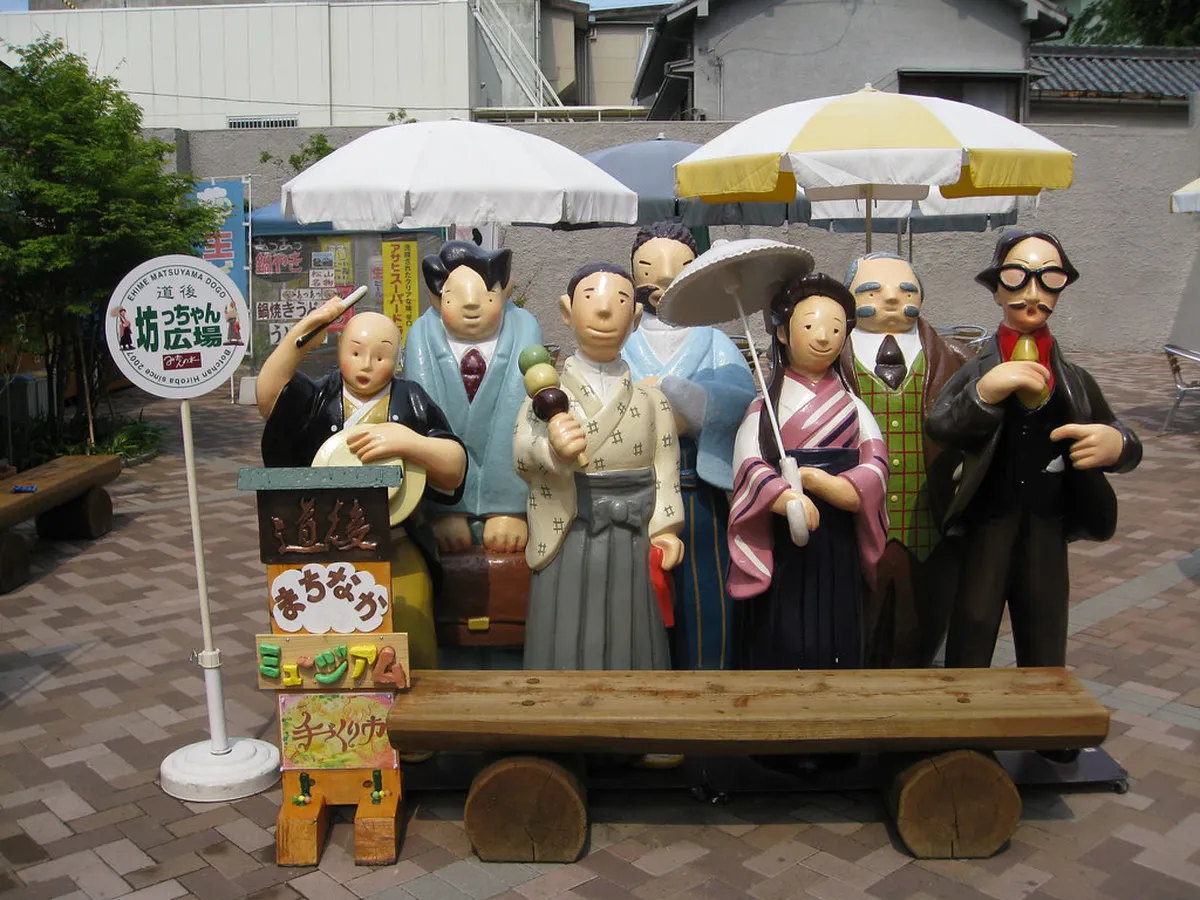
A retro steam-locomotive-style tram called the Botchan Ressha runs between central Matsuyama and Dōgo Onsen a few times a day. It's named after Natsume Sōseki's 1906 novel Botchan, which is set in Matsuyama and references the hot spring directly. Fans of the book can dig deeper on our guide to Botchan's literary heritage in Matsuyama before or after their soak.
The covered Haikara-dori arcade links the station to the Honkan, lined with dozens of small shops and food stalls. Botchan Dango, tri-colored skewered rice dumplings named after the novel, are the arcade's best-known treat. Our what to eat in Matsuyama covers more local snacks worth trying between bathhouse visits.
Getting to Dōgo Onsen from Matsuyama and the Airport
Dōgo Onsen sits at the end of the Iyotetsu tram line, so there's no risk of missing your stop. Trams leave roughly every 15 minutes and take about 20 to 25 minutes from central Matsuyama, depending on your starting station. Our guide to getting around Matsuyama breaks down the full tram network if you're staying several days.
Fares run about ¥210 to ¥230 one-way with an IC card, making the tram the cheapest way to reach Dōgo. If you're arriving straight from Matsuyama Airport, a direct limousine bus runs to Dōgo Onsen Station without transfers. The ride takes roughly 40 minutes, and seats are first-come, so no advance booking is needed.
For full step-by-step directions from any part of the city, see our guide on how to get to Matsuyama. The airport bus schedule and current fares are listed on the Matsuyama Airport Limousine Bus page. Whichever route you pick, plan for a short walk through the arcade once you reach Dōgo Onsen Station.
- By Iyotetsu tram from JR Matsuyama Station
- The direct ride takes about 25 minutes and drops you right at Dōgo Onsen's terminal platform.
- Fares run near ¥230 by cash or slightly less with an IC card.
- By tram from Matsuyama-shi Station downtown
- This ride runs a touch shorter, around 20 minutes, and follows the same terminal-stop route.
- It's a convenient option if your hotel sits closer to the Matsuyama-shi Station side of downtown.
- By limousine bus or taxi from Matsuyama Airport
- The direct airport bus takes roughly 40 minutes and needs no advance reservation.
- A taxi covers the same distance faster but usually costs several times the bus fare.
Onsen Etiquette, Tattoos, and What to Pack
Traditional onsen etiquette applies at all three Dōgo bathhouses, starting with a full rinse at the wash stations before entering the shared bath. Soap and shampoo stay at the washing area, not in the tub, since the bathing pool itself is for soaking only. Swimsuits aren't allowed inside, since bathing happens without clothing, and long hair should be tied up and kept out of the water.
Tattoo policies vary by bathhouse and can change, so it's worth checking current rules before you plan your visit. Historically, Honkan and Asuka no Yu have restricted guests with visible tattoos, while smaller neighborhood baths sometimes take a more relaxed approach. Small tattoo-cover patches, sold in some Japanese drugstores, offer a workaround if you'd rather not skip the bath entirely.
Honkan and Asuka no Yu have historically restricted guests with visible tattoos, though policies may vary. Tattoo-cover patches sold in Japanese drugstores offer a workaround, and Tsubaki no Yu may be more relaxed about this policy.
Higher-tier tickets at Honkan and Asuka no Yu include a rental yukata and towel, so you can travel light. Choosing the cheapest bath-only ticket means bringing your own towel, or buying one on-site for a small fee. A phone-free, quiet atmosphere is the norm inside the bathing halls, so save photos for the lounges and gardens outside.
Where to Stay and the Best Time to Visit Dōgo Onsen
Staying overnight in Dōgo removes the biggest headache of a day trip, since you can slip into the baths during quiet hours. Many ryokan here draw their bathwater from the same springs, so you get a soak before breakfast without leaving the building. Options range from centuries-old inns with tatami rooms to newer boutique hotels closer to the station.
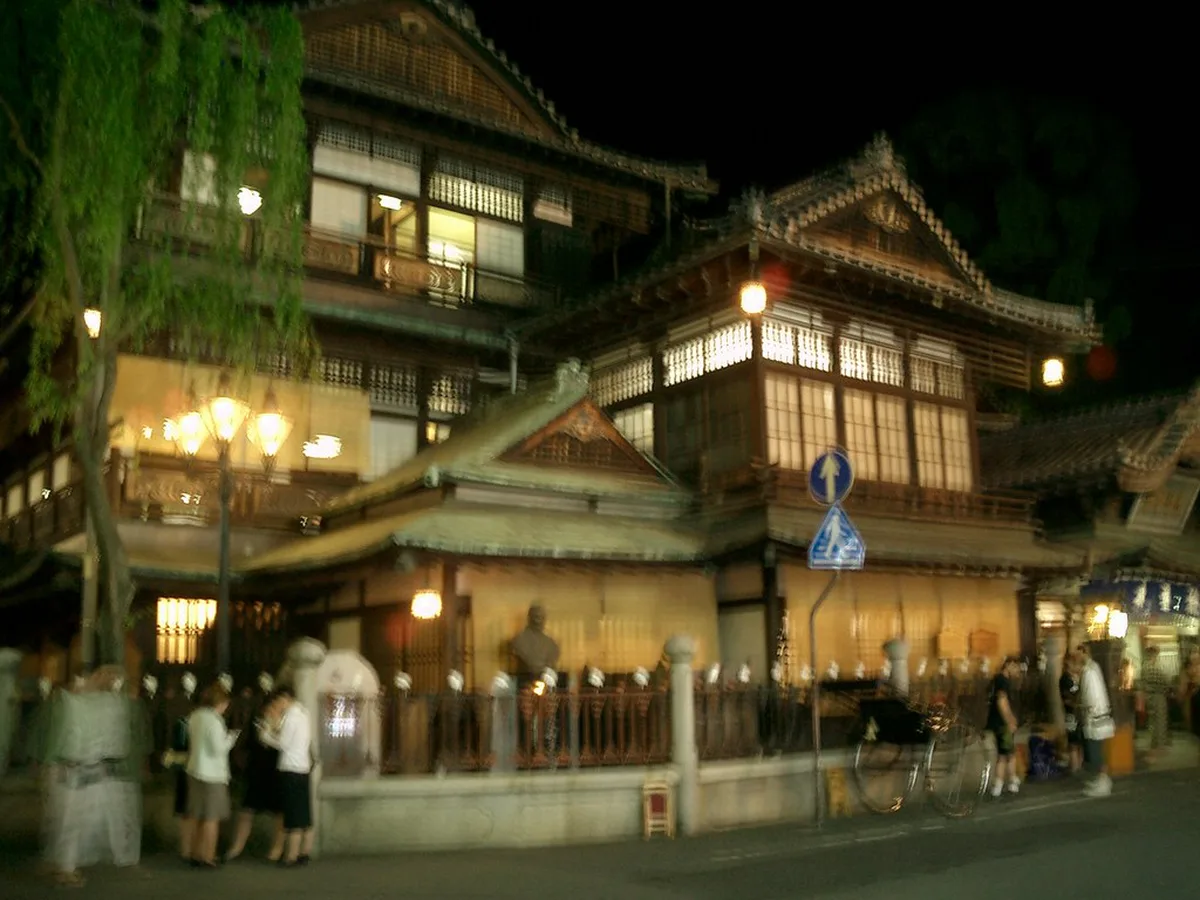
Our where to stay in Matsuyama guide breaks down neighborhoods and price ranges across the whole city. Booking a room within walking distance of Haikara-dori arcade saves you a tram ride after a late soak. Rooms near the Honkan tend to book up first during Golden Week and the New Year holidays.
Weekday mornings between roughly 7:30 and 10:00 tend to be the calmest window for bathing at Honkan. Weekend afternoons, especially 3:00 to 6:00 pm, bring the longest waits, so plan around that block if you can. Golden Week, Obon in August, and the New Year holidays draw the heaviest crowds of the year, so book lodging early. Our guide to the best time to visit Matsuyama covers seasonal weather alongside these crowd patterns.
Visit on weekday mornings between 7:30 and 10:00 AM for the shortest waits at Honkan. Avoid weekend afternoons (3:00–6:00 PM) and peak holiday seasons like Golden Week and Obon, when crowds and lodging availability peak.
Nearby Sights: Isaniwa Shrine and Dōgo Park
A few minutes on foot from Dōgo Onsen Honkan, Isaniwa Shrine sits atop a run of 135 stone steps and has served as the neighborhood's guardian shrine for more than a thousand years. Its main hall carries Important Cultural Property status, and the shrine draws visitors seeking blessings tied to love and academic success.
Dōgo Park, also known as the Yuzuki Castle Ruins, sits about a five-minute walk from the Honkan and charges no admission to the grounds. The park preserves the remains of a medieval castle built by the Kōno clan and appears on Japan's lists of 100 Famous Castles and 100 Best Historic Parks. Cherry blossoms in spring and colored leaves in autumn give the park a different feel each season, and pairing both stops with a walk through Haikara-dori arcade easily stretches your visit by an extra hour.
Frequently Asked Questions
Is Dōgo Onsen worth visiting?
Yes — Dōgo Onsen combines a working Meiji-era bathhouse with an easy tram ride from central Matsuyama, so most travelers find it worth a half-day stop. You can bathe for the price of a casual meal, or spend more for a private lounge and imperial bath viewing. A free footbath nearby lets you try the springs without paying anything.
Do you need to reserve a spot at Dōgo Onsen?
Regular bathing tickets at Honkan, Asuka no Yu, and Tsubaki no Yu are first-come, first-served, so no reservation is required for a basic soak. Premium options, like Honkan's third-floor lounge or Asuka no Yu's private family bath, do take advance bookings, especially around holidays. Booking ahead matters most during Golden Week, Obon, and the New Year rush.
Can you bathe at Dōgo Onsen if you have tattoos?
Policies vary and can change, so tattoo rules are worth confirming before your visit. Historically, Honkan and Asuka no Yu have asked guests with visible tattoos to cover them or skip bathing there. Smaller neighborhood sento, including Tsubaki no Yu, have sometimes taken a more relaxed approach, though this can shift without notice.
What is there to do at Dōgo Onsen besides bathing?
Beyond the baths, wander the covered Haikara-dori arcade for souvenirs and a Botchan Dango snack. Ride the retro Botchan Ressha tram, soak your feet at the free station footbath, or view the imperial Yushinden hall. For more ideas nearby, browse our Matsuyama attractions guide for temples, castles, and gardens close by.
Dōgo Onsen rewards visitors who slow down, whether that means a quick footbath or a full evening soak in the Honkan. Picking the right bathhouse mostly comes down to how much history and ceremony you want with your bathing time. Once you've read this dogo onsen guide, budgeting an hour or two here becomes an easy add-on to any Matsuyama itinerary.
Check official fee and hour pages before you go, since renovation work and seasonal schedules can shift things year to year. Pair your soak with a walk through Haikara-dori arcade, a Botchan Dango snack, and a footbath if the baths are full. Dōgo Onsen remains a rewarding stop in and around Matsuyama, worth the short tram ride any time of year.
Free guide: Japan's Hidden Gems
12 under-the-radar places beyond Tokyo & Kyoto — with the best season to visit each and a local tip you won't find in the guidebooks.
You might also like

Continue reading
More guides you'll find useful