
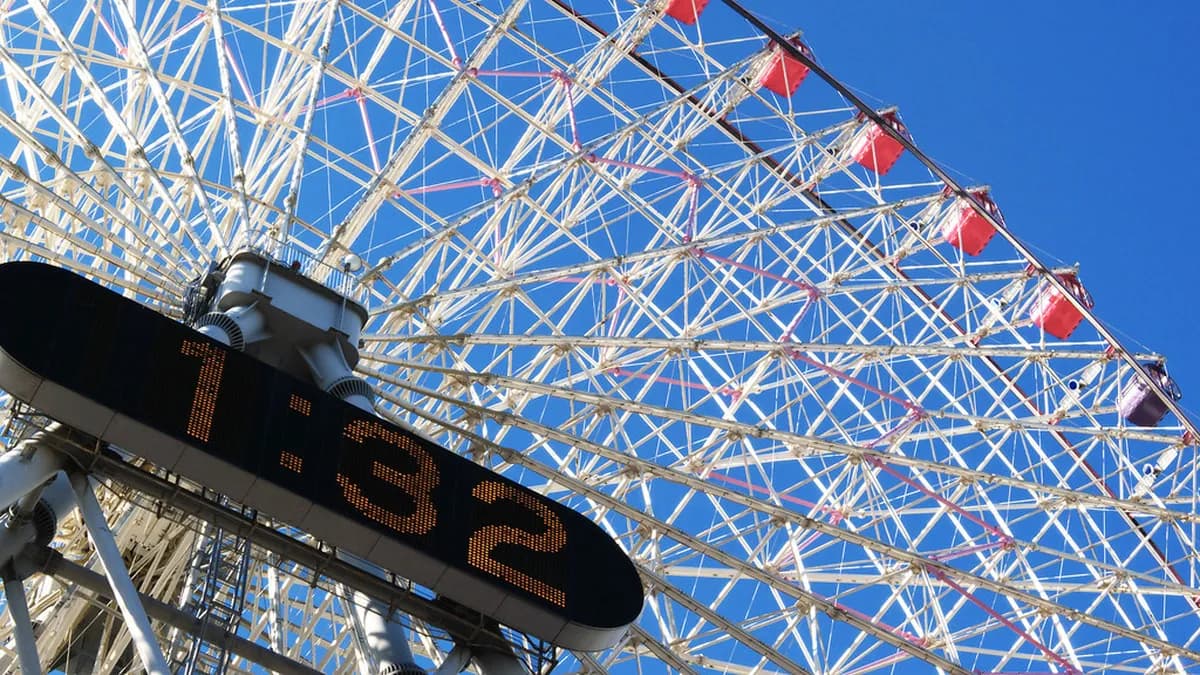
Yokohama Cosmo World sits in the heart of the Minato Mirai district, offering fun for all ages with no admission fee at the gate. This urban amusement park spans roughly 27 attractions across three themed zones along both banks of the Ooka River. The headline ride is the Cosmo Clock 21, a 112.5-metre Ferris wheel that also functions as a working digital clock. Its open layout means business commuters cut through the park, couples pay for one ride and leave, and families chain it with the nearby Cup Noodles Museum without breaking their budget.
Planning a visit requires understanding the park's three distinct zones, its pay-per-ride ticketing, and the height limits that determine which attractions your children can actually board. Our Yokohama hub covers the broader district, but this guide focuses on Cosmo World specifically — what to ride, when to arrive, how to pay, and what every competitor guide forgets to mention.
What Makes Cosmo World Special
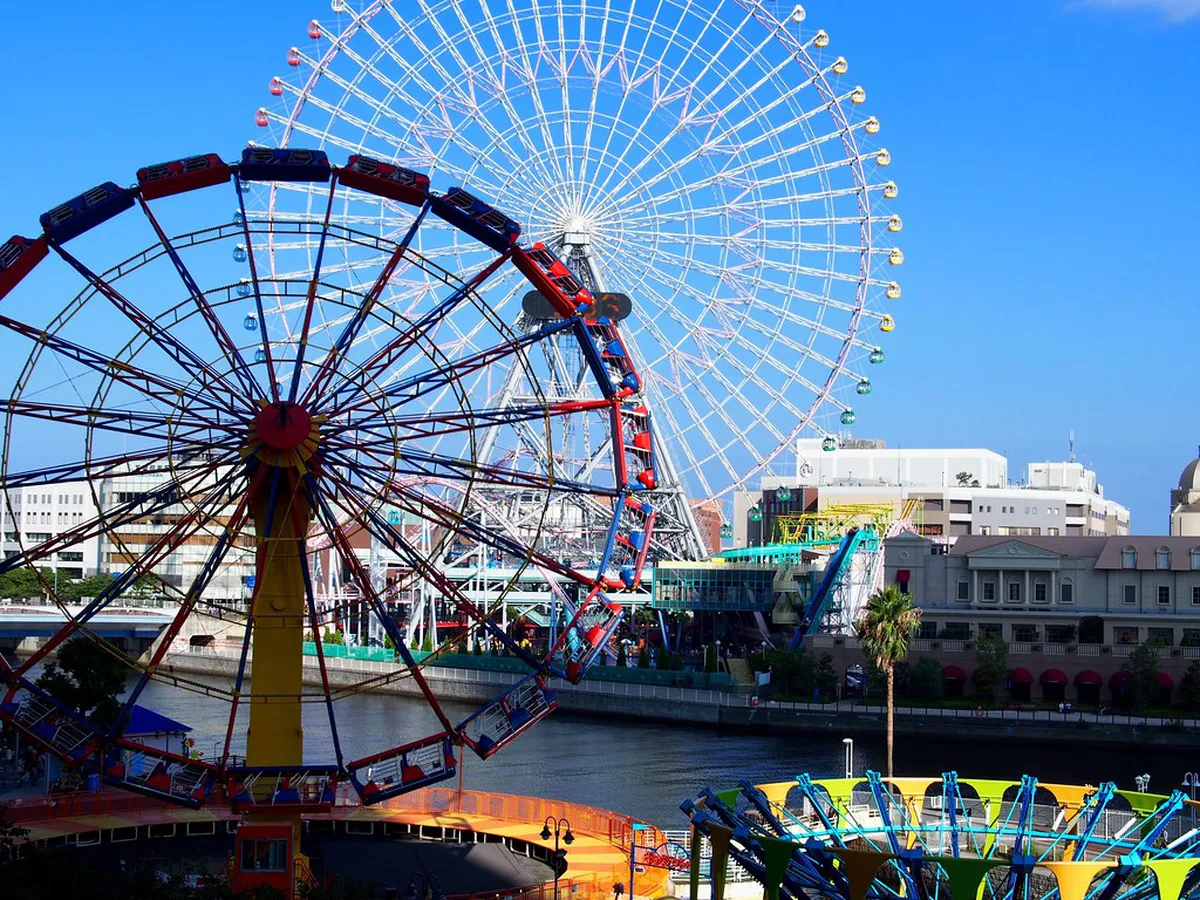
The defining feature is urban integration. Unlike Fuji-Q or Tokyo Disney, Cosmo World shares concrete with the surrounding city. The Diving Coaster Vanish track passes over the Ooka River and right beside the Queen's Square office tower, so you can watch the train splash from a public pedestrian bridge without spending a yen. Salary workers buy lunch ten metres below a coaster loop. That is the texture of this park.
The absence of a gate changes the social dynamic entirely. There is no pressure to justify an entry fee by staying all day. Couples ride the Ferris wheel once and walk to the Red Brick Warehouse. Families drop in after lunch at the Cup Noodles Museum, ride two attractions, and continue on. Locals jog through the park at sunrise. It behaves less like a destination and more like a public square that happens to contain rides.
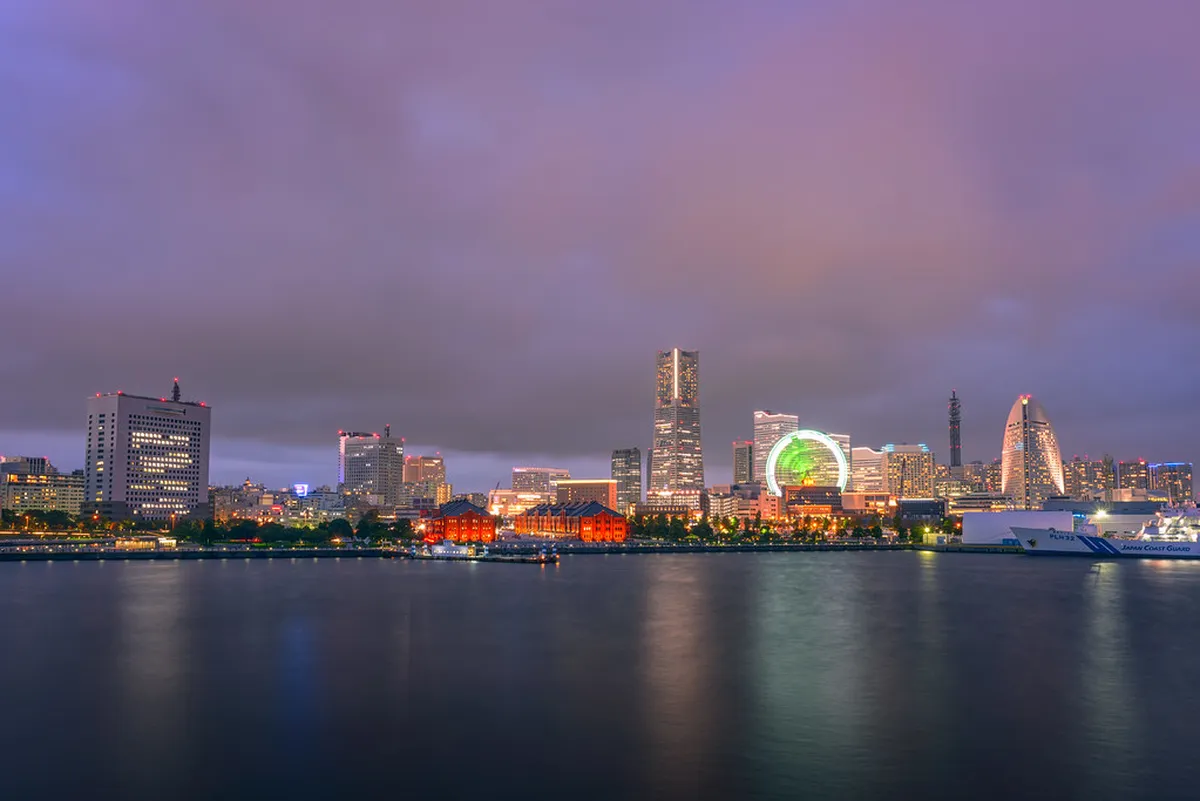
Historically, the Cosmo Clock 21 was a Japanese engineering showpiece. When the YES '89 Expo closed, the city kept the wheel as a permanent fixture, rebuilding it on its current site in 1999 and increasing the height from the original 107.5 m to 112.5 m. The colour-changing LED skin was added in 2016 and upgraded for energy efficiency in 2023. It is now a symbol of the entire Minato Mirai waterfront, visible from the Yokohama Landmark Tower observation deck.
Park Hours and 2026 Schedule
In 2026, Cosmo World is generally open weekdays from 11:00 to 21:00 and weekends and public holidays from 11:00 to 22:00. The Ferris wheel and the Kids Carnival Zone often follow shorter internal schedules — the Ferris wheel typically closes at 20:00 and the Kids Carnival Zone at 19:00 even when the rest of the park is still running. Because the park has no entry gates, each ride opens and closes on its own timetable rather than a single site-wide cutoff.
The park closes on select Thursdays throughout the year. The off-season closures cluster in February and June — if your itinerary includes a Thursday in either of those months, check the official Yokohama Cosmo World calendar before you travel. Maintenance closures for individual rides can also occur mid-week without advance notice on social media.
Seasonal extensions apply during Golden Week (late April to early May), Obon (mid-August), and the year-end holiday period. These are also the busiest weekends of the year. If you are visiting during any of these windows, arrive at opening time or plan for queues of 30 to 60 minutes on the major thrill rides.
The Three Zones: Kids Carnival, Burano Street, Wonder Amuse
The Kids Carnival Zone is the smallest section, located on the upper level near Queen's Square. It holds about ten gentle rides — a merry-go-round, mini swings, a kids' coaster — and most require a minimum height of 90 cm. Toddlers can ride almost everything here with a parent alongside, and the zone closes at 19:00 even when the rest of the park stays open later. Weekday mornings are consistently the least crowded time for families with young children.
Burano Street Zone is the mid-intensity section modelled on the pastel houses of Burano, Italy. The standout ride here is the Cycle Monorail — you pedal a two-seat car along an elevated track for 400 yen, and it delivers an underrated view of the harbour that most visitors overlook entirely. This zone also contains the haunted house, the carnival arcade, and the Aqua Adventure log flume. Lines in Burano Street are rarely long even on weekends, which makes it a good choice when Wonder Amuse queues are building.
Wonder Amuse Zone is the thrill section and where most of your ride budget will go. It contains the Diving Coaster Vanish, the Spinning Coaster, the disc'o spinner, and the Cosmo Clock 21. Height restrictions are tightest here — the Diving Coaster Vanish requires 120 cm minimum and refuses children under six regardless of height. Plan to spend 60 to 90 minutes in Wonder Amuse if your group includes teenagers. The zone draws the largest crowds on weekends, so arrive at opening if the Diving Coaster is a priority.
Cosmo Clock 21: The Ferris Wheel Experience
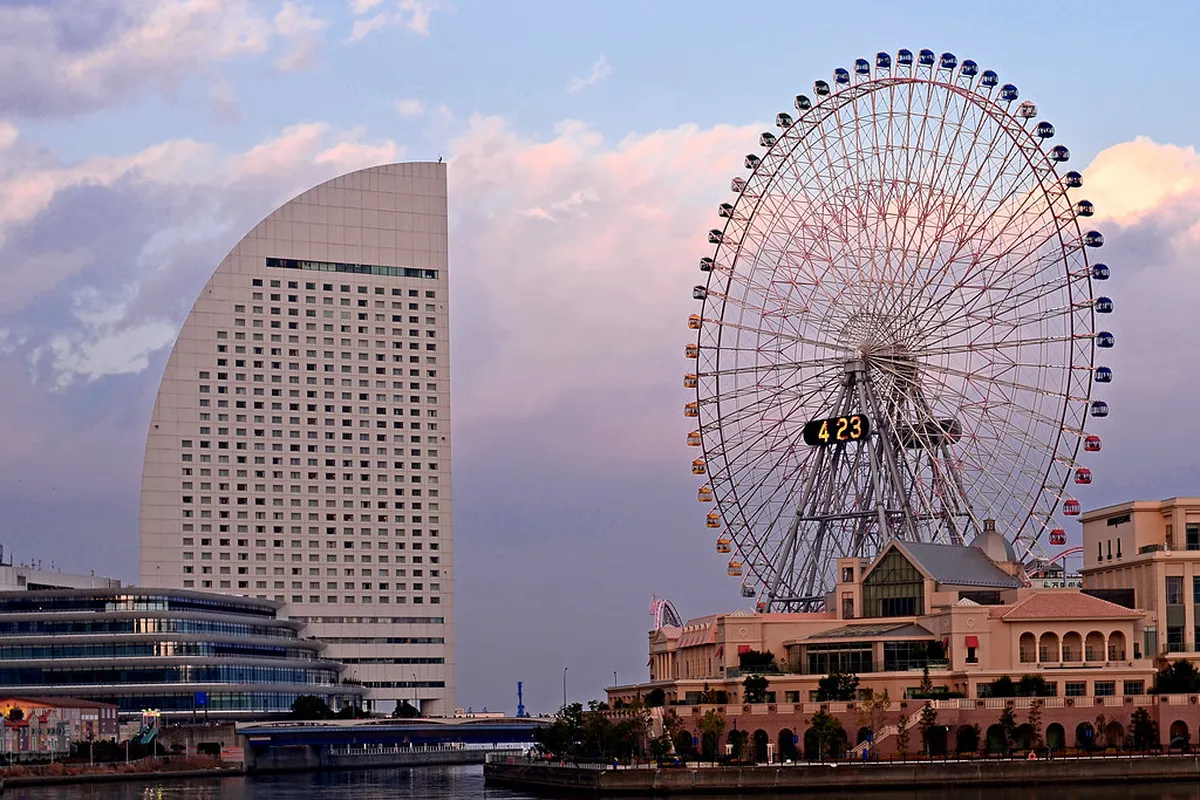
The Cosmo Clock 21 stands 112.5 metres tall with 60 gondolas, each holding up to eight people. A full revolution takes about 15 minutes — which is also the interval on which the wheel's LED display runs its colour-changing light show after dark. Tickets cost 900 yen per person, and the queue is usually under 20 minutes except on summer Saturday evenings.
On clear winter mornings you can see Mount Fuji from the western-facing side of the gondola. Ask the attendant for that orientation when visibility is good. Sunset rides in spring 2026 (sunset is roughly 18:30 in May) give you both daylight harbour views and the city's blue-hour lighting in a single 15-minute revolution. This is also when the wheel's clock face shifts from daytime numerals to its full evening colour programme.
The wheel is wheelchair-accessible. Staff stop the gondola for boarding, and each cabin holds one wheelchair plus three passengers. If you want the famous transparent-floor gondola, expect a slightly longer wait as those specific cabins are popular. Standard cabins provide identical views and the same complete experience. The view of the Yokohama Landmark Tower from the highest point is the clearest landmark on the western side.
Your Child Travels as One of Four Profiles
Match your ticket spend to the child you actually brought. These profiles map every Cosmo World zone to a realistic age and intensity range so you do not waste 900 yen on a coaster a six-year-old refuses to board — or hold back an older child who is ready for the thrill rides.
Toddlers under 90 cm belong in the Kids Carnival Zone. The merry-go-round and the mini train rides are the best options here, both gentle and visually engaging. Nearly every attraction in this zone allows a parent to accompany the child, and the entire zone is stroller-accessible. Budget 600 to 900 yen for a full session and expect about an hour of happy riding.
Children between 90 cm and 110 cm unlock Burano Street. The Cycle Monorail is the highlight — it is calm enough for this age group, genuinely scenic, and almost always walk-on. The Family Banana Coaster and the bumper cars are also well within reach for confident kids in this bracket. Height checks apply at the ride entrance, not at a zone gate, so your child only encounters a refusal if they queue for a ride they cannot board.
Children who reach 120 cm can access the full Wonder Amuse Zone, including the Diving Coaster Vanish and the Spinning Coaster. Below that threshold, adults who want the Diving Coaster should plan to ride solo. Children between 110 cm and 120 cm can board the Spinning Coaster with a parent and will find that a satisfying substitute while they grow into the bigger rides.
Pricing and the Pay-Per-Ride System
Ride the Diving Coaster Vanish in the first 30 minutes after opening — the queue grows from about 5 minutes at 11:00 to 45 minutes by 14:00 on weekends. Then move to the Ferris wheel while crowds are still thin.
| Ride / Zone | Ticket price | Min. height |
|---|---|---|
| Cosmo Clock 21 (Ferris wheel) | ¥900 | No restriction |
| Diving Coaster Vanish | ¥900 | 120 cm (min. age 6) |
| Spinning Coaster | ~¥700 | 110 cm with parent / 120 cm solo |
| Cycle Monorail (Burano Street) | ¥400 | ~90 cm |
| Kids Carnival rides | ¥300–¥600 | 90 cm (most) |
| Discount booklet (¥3,000 value) | ~¥2,800 cash only | — |
Admission to the park is free. You pay only for the rides you take, and there is no all-day wristband or pass. Individual tickets range from 300 yen for the smallest Kids Carnival rides to 900 yen for the Cosmo Clock 21 and the Diving Coaster Vanish. A typical family of four spends 4,000 to 7,000 yen on rides depending on how many thrill attractions they choose.
Discount ticket booklets are sold at vending machines near each zone entrance. The standard options in 2026 are 3,000 yen of ticket value for approximately 2,800 yen, or 5,000 yen of value for approximately 4,600 yen. Tickets in the booklet do not expire on the day of purchase — they remain valid for one year from the issue date. Skip the booklet if you plan fewer than six rides; the savings are modest enough that individual tickets make more sense for a short visit.
Ride tickets and discount booklets are cash-only — vending machines do not accept credit cards. The park also closes on select Thursdays, clustering in February and June. Always check the official calendar before you travel.
One critical detail most visitors miss: ride tickets and discount booklets are cash-only. The vending machines do not accept credit cards, and the savings booklets cannot be purchased with IC cards. Bring enough yen in cash before you enter the park. Some individual ride machines now accept Suica and Pasmo IC cards, but the booklets remain cash-only. Check the official Yokohama Cosmo World site for the most current pricing before your visit, as individual ride fees can shift between seasons.
Height Limits, Stroller Access, and Accessibility
Knowing the height limits before you queue saves families an emotional refusal at the ride gate. Kids Carnival rides generally require 90 cm minimum. Burano Street rides sit at 100 to 110 cm depending on the attraction. Wonder Amuse thrill rides require 120 cm with a parent or 130 cm to ride independently. The Diving Coaster Vanish is firm at 120 cm and also refuses children under six even if they clear the height bar.
Strollers are allowed throughout the park. The bridge between Burano Street and Wonder Amuse has a steep ramp on the eastern side — use the western pedestrian crossing if you have a double stroller or a heavily loaded single. Stroller parking is free outside each ride and is monitored by staff during operating hours. Coin lockers at 300 to 500 yen sit at the upper-level entrance near Queen's Square and at the Wonder Amuse south gate, useful for storing bulky bags before boarding.
The park is largely accessible: 22 of the 27 rides accept wheelchair transfers, and the Ferris wheel has dedicated boarding. Service dogs are welcome throughout the park. Nursing rooms and diaper changing stations are located near the main restrooms in each zone. The on-site first-aid room is at the upper level near Kids Carnival and is staffed during all operating hours. Tuesday mornings consistently have the lowest crowd levels, which makes them the most manageable time for visitors who need a calmer sensory environment.
Photo Spots and Hidden Gems Worth Knowing
The single best photograph of the Diving Coaster Vanish comes from the Kokusai-bashi pedestrian bridge as the train hits the splash zone. Stand on the southern railing, set your phone to burst mode, and start shooting when the train clears the loop. You have roughly 1.2 seconds before the splash, so anticipation matters more than reaction speed.
For the Cosmo Clock 21 light show, cross the canal to the Akarenga (Red Brick Warehouse) waterfront. From that angle you frame the wheel, the Landmark Tower, and the Queen's Square towers in one shot, with the full lighting cycle reflecting on the water. The pattern repeats every 15 minutes after sunset. The Yokohama Air Cabin gondola also provides a clean aerial perspective of the park if you want an elevated view without the Ferris wheel queue.
One genuinely overlooked attraction is the Aqua Adventure log flume in Burano Street. The flume has a hidden second splash point that soaks anyone standing on the lower walkway below the exit chute. Most visitors do not realise this exists — locals do, and they position themselves deliberately. The Cycle Monorail in the same zone is another under-the-radar option: cheap at 400 yen, almost always walk-on, and offering a clear harbour sightline that the ground-level zones cannot replicate.
Insider Tips From Regular Visitors
Ride the Diving Coaster Vanish in the first 30 minutes after opening. The queue grows from about 5 minutes at 11:00 to 45 minutes by 14:00 on weekends, and the splash track is more enjoyable before afternoon crowds build. After the Diving Coaster, move to the Ferris wheel while the Wonder Amuse crowds are still thin, then use the rest of your time in Burano Street where lines rarely form.
For the Ferris wheel, board between 17:30 and 18:00 in spring 2026 (sunset falls around 18:30 in May). The 15-minute revolution lets you watch the sun set on one side of the gondola and see the Minato Mirai skyline light up on the other. This is also the window when the wheel's clock face shifts from daytime mode to its full evening LED programme. Avoid high-wind days — the Ferris wheel closes when gusts exceed the safety threshold, and there is no refund.
If you are walking from Sakuragicho Station rather than Minatomirai Station, take the Kishamichi Promenade route across the historic former-railway bridge. This adds only two or three minutes to the walk but gives you the widest-angle view of the park skyline before you enter. The promenade is especially good for photography at dusk when the Ferris wheel is already lit. After the park, the Red Brick Warehouse is a five-minute walk for dinner and seasonal markets.
Pack a light jacket for evening visits even in summer. The breeze off the Ooka River can feel surprisingly cold after 20:00. Comfortable walking shoes matter if you plan to cover all three zones and continue into the broader Minato Mirai district afterward. Avoid pairing Cosmo World with the Minato Mirai 21 observatory visit on the same morning — do the indoor observation in the morning and arrive at Cosmo World around 15:00 to catch both afternoon rides and the evening light show.
How to Get to Yokohama Cosmo World
The closest station is Minatomirai on the Minatomirai Line, a five-minute walk via the Queen's Square shopping concourse. From Tokyo, the most direct route is the Tokyu Toyoko Line from Shibuya, which becomes the Minatomirai Line after Yokohama Station and runs straight to Minatomirai Station in about 40 minutes for 480 yen. You will see the Cosmo Clock 21 as soon as you exit Queen's Square toward the water.
JR Pass holders should use Sakuragicho Station on the JR Negishi Line instead, as the Minatomirai Line is a private railway and not covered by the pass. The walk from Sakuragicho takes about 10 minutes. Cross the Kishamichi Promenade — a former-railway bridge turned pedestrian walkway — and follow the bay toward the wheel. This route also passes the closest entry point to the Burano Street Zone.
Limousine buses from Haneda Airport stop at the Yokohama Bay Sheraton (40 minutes, 720 yen) and Pacifico Yokohama (50 minutes, 720 yen), both within easy walking distance of the park. For a full day combining Cosmo World with Chinatown and the Red Brick Warehouse, the Minato Burari Ticket (550 yen) gives unlimited rides on the Blue Line subway and the Akai Kutsu sightseeing bus. The Yokohama City Tourism Association publishes the current bus route map and combination-ticket pricing. Parking in the surrounding malls is available but expensive on weekends — public transport is strongly preferable.
Frequently Asked Questions
Is Yokohama Cosmo World free to enter?
Yes, admission to the park grounds is completely free for all visitors. You only need to pay for the individual rides or games you choose to experience. This makes it a great spot for a casual walk near the Yokohama Landmark Tower.
What is the best age for Yokohama Cosmo World?
The park is ideal for children aged 3 to 12, but adults also enjoy the thrill rides and Ferris wheel. The dedicated Kids Carnival zone is perfect for toddlers under five. Older teens and adults usually flock to the Wonder Amuse zone for the roller coasters.
Can you see Mt. Fuji from the Yokohama Ferris wheel?
Yes, you can see Mt. Fuji on clear days, especially during the colder winter months. The best visibility usually occurs in the early morning or just before sunset. Make sure to look toward the west as your gondola reaches the highest point of the rotation.
How much time should you plan for Yokohama Cosmo World?
Most visitors spend between two and four hours exploring the different zones and riding the main attractions. If you only want to ride the Cosmo Clock 21, plan for about forty-five minutes including wait times. Families with young children often stay longer to enjoy the carnival games.
Is the Cosmo Clock 21 worth the wait?
The Ferris wheel is widely considered worth the wait for its incredible views of the Tokyo Bay. The experience is particularly magical at night when the city lights are fully visible. If the line for see-through gondolas is too long, the standard cabins provide the same great views.
Yokohama Cosmo World remains a must-visit destination for anyone exploring the Minato Mirai area in 2026. Its free-entry model and diverse ride selection offer something for every type of traveler, from toddlers in the Kids Carnival Zone to thrill-seekers targeting the Diving Coaster Vanish. The combination of an iconic landmark Ferris wheel, an open urban layout, and a flexible pay-per-ride system makes it uniquely accessible compared to any full-ticket theme park.
Remember to check the official calendar for Thursday closures, especially in February and June. Bring cash for the discount ticket booklets, arrive at opening on weekends if the Diving Coaster is a priority, and board the Ferris wheel between 17:30 and 18:00 in spring for the best light. This guide ensures you are ready for an efficient and memorable visit to one of Yokohama's most recognised landmarks.
For more Yokohama planning, see our things to do in Yokohama and Cosmo World guide.